
You Can Control Your Breathing Manually?!
42sThe unique ability to consciously control breathing compared to other organs is a fascinating fact that sparks curiosity.
▶ Play Clip"Delivers exactly what the title promises: a doctor answering lung questions with clear, educational explanations."
In this video, a pulmonologist answers a variety of lung-related questions from the internet, covering topics such as breathing control, asthma inhalers, lung transplants, hiccups, vaping dangers, and more. The doctor provides clear, educational explanations for each question, aiming to inform viewers about lung health and function.
The lungs are unique because they can be controlled both consciously and automatically. The brainstem controls automatic breathing, while the cortex allows conscious control for activities like talking and singing.
Asthma inhalers deliver anti-inflammatory medicine (usually corticosteroids) directly to the windpipes to reduce inflammation, and often include a bronchodilator to relax the muscles around the windpipes, opening them up for easier airflow.
This happens when a blow to the solar plexus causes the diaphragm to spasm, making it difficult to breathe. It's not a lung problem but a diaphragm issue that resolves as the spasm relaxes.
Having two lungs provides redundancy; if one fails, the other can still function, which is an evolutionary advantage.
COPD (chronic obstructive pulmonary disease) or emphysema makes the lungs less elastic, like a plastic bag, leading to less sound in the chest, not more.
Lungs have only three connections to the body: windpipe, vein, and artery. Modern transplants use smaller incisions, and patients are put on a bypass machine during the surgery.
The current theory is that yawning increases blood flow to the brain to cool it down. Contagious yawning may be linked to empathy, which develops around age 4-5.
Air enters passively due to pressure differences: the diaphragm flattens, creating negative pressure in the chest, and air flows in. Exhalation is passive due to lung elasticity.
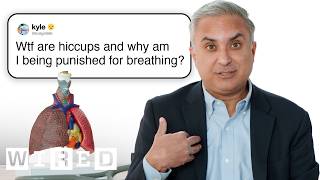
Hiccups occur when the diaphragm tries to breathe but the vocal cords cut off the breath. The exact cause is unknown, but it may be an ancient reflex.
Vape juice contains nicotine (highly addictive), formaldehyde (a preservative), and food-safe flavors that become dangerous when heated and inhaled.
The urge to breathe is driven by rising carbon dioxide levels, which lower blood pH. Receptors signal the brainstem, creating the sensation of needing to breathe.
Nasal breathing filters, warms, and humidifies air, and produces nitric oxide, a vasodilator that improves oxygen uptake. Mouth breathing has less resistance but lacks these benefits.
The burning sensation is not in the lungs (which lack pain receptors) but in the windpipes, which are irritated by cold, dry air when breathing through the mouth.
Anyone who coughs up blood should see a doctor ASAP.
Hyperventilation lowers carbon dioxide levels, raising blood pH. Breathing into a bag rebreaths CO2, restoring normal pH and relieving symptoms.
Coughing is the first defense; if food goes further, macrophages in the lungs degrade it.
A lung collapses when air enters the pleural space, disrupting the suction effect. Treatment involves a chest tube to remove the air.
The mucociliary escalator, which clears mucus, returns to function within about a month after quitting, leading to increased coughing as the lungs clear out.
It's unlikely to cough up actual lung tissue; it's probably mucus with a little blood.
Pneumonia causes consolidation, transmitting sounds better (e.g., whispered sounds are heard). Asthma causes wheezing due to narrowed airways.
Oxygen diffuses across the alveolar membrane into capillaries because of a concentration gradient, then binds to hemoglobin for transport.
The video provides a comprehensive overview of lung function and common respiratory issues, emphasizing the importance of lung health and the dangers of smoking and vaping.
What is the unique feature of the lungs compared to other organs?
They can be controlled both consciously and automatically.
00:14
What are the two main components of asthma inhalers?
Anti-inflammatory medicine (corticosteroids) and a bronchodilator.
01:13
What causes the 'wind knocked out' sensation?
A blow to the solar plexus causing the diaphragm to spasm.
02:28
Why do humans have two lungs?
For redundancy; if one fails, the other still works.
03:25
What is the current theory for why we yawn?
It increases blood flow to the brain to cool it down.
05:51
How does air enter the lungs?
Passively, due to pressure differences created by the diaphragm flattening.
07:01
What chemicals in vape juice are dangerous?
Nicotine, formaldehyde, and heated food-safe flavors.
08:24
What drives the urge to breathe when holding your breath?
Rising carbon dioxide levels lowering blood pH.
09:57
What are the benefits of nasal breathing?
Filters, warms, humidifies air, and produces nitric oxide for better oxygen uptake.
11:03
Why does breathing into a paper bag help hyperventilation?
It rebreaths CO2, restoring normal blood pH.
13:36
What is the first defense against food entering the lungs?
Coughing, triggered by sensitive cough receptors.
14:41
How is a collapsed lung treated?
Inserting a chest tube to remove air from the pleural space.
15:18
What happens to the mucociliary escalator after quitting smoking?
It returns to function within about a month, causing increased coughing.
16:44
How does oxygen move from the lungs into the blood?
By diffusion across the alveolar membrane due to a concentration gradient, then binding to hemoglobin.
20:19
Unique control of breathing
Highlights the unique dual control of the lungs, which is essential for survival and speech.
00:14Asthma inhaler mechanism
Clarifies the dual action of inhalers, combining anti-inflammatory and bronchodilator effects.
01:13Yawning theory
Explains the current scientific theory behind yawning and its link to brain cooling.
05:51Vaping dangers
Lists specific harmful chemicals in vape juice, providing concrete health warnings.
08:24Benefits of nasal breathing
Explains the physiological advantages of nasal breathing, including nitric oxide production.
11:03Lung healing after quitting smoking
Provides hope and motivation for smokers by explaining the recovery process.
16:44[00:02] Northwestern Medicine. I'm here today to answer your questions from the internet. answer your questions from the internet. This is Lung Support.
[00:14] breathe both consciously and automatically?" This is super interesting and unique to the lungs because no other organ can you consciously control it. You can't make your kidneys filter more fluid. You
[00:27] can't really just make your heart start beating faster. You can't make digestion speed up. There's no other organ that can do this. But for the lungs, it's essential. So the brainstem, the oldest part of the brain in terms of
[00:42] evolutionary terms, controls breathing automatically. And respiration just happens. The brainstem makes sure that the diaphragm keeps contracting, the keep breathing. That's super important cuz otherwise every time you went to
[00:56] sleep, you'd die, right? But we also need to talk and laugh and scream and sing. So the conscious part of the brain, the cortex, can actually control breathing in addition to the brainstem. So in that sense, we can both manually
[01:13] control our breathing as well as have automatic functions that keep us alive. Purest videos asks, "How exactly do asthma inhalers work?" Well, asthma inhalers contain medicine. It actually drives me crazy when people only refer
[01:28] medication. And they're medicines that we can deliver straight to the windpipes. The problem in asthma is the windpipes are over inflamed because a person is susceptible to things in the environment like pollen, pollution, or
[01:44] if someone smokes cigarettes, that cause inflammation in the windpipes. So the way we treat that is with inhaled anti-inflammatory medicine. Usually that's inhaled steroids. You can
[01:59] inhale corticosteroids that treat the surface of the windpipes so that they get less inflammation because of those corticosteroids anti-inflammatory effects, and then the lungs don't have that inflammation and
[02:13] people have less asthma symptoms. Asthma inhalers also often have a bronchodilator. Those medicines relax the muscle surrounding the windpipe so that the windpipe can open up and air can move in and out more efficiently. I
[02:28] is smarter asks, "What actually happens when you get the wind knocked out of out of you, it usually comes after someone gets hit in the chest or punched in the gut. And that's not actually a problem of the lungs. It's a problem of
[02:42] the diaphragm where getting hit right here, sort of like where the ribs come together, there's a nerve bundle right there called the solar plexus, which is not that protected by bones. It's like right in that open space behind your
[02:56] stomach. And when you get hit there, the thought behind the wind getting knocked out of you is the diaphragm goes into spasm. So the diaphragm doesn't work right. You feel like you can't breathe cuz the diaphragm's not moving down. And
[03:09] everything to reset, calm down, the diaphragm to relax, and for the person knocked out of them. One user asks, "Why do humans have two lungs instead of one single big lung?" It's probably the result of evolution deciding to having
[03:25] two things or redundancy is better than having one thing. It's like why does a one? Well, that's because if one goes down, the other still works. Akidae down, the other still works. Akidae asks, "Does this sound like COPD?"
[03:44] COPD usually is characterized by having less sound in your chest. COPD stands for chronic obstructive pulmonary disease. It also gets called emphysema. So normally the lung is like rubbery and elastic, like a balloon. And if you blow
[03:59] elastic, like a balloon. And if you blow air into it in and let it go, the air [snorts] just comes out super fast. When someone has emphysema, the lung is not rubbery anymore like a balloon. It's like a
[04:14] plastic grocery bag. You blow air into it and the air just kind of sits there And we normally hear less sounds in the lung, not more sounds in the lung. With a bag asks, "How TF does a lung
[04:28] transplant work? Like how do they get the lungs out?" In the old days, we actually used to just take the lungs out by creating a giant incision in the chest, opening it up, deflating the lungs, and taking them out. When they
[04:41] deflate, they're actually pretty small, like the the size of your fist. So these days, there's all kinds of new ways that they're doing transplants that make it easier to tolerate the surgery. So the lung only actually has three connections
[04:58] to the body. They're connected through a windpipe, through a vein, which takes an artery, which brings blood from the heart to the lungs. Just those three hookups. So if you can remove those three hookups and deflate the lung, you
[05:11] can actually take it out through a smaller incision. of places that they're doing smaller incisions, sort of between ribs, where they can take the lung out and then put a new lung in. The way people live
[05:25] during that period is they're put on a bypass machine, which does the oxygen and gas exchange for the person while their lungs are going in and out of the transplant takes place at a lot of
[05:37] places is a lot less sort of dramatic, what we used to call a clamshell, sort what we used to call a clamshell, sort of just cut open and lift up the chest. do it cuz the lungs can deflate and reinflate once they're in the body.
[05:51] Andre the Boss 21 asks, "Did you know that we still don't know why we yawn and why it's contagious even across species?" There are some theories about why people yawn. One of them is debunked, that the brain or the body
[06:04] needs more oxygen. That's not why people yawn. The current most talked about theory is people yawn because it increases blood flow to the brain and cools it down. So it's like a cooling function for the brain. Why the brain
[06:19] needs cooling, I don't think we know. Why yawning is contagious, some people think is like a old social network thing of empathy that gets transmitted sort of naturally in the human state. Because yawning is
[06:34] considered sort of this empathetic social response to people around them, it takes time to develop that empathy. And 4- and 5-year-olds, in general, don't have contagious yawning cuz they haven't developed those empathetic
[06:48] networks, or so the theory goes. A Reddit user asks, "How does air enter the lungs?" Well, this is an interesting question because while one might think air gets sucked into the lungs, it's actually a completely passive process.
[07:01] There's a muscle below the lungs called the diaphragm, which is dome-shaped. When you breathe in, that dome flattens and the lungs have negative pressure in them compared to what's in the atmosphere. Air always flows from higher
[07:16] pressure areas to lower pressure areas. So when the dome flattens and there's negative pressure inside the chest, air enters the chest. How does air leave the chest then? Well, the lungs always want to deflate. They're filled with air and
[07:31] they're like a rubbery balloon. So after that negative pressure fills the lungs, the diaphragm relaxes and air's natural tendency is to come out because the lungs are elastic and rubbery. Troll girl 666 asks, "WTF are hiccups? For
[07:45] like why am I being punished for breathing?" Well, a hiccup is a pretty breathing?" Well, a hiccup is a pretty weird thing. It is when the diaphragm tries to breathe, but then the vocal cords prevent the
[07:58] breath from happening. And there's like this awkward feeling of where air's trying to go in, but then it gets cut off up here by the vocal cords. And no one knows why they happen. They could be because something irritates the
[08:11] something irritates the vocal cords. Like sometimes people say they drank too much carbonation and they start hiccuping. There's no real knowledge for why that reflex exists. It's probably related to some ancient reflex that
[08:24] developed over time during evolution. But they certainly are uncomfortable. Burkin8000 asks, "What chemicals actually make vaping dangerous?" There are a lot of chemicals in vape juice that we don't know all the time how
[08:37] dangerous they are, but it stands to reason that they probably are. The first big one is if someone's vaping nicotine, there's nicotine in the vape juice. At high levels, actually, it gets heated up in the juice and aerosolized, and then
[08:50] you can breathe it in. And that's a high concentration of nicotine, which creates addiction. Nicotine is a highly addictive chemical. How dangerous that nicotine is on a day-over-day basis is not totally clear, but being addicted to
[09:06] it creates problems and desire for more and more nicotine. There are other chemicals in vape juice that get heated up. For example, there's formaldehyde. The stuff used to preserve bodies is in vape juice. And heating that up and
[09:20] inhaling it, well, that probably isn't that good for you in the long run. There are other things like there's flavors, and these are food-safe flavors in vape and these are food-safe flavors in vape juice. So you use fruity flavor vape or
[09:32] peppermint or whatever the vape is. They're probably okay to eat, but we don't know what happens when you heat them up, turn them into a volatile substance, and inhale it in the lungs. That could be really dangerous. So all
[09:45] That could be really dangerous. So all these things, you know, are, in my mind as a pulmonologist, bad for you. I think, as a lung doctor, the thing you're supposed to inhale is air. Gandhi's account asks, "Why does
[09:57] for a long time feel like you're not suffocating?" Well, when you hold your breath, you take a big breath in and hold your breath, you're not breathing. And when you're not breathing, the body does not release
[10:12] carbon dioxide. It also doesn't inhale oxygen, but in the sense of suffocating, the carbon dioxide is what matters. So, when you don't exhale carbon dioxide, it
[10:24] builds up in your blood. Carbon dioxide is an acid, so the pH in your blood goes down. There are receptors in your bloodstream that feed into the brainstem
[10:37] bloodstream that feed into the brainstem and create a sense of needing to breathe when the pH in the blood goes down because of this increase in carbon dioxide. So, that's when the brainstem kicks in and says,
[10:51] "Dude, we better breathe right now." So, the sense of relief that comes when you you're not suffocating anymore is because you finally are releasing that carbon dioxide. The pH in the blood is
[11:03] going back to normal and the satisfaction of being able to breathe again kicks in. Rateo BC asks, "What's the difference between breathing in through your nose and mouth and why it's recommended to do it through your nose?"
[11:16] When you breathe through your nose, a lot of good things happen. The nose filters air. There's hair in your nose, it's a first line of filtering, and then there's other filtering steps through what are called ciliated epithelia.
[11:28] There are cells in the entire respiratory tract that have little flapper things on it that can move debris and other mucus out of the way so When you breathe through the nose, the air also gets warmed up and humidified,
[11:43] so that's good. And then the third thing, which people don't actually know that commonly is the sinuses produce something called nitric oxide. Nitric oxide is what's called a vasodilator. And when nitric oxide comes into contact
[11:58] And when nitric oxide comes into contact with the lungs, it helps ensure that where air goes, cuz there's nitric oxide there, the blood also goes because it opens up blood vessels. So, then we have a really good matching between where the
[12:12] oxygen goes and where the blood goes, so oxygen can more efficiently enter the bloodstream. So, those are all benefits of breathing through the nose. If you breathe through the mouth, those things don't happen. There's no humidifying,
[12:25] there's no clearance, there's no nitric oxide. But what there is is less resistance to airflow. So, when you're exercising and you need to get air in shouldn't breathe through your nose. You should do the natural thing, which is
[12:39] you're just at rest or not doing anything that involves exertion, there are clear advantages for why breathing through your nose is better. @10 CO asks, "Why after running for a while do my lungs get that painful burning
[12:53] sensation?" It's actually not your lungs. The lungs don't have pain receptors. The windpipes do, however. And when you exercise, you inhale mostly stuff that happens when you breathe through your nose, humidification of the
[13:07] air, warming of the air, cleaning of the air, doesn't happen and everything goes So, if it's cold outside, this symptom might get worse because it irritates the windpipes when you breathe in cold air through your mouth. Google Bro asks,
[13:22] be worried?" I think you should be worried. Anyone who coughs up blood should see a doctor ASAP. Rachel Bunny asks, "Why does breathing into a paper bag help with hyperventilating?" One could wonder why someone hyperventilates
[13:36] caused by lots of things. The biggest thing is anxiety or distress or panic. a paper bag. When someone hyperventilates, they have lowered the
[13:48] amount of carbon dioxide in their blood. It actually turns out that those people who are hyperventilating have normal oxygen levels. It's all an ability to start breathing really fast. So, that
[14:00] unsettled. Having a high pH creates a sense of further anxiety, maybe tingling things that go on when someone hyperventilates. If you start breathing into a bag, however, when you hyperventilate, the carbon dioxide you
[14:14] breathe out gets stored in the bag cuz you're sort of pinching it and breathing you're sort of pinching it and breathing in the bag like this. dioxide, which naturally makes the carbon dioxide level in the blood go up
[14:28] again, so the pH goes down, the blood becomes more acidic or gets closer to normal, and it relieves the sense that you get when you're hyperventilating that everything is going wrong. A Reddit user asks, "What happens to food that
[14:41] accidentally gets in the lungs?" The first thing that probably happens is you start coughing a ton because the body has a defense mechanism. If something that's not supposed to hit the vocal cords or the main windpipe up here, the
[14:53] trachea, if something hits that, there are very, very sensitive cough receptors there that make someone start coughing like crazy and the food never makes it down further. If the food does make it down further,
[15:05] like a tiny amount of food gets down further, the body has defense mechanisms for that. One of the biggest defense mechanisms is that there are cells in the lungs that are called macrophages that will surround that thing and start
[15:18] to sort of degrade it or take it up so that it can't cause problems. Don't Spill Me asks, "What is going on when a lung collapses?" Normally, the lung lung collapses?" Normally, the lung stays inflated only because of a suction
[15:33] effect of the lung against the chest wall. There's just like a thin layer of fluid between the lung and the chest wall and the lung is kind of just suspended there. You know, if you have a glass and it's condensing cuz you have
[15:46] ice cubes in it and it's on a counter, the glass kind of sticks to the counter because of that fluid between the glass and the counter. That's what's going on with the lung. It stays inflated because of that fluid. So, if something disrupts
[16:00] of that fluid. So, if something disrupts that layer or if the lung gets punctured for some reason, so there's now air between the lung and the chest wall instead of fluid, the lung will actually collapse because it can't stay inflated.
[16:14] only staying there cuz of that suction effect. So, when the lung collapses, the way to treat it is to insert something called a chest tube where we stick a tube from the outside through between the ribs into that space between the
[16:30] lung and the chest wall and suck out the air that got in there or whatever else occur in there, sometimes blood can end up in there. Suck that out, so then the body can heal, restore that little fluid layer, and then the lung can stay
[16:44] inflated again. A Reddit user asks, "How do the lungs heal after a smoker quits?" This is a great question cuz I think every smoker should quit and it's true that a lot of the lung can heal. Most of that healing happens in the windpipes,
[16:57] which are irritated by smoking cigarettes. So, normally the lungs have mucociliary escalator, which is the flapping of these things called cilia at the tops of the cells that line the windpipes. So,
[17:13] when you breathe something in that's toxic, the cilia kind of can flap it back up. So, if you inhale small particles from cigarette smoke, the the lungs produce too much mucus cuz they're irritated, the cilia can kind of
[17:27] flop it back up to your mouth and you swallow it and it goes to your stomach where it doesn't cause any harm. One of the biggest bad effects of cigarette smoking is that it impairs the function of this mucociliary escalator and
[17:40] actually causes the cilia to disappear. So, there's no defense when someone smokes cigarettes. When they quit smoking, that function starts to return over a month or so. So, a lot of people when they quit smoking say, "Oh my gosh,
[17:53] when they quit smoking say, "Oh my gosh, I quit smoking
[18:08] Well, that's because the defense mechanisms that help you clear out mucus are actually working again. That's a positive sign. @BRoosterMaster asks, my lung comes up. Is this normal? Do lungs grow back?" Well, it's pretty
[18:21] unlikely that that's actually a chunk of your lung coming up. It's pretty hard to cough up a chunk of lung. I don't think that actually happens. It's probably mucus that's coming up that looks pink, maybe cuz there's a little bit of
[18:35] blood in it, but it's not actually your lung. Fever Coach Admin asks, "Asthma versus pneumonia, how do lung sounds differ?" Here's the sound of pneumonia.
[18:51] So, in that clip, someone is talking or whispering while they have pneumonia. pneumonia, pneumonia's when part of the lung fills up with infection or something else. So, like on this X-ray, you can see the normal lung is dark and
[19:05] black and filled with air, and then there's this top part here, which is white, which means it's filled with something. When the lung consolidates, it can suddenly transmit sounds much better than if it's
[19:18] filled with air. So, if the lung is filled with air and you whisper and I listen with the stethoscope right on that spot, I won't hear you whispering. But if it gets consolidated or filled with fluid, suddenly it can conduct what
[19:32] is being said at the vocal cords. So, if someone whispers then, you can actually hear the whispering is sort of a vibrating sound when you listen over that part of the lung. Now, we can listen to what asthma sounds like.
[19:50] windpipes, the pipes that lead to those air going in and out of the lungs in a much more prominent way than we do if someone doesn't have asthma. So, we hear squeaking or wheezing or various things like that that make noise of air going
[20:07] out of the lungs that we normally would not hear as a squeaking high-pitched noise. I promise to shut up asks, how does oxygen go from lungs into blood? does oxygen go from lungs into blood? Could you explain in details and simply?
[20:19] Well, when you breathe in, oxygen enters the lungs and the air has 21% oxygen. The lungs are comprised of millions of tiny air sacs that inflate
[20:33] when you breathe in. The air sac is called an alveolus and it's surrounded called an alveolus and it's surrounded by a net of alveolar capillaries, which carry blood from the heart past the air sacs and they form kind of like a net, a
[20:47] mesh around the air sacs. In between the capillaries and the air sac is a super thin membrane, like a a microscopic filter.
[20:59] So, when you breathe air in, it's just a matter of diffusion. The 21% oxygen that you breathe in is higher than what's in the blood that returns to
[21:11] Because there's more oxygen in the air sac than in the blood that comes by the air sac, that oxygen diffuses across that alveolar membrane into the blood.
[21:24] Once the oxygen hits the blood, there's a molecule in the blood called hemoglobin, which is highly avid for oxygen. So, the oxygen molecules attach to that hemoglobin and it gets carried away back to the rest of the body which
[21:39] that's all the questions I got today about your lungs. Hope you learned something. >> [music]
⚡ Saved you 0h 21m reading this? Transcribe any YouTube video for free — no signup needed.