
Is Muscle Soreness Good or Bad?
38sPoses a fundamental question that sparks debate among fitness enthusiasts.
▶ Play Clip"Delivers on the title with a balanced, informative take on DOMS, though some repetition and filler reduce density."
This video explores the role of delayed onset muscle soreness (DOMS) in fitness, explaining its causes and how to interpret it for training decisions. It clarifies that while soreness can indicate effective workouts for beginners or when trying new exercises, it diminishes over time due to the repeated bout effect, meaning lack of soreness doesn't necessarily mean lack of progress.
Delayed onset muscle soreness (DOMS) is soreness that kicks in about a day after exercise, caused by exercise-induced muscle damage at a cellular level, including micro tears and alterations.
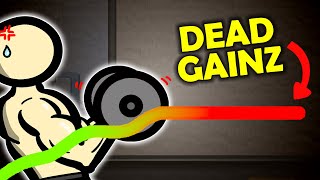
Over time, the body adapts to exercise, reducing the soreness response. This means an effective workout won't always cause soreness, so soreness is not a reliable indicator of workout quality for experienced individuals.
Beginners should feel sore after workouts; if not, they may need to increase intensity. Also, when incorporating new exercises, soreness indicates the exercises are sufficiently different and challenging.
If you're experienced and not sore but still seeing progress, lack of soreness is fine. However, if you're not sore and not progressing, it may be a sign to train harder.
Soreness alone isn't a definitive sign; it should be used in conjunction with other progress indicators to determine if training adjustments are needed.
Muscle soreness can be a useful tool for beginners and when trying new exercises, but due to the repeated bout effect, it diminishes over time and should not be the sole measure of workout effectiveness. Use soreness alongside other progress markers to guide training decisions.
What does DOMS stand for?
Delayed Onset Muscle Soreness
00:25
What causes DOMS at a cellular level?
Exercise-induced muscle damage, including micro tears and alterations, leading to pain signals sent to the brain.
01:07
What is the repeated bout effect?
The body adapts to exercise over time, reducing the soreness response after subsequent training sessions.
01:38
In which two scenarios should you feel sore according to the video?
If you are a beginner, or when incorporating new exercises that are sufficiently different from your usual routine.
02:25
What does lack of soreness combined with lack of progress indicate?
It may be a sign that you can benefit from training harder.
03:38
Repeated Bout Effect
Explains why soreness diminishes over time, a key concept for understanding DOMS relevance.
01:38When Soreness is Useful
Provides actionable guidance for beginners and when trying new exercises.
02:25Soreness as a Validation Tool
Emphasizes using soreness alongside other progress indicators, not in isolation.
03:38[00:00] Muscle soreness, is it a good thing, a bad thing, or does it even matter? In this video, I’m gonna show you when you should and when you shouldn’t use muscle soreness to help with your gains.
[00:13] is the wonderful sensation known as muscle soreness. More specifically, we’re very familiar with that soreness doesn’t kick in until about a day after exercise
[00:25] known as delayed onset muscle soreness, or DOMS for short. goers say that soreness is a sign of an effective workout. or that soreness means nothing at all.
[00:38] is clearly related to exercise because we don’t experience it But just imagine if you can actually get DOMS from simply doing your dishes.
[01:07] to something known as exercise-induced muscle damage. Basically, at a cellular level, a lot of alterations and tiny, micro tears This leads to pain signals sent to your brain, aka DOMS, essentially
[01:25] we gotta fix a bunch of crap that broke after whatever the eff you just did.” to people believing that DOMS is in fact a good thing.
[01:38] Until, as you might have experienced yourself, the soreness happens less and less over time. And that’s because your body is naturally built Essentially, the alterations and responses the muscle experience from your training
[01:54] diminish more and more after every subsequent training session. And that includes the response of muscles soreness. In other words, for something you’re now getting better at doing on a regular basis. But
[02:09] that also means that an effective workout won’t always make you feel sore, which means we can’t always say that soreness is a good sign. to help us make better training decisions based on muscle soreness.
[02:25] So now, let’s do just that. First, one scenario where you should feel sore is if you’re a beginner. Based on the repeated bout effect, beginners are the most susceptible to muscle soreness. So, if you’re
[02:37] it doesn’t necessarily mean you’re not making ANY progress, but it’s probably a strong sign that you can at least do a bit more. The other scenario where you should feel sore is when you’re incorporating new exercises
[02:50] then it probably means one of two things: One, the new exercises aren’t different enough from your usual exercises to forgo the repeated bout effect. Or two, you can indeed push these new exercises a bit harder.
[03:04] about pushing yourself harder because you don’t feel sore. With the repeated bout effect, there are some cases where you can train But that probably means absolutely nothing so long as you’re seeing clear gains
[03:22] after that feeling of soreness by pushing that muscle way too hard because it can end up doing more harm than good. But, on the other hand, is no longer getting sore from training but you’re also not seeing progress.
[03:38] how hard we’re currently training the muscle. If you’re not seeing progress then, in conjunction
[03:50] with the lack of soreness, we can determine that we can benefit from training harder. So, in this case, soreness is not a sign all on its own, especially since you still might not get sore when you do push yourself harder,
[04:02] but it can be useful to validate other signs. And that’s how we can use soreness to our benefit. As long as you know when it matters and when it doesn’t, then you should be good to go.
[04:14] If you enjoyed this video, then please give it a muscular thumbs up and share it and let me know what you think in the comments. As always, thank you for watching and don’t forget to get your protein!
⚡ Saved you 0h 04m reading this? Transcribe any YouTube video for free — no signup needed.