

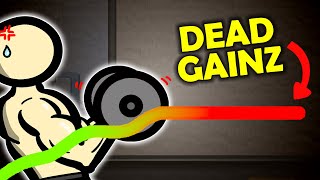
Why Fasted Training is a Bad Idea
45sChallenges the common trend of fasted workouts with scientific backing, sparking debate.
▶ Play Clip"Title accurately reflects content; video delivers practical, science-based advice on pre-workout nutrition."
This video explores the science behind pre-workout nutrition, explaining what to eat, when to eat it, and how much it actually impacts exercise performance. It debunks myths about fasted training and provides practical, flexible guidelines for fueling your workouts.
Most fitness experts agree that training on an empty stomach is rarely a good idea, and science supports this.
A pre-workout meal improves glycogen repletion, which is crucial because glycogen is a primary energy source for exercise and storage is limited.
The best time to eat is about 30 minutes before exercise, but eating within three hours is generally acceptable.
A small meal with about 25g of carbs and 5g of protein (e.g., a banana and nuts) can be effective.
Foods high in simple sugars or sports drinks are less effective; choose more filling options instead.
Pre-workout meals can boost endurance performance (e.g., cycling time to exhaustion) by up to 10%.
For low-rep, heavy weight training, benefits are inconsistent; some studies show 5-10% improvement, many show none.
Higher rep, lighter weight training utilizes more glycogen, so pre-workout meals are more beneficial for that type of exercise.
For most people, especially those lifting 3-8 reps per set, overall daily nutrient intake is more important than precise pre-workout timing.
A pre-workout meal can improve performance, especially for endurance exercises, but for weightlifting the benefits are modest. The key takeaway is to avoid training fasted and focus on overall daily nutrition rather than obsessing over pre-workout timing.
What is the primary energy source for exercise that pre-workout meals help replenish?
Glycogen
00:24
What is the recommended time window to eat before a workout?
About 30 minutes to 3 hours before exercise.
00:39
What is a simple effective pre-workout meal example?
A banana and a small bag of nuts (25g carbs, 5g protein).
01:24
What type of exercise benefits most from a pre-workout meal?
Endurance exercises like cycling, with up to 10% improvement in time to exhaustion.
02:07
Does a pre-workout meal significantly improve heavy weightlifting performance?
Benefits are inconsistent; some studies show 5-10% improvement, many show none.
02:36
Avoid Fasted Training
Challenges common belief that fasted training is beneficial; science says otherwise.
00:12Up to 10% Boost in Endurance
Quantifies the performance benefit for endurance athletes.
02:07Prioritize Daily Nutrition
Provides perspective that overall diet matters more than pre-workout timing for most people.
03:17[00:00] not only your lunch but also some gains on the table. are we leaving on the table, and what should we have in our pre-workout
[00:12] meal? Well, today, we’re gonna find out. One thing most fitness experts agree on is that training on empty stomach, or training fasted, is hardly ever a good idea. And the science thoroughly supports this,
[00:24] how a pre-workout meal can improve something known as glycogen repletion. This is good because glycogen is one of the primary energy sources for exercise, and we can store only a limited amount of glycogen in our muscles. So,
[00:39] eating something beforehand can make sure we have a bit more energy available. when exactly should we eat before the gym? Well, it seems that the best time is about 30 minutes before exercise. However,
[00:53] What the science agrees most consistently on, though, is to, again, avoid training in a fasted state. So, with that in mind, I think as long as you eat something within say about three hours before your exercise should be okay.
[01:08] and stomach responds. and your lunch Fortunately, we are afforded quite a bit of flexibility. In fact,
[01:24] like about 25 grams, and a bit of protein, about 5 grams, can be effective. That’s like just a banana and a small bag of nuts. That said, there’s also evidence showing that reducing hunger and increasing
[01:37] So even though we have a good deal of flexibility with the food we an eat, we wanna at least avoid foods that are less effective with reducing with a lot of simple sugars or fluids, like sports drink.
[01:52] Or you can choose to eat more food until you feel more full. Personally, right after eating lunch. That keeps things easy with no extra planning needed. And that’s the basic strategy of a good pre-workout meal.
[02:07] perhaps the most important thing of all: How much of a difference can we actually expect in our exercises from optimizing our pre-workout Now, it can be very effective for very specific exercises. That’s
[02:24] the case for endurance exercises, where outcomes like time to exhaustion in cycling can see as much as a ten percent boost in performance. This is where the whole glycogen repletion matter comes into play, since we heavily
[02:36] rely on glycogen for endurance. But for something like lifting weights, the benefits are kind of whatevers. Sure, again, some studies show solid five to ten percent improvements. But there are many, many more studies
[02:49] showing no benefit whatsoever. It also tends to mainly benefit high rep, light weight training more so than low rep, heavy weight training. Again, Usually the more reps performed, the more glycogen will be utilized,
[03:04] so the more you can benefit from a pre-workout meal. Ultimately, it is undeniable that a pre-workout meal can improve all facets of exercise performance. That said, it does clearly favor more endurance-type
[03:17] exercises. So, if you’re running some training program where you’re lifting between three to eight reps per set, then, as long as you’re not fasting have to be too diligent with your pre-workout meal.
[03:32] And in an overall sense, it’s always best to prioritize on just getting enough overall nutrients on a daily basis.



⚡ Saved you 0h 03m reading this? Transcribe any YouTube video for free — no signup needed.