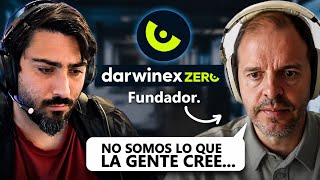

Why I Hate the Word 'Retail Trader'
45sChallenges a common label in trading, sparking debate and resonating with retail traders who feel undervalued.
▶ Play Clip"The title promises a deep dive into Darwinex Zero, and the interview delivers a thorough explanation of the platform's philosophy and mechanics, though it's more of a general Darwinex overview."
In this interview, Darwinex co-founder Juan Colón explains the philosophy and business model behind the platform, which aims to give independent traders the credibility they deserve by pooling their trades and capital. He discusses the social change democratizing market access, the flaws in traditional retail trading models, and how Darwinex's protocol builds trust through collective action and network effects.
Over the past 15 years, technological development has democratized access to financial markets, allowing retail participants to trade assets previously only institutions could access. Retail participation has grown at a double-digit annual rate, now representing 30-35% of the most liquid assets.
Juan despises the word 'retail' because it judges traders by portfolio size, not intelligence. He calls it 'micro-classism' that institutionalizes the idea that retail investors are inferior and need protection, which often denies them access to markets on equal terms.
Darwinex's mission is to give independent traders the trust they deserve by imposing objectively reliable rules to prove they deserve that trust. This is achieved by creating a collective mechanism where independent operators, who individually lack credibility, gain it collectively.
The Darwin protocol is a trust-building protocol where independent traders pool their operations, and each trade is certified by a third party. The market acts as a witness, and the collective credibility grows as the community's account earns returns.
Index is the best strategy the community is capable of, representing the net result of all participants in the external market. It is a measure of confidence in independent traders, built from the collective track record and capital in the community account.
Many companies claiming to find profitable traders have conflicts of interest; they profit from losing traders' losses or subscriptions. If the balance shifts, they may close down and stop paying, making their business model not in favor of traders.
Darwinex is the only capital management company that truly looks for profitable traders, proven by its track record. They have created an index of top 200-250 traders, and their business model depends on having winning traders to attract investors.
Many people misunderstand Darwinex, thinking it's a funding challenge that pays little. Juan clarifies that it's a long-term platform for those who want to make a living from trading, and the focus is on building trust and credibility.
The video aims to simplify the complex technical aspects of Darwinex by inviting Juan Colón, who explains the philosophy and business model in an understandable way, focusing on the movement and trust behind it.
Juan uses a wardrobe analogy to explain that to understand big problems, you need to abstract and see the whole picture. The social change is that technology has democratized market access, but the business model is missing.
The word 'retail' is a form of micro-classism, judging traders by portfolio size. Regulators impose restrictions on retail investors, denying them access to instruments, which is a form of institutionalized classism.
To access capital, independent traders need trust from regulators, investors, and other parties. Darwinex aims to provide that trust by certifying track records and building a collective credibility mechanism.
Darwinex creates a movement of independent operators who submit to objective scrutiny by a third party. By pooling their trades and capital, they achieve credibility that no individual could achieve alone.
Each trade is reported to Darwinex, and an independent third party acts as a witness. This certification is the first step to attracting capital, as it provides a verifiable track record.
Darwinex is a movement of independent operators who pool their operations in a brokerage account. The account's balance represents the trust of investors, and its growth increases the community's credibility.
Trust is a network effect: the more participants, the more credible the system becomes. As the account earns returns, more investors are attracted, and the community grows, creating a virtuous cycle.
The protocol takes a signal, certifies it, and attributes the benefits to all members. It builds trust by certifying each member's contribution to the community's profitability.
The Darwin protocol is a trust-building protocol that allows independent traders to gain credibility based on their individual merit, collectively achieving what none could individually.
Credibility is built gradually through winning. Different operators have different adoption rates, but as the community grows, trust increases, and more participants join.
Darwinex is a movement of independent operators who pool subscriptions to provide the necessary infrastructure. It moves 30 billion a month with hundreds of thousands of trades, monitored 24/5.
As orders cross internally, the system recovers a spread that would otherwise go to external market makers. This surplus is reinvested in the community, benefiting all participants.
By matching all internal flow, Darwinex eliminates extractors who profit from independent traders. The community becomes a market where savings are directed to the best participants.
The protocol is funded by member contributions through monthly fees. This allows the community to provide institutional-grade infrastructure and reinvest in the best traders.
In trading, it's a zero-sum game. Market makers and other intermediaries extract value from the flow. Darwinex rescues that spread and reinvests it in the community.
The real economy is like a cow that extractors suck dry. In trading, market makers capture spreads and use information advantages to profit at the expense of retail traders.
Market makers like Citadel extract a portion of every trade. Darwinex's model rescues that spread from external extractors and reinvests it in the community.
Darwinex has 13,000 participants who pool their resources, creating a collective operation that can compete with institutional players and rescue spreads for the community.
Darwinex only reveals information when sending trades to the market. By doing so, they minimize information leakage and maximize the community's advantage.
The mission is to return the market to the people who make it, eliminating extractors. The index is a measure of confidence in independent traders, built from collective performance.
The community generates a proprietary source of information that is only available to its members. This meta-information is processed to extract maximum benefit from the market.
Index is the performance measure of the credibility certification protocol. As the account earns, the incentives of participants align, and the community grows.
Victor compares the community to the Spanish basketball team, where even if you're not the star, you benefit from the collective success. This illustrates the sense of belonging and shared benefit.
Trust is essential among participants to share memberships, data, and capital. Darwinex has 350,000 failed track records, which serve as a 'fossil repository' of lessons learned.
The allegory to Darwin is about evolution and development. Darwinex develops, certifies, and capitalizes on the strategies of its best members, creating a meritocracy.
Once you have credibility, you only need to earn trust. The protocol is designed to build credibility, which then attracts more trust and capital.
By eliminating extraction, Darwinex returns markets to the people, sending savings to where they yield the best social returns with the least friction.
Darwinex is evolving, with changes in branding and a focus on members rather than clients. The goal is to create a non-extractive model throughout the value chain.
Users are those who contribute less than they receive, while members receive more than they contribute. The aim is to convert users into members and eventually shareholders.
Darwinex is considering a work token where users are paid in a share of the index account, making them members and aligning incentives. This would create a sense of ownership.
Juan's goal is to enable members to tell the story better than he can, activating those with communication gifts to attract more users and grow the movement.
If Darwinex pays in index, the money stays in the system, capitalized at maximum return by members. Paying Google would take money out of the system.
Darwinex will never be a mass-market product but can be a significant niche. The goal is to attract those who realize the value of a non-extractive model.
Index is the visual result of the confidence built. It's a clear statement of intent, showing that the community's track record is the best proof of its credibility.
To improve the index, more members need to be involved in distilling the signal. Darwinex is working to make data available to members so they can contribute to the strategy.
The goal is to maximize alignment among all participants to generate network effects. This requires simplifying the story and aligning the proposal.
The network will expand as the story is simplified and the proposal aligned. More members make it easier to provide institutional-grade infrastructure and recover spreads.
The community lacks trust, and there are actors who want to maintain that. Darwinex aims to break down barriers and attract good traders to its platform.
Spreading the word about Darwinex is a collective responsibility. Juan hopes that more good traders will join and that the movement will grow.
Darwinex's model is built on trust, collective action, and network effects, aiming to give independent traders the credibility they deserve by pooling their operations and capital. The platform's success depends on attracting profitable traders and reinvesting in the community, ultimately returning the market to the people.
What is the mission of Darwinex?
To give independent traders the trust they deserve by imposing objectively reliable rules to prove they deserve that trust.
00:31
Why does Juan Colón despise the word 'retail'?
Because it judges traders by portfolio size, not intelligence, and is a form of micro-classism.
00:15
What is the Darwin protocol?
A trust-building protocol where independent traders pool their operations, and each trade is certified by a third party, with the market acting as a witness.
00:57
What is Index in the context of Darwinex?
The best strategy the community is capable of, representing the net result of all participants in the external market.
01:09
What is the conflict of interest in traditional trading firms?
They profit from losing traders' losses or subscriptions, so they need more losing traders, not profitable ones.
01:22
How does Darwinex certify trades?
Each trade is reported to Darwinex, and an independent third party acts as a witness, providing a verifiable track record.
15:06
What is the network effect in Darwinex?
The more participants, the more credible the system becomes, attracting more investors and creating a virtuous cycle.
17:13
How does Darwinex eliminate extractors?
By matching internal orders, it recovers the spread that would go to external market makers and reinvests it in the community.
23:54
What is the 'fossil repository'?
The 350,000 failed track records that serve as a repository of lessons learned for the community.
37:40
What is the goal of paying in Index?
To keep money in the system, capitalized at maximum return by members, rather than paying external parties like Google.
44:24
Why 'Retail' is Derogatory
Challenges the industry's labeling of traders by portfolio size, highlighting a form of classism.
00:15The Darwin Protocol
Core concept of the platform, explaining how collective trust is built.
00:57Network Effects in Trust
Explains the virtuous cycle that drives Darwinex's growth.
17:13Rescuing the Spread
Shows how internal order crossing benefits the community by eliminating external extractors.
23:54Fossil Repository
Highlights the value of failed track records as learning data for the community.
37:40[00:01] social change. Over the past 15 years, technological development has democratized access to markets. Why do I despise the word retailer? Because it judges the trader or investor by the size of their
[00:15] portfolio, not by the size of their brain. What has already been produced and what is still missing? business model. To access capital you need a lot of things, but above all, what I need. Darwinex's mission is to give the
[00:31] independent trader the trust they deserve, but what we do is impose a set of objectively reliable rules to prove to the world that we deserve that trust that is denied to us. If that order that leaves the
[00:43] [music] in independent traders has increased. Because? market. I call that the Darwin protocol. So, in a way, collectively, they achieve what no one could achieve independently,
[00:57] which is credibility, capital, and information. What we have here is a proprietary source of information that is only available to the community. So, what is index? Index is the best strategy the community is capable of
[01:09] hundreds of companies have appeared claiming to be looking for profitable traders. They all tell you the same thing. They tell you they are investigating, that they are looking for profitable traders to evaluate, and that if they are good traders they will give them their
[01:22] together. But the reality, as you all know by now, is quite different. Most of these companies have conflicts of interest with traders, since they losses of the traders who lose. In other words, they need to constantly
[01:36] In other words, they need to constantly not looking for profitable traders, they're looking for more and more losing traders. profitable traders and they had to pay more and more money to the traders who win,
[01:50] subscriptions or the losses of the traders who lose. If that balance becomes slightly unbalanced, enough so that the cash flow doesn't work, things don't go well for them, they have to close down and eventually they'll stop paying people,
[02:02] you've broken the rules, and so on and so forth. You already know how that works, and I do opening your eyes, nor do you need a PhD to understand that the business model of those companies is not in favor of traders. But there is
[02:16] found throughout my years in trading, that really does look for traders. It is the only capital management company that has proven over believes in traders. They have even gone so far as to create, after many years and
[02:30] after evaluating hundreds and thousands of traders, an index created by traders that, as you can see here on screen, gathers the top 200-250 traders on their platform, unites them, and generates that track record. They need profitable 3D because if they are
[02:42] n't, this curve you're seeing here on screen would fall down and their business model would collapse. Its credibility, the credibility of this company, is based on the fact that the traders they find on their platform are
[02:54] of this miniature, those companies are Darkwunx and Darwun Exter. The first video on my channel, as you can see here on screen, already talked about Darwun X0, at that time Darwunx Classic. There I already showed you what a track record meant,
[03:07] I analyzed the traders on the platform, how they managed capital, what Darwinex was based on, and in general, this was in 2019 and I was already talking about what has been proven to be true today, which is that Darwinex continues to bet on
[03:19] profitable traders because what they do is connect investors with retail traders. from investors. And to get real investors, people who want to they need to have winning traders. If there are no winning trolls on their platform,
[03:34] convince investors to invest their money in Dragonero? Well, this, what makes the difference in the industry. And many of you write to me n't really understand how Darkun Extero works, what it
[03:48] funding challenge, and that it pays very little. I think that kind of consequence of not really understanding what this is all about. The thing about you're on a platform for the long term, if you want to make a living from this in the
[04:02] long term, on a company, on a platform that really wants to be profitable versus one that doesn't want to be profitable, that should make you myself often sin, and that is that we always talk about technical things like
[04:16] raise the la, the I don't know, the sector, the opening factor. I understand that there are many, many technical terms, a lot of language that people often language very specific to Darwinx. And that's why in this video what I've done is
[04:30] invite, bring Juan Colón. Juan Colón is the person I have heard who best conveys the idea of why Darwinex is its business model is, what makes them different, why they do seek
[04:45] of interest unlike everyone else. What's happening there? So capital allocation, how the platform works, or anything like that Darkx is and doesn't understand it, if you've heard about it but don't know exactly what it
[04:57] using it but never have because it's too confusing, believe me, this talk with Darkx co-founder Juan Colón will clear everything up for you Darkwunx was created, what it's trying to change within the retail trading industry, and
[05:10] why they decided to invest in that path—a path where, if they didn't get profitable traders, their entire business model would collapse. So if you've ever defending Darkwun X and Darkwun X0 for so many years, believe me, this video will
[05:22] leave you with the chat with Juan Colón. I hope you like it a lot, Profit Traders, and see you soon. Hi Juan, how are you ? How are you? with you, Victor, and with your audience. Thank you so much for giving me the
[05:35] On the contrary, you know that for me this is a pleasure. Uh, I feel really bad, as I was saying, aside from the fact that it's Monday morning, so I understand that you probably prefer to do other things, but [laughs] I think a
[05:49] love this. I apreciate it. I really appreciate it camera what the objective of this was, okay? So, I'd like okay? So, I'd like people to... uh, sorry, I've changed my... which
[06:01] people to... uh, sorry, I've changed my... which looked really weird. [laughs] think people might really like what we're going to talk about today because, as I was saying, it's the first video I have on the channel, and I
[06:13] is talking about Darwinx, okay? Speaking of analyzing the Darwins a bit , because, uh, that Y in particular and others of them, because at that time in others of them, because at that time in 2019, uh, when I knew Dark OneX, there was
[06:26] n't in the environment of traders that I lived in, I didn't know what a track record was, I didn't know what it meant for a retail trader to have the ability to live off it. It was truly something very new. So when I discovered the
[06:39] Darwinex ecosystem, I felt very much a part of that movement, because of everything it What's happening? As the years have passed, I've realized that convey it, but sometimes it's very difficult for me to move beyond the technical aspects
[06:53] Darwinex that have to do with what Darwin is, what Darwin itself means, how to understand the risk engine, and many people also find it difficult to understand what an evolution that has been happening over time, and I find it
[07:07] things, I think, right? So, uh, recently, and since I've known you, and you have an incredible ability for it, but recently we went to an event in Madrid with Darwinex and you explained what Darwinex and Darwunx meant
[07:20] in a way that I think is very understandable for most people. It's the philosophy, the movement behind it, and not so much what I wanted to bring you here for that reason, to try and get a little bit of information out of you and have you
[07:33] Extero is and where it's going, right? Because there's been a bit of rebranding, some changes to a few things, and if you'd like, could you explain a little bit about how all this is going and how you see it? Well, I'll leave the incredible capacity to the
[07:47] Well, I'll leave the incredible capacity to the eye of the good listener, but try. Well, I often think that to understand big problems, the important thing is to abstract yourself a little and take a step back
[08:01] abstract yourself a little and take a step back . So, um, because that way I think it looks easier and you have a wardrobe where you can hang your trousers, socks,
[08:16] right? But the important thing is to realize that it 's a wardrobe. And in this case, what is happening is a social change. There is a social change in which, in the last 15 years, there has been a
[08:31] technological development that has democratized access to markets, understood as the possibility of operating in financial assets that, until that moment, were only operated by
[08:46] institutions, right? to give some figures. I think that in the to give some figures. I think that in the last 10 or 15 years the number of retail participants, and now we're talking about that word that I detest with
[08:59] all my might, has grown at a double-digit annual rate and in some instruments it already represents around 30 to 35% of the most liquid assets and there are operators like the Chicago
[09:14] Mercantile Exchange, the CMI, which, well, buys most futures, and buys most futures, and treats Retail as the area of most marked growth. Uh,
[09:27] why do I despise the word retailer? Because he judges the trader or investor by the size of their portfolio, not by the size of their brain.
[09:40] And just as there are microaggressions, here there are micro- classisms. The underlying issue is classism because you are considered inferior the lines, moreover, are institutionalized, not so much
[09:55] institutionalized, but rather that all Spaniards are equal before the driving, race, etc., etc., etc., and obviously wealth. Well, on a
[10:07] financial level, there's a rule that considers you a retail investor if you haven't worked in the financial sector, which is something that's also changing again, uh, unless you have €500,000 in assets or you have a certain level of
[10:20] experience in trading. You don't have to meet two of the three conditions, and if you do n't, you enter a regime where well- intentioned regulators try to impose restrictions to protect you, which in practice
[10:33] result in denying you access to instruments you could rambling a bit. What I mean is that there is a technological change
[10:48] should lead to a social change. And we are in a phase where, in the phase of fighting against micro-classism, of considering that upstart newcomer to the market, well, a kind of person who needs to be
[11:01] protected, uh, in those cases where there are, well, very translates into that you are denied the right to access the markets on equal terms with the, well,
[11:15] established players, as I would say, I don't know, I don't know, it's a translated word. I hate English translations, but oh well, the ones that were already here before I got here, right? They're obviously not
[11:27] going to open the doors for you. Okay? So, what has already been produced, and what is still missing? Technology is in eliminate barriers when it comes to programming algorithms, accessing
[11:40] data, and so on. What's missing is the business model. The business model isn't there because, in order to live off trading in the market, if you're a retail investor, you don't have enough capital to provide
[11:56] have enough capital to provide regular income, etc., etc., etc. And to access capital you need a lot of things, but above all what I
[12:08] a lot of things, but above all what I need. regulator can trust that you will not defraud investors and therefore
[12:20] gives you permission to manage your money. The investor must trust you because otherwise they won't entrust you with the management of their money, etc., etc., etc. There have to be a number of parties outside of you, and this is
[12:32] important, that give you a vote of confidence. Hm. Good. So, giving a vote of confidence requires, well, in the end there's a requires, well, in the end there's a
[12:49] credibility you have and the trust you deserve, and another is the credibility that is granted to you by that third party. And we met. Darwinex's mission is to give the independent trader, which
[13:04] is a word I refer to much more as a retail trader, the trust they deserve. That is the mission because by achieving that, what we do is put an end to that last micro-classism by which
[13:17] access to capital is denied to those who do not come from within the system. And at that point, I believe the social revolution would have
[13:29] run its course and our mission would have been completed. Let's just say it's nothing Obviously, this is all a matter of degrees and therefore degrees and therefore difficult to
[13:43] So, what is our mission? Our mission is to build trust in the independent operator. And how do we accomplish that mission? Well, complicated way, well, but quite simple, what we do is generate a
[13:56] movement of independent operators who submit to objective scrutiny by a third party independent of them, which is
[14:08] who we are, because that's also quite something , isn't it? But what we do is impose a series of rules that are objectively reliable to demonstrate to the world that we deserve the trust that is denied to the world
[14:23] in particular and to investors in particular. So, as a result, what we have created is a collective mechanism in which independent operators who individually cannot be
[14:36] credible, by tautological definition, achieve the credibility that achieve the credibility that each of them deserves at an individual level. And how does that work? Well, it's simple, we created an environment to
[14:51] certify and capitalize on track record. How does that environment work? Each time an independent trader performs a transaction, they report it to us, and at that moment there is no doubt that they have
[15:06] performed the transaction. No, it's not, oh, no, it's just that I thought not, I mean, either you moment, an independent third party can act as a witness to say, " Victor, at this moment he told me that he was doing this operation."
[15:20] That is a first step towards being able to attract capital, provided the notary is credible. If you go up to a guy on the street and tell him that "Fantastic, it's third-party ownership, but he can't vouch for it because he's not a notary,
[15:36] right?" In our case, what we have done is compile those track records. the risk of the tracks independently, which we are now entering into
[15:48] and sending record-breaking figures to the market. And at that moment something happens . Just as we have acted as witnesses for those members of the community who send us the trades, at the moment we send that
[16:02] trade to the market, the market can act as our witness and by in the chain. So, what's the deal? Ultimately, Darwinex is a movement of independent operators
[16:18] who pool the operations they carry out at any given time, and a capital. Now we'll talk about how that capital is generated, which we'll talk about how that capital is generated, which lives in a brokerage account in the name
[16:31] of the community or movement. So that account is the custodian of the existing trust of investors. There is capital there that comes from investors who have trusted these PS that are coming in. Then there's that
[16:47] balance in that account, a marginal operation from one of the members comes in, it goes out to market and here's the most important thing in all of Darwinex:
[17:00] winning, confidence in independent traders has increased. Because? because they have been able to beat the market.
[17:13] The more that account earns, the greater the credibility that the community has in the eyes of the outside world, because the market is paying us define strategies. Clear.
[17:29] important happens, which is a network effect. A network effect. Many times I get bored and tell me if I've repeated it because but a network effect is a phenomenon in economics whereby the
[17:44] more participants there are in a system, the better the system is, and this participate and for those who join. A clear example of a network effect is the telephone. The telephone for the first person who
[17:57] invented it was absolutely useless because he couldn't call anyone, and as soon as he found the second person, it started to close because they've set up here with the don't worry. These eye-blowers are one
[18:09] of the things I detest most in this [laughs] in this in this world. Anyway, I was talking about the trust that the phone provides, right? The second user makes both the existing user and the new user happy .
[18:21] The third user is obviously happy, and the previous two are happy because doubled the phone's usage, haven't they? In the end. Well, trust is a
[18:33] credibility you have, the more votes of confidence you receive, and the more confidence confidence you receive, and the more confidence you have, the more credible you become. Those who have contributed capital to that common community account, to the
[18:48] generating returns, have more interest in contributing more So, what's going on? Well, it's happening that trust in happening that trust in the community is growing. And in that way,
[19:05] the community is growing. And in that way, the winning trades of the members of today's movement accumulate credibility, which is the TR history that that account has had with the Prime Broker and a file
[19:19] confidence, which is the balance in that account at any given time, in which existing investors will predictably deposit more. other investors who see that the account is indeed growing,
[19:32] that there's a latent opportunity there, which is the talent of independent traders whom the system despises for being retail investors. That is So, what have we done? We have created a
[19:47] mechanism in which a signal is taken and certified by a trade against a third party who may be outside the system, who
[19:59] witnesses the benefits that the community is accumulating through this, and then we are able to attribute the origin of the three to all members of the community . So what we have created is a
[20:13] trust-building protocol by which all the tests of all members are certified, and also the contribution to the marginal profitability of the community of those who charge. I call that the Darwin protocol, which
[20:27] call that the Darwin protocol, which is the protocol for building trust in based on their individual merit. Total, total. And I also think it's spectacular how it's presented, but then even so, when I listen to it I
[20:41] to you. How is it possible that in the face of something like this , something that is clearly designed to generate that trust, there are still people who find it difficult to find yourself in that situation where you have to convince many actors that
[20:55] you are the ones who are going to certify that, right? This applies both to retail traders, in this case independent or retail traders who want to entrust their signals to you, as well as to the regulator, and to investors who
[21:08] want to invest in traders. How is that achieved? How do you manage to convey that idea? Well, winning. Sure, [laughs]
[21:21] credibility, and credibility gradually different operators. Some are more distrustful, some are more trusting, but it's a continuum where little by little everyone joins in
[21:34] distrustful and then you're afraid of being left out. And that's part of the network effects, isn't it? I suppose There were people there, weren't there? They're going to hear it, you know? There are always different
[21:47] adoption rates for perfectly legitimate reasons on the part of those outside the perfectly legitimate reasons on the part of those outside the system, right? And well, that's actually it , it's a protocol so that a series of independent operators
[22:00] who selfishly seek that trust obtain a solution to certify and capitalize on their track record, which—and this is the beautiful part— works at an individual level,
[22:15] as everyone is contributing to that trust. They are somehow competing for the capital in that account, but what they credibility that will attract more confidence tomorrow. And what I
[22:28] think is beautiful about all this is that the operators who trusted yesterday, or those of today, inherit the trust of those who operated yesterday and ideally
[22:40] tomorrow. Mm. And the more users that join from all contribute capital, those who contribute credibility—the better the system becomes for everyone. That's the mechanism by which it works.
[22:56] So, what is Darwinex today? Well, it 's a movement of independent operators who pool a subscription that allows them to provide an necessary to be able to do all this. The account has to be with the broker; it
[23:09] has to be right now. It moves 30 billion a month with hundreds of thousands of trades a month. Hey, that can't fall. So here's a team dedicated to monitoring everything 24 hours a day, 5
[23:23] days a week. Uh, as you know, we also develop the technology to make it work, and that benefits the community. community, the better, because those expenses can be shared among more
[23:38] participants. And then there's a network effect that's also very interesting, which is—and this could be a topic for another podcast another day—but what happens is that all participants
[23:54] is that all participants operate at the market price, but as their orders cross internally within the system, what occurs is the possibility that the system will recover
[24:10] a spread that would otherwise be sent out . The sources of income on the one hand, the contributions of the members and on the other hand, that surplus that doesn't really cost anyone, which is the amount we have salvaged from
[24:24] all the rest of the orders among the participants. And that income is what we seek to reinvest with , because the community is accumulating capital by doing that, and the
[24:40] idea is to reinvest that capital in those who do it best, so that the account accumulates more credibility and attracts more participants than those that net more spread, and so on. And if you think about it,
[24:55] creating a new market. It's a completely all the participants are there, by definition the entire flow is matched then? What happens then is that we have eliminated all the extractors
[25:11] who today suck from the independent participants because the independent ones are not equipped to be able to So, finally, what exactly is Darwinex? It operates a protocol to
[25:27] give the independent journalist the credibility they deserve. This protocol is funded from member contributions through their monthly membership fees. And that's another interesting thing:
[25:40] real-time operational data. We've talked about marketpols in this, haven't we? So, in a way, collectively, they achieve what none of them could achieve individually, which is credibility and capital.
[25:52] Total, total and information. What you said at the end seems remember this and we heard it there at the event when you were explaining it, which is to eliminate actors who want to bleed the participant dry,
[26:05] ? Because I think it really impacted me when I heard it because it makes perfect heard it until you said it. So how is it that you eliminate that intermediary, that participant who wants to somehow
[26:18] harm, or not harm but bleed dry, as you rightly say, the retail trader in this case ? Well, in trading it's a zero-sum game, it
[26:32] 's a zero-sum game. Finally, there's Main Street, the real economy, and then Wall Street, whose function is to ensure that the savings of the real economy end up in those parts of the real economy where they can
[26:45] generate the most, right? Well, in the end, the financial system is transfer enters, which is your savings, and from which another transfer comes out, which is the
[26:58] reinvest it in the real economy. And along the way, a lot of things have happened along the way, a lot of things have happened so that the system can identify where to send that transfer, right? In other words, you put in your
[27:11] appears to be from someone else and you don't know who it is, but there's a capitalist channel there that does exactly that. And in between that channel there are a lot of players with an information advantage who know things you don't, and they're making
[27:25] So, nowadays, and I think we see this everywhere, in the end the real economy has become a kind of cow that all the extractors are sucking dry, right? In the specific case of
[27:40] right? In the specific case of trading, , right? Well, in the end, behind all of that, there's a bought the oil and is delivering it somewhere, right? And what was created as
[27:54] become a tool for speculation, primarily speculation. So, when you buy oil, you're going to the Chicago Mercantile Exchange's order book and there's a
[28:09] counterparty that provides you with liquidity. You buy oil from the Chicago Mercantile Exchange, and Chicago is a thing of the future, but oh well. And a counterpart gives you back that, it sells it to you, right? Because he
[28:21] has it. What's happening? Over the years, market makers have emerged, providing years, market makers have emerged, providing the spread. They are very effective for various reasons, including
[28:36] information symmetry, which allows them to take your order from one side, wait for a while, and release it. In return, they retain the spread, keeping the money for themselves.
[28:50] Moreover, by virtue of being able to be and exit orders and also having tentacles in a lot of parallel markets, they are able, because there are very very intelligent people here, to infer whether
[29:06] the flow at this moment is net buying or net selling. And with all the doing is covering themselves between the two sites, capturing that price range without that reinvestment resulting in anything. I was recently in New York and
[29:20] there was one of these towers, uh, tremendous, right? Nat and who's alive, well, Ken Griffin is from Citadel. Well, Citadel Live comes from there. So what happens? That in each operation they are extracting a part of
[29:33] the fork that comes out of the real economy or well, it ends up in them and then Martin Valkyrie this that has twice the number of hairs that [laughs] this is not an austerity. If you think about it, in our environment where
[29:49] think about it, in our environment where internally for part of the volume and the community reinvests that in its Rinex property does, in the end what we do is rescue that spread from the Tower of
[30:04] Mordor there in New York to be able to reinvest it in the participants themselves. And in that way both the spread and the thing, since we currently have 13,000 participants who effectively pool their resources
[30:19] in this operation that becomes markets, which we then make available to the best participants so that they can extract more from the flow around. Normally, what is done is to send losses from participants
[30:33] all this is losing, but it is to rescue them. They return, and also, as we said before, what happens when those profits return to the Prime Broker account, which holds the
[30:47] accumulated collective credibility of the entire community? Well, again, as we've said, there's more capital for everyone. The incentive for better operators to join and channel their operations from here is better. That
[31:00] operation, and this is important, we only reveal information about the community at the moment we send a trade to the market. So that moment is when you show your
[31:12] cards, but if you show them to win, what you're doing is that you've rescued, you've rescued the fork from within before sending it, you've obtained a profit from the outside, and what you've also done, and this is
[31:24] important, is that by less informing the system outside the system you've because there's someone who no longer contributes to it where they were sucking it up to
[31:37] other side there are the investors themselves who are seeing that, hey, Because there are far fewer intermediaries pulling the three points where what we've done is hook a movement of
[31:54] small fish, connect it to the big fish, and what we're doing, if things work out well, is extracting capital via profits, via investors who desert the
[32:08] ecosystem and turn to ours. And even more importantly, information. information in the defined as participants who choose to channel and certify their operations through this protocol.
[32:24] then the, I mean, the mission of all this is to become, is to return the market to the people, to the people who make it. Uh, why? Because the only ones who don't belong here are the extractors.
[32:39] And how would you link all of this, for example, to the creation of the index? Does all this lead to that point? The creation of the index, strictly speaking, what the index is, should be, is the net result of all participants in the
[32:54] external market. So index is the measure of confidence So index is the measure of confidence in the independent operator. watching this here more or less have an idea of what we're talking about,
[33:09] someone after everything we've explained so far, how is Index built from this whole idea of a trust movement, how is it being built today and how will it be built in the future, how is it being
[33:22] that's the typical "my brother's coming over, and he'll tell you the story of ," but ultimately what we have here is a proprietary source of information. which is only in the possession of the community
[33:38] and the objective of the community is to process that meta-information that it is generating in a way that extracts the maximum benefit from the market. best strategy that the community is capable of,
[33:56] on the trust given to the community, which is the cash balance in its trading account. So, as that goes up, certifying that the market is paying us, it's
[34:12] paying us in the form of income, which is visible, and then in the form of information that is produced as more and more participants desert the market where they are not given anything, where they are extracted
[34:29] [cough] all the benefits of everyone are redistributed meritocratically. It's about the members who contribute the most, but that's what index is. Here's a
[34:41] brokerage account, there's a lot, a flow of signals coming in, there are a number of participants who have contributed to that data. Looking ahead, we are also exploring ways to open up this data to processors that
[34:54] distill the best signal the community is currently capable of generating and apply it against the external market. we have said, it is the performance measure of the credibility certification protocol
[35:11] account earns, the better off the incentives of the protocol participants are aligned to Sorry. No, no, don't worry. Yes. Also, this reminds me
[35:26] that I recently saw a documentary about, I don't know if you like basketball, but uh, the whole era of , let's say, the Spanish national team here, right? From the good, golden age, right? From the golden age,
[35:40] No, a little further on even, which has to do with Gasol, Calderón, Navarro, all of that, right? Several Europeans won, they won the World Cup, talking about a critical moment in the World Cup when Gasol got injured,
[35:54] Pau Gasol, okay? He injures his foot and breaks it, and then he has to go out for the last and Margasol, his brother, and so on, came in, right? So, at that moment locker room, I remember when I saw it, I mean, in the locker room, I mean, in
[36:08] the dressing room, where the coach, who was Pepo Hernández, comes in and sees how all the others, his teammates, were hugging each other and crying, but not because they were afraid of losing the game, no, but because they saw
[36:22] community, was going to miss such a fun game, like that one? And when I hear you, because I think, in the end, when you participate in an environment like Dark and Dark Extero with Index, in the end, even if you lose,
[36:36] 're not someone who's capable of winning yet. From my point of view, I think it makes you're participating in the benefit of someone who's like you, you know? From someone who is within the community and who is flying your I am
[36:48] happy when I see that win, you know? In that sense, it also benefits me, whether as an investor or as a trader, who is trying to be that person, the sense that a kind of collective is created in which, even if you are
[37:01] able to generate that or you are not yet at that point in your trading, you same collective, within your same you, right? You see it that way too,
[37:14] are creating, and we come back to this, is trust. Without the trust of the participants, none of this would be possible . In other words, there is trust between the independent operator and the investor in the independent operator, but above
[37:27] all there has to be trust between the participants, the independent operators, to be able to share their memberships, their data, their capital and then, and this is the last thing that has also been mentioned, their data.
[37:40] Here, for example, one very powerful thing that we haven't exploited enough so far is that there are 350,000 failed track records. I call it the because in English it's the for record, I don't know how it would be here.
[37:55] for record, I don't know how it would be here. Well, if it's the historical memory or the fossil repository, the idea would be that all the lessons accumulated by those who came before would be
[38:09] Correct. And that's one of the points. And the second And that's one of the points. And the second point is, uh, why do we make an allegory to Darwin? Because there is also an element of development and evolution here.
[38:21] done is to develop strategies. In a way, what we do is develop, develop, certify, and capitalize on the
[38:35] strategies of our best members, and it is indeed a meritocracy. What we do is provide the best possible conditions so that everyone can become the best trader they are capable of as quickly as possible with the lowest possible costs.
[38:51] time. Indeed, the real-time operation that it can allow is this; we Index team to see how to share the real-time operation with them because in some cases we see that reporting those strategies that they have already
[39:07] with this additional data source improves the improves the winner and loser ratios. But indeed, the better everyone does, the better the platform ultimately does
[39:20] trust: once you have credibility, all you need to do is earn trust. It's already won for you. Completely. Uh, so that's
[39:34] the design of the protocol. That's a meritocracy. uh leveraging a protocol, own benefit, but also for individual benefit, community benefit and social benefit, because to the extent that
[39:49] we eliminate extraction, what we are doing is returning the markets to In the end, if we go back to that oil trade that existed before, to the extent that that unnecessary spread has been eliminated , we are sending that money
[40:03] to the oil well that will make—I'm not saying it's the good one, I mean, no, but it would probably end up in the renewable energy park that will more efficiently power the artificial intelligence that has been made
[40:16] available to retailers as well. And that speeds up the process, does increasing gap between competitors, right? Because if you do that, you'll be able to distinguish yourself more and more, and gain more perspective on what
[40:29] happens is that the more participants there are within this new participants there are within this new protocol, the less friction there is in being able to cross-reference the information they are contributing.
[40:45] Therefore, in the end what we do is become a market where your transfer actually goes in and a transfer goes out mean, in the real economy there's an information symmetry where you don't know
[40:58] where the best option is to reinvest your savings, and on the other side there's the other one, right? And what the protocol does is take your savings to where they yield the best social returns with the least possible friction,
[41:14] we've eliminated all choices, which really becomes zero-sum game, it's a game, well, yes, it's a zero-sum game in which there's one player because they have an information symmetry, in the form of, well, they have
[41:29] information symmetry, in the form of, well, they have more data, or they hire better people, or they pay off a politician, or they do whatever it takes to make sure the game isn't fair. Total, total, total. And looking
[41:41] did a bit of a rebranding, right? About changes. There's a lot going on, and what I also perceive as a Darknex customer is that some pieces are changing, right? That they are evolving. I don't like the word "client" here
[41:56] member. I like being a member, are, no, we're not the employees, we're all those who Absolutely, absolutely true. Yes, yes. And then there are the users, who are
[42:10] and then there are the members who are those who receive more than they contribute, with a receive more than they contribute, with a non-extractive model throughout its entire value chain. It's not just about not
[42:28] we trade, but also, for example, not paying Google to run ads to attract new users. It's much better for the community if that to [clears throat] the very users who make the recommendations. Sure,
[42:42] considering having our own work token where instead of being paid in CAS, you would be paid by default in a share of the first index account, which is obviously liquid, and then there's the user description,
[42:56] allowing them to withdraw it whenever they want. But in that way, users become members, and in my specific dream—I don't know something I can an evolution from user to member and ultimately to
[43:10] shareholder, isn't it? Through a token, but it's basically having the better it does, the better you'll do . great, that's great, man. That sounds great, huh? Sounds great. And regarding these types
[43:23] less what your vision is for the future of those who are coming up? I understand that it's difficult to had to explain these changes that have occurred right now, how you are evolving, would your goal be? My personal goal is to be able to
[43:38] tell this story in a way that allows you to tell it better than I can, and for that to spread to more members of the movement who specialize in recruiting new members.
[43:52] Because at that point, we'll break out of this spiral where we're unknown because we don't bombard people. And well, in a way, we're the secret, the well-kept secret that more people should know about, and that
[44:09] only happens to the extent that we're able to activate members with a gift for communication, like you, so that you can teach us ways to attract more users so that the funds don't
[44:24] leave the account that generates the most trust, which is selling in the market. We think this way: if we pay in index, that money has not been withdrawn from the system. It remains there, capitalized
[44:37] at the maximum return by the members themselves. If we pay Google, that money has already come from there,
[44:49] Darkx is evolving? I have seen that it is growing more and more, more and more true that I still see that in the end the competitors that exist today favor the whole thing about paid advertising, that is, it is
[45:03] really difficult to break a little bit of the barrier that many people, many traders in this case, retail traders, right?, have when they are starting out with what Darwines implies compared to other types of companies today. Do
[45:15] that little by little, this whole... I don't know how to say it... idiosyncrasy will be overcome, the idea that people believe Dar is something different, something little known, but it's something... I don't know, I don't know how to convey that to people. How do
[45:28] you see it going to break that barrier? Well, the concept of people is a very broad concept. I believe there is a niche of people within realize that it is impossible to get there
[45:41] . They'll eventually figure it out, and those who want to make a killing will just end up banging their heads against the wall, and unfortunately there will always be tons of ads because it's a perfect
[45:55] storm. So, we'll never be a mass-market product in we can be a significant niche product, and my aspiration is not for need to know us to know us. Absolutely, absolutely. Yes. And besides,
[46:11] I see index, for example, right now as the visual result of all that confidence you were talking about, right? Ultimately, if you want to know if this look at that graph, that track record, to realize that what you
[46:24] clearest statement of intent I've seen in a long time. Well, but that also means involving as many members as possible in distilling that signal, the better. Right now, well, we are—and this is one of the
[46:38] bottlenecks—that we have understood this as a company where people work, which is owned by shareholders, where employees work, and I think the way for this to grow is to understand it as a
[46:50] movement where members get what they get based on what they contribute. And from there, well, if there are data scientists, one of the technical challenges is how we make that
[47:03] data available to members so they can improve the index strategy, so that it improve the index strategy, so that it is extracted without contributing to the benefits it deserves. That's one of the points. But
[47:18] somehow the idea is to seek to maximize alignment among everyone in order to maximize generates this network effect that I was talking about . And in my specific case, I think it has a lot to do with history. So if there's anyone here who's good at
[47:32] drawing, then do these speed motion ones, or whatever they're called, right? These little hand-drawn sketches explain in a simple way what the Darwin protocol succinctly states, right? Therefore, there is an
[47:44] independent operator who deserves more trust than is currently being given. And thanks to this protocol and by collaborating with other independent operators like him, trusting in other independent operators like him, what is done
[47:57] is to generate that triple benefit [clears throat] , which is what I like most about this, right? Because it works at the social level of the community, that is, at the individual level, at the social level of the community and at the level of
[48:09] without anyone having to be anything other than selfish. Absolutely, absolutely. And do you think there's any kind of ceiling in terms of the number of participants, or can that network just keep expanding?
[48:22] I believe that network will expand to the extent that we simplify the story and align the proposal among all of us. And the great thing about that is that the more members there are, the easier it becomes to do it. For example, right now we are not
[48:37] institutional range to all our participants. Because? Because some covered by subscriptions. Well, as we have more subscribers, we will be able to transmit institutional spreads
[48:50] of each participant. So, there is a curve there where marginal conditions are for each participant and the more spread is recovered that
[49:02] can be reinvested. So, there is a turning point there that we haven't reached yet, but that we have to work towards reaching. That's great, Juan, because ultimately the independent dealership community
[49:15] global community where what's lacking is trust, because as you know, there are selling Lamborghinis, right? And he'll get paid for the fall he takes, he who believes it. Hm. Yes, there are also two actors
[49:30] who go somewhat against that philosophy you're saying because obviously don't want you there in some way because they want to rightly say, right? And therefore, smaller pedals are seen as a
[49:43] strongly feel that version from the more institutional side, but then there's also the other side, which is that the retail traders or beginners, or those who want to be non- institutionalized, also
[49:56] know about track records like those of Darwinx, Index, etc., to So, their own mistrust, along with that applied from the complex. But I think that little by little barriers are being broken down and
[50:11] good people doing incredible things in the markets and I hope they all end up at Darkix, damn it. I really hope so . I hope this keeps Well, you're also part of the delusion in your bans [laughs]. It is
[50:25] everyone's collective responsibility. Absolutely, absolutely. Juan, dude, listen, I this. I hope that this has helped those of you listening, who may not yet understand or did not understand what it meant to give an
[50:37] have an even more solid understanding of all this. We have always part is very necessary to understand everything behind it, everything that is subordinating it, all that information and Juan, really, this is your home.
[50:50] coming to comment on something, to share are very valuable, this is your home. Just let me know and I'd be you again. Yes. Well, I'm waiting for the questions you'll be asked,
[51:02] special follow-up episodes or anything like that . And as I said, if there is someone who specializes in making these explanatory videos and is able to a protocol to generate
[51:15] trust in those who truly deserve it, which is not currently being Absolutely, absolutely. Thank you so much, Juan, really. We're in touch. Come on, a hug. Goodbye, Victor. Care.
⚡ Saved you 0h 51m reading this? Transcribe any YouTube video for free — no signup needed.