
AI Summary
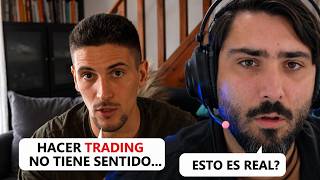
This video analyzes a live trading session where a trader succumbs to FOMO (Fear of Missing Out), leading to a series of costly mistakes. The host breaks down the trader's actions, explains the psychological cascade of errors, and provides actionable advice on how to identify and combat FOMO in trading.
Chapters
The host introduces the video as a reaction to a trader experiencing FOMO, the second in a series analyzing common trading mistakes.
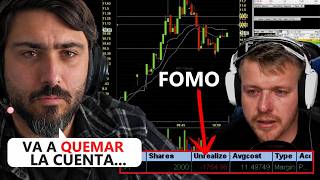
The trader enters a position prematurely, not waiting for the planned pullback, driven by the fear of missing the upward move.
FOMO causes impulsive decisions outside the plan, leading to a cascade of mistakes: entering too high, moving stop loss, and averaging down.
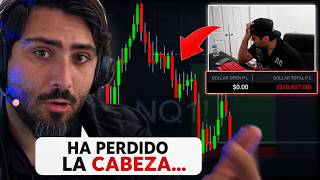
The trader faces significant unrealized losses, trapped in a loop where any decision is likely to be a losing proposition.
The host compares FOMO to infidelity: if you get away with it once, you're likely to repeat it, reinforcing the behavior.
FOMO not only causes bad entries but also leads to poor risk management, increasing position size, and moving stop losses, turning a single mistake into a catastrophe.
The trader fails to close at his stop loss level, illustrating the difficulty of accepting a loss after a series of errors.
The trader freezes, unable to act, even when the price reaches his original stop loss, a common reaction to mounting losses.
The trader exits at the lowest point, only to see the price reverse immediately, a psychologically painful experience.
The host explains that the trader's focus on the painful exit reinforces the belief that the market is against him, a form of confirmation bias.
The trader engages in self-blame and regret, a common psychological response that further damages confidence.
FOMO is the fear of missing out, leading to rushed decisions without considering consequences, both in trading and life.
FOMO leads to overtrading, increasing trading frequency and risk exposure.
After a FOMO mistake, traders are more likely to hold losing positions, hoping for a reversal, which exacerbates losses.
FOMO leads to self-flagellation and loss of confidence, which can cause analysis paralysis in future trades.
One way to detect FOMO is by trading outside your usual hours, indicating irrational behavior.
Trading assets you don't normally trade, influenced by others, is a sign of FOMO.
Unusual volatility in your usual asset, like the Nasdaq moving 800 points, can trigger FOMO if you deviate from your plan.
Monitoring your exit times: if you hold positions much longer than your average, it may indicate FOMO-driven behavior.
The key is to identify FOMO early and accept the small loss, preventing a cascade of errors.
FOMO is a destructive psychological force in trading that leads to impulsive decisions, overtrading, and self-doubt. By quantifying your trading patterns and recognizing the early signs of FOMO, you can stop the cascade of errors and protect your capital.
Mentioned in this Video
Study Flashcards (5)
What is FOMO in trading?
easy
Click to reveal answer
What is FOMO in trading?
Fear of Missing Out, leading to impulsive decisions to enter trades without following the plan.
17:06
What are the three main consequences of FOMO mentioned?
medium
Click to reveal answer
What are the three main consequences of FOMO mentioned?
Overtrading, enduring bleeding (holding losing positions), and self-flagellation/self-doubt.
17:30
How can you identify FOMO based on timing?
medium
Click to reveal answer
How can you identify FOMO based on timing?
If you trade outside your usual hours, it may indicate FOMO-driven behavior.
19:40
What is the 'infidelity analogy' used to explain?
medium
Click to reveal answer
What is the 'infidelity analogy' used to explain?
If you get away with a mistake (like FOMO) once, you're likely to repeat it, reinforcing the behavior.
05:19
What is the first step to combat FOMO?
hard
Click to reveal answer
What is the first step to combat FOMO?
Identify when you are falling into FOMO and accept the small loss to stop the cascade of errors.
21:49
💡 Key Takeaways
Impulsive decisions lead to more errors
Explains the domino effect of FOMO, where one mistake leads to a series of compounding errors.
03:04Infidelity analogy
A memorable comparison that illustrates how FOMO can become a repeated behavior if not corrected.
05:19Selling at the bottom
Highlights the psychological pain of exiting at the worst possible moment, a common FOMO consequence.
13:03Quantifiable FOMO indicators
Provides concrete, measurable ways to detect FOMO, making the advice actionable.
19:28Full Transcript
[00:01] I talked about revenge trading, okay? which you all really liked and from the bottom of my heart, in which we reacted to a live trader who had obviously it implied, right? Okay, so today we're going to do the same thing because I've
[00:16] found another video of a trader who is falling into FOMO, which is the second one. reacting to other traders who make the most typical trading mistakes live , right? From Ben Trading, FOMO, about trading, etc., etc.
[00:29] screen, we are going to receive this trader who commits the typical example of okay? In terms of errors, because that is linked to other types of elements such as moving stop loss, etc., etc. OK? So, since there's
[00:44] deal with here, we're going to react to the video and then at the end I'll explain and then at the end I'll explain the key points for dealing with FOMO.
[01:01] to automatic here, but it's not showing up. So, I'll translate more or less a pullback, okay? That is, that's trading shares. In this case, he small step back before joining in. OK? So, for now it's not
[01:15] the market starts to rise steadily, he wanted to join that position out of FOMO, because that's what he was expecting, but if it doesn't happen, he doesn't want to miss out on the party, and that's where he's going to join. OK?
[01:49] small pullback much lower than what's happening, but since he's a small retracement movement, and he does n't want to miss the move because he believes his hypothesis is that the market will continue to rise, he gets ahead of it and
[02:02] before it even reaches the point he had anticipated, planned, that he wanted to wait for, he quickly joins the market. That's has surely experienced, just like me, with FOMO: you wait, you have your
[02:15] plan, you have your hypothesis, you have your strategy, but you see that the movement starts without you, right? The market might be waiting for a pullback to a certain zone, it doesn't happen, it stays just short of one, and then it starts making the move
[02:27] you were expecting. Since you had foreseen that and your hypothesis was so strong and you so wanted to be in that position, when you see that the market is end up entering the position and unfortunately making a mistake.
[02:41] OK? That's what's happening to him. It's
[03:04] when you have FOMO and FOMO leads you, as we'll explain later, to make impulsive decisions outside of your plan, okay? And when you make an initial impulsive decision outside of your plan, that means you'll probably
[03:16] try to correct that mistake in real time , because if you followed the plan, you know that the plan is A, B, and C, or whatever it is, and you execute it, period. But wait for the price you expected, you enter too high, it
[03:30] move you expected, and when it reaches your zone, it starts to reach the have to enter again because that was the good zone, and that's where you load positions. It is averaging down, meaning it is losing and increasing its
[03:42] position size, which is clearly the first symptom of catastrophe. is clearly the first symptom of catastrophe. I think we share the same thing, don't we?
[04:13] Think that he is going. You can see here that it has almost 900 less in unrealized loss . Remember that here we will surely say that this exact point, whether it's a BWAP, a moving average, or whatever. In other words, you
[04:27] pullback, a holding pattern at some kind of moving average or whatever , and then you'd buy to buy that bounce, right? If instead of waiting for that, which is your plan, you watch the market move on without you and feel
[04:40] anxious about not being part of that movement, this is what will happen. You make a decision, you're wrong, the market goes against you, you're wrong further against you, and there you are trapped, you're in the loop where
[04:54] any decision you make is going to be a losing proposition, because if you're lucky, okay? And that the market, which we don't know what's going to happen, there comes expected, it goes to all-time highs for the position and therefore you make money,
[05:07] okay? After making that series of mistakes, think that's the worst thing that can happen to you, because the next time he sees this he's going to think that's right, because since it worked out well this time, why not do it
[05:19] leaving without you and you have FOMO, I'm going to let myself be carried away by the FOMO because it's not like infidelity, think of it that way. Imagine that you are unfaithful, you partner and for whatever reason you do it, you have made a mistake, you know it, but you don't get
[05:33] and nothing has happened. When you have another opportunity to do it, you'll probably do it again consequences for it. That's unfortunately how human beings work. The same thing happens here. If you are unfaithful to your plan and there is a moment when
[05:46] fallen into FOMO, because you have not been able to resist that person, that woman, that man, you have not been able to resist that action or that wanted to be a part of, since you have not been able to resist, it is very likely that
[06:01] when that happens again, if it works out well, you will do it again because you have the positive memory that that mistake gratified you, you were paid with a coin when it is not like that. OK? So here at Trend, I don't know what's
[06:15] or loses, that is, if this goes against him now, he's going to lose money and he's basically made a mistake, which is losing money because of FOMO. But if he wins, he's next time it happens, he's probably going to lose money. So FOMO is a
[06:30] in the video, the problem with FOMO is not only entering the trade. The trade, a position, out of fear of missing out on something, you usually take on more risk management, you start increasing your position size, you move the stop loss, as
[06:44] means that a bad trade, a single mistake, can turn into a catastrophic loss. And the worst part of all, unfortunately, is that these kinds of FOMO mistakes, overtrading, and fear in general are inevitable in the
[06:56] trader who is still learning or if you regularly make money, I truly encourage you to use platforms like Darwin Extero for just €45 a month, as you can see on the screen, plus a 20% discount that I've
[07:11] psychologist, you'll be able to operate a completely virtual account of €100,000 for trade other products such as CFDs, as you can see here, futures, and so on. And with that risk to you whatsoever, just the monthly fee you pay, no
[07:25] rules, no challenges, no absurd regulations, operating real account, you create your own audited track record , as you see here on the screen, analyzing your trades, how many and which assets you trade, everything you
[07:38] trader is a good trader, such as your maximum drawdown, how long it takes to how much you earn each year. All of this is automatically audited, a track record is displayed to the thousands of investors on the platform.
[07:52] want to take the risk because they don't have the time, and you have the skill but not shows your results, they invest in you, and you get a share of the brought to the channel many times of incredible traders in Dark Extero like
[08:05] Sy who are transsystems, generating €13,000 for example in April, € 37,000 in March, €21,000 in February, and in October they earned €10,000 and €22,000 in September. These are absurd amounts of money . And the key to this is that if
[08:18] FOMO we see in the video, the worst that can happen is losing money from a that €45 fee and therefore there is no risk. I invite you to open an included below in the description of this video. Use the code psychologist
[08:31] a 20% discount on the fee and create your own Track Record Trader. your own Track Record Trader. Take advantage of it.
[08:53] "My stop loss is at 11, okay? At 11." As you can see, when it should have closed the position, because that's his stop. At that point, the risk he was willing to take was taken, and whatever happens, you should close according to your plan. What happens is that
[09:07] when you enter FOMO (fear of missing out), the decision you made previously is already irrational, you've already made a mistake. When you make one mistake, two mistakes, the third one is easier to overcome. In other words, the really difficult thing for a trader
[09:20] of error. When you make a first mistake, that's the biggest barrier because do. Once you've broken through that a row of dominoes. You knock down the first one, and the
[09:33] knock down because there's already an inertia to the two? No, because you have to try. He needs to get out of that situation somehow, than the second. And that's what he's doing. He entered too early,
[09:46] he thought that's when he reached the correct price, when wrong. The thing is, if he had entered correctly, he would have lost very little, everything would have turned out fine. But since he's already made a series of mistakes, when his
[09:59] want to accept it because you think, "Oh no, I made a mistake, I have to a mistake. So, what do you do? overtrading, meaning he's traded more than he should have, but you're
[10:11] also becoming risk-averse, moving your stop loss—a probably made yourselves, which is moving the stop loss when the price moves against you because small pullback that will save you, well, that's what he's doing. They're
[10:24] not closing at 11, and the market is going to keep falling. It's real-time paralysis. Instead of taking action and knowing that you have to close
[10:37] the position, you freeze. You're literally frozen, not knowing what to literally frozen, not knowing what to do.
[10:49] reaches 11, meaning that right now he 's at the exit point of his original stop loss, okay? A trader who has made a mistake and knows he's of that position, that's when he exits. And I also know that many of you do it because
[11:01] I've done it and I've seen it in sessions, and it's that the market goes against you, please, let it reverse a little on its own to the stop loss, because you've lost a reach my stop loss, I'll close." The stop loss hits and you say,
[11:15] "Okay, a little more." Let's see if he wins a little bit that way. When you're already like making promises to God, isn't it? Typical promises that you then keep. saint, who is the saint of the market, where it's going against you, you've gone way past
[11:29] please let it reverse for me." And if you really get to me, you start having conversations, but if you get to my stop loss point, I close the position, I you think he's going to do it? What would you do? I'm sure you've all
[11:42] you do? I'm sure you've all experienced that.
[11:54] moving averages, I don't know what, in 5 minutes. You start creating fictional narratives, saying, well, let's see if it stops here, let's see if this happens. In other words, instead of following the plan and staying at $1 as you had planned, you're already
[12:08] trying to think that maybe there was a support level there that you managed to catch added extra information to the chart, which probably has nothing to do with your plan, and now you're starting to look for reasons, right? In other words, it's like
[12:22] making excuses, isn't it? Going back to the analogy of the infidelity relationship, relationship was very damaged in recent years, he didn't show me affection, I don't know what." In other words, you look for excuses, you look for esoteric reasons to corroborate that
[12:38] your decision was correct. The infidelity you have committed against your plan, against your partner, is OK? That doesn't exist. There is no justification.
[13:03] losing 2000, he almost left the position, he decided to exit right at the bottom, and this is also important, at the button, that is , at the bottom, at the lowest point of the movement, that is, from the very top where he entered, he
[13:17] surely we'll see it now because this has happened to all of us, to me too. can't go any lower. Now's not the time for it to bounce back, I'm going to get out just in case ." Sales and the price goes boom and bounces. If you haven't experienced
[13:30] that, it's a really tough psychological pain, truly, really tough, because you take responsibility for the mistakes you've made: the FOMO mistake, the mistake of reloading the stop loss got away, meaning you could have
[13:42] problems from where you wanted, but you didn't , you held on, it went against you, and then when you couldn't take it anymore you close it and that's when it reverses and goes to the highs and gives you the profit you
[13:54] one of the most psychologically painful situations a trader go wrong psychologically, everything that makes you realize you've made a mistake and how the market repays you with pain, by saying, "Ah, you made a mistake, don't
[14:08] when you get out of the market, it happens when you want it to." It's like at that moment your mind creates, as I've explained many times, an enemy in the watching you and you think it can't be true. I mean, it can't be that the
[14:21] market turns here and it does. Uh, it's confirmation bias. That selective attention, you focus so much on that because it went wrong and because it hurts, because it's so painful, so let's say you focus a lot on that, right? Because
[14:34] last longer in our bloodstream than what we like. When you long, you say, I've made a good decision, you move on, you forget about it. But when it hurts, when what happens destroys you, that's when you notice it and you stay with it.
[14:47] And that's why you think the market is against you. There is no real enemy. Moment of absolutely perfect timing. The second he's out, the stock reverses and rockets without him. BPI jumping back up there to right after I sold there
[15:17] painful point. It's $0,000, but there are cases that I think we've seen or even experienced that are much worse. In other words, in the end you become so attached to the mistake that you can't get out of it. Another trader would have let it run, run,
[15:29] run until the stock was destroyed and he ended up losing his entire account. "Hey,"
[15:48] He says, "This is what happens when you don't cut your losses." He's position." Why have I put up with her? Why are you already regretting it, aren't you?
[16:02] you start to beat yourself up. This type of self-flagellation is very typical of so far ahead of the movement that you think, wow, why did I do it? why have I put up with it? If you start to get carried away, we're very, very bad to
[16:17] ourselves, aren't we? And we beat ourselves up a lot when we make kinds of cases are clear examples of harsh punishments, huh?
[16:37] cut there, why didn't I cut it? How is it possible that I didn't cut it?"
[16:53] right? So, for those of you who aren't very familiar with what you're seeing, I but FOMO is basically the Fear of Missing Out, okay? It is a trading, but also in everyday life . When an opportunity
[17:06] , you rush to take it without considering all the basically that idea of being left out of a movement, isn't it? Missing out on you see that many people are taking advantage of it. When this happens in
[17:18] trading, as we see in this case, it has consequences, right? It has consequences overtrading, which is what happened to this trader. In other words, when you fall into FOMO, you anticipate the movement because you do n't want to be left out of it,
[17:30] reach your entry point, right? which is where you had planned and When that happens, you tend to [music] take more overtrading because, want to stay there, you don't want to take that trade at the very top or the very bottom
[17:43] and do nothing else, but you try to get out of the position, and as of the position, you start overtrading, more trades than you should. That day making two or three; that increases your trading frequency and therefore the
[17:55] important point that occurs when there is FOMO is, as you have seen, since you've already made a mistake, as I was saying, the dominoes are already falling and therefore you're becoming more and more likely to endure the bleeding. It's going
[18:08] . Since you didn't close your position when you should have because you entered earlier, you don't want to stop there anymore. You want to try, no matter what, to get your head a little you force the position to the maximum possible because the mistake will condition
[18:22] And the third consequence that occurs when there is FOMO, as you have seen, is self-flagellation, self-insult, self-doubt . You start to lose confidence because you let yourself go, and when you let yourself
[18:36] go, the next thing that will probably happen is to think about that trade [music] very distressed. You're going to try, let's say, never to make that mistake again, but that's going to force you to be paralyzed, because
[18:49] next time you have the opportunity to take your trade, let's imagine that you give in to FOMO that day, the next day you face the markets again and ahead of myself." You wait for the right moment to take a trade, but because
[19:02] traumatic situation of the previous day with FOMO, when you actually have to take the trade, you're going cautious. That's analysis paralysis, it's being overly exposed to the lost confidence the day before, [music] do you understand? So, when
[19:15] zone, you say, "I'm going to wait a little longer." And that day passes again. Did you make the trade correctly? It goes in the direction you expected and dangerous loop with FOMO. So, given the consequences, to give you
[19:28] try to deal with it and how I advise you to deal with it psychologically, as you can see here on screen, there are different ways to quantify To know if there is FOMO, that is, to try to deal with FOMO, the first thing to do is to
[19:40] be FOMO, as you can see here, it's the timing of the operation. For example, which you are most likely to take a trade. And if you act outside of those hours, that's a bad in the American window and suddenly you are trading in the European window or
[19:55] you are trading in after hours or you are trading in premarket, whatever. But that are irrationally operating [music] in environments where you are not surely FOMO is running. The second element that leads you to
[20:07] falling into FOMO, is the asset of the operation. If you normally trade, I don't know, operation. If you normally trade, I don't know, the Nasdaq or the Eurodollar or you trade moving to other types of products that you do n't normally touch simply because
[20:20] , there isn't much opportunity, then it leads you to see that other traders on Twitter or YouTube or whatever, are trading other types of products or assets and you jump into that FOMO and you have to stop it. The context
[20:33] measure the volatility of your asset, okay? In which you normally operate, average volatility. Let's imagine you're in your usual asset, uh, I don't know, let's imagine the Nasdaq, right? The Nasdaq moves 300 or 400 points a day on average.
[20:46] If there is a moment when the asset is moving 700 points, as happened to me yesterday, I am recording on Saturday and yesterday there was a hemorrhage in the Nasdaq, it fell 800 points after opening. If that's happening, it's a different environment than the one you
[20:58] do it with a very well- established plan and you just go with the flow , since it's falling, I'll short it," that's FOMO because you're going off your plan if it will favor you. Dangerous. And finally, one of the things that will help you
[21:11] is the exits from your trading. In other words, if you look at your long does it take me, for example, to take a moving average stop loss? How long does it take me normally the stops last you half an hour and that day for whatever reason you are
[21:24] [music] enduring it for 2 hours, you are far exceeding the average exposure time to the risk that you normally take. The same applies to profits. If you suddenly [music] notice that your profits are normally 20 minutes, an hour
[21:36] 're letting it run a lot, why are you letting the trade run? Is it for a carried away by FOMO (fear of missing out)? Once you identify these elements, which as you can see are quantifiable, it is very important that
[21:49] operation. The way to combat FOMO is to stop the dominoes falling—I beginning as possible, because if you allow them all to fall, [music] the end is catastrophic because, first FOMO mistake, second mistake, third mistake,
[22:04] if you are able to identify when you are falling into FOMO, where you made the mistake, entered too high or too low, it went accept that loss, which is the important thing, that loss exists, it is a
[22:17] mistake, but it is a mistake that, if you count it in your total sample, will be insignificant if you dedicate yourself to this. In other words, it's better to accept a small entire war. OK? I'm going to repeat this many times. That small
[22:30] defeat in that act of FOMO will allow you to get out of the position. You've absolutely fine, I'll wait for my entry point and that's where correctly identify the FOMO. So that's all, traders, that's it
[22:42] reaction to this second common psychological element in traders, which is trading, we've seen FOMO, the next thing we'll see is about trading, paralysis, we'll see other elements that I think are very representative of what we
[22:54] try to avoid them. So I hope this helps you calm the situation a bit correctly as possible, not to stray too far from the plan, which is what's not to make mistakes, not to let psychology affect you
[23:07] being there for one more video. If you liked it, if you like this type of always helps me out. Leave a comment if you're bored with FOMO, what you think about this, and if you've felt identified with it. Everything you say is
[23:19] always helpful; it's good to see debate in the comments. and little else.