
Trading vs. Investing: The Ultimate Debate
45sThe opening hook directly challenges a controversial claim, sparking curiosity and debate among viewers interested in finance.
▶ Play Clip"Delivers a solid rebuttal with some fluff, but mostly on-topic and informative."
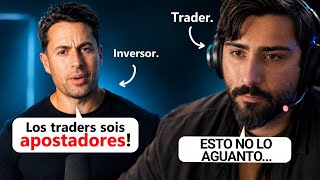
This video is a response to a video by an investor claiming that trading is a scam. The speaker defends trading, arguing that it is not gambling and that technical analysis is valid, while also agreeing with criticisms of funded account challenges. The video aims to debunk the investor's claims and present a balanced view of trading.
The speaker responds to a video by an investor who claims trading is a scam. He sets the stage for a detailed rebuttal.
The speaker argues that trading is not gambling because it involves a system and positive mathematical expectation, unlike gambling which is impulsive and random.
Technical analysis is a graphical representation of social behavior and fundamental decisions, not just lines on a chart. It is probabilistic, not deterministic.
The claim that only fundamentals move prices is false. Technical analysis reflects the collective behavior of market participants, including institutional investors.
Studies show that 97% of day traders lose money, but these studies have limitations and are not representative of all traders.
Many trading courses sell a lifestyle, not a realistic path to success. Aggressive marketing and false promises are common.
Funded account companies make money from evaluation fees, not from traders' profits. They are often unregulated and have high failure rates.
Investing is long-term wealth building, while trading is a way to make a living today. Both have their place, but they are different.
Investing €200/month for 30 years at 10% yields €455,000, but after inflation and taxes, the real purchasing power is much lower.
The investor also sells training, so his criticism of trading is biased. He only shows the advantages of investing and ignores its drawbacks.
The speaker concludes that trading is a legitimate profession with its own risks and rewards, and that while many fail, there are successful traders. He encourages viewers to think critically and not be swayed by one-sided narratives.
What is the main argument against trading being gambling?
Trading involves a system and positive mathematical expectation, unlike gambling which is impulsive and random.
03:21
What is technical analysis according to the speaker?
A graphical representation of social behavior and fundamental decisions, probabilistic not deterministic.
05:44
What percentage of day traders lose money according to the Brazilian study?
97% lost money.
14:29
What is the main business model of funded account companies?
They make money from evaluation fees, not from traders' profits.
24:25
What is the real purchasing power of €455,000 after 30 years with 3% inflation?
Around €150,000-€180,000.
30:07
Trading is not gambling
Clarifies the distinction between trading and gambling, a core point of the debate.
03:21Technical analysis is valid
Defends technical analysis as a representation of market behavior, countering common criticism.
05:44Day trading studies
Cites studies showing high failure rates but notes their limitations.
14:29Funded accounts are a trap
Exposes the business model of funded account companies, a key warning for viewers.
24:25Investing vs. trading
Distinguishes between long-term investing and trading as a profession.
27:06[00:01] screen, it's my turn to defend our honor as traders once again, because as you can see in the title, a great investor who has a very large YouTube channel, here on screen, has made a video, which I uploaded a few days ago, called
[00:15] Trading and Funded Accounts. The truth that nobody tells you about this massive scam. And again, YouTube is talking, there are many people who have a lot to say about trading, often things that make
[00:30] sense, and other times just nonsense that comes from someone who perhaps doesn't have realistic information about what they're saying, but they do have reasons to
[00:42] try to denigrate the profession of others or try to extol the virtues of what they do, which in this case is investing, and to tear down what others do, like trading, right? I recently received
[00:55] a video recommendation, a reaction to this video from a great friend of mine, Saul, from the La Craolsa channel, which you can see here on screen, in which he himself the video briefly, seeing what Saul was saying and defending
[01:09] trading, obviously. And after watching this video of Saú, and listening to what he traders' point of view very well, but I would like to give a little more context Because sometimes I think we're too polite, so to speak, too
[01:23] traditional industry. And it's because I've been dealing with this for many years, and it's happened to me before, where I've had to defend trading in some way, traders from investors, from, I don't know, ultimately from people who are always on the other side
[01:35] like gambling addicts, they treat us like gamblers, like bettors, that is, always with a contemptuous tone towards what we do. And what pisses me off the most about all this, uh, excuse me for speaking like this, has to do
[01:48] with the fact that they don't say it from the point of view of trying to protect what understand that there is always a conservative discourse regarding, hey, watch out, be lot of fraud surrounding trading, that most people want to take advantage of
[02:02] are against us. That thing that I think you also feel here when I speak, uh, has to do with a paternalistic and protectionist attitude that sometimes makes sense when you have a large audience, but that's one thing and
[02:14] the other is putting yourself in a kind of judge position where you determine or dictate that only what you do, in this case investing, makes sense and that everything else is nothing more than that, right? Betting, gambling, or wasting time.
[02:27] to the video and you'll see what I mean, because if you're traders like me, therefore I want to say a few things, funded accounts are not investing, and getting rich overnight does not exist in the
[02:41] have sold you an idea about the stock market that is a complete lie and that is emptying this video I'm going to debunk, one by one, all those false beliefs about what it means to opinion. I'm going to prove it to you with data, with studies, with
[02:54] opinion of the main regulators around the world. This is the reality, because of the billion-dollar business behind it all , involving brokers, influencers, or video, I assure you that you will finally understand what investing in the stock market really is
[03:08] money and, above all, the most valuable thing you have: time. So give the video a big like and let's get started. Trading is not investing, it's gambling. Let trade, you're not investing in the stock market or buying any businesses. You're
[03:21] betting on a chart. And a chart has no clients, no profits, no competitive advantage whatsoever. That's not investing, it's gambling by constantly buying and selling stocks else to come along behind you willing to pay a higher price for that chart you
[03:34] real life. And okay, uh, here the first premise they always put when they talk about trading is the word betting, because as we all know it has a kind of metalinguistic aura, right?, that is associated with
[03:47] something negative. Ultimately, gambling is about games, and gambling impulsive behavior that obviously leads to losing money and has no mathematical advantage. When they say "betting," as opposed to "
[03:59] kind of separation between what it means to take care of your financial health and what it means to invest, right? Investing has a powerful impact on health, doesn't it? invest in, right? We all know that, and we'll talk about it in the video.
[04:13] Therefore, you separate investing, which is appropriate behavior, from gambling, which is for someone, you know, someone who is making a mistake, right? He's involved in the game, and that's a very negative thing. By making this separation, you
[04:27] are already creating a dichotomy of thought; it's either you're with the good guys or lot in politics too. It's basically either you're for good or you're against evil. No, you can't be in the gray areas, there can't be
[04:40] details, nuances, no no no no. You're either a Sith, like in Star Wars, or you're a Jedi, there's no middle ground, no gray areas. So this is what he's trying to do here with this authority bias where investing is the right thing to do and
[04:52] trading is not investing in the usual way, it's speculating. In other words, you speculate about an idea, about a hypothesis that can generate a certain return if you are right or wrong, but that does not imply that it is something that is the counterpart of something
[05:05] else. It's not like you either invest or speculate. Both things can be done . It's something parallel, something that can be done simultaneously, it's not mutually exclusive, but rather you can create an environment, an ecosystem in which you speculate on
[05:17] certain ideas in the markets and also invest in others as well. Uh, it's not Imagine you want to buy the pizzeria in your neighborhood. Would you buy it simply times in recent months without really knowing how many pizzas it sells per day,
[05:30] how much it pays in rent, whether it makes or loses money at the end of the month, and how much That's exactly what the trader does: he buys a piece of a company having any idea whether the business behind it is making or losing money. Notice here
[05:44] price line. Again, this way of speaking is related to, as you will see, an interesting debate. In the end, technical analysis either makes sense or it doesn't. It's n't it? We've studied it many times here, and I've explained that we
[05:59] simply be seeing confirmation of our ideas in the graphs through lines, and that . There are many studies that analyze technical analysis to see if there is really an advantage to technical patterns, and it's a debate,
[06:12] many times here, I won't go into my opinion, but basically what he's saying is, you just look at a graph line, while I, the one who does it right, am the one who looks at whether the business really works, whether there's real
[06:25] cash flow, whether it really has everything that I understand as something fruitful therefore I invest in it, right? Again, separating the two paths from the beginning of the video correct one, I invest in things that have value, while you
[06:38] basically just bet on chart lines, okay? to Trying something without knowing its value is not investing, it's speculating or gambling with your Notice the difference, right? Speculating is not gambling. When you bet, uh,
[06:51] I understand that many of you identify trading as gambling, and I understand that the bad, but from the point of view of someone who argues that trading is something negative, the word gambling implies that you are a gambler, and a
[07:04] gambler doesn't have a positive mathematical expectation , doesn't have a system that can offer an advantage over time. Someone who bets, someone who plays, eh, is letting themselves be carried away by chance, by randomness. You know perfectly well that
[07:17] professional trading is not like that. Absolutely not, and I have real proof of that, discuss this, right? And to be able to debate it, but they always put you on the side of the gambler's point of view, the one who is compulsively letting himself be carried away
[07:29] by an act of receiving dopamine where you go to a casino, put the chip on the roulette wheel and let yourself go, right? That's betting versus what it mathematical expectation through a pattern of behavior. I've come from
[07:43] , I don't care, but in the end, that difference must be made. And here lies the heart of the problem. Almost all trading is based on is false, you know, forgive me for cutting so short, but I have to go over some
[07:55] trading is based almost entirely on technical analysis, you know that's not the nothing wrong with it, but it's not true. There are algorithmic traders, who because they rely solely on statistical data. There are fundamental traders, and
[08:09] therefore don't care at all about technical analysis . Well, there are traders and therefore the analytical aspect loses value because you're fixing the this may sting some people.
[08:22] . Just look at price variations, candlesticks, support, because think about it, the price of a stock doesn't go up because it has touched a support, it goes up because something changes in the business, it sells more, earns more or opens up to
[08:36] a new market or on the contrary, it goes down for the same reason. The only thing that long term is fundamentals. This statement is completely false in that the only thing that moves are the fundamentals. It is disregarding the entire
[08:49] ecosystem that encompasses the psychological decision-making of the masses. a support or resistance level represented on a chart, if you give it that name, support and resistance, because technical analysis tells you so and you believe that it exists
[09:03] the fundamental reasons behind that technical analysis. Ultimately, technical analysis is the graphical representation of a social behavior or industry behaviors, of fundamental decision-making that overlays
[09:17] a series of information on the price. The information is represented through Japanese candlesticks, bars, whatever you want, lines that behavioral decisions. Technical analysis by itself has no
[09:29] meaning; it is simply a representational form, a narrative that helps you to make more optimal management decisions. If you separate technical analysis from money management, what you're going to get is financial esotericism,
[09:42] if you apply the same technical analysis, for example, to medicine, to pandemics and you look at pandemic charts, you could estimate, also through technical analysis, future pandemics, I do n't know, tectonic plague movements,
[09:54] and obviously it's not like that. The point here is that this technical pattern, this technical analysis that is created through the fundamentals of how the interests of professionals, hedge fans,
[10:07] of professionals, hedge fans, large holders, and institutional investors work in this case. Basically, if you analyze that type of behavior along with that of retailers, you get a flow of information that is
[10:19] interpretable; it's not deterministic—it's not about whether this happens, or if the following B happens—but rather probabilistic. It generates a space of time in which, with a certain confidence interval, that can happen,
[10:32] and that helps you over time to identify certain better manage your positions and risk less or more money. That's technical analysis, and therefore when you claim that it does n't make sense, it's because you're not
[10:45] graphical representation of what you're arguing, which does make sense: that there is stupid. And the profits of the company tell you if the company is generating positive cash flow, a resistance level, or
[10:58] . It's like trying to tell if it's going to rain by looking at whether people are carrying the weather forecast. And here comes the most trading— look at this analogy made by this
[11:10] how when you want to defend something that doesn't make sense, you say anything and do saying. Uh, when you say, it's like trying to see that if you see a lot of people tell if it's raining, you have to check the weather forecast. Do you see that it's an
[11:24] in the end, when you see, if you go out on the street every day and see people with umbrellas and you associate, you create a correlation that may again be we can enter into debates. I don't want to get into this, I want it to be
[11:38] day when you go out on the street that when there are many people with umbrellas, the that every time you see people with umbrellas it rains, that generates a correlation, it generates information, a narrative based on the superficiality
[11:52] go to the reasons why you carry an umbrella. As a trader , in many cases you don't need to understand why that storm cloud has formed meteorologically, why that
[12:04] rain has physically occurred, but rather why people are carrying umbrellas at certain times when the temperature drops and the information is enough to speculate that every time you go
[12:18] outside and there are clouds and the temperature drops and there is some require meteorology, it requires social behavior patterns. In It's something that will make you rich or generate a stable income. These days they don't
[12:33] in what are essentially stocks. They push you into something even more complex and we can say more slippery, trading on assets that don't even have is impossible to calculate, the euro-dollar pair, gold, oil,
[12:46] if that weren't enough, there's another big obstacle in trading that nobody short term you don't compete against other traders, you compete against high-frequency machines that operate in microseconds. Do you really think you're going to
[12:59] trying to train for three months in boxing and then stepping into a ring against Floyd Mayweather at his peak. It's not a lack of talent, it's just that it's not a fair fight. But it's another fallacy because it's
[13:12] drawing a parallel between you as a retail investor operating in the markets and an institutional fund like Jim Simons' being watched and making a specific decision against you, when that's not the case. There are
[13:25] are clearly made up of institutional investors, retail investors, and institutional investors, retail investors, and funds. There are many demands and many needs to be met, and therefore a flow of movement orders is created
[13:37] are part of it and are obviously the most affected by this, but that doesn't mean that, as he said, you're in a ring hitting you directly because that creates a focus of attention on
[13:51] individual retailers which is false. It's creating a kind of analogy where David and Goliath, where it's impossible to defeat Goliath because he's coming at you, and you're like little David trying to beat him with a wave, which
[14:03] isn't true. You are within an information flow in which you can to focus on yourself, but happening in that information flow and act accordingly. Therefore, it
[14:15] Fernando, I've seen many people who trade daily and make money with everyone says they make money, but what they say is one thing and the facts are another and the academic studies will speak . In Brazil, the
[14:29] this study was conducted where they followed all those who started day trading, not days and left, not those who endured more than 300 days with this seriously. As a result, 97% lost money and only 1% were able to generate
[14:44] And most devastatingly, they found no evidence of learning. Those those who were starting out or the novices. If we look at this other academic paper that Taiwanese traders over 14 years, it was concluded that less than 1%
[14:57] consistently made profits after deducting all commissions. Less forget about the United States. Let's look at a study from the CFA Institute magazine, the professional financial analysts worldwide, and where in this study they analyzed
[15:10] full-time from the offices of a professional firm. No fans allowed from their homes. The result: 64% lost money and only 14% earned more than comes the most perverse part of the matter. In trading, it's not enough to be right. The
[15:24] correct and generated $8,000 in gross profit per year. Did you hear what I just net profit was in the end? With an average loss of $750. The reason: the high commissions for constantly opening and closing
[15:37] tax bite when you sell at a profit. In short, what the data using only technical analysis consistently lose. They don't Okay, here he has compiled a collection of information that has nothing to do with each other
[15:50] . He's mixed things up to, let's say, defend his narrative, which is logical, but it's true that it's wrong not to tell the truth. And that's the study you saw, for example, right? When he says he will stop talking about
[16:02] data, he is once again offering an appeal to authority. He tells you, "Hey, if you don't really know, who have done scientific studies and who will prove to you that what start to investigate a little, you realize that in the end,
[16:17] do so to confirm their own narrative. He doesn't really know if the serious, rigorous protocols, some credibility or authority. Some of the studies that have been shown, for
[16:30] Living, right?, which I think is from Brazil, are doing serious work in terms of analyzing a specific group telling you is that there are a number of strange confounding variables that are
[16:43] not being taken into account. In other words, he tells you, "Look, this study in which there are 20,000 traders on the Brazilian stock exchange acting on the future of the acting on the future of the Brazilian stock exchange, there for 300 days,
[16:55] which is almost 2 years, not even quite 2 years, you see that 97% have lost." telling you that trading doesn't work, it's not telling you that you can't make money with trading because it's biased towards a population sample. determined by a
[17:09] population sample. determined by a specific context with some Ultimately, when you conduct a study of this nature, called " Day Trading for a Living," you are putting forward a hypothesis, the
[17:21] researcher's hypothesis, in which you will try to confirm your play with that information, trying to eliminate any information from contradict your study, because otherwise you wouldn't publish it and it wouldn't make sense.
[17:35] , as I said, the population sample is only from Brazil, only from the Brazilian futures market, only from 2013 to 2015, it's only 300 days and you don't of trading they do, you don't evaluate what kind of knowledge they have, you don't evaluate the
[17:50] capital they have available, you don't evaluate many other confounding variables that alter that [music] result. You 're not evaluating the education cognitive ability those traders have, you're not taking a
[18:03] specific, closed sample, with a very selective cherry-picking that guarantees that your information is correct. And the information it gives you is that only 1, 2, or 3% of the population manage to have returns in
[18:15] study, but with the others it has shown. But now imagine I someone tries to become an astronaut, you only have a success rate of 0.1%, for people out of every 10,000 or 20,000 participants. Does that mean
[18:28] exist, and you shouldn't do it? An elite athlete, someone who is at the top football, must have a success rate of less than 1%. Does that mean, then, professionally, doesn't want to become , can't become, an
[18:42] look it up, it has a 5% success rate—or an actor, DiCaprio, for example, oh, I don't know, Merle Strip, who don't have to be be an actor of their caliber because it's less than 1%, far
[18:57] less than 1%, to become a famous Hollywood actor. As you can see, the very large in the middle. It's not either yes or no, it's not dichotomous, but there is a between that imply that a trader can make a living from trading in many ways.
[19:11] But also, not only that, just to debate the idea that since that's absurd because then many professions wouldn't exist. an activity that can be so profitable, can be so
[19:23] economically lucrative, it has a low success rate. That's obvious, isn't it? Otherwise, everyone would be like that, any sense. But what's more, nowadays there are ways to prove to you, in this case to the person who created this video, and to
[19:37] living from trading. There are publicly audited track records from reputable entities that prove what you're saying isn't true, as there are increasingly more track records show very good results. Moreover, as I always do in these types
[19:52] of videos, I invite anyone, in this case, who makes these types of videos know the truth about trading and whether or not it's possible to win, because I can show them many exceptions to their rule. Hey, we can meet up. Hey, I'll
[20:05] show you what types of traders there are, I'll show you their results, I'll show you mine nothing compared to what other people can teach you and that I'll introduce you to if you want, but as long as you do that, we'll do it through
[20:17] a contract, and you demonstrate it and show it on your channel with 300,000 subscribers, uh, those people so that people know that in trading you can get results, incredible results that most people don't believe, simply
[20:29] talking about and make videos like the one you make. If anyone is willing to do that, I am absolutely ready to get in touch. [email protected]. We sit down, we talk like people, I
[20:41] person, this person—I have 10 , 20 examples. If you want, you can talk to them, I'll introduce you, you can talk , you can show them in your video, they can show you the results, or I can show them to you, no problem. You
[20:53] you were wrong and that in trading, you really can have incredible results. And listen, that doesn't mean it's easy or simple or opposite. This is very complex. As you can see, as you rightly said, the
[21:06] success rate is minimal, very low, but that doesn't mean that there aren't people who actually achieve it, and therefore, due to achieve it not in one, two, or three years , but over more than ten years, which,
[21:19] , because by chance everyone can have a certain set of results." We're 7, 8, 10 years of track record. These are people with very good results over many audited years. Don't
[21:32] this is just a theory of age, and that if you put a monkey to work, We're talking about thousands of executions, we're talking about various market regimes; their track records. So, when I showed you that, I'd like you to make
[21:47] you said isn't true, that you were wrong, and that they've proven you wrong. because there's more. A method sells you a life. So, if the data is so overwhelming, why do so many people do it? Because of the bait. And
[21:59] the life they make you believe you're going to from a company's balance sheet or from a process of striving, acquiring the business. They speak to you from the perspective of their success, driving a Ferrari with a Rolex,
[22:11] Bali beach with their laptop, or from a business class flight. They're selling you a lifestyle, not a living in a system trapped in the rat race, looks for any easy and quick way to that lifestyle. If they could do it, so can I. They hold up
[22:24] so you'll take the bait. And here's a second phase of the bait that you need to contact information or enter one of these training programs or of salespeople or setters trained to aggressively pressure you via
[22:38] until they convince you to buy. The offer expires tonight. You don't want to generate extra income, do you? Remember this. The best products and chase you down to buy them. Nobody needs to be called 10 times to be
[22:51] Philips. When something is truly good, the product doesn't harass you; you harass the , that product, I'll tell you right now, isn't good and it won't make you Okay, so far so good. And I think everyone agrees on that, right?
[23:05] apples and oranges, isn't it? I mean, in the end, obviously, the trading world, like many others—which I 've criticized many times—everyone sell you illusions, and therefore they use very aggressive marketing methods
[23:18] that make you complete their course, their garbage course, so that you believe you simple strategy. That's obvious, everyone message for the general public who do n't know what real trading is,
[23:30] So, when you put a group of con artists into... To lump a snake oil salesman in with
[23:42] insult a group of people who are obviously going to be offended, right? It all. As you'll see later, he also has his own training, he sells his training, and believe me, I've seen all the people
[23:54] investing in the S&P 500 and indices, and it's absolute nonsense, which I'll prove, and they own landing page structure where they launch their product, where they and they sell you the idea that if you don't invest you'll be poor. You get the picture,
[24:10] neuromarketing message, using words and information that tug at your training, because that's basically how people make a living. . You don't need your own money to invest. I lend you My
[24:25] give you an account with €50,000, you trade alone, and you take 80%. It sounds like a trap, which I'll demonstrate with two points. First, their business isn't of these companies don't make money from their traders' trades, but from
[24:39] evaluation fees, the famous challenges or exams you have to pass before they lend you that money to invest. They charge you between €50,000 and do to prepare for it. And here's the key. For the
[24:52] the trailing drawdown, which penalizes you even when you're winning so fail. Since around 95% fail, the company pockets those fees, and to try again, you pay the fee again. More training and more
[25:05] fail quickly and pay again. They thrive on the high turnover of people who have actually passed the challenge. Of course, there are winners. In every lottery, these companies do with these few success stories is precisely what gets
[25:17] cycle where those who lose pay for the prize of the few who win. Second financial regulator. Many of these companies aren't registered as assessment or educational services, not investment services. And I'm not making this up
[25:30] . The CNMV itself issued a warning in 2024 about these websites offering training courses, echoing the alert from the Italian regulator. The CNMV outside its scope and are therefore unregulated, and describes the mechanism exactly
[25:44] to make the user play repeatedly, and companies that don't distribute the of all this is that if the company disappears or decides not to pay you, an ambiguous clause hidden in the terms, there's no
[25:56] clear, this isn't an exaggeration on my part. In 2023, the fraud charges against one of the powerful regulator on the planet investigates the largest company in the sector,
[26:11] So, yes, I think that's where we are. Well, agree, but that's clearly the way it is . I've spoken many times about the issue of funding tests, and I truly agree with every word he said.
[26:23] say things that are truly serious, that's how it is; everything he said is true. However, saying that all of that is true means that you can't make You know I have a different opinion on that. Now, what's best for the
[26:38] save your life? You already know my opinion on that. It's literally an to work against traders, to harm traders, to create to get you caught in the cycle of paying for challenges that never ends,
[26:53] cash flow continues. I've explained this many times, so I won't go on about it I agree 100% with the funding tests. Now comes the point, right? The one he's going to real investing? No, which is basically what he does . What is real investing?
[27:06] So, what is investing? And here's the light. Investing is becoming a in the world. Not buying A chart, buying a piece of a real company. And let me make one thing very clear, because this is the most important point of the video.
[27:19] quick. It's a tool to build your future, your retirement, your pension, the freedom of your future self in 15, 20, or 30 years. Trading is sold as a way to make a living today. Investing is the way to secure
[27:32] salary, the other builds wealth. And here's the weapon that traders never use: time and compound interest. Look at this number. €200 a month for 30 years at an average return of around 10%. That
[27:45] becomes around €455,000 without trading every day for hours, without challenge fee. The simple timescale of the S&P 500, already yielding that 10% annual return on average for you have Warren Buffett at around 20% annual compound interest. For almost 60
[28:00] business and patience multiply wealth. With a 10% annually. But be careful, all of this is always long-term. before we get into how he's now saying what the training sells,
[28:12] obviously, why he does this. Let's play his game a little, shall we? And let's see if this whole thing about investing for the long term, the way he presents it, makes as much he actually says, because when you defend only one idea and don't present the
[28:27] cons, you're clearly biased towards demonstrating that what you're people by saying, "Hey, trading is really bad, look at the light, which is what buy my course, right?" which is basically what he's doing. Okay,
[28:40] ? Let's start with 200, a zero balance, okay? We're going to a deposit of €200 per month. Let's give it a 10% interest rate, which is what other things that might change that narrative a bit, and we'll look at it over 30
[28:55] that narrative a bit, and we'll look at it over 30 years, right? Look, here's €455,000 in profit where you contributed €72,000 and generated €363,000, which is everyone wants something like this. What N is telling you, for example, in this video where
[29:09] only showing you the advantages and not the disadvantages of investing, is that those 30 years have a slightly unpleasant aspect called inflation, an average inflation rate, for example, of 3%. If you, as you can see here on screen, in this
[29:22] yourselves with artificial intelligence, contribute €72,000, those €200 per month would generate a capital of approximately €452,000 over 30 years . If you contribute €200 per month, as Fernando has told you, for 30
[29:36] years you will contribute €72,000, which will generate a total of €452,000 , or rather, it will become €452,000 at 10% per year. That's a total profit of €380,000, as you can see here, on which you have to pay
[29:50] forgotten, although there are efficient ways to do it. Anyway, roughly €70,000, € 80,000, or €90,000 here in Spain will be taken from you, leaving you with a net capital of, let's say, €350,000. Okay, let's say you'll have roughly €350,000 left over
[30:07] taxes. Now adjust that for the 3% annual inflation you'll experience over these 30 years, and the real purchasing power you'll have in 30 real purchasing power you'll have in 30 years is around €150,000, €170,000, or €180,000.
[30:20] 's about €5,000 per year for you. Something that is obviously more than zero, but very far from all these benefits they changing your life, because in reality what you will have is, uh, €150,000 adjusted for
[30:35] inflation today after 30 years. This doesn't change lives. This generally does not mark a generational difference. It's not going to make you incredibly wealthy. What I will never say is not to do this, because it
[30:47] obviously makes much more sense to invest than not to, because invested in the currency you're using, whether you like it or not, and most of 're invested in euros or dollars, you're screwed. So, it's better
[31:00] clearly the case. What bothers all of us who speak like this is the same context: people who have little money, people who have a lot of money, and Being in Venezuela today is not the same as being in the United States,
[31:13] Finland, or Spain. Therefore, when you present investment as without considering that what you 're projecting into the future might not be entirely realistic, you're selling a future of
[31:25] achieve because it's based on certain sustainability assumptions, €200 a month, which here in Spain, only in Spain, is quite difficult because I think the average savings is around €300 per family. So,
[31:39] watch out for those €200, be careful. Furthermore, you don't count that either, but rather the 10% annualized return everyone can access it, right? Even mentioning Warren Buffett easy to achieve these kinds of returns, because the True
[31:52] Value fund, for example, True Value, which I do n't know if you know, but well, it's Brand, whom I also respect a lot, they say very interesting things, but where in this case the owner of the channel who
[32:05] from what I've analyzed, right? They have some kind of connection and therefore he was there, uh, as an analyst or in some kind of role. That same fund, the one he was involved with today, a fund that is based on what he advocates, right? They
[32:18] value, right? Companies that are really working, right now, have a cumulative return of 632% since their inception, using the MSC World as a benchmark can correct me, but things are around that point. a 632% annualized return since its creation, and for
[32:31] things are around that point. a 632% annualized return since its creation, and for which has generated 9% in the same period of time, more or less, with has more volatility than its own benchmark index, it tells you that
[32:44] can play that game too, like most people in say, "Yes, professional funds, like True Value, which are managed by people who select, analyze, and
[32:57] monitor stocks with professionals like yourselves. If a fund like that achieves this well below its benchmark index, and in many cases with higher volatility, how can you say that everyone who
[33:10] promote will achieve the same, or even beat it? I mean, trading isn't. Most traders lose and are very bad, but professionally managed funds that underperform their benchmark, in which many of
[33:24] you participate, are good, and that's something that's good. So, I'm also need to be a little humble and lay all our cards on the table watching the video, but I want to say that everyone will achieve a..." 10%
[33:37] somewhat complex premises, aren't they? But Fernando, you also sell training, so you want me to be your product too? That's the . I have a financial objective. Obviously, I make money with
[33:49] my training; I'm not going to hide that. The difference isn't that I don't charge; the difference is what I sell you in return, and whether what I sell you is real. My information and make you rich tomorrow. I'm not selling you a shortcut; I'm selling you the exact opposite: patience and
[34:01] any magic formula for systematically making money because that formula ? Well, I teach you the accounting necessary to traded company from the inside. I teach you, based on my more than 14 years of experience in the stock market,
[34:14] all the mistakes I've learned from that experience. I teach you, with all that intrinsic value of a stock so that later, with all that analysis and stock price and decide if you have a margin of safety to invest in that
[34:28] nervous and take advantage of market volatility. the bad. Theirs is the good, everything else is bad. But most their benchmark index fail in the long run. But hey, you
[34:43] as retail investors are going to manage to beat not only the index, but with less volatility and with everything that professionals can't achieve, right? interesting discourse to listen to, but clearly biased towards the narrative
[34:56] teaches you how to invest, which isn't bad, it's great that everyone sells training, that everyone tries in some way to remunerate their spectacular. What I think is It's a bit unfair to use the advantages of,
[35:10] or rather, to sell the benefits of your model by criticizing the weaknesses one side of the coin to see which one unfair. Having said that, traders, I just wanted to clarify a few points.
[35:24] these kinds of videos quite offensive, especially because they lump us all together, into the same stock market. They always use... I think that as traders, it's perfectly criticize the trading industry itself, exercising
[35:37] obviously this is full of snake oil salesmen and people with bad intentions, but there are many others who do fight every day to generate their own results, their track records, every single day,
[35:49] without trying to promote anything strange, simply working hard, and industry who He denigrates us, doesn't he? To be singled out as players, as gamblers, in such a frivolous way, personally offends me a little, doesn't it?
[36:03] these cards on the table, right? Not everything is so beautiful. I truly believe that investment is necessary. I hope everyone invests, I hope you don't depend on anyone for your future, and therefore investing I think
[36:16] many ways to do it. I honestly believe that the most efficient one that best suits your your assets. There are many details about your geographical context. Don't
[36:30] that you absolutely have to invest and that otherwise you'll be a failure; don't listen not everyone lives the same life. They don't n't know if you are in a complex work process where you don't have
[36:43] bills and therefore can't afford to invest. They can't know if in your country or city has experienced some kind of catastrophe, like what recording this, and that prevents you from investing or thinking about your
[36:56] speak to you in general terms. They also try to put invest, if you don't take care of your financial health, you're screwed. If they do feel bad and frustrated. Do what you can within your means.
[37:10] Always try to improve as much as possible, protect your future, but without overwhelming yourself with life, and not only that. Try to disconnect a little from all this here, you'll see my videos and say, "Oh, trading is the best," you'll see another one
[37:25] best." And in the end we all defend, we set standards for ourselves. What matters is that just take what others tell you, "Look, this study says this, I'm going to believe that." Because then, you really need to have some judgment to
[37:37] sense or not, whether the person saying what they are saying has some motive behind it or not. And that's also important to know what's closest to reality. because you've seen Fernando's video, trading is useless
[37:50] ? Well, I'm putting it on the table again, think about it, consider it. This is very difficult, this is complex, it's full of sharks and piranhas that want to bleed you dry, but it also has very good things and, really,
[38:02] if you do well, well, a very, very good prize, really, very good, and you get something like that in your life. I hope it's like it's something, like the lottery says. Well, lottery, go ahead, but in the meantime, there are many people working hard every day
[38:17] trading. But in the meantime, whether you trade or not, invest if you can, enjoy life and don't take these things too seriously, internet can mess with people's heads. So that's all, I hope you
[38:30] give him a good professional, it always helps, right? You know, if you're watching this, traditional investors, Fernando, whoever, the channel owner, I don't care, and you want to meet real traders, tell me, I'll show them to you on
[38:42] wrong, I've met traders who actually make money, and there are quite a few of them. I introduce you to, and from there I think people can better understand what that it's not just technical analysis, but there's much more to it, and I think you might like it
[38:55] eyes, and that way we all learn." Now I'll say goodbye.
⚡ Saved you 0h 39m reading this? Transcribe any YouTube video for free — no signup needed.