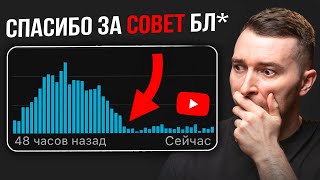

Stop Wasting Time on Useless YouTube Tips
45sDirectly challenges common advice, creating curiosity and potential debate among creators.
▶ Play Clip"Delivers on the promise of listing 10 mistakes, but some points are padded with examples and self-promotion."
In this video, Stas Maar, an experienced YouTube content creator, debunks 10 common pieces of advice that can harm a YouTube channel. He emphasizes that content quality and viewer engagement are more important than optimization, and warns against blindly following popular but ineffective strategies.
Optimization alone doesn't solve channel problems; content and its appeal to viewers are what make a video popular. SEO only works after a video has viewing history and reputation.
Creating many videos without focusing on quality leads to wasted effort. Successful authors consider the potential of each idea and aim for high impact with minimal production cost.
You don't need expensive gear to start. A strong idea can make a video successful even with poor sound and picture. Equipment is a bonus, not a prerequisite.
Blindly copying competitors is a dead end. Instead, analyze their growth path and find the video that caused a spike in views to understand what worked.
Virality is unpredictable. Systematic content that addresses viewer pain points can lead to viral success, as shown by the RMC channel example.
While thumbnails and titles are important (70% of success), they must be paired with good retention. Low retention will kill the video's reach.
Sincerity is important but must be integrated into a structured narrative. Without storytelling, viewers won't stay engaged.
Despite claims that YouTube is dead, channels continue to grow. It's not too late to start.
Don't wait for a large audience to start making money. Integrate advertising early, as shown by the Souvenir Technologies channel example.
The video emphasizes that success on YouTube comes from focusing on content quality, understanding viewer needs, and avoiding common pitfalls. By following these principles, creators can achieve growth without falling for misleading advice.
What is the main factor that makes a video popular on YouTube?
The content itself and its appeal to the viewer, not optimization.
00:38
Why does publishing many videos not guarantee channel growth?
Because if the videos are not interesting, they will get few views and waste effort.
02:45
What is the 'gold mine' for any author according to Stas Maar?
An idea that attracts a huge number of viewers but has minimal production costs.
03:12
What example does Stas give to show that quantity doesn't work?
Anatoly Nekrasov published over a thousand videos with dismal results, while Stas's six videos brought in 20,000 new viewers.
03:49
What is more important than equipment when starting a YouTube channel?
A strong idea; people will watch even with poor sound and picture if the idea is compelling.
04:55
What should you analyze in a competitor's channel instead of imitating them?
The video that caused a sharp increase in views and what influenced its reach.
06:28
Why did Vlad Kozyr's and Nikita Martinez's channels take off immediately?
Because they had built audiences on previous channels, so their fan base was already waiting.
07:09
What is the relationship between thumbnails/titles and retention?
They work in tandem; even with great thumbnails, low retention will kill the video's reach.
10:25
Why is sincerity alone not enough for a video?
Because without a structured narrative, viewers won't stay engaged.
11:05
What is the advice about monetizing on a new channel?
You should start making money from the first video, not wait for a large audience.
12:10
Content is king
Stas emphasizes that optimization is secondary to content quality, a fundamental principle for YouTube success.
00:38Gold mine concept
The idea of maximizing viewer impact while minimizing production cost is a key strategic insight for creators.
03:12Idea over equipment
This counters the common misconception that expensive gear is necessary to start, encouraging beginners to focus on ideas.
04:55Analyze growth, not results
A practical technique for learning from competitors by identifying the video that caused a spike in views.
06:28Thumbnails and retention work together
Clarifies that thumbnails alone don't guarantee success; retention is equally critical.
10:25Monetize early
Challenges the common advice to wait for a large audience, showing that early monetization is possible and beneficial.
12:10[00:01] YouTube promotion. Make a playlist and call it But most of them not only don’t work today, Mail, Viber, WhatsApp and everywhere send this video to everyone in a row.
[00:13] They will definitely harm your channel. In this video, I'll break down 10 popular tips from underachievers that you should avoid so you can stop wasting time on useless activities and start getting views. I, Stas Maar, and my
[00:25] team have created and released over 2,000 expert videos on YouTube over the my experience and reveal production secrets. And the first thing such experts advise is to consider that all optimization solves any problems of your
[00:38] channel. And such experts don't understand that what makes a video popular is not its optimization, but the content itself and its appeal to the viewer. It's like a product on a store shelf. If you don't find the packaging appealing,
[00:50] well, you're unlikely to buy it. Accordingly, you have no way of knowing what's inside. How can we even talk about reading the ingredients of this candy if you have n't even taken it? Similarly, on YouTube, your channel description and tags are
[01:02] essentially the ingredients of a candy bar. This means that if you transfer featured in YouTube's recommendations, no matter how well you set up optimization and tags, it won't appear in YouTube search. It only appears in
[01:15] YouTube search when there is some viewing history of your video. He earn a reputation for relevant content. And only when these parameters become higher than those of your competitors will your SEO optimization become
[01:29] at least somewhat effective. That is, if we've done everything for search results and optimized the video correctly, for example, we made a video about how to create a YouTube channel in 2025. Everything is tailored to viewers' needs, but it
[01:41] there are creators, competitors, who have made these videos better, and they already have a viewing history. The author understands that he will promote them in search, even if all their optimizations are empty lines. Why does this happen? Because
[01:54] YouTube collects viewer data and compares it with your new video. If you lose quality to this video, you will always be lower in the line. It can't happen that your video is worse in all respects than a competitor on the
[02:06] because you wrote everything correctly in the optimization, made a stuffed hashtags in the description itself. This will never happen words, even if we tailor a video to search results, we never
[02:21] expect it to become less interesting. Only interesting, engaging videos appear in these search results. This means that even if we still expect it to be included in recommendations, because
[02:33] it needs to earn a reputation in recommendations. The second stupid piece of advice: publish more and your channel will grow faster. No, that won't happen. If you make a lot of videos, but these videos are not interesting to viewers, you risk
[02:45] making a lot of useless videos. And these videos, of course, will get some test views, and sometimes they will even get something. But your efforts will be wasted, because out of 100 videos, only a few will fly.
[02:58] successful authors pay attention to. They always consider how much potential their video idea has and how much or how little time they will spend to create it. And the result is always considered fantastic when an idea attracts a
[03:12] huge number of viewers, but the costs of producing such content are minimal. This is a gold mine for any author. You shouldn't just Your goal is to spend as little time as possible
[03:24] conversions as possible. Of course, we're not talking about work there. This is only for expert niches. This is why they see such a great temptation to create a lot of videos, but ignore the quality of the content and its
[03:36] many examples where authors choose the strategy: "Publish a lot, there will be more results." There is even a YouTube school that has released several thousand of its own videos. There is a very scary number there, but at the same time their videos get
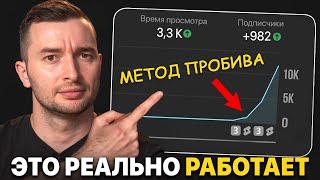
[03:49] favorite example of Anatoly Nekrasov, who also published more than a thousand videos, but the results of each one are dismal. And I love this example because we made our six videos on this same channel , and these six videos brought in
[04:02] more than 20,000 new viewers. Only six videos, only one month of work. instead of 7 years of work and thousands of unnecessary issues. Just choose what's best. The energy costs are the same, the result is much better. I talked about this case in detail
[04:15] videos. Be sure to check out this link. And there will also be other examples of understand what we did that made these videos explode in views. producers and production companies, is to wait until you
[04:29] have everything you need, the ideal equipment for filming, lighting, cameras, sound, and so on, before you start filming. Of course, they don't directly tell you to buy an expensive camera, lighting, and sound, but they do say that sound quality and picture quality are an
[04:42] If you film everything on a phone with bad sound, no one will watch you. To put it mildly, it's complete [ __ ], because if your video has a strong idea, people will watch it even if the wind blows in it . The most important thing is not the sound or the
[04:55] picture, but the idea behind your video. We've repeatedly done reviews and results on the very first videos, on new clients' channels, who didn't have microphones or a high-quality camera, just a point-and-shoot camera, and even the
[05:08] situational content on the go. The equipment will give you a good start bonus, but if you don't have that bonus, you can still make a strong start a good idea. Be creative, be out of the box, and share your lived
[05:21] good sound and a camera. And in Stepanova. Ulechka, yes. Train your man to lick your [ __ ]. You just sit and listen, or like someone walking to the
[05:34] This world is already absolutely clear to me. Amazing. Just start filming to understand what your audience wants. Here's some good advice. The fourth stupid piece of advice is to look at successful authors in your niche and just stupidly imitate
[05:48] them in order to, well, repeat their success. This is a dead end , because first videos. Your video will be clearly worse. But plagiarized content created by your competitors won't be of interest to viewers, because they've already
[06:02] seen it done better . Why would they watch you? But you can just mindlessly copy their best videos and put them on your channel? The answer, well, is not obvious, because every major blogger
[06:16] has their own development path. We need to learn to understand why it started to grow. and not just on the results of its growth. That is, you need to find the video on his channel that caused a sharp increase in views. And if you find one, then here it is
[06:28] , Eureka, and action, yes, how to do it and what influenced the reach of the competitor's video. To do this, we look not at a single successful video, but at a its reach increased sharply. Then your chances of making a successful video will be
[06:42] your competitors have a lot of views from their very first video and you don't see any growth potential? In fact, every great creator, even if they have a lot of views, has their own path at the start. And, as a rule, the channel that
[06:56] he launches quickly and immediately is not the only one in his experience. For example, in my niche are the channels of Vlada Kozyra and Nikita Martinez. We can see that from the very views, and many might think: "They are great experts,
[07:09] everything worked out for them right away. They are definitely good experts." and Nikita Martinez, and Vlad Kozyra. But their videos took off immediately because they had built a channels before. Vlad Kazyra hosted the Mawai Vlog, and Nikita Martinez hosted his other channels, the
[07:22] millionaires Makrols and Nikita Martinez. Of course, their fan base was already waiting for them to launch their new channels and tell the story of their success. How do posted on those channels? But few people know that Vlad Kozyr's channel was
[07:35] not very popular at the start. And when the first three videos came out, practically no one few thousand views and they stayed there for a very long time before he made them private and only returned to his channel after gaining fame
[07:48] on Mawawi's vlog. And it’s clear that it wasn’t just fame that decided everything, but also experience and the right choice of topics. In other words, don't compare yourself to successful videos they've released, but only from the point of their growth. If you've
[08:01] , then you can determine why their popular, most popular video has become so popular. Otherwise, you'll rack your brain trying to figure out river is so popular. Go on and fuss. This is your
[08:15] distribution, this is your path and your horizon of knowledge, sensation and your Another bad advice is to create a viral video to grow faster. But systematic work is not that important. It's better to take a long time, do it well, but make
[08:28] something viral. On the one hand, there is some truth to this, but it is not worth working for the sake of happens that videos that you released systematically and according to the rules—yes, you came up with interesting ideas, conducted analysis, did high-quality editing, and had
[08:41] good camera work—such videos can sit for a long time, months or even years, before they go viral. Virality is a very flexible and streamlined thing. It's very difficult to create programmable viral videos
[08:53] when your budget is limited, and even more so if you have expert content. But your chances of making a viral video will be much higher if you systematically release content, each time addressing your viewers' questions and raising only
[09:06] relevant topics. For example, the RMC channel essentially couldn't create a viral video because we were meeting the needs of viewers. We gearbox with a reliable automatic. It would seem that such a topic cannot grow widely
[09:19] because, well, few people do it. But the videos got 20,000 and 30,000 views and generated a huge number of applications simply because they touched the viewers' hearts. This is also considered virality of content.
[09:31] Just hit the pain point. Almost all owners of cars with CVTs or robotic transmissions experience problems with these gearboxes. And here is a direct solution to everyone can actually do this, go and change the gearbox,
[09:44] their personal messages and comments are filled with requests for gearbox replacement. And a simply crazy queue formed to replace the boxes. They don't even have time to respond to most of the comments because they are overloaded with work. This is what
[09:56] the creation of meme videos. The next piece of bad advice from experts is to think that the cover and title are the most decisive factor of your video. I have said many times that this is almost 70% of success, and this is really true. But if your video
[10:11] inside has low retention, there can be no talk of any chances of the video growing reach, but it will die out abruptly after getting the first few thousand views, retention rate will be weak. Accordingly, these two parameters of
[10:25] retention and CR work in tandem. In no way can they individually I understand that not all authors can pay attention to the intricacies of working on YouTube. For such authors, I recommend not wasting their time, but delegating
[10:38] specialists, such as our Marmedia team. My team will be exclusive working conditions. Contact information is in the description. The seventh Neanderthal tip is to rely only on sincerity in your videos. Yes,
[10:52] I agree that sincerity is important, but sincerity alone will not get you anywhere. Your video will be uninteresting to watch simply because it will be my attention in this honesty. Why should I watch your entire video? And
[11:05] when we think about the structure of the narrative instead, what exactly will be said first? What makes a viewer decide to watch the entire video? What opening and closing loops will be created within the plot so that
[11:18] the viewer receives some question and waits for an answer to it, but receives it not immediately, plot. If we structure our narrative like this, then there is a high probability that the video will be watched to the end. But if we only
[11:32] exude honesty, it will be just nonsense and self-indulgent, but no one will watch it. Even if you know when to cry and you have a medal for sincerity. But if you can integrate your sincerity into the
[11:44] storytelling, you'll be in the saddle. The next piece of advice that you should simply ignore is thinking that YouTube is already oversaturated or irrelevant or that it is generally slow there. It's just too late to use it. This is far from true.
[11:57] And if you look at the results of my clients' channels, which started noise was going on and everyone was actively moving to other platforms, we see that there is no decline in interest , and the videos continue to grow. So, I think the conclusion here should be as
[12:10] short as possible. It's worth doing. stupidity: wait until you have a large audience before you fact, you don't need to do that. It is essential to make money with the very first video
[12:25] on a new channel. That is, if you have something to offer your viewers, you need to do it right away, because your video, even one that was long forgotten and considered lost, can go viral at any moment and bring
[12:37] stitch together advertising, even on the first videos. And if we had ignored create such interesting cases as on the Souvenir Technologies channel, where we released just our first video on the channel and immediately integrated
[12:51] advertising into it. We didn't wait for it to go viral, but we did go viral with this same video and brought in a year's worth of revenue for the company. And there are actually many such examples here if I hadn’t often heard these words from my clients:
[13:03] figure out what to sell.” First we think about what to sell, and then we think about what to sell, and then we get going. can make money by creating channels. And if this happens, you don’t have your own,
[13:18] you can make money on someone else’s. And I talked about this business idea in my video, I talked about this business idea in my video, which will appear at the end.
⚡ Saved you 0h 13m reading this? Transcribe any YouTube video for free — no signup needed.