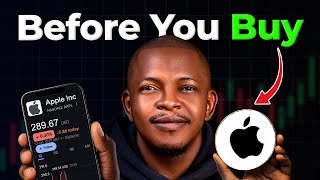

Apple Stock Up 300,000% Since IPO
57sStaggering historical returns trigger FOMO and make viewers imagine what they could have made.
▶ Play Clip"Delivers the promised Apple stock overview, but the heavy Bybit promotion and free-stock offer make it feel like an ad by the end."
This video breaks down everything an investor needs to know about Apple stock, from its historical performance and bull/bear arguments to the different ways to own it, including the innovative X stock token on Bybit. It also explains the difference between owning and trading futures, and promotes a limited offer of $20 in free Apple X stock for new Bybit users.
Apple is one of the top three most valuable companies with a ~$4 trillion market cap. An IPO purchase at split-adjusted price is up over 300,000%, a 5-year hold is up ~149%, and a purchase last January is up ~33%.
At IPO in the 1980s, split-adjusted price was around 10 cents; today it trades above $300. That's over 3,000x, compounding to about 19% annually for 40+ years. A 5-year hold gives ~20% per year.
Bulls point to 2.5 billion active devices, growing services revenue, strong brand pricing power, and a sticky ecosystem. Cautious investors note that Apple's size makes meaningful growth harder, the stock isn't cheap, and pullbacks are possible—though skeptics have been saying that for years.
The presenter emphasizes that using Apple products and owning a piece of the company are two different concepts. You can own a share and benefit from the company's growth.
1) Traditional global brokers (stressful: dollar cards, tax forms, forex fees). 2) Nigerian fintech apps like Bamboo, Trove, RiseVest, and Kuda Invest (fractional shares, low minimums, but only US market hours). 3) Bybit X stock (24/7 trading, buy with USDT, no US brokerage needed).
An X stock is a token backed one-to-one by a real Apple share held by a regulated custodian. Price moves exactly with Apple, dividends appear in your balance, but you get no voting rights.
Owning (spot) means holding the actual asset; if it drops, you can wait. Futures are leveraged positions on price direction—profits and losses are magnified, so you can lose money fast. Beginners should stick to spot.
New Bybit users who click the affiliate link, deposit at least $100 within 7 days, and complete basic KYC can claim $20 in Apple X stock from the reward hub. It's limited to the first 500 people, and deposits from other Bybit accounts don't count.
Over the past 5 years, Apple is up 149%, outperforming Bitcoin, which is down about 40% from its peak during the same period. Apple achieved this with far less volatility.
The video provides a comprehensive, beginner-friendly overview of Apple stock, covering its performance, ownership methods (including the novel X stock), and the risks of futures. Ultimately, the presenter concludes that Apple outperformed Bitcoin over the past five years with lower volatility, and reminds viewers that they can hold both as part of a diversified strategy.
What is Apple's market cap mentioned in the video?
About $4 trillion, making it one of the top three most valuable companies.
00:02
What was Apple's split-adjusted IPO price and approximate total return?
Around 10 cents per share; it's now above $300, a return of over 300,000%.
01:47
How many active Apple devices are there globally?
Over 2.5 billion.
02:41
Name the three ways to own Apple stock mentioned in the video.
Traditional stock broker, Nigerian fintech apps (Bamboo, Trove, RiseVest, Kuda Invest), and Bybit X stock.
04:11
What is an X stock?
A token backed one-to-one by a real Apple share held by a regulated custodian, offering price exposure and dividends without voting rights.
05:53
What is the key difference between buying Apple stock and trading Apple futures?
Buying stock means owning the actual asset; futures are leveraged positions on direction, magnifying both gains and losses.
07:16
What are the terms to get $20 of Apple X stock on Bybit?
New users must deposit at least $100 within 7 days, complete KYC, and claim the reward in the reward hub; limited to first 500 people.
09:58
How did Apple perform vs Bitcoin over the past 5 years?
Apple was up 149%, outperforming Bitcoin, which was down about 40% from its peak with higher volatility.
11:58
What is the presenter's stance on using Apple products vs owning Apple stock?
Using a company's products and owning a piece of the company are two different things; you can own a share and benefit from growth.
03:25
Apple's 300,000% IPO Return
A striking long-term compounding figure that demonstrates the power of holding quality stocks.
01:47Using vs Owning Distinction
A foundational investing principle that encourages viewers to think beyond being just customers.
03:25X Stock Explained
Clarifies a relatively new, accessible way for non-US investors to gain stock exposure via crypto platforms.
05:53Futures Risk Warning
Honest breakdown of leverage, emphasizing why beginners should avoid futures despite the appeal of amplified gains.
07:16Apple Outperformed Bitcoin
A data-backed comparison showing Apple's superior risk-adjusted returns over five years.
11:58[00:02] of the top three most valuable company on the planet with a market cap of both $4 trillion. If someone bought Apple's stock from the IPO stage at the split-adjusted price, the stock price is up above 300,000%.
[00:18] [music] If they bought around 5 years ago, it is roughly 149%. And if they bought just last year around January, it is roughly
[00:30] 33%. I'm going to show you in this video how Apple has actually performed, the different ways you can buy and own it even from here in Nigeria, and how you can also trade it on the futures markets, and how to get $20 worth of
[00:47] Apple X stock for free. But, this is limited to the first 500 person. First By the end of this video, you'll understand Apple stocks properly
[01:00] not. Apple is a company behind the iPhone, the Mac, the iPad, the Apple Watch, and so many other products. These are products almost everyone around you uses already, but there's a part most people
[01:18] never think about. You use Apple products every day. You have used it for and you will use it for more years to come. You can own a piece of the company and make gains as they make gains, but you don't.
[01:33] Think about it. Let me dive into how Apple has actually performed. If someone had bought Apple stock at its IPO back in the 1980s, [music] the split-adjusted price was around 10
[01:47] the split-adjusted price was around 10 cent a share. Today, it is trading above cent a share. Today, it is trading above $300. That is over 300,000%. [music] $300. That is over 300,000%. [music] More than 3,000 times
[01:59] the money. This works [music] out to about 19% a on average for more than 40 years. bought [music] just 5 years ago around
[02:14] a share, you'll be up roughly 149% today. That is you'll be up roughly 149% today. That is about 20% a year. And from January last
[02:27] year, if you bought then, it is up around 33%. past performance doesn't promise anything about the future. So, let me give you both sides. The people who are bullish on Apple
[02:41] point to a few things. The service side of the business keeps [music] growing. There are over 2.5 billion Apple devices on people's hands right now. The brand is strong enough to charge premium prices, and people still pay. And they
[02:56] keep rolling out new features to keep the ecosystem sticky. The people who are cautious will tell you something different. Apple is now so >> growing meaningfully from here is harder than it was.
[03:10] The stock isn't cheap right now, and it's trading high relative to what the company actually earns. Some analysts even think it's could pull back this But the thing is, they have been saying this for years.
[03:25] I'm not going to tell you which side is right. That is your decision to make. this. Using a company product and owning a piece of the company are two different things. And now, you know how this
[03:40] particular company has performed. But before I show you how to own a piece of one question. Bitcoin [music] performed better over the past 5 years?
[03:55] Now, pause this [music] video and go to the comment and tell me, and video. So, how do you own a piece of Apple? There are three main ways to actually [music] own a piece of Apple. Let me go
[04:11] through them one after the other. The first one is the traditional [music] way, a stock broker. This is how most people in the US or the UK buy Apple. using [music] a global broker that accept Nigerian clients, but it is the
[04:27] most stressful route. [music] You usually need a dollar card. You have to fill out a US tax form, and you are converting naira to dollar and paying forex fees along the way. It works. It's just the most setup and
[04:44] the most paperwork. The second way is the app built for The second way is the app built for these, like Bamboo, Trove, Rise Vest, and the one I've used before, Kuda Invest. This [music] made it much
[04:58] conversion inside the app. You can start [music] with very small money, even a few thousand naira, and you can buy a fraction of one Apple shares instead of needing the full $300. For most Nigerians, this is
[05:14] the simplest ways to own real Apple stock. But, there is one thing these apps can do. They only let you buy >> [music] >> and sell during the US market hour.
[05:26] The US market opens in the afternoon, our time, and closes late at night. So, if something big happens with Apple at 6:00 a.m. your time, you're waiting until the US market open before you can do anything.
[05:40] This brings me to the third way. way. Apple as an X stock on Bybit. Let me explain exactly what [music] this is because it is different from the first
[05:53] An X [music] stock is a token that is backed one-to-one by a real Apple share backed one-to-one by a real Apple share held by a regulator custodian. So, when
[06:05] held by a regulator custodian. So, when Apple price moves, your X stock move the exact same way. When Apple pays dividend, that value shows up in your balance, too. You are getting the money side of owning the Apple.
[06:20] One thing to be clear about this, an X stock is not a paper share with voting rights. You're not going to be voting at Apple shareholder meeting. What you get is a price exposure and the dividend value of owning Apple without
[06:34] dividend value of owning Apple without needing a US brokerage account. And this is why I use it. It trades 24/7, not just US market hour. You can buy it directly with USDT. So, there's no separate
[06:47] dollar card or bank conversion, and you can do it from right here in Nigeria inside the same Bybit account where you already trade crypto. Now, everything I've shown you so far is
[07:00] about owning Apple, buying it and holding it. But there's a second thing you can do with it on Bybit, and I [music] need to be very careful on how I explain this because it is completely different. You can trade Apple
[07:16] as futures. Let me explain the difference simply. When you buy Apple to own it, we'll call this sports. You are buying the actual asset. If Apple goes up 10%, you are up 10%. If it
[07:34] drops, you can choose [music] to hold it and wait. Your money is not in danger of and wait. Your money is not in danger of disappearing. Worst case, you're holding Apple at a lower price. And historically, Apple has recovered and
[07:47] gone higher. Futures is different. With futures, you are not owning Apple, you are placing a position on which direction the price will move. And you can use leverage, meaning you can control a bigger
[08:02] >> [music] >> But this cuts both ways. If you are right, your profit is magnified. If you are wrong, your loss is also magnified and you can lose your money really fast. So,
[08:19] this is how I'll think about it. If you are a beginner or you believe in If you are a beginner or you believe in Apple long-term, owning it on the sports and adding to it over time is a calmer path.
[08:32] company. Time is on your side. This is the path that matters for most people watching this video right now. futures is for people who already
[08:47] understand leverage, who already trade and who knows how to manage risk and use a stop-loss. If you've been watching my trading videos, you know I am big on risk management. The same rule applies here. Except now, you're applying them
[09:01] to Apple [music] instead of Bitcoin. If you don't yet know how to manage risk on a leverage trade, do not trade Apple on futures. Own it on the sports. The advantage of futures is
[09:15] up or goes down if you know what you're doing, and you can do more with less capital. The disadvantage is the same. The leverage that magnifies your wins
[09:29] magnifies your losses just the same way. That is honest trade-off. Now, let's talk about how to get the $20 of Apple X [music] who watching this video right now. This is exactly how it works and
[09:44] anyone can do this, but the reward [music] is limited to the first 500 people. First come, first serve. And this is for people who don't already have a Bybit account. If you click the link in the description,
[09:58] you will see Jude Umano X Bybit. Click sign up to unlock reward X Bybit. Click sign up to unlock reward and deposit at least $100 within 7 days
[10:10] account. Bybit is going to give you $20 worth of Bybit is going to give you $20 worth of the Apple X stocks free. You claim it inside [music] the reward hub once your deposit is confirmed and it's there for
[10:24] >> [music] >> know so nobody is confused. One, this is before. If you already have a Bybit >> um you won't qualify. That's just Bybit's rule, not mine. You can as well
[10:39] >> [music] >> Two, the reward is capped at the first 500 people. When those 500 spots are claimed, it is gone. So, if you are going to do it, don't sit on it. Just
[10:55] get to it and do it. Three, you need to complete the basic identity verification on Bybit to be eligible and the deposit has to be a real deposit, not transferred from another Bybit account. So, that is it. Deposit $100 to
[11:10] get $20 in Apple X stock to start you off and you are holding right now a piece of Apple while you decide um whether [music] what to do next. And this increases as the Apple um value
[11:25] also increases. Now, to the question I asked you earlier, Apple versus Bitcoin, Which one performed better over the past 5 years?
[11:37] This is the answer. I hope you have um dropped [music] the this answer. If you have not, just pause this video again and go and drop it Over the past 5 years, Apple is up 149%.
[11:58] over that same period. And it is down currently, right now as I'm making this video, about 40%. That is in the past year So, over 5 years,
[12:11] Apple outperformed Bitcoin and it did it with far less volatility. But you can hold both Apple and Bitcoin. This is not about Apple versus Bitcoin. It's about understanding that you have more than one way to grow your money. Most people
[12:25] only ever look at one. And you now know how Apple has performed. The different how Apple has performed. The different way to own it and how to trade it. What you do next is up to you. If you want to see more of this kind of video and
[12:39] opportunities, subscribe, of course, and join my Telegram community using the link in the description where we share these things. See you in the next one.



⚡ Saved you 0h 12m reading this? Transcribe any YouTube video for free — no signup needed.