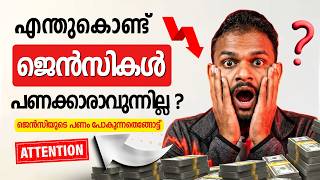

Where Does Gen Z Money Actually Go?
54sOpens with a bold breakdown of subscriptions, shopping, and invisible money leaks that instantly hooks anyone worried about their finances.
▶ Play Clip"Lists real Gen Z money leaks, but the '2026' angle is empty and the delivery is repetitive."
The video explores where Gen Z's money actually goes, highlighting invisible money leaks such as subscriptions, online shopping, credit apps, and digital payment traps. It also contrasts Gen Z's collaborative, fast-executing nature with their tendency to lose funds easily on online platforms, ending with a simple monthly budget example.
Gen Z dominates social media today but has many expenses; the video promises to reveal where their money really goes.
The primary destinations for Gen Z money are subscriptions, online shopping, credit apps, and invisible money leaks.
Digital payments make it easy to spend large amounts because digital money feels less tangible than physical cash; people count cash but not digital balances.
Companies earn through subscription models and user data, encouraging more digital spending on games, apps, and content.
Spotify, Prime, and monthly subscription models lure users into recurring payments; people often forget they are subscribed.
Offers on Amazon, Myntra, and Instagram DMs inspire impulse purchases, causing people to buy things quickly without thinking.
Users subscribe to watch one movie or play one game, then forget about it, losing money every month on unused services.
Interest-free EMI programs sound attractive but later turn into large charges and interest, becoming a major money leak.
Time-limited offers with one-click checkout encourage instant, thoughtless purchases without a second thought.
Gen Z plans and executes quickly, works in teams and large networks, but easily loses money on online platforms.
Example: income of 12,000 (5,000 pocket money + 7,000 part-time) vs expenses of 15,000 (6,000 food/travel + 9,000 shopping/OTT), leaving a 3,000 deficit.
The video concludes that by recognizing invisible money leaks like subscriptions, BNPL, and one-click checkout, Gen Z can better track spending and avoid deficits.
What are the main categories where Gen Z money goes?
Subscriptions, online shopping, credit apps, and invisible money leaks.
00:58
What is an invisible money leak?
Digital payments, subscriptions, buy-now-pay-later, and one-click checkout that drain money unnoticed.
01:11
Why does digital payment encourage overspending?
Because digital money feels less tangible than physical cash, so people spend larger amounts without counting.
01:54
How do big companies profit from free apps?
Through subscriptions and user data.
02:21
What is the buy-now-pay-later trap?
Interest-free EMIs that later convert into large charges or interest.
05:34
What is one-click checkout?
A checkout option that lets users buy immediately with time-limited offers, without thinking twice.
06:02
What positive trait does the video attribute to Gen Z?
They plan and execute quickly, and build strong teams and networks.
06:29
In the monthly example, what was the net deficit?
3,000 rupees (income 12,000 vs expenses 15,000).
07:19
Digital payments mask real spending
Explains a core psychological reason behind overspending: digital money feels less real than cash.
01:54Business model: subscriptions and user data
Reveals how companies profit from recurring charges and personal data, not just one-time sales.
02:21BNPL: interest-free that becomes expensive
Warns about a growing debt trap where 'interest-free' EMIs later turn into large charges.
05:34Gen Z execution strength
Positively frames Gen Z as fast planners and strong networkers, balancing the negative spending habits.
06:29Simple budget example shows deficit
Provides a concrete, relatable number (3,000 deficit) that makes the concept of leaks easy to grasp.
07:19[00:03] Jhansi rules social media today . So, Jancy has a lot of expenses and things.
[00:19] People born in other eras often have a desire to know where their funds and money are going. Now, . However, if someone at Jency can see going after watching this video,
[00:33] . Well, I'm doing it for support . If this is your subscribe to the channel. If you click the bell button next to it, you will click the bell button next to it, you will
[00:45] everyone loves the Jansis. There are loves the Jansis. There are But keeping all those worries inside, you are going to
[00:58] mistakes, correct, share things. Okay, so where does the money of the agencies go? Subscriptions, online shopping, credit apps, invisible money leaks, and so on. Let's see
[01:11] what are the invisible money leaks. If we invisible money leaks. If we
[01:25] but if we believe it, many apps are social. I agencies rule from social media. So social media is in their hands. So there are some advertising apps that are made for them.
[01:38] going to that event right away. Today's event is great. Right away, they are checking out the going. So they are always supporting them. They are always supporting them. somehow make them spend. They need to
[01:54] This is an important thing. Since we do not see the two money directly, digital payments help us spend large amounts of money easily. Means, we have money, this hard money, what can we say? Liquid
[02:09] money is our cash. We sometimes count this cash and spend 5000 or so. We will have a problem. But when it comes to digital money online, it will be the same. Basically, there will be some people, but they will
[02:21] parents use their credit cards to bad. I said that it is about spending a lot of money. third thing is that big companies are making a profit from this through subscriptions and user data. Means, you know,
[02:38] big companies are making a profit from this through subscriptions and user data. Means, you know, spend more on digital things. We all spend more on many things.
[02:51] games and other things. No matter how much they pay, they want to buy it, do it, be happy, etc. That's why they understand their behavior, and keep taking them. These are the
[03:05] important things. If we subscription is Spotify as well as monthly subscription models like Prime. They also take and put in place
[03:20] from which they will order some things . I will order food. Then it will cost a subscription model itself . I will try all of that. Similarly, . I will try all of that. Similarly,
[03:32] will be offers in all of them. Then, you'll get so inspired by all the offers that you'll quickly buy them all. I think there are people who buy online, like Amazon, Myntra, and even more so on Instagram pages, who DM people and then send them messages
[03:44] people who fall into traps. Now, when I go there and DM them. There are
[03:59] caught in a trap like this, they don't get stressed out at all. They're not a team that gets stressed out about it. Whatever it is, go ahead and a world of their own, something about them. There
[04:13] . After discussing it for a while, . That's their program. Next up are gaming apps. As I said earlier, they are Next up are gaming apps. As I said earlier, they are
[04:27] a very interesting team when it comes to gaming apps. Similarly, there are people who . So, that's .
[04:42] these are their spending methods, the main processes are where their money goes. Now we're discussing things. Now I want to watch a movie, and then I
[04:55] subscribe for that, and then I don't want to watch the next movie next month, and then I forget to Amazon Prime and so on. This is an important thing. Now I want to play a game, I
[05:07] somewhere, and get inspired, and play that game. Now I Then after a few days, I forget that the money is gone next month. I know after it's gone. Sometimes I
[05:19] one or two games or movies this month anyway. On the money is gone. I can't get it anymore. The two-buy-now pay lighter program is very trending. The program is now we
[05:34] buy and then pay. Then interest-free EMIs are trying to interest-free EMIs are trying to Then what do we do? They
[05:46] like interest and then they change it and it becomes a big charge. This is another type of money leakage. Now the third is one- click checkout. There are
[06:02] This is running like this. One to three. There First, they show a 30-second offer. Then 25 seconds. This offer is so much. Flat offer. And then they show it like that. Then the agencies are very inspired and purchase it. They don't think twice. They don't think twice. They don't think twice.
[06:15] They don't think twice. They think twice. They think twice. opportunity. We have
[06:29] People in my era plan and plan and plan and in the end there will only be a plan. The juntas are not like that. Once they have planned, they try to execute very quickly. They come together and they try to execute very quickly. They come together and
[06:41] people. They will all be together. Wherever they go, they will have people in our era will only have a few relationships. They will not have many big always be relationships. They will be a big network. They will be a world.
[06:54] done it in a big way. They will have achievements because they have a team. They will have achievements. Then they will have relationships with people. They will be a good company with everyone. I
[07:06] about them. The negative thing is that there are . They will lose funds very easily on this online platform that the company is talking about only thing I can say negatively about is that. Once they notice that,
[07:19] only have one thing to operate on. If we look at a monthly financial analysis, we can see that the 5,000 rupees in pocket money. I got 7000 from a part-time job. I got a total of 12,000. As for expenses, I spent about 6,000 on food and travel.
[07:33] 9000 went to the shopping and OTT platform . Total cost was 15000. The net deficit is said to be 3000. So, those who spend the extra money from their hands after receiving income have reached the process. The remaining 3,000 rupees will be spent on it
[07:48] cost them an extra 3000 rupees. No income, nothing. Then, when they buy this food, they will give it to everyone, not just one person. And everyone, not just one person. And
[08:03] live happily and happily with the money they get for doing everything. thing in one way. We did many things that we could not have done otherwise. I'm the only person who still . He is
[08:19] So, after mentioning you, I just said that sometimes the information may be know in the comment box. Please provide your valuable comments and suggestions . We'll see you tomorrow for another used video. Is Minishony
[08:31] We'll see you tomorrow for another used video. Is Minishony signing off bye. [Music]

⚡ Saved you 0h 08m reading this? Transcribe any YouTube video for free — no signup needed.