
Cops Swarmed a Journalist Over a License Plate Error
54sBodycam footage of an innocent couple surrounded by armed police due to an AI misread makes the privacy risk visceral and shareable.
▶ Play Clip"Accurate title delivered with real cases and data, but the editorializing and lengthy commentary dilute the impact."
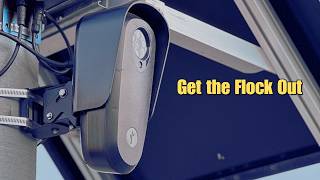
The video examines Flock automated license plate readers (ALPRs), which are marketed as tools to fight crime but frequently produce false positives and raise serious privacy concerns. Using real cases like an innocent journalist being surrounded by police and a man mauled by a police dog, the report argues that the technology is error-prone and can be abused by bad-faith actors. It concludes by discussing how communities are pushing back and whether surveillance can be reversed.
Defenders say automated license plate readers help solve crimes involving missing persons, stolen cars, and fugitives; critics call them a privacy nightmare because of who can access the data and how inaccurate they are.
Joel Feder of The Drive was surrounded by police after Flock cameras flagged the Range Rover press car he was driving as stolen based on a partial plate match, a case that went viral.
ALPRs use high-speed cameras and optical character recognition to convert plates into machine-readable text, then upload the data along with time, date, and GPS to a central database, where police can search for vehicles or add plates to hot lists.
Flock pulled from the NCIC database, where the press car's plate '3410 DTM' was logged incorrectly as '34 DTM,' causing the system to flag any Range Rover with that partial plate.
Brandon Upchurch was wrongly identified by Flock as driving a stolen truck. The misread of a '7' as a '2' led to his detention, a police dog attack, and charges that were later dropped.
There is no federal standard for license plate typography; states have different designs that can obscure characters, making it harder for ALPRs to read them correctly.
Flock uses solar-powered, cellular cameras sold on a subscription model that includes hardware, software, and maintenance. This lowers infrastructure costs and allows private users and businesses to join the network.
An EFF study found only 0.5% of plate scans matched a hot list, meaning 199 out of every 200 scans involved vehicles with no known connection to crime or public safety issues.
Cases include a Kansas police lieutenant spying on his estranged wife, a police chief tracking an ex-girlfriend 228 times, and a Florida detective using Flock to target her husband's ex-wife.
LAPD scaled back Flock cameras; Monroe County, Indiana terminated its contract and paid to remove them; Verona, Wisconsin residents covered cameras with trash bags; a Tennessee congressman proposed a federal ban.
Contracts expire, and communities have successfully removed Flock cameras, showing that ALPR integration is not permanent and can be overturned through public pressure.
The video argues that Flock and similar ALPR systems are unreliable and prone to abuse, making them a threat to privacy and civil liberties. However, it offers hope by highlighting that community activism and legal actions can successfully remove these cameras and reclaim freedom.
Flock
service
ShotSpotter
service
National Crime Information Center (NCIC)
tool
dflock.org
link
havebeenflocked.com
link
Electronic Frontier Foundation (EFF)
service
Business Insider
service
University of Washington's Center for Human Rights
service
Joel Feder
person
Joshua Thomas
person
Brandon Upchurch
person
What does ALPR stand for?
Automated license plate readers.
03:02
What technology do ALPRs use to read plates?
High-speed cameras and optical character recognition (OCR).
03:02
According to the EFF, what percentage of license plate scans are attached to a hot list?
Only 0.5% (half of 1%).
16:44
When did ALPR technology first emerge?
In 1976, when the UK's police scientific development branch began using it as an anti-terrorism measure.
11:23
What business model made Flock cameras widespread and cheap for law enforcement?
Solar-powered, cellular cameras sold on a subscription model that packages hardware, software, and maintenance into a single annual price.
12:31
What error caused Joel Feder's Range Rover to be flagged as stolen?
An input error in Los Angeles recorded the plate as '34 DTM' instead of '3410 DTM'; Flock flagged any Range Rover with the partial plate.
04:24
How did Brandon Upchurch's case demonstrate ALPR error?
Flock misread a '7' as a '2' on his legally registered truck plate, leading to his detention and a police dog attack.
07:50
What vehicle details can Flock cameras track beyond the license plate?
Color, make, model, modifications, flaws, roof racks, temp tags, and bumper stickers.
14:00
What did the University of Washington audit find regarding Flock data?
Limited cases of local law enforcement agencies conducting side searches on behalf of federal immigration enforcement agencies.
15:31
How did Verona, Wisconsin residents protest Flock cameras without removing them?
They covered the cameras with black trash bags, an act of malicious compliance after Flock told them not to remove the cameras themselves.
23:24
The 0.5% Hot-List Statistic
Reveals that the vast majority of tracked vehicles have no connection to crime, challenging the system's value.
16:44Police Dog Attack on Innocent Man
A concrete case of ALPR error leading to physical harm and wrongful charges, showing real-world consequences.
07:50No Guardrails Against Bad Actors
The core problem: digital surveillance is only as safe as the people controlling it, and safeguards cannot guarantee against misuse.
25:17Freedom Is Inherent
The speaker's philosophical takeaway: once freedom must be reclaimed, it's already lost.
29:03The Business Model Behind ALPR Proliferation
Explains how subscription-based, low-cost cameras spread into small communities and private networks.
12:31[00:02] communities like no street closing car meetat ever could. Because on the one hand, defenders will state that these automated license plate readers help protect the community by aiding police investigations into missing persons,
[00:18] stolen cars, and wanted fugitives. On the other hand, critics have called On the other hand, critics have called this a privacy nightmare because local law enforcement agencies aren't the only ones with access to data on your
[00:32] movements, nor are criminals the only ones subject to having their privacy invaded. But what makes this all significantly worse for opponents of
[00:44] automated license plate readers is the reality that these cameras and their AI systems can't even guarantee that the people being singled out as criminals are actually criminals that these cameras were meant to identify. It's
[01:01] utterly ridiculous. And understandably, communities across the country are communities across the country are finally fighting back against ALPRs like flock in a desperate battle to win back some measure of automotive and
[01:16] back some measure of automotive and personal privacy as drivers across the country discover firsthand just how wrong these cameras can get it.
[01:28] Roman report at the end of the month and I make what I want when I feel like I make what I want when I feel like discussing cars. It's not often that automotive journalists go viral and when they do you would hope it would be for a
[01:42] positive reason but that's not really what happened to the drives Joel Feder who was the star of body cam footage of a flock assisted police bust gone wrong
[01:54] on July 8th. Feder detailed the now viral incident in an article for the drive, stating that he and his wife were exiting a department store in suburban Minnesota when they were suddenly
[02:08] surrounded by police cars on suspicion that the $155,000 Range Rover press car he was driving had been stolen, or rather that the plates
[02:20] had been stolen. Police had been tracking the Range Rover through flock cameras, waiting for an opportunity to pop out and surround him like a pack of mosquitoes on a summer leg. But to the
[02:34] surprise of the police officers and basically no one else, the flock cameras were wrong. The Range Rover was misidentified as a stolen vehicle due to
[02:46] a simple input error committed thousands of miles away in Los Angeles that the of miles away in Los Angeles that the Flock came AI couldn't compensate for because, well, it wasn't really designed to.
[03:02] As the Electronic Frontier Foundation notes, automated license plate readers or ALPRs use quote a combination of high-speed cameras and optical character recognition technology that can identify
[03:18] license plates and turn them into machine readable text. The cameras can also be mounted on police cars or other vehicles such as tow trucks to passively collect license plate scans during routine patrols or to surveil specific
[03:35] communities by driving systematically through targeted neighborhoods. After the plate data is collected, the ALPR systems upload the information to a central database along with the time, date, and GPS coordinates. Cops can
[03:53] search these databases to see where drivers have traveled or to identify vehicles that visited certain locations. Police can also add license plates under Police can also add license plates under suspicion to hot lists, allowing for
[04:08] realtime alerts when a vehicle is spotted by an ALPR network. End quote. Now, as Feder states in his article, this press car bore New Jersey manufacturer plates, which have a set of
[04:24] numbers in the middle that are smaller than the characters on either side. So than the characters on either side. So the plate here is listed as 3410 DTM with the 10 being the smaller number in the middle. Flock gets its
[04:39] information from the National Crime Information Center database and presumably the license plate must have been logged incorrectly in the NCIC database because it was recorded in the log as just 34 DTM without the 10. So
[04:58] the flock camera apparently just flagged any Range Rover with that partial plate. Yet even if the officer had recorded the accurate plate number, an ALPR like flock can only log plates that are legible to its systems. And a unique
[05:15] plate like this might not have been for reasons we'll get to a bit later. Of course, while the mistake was cleared up and Federer was eventually free to go, the entire ordeal would go on to become one of those dumb situations that'll
[05:30] make you roll your eyes so hard they could flatten Indiana Jones. Because not only was the plate on Feder's Range Rover, not stolen, the Range Rover plate that was believed to have been stolen wasn't stolen either. That Range Rover
[05:47] had been used for a photo shoot after which its plate was misplaced and so the dealer had to report it to the police as having been lost. And it would seem that the system didn't really differentiate between a plate being lost or being
[06:04] between a plate being lost or being stolen. Either way, this all resulted in a completely innocent man and his wife being surrounded by armed police officers like they just stolen the Declaration of Independence.
[06:18] Now, Federer wrote a follow-up article in which Flock's chief communications officer, Joshua Thomas, noted that even if the 10 had been a normal size on the plate, the system still would have flagged it because for better or worse,
[06:33] the system is trained to operate on partial plates since that's sometimes all that law enforcement has to work with. So, if 34 DTM was all that the system had, it was still going to look for any license plate that had 34 DTM,
[06:51] whether the middle number was 10 or as was the case with the actual missing plate, the middle number was three. And to Thomas's credit, he wasn't really trying to come at it from a standpoint of simply defending flock cameras, at
[07:07] least from his perspective, but rather trying to understand how this could have happened in the first place. And it would appear that law enforcement in this case acted outside of Flock's recommended protocols, which is to,
[07:21] recommended protocols, which is to, believe it or not, verify that the plate believe it or not, verify that the plate they're looking for is actually a match with the plate that was pinged. Revolutionary concept here. For his
[07:35] part, Thomas would note that Flock is taking measures to mitigate the effect of human input errors, but that's got to be easier said than done, right? And a good effort to get this done probably isn't good enough when the stakes are
[07:50] this high. A report by Business Insider back in A report by Business Insider back in March cited a case from April 2024 in which an Ohio man named Brandon Upchurch was detained on suspicion of stealing a
[08:06] truck that was legally registered to him. Upurch was hesitant to get out of his vehicle since he hadn't done anything wrong, but he did comply eventually and started to get on his knees. The officer saw this and presumed
[08:22] that Upurch was planning to run but had just tripped. So he released his police dog who went on to pounce on Upurch and ram his head into the ground and then bite down on his arm. And to add insult
[08:39] to injury, Upurch was sent to the county jail after his wounds were treated and charged with resisting arrest and obstructing official business.
[08:52] And what do you know? Turns out the police had been alerted to this supposedly stolen truck by Flock. Business Insider states that Flock monitors and collects misread rates, but that they declined to provide the
[09:08] publication with the specifics about that data with a spokesperson noting that data with a spokesperson noting that quote, "We have strong confidence in our models and continuously improve them through ongoing optimization and
[09:23] End quote. But the spokesperson goes on to add that they don't offer the accuracy figure because the performance of the flock cameras depends on the design of the license plate and other factors like the
[09:38] lighting conditions and the environment. And this is where we come back to the issue of license plates needing to be legible.
[09:50] To the best of my knowledge, there is no federallymandated or standardized type face for license plates in the United States. It's up to the individual state. Otherwise, I'm not sure collecting license plates would be as popular or
[10:05] fashionably decorative as it is, if it even still is. But this opens up the issue that some states have license plates that are more legible than others plates that are more legible than others to an AI system that only seems to kind
[10:19] of know what it's doing. Even ignoring the type face, some license plates have wacky designs that can intermingle with or otherwise obscure the plate numbers legibility. I mean, look at a Florida plate. a phallic
[10:37] mess of circumcision silhouettes and orange is the size of a man's biological seed garage. The design underlaps the type face in such a way that it's not
[10:49] inconceivable that it could mess with an AI systems ability to make out the plate number. Ohio has a fairly clean plate design without any juicable fruit taking up surface real estate. But even then, Flock still got it wrong in Brandon
[11:06] Flock still got it wrong in Brandon Upurch's case, as the system misread a seven as a two, mistakenly matching his plate with one flagged as stolen and sending an innocent man to the hospital and then to county jail.
[11:23] Now, automated license plate recognition isn't exactly new. In fact, ALPR technology dates all the way back to 1976 when the UK's police scientific
[11:36] development branch began utilizing plate tracking as an anti-terrorism measure. In the decades that followed, they spread around the globe. Although ALPR
[11:48] technology was mostly limited to major metropolitan areas with the funding to afford the pricey infrastructure demands and utility costs that were necessary to install these things and to keep them operational.
[12:04] But then if they're so expensive, how did they become so prevalent even in areas that you wouldn't think would have the budget to afford these
[12:16] cameras? Well, Flock is far from the only ALPR company on the market. But when they were founded in Atlanta, Georgia in were founded in Atlanta, Georgia in 2017, they operated through a unique
[12:31] business model. You see, Flock cameras are solar powered and cellular, thereby reducing electrical and network infrastructure costs. But they also ran on a subscription model that packaged
[12:46] hardware, software, and maintenance into a single annual price. So, you had the a single annual price. So, you had the cost benefits for one, but you also had significant potential reach because flock cameras allowed law enforcement to
[13:02] flock cameras allowed law enforcement to tap into a broader network of private tap into a broader network of private users and businesses. Now, of course, these other users needed to first opt into sharing with law enforcement, but
[13:16] that momand pop bakery that keeps getting robbed, that's exactly what they're going to do. Since these cameras are presented as being way more technologically sophisticated than simple CCTV cameras, and from all
[13:30] appearances, they are. For instance, while ALPRs don't have facial recognition capabilities, they can track individuals since a lack of
[13:43] facial recognition doesn't really preclude the camera from being able to make out personal details. And from an automotive standpoint, they can not only track the color, make, and model of your car, but even modifications and flaws.
[14:00] roof racks, temp tags, bumper stickers. It's all capable of being logged as machine readable information that theoretically provides police with more to go on than just a grainy image of a possible suspect.
[14:14] And with Flock extending their hardware into the drone space and even into mobile security trailers, I can understand why a business would subscribe. Flock projects an identity of
[14:29] comprehensive protective surveillance that fills in the gaps of police capability. But if the goal for Flock is to protect But if the goal for Flock is to protect public safety, the message kind of gets
[14:43] undermined when entire communities are being opted into a surveillance network that extends far outside the bounds of that community and without their direct consent. Flock makes it clear on their website
[14:58] that they do not sell your data to third parties and will not provide law enforcement access to your camera if you don't allow it. And if you're a private customer with a Flock camera, that's all well and good. But the decision on
[15:15] whether or not to grant access to third parties rests with whomever controls the Flock subscription, not with whomever is being surveiled or having their information collected. For example, Flock denies that US Border
[15:31] Patrol has access to their database, but an October 2025 audit by the University of Washington's Center for Human Rights found quote limited cases of law
[15:44] enforcement agencies in Washington State conducting side searches on behalf of federal immigration enforcement agencies. End quote. Reportedly, Flock pilot programs with
[16:00] federal agencies have been put on hold for the time being. So, I guess technically Flock isn't contracting with the federal government, although that's really just semantics. But in the grand scheme of things, the federal government
[16:16] doesn't even need to have a contract with Flock to have access to their database if local law enforcement agencies agree to conduct database agencies agree to conduct database searches on the government's behalf. And
[16:29] I know the argument is that well, if you aren't doing anything wrong, you have nothing to worry about, right? But that presumes that these cameras are far more effective at catching actual criminals than the data would suggest.
[16:44] A study by the Electronic Frontier Foundation found that quote on average only.5% that is 1/ half of 1% of license plate
[16:57] that is 1/ half of 1% of license plate scans were attached to a hot list. This means that 99.5% of the license plates captured by ALPR are actually not connected to a public safety interest at the time they are
[17:13] captured. End quote. And of course, most people aren't criminals, so naturally most people recorded by these cameras aren't going to be criminals.
[17:28] But while the half of 1% number doesn't prove that ALPRs never solve crimes, it does show that roughly 199 out of every 200 scans
[17:42] involved vehicles that had no connection to any crime or public safety issue at the time that they were recorded. which suggests to me that by serving as a sort
[17:54] suggests to me that by serving as a sort of technological drag net collating the information of majority innocent motorists, the system is working exactly the way it was intended to work. But okay, let's say for argument's sake that
[18:10] ALPRs like Flock are a significant investigative tool for law enforcement. Well, that's great, but the problem is that not everyone with access to the data Flock collects is using it in good
[18:25] data Flock collects is using it in good faith. In 2022, a police lieutenant in faith. In 2022, a police lieutenant in Kansas was arrested for using Flock to spy on his estranged wife. 2 years later, also in Kansas, a police chief
[18:40] used Flock's database to track his ex-girlfriend 228 ex-girlfriend 228 times. Just last week, a detective in Central Florida was arrested for allegedly using Flock and other law
[18:55] enforcement databases to spy on her husband's exwife. Another Kansas man was targeted by his local police department for writing an op-ed piece criticizing them. And what the
[19:11] hell are you guys even doing over there in Kansas? Working on your pulled pork recipe in between violating each other's civil liberties. What even is this? But civil liberties. What even is this? But perhaps most alarmingly of all, last
[19:26] November, a Colorado woman's Rivian was wrongfully connected to a theft by flock cameras. And the result was that she then had to go and collect her own evidence to prove her innocence before police would drop the case. So now this
[19:43] supposed tool to keep people safer is something that can be used for harassment, retaliation, and stalking. and arguably at worst for falsely
[19:55] accusing you of a crime and then moving the goalposts on burden of proof. So naturally, people aren't really all that happy about any of this. And some
[20:07] communities are downright fed up. And this is where I want to talk about some of the good news from the month of July 2026 for people who are vehemently 2026 for people who are vehemently anti-LPR.
[20:24] introduced a bill to block federal agencies from purchasing or accessing automated surveillance systems. And he even spoke to Knox County Mayor the Big even spoke to Knox County Mayor the Big Red Machine Kane about getting them the
[20:39] flock out. As I sit here wondering how the Undertaker's fake brother gets to rule over an entire [music] county, much less one that houses the sun sphere. But in some of the low-key best news of the month, Flock finally decided to end its
[20:55] pilot program for a distress detection feature on their audio detection device, which currently flags sounds like fireworks and gunshots and car crashes,
[21:07] fireworks and gunshots and car crashes, but with distress detection would now also factor in sounds like screams, which feels like a really hit or miss concept in general. And I'm not even sure that gunshot detection is the best
[21:22] idea because anyone who's been in America on July 4th or even just the summer in general should know why this kind of seems like a bad idea. As similar systems like the Shot Spotter gunshot detection system have come under
[21:39] fire, no pun intended. I I did not intend that pun and you cannot prove that I did. have come under fire for their inaccuracy or at the very least for the ease with which they can be misinterpreted. Case in point, a
[21:55] misinterpreted. Case in point, a teenager nearly got shot back in 2024 when police officers responded to an alert from the Shot Spotter system and opened fire because they mistook the fireworks the teenager set off for
[22:10] gunshots. So, while the distress detection feature is going away, which appears to be for the best, because I don't think every single instance of noise in the street deserves an armed police presence,
[22:24] gunshot detection systems, at least for the time being, don't seem to be going anywhere. Yet, the safety risks do seem secondary to the privacy concerns when it comes to jurisdictions rethinking their
[22:40] relationship with flock. The Los Angeles Police Department, one of the largest metropolitan police forces in the country, is scaling back their use of flock cameras due to privacy concerns over who actually
[22:55] privacy concerns over who actually controls the data being collected. Meanwhile, commissioners in Monroe County, Indiana, voted to terminate their contract with Flock and even paid a $3,000 removal charge to get the
[23:09] cameras removed sooner than the September 2027 agreement termination September 2027 agreement termination date. But breakups aren't always so clean. Such as in Verona, Wisconsin, where the city council voted to remove
[23:24] Flock cameras, but were informed by Flock that they were not to remove the cameras themselves. So, in an act of malicious compliance, they opted to cover the cameras with black trash bags since they didn't know if the cameras
[23:39] were still technically operational. Other cities have taken the black trash bag approach as well. Although some areas have been home to actual vigilante justice with masked flock fighters taking to the streets to destroy these
[23:56] ALPRs outright. And while I don't condone doing that, it does illustrate the rise of deflocking measures among communities who want nothing more than
[24:08] to get the flock out. Currently, there are resources such as dflock.org, an open-source tool for locating and mapping ALPRs across the country, so you can see if your community is using these
[24:25] can see if your community is using these cameras. Meanwhile, the website have been flocked.com allows you to look up your license plate to see if it's among the plates that have been logged in the 233 million
[24:38] flock searches that they know about. Now, this website makes a point of saying that your plate not showing up in their database doesn't mean you haven't been flocked. And that's because their data comes from audit logs they've
[24:52] acquired through public record requests. And most agencies don't publish audit logs of their own accord. So, it kind of falls to watchdog websites like these to
[25:04] make the requests and make them accessible. accessible. So, use at your own discretion, but I've provided the link to both of those websites in the description. Yet, what I
[25:17] found through all of my research into this is that while Flock states that there are safeguards in place that preclude bad faith actors from having access to the information these cameras collect, I don't believe there are any
[25:31] kinds of safeguards in place capable of guaranteeing that because it's a system that serves at the pleasure of whomever controls it. So, if it's in control of a
[25:43] local law enforcement agency that doesn't mind doing side door searches on behalf of the federal government or they're in the hands of a vindictive law enforcement official who can use that to stalk and harass or otherwise target
[25:59] you, well then, okay, Flock isn't directly responsible for the actions of the people who use the system, but then they're also not directly responsible for oversight either. So the only real solution then is to get rid of the
[26:14] cameras altogether. And look, in isolation, you could argue that the goal of flock cameras is a noble one since presumably it's about preventing crime, preventing property damage, and locating missing vehicles,
[26:29] damage, and locating missing vehicles, missing people, and capturing fugitives. But if you think about it, it's opensourcing the prison industrial complex because now we're all under the watchful eye of a warden with really
[26:46] watchful eye of a warden with really lousy eyesight. And worse, it's a warden who's stubbornly refusing to get glasses. Because I think the problem people have with these cameras is the same problem people have with AI, which
[27:00] is that it's easier to introduce into a society than it would be to remove it. Once people get used to using these types of security cameras and begin to rely on them in the same way a college student relies on chat GPT to write
[27:17] their research paper, the harder it will be to go back. I mean, look at that woman in Colorado and tell me that isn't terrifying, that a person had to prove her innocence rather than having it be presumed until any guilt was proven.
[27:33] It's easy to say that could never happen to us. But I'm sure the victims of wrongful accusation or stalking thought so, too, that it can never be them and so, too, that it can never be them and it can never be you, right?
[27:48] it can never be you, right? until it's suddenly you. But ultimately, there's hope. I believe that the process of integrating ALPRs into society is not irreversible, as shown by these communities that have
[28:04] shown by these communities that have successfully kicked Flock out. Contracts have expiration dates, and you can even end them early, albeit at cost. But I guess that's the price of allowing your community to regain some semblance of
[28:18] personal anonymity and freedom. And I knowledgeable about these cameras beforehand before they're introduced into their towns, it can be easier for these communities to fight back so that
[28:33] they never get installed or that they can get them banished for good if they do get installed. But then you have the problem that who's to say that even if you get rid of flock cameras that the method of surveillance wouldn't then
[28:48] method of surveillance wouldn't then change to something else. Maybe this is the new normal. But what's hopeful here is that people aren't just resigned to allowing this. They're fighting back by exercising the
[29:03] They're fighting back by exercising the freedom that deserves to remain theirs. Because freedom is a right that is inherent. The minute you start feeling as though it's something that needs to be reclaimed,
[29:18] be reclaimed, it's not really freedom anymore. have more of a potential benefit for society than perhaps we're giving them
[29:30] credit for having? Or do automated license plate readers need to become a thing of the past? Have you ever been falsely accused of a crime due to an automated license plate reader? What are your experiences with flock cameras? If
[29:46] you've had any at all. I want to hear all of your stories and read all of your thoughts. So, chat me up in the comments. I'll be in there. Keep a lookout for my screen name. It's Limited Time Roman. And if you enjoyed the
[29:59] video, please like, comment, subscribe, or even share the video with someone you think might enjoy it. But if you'd like to support the channel in the biggest possible way, join us on Patreon for just a dollar to get videos early and
[30:15] adree along with other exclusive content. But regardless, your viewership content. But regardless, your viewership is enough. And I thank you for the gift of your time and have a great outstanding flockfree rest of your week.


⚡ Saved you 0h 30m reading this? Transcribe any YouTube video for free — no signup needed.