

I Lost Money for 6 Years So You Don't Have To
45sThe creator's candid admission of losing money for six years is relatable and builds trust, making viewers want to learn from his mistakes.
▶ Play Clip"The title promises a comprehensive guide, but the video is a lengthy motivational lecture about discipline and risk management, with repeated points that could have been made in half the time."
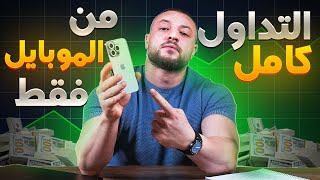
This video is the final theoretical lesson in a forex trading course for beginners. The instructor emphasizes the critical importance of capital and emotional management, which he claims constitute 70% of trading success, while technical analysis only contributes 30%. He provides a simple risk-reward model and encourages realistic expectations about the learning process.
The instructor reviews the previous theory videos and emphasizes that this is the last theoretical lesson before moving to practical application.
The trading field involves losses, and learning often means losing money. The instructor shares that he spent six years losing money before becoming successful.
Traders should only use money they can afford to lose, and they should not expect instant wealth. Riskier methods like crypto pump-and-dump are akin to gambling.
Technical analysis and indicators only make up 30% of trading success, while capital and emotional management are the remaining 70%.
The instructor explains that emotional control, mental well-being, and capital management are more important than any strategy or indicator.
A proper risk-reward model: profit target of 3% and stop loss of 1% of capital. This ensures that a trader can profit even with a low win rate.
With 30% accuracy, a trader wins one and loses two out of three trades. With the 3:1 model, they still end up with a net profit.
Trading 10 trades a week with good management can result in an 8% monthly profit, which is the safe, professional approach.
Most traders lose money due to greed and lack of management, leading to frustration and quitting. Proper management and emotional control are essential.
The key to success is not knowing the market direction but managing capital and emotions. Without this, one is not truly a trader.
What percentage of trading success does technical analysis account for?
Technical analysis and indicators
06:44
What makes up the remaining 70% of trading success?
Capital management and emotional management
06:44
In the 3:1 risk-reward model, what are the profit target and stop loss percentages?
3% profit or a 1% loss
07:47
If a trader has 30% accuracy, what is the expected outcome per three trades?
One win and two losses out of every three trades
08:47
How long did the instructor say he lost money in trading?
He spent six years losing money at the beginning
02:08
The 30% vs 70% Split
This insight clarifies that technical analysis is only a small part of trading success, shifting focus to the mental and managerial aspects that are often overlooked by beginners.
06:44The 3:1 Risk-Reward Model
This simple, actionable rule provides a clear framework for setting profit targets and stop losses, making it easy for beginners to apply.
07:47Learning Through Losses
The instructor's honest admission that trading involves losing money reinforces the reality of the field, helping to set realistic expectations for newcomers.
02:08Profit Despite Low Accuracy
The mathematical example shows that even with only 30% accuracy, proper management can lead to profitability, which is a powerful motivator for beginners.
08:47[00:03] . If this is the first time you're seeing it, go to your playlists, navigate to the Forex section, and watch from the first video up to this point to fully understand everything I'm saying. This is the last video covering theory, and after it, we'll start practical application. You'll grab your phone and computer, and we'll work together step-by-step through what we've
[00:18] learned. I'm so happy because I've brought you to a point where, in the upcoming videos, you'll understand everything I'm saying. When I tell you about a trade, when I say "buy sell," understand everything I'm saying. When I tell you about a trade, when I say "buy sell," when I teach you
[00:33] strategies and we analyze the market, and when you start analyzing it yourself and know how to enter trades, when I tell you, for example, if you see the candle's tail, you understand what I'm saying. If you see the candle's body like this, if you see a candle with this shape, then give me an hourly candle, a
[00:50] minute candle, a four-hour candle—it will be a great feeling because I've built you on the right foundation, thank God. You're now on the right foot, understanding everything correctly, every single word. I'll explain it practically in the
[01:02] following videos. You understand them and know everything I'm going to explain. There's one more thing, and it's the most important explain. There's one more thing, and it's the most important before you start applying it practically. The first
[01:15] thing, which we talked about in the first video, is that the video, is that the trading field is dangerous and involves losses. Unfortunately, learning in the
[01:27] trading field is a waste of money. Like I told you, if I want to become a barber, I have to ruin people's hair. If I want to become a car mechanic, I have to damage people's cars to learn and become
[01:40] successful in the field. If I want to become a restaurant manager, I have to burn 1000 dishes. This is all called restaurant manager, I have to burn 1000 dishes. This is all called learning, not mistakes. I call it learning from learning, not mistakes. I call it learning from mistakes to learn in the trading field. Learning is a
[01:54] waste of money; you have to lose money, and it's not up to you. Alaa isn't here to perform magic for you and make you win perform magic for you and make you win money. Don't think that just because you've finished your money. Don't think that just because you've finished your theory, you can jump into the market and
[02:08] make a million dollars in the first month, year, or two. No way. That's not how it works. I spent six years losing money at the beginning, and you're not any better than me. Maybe now you have Alaa helping you
[02:20] with great trading content in Arabic, which will save you some time. Maybe you won't lose for six years, maybe less, maybe a year, maybe six months, maybe two years, maybe five, maybe 20, and maybe you won't even make a profit. That's up to you. My role here is
[02:32] just to teach you about the field, and then the rest is up to you. I wanted to reiterate this point, and I also wanted to remind you before we start practical tomorrow and you start trading with
[02:44] money and investing it: if you need that money, keep it for yourself because you're starting with it, and you'll need that money, keep it for yourself because you're starting with it, and you'll lose that money to learn. If I told you otherwise, I'd be lying to you, neither me nor anyone else. Don't believe anyone who can
[02:59] make money instantly from trading, except with risky trading methods like spot trading and trading methods like spot trading and cryptocurrencies, which are like a pump-dump. You buy a cryptocurrency, and the next day its price increases many times over, and your $1000 becomes... $30,000 or
[03:15] your $1000 becomes... $30,000 or your $100 that became $10,000, what will it be? Yes, but it's called luck and it's called risk. And did you do it, Alaa? Of course I did it and I still do it, taking risks sometimes, sometimes with cryptocurrencies. But I know I'm going in the wrong direction. I mean, in the
[03:31] playlists, which are not forex, there are which are not forex, there are many methods that you will find risky, and you can make money or you can lose money. I enter, for example, with this $000 knowing it's going to be gone. It's either going to be gone or it's going to be
[03:45] or it's going to be
[04:08] either get $10,000 back or you lose it all. It's up to you; I'm not to blame or involved. I'm just trying to teach you, make you aware, and tell you the right plan to follow. I started tell you the right plan to follow. I started with this introduction and reminded you because
[04:23] this video is about capital management and emotional management. Controlling your emotions, personality, mindset, and psychology is the most important thing in trading. In this video, I'll prove to you how much more important emotional control, mental well-being, and
[04:38] In this video, I'll prove to you how much more important emotional control, mental well-being, and capital management are than anything we've said or will say, than any strategies you learn, and than all the people who go around bragging and showing off on social media, saying, "I have a strategy," "I have an indicator," and "
[04:52] I have this or that." There are many tools that can help you. In the upcoming videos, I'll even tell you about an app that gives you ready-made trades. It tells you to buy at this price and at that price, and you profit. It has good profit margins and everything. But even though this tool, this
[05:06] app, and the indicators exist, they only make up 30% of trading. Pay close attention because this video is very important. This is the last video in the theory section, and it's crucial. It's a bit long, and I might talk a little more, but it's for your own good. I want you to
[05:18] long, and I might talk a little more, but it's for your own good. I want you to learn properly. You're already established in this field, and it's hard to fool you. For example, if you want to build muscle through exercise, you might start thinking that doing chest or arm exercises makes no difference. But then you discover
[05:35] doing chest or arm exercises makes no difference. But then you discover that sleep and nutrition are a billion times more important than the way you exercise. So don't look at trading superficially. Like, "I'm just learning an indicator from Alaa, or Alaa recommends an app that gives me trades, and
[05:51] Alaa recommends an app that gives me trades, and I'm making millions in trades!" No, we won't go back to those topics because in the next videos we'll start practical. Right now, I want to talk to you about capital management, risk management, and emotional management, and how they are a
[06:05] risk management, and emotional management, and how they are a million times more important than analysis and the indicators we'll learn later. In the next videos, we'll learn about indicators. I'll teach you how to read a chart and understand its direction if you see a candlestick pattern. I'll teach we'll learn about indicators. I'll teach you how to read a chart and understand its direction if you see a candlestick pattern. I'll teach
[06:20] news and fundamental analysis. Technical analysis involves trading, which includes fundamental analysis, meaning you understand what's happening in the world through news.
[06:32] Technical analysis involves observing candlestick patterns and charts, noting their performance yesterday, a month ago, and a week ago, and then using your indicators and analysis to predict market direction – whether it will rise or fall. However, this only constitutes
[06:44] and analysis to predict market direction – whether it will rise or fall. However, this only constitutes 30% of the process. In this video, you'll learn the 30% of the process. In this video, you'll learn the remaining 70%. Let's say
[07:01] and indicators, leaving nothing unsaid about the market. But your current ability only allows you to predict the market with 30% accuracy. That's your current level. It's enough for me that you learn to read
[07:14] enough for me that you learn to read the market 30%. Just imagine – your accuracy rate in predicting the market 30%. Just imagine – your accuracy rate in predicting whether the market will rise or fall is 30%, and your whether the market will rise or fall is 30%, and your error rate is 70%. Imagine that if you reach this
[07:30] error rate is 70%. Imagine that if you reach this level, I can help you start making money and create a trading plan that will generate profits after a long period of learning, not immediately. And what if you have proper capital management? What does proper management mean? It means that when I enter a trade... Either I
[07:47] proper management mean? It means that when I enter a trade... Either I make a 3% profit make a 3% profit or a 1% loss. Let's say I entered the trade here at this or a 1% loss. Let's say I entered the trade here at this price, okay. So I have to put my profit here, and it should be
[08:00] price, okay. So I have to put my profit here, and it should be 3% of my capital. That is, according to my load, 3% of my capital. That is, according to my load, points, and how much capital I have. My stop loss points, and how much capital I have. My stop loss will be 1% of my capital. Here's my target price, and here's my stop loss.
[08:13] will be 1% of my capital. Here's my target price, and here's my stop loss. So if I So if I win, I'll make a 3% profit, and if I lose, I'll lose 1%. win, I'll make a 3% profit, and if I lose, I'll lose 1%. And if I win or lose, I close my laptop,
[08:29] And if I win or lose, I close my laptop, phone, or computer and stop trading. This is called emotional management. Most people lose in trading because they don't have proper emotional management and they don't have proper capital management. If your prediction is 30% accurate, and
[08:47] If your prediction is 30% accurate, and every three trades you make one win and two lose, every three trades you make one win and two lose, you're not someone who predicts the market 30%. So logically, you'll make one win and two lose. Imagine that. So if you're reading the market and every three trades you
[09:03] enter, two will be losses and one will be a win. Imagine that. So if You're not analyzing correctly, but you have good management skills, so you'll still profit. In your first trade, you lose 1%,
[09:18] and in your second trade, you lose another 1%. Then, in your third trade, your prediction is correct, and you make a 3% profit. prediction is correct, and you make a 3% profit.
[09:33] you're losing two out of every three trades— meaning you're losing seven out of every ten trades and meaning you're losing seven out of every ten trades and winning three—you're only winning three and
[09:46] losing seven. Imagine how far your analysis might go, but with good management and emotional control, you'll still your analysis might go, but with good management and emotional control, you'll still profit. You'll end up with a profit. You'll end up with a
[10:01] 9% profit. For example, if you entered 10 trades this week, you'd make a 9% profit and a 7% loss. So, if you trade 10 trades every week, you'll end the month with an 8% profit.
[10:14] you'll end the month with an 8% profit. This is the right trading strategy, the safest trading strategy, and the kind of trading that... With This is the right trading strategy, the safest trading strategy, and the kind of trading that... With a sound mind, this is the kind of trading professionals do. They tell you they make more than 8% a month, or 50%, or
[10:28] make more than 8% a month, or 50%, or 200%, or whatever. That's called luck. There are 200%, or whatever. That's called luck. There are such things, but it's called luck. It's called risk. I such things, but it's called luck. It's called risk. I entered with $1000, but in a single trade, I either lose 20%
[10:41] of my capital or make 10%. For example, if I'm lucky, I might make 10% of my $1000 and earn $100 in 10% of my $1000 and earn $100 in one trade, but I could also lose 20%. Most of you one trade, but I could also lose 20%. Most of you traders understand what
[10:55] I'm saying, and maybe you're laughing right now, knowing that this is your mistake. This is always your mistake in trading; you don't have proper management. You're greedy, opening a trade to make
[11:08] $1000 in a minute. But if the market turns against you, you'll lose all your money. the market turns against you, you'll lose all your money. Pay attention to the beginners who start A
[11:21] trader loses all their money and quits the field, saying they'll never succeed because they don't manage their emotions or capital properly. They're greedy, wanting to make
[11:34] $1000 or $10,000 a day, or $100 or $1000 a day. You'll find them making a lot of money, hitting a high trade, losing all their money, and then cursing the whole industry. In the next video, we'll apply
[11:47] everything practically. Let's end this video with this: a trader who doesn't manage their capital properly, can't control their emotions, and gets stressed when they lose isn't a trader at all. A trader is
[12:06] market analysis skills or whether they know if the market is rising or falling. I've proven this to you. Knowing just 30% of the time and getting one successful trade out of every three is enough for proper capital management. Your weapon is capital management.
[12:20] Proper capital management is what distinguishes a trader from a true trader. By controlling his emotions and managing his capital, the trader isn't the one who knows whether the market is going up or down. Today, there are many programs and indicators that easily help you determine whether the market is rising or falling. The
[12:37] easily help you determine whether the market is rising or falling. The secret, the key, and the method that allows you to make secret, the key, and the method that allows you to make money is capital management, risk management, and money is capital management, risk management, and emotional management. And no one can just give
[12:49] you that information. I hope you benefited from this video, and be ready for the next one. I haven't eaten a single cucumber yet!
[13:01] If you liked the video, leave me a nice comment because I 'll read all of them. Good luck! Peace.



⚡ Saved you 0h 13m reading this? Transcribe any YouTube video for free — no signup needed.