
AI Summary
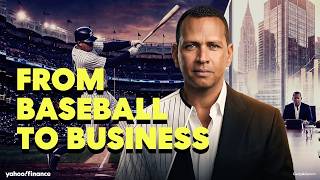
Alex Rodriguez sits down with Brian Sullivan to discuss his transformation from MLB superstar to CEO of A-Rod Corp. He shares his early life motivation, investment philosophy, lessons from George Steinbrenner, his ownership of the Minnesota Timberwolves, and his outlook on sports and market risks. The interview covers his patient approach to real estate and venture investing, leadership principles, and concerns about a potential MLB strike.
Chapters
Born in Washington Heights, A-Rod's father left when he was 10-12; he saw his mom collect food stamps. At around 9-10, he told his parents he wanted to do the 'two B's: baseball and business.'
Bought his first duplex for $250,000 in his early 20s, then an eightplex. He emphasizes going slow and methodical over 25+ years.
George Steinbrenner taught him VCP: vision, capital, people. If you have a clear vision, capital to deploy, and the best people, you can scale businesses successfully.
Steinbrenner demanded excellence and a winning culture in everything—fans, media, dress code, no long hair or beards. He spoiled players but never took shortcuts; compromise nothing, win at all costs.
A-Rod Corp is a private equity firm focused on three areas: real estate (legacy), sports (co-chairman of Timberwolves and Lynx), and venture investing/private equity.
They've invested in about 50 companies, taken about half a dozen public. Their approach: find great founders, help with capital, strategy, hiring, then get out of the way.
A-Rod thinks assets are very expensive right now; he's sold a lot of the market. He's bullish on later in the year after geopolitics and interest rates settle. Sports is not correlated to the market, so they keep investing there.
Rate hikes don't worry them because they plan to own assets for 15-50 years (e.g., Timberwolves for 50 years, real estate for 15-25 years). Opportunities exist on both ends of price changes.
A-Rod says success requires buy-in from ownership down to arena staff. In the 2009 Yankees title run, everyone checked their ego at the door—it was 'we, not I.' The Knicks flipped from good to elite the same way.
Ohtani is like Babe Ruth and Nolan Ryan combined; Wembanyama is a 7'5" guard. These unique stars are driving NBA and MLB viewership to record highs.
If players and owners can't reach a deal, both teams are dug in. A-Rod says a strike would have more severe consequences than in '94 because fans now have Netflix, Amazon Prime, etc. and may not return.
A-Rod's career shows a deliberate transition from athletic excellence to business success, grounded in patience, strong relationships, and a clear framework for scaling. His insights offer practical lessons for investors and leaders, along with a cautionary warning about labor disputes in sports.
Mentioned in this Video
Study Flashcards (8)
What two ambitions did A-Rod have from age 9-10?
easy
Click to reveal answer
What two ambitions did A-Rod have from age 9-10?
Baseball and business.
00:45
How much was A-Rod's first real estate purchase?
easy
Click to reveal answer
How much was A-Rod's first real estate purchase?
A duplex for $250,000.
01:12
What does Steinbrenner's VCP stand for?
easy
Click to reveal answer
What does Steinbrenner's VCP stand for?
Vision, capital, people.
01:28
How many companies has A-Rod Corp invested in on the venture side?
medium
Click to reveal answer
How many companies has A-Rod Corp invested in on the venture side?
About 50 companies.
03:18
Why doesn't a rate hike worry A-Rod's investments?
medium
Click to reveal answer
Why doesn't a rate hike worry A-Rod's investments?
Because they plan to hold assets for 15-50 years.
04:34
What is A-Rod's key principle for team success?
medium
Click to reveal answer
What is A-Rod's key principle for team success?
Everyone checks their ego at the door; it's 'we, not I.'
09:47
Who does A-Rod compare to Babe Ruth and Nolan Ryan?
hard
Click to reveal answer
Who does A-Rod compare to Babe Ruth and Nolan Ryan?
Shohei Ohtani.
10:42
What risk does A-Rod see if MLB players go on strike?
medium
Click to reveal answer
What risk does A-Rod see if MLB players go on strike?
Fans may not come back, and both sides could end up with a worse deal.
12:30
💡 Key Takeaways
Steinbrenner's VCP Framework
Provides a concise, transferable model for scaling any business: vision, capital, people.
01:28Long-Term Ownership Mindset
Shows how ignoring short-term market noise like rate hikes can be a competitive advantage for patient investors.
04:34We, Not I Culture
A powerful leadership lesson from the 2009 Yankees: winning requires everyone to check their ego at the door.
09:47MLB Strike Risk
A-Rod warns that fan loyalty is not guaranteed, making the potential strike a serious existential threat for baseball.
12:17Full Transcript
[00:04] interviews from Can. A-Rod Corp chairman and CEO Alex Rodriguez sat down with talked about his transition from baseball to business. >> I grew up watching you um every day on my
[00:18] television screen. And it's so awesome to see your transformation now to a a business person. I don't think it started after your career. Talk to me and entrepreneur started. >> Yeah, Brian, to me it goes back all the
[00:31] way to my childhood when, you know, born in New York, Washington Heights, shadows My father leaves my family, my mom and my two siblings. At the age of 10, 12, I see my mom collect food stamps. And uh 17, I'm the first pick in the draft. But
[00:45] it was around 9 or 10 years old that I remember sitting in New York City with my parents saying I wanted to do the two B's, baseball and business. So my ambition always goes back to, you know, doing what I love and that's
[00:58] >> What were there some of your early learnings as you put your way? >> I think that the the big I think the thing that I did right was I went very, very slow. I started over 25 years ago
[01:12] in my early 20s. I bought my first duplex for 250,000. And then I bought a double and I sold an eightplex. So I went really slow and methodical. And from George Steinbrenner. He talked about VCP, vision, capital, people. And
[01:28] if you have the vision, if you have the capital to deploy to that vision, and the people part. If you have the best people in the world, then you have great alignment, you have an opportunity to scale businesses. And I think that's
[01:40] what I did so well. In '08, um you know, we had a couple uh mortgage in the real estate that went under. Uh we were able to um pay a nice fee, get the bank to write down those
[01:53] mortgages. And then 5 years later, we had a big exit and we partnered with the our partners today. So those are the kind of things that the highs and the get here. >> I I grew up reading the back pages of
[02:07] Steinbrenner. He demanded excellence and if you didn't get excellence, your ass was getting kicked out. >> What did you learn from him about these years of really getting direct access to him?
[02:20] important thing and that means winning in culture, winning with the fans, winning in media, winning on the field, the way you dress, no long hair, no no no beards. He was the ultimate general, right? And
[02:34] he expected the most, but he also spoiled us. We flew in the best planes, the best hotels and he never took any any shortcuts. And that's what I learned from him is compromise nothing, win at all cost.
[02:47] investing in real estate? I go to your webpage and you're invested in you have OpenAI on the page for example. >> Yeah, well A-Rod Corp is basically Uh private equity and where we do real
[03:03] dollars of real estate. This we do three things, real estate, sports and venture investing and private equity. And uh real estate's our legacy business. Timberwolves and the Lynx where I'm the co-chairman with my partner Mark Lore
[03:18] and then on the venture side we've had positions in about 50 companies. We take about half a dozen of those public and uh yeah, we kind of sit in sit in the weeds and uh make investments, find great founders, help them out with
[03:30] capital, with strategy, with hiring and then get out of the way. >> I look someone like Derek Jeter, right? Someone who's a winner, someone who's Someone who's a winner, someone who's coachable, someone who is ambitious,
[03:42] that has a big big vision, incredible work ethic, but someone who's humble great team around them. >> What's your investment thesis right now as you look to put money to work? >> I think um things are very expensive
[03:57] right now. So, we're kind of um you know, I sold a lot of the market I think there'll be another opportunity soon. I'm I'm bullish on what this year rocky over the next two or three months as things settle all over the world,
[04:10] geopolitics, and uh interest rates, and private credit. There's a lot of noise going on. There's a lot of noise around sports, but sports is not correlated to the market. So, we continue to invest heavily in sports. Um and then let
[04:22] uh on the private side. >> What a rate hike? Like that's now. I'm down in the weeds of the market. I want to talk sports with you, but with a rate hike, that's the talk in the market right now. Would that really
[04:34] over the next year? >> Not really, cuz we don't look at things about the Timberwolves, we think about owning them for 50 years, right? When we have a real estate, we can stay on there for 15, 20, 25 years. So, whatever
[04:46] worry us. But prices changes, right? And opportunities change. And with those opportunities, spikes, or if it goes the other way, there's opportunities on both ends. And we're fairly liquid, and we
[04:59] sell. >> On the the Timberwolves, it wasn't easy from that process? >> Well, I mean, we had a great law firm in us. Um you know, in these deals, you have
[05:12] i's. But we're thrilled with the market of Minnesota, with our two teams, both the Wolves and the Lynx. Lynx are in in first place now, doing very well. Um and uh the last 3 years we've come out top
[05:25] four, top four with the Wolves, top six this year. Obviously lost to a great great team in San Antonio with with Victor Wembanyama, who's an amazing player. And obviously the NBA at an all-time probably 28-year high uh when
[05:37] it comes to ratings. Uh 15 billion impressions on social media. Uh average um viewing was about 22 million. And uh the peak was 33 million, which is like
[05:49] NFL numbers. And the New York story uh was just phenomenal. I I told you off camera, I've known Marc going back to his Jet.com days. He business. I think he's one of the most underrated entrepreneurs of the past
[06:03] brain? >> Well, not a lot because the brain is so >> Oh, man, he's going to love that. I got to send him that clip right there. >> Look, Marc is a most ethical guy. He's the smartest guy that I've ever met.
[06:15] much from him. And we have complimentary set of skills together. >> I recently had a conversation with uh Denny Hamlin and he of course he owns uh 23 Racing
[06:28] uh with Michael Jordan. And what is it about you guys? It's the Michael Jordan has done with uh his racing team and the wisdom he has what you're doing the winning ways with the Timberwolves. Like what is it about
[06:40] winners? >> Well, I think Magic and Michael Jordan friends, and people I've looked up to and studied for many years. And they the humility. Just because they reached the pinnacle in the NBA and reached what
[06:57] that they're going to think they're going to get an entitled ticket to the penthouse in business. They started at the bottom and they've worked themselves Starbucks and AMC Theaters, uh Michael with his mom and the Nike deal, which
[07:09] was so famous on air. And over time they've built these conglomerates, humility, the work ethic, and then with experience, just like a good hitter makes, you know, adjustments from not, you know, chasing bad pitches, the same
[07:22] more you see, the more experience, the recognition, which then enables you to make more sound decisions. former teammate, and I told him I'm going to tell you the same thing I told
[07:34] from games. You guys are in great shape still. Like it feels like you should be still play? Like >> Sometimes. Yeah, I I think CC will tell you the same thing. We can play a couple of days a week. We just can't play 7
[07:46] days a week cuz the grind is what gets you, right? But, um you know, on any go. >> What's next for you in your Do you have that one more big prized investment, like another sports team that you want
[07:58] >> You know, I think you wake up every day um with a good attitude, and you build You're gentleman everywhere you go. There's a halo you leave everywhere behind. And I find that people want to do business at the highest level or the
[08:12] lowest level with people you like and trust. And if you can develop that, um Laurie is so successful and some of my partners with the Timberwolves. But, the title uh for both teams. >> Uh well, the Knicks I mean, our in
[08:26] stranger to the Knicks. Like, what what worked for them, and what can you pull from that experience with the Knicks and apply to your team, if anything? >> Yeah, I I think Jim Dolan got too much
[08:38] guy. Um I sit next to him in the board meetings. He's always been fantastic New York. Um and I'm glad that he's getting his flowers cuz it starts with him, right? He hired Leon and Worldwide Wes to be
[08:51] his one and two. And then they made moves that were just incredible. And when the Knicks or the Yankees or the Lakers, when they win, it lifts the imagine. I mean, the numbers that we're seeing in the NBA, the interest that
[09:04] we're seeing in Europe, domestically with our two team it is just been fun to you know, New York is a city that is not easily impressed or amused. And they were both in this case. And when you see the block
[09:18] parties, it felt like we were around in the 1930s, but it felt like if the that's how it would look, you know, or or or the Yankees or whatever. So, yeah, >> What gets your team to break through? Your team is rocking right now. Had some
[09:32] that next level? Is it more It's more than just a player, right? players, right? It has to be a buy-in from ownership all the way down to, you on on the arena who are our partners as well, right? It has to be an all-in,
[09:47] everyone checks their ego at the door. In '09 when we won the title, we were it all came to fruition because everyone checked their ego at the door. It was we, not I. So, if you look at the Knicks and you go back 3-4 months, they looked
[10:00] like a pedestrian team. Something happened with Coach Brown, something spun the wheels and said, "Okay, we go from good to elite, not great." They they skipped the great, they went to great and went to elite. And the run
[10:12] impressive runs I've seen in all of sports in the last 30-40 years. So, it can turn in a dime if you have the right leadership and the right personnel in that locker room. >> As one of the the greats of the game to
[10:27] the commoner such as myself, what are we witnessing here with Shohei Ohtani? with Wembanyama, right? It's two unique unique players that we've never seen before. And they're is eerily how
[10:42] common you can compare them, right? A guy that's 7'5" who can dribble like a guard and shoot like a shooting guard, and then Ohtani who is both Roger Clemens and Barry Bonds, right? Babe Ruth and Nolan Ryan. I mean, you
[10:56] just can't even imagine that. And he's also the fastest guy on the team, and anyone on the team. And it's like, "What else can this guy do, right?" And he's also a great human being. So, when you see leagues having great players and
[11:08] those great players, you double down and you put them on great franchises, the league really triumphs and you're seeing that with both leagues, the MLB and NBA. the pitch count, how they're using relievers, the viewership is back, the
[11:21] marketing is working. Like, how how tough it'd be to see a strike next >> You don't even want to think about a strike because again, since I've left the game now, it's been about 10 years and this is by far the height and the
[11:34] pinnacle the game has been in 10 years, maybe 20 years. And with all the great has made, and now they have to find a way to how do you make everybody a players that are at the bottom? You never want to see a league where 80% of
[11:49] the revenue goes to 10% of the players, right? If you have a union, you want it to be a little bit more democratic and where everyone gets a piece, you know? I like raising the floor, and then whatever the complicated things was
[12:02] have really smart people. There's too much momentum, and you do not want to >> I mean, as someone now making big deals uh in the world of business, are both may not have a season next year? >> Well, the problem is yes, the answer is
[12:17] yes. They're both dug in more than ever before. This will be This season will have more consequences than any season we've had over the past century. In '94, we walked off the field, but remember, back then we didn't have Netflix, Amazon
[12:30] Prime, you know, Apple TV, Yahoo Sports, you know, we did have Yahoo, but not >> Thank you for the shout-out. >> Yeah, of course. So, that that's why I think if you end up leaving, I think both ends end up with a
[12:42] worse deal than they left it at. Because the question is, how many fans are going can take it for granted that they're all going to come back. going to come back. >> Sure.