
Butterfly Invasion!
45sThe unexpected butterfly encounter creates immediate curiosity and a relatable 'pest' moment.
▶ Play Clip"The title accurately promises a full tour of an abundant homestead, and the video delivers exactly that, though some segments feel padded with personal anecdotes."
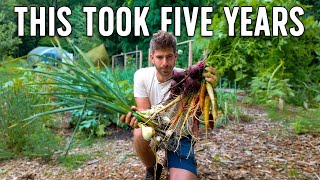
The video is a comprehensive garden tour of a one-acre suburban homestead in its fifth year, showcasing the transition from spring to summer. The creator highlights the abundance of vegetables, fruits, and new projects, emphasizing the progress and lessons learned over five years of gardening.
The video is a straight-up garden tour during the transition from end of spring to beginning of summer. Heavy rain has led to abundant growth.
One raised bed is inactive due to an active wasp nest. Another bed is an experiment with dense planting of garlic and onions, which is doing incredibly well.
Garlic scapes are in prime season, described as a delicacy with a texture like asparagus and a mild garlic flavor. Onions are bulbing up nicely. The creator recommends growing garlic and onions as easy, productive crops.
A bed is dedicated to flowers, managed by Harley, who is teaching the creator to make bouquets. Other beds include lettuce, radish, escarole, bok choy, kale, fennel, and snow peas.
A strawberry patch is thriving in its second year, producing a thick flush of fruit. The creator is also training grapes and an Asian pear tree to espalier, a technique they would use more of if starting over.
First-time wheat growing is exciting, destined for bread and pizza. The fruit orchard has mixed results: apple trees produced no flowers this year, but Asian pear trees are fruitful. A peach tree is protected with netting to deter squirrels.
An in-ground bed is loaded with staple crops like garlic, potatoes, and onions. A new trellis with snap peas is covered with netting to protect brassicas from cabbage butterflies, resulting in damage-free cabbage and broccoli.
Three fuyu persimmon trees are producing an unprecedented amount of fruit, naturally thinning themselves. Cherry trees have yielded only a few cherries. A deer fence supports kiwi berries and various berries, including the first raspberry of the season.
The greenhouse is transitioning from spring to summer crops, with tomatoes trellised using the lean-and-lower technique. Elderberries, raspberries, and blackberries are planted in new spaces. Potatoes are grown in containers with compost.
Three pawpaw trees are established, a tropical-tasting fruit that can grow in this climate. Compost systems have been upgraded to prevent animal intrusion. Shiitake mushroom logs are fruiting, with more oak logs on the way.
Chickens are producing well. A new bee apiary has been set up with local bees, and the colony is establishing. The creator hopes to harvest honey by summer's end.
The creator harvests spring goodies to make a pasta dish. The recipe includes fresh pasta dough (semolina and all-purpose flour), spring onion, young garlic, radish pods, carrots, and pistachio garlic scape pesto.
The tour demonstrates the rewards of a five-year gardening journey, from abundant harvests to new experiments like beekeeping and mushroom cultivation. The creator's passion for growing food and continuous learning is evident, with a promise of more projects and harvests to come.
What is the texture and flavor of garlic scapes?
They have a texture like asparagus and a similar sweetness, but with a garlicky flavor that is less intense than a garlic clove.
01:36
What is the recommended spacing for garlic and onions in a raised bed?
The creator planted as many garlic and onions as possible into one 4x8 bed as an experiment, and it worked incredibly well, suggesting dense planting is effective.
01:09
What is the 'lean and lower' technique used for?
It is a trellising technique for tomatoes that was successful last year.
12:15
What is the purpose of netting over brassica beds?
To protect them from cabbage butterflies that lay eggs and destroy the plants.
07:49
What are radish pods and how are they used?
They are a byproduct when radishes bolt, having a texture like snap peas. They are blanched and used in pasta.
17:23
What is the key trick to prevent fresh pasta from sticking?
Let the pasta sheets dry out for about an hour or two before cutting.
17:09
What is the recommended time to harvest garlic for storage?
About one to two months after the scapes appear, when the bulbs have bulbed up.
01:50
Garlic scapes are a delicacy
Highlights an often-overlooked crop part that is both delicious and versatile.
01:24Second-year strawberry patch success
Demonstrates the importance of patience and establishment for perennial fruits.
03:13Netting protects brassicas from pests
Shows a simple, effective method to prevent common garden damage.
07:49Pawpaws: tropical fruit for temperate climates
Introduces a lesser-known fruit that can be grown in cooler regions.
12:39Beekeeping as a homestead addition
Illustrates the expansion of a homestead beyond plants to include animal husbandry.
15:35[00:02] butterfly was waiting for me to take off this netting and it's going right back on. Oh, there's another one. No, thank you. So, as I've developed 5 years, I've done a lot of different types of videos talking about that
[00:16] straightup garden tour, which is what this video is going to be. It's a very exciting time in the garden right now. It's the transition between end of spring and the beginning of summer. It's been raining so much, more than I've
[00:29] So, things are absolutely abundant. There's so much I want to show you. And I will show you pretty much everything I have growing from all of the vegetables to all of the fruits that are coming in because I'm 5 years in and things are
[00:42] starting to pop off. So, I'm going to start right at the beautiful raised beds. There's a lot of different things happening in these raised beds. Actually, this one right here is a little bear because there was
[00:56] a wasp nest that Oh. Oh, Jesus. It's still there. Let's uh let's stay away from that. Thought we took that thing out, but nope. It is still there. It is active. So, we haven't been able to garden much in that bed. But if we look
[01:09] this raised bed is. This was a bit of an experiment. We planted as many garlic and onions as you possibly could into one 4x8 garden bed just to experiment of kale in there and it's doing incredibly well. So, I will continue to
[01:24] do this type of spacing in raised bed gardens moving forward. I actually just came through and harvest a ton of garlic scapes yesterday for a video, but this scapes yesterday for a video, but this is prime garlic scape season. These are
[01:36] true delicacy. I mean, they're delicious raw. M texture of asparagus. Similar sweetness of a fresh asparagus, but garicky yet not as garlicky as a garlic clove, which is why I can eat them just like that. So, the garlic is just
[01:50] starting to bulb up, but we're still a good month to two months out from actually picking this for storage. And then the onions are really starting to bulb up nicely. I mean, that is a proper spring onion right there. If you have a
[02:02] garden and you're not growing garlic and onions, you're missing out on one of the easiest crops to grow that produces just so much food because you can eat both of growing season. And you cannot find a spring onion like that in the store. You
[02:16] season at a farmers market or if you grow it yourself. This bed right here we've dedicated to flowers. We did that last year and it was super successful. Harley's the flower expert. She's been teaching me how to make proper bouquets.
[02:30] So, just a few flowers coming in now, but you know, come a month, this is going to be completely popping. This bed is kind of turning over a little bit. different lettucees. There's some radish growing in. We've got some escrow, which
[02:43] we grow a lot of in the summer. So nice. Just chopped in half, thrown on the is really bumping. We've got some beautiful bok choy. Bunch of kale. Got some fennel over there. And then we've got oo some peas coming in. These look
[02:59] like snow peas, which are the greatest garden snack of all At this point, I don't really have enough for more than just garden snacks But that's good enough for me. My kids love coming through the garden and
[03:13] we're moving on to the raised beds. And the next thing I want to show you is this little trellis area right here, which last year we grew as a three sisters patch. This is where one of my biggest strawberry patches lives. Just
[03:26] take this off real quick. We're kind of through the biggest flush of But let's see if we can find some good ones. I love this variety. One that's super craggly. It's a little bit sour. So tasty. I think from all the rain
[03:40] bit. Hopefully you saw my strawberry short. This has been the most successful about buying bare root strawberry plants, getting them in the ground, letting them establish. And that second year is when you get a patch of
[03:53] strawberries that is this thick. That really starts to put out a lot of fruit. strawberries. I'm always just looking for spots around my garden to plant more freeze them or make jam. I'm training some grapes here to espalier on this
[04:09] trellis. Actually, this tree over here I'm really excited about. This is my first experiment with an aspalade fruit tree. It's an Asian pear, one of my favorite fruits, and it looks amazing. It's actually putting out a good amount
[04:21] think if I were to start from scratch, I would espalier a lot more fruit trees. It seems like a great technique for fruit production. And tree management technique. Here's another grape vine on this trellis. It's only the second year,
[04:34] so it hasn't really put out much fruit. If I'm being honest, I haven't had that surprised cuz grapes grow well on Long Island. There's a ton of vineyards out success, but just a lot of disease, a lot of pests. It's It's been a bit of a
[04:48] disaster. Oh, I almost forgot something right here. Look at all of this beautiful wheat we are growing. First time growing wheat. Very excited for that. We'll definitely be making some bread and pizza in a few months. All
[05:00] right, so we're moving on to the fruit orchard, which has had a lot of mixed results. I would say all of these trees are my babies, my secondary babies outside of my real babies. Actually, I just had a baby about 4 weeks ago, so
[05:15] pardon if I am a little crazy because I am sleeping exclusively in 3-hour stretches for the last month. But we're doing it. We're getting through it. Now, this season, none of the apple trees put out any flowers, which is very
[05:27] established. But it does seem to be a trend on Long Island from talking to a has any experience with that. The Asian pear trees, on the other hand, have been putting out a ton of fruit, and that is just very exciting to see. I feel like
[05:42] I'm finally getting to a point, 5 years in, where some of these trees are really which was the goal of planting all these fruit trees many years ago. Take a look at this right here. This is a peach tree. It's about 2 and 1/2 years old.
[05:56] There are two measly little peaches on there. It's actually best practice to years. And I just missed those two little fruit at the bottom. But right over here, we have an older peach tree which is about 5 years old. I planted it
[06:10] right when I got into the studio. It was the size of the other one. But this thing is vigorous. Actually, right here we have a 1 and 1/2year-old nectarine tree. That's how fast this tree grew. In 5 years, I have a fully established
[06:23] fruit. And for the last few years, it's been putting out a lot of fruit, but the squirrels, they eat all the fruit before it's even ripe. I think they're just collecting the pits in the middle. So, Operation Fort Knox peach protection
[06:38] commence this year. We put on this huge net because I refuse to not get a big this is going to do the trick. Plus, I realize I can grow veggies under this I might plant some zucchinis under there, but I'm very excited to hopefully
[06:53] make a bunch of peach jam in the next two months. Now, directly to the right of this peach tree is the big market garden bed. It's just an ingground garden bed, but this is how a market garden would look. And you can see it is
[07:06] loaded with food right now. Ever since I got the greenhouse, which really increased production, I've been able to focus more on those staple crops. Like enough garlic. Even these two beds of garlic is not enough garlic for my
[07:21] probably need another two beds. We've got potatoes. We'll harvest these as new potatoes because we have more storage potatoes over there. Onions that are just absolutely blowing up. And then over here, I built a new trellis this
[07:35] year. We've got some snap peas, which have gotten kind of destroyed over the last month. Now, the reason I have this covered is because we have two full beds of brassacas. And with brassacas, you get a lot of the cabbage butterflies,
[07:49] flipping around, laying their eggs, destroying the brassacas. But not these, baby. Look at what's going on under here. Absolutely gorgeous. This is
[08:01] honestly the first time I've taken this off in maybe a month. I mean, soon going to have to come off. But this is all cabbage. Looking incredible. On the other side, we have different broccoli and cauliflower. Some bok choy with
[08:16] basically zero damage because of this netting. Actually, I'm getting Oh, see there's one right there. Not messing around with those things. They will eat realized I actually forgot some fruit trees over here that are very, very
[08:31] exciting. We've got pimmens growing in like crazy. I have three pimmen trees. These are fuyu pimmens and I have never seen them put off this much fruit. I'm traditional Chinese pcmen drying technique. I actually just realized that
[08:45] I have not thinned these out. There's so many. And the tree is just naturally thinning and dropping a ton of fruit on the ground. So, nature's doing the job out cuz there's so many. There's also two sneaky cherry trees over here. These
[08:59] have not been that abundant. I don't know if I just need more time, but I think I did see Yep. Oh, no. That was ripe yesterday. Bugs another one? Bugs didn't get I'll just pick it now. Let's see. It's not looking
[09:14] that great. But not bad. Yeah. Hopefully in the next few years I'll get more cherries than like three on each tray cuz that's not worth plants, I have to pick a few. The ultimate garden snack.
[09:32] but on this deer fence, I have endless berries. Right here is a kiwi berry that's starting to get very productive. You can see how much fruit is coming off. Kiwi berries are extremely aggressive growing plants. One of the
[09:46] have to prune them almost every few days, but they are delicious and it's a way to get some tropical fruit in a temperate climate. And then over here, just different types of berries on the entire fence line. just going for days.
[10:00] Oh, I actually think I see the first raspberry of the season. Yes. Hello. Let's see how she is. Tastes like a raspberry. The garden tour continues to Where do we want to go? Well, before we get into the greenhouse, I'm going to
[10:13] greenhouse. Some new developments. Now, one thing I've learned is there's no way to rush a garden. You start somewhere and it just kind of develops like a like splitting cells, just continuously expanding and growing from a single
[10:27] that. This was dead space to the side of the greenhouse. We've got the fence line over here. I planted some elderberry, which two years later looks like this. It's absolutely huge. And I'm going to have a ton of elderberry this year. Look
[10:41] what I want to do here, you can see it's already happening. We've planted a bunch of raspberries and blackberries. I already have a ton of blackberries on raspberries right here. And I'm going to do a proper berry trellis and see how
[10:56] that works. So, I'm always surprised how much I can pack in. There always seems to be little crevices and spaces to plant more food. All right, we enter the greenhouse. Speaking of more space to plant food, we've got a few garden beds
[11:08] of just different herbs, cilantro, dill, parsley. We've been doing a lot of potatoes in containers this year, which I'm very excited about. Grown completely in this compost. We just keep packing on the compost as the potatoes grow.
[11:22] There's actually more to the side of the greenhouse. all potatoes in these birdies beds. And the reason for that is I found that tubers in raised beds or containers is a great way to go because they can just really develop in there.
[11:36] They can die back and they don't have to create a big mess in your garden. You can just keep them contained in these beds and they can even overwinter in harvest them like these beds are refrigerator. So, I'm very excited to
[11:48] see how that goes. We're moving on to the high tunnel and first thing of note currently working on another climate battery greenhouse and I'm trying to get some citrus trees established so I can grow them on Long Island hopefully with
[12:01] success. We've got some fig trees over here. And again, a bit of a transition in the greenhouse. Everything is ahead about a month and a half. So, a lot of those spring crops are starting to turn over. We still have beets. We still have
[12:15] a lot of carrots we're harvesting, but then we're starting to load up on things like peppers and tomatoes. As you can see, we're trellising up these tomatoes and doing lean and lower techniques, which was really successful last year.
[12:27] grow. Cabbage is a plant I have not had much success with. I get big foliage growth, but the heads don't grow that big. So, please comment in if you're a successful cabbage grower. But that's really what's
[12:39] going on in here. It's honestly a little too hot to stay in here. So, I'm getting starting over there. Now, this might not look like much, but I am very excited about one, two, three trees. Anyone know what these are? If you guess pawpaw,
[12:53] obsessed with researching paw paws, watching pawpaw related videos. I think it's because I love fruit and paw paws are one of the only tropical tasting fruit you can grow in this climate. They also can be hard to get established and
[13:07] I've tried them before. This is the first year I got some really good trees first year I got some really good trees and we are off to the races. So, come 2 years, 3 years, I can't wait to show you some paw paw harvest. Now, moving on
[13:19] from the paw paws, this is a great example of space unused right now. I don't mind grass. I actually like a nice little patch. I think it's beautiful, but every year it seems like I just continue to build out the orchard or
[13:33] here. And this area, as you can see, it's about finding things that like the shade. That's why the paw paws are over there, because they like the edges of the forest and they can handle some shade. And then over here, I've actually
[13:47] upped my uh compost game a little bit. This is just a regular three bay compost system for garden scraps, all that foliage. This is where I keep my food scraps more protected in these plastic bins. But the animals were still digging
[14:00] under and getting in, which was just such a nuisance. So, we built this little stand which has a much more sturdy connection at the bottom. So, Plus, it's a little bit elevated, which will help with that. Actually, speaking
[14:12] of shade loving plants, I'm starting a little bit of a mushroom farm over here. I've actually planted mushrooms all up in the wood chips wherever I can. I'm planting mushrooms. It's just free food. But this is where my shiake logs are
[14:25] chilling out, waiting to fruit. I got a big harvest this year for the first time. And I just heard back from my local tree cutter. He just cut down an oak tree and he's bringing over more oak logs. So, I hope that this entire area
[14:39] right here in the next 2 years is just completely full of mushroom logs of all video on it, but of course it's a longterm process. So, stay tuned for like 2 years from now to be continued. This, by the way, is my absolute
[14:54] favorite view in the garden. It's a little bit elevated so you can really see what's going on. And man, it has come a long way. This was just grass, nothing else. And look what you can create in just four or 5 years time.
[15:07] Now, next we move on to the animal section of the homestead. And I've got two now. One animal, one insect. Chickens, you have seen them in many videos. They are producing like crazy. They are very hungry, freaking out. I'll
[15:21] garden tour cuz I need to show the people what's going on over here. The bee apiary. So, this has been the newest upgrade to the homestead. It's taken a lot of research over the last year and a half and it seems like I am just
[15:35] world of bees. But I just put out my first video on building this apberry, setting up the hive. We got some bees locally here on Long Island. They're integrated into the hive. And we've been beekeeping, which has been so fun. A
[15:48] little bit overwhelming at times, but the bees are very happy. They're just colony and get established and reproduce. So hopefully I can get some honey by the end of the summer. So stay tuned for that. And the last thing I
[16:00] want to say before we make a little food is I am finally breaking ground on the big backyard project. There's going to be a major garden renovation back here. Lots happening in the next probably month or two. All very fun things to
[16:13] just harvest a bunch of things that I showed you on the garden tour and whip up a little garden to table meal. So, like I said, we're in this nice I've got a ton of spring goodies that need to be cooked up. And since the
[16:28] now, I'm going to start things off by making a big batch of fresh pasta dough. And I'm using equal parts semolina flour and allpurpose flour, a little bit of salt, a bunch of fresh eggs, and some olive oil.
[16:42] olive oil. [Music]
[16:56] fresh pasta is when you cut the pasta and it all sticks together. This happened to me for years, no matter how much flour I added to the cut pasta. And then I stumbled upon the ultimate trick to avoid sticking pasta, which is just
[17:09] letting those pasta sheets dry out for about an hour or two to the point where actually stick together, but they still have enough flex that they won't break when they go through the pasta cutter. To prep this pasta, I'm going to dice up
[17:23] some of this spring onion, a full head of young garlic, and finally some of mention in the garden tour were these yummy radish pods, which actually come from when a radish bolts and starts putting out flowers. You get this great
[17:37] byproduct of these little pods, which have the texture of a snap pee with a I'm first going to blanch these along with the carrots to soften them up for about 90 seconds. Then in a pan goes some olive oil. And I'll fry up the
[17:51] onions and garlic until they have some color. Then in goes those blanched veggies. And this fresh pasta only needs about 1 to 2 minutes until it's al the pan. And I'm going to be finishing off this pasta with some fresh pistachio
[18:05] garlic scape pesto, which was featured in this recent short video I made on delicacy, and it's something that I've actually enjoyed more than a traditional basil pesto over the last few years. [Music]
[18:20] Wow. Yeah, it is the springiest spring pasta of all time and maybe the lightest tasting pasta I've ever had. M. Wow. tasting pasta I've ever had. M. Wow. [Music]


⚡ Saved you 0h 18m reading this? Transcribe any YouTube video for free — no signup needed.