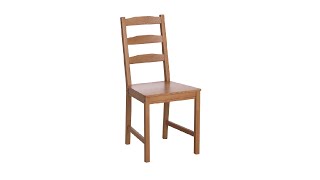

Do chairs really exist?
50sThis segment challenges a basic assumption about everyday objects, sparking curiosity and philosophical debate.
▶ Play Clip"The title is accurate; the video genuinely explores the philosophical question of whether chairs exist."
This video explores the philosophy of ontology, questioning whether everyday objects like chairs truly exist or are just useful mental constructs. It examines concepts like constitution, composition, and the special composition question, leading to a discussion of ontological reductionism, nihilism, and deflationism.
Philosophers question the existence of ordinary objects like spoons, buckets, and chairs, as their reality becomes uncertain upon closer examination.
An origami crane and the paper it's made of are not identical: the paper survives unfolding, the crane does not. This illustrates the relationship of constitution.
Objects are composed of fundamental particles (simples). If there is an infinite chain of smaller parts, it's a 'gunky universe'; if everything is part of something larger, it's 'junky'.
The view that wholes are nothing more than their parts. The crane and paper challenge this, suggesting being made of something differs from being those things.
Islands exist by common definition, but 'incars' (cars in garages) seem silly. This raises the question of whether usefulness determines reality.
A 'trog' is a tree and the nearest dog. While seemingly absurd, it parallels how a bikini is two disconnected pieces. This challenges objective reality of objects.
Realists believe the universe has 'joints' for objective categories; anti-realists argue our categories are just useful ways to cut reality.
Peter van Inwagen asks when do parts compose a whole. Possible answers: contact, fixation, or melding, but none fully explain all cases.
The view that any assortment of stuff composes a thing, no matter how scattered. This leads to accepting bizarre composites like a 'took' (two books).
Eliminativism denies ordinary objects; van Inwagen's organicism accepts living things but not artifacts. 'People exist but none wear clothes.'
Nothing ever composes; only simples exist. A 'chair' is just simples arranged chair-wise.
All positions agree on what exists (simples arranged in patterns), so disputes are merely verbal. Chairs exist if that's what we mean by 'chair'.
Composite objects are causally redundant; all effects can be explained by the behavior of simples. Believing in chairs is like believing in 'boo' (a magical substance).
If composites exist, counting parts and the whole leads to overcounting. A chair with 100 sextillion atoms would be 100 sextillion and one things.
Removing one atom from a chair doesn't seem to change it, but repeated removals eventually leave no chair. This paradox shows vagueness in object boundaries.
Peter Unger suggests 'stuff' survives sorites sequences without paradox, but turning stuff into a 'thing' introduces vagueness.
At atomic boundaries, it's unclear which atoms belong to a chair, leading to billions of candidate chairs. Which one is the real chair?
If all parts of a ship are replaced, is it the same ship? If the old parts are reassembled, which is the original? This challenges identity over time.
If ordinary objects don't exist, the paradoxes vanish. There are only simples arranged ship-wise; no ship persists or is replaced.
Trenton Merricks calls belief in ordinary objects false but nearly as good as true, since it's useful for tracking properties.
If 'chair' means 'these simples arranged chair-wise', it's a plural term like 'these books', referring to many things, not one object.
A chair cannot be identical to its parts (since parts can change) but also cannot be different (since there's nothing else). This suggests a contradiction.
She distinguishes between neutral 'thing' (any entity) and sortal 'thing' (with identity conditions). Existence depends on application conditions; chairs exist if conditions for 'chair' are satisfied.
Ship of Theseus: specify what 'ship' means (original parts or registered vessel). Sorites: stipulate boundaries. Problem of the many: many slightly different chairs, but it doesn't matter.
Objects like holes and perhaps chairs are disturbances in matter. Michael Jubien calls this 'object fixation'—confusing properties of stuff with a thing.
Confusing 'is' (predication) with 'is' (identity) leads to believing chairs are made of matter. Actually, properties are so thorough we noun them.
People are not made of atoms but performed by them. We are disturbances in stuff, not the stuff itself. As Alan Watts said, 'the universe peoples.'
The video concludes that ordinary objects like chairs exist as useful concepts but are not fundamental physical entities. They are disturbances in matter, and their existence depends on our language and application conditions. Ultimately, there are no things, but as many things as we like.
What is the special composition question?
When do two or more things compose something else?
09:02
What is mereological nihilism?
The belief that nothing ever composes; only simples exist.
11:58
What is the problem of the many?
At atomic boundaries, it's unclear which atoms belong to an object, leading to billions of candidate objects.
19:35
What is the Ship of Theseus paradox?
If all parts of a ship are replaced, is it the same ship? If old parts are reassembled, which is the original?
20:34
What is ontological reductionism?
The position that wholes are nothing more than their parts.
04:06
What is a 'sortal' term?
A term that tells us what a thing is in a way that allows counting and identity conditions.
27:12
What is the difference between the 'is' of predication and the 'is' of identity?
Predication tells what something is like; identity tells what is the same as what.
33:52
What is a 'gunky universe'?
A universe with an infinite chain of smaller and smaller substructure, with no fundamental simples.
03:33
What is mereological universalism?
The belief that any assortment of stuff, no matter how scattered, composes a thing.
09:48
What is overdetermination in ontology?
Composite objects are causally redundant because all effects can be explained by the behavior of their parts.
13:11
Crane and Paper Identity Puzzle
A simple visual demonstration that two things (crane and paper) can be the same yet different, challenging our notion of identity.
02:33Incars: A Silly but Logical Concept
Introducing 'incars' humorously shows how arbitrary our object categories can be, questioning why islands are real but incars are not.
06:00The Trog: Tree + Dog
The absurdity of a 'trog' (tree + nearest dog) highlights how our naming conventions create objects, paralleling the bikini example.
07:07Overcounting Example with Curiosity Box
A practical, funny example of overcounting when listing items in a subscription box, illustrating ontological overcounting.
14:06You Are Not Made of Matter
The mic-drop moment: we are not physical objects but disturbances in stuff, performed by atoms, not made of them.
33:34[00:17] here Michael here hey vauce what is here what is here what is there what is there what really exists
[00:30] there what is there what really exists do waves exist or are there just things that are wavy when does a piece of food stop being a piece of food and become me stop being a piece of food and become me do chairs
[00:48] existence and chairs are what philosophers call ordinary
[01:00] old common sense things we deal with every day spoons buckets rocks stuff every day spoons buckets rocks stuff like that their existence is as obvious like that their existence is as obvious as possible but the more we try to sus
[01:14] as possible but the more we try to sus out where they are the more sus they out where they are the more sus they become first of all sure this could all be a dream maybe we've all been hallucinating chairs all these years or
[01:28] this could be part of the simulated reality pumped into our brains while our bodies are harvested for energy but underneath that skepticism there's a deeper ontological question we need to answer first regardless of
[01:44] whether this spoon is made of real atoms whether this spoon is made of real atoms or simulated atoms is it really possible to be made of something take a look at these two
[01:56] something take a look at these two things as we all know 2 - 1 things as we all know 2 - 1 is two there are two things here there's an origami crane and a piece of paper I'm just kidding of course there's
[02:10] just one thing the crane and the paper are the are the same but watch this
[02:33] crane were truly identical they would share everything in common but clearly they don't the paper can survive being unfolded and the crane cannot also I made the crane but I didn't make the paper and the paper was around before
[02:49] the crane you know for two things that are the same they sure are different this relationship is called Constitution paper con constitutes the crane it's a
[03:01] onetoone relationship but there's another kind of being made of going on here too this paper for example is made not of one other thing but of sex illions of things fundamental subatomic particles electrons and quirks or
[03:18] strings or physical and virtual Fields this many toone relationship is called composition philosophers call whatever it is that matter is ultimately composed of simples a simple is a thing that unlike
[03:33] a piece of paper has no parts no substructure not even a top or bottom no symbols that there's just a never-ending chain of smaller and smaller substructure philosophers call such a reality a gunky universe if
[03:50] direction and everything turns out to be part of something bigger with no final complete composite that is known as a junky universe point is believing ordinary objects exist and are made up of smaller things
[04:06] is quite common it's called ontological reductionism it's the position that reductionism it's the position that holes are nothing more than their parts but our Crane and our paper challenged that notion it seems like being made of
[04:19] that notion it seems like being made of some things is different than just being those things let's agree on what it means to exist let's say that for for something to exist is simply for there to be more than zero of it so Pegasus
[04:36] exists if we mean are there any winged horses in works of fiction and mythology and Pegasus does not exist if we mean are there any physical Flesh and Blood
[04:48] winged horses that evolved on Earth through natural selection okay so if we can agree on that then of course chairs exist there's this one right here I can see it and I can feel it and I can taste it yeah oh yeah it's kind of dry a
[05:05] it yeah oh yeah it's kind of dry a little bit salty dry and salty are what little bit salty dry and salty are what we call properties properties tell us what things are like for example this slice of cheese is floppy by noticing
[05:20] and sharing properties we can let each other know what to expect from things and we all more or less agree on what things there are we give names to stuff and if they catch on we put them in dictionaries with the word noun next to
[05:35] them but are all of these nouns an inventory of the universe or an inventory of the universe or an inventory of things we made let me put inventory of things we made let me put it this way do Islands exist well it's
[05:48] around confirms that there are more than zero Islands so yes Islands exist but zero Islands so yes Islands exist but what about in cars
[06:00] what about in cars an incar is a car that is in a garage as a car leaves a garage an incar diminishes at the threshold until it diminishes at the threshold until it collapses into non-existence later an
[06:13] extremely similar incar May emerge at the same threshold when the car returns are there any cars in garages right now well if so then in cars exist but you might be thinking Ah that's not a thing
[06:29] you just made that up and it's silly being in a garage is just a property that a car can have stop trying to make incars a thing okay but first of all I
[06:41] didn't make it up Eli hirs did and second of all if you think incars aren't second of all if you think incars aren't things wait until you hear about Islands an incar might just be a relation between a car and a garage but an island
[06:54] is just a relation between land and some water now of course Island might be a more useful concept than incar but does that make Islands objectively more real than
[07:07] than incars and what about trogs a trog is an object whose parts are a tree and whatever dog is nearest here's a picture of one do you see the trog this is its tree part and this is its dog part you
[07:23] might be thinking come on how can that be a thing the tree and the dog aren't even connected well so what these two pieces of fabric aren't connected and yet they are a thing called a bikini now sure if we cut down this tree and burn
[07:38] it for warmth we don't feel the need to apologize to What's Left of the trog for destroying its tree part but maybe we should what if some extraterrestrial showed up and said they thought dogs and
[07:52] trees composed trogs would they be wrong could we convince them otherwise ontological realists believe that we could that there really is a mind independent answer to the question what
[08:07] is there people like Theodore cider believe that the Universe has joints and that we can cut up reality into objective real things by finding them ontological anti-realists disagree their position is
[08:21] that what we think there is is just one way to cut up reality it's a good one for us and our needs but it's not objectively more true than any other so
[08:33] objectively more true than any other so who's right H well if these blocks compose a tower what do they compose now just because we don't have a name for this doesn't necessarily mean I haven't
[08:47] doesn't necessarily mean I haven't accidentally built something does it when do two or more things compose something else Peter Van inwagen calls this the special composition question in material beings he considers possible
[09:02] answers maybe things compose something only when they're in contact well that's a good thought but it doesn't explain how a bikini can be a thing or why two books are still just two books when one is stacked on top of the other you know
[09:18] maybe a certain degree of fixation is required or a required or a melding if a surgeon sewed us together and the skin healed with no seam and we shared the same blood
[09:30] Supply you know even then it would seem wrong to say that we'd become some new kind of animal there'd still just be me and you but like stuck together the philosophy of parts and holes is called myology and myological universalism is
[09:48] the belief that there is an answer to the special composition question and the answer is this any assortment of stuff no matter how strange or scattered across time and space composes a thing some pages compose these books but I
[10:03] there's also a third thing let's call it a a took because its parts are two books there is also something composed of uh my left ear the northern third of every
[10:16] brown trout in England and the Eiffel Tower just because it doesn't have a name and no one's ever talked about it before just shows a lack of interest on before just shows a lack of interest on our part to a Universalist eliminating
[10:28] some composits but but not others is just too arbitrary we may as well accept them all eliminativism is any belief that accepts some composits but eliminates others Peter Van inwagen for example believes that there are no
[10:44] example believes that there are no ordinary objects no chairs or shirts or shoes right here there are just some symbols atoms or whatever arranged shoewise there isn't something else here called a shoe but he thinks that because
[10:59] people believe that they themselves exist and he can't see how something existing in the first place to even think that there must be people he goes further though to argue that all living things exist while admitting he doesn't
[11:15] have any knockdown arguments in their favor he mentions that because symbols that are part of a living organism maintain the organism while shedding some members and gaining others all while remaining individuated from other
[11:28] organisms unlike say waves of water at the moment of collision clearly symol in the moment of collision clearly symol in the act of a life must compose something that position is called organicism it's been called the belief that people exist
[11:45] but none of them wear clothes myological nihilism is less generous it's the belief that there are no trogs or in cars or dogs or trees
[11:58] because nothing ever composes now the nihilist does not believe that there is nihilist does not believe that there is nothing here there are lots of symbols but that's it now that might sound puzzling how can a bunch of fundamental
[12:10] particles arranged into atoms and molecules that are arranged like this molecules that are arranged like this not be a chair I mean that's just what a chair is well good question let's call that deflationism the belief that this
[12:25] is all silly and that all these positions are just talking p one another I mean they all agree on what reality contains they all believe that there are symbol here and that those symbol are arranged into a chair shape and since
[12:40] that's just what a chair is they all believe in chairs those who say they don't are just being weird and contrarian deflationism has many supporters and it truly is the heart of our issue today but to address it we
[12:55] should first see why it would be nice if all these Parts did not form a chair all these Parts did not form a chair let's begin with over determination if chairs really do exist shouldn't they be able to interact with us the thing is
[13:11] though everything this alleged chair can do can be described by referencing the behavior of simpol here and any other simpol that happen to come along an account of the activities of every atom in this room leaves nothing for the
[13:25] in this room leaves nothing for the chair to explain composits are causally chair to explain composits are causally redundant believing in chairs is like believing that while yes the burning gas from my stove completely describes why
[13:39] the water in the pot boils there's also a magical invisible substance called boo that comes out of my stove and does the same thing as the flame at the same time warm the water just the same but there
[13:54] is Boo chairs are no more real than boo composits overdetermine what happens in the world they also lead to over
[14:06] counting for more on that let's say hello to this video's sponsor hi I'm Michael Stevens you may know me from such films as Lady Gaga Judi parody Key of Awesome number 42 and the Emoji Movie but today I'm here to
[14:23] talk to you about the Curiosity box this season our subscribers will be receiving many things including a shirt celebrating the Sherman line a kit to find out what kind of bacteria grows on you a puzzle that celebrates the average
[14:40] you a puzzle that celebrates the average color of Neptune and yes also Uranus and the first ever atome demonstration of impossible colors and right now if you subscribe with code BOGO we'll also send you our entire summer box completely
[14:56] free just pay shipping how many things will you be receiving for this one ridiculously low price well you might think 15 eight things plus seven things but don't forget that you're also getting this entire collection and this
[15:10] getting this entire collection and this entire collection that's 17 entire collection that's 17 things order now that's a good deal but the ontology seemed wrong if I count some parts I shouldn't also count the
[15:24] compose but if you believe in composite objects you must right I mean after all the composite exists so if this chair contains say 100
[15:36] setian atoms then there are actually at least 100 sextilion and one things here all of the atoms and also the chair that seems wrong but wait there's
[15:50] chair that seems wrong but wait there's more if I take a knife and scrape off a tiny part of this chair is it still a chair I think most of us would say that yes it is still a chair and it would still be a chair even
[16:03] chair and it would still be a chair even if I removed a tiny bit again and again a series of tiny innocuous removals is called a sores sequence the trouble they cause is that while it seems we must accept that each individual step doesn't
[16:18] annihilate the chair clearly enough minute removals will eventually leave us minute removals will eventually leave us with no chair nothing at all in fact but how can that be how can subtracting zero over and over again ever give a
[16:33] different result well clearly there must be a point at which a tiny change does make a difference now different people might give different answers as to where that line is but uh you know we could just stipulate the boundaries we could
[16:49] Define chair in some extremely precise way if we did that if we defined the shape function and history that make something a chair so prec precisely that her break its status as a chair how could we know if we' done it
[17:06] chair how could we know if we' done it right if we called up God and said hey hey dude watch this okay see this chair well okay now we're going to remove a single atom from it tada it's no longer a chair is it
[17:20] would God be like correct you guys nailed it that is exactly right it was a chair before and now in my Infinite Wisdom I can confirm
[17:32] that that single atom was exactly what made the difference unless there's some explanation for why a boundary should be drawn in a precise way instead of some other way our stipulations are just
[17:47] arbitrary ordinary objects may be unredeemable vague but being vague may actually be a feature of ordinary objects for example
[17:59] how many people is a crowd 10 people standing together in a huge empty Park might be more of like a group but 10 people standing further apart in a tiny people standing further apart in a tiny waiting room will feel way more crowded
[18:13] the fact that our terms depend on context that they're plastic makes it seem less and less like they're describing things and more and more like they're pragmatic that rather than telling us what there is they tell us
[18:27] what to expect Peter anger has pointed out that there's at least one kind of thing that can survive a cides sequence without survive a cides sequence without Paradox stuff if you innocuously remove
[18:40] tiny pieces from something that is just some stuff you will still have some stuff after each step until you reach a clear and unambiguous boundary when the
[18:52] last piece is removed there will no longer be any stuff this might show that there are composite objects stuff as soon as we pretend that
[19:04] some stuff is a thing though vagueness sets in suddenly we're talking about a thing that can lose Parts but also can't lose parts and unless contradictions can exist words like chair just don't really refer to anything in the
[19:20] universe sores sequences lead to other problems too like the problem of the many if removing a tiny number of atoms from this chair leaves me with a chair well
[19:35] how many chairs are here like okay there's there's this one but then there's there's this one but then there's the first but it doesn't have these atoms on top of it you know I don't have
[19:49] to remove atoms for this to be a problem all I have to do is try to Define which atoms here are part of the chair and which aren't at the atomic level there isn't a definite boundary near the edge it will be hard to tell whether a
[20:02] particular molecule is part of the moisture in the chair or part of the ambient humidity instead of there being a single chair here it seems like really there are billions and billions of candidates for the chair which one is
[20:19] the chair but now suppose that instead of removing pieces like in a sides sequence or choosing pieces like in the problem of the many we instead discard pieces and replace them with new similar pieces
[20:34] this is the setup to the famous ship of Theus Theus Paradox suppose I buy a boat and name it feus over time parts of the boat wear out and I replace them with brand new
[20:47] parts after say 10 years well I might realize that not a single part of my boat was part of the boat on the day I bought it do I now own a different boat have I owned two boats not but now suppose that someone has been following
[21:01] me around all these years and has been picking up each old part I throw out and storing them away in a warehouse after I've replaced all the original parts they take them and join them back the way they were 10 years ago which boat is
[21:17] way they were 10 years ago which boat is thesis both if we conclude that ordinary objects don't exist the problems of pides the many thesis overdetermination and over counting all evaporate if there are only symol
[21:33] and they never compose anything then which one is the ship of Theus is easy which one is the ship of Theus is easy to answer neither neither are the boat and nothing ever was the boat all that happened was that some simples got moved
[21:47] around the simples the scavenger has are the simples I possessed when I bought the boat but there's no mystery of persistence removing or exchanging a piece of stuff never left me with the same stuff there's also no mystery as to
[22:03] which of the billions of chair candidates here is the chair and the removal of no specific atoms will ever stop it from being a chair because there is no chair here and there never was there are only symbols arranged chair
[22:19] wise the illusion that there are composits that can survive changes in their parts is an artifact of our minds it's a helpful one that allows us to track certain properties and ignore others but when taken seriously it
[22:34] obviously is not really how the universe works and that's okay we shouldn't be embarrassed when we talk about boats or chairs our words for ordinary objects really do refer to actual phenomena and therefore are more correct than
[22:49] believing that say the sun turned into a black hole yesterday unlike the false statement that chairs exist there is no evidence that saying the sun turned into a black hole yesterday could even be incorrectly describing because of this
[23:05] Trenton Merck calls the belief in ordinary objects false but nearly as ordinary objects false but nearly as good as mean of course there are chairs if if you believe that there are some simples
[23:21] arranged chair wise then you admit there's a chair because that just is what a chair is it's not some additional thing over and above these symbols it just is them each is still an atom or electron or whatever but together they
[23:37] electron or whatever but together they are a chair well not so fast there chair lover what do you mean a chair is simples arranged chair wise the phrase simples arranged chair wise just picks out these simples there's nothing else
[23:53] for that phrase to refer to there aren't these simples and then also some other simp that are the simpol arranged chair wise so do you mean that chair is a disguised plural that it refers to lots of things
[24:08] plural that it refers to lots of things just like the phrase these books because these books only commits us to the existence of this book and this book but not an additional object that's called a these books likewise if chair just means
[24:24] this simple and this simple and that simple well then it points to a whole simple well then it points to a whole bunch of things and not one of them is a bunch of things and not one of them is a chair sure chairs exist if by chair we
[24:37] mean a word for all these symbols but if by chair we mean an actual object in the universe there just aren't any my friend except maybe there is no chair
[24:49] over and above the symol but instead something happens when an assortment of syles are arranged into a chair shape each member continues to be a single atom or whatever but collectively they all simultaneously become one thing a
[25:06] chair okay so then either there's no chair here just symol or somehow a miraculous contradiction has appeared many things and also one thing that
[25:18] despite both clearly differing in that respect are still respect are still identical it looks like chairs cannot be identical to the parts they're supposedly composed of but chairs also
[25:31] can't be different from their composite Parts because there's nothing else there and after counting and accounting for their parts there's nothing left for the their parts there's nothing left for the existence of a chair to cause or
[25:44] explain to rescue chairs from non-existence we need to find a way to show that a chair is independent of its atoms and therefore distinct from them atoms and therefore distinct from them but not so distinct that it's possibly
[25:59] over and above them we need to find a way to make chairs ontologically innocent to have our cake and not have it too Amy Thomasson does this in a very clever way she points out that if I ask you uh hey is there anything in the
[26:15] fridge and you look inside and see that it's empty and say there's nothing in it it would be weird if I came over looked inside myself found a single eyelash in the corner and said oh um excuse me what is this you said there was no thing in
[26:32] the fridge but there was an eyelash and gosh dang it the whole thing eyelash and gosh dang it the whole thing is actually full of air now that would be weird because when I asked if there was anything in the fridge it was
[26:44] was anything in the fridge it was implied that I meant anything to eat by arguing that the empty fridge is not really empty I was using the word thing in what Thomasson calls a neutral sense I used it to mean any and all entities
[26:59] that could possibly be described but you took me to be using thing in what she took me to be using thing in what she calls a sortal sense a sortal is a term that tells us what a thing is in a way that allows us to count how many there
[27:12] that allows us to count how many there are and know when there is or isn't one water is not a sortal if I told you there was water in my basement and you asked how many Waters I'd have to use a sortal to answer you for example gallons
[27:26] of water Thomas argues that the neutral use of thing is meaningless when used to ask questions for example if I used thing in a neutral sense and asked how many orange things are in this video you would have no idea how I wanted you to
[27:42] carve it all up thus there would be no single correct answer you might say uh one orange thing your shirt but then I could say what no there's my left sleeve my right sleeve the inside of the shirt the outside of the shirt come on there's
[27:58] the outside of the shirt come on there's way more than one unless we use sortal any search for what things there are will end in confusion not because there are no things but because it hasn't been made clear what conditions to apply when
[28:12] searching for Thomasson this means that what we find depends on what application conditions we use if I ask if there's anything here that the condition smaller than a molecule applies to you could note each such thing and give me an
[28:29] inventory chair would not be on that list but if I asked you if there were any mediumsized rigid according to human strength things here chair would probably go on your list and no single atom would if an application condition
[28:46] is satisfied in the world then the thing it describes exists so chairs do exist if the application conditions for one thing are also sufficient for something
[28:59] else then if we find the first thing we have found the other because its have found the other because its existence is entailed analytically by the existence of the first thing that is by meaning and logic alone for example
[29:12] if I say that I live in a house you can conclude without looking that I live in a building there's no Paradox here I don't live in a house and a building two distinct things that defy the laws of physics by being collocated instead the
[29:27] conditions that apply to a house are also sufficient for a building so a single chair is not impossibly identical to some collection of many nor is it somehow over and above its parts instead Adams arranged chair wise merely
[29:44] Adams arranged chair wise merely logically entail a chair the entailment connects things differentiated by distinct application conditions when we ask which one is the ship of thesis a puzzle erupts because we're being too
[29:58] neutral we need to say what we mean by ship aesus if we mean the original parts then this is it do we mean the thing registered to me by the boat authorities well then it's this one but which is the real one is an incomplete pseudo
[30:14] question when it comes to sori sequences I think we need to just stipulate where the boundary is I don't think there's an objective answer provided by the universe or God as to what exactly is and is not not a chair but that doesn't
[30:29] have to mean that there aren't any chairs it can just mean that every single collection of symbols is its own unique object independent of our minds and that we get to decide which to call chairs vagueness comes from our minds
[30:45] and our language but there are no vague objects in the universe we don't have to believe that our reality is simulated but I do think our reality is simulated but I do think we have to believe that it's STI ated it
[30:59] is a reality that contains not what intelligent machines have decided to intelligent machines have decided to give us but what we have decided we have there's no fact of the matter as to whether calling this a star is the true
[31:12] way to carve up this stuff it's a pretty useful way to do it and helpful for at useful way to do it and helpful for at least human purposes but star is a thing we imposed on the world as Michael juian puts it there are no things but as a
[31:27] consequ quence there are as many things as we like now as for the problem of the many we can simply just admit that there really are billions of slightly different chairs here some include a few boundary atoms that others don't but
[31:43] since they all act and react pretty much in unison in our daily lives it just doesn't matter which exact material collection we mean when we say this collection we mean when we say this chair however let's go back to our
[31:58] trains when we talked about holes we said that holes might be ontologically parasitic that their existence seems to require the existence of something else something that can host the hole perhaps our crane is Holy too not a physical
[32:16] thing in its own right but a disturbance in some paper there is no material crane here there's only some paper arranged cranewise but once we start entertaining that notion we realize that nearly everything we see and feel all ordinary
[32:33] objects and even ourselves are ontological parasites Michael juian calls our tendency to think that what is true of a chair is true of the material true of a chair is true of the material that is chairing object fixation or
[32:47] property repression object fixation is useful and nearly as good as true but when paradoxes Loom we should remember that while chairs do exist exist they are not made out of matter and cannot be touched or felt or tasted all I can do
[33:04] touched or felt or tasted all I can do is taste some stuff while it chairs if it looks like a duck swims like a duck and quacks like a duck then it's not a duck but it is arranged duck wise I think that the only concrete
[33:20] physical things in our universe are simples or since our universe could be simples or since our universe could be gunky the m material world only contains gunky the m material world only contains stuff and yes this stuff is chairing but
[33:34] the road paved by the idea that that makes this stuff a chair leads to Paradox to see how we could have made that mistake let's remember the famous clintonian dictum that often it depends on what the meaning of is is there's the
[33:52] is of predication which tells us what something is like as in this Che something is like as in this Che is floppy and then there's the is of identity which tells us what is the same as what for example 2 + 2 is 4 to
[34:09] believe that chairs are made of matter to believe that you are made of matter to believe that you are made of matter is to confuse these two ises when a collection of properties are extremely thorough in telling us what to expect
[34:22] from some stuff we tend to just go ahead and noun them collapse them into a single word and believe it doesn't just describe some stuff but refers to it I
[34:34] think we have an intuitive sense of the thoroughness of properties and this can be seen in how we order our adjectives big can mean many things a big diamond and a big house are very different in size blue tells me a bit more about what
[34:52] size blue tells me a bit more about what to expect but cheeseburger oh that's specific so specific in fact that we call it a noun the increasing thoroughness may be partly responsible for the fact that big blue cheeseburger
[35:06] for the fact that big blue cheeseburger sounds fine but blue big cheeseburger sounds kind of weird when we embrace the idea that cheeseburgers are not physical objects but instead exist as an abstract set of
[35:20] properties like juicy warm soft and so on the Spectre of ontological paradox dissipates you and I are not physical objects either Micheline is a bunch of different properties and most of them are very
[35:36] vague they include things like knowing who Kevin is being more or less a continuous relationship with the stuff that was Michaeline yesterday now some of what it means to Michael does concern composition like
[35:53] the fact that I will still exist even if I shave off the stuff I call my beard if I shaved off my beard there would still be some stuff miching but it would be different stuff than it was before we are able to lose parts and
[36:09] before we are able to lose parts and change and grow because we are not made change and grow because we are not made of matter we are hosted by matter as Alan Watts would say the universe doesn't contain people the universe
[36:22] doesn't contain people the universe peoples chairs and tables and rocks and peoples chairs and tables and rocks and buckets and people are not made of Adams buckets and people are not made of Adams they are performed by Adams we are
[36:34] they are performed by Adams we are disturbances in stuff and none of it is disturbances in stuff and none of it is us this stuff right here is not me it's us this stuff right here is not me it's just me we are not the universe seeing
[36:47] itself we are the seeing I am not a thing that dies and seeing I am not a thing that dies and becomes scattered I am death and I am the the scattering and as
[37:01] scattering and as always thanks for
[37:19] learn more can be found down in the description below there's also a link down there to subscribe to the Curiosity box if you subscribe now this will be your first box but remember use code BOGO and we'll send you our summer box
[37:31] BOGO and we'll send you our summer box as well completely free give your brain a treat support Vsauce support Alzheimer's research and creators Alzheimer's research and creators Everywhere by joining today I'll see you
[37:43] Everywhere by joining today I'll see you there and as always thanks for watching


⚡ Saved you 0h 37m reading this? Transcribe any YouTube video for free — no signup needed.