
Pixel 11 Pro: Price Up, RAM Down?!
31sHighlights a controversial trade-off that sparks debate among tech enthusiasts.
▶ Play Clip"The title's question is answered with a nuanced take—delivers on the 'worse' angle with the RAM and price, but balances it with praise for new features."
Google's Pixel 11 lineup, including the Pro XL, introduces notable hardware and AI features but faces criticism for a price increase and reduced base RAM. The video highlights the new 'Highlight' notification light, AI-powered camera tools, and improved translation, while questioning the decision to start the Pro XL at 12GB of RAM.
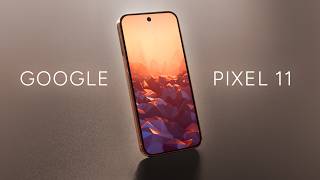
Google announced Pixel 11, 11 Pro, 11 Pro XL, and 11 Pro Fold. The Pro XL's price increased by $100, and base RAM dropped from 16GB to 12GB, attributed to rising component costs.
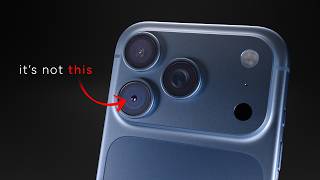
A new hardware feature on Pro models is a cluster of lights on the back, replacing the flash, which serves as an advanced notification light. It can glow in colors for contacts, show patterns during Gemini interactions, and visualize voice interactions.
To introduce the Highlight light, Google removed the temperature sensor that had been on Pixel Pro devices since the Pixel 8 Pro.
A camera feature that records video and automatically captures still images, which are cropped, unblurred, and tweaked. The creator initially dismissed it but found it excellent for capturing candid moments, especially with kids.
A camera app teleprompter that loads a script and adjusts prompt speed based on speech. The creator questions its usefulness for most users.
A standout AI feature that converts natural speech into clean, simplified text, handling complex commands like adding and removing items. It runs on-device and is considered genuinely useful.
Expands live translation from phone calls to videos and podcasts, with impressive demos showing Spanish videos translated to English with a matching AI-generated accent.
New colors include 'hibiscus' (hot pink) for the standard Pixel 11. Pro devices offer matte frames in obsidian and olive, with fog and canyon retaining a glossy finish. Pro screens are slightly brighter.
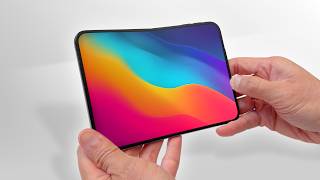
The Fold is thinner, lighter, and has a hinge three times stronger. The creator noticed asymmetric panel thickness (back panel thinner than front) and improved crease visibility, though still present.
Pixel 11 and Pro Fold have a new main sensor allowing more light. Pro devices get an improved telephoto sensor with 120x super zoom (5x optical), relying heavily on AI-generated details.
All four devices support Qi 2.2 at 25W wireless charging. Pro devices have slightly smaller batteries, likely due to the efficiency of the Tensor G6 chip.
The creator argues that 12GB RAM is the minimum for Google's Gemini AI experience, with AI models already using ~6GB. Starting the Pro XL at 12GB may limit future AI capabilities, and users may not realize this limitation.
The Pixel 11 lineup brings innovative AI features and hardware tweaks, but the Pro XL's price hike and RAM cut raise concerns about future-proofing and the overall value proposition.
What is the starting RAM on the Pixel 11 Pro XL base model?
12GB
00:16
What hardware feature replaced the temperature sensor on Pixel Pro devices?
The Highlight notification light
01:53
What is the maximum super zoom on the Pixel 11 Pro's telephoto sensor?
120x
07:24
What wireless charging standard and wattage do all Pixel 11 devices support?
Qi 2.2 at 25 watts
07:53
Why does the creator believe 12GB RAM is the minimum for Gemini AI?
Because Gemini Nano V3 already uses ~6GB, and future models will be larger, making 12GB the floor for a proper experience.
09:13
AI video stills are a game-changer
Demonstrates a practical AI feature that enhances candid photography, a common pain point for parents.
02:06Voice-to-text handles complex commands
Shows on-device AI's ability to parse natural speech into structured text, a significant usability improvement.
03:45RAM cut undermines AI promise
Highlights a potential contradiction between Google's AI ambitions and hardware decisions, affecting long-term user experience.
08:20[00:01] the Pixel 11, the 11 Pro, the 11 Pro XL, and the 11 Pro Fold. And something very strange has happened here because their flagship product, the 11 Pro XL, has had a price increase of $100 compared to last year, as well as having the RAM on
[00:16] the base model dropping from 16 gigs down to 12 gigs. Now, this stems from the world have skyrocketed and just consumer electronics pricing is jacked up like crazy. But, we're seeing Google launch a new phone with lowered specs
[00:31] and a higher price compared to the previous year. Now, you do have the option of going back up to 16 gigs of RAM, but it is tied to a storage upgrade that costs $100. It's not great. So, I was able to try these new devices at a
[00:43] Google event, and despite the increase in price and the drop in starting RAM, I features this year that are noteworthy. So, the headlining hardware feature is seemingly a cluster of lights on the back they call highlight. It's on the
[00:57] Pro devices only, so the Pro, the XL, and the Fold. And the light is located where the flash would have been, and it essentially serves as a advanced like notification light. You can set it so it glows in a color for specific contacts,
[01:10] interacting with Gemini, it'll have the flowing pattern as you talk to it, and in a different pattern, and it's just there to visualize your interaction with to have your phone face down, and I think some people don't like leaving
[01:26] up scratches, you got to get cases and protect the screen. I don't think the idea of a notification light on the back of phone is inherently bad. I actually think it's good nowadays because having a tool like a voice-operated tool that
[01:39] that it's how it's interacting, when it's interacting, that's a good thing, little bit heavily, like it's just a light. I love it, but I don't think the introducing it this year, they had to remove the temperature sensor that we've
[01:53] seen on the Pixel Pro devices since the Pixel 8 Pro, so that's gone. Now, there's some other cool AI software features they showed. In the camera, that records video and when you use it, in addition to the video file that you
[02:06] would get normally, you also get these still images that it intelligently selected and snapped while you were recording video without any effort from you. And these images are cropped and unblurred and just tweaked to look as
[02:19] heard about this feature, I was like, this is silly. Like, why would I ever pictures, I take pictures. If I want video, I want video. But then, I saw it in use and I realized this thing is awesome. So,
[02:33] I have kids and I have a family that like anytime I try to take pictures of my kids and I ask them to pose, it's just a goofy-looking photo. This allows life to just happen, things to just happen, and then it just picks up really
[02:47] nice moments and turns them into stills. And when I saw this in use at the event, pictures of this dude I'd met there and if he'd if if it'd been like, "Hey, do don't even know each other. It'd be like, you know, the weird picture. But
[03:03] candid and just natural. And I think they just look a lot nicer. I think this is something that sounds silly, but in actual use, I think a lot of people will teleprompter feature in the camera app where you can load up a script or
[03:17] something and it'll just prompt you as you go and it'll adjust the prompt speed depending on your speech. It's neat, but I just can't help but think like, how this? Like, are there that many creators that use phones to do this stuff? As
[03:31] never in my life used a teleprompter. So, I can't imagine like getting a phone use them, like I don't know. It was strange because this was like a launch feature that they're showcasing as like, "Hey, this
[03:45] is what's new with the Pixel 11." It's neat, I guess, but for a small number of people, maybe. My favorite AI tool that they showcased was the new voice-to-text feature, which is just really good. It's able to take the stuff you're saying and
[03:58] that before, but now it's able to do like simple math. And this is just the demo the guy showed. >> Remind me to get milk, cheese, two avocados, two oranges, um
[04:11] 12 eggs, and actually I need three avocados and I don't need milk. avocados and I don't need milk. And can you also add banana and >> I love that. I thought that was genuinely useful. It's able to take our
[04:26] natural speech and then turn it into this clean, simplified text. And it's seemingly all done on device. I don't know how long it'll be like a Pixel 11 it's really cool. Uh the other thing that's new is a new live translate. So,
[04:40] we've seen it last year, I think, where you could just get like phone calls and is now able to do it with videos and podcasts. And the demo was really cool.
[05:04] you get the most out of your YouTube I don't know how accurate of a depiction that would be for the actual user experience, but it was impressive, right? You have a Spanish video, when
[05:17] coming back to me in English. Interestingly, the person's voice was like it the English-sounding voice matched the voice of the original host voice, but also it had like an AI-generated accent.
[05:33] of just like a plain English accent. Like, it was neat, but The Pixel 11 has some new colors. The hibiscus color really pops. It's basically like a hot pink. It's super bright. Uh the pro devices, so the pro
[05:49] frame options this year. So, the obsidian and the olive have like a matte finish to the frame. And then the fog and the canyon colors still have the The pro devices also have slightly brighter screens than last year. It's
[06:03] is a brighter screen. We always appreciate that. And then on the Pixel little bit different this year. It also has the highlight on the back. The Fold only comes in two colors, the obsidian and then the olive colorway. It's still
[06:18] It's a little thinner and a little lighter than the previous generation. is three times stronger than before. All good to hear. But one thing I noticed when I held it in my hands, the panels are different thickness. Like if you
[06:33] look at this shot here, the back panel, so the one with the the camera bump, is a little thinner than the front panel. And it doesn't feel weird or anything. It still feels balanced and normal. And it could just be my eyes. Like I was
[06:46] think it's thinner, but I didn't have like calipers. But I really do think that the back pain, or the back panel, is thinner than the front panel, which I've never seen before. Like that asymmetric panel discrepancy on a
[06:58] crease, or like the visibility of the crease, it is better this year than the previous generation. That one had a very noticeable crease, but it's still who's really bothered by creases, you should go for something else. Now, in
[07:11] terms of cameras, the Pixel 11, as well as the Pixel 11 Pro Fold, have a new allows more light to get in, gives you better image quality. We'll be testing that shortly. But the pro devices, so the pro and the pro XL, don't have a new
[07:24] main sensor, but they do have a improved telephoto sensor. So, again, bigger sensor, allows more light to get in. This now goes up to a 120x super zoom. Keep in mind, it's a 5x optical. So, to go from 5x optical to 120 requires a lot
[07:40] of software. Now, Google's very good at generating details with AI to kind of fill in that photo so it looks really good, but it is generated. There's faster wireless charging across the board, so all four devices can now do Qi
[07:53] 2.2 at 25 watts, and the battery sizes haven't changed much. In fact, the pro devices actually have slightly smaller sized batteries than last year. I'm assuming that the Tensor G6 chip is just so energy efficient that Google felt
[08:06] confident and comfortable to shrink the battery like this because they know that the efficiency will carry. At least that's what I hope. Okay, a quick note mentioned in the beginning of the video, it can be argued that the new Pixel 11
[08:20] Pro product that starts at 12 gigs of RAM, because it has less RAM and it costs more than the previous generation, is arguably that conversation, but I bring this up because
[08:33] the way that Google has always done the Pixel experience is through a great software experience, you need a lot of RAM. More RAM than is being used. Like you want extra RAM just sitting there with lots of room for software to load
[08:47] because that just That's what makes it faster and smoother, right? So, though get loaded into RAM. There's like a certain chunk or a certain portion of
[08:59] your memory on a Pixel phone that is reserved for their AI models, and this model grows over time. Right now, we're at V3, and I think it's at like 6 gigs of usage. So, a portion of that 6 gigs is like the model itself, but there's
[09:13] that's reserved for like how that model interacts with other applications. gigs. The next version of it, so Gemini Nano V4, it's invariably going to be larger, right? The bigger the model, the better,
[09:29] usually. And I feel like at 12 gigs, that is the minimum. That is actually the requirement from Google to even have the proper Gemini intelligence experience. Anything less than that doesn't qualify. So, 12 gigs is the
[09:42] floor, and this new pro phone comes in at 12 gigs. Like it's just it's strange to me. Like I get why they did it. They have to have like a price competitive and this is how they do it. But I think a lot of people are going to pick up
[09:56] that pro phone, the base one, 12 gigs of RAM, and not realize just how they've only [clears throat] experience this model in its full glory, but the next limit, and now they're like, "Oh, you can't have the proper Gemini
[10:12] intelligence experience." It's so bizarre. It's not I mean, they're the ones that are consuming the memory on the other end of it, but I just Yeah, I I'm shocked that Google would
[10:26] disappointed that this is on their pro phone. I Yeah, that's just the way it these devices, I will be testing these uh when we get them in. Hope you guys uh when we get them in. Hope you guys enjoyed this video.
⚡ Saved you 0h 10m reading this? Transcribe any YouTube video for free — no signup needed.