
Pixel 11: The AI Memory Crisis Hits
45sHighlights a major industry issue (AI memory crisis) affecting smartphones, sparking curiosity and debate.
▶ Play Clip"Delivers on the 'crisis' angle with honest hardware critique, but the 'hands-on' promise is diluted by heavy software focus and sponsor segment."
Google's Pixel 11 lineup, including the 11 Pro and 11 Pro Fold, shows minimal hardware improvements due to the AI memory crisis, with price hikes and some regressions. The video highlights that software innovations, particularly AI features like Rambler and live dubbing, are the main differentiators, questioning whether upgrading is necessary.
Pixel 11 series has few hardware improvements, with some regressions, due to rising component costs from the AI memory crisis.
Wireless charging bumped to 25W, main camera sensor 56% larger (from a low base), Tensor G6 chip with 50% AI improvement, camera bar protrudes 40% less.
Battery life same as last year (underperforms vs Samsung/Apple), other camera sensors unchanged, no graphics improvements, price up to $899 from $799.
Charging faster (29% on smaller Pro, 17% on XL), brighter display (3600 nits vs 3300), new telephoto with 30% larger sensor, but main camera identical.
New 'Highlight' LED is like a notification LED, but body temperature sensor removed; Pros get $100 price hike and start with 12GB RAM (down from 16GB).
Thinner (1mm), lighter, new composite back (polymer-based, may scratch easier), same camera as base, $100 price increase with no extra storage.
Video quality improved via processing, night shots use 1/3 light info, Video Boost further stabilizes, Rambler dictation is 'crazy good'.
Live dubbing (4 languages) is impressive, could save creators $2,000 per video; not available in Europe at launch.
Magic Eraser improved, Best Take (like Samsung's Single Take but better), larger digital zoom (30x/120x), new camera presets, creator suite with audio visualizer.
AI can generate custom watch faces on demand, e.g., fluffy dinosaur face.
Samsung S26 Ultra offers more hardware for same price; last year's Pixel is at least a third cheaper and barely less future-proofed; software perks may trickle down.
While Google's software innovations are impressive, the hardware stagnation and price increases make upgrading questionable. For most, last year's Pixel or a Samsung flagship may be better value, unless early access to AI features is a priority.
What is the price increase for the base Pixel 11?
From $799 to $899 (a $100 increase).
02:11
What is the RAM reduction in the Pixel 11 Pro models?
They start with 12GB instead of 16GB.
05:14
What is the improvement in wireless charging for the base Pixel 11?
Bumped to the latest 25-watt standard.
00:39
What is the main camera sensor size improvement on the base Pixel 11?
56% larger, but from a very low base.
00:52
What is the 'Highlight' feature on the Pixel 11 Pro?
An LED that lights up in different colors for notifications and AI interactions.
04:06
What sensor was removed from the Pixel 11 Pro to make room for the Highlight feature?
The body temperature sensor.
04:33
What is the max digital zoom on the Pixel 11 Pro?
120x (up from 100x).
11:24
What is the name of the AI dictation feature that impressed the reviewer?
Rambler.
08:28
How many languages does the live dubbing feature support at launch?
Four languages.
09:49
What is the cost to dub a video in three languages with humans, as mentioned?
Around $2,000 per video.
10:03
AI Memory Crisis Impact
Explains why hardware improvements are minimal, a key industry context.
00:01Silent Feature Cuts
Reveals how Google removed the temperature sensor without prominent announcement.
04:33Rambler Dictation Excellence
Showcases a genuinely impressive AI feature that could change how users interact with phones.
08:28Live Dubbing Potential
Highlights a feature that could disrupt the translation industry, with cost implications for creators.
09:22Value Proposition Shift
Argues that last year's Pixel or Samsung may be better value, a practical buying principle.
12:18[00:01] all the new Google phones, the Pixel 11, 11 Pro, 11 Pro XL, and the 11 Pro Fold. And I think this is the first time that we're really feeling the impact of the current AI memory crisis on the smartphone. Because components are
[00:14] getting more expensive, I can't actually remember a launch event with as few hardware improvements as this, with a couple of things even regressing. But at the same time, software has no such limitation. And so, Google's cranking
[00:26] this lever harder than ever to try and make up for it. There were at least three things I'm going to show you here that I would say blew me away. But then, if it is all software, do you actually need to buy [music] the new Pixels? So,
[00:39] with the base Pixel 11, for example, when you strip away all the marketing phone itself. Wireless charging is faster. They bumped it up to the latest 25-watt standard, which is great because this is still the only mainstream
[00:52] Android phone with magnets to actually make the most of that. The main camera sensor is 56% larger, which is definitely not a number to be sniffed at. But just bear in mind that this is being improved from a very low base.
[01:04] This takes the Pixel 11 camera from very tiny to as large as the competition's. There's Google's next-gen chip inside, the Tensor G6, which, when I put it side by side with the last one, I could tell does make the phone a little snappier at
[01:17] opening apps and general browsing. And it comes with a very decent 50% improvement to AI capability. And then, finally, the new phone looks nicer. [music] The camera bar is now all glass, just like it used to be right at the
[01:30] very beginning. But it does also now protrude around 40% less, which just where, when you have a case on, the bump almost entirely disappears. But that is basically it. The quoted battery life, same as last year, where in the real
[01:45] world, Pixel did not measure up very well versus Samsung and Apple. Every other camera sensor, same as last year. This new chip, while it is faster in some ways, has zero quoted improvements to graphics. So, given how far behind
[01:59] would not be surprised if the company's flagship phones this year start getting comes to gaming. And while you do get twice the storage this time at 256 GB,
[02:11] you're also paying more for it with the new phone starting at $899 up from $799. Then we've got the new Pro phones, the 11 Pro and 11 Pro XL, which are pretty similar level of frustratingly subtle hardware improvement. But then with one
[02:26] additional unusual caveat on top of that. I got to say, when the company briefing for these Pros, they really made it feel like everything's better charging is up to 29% faster. The wired charging is faster. There's this next
[02:40] generation Tensor chip. You get a brighter display up to 3,600 nits, as well as two times the scratch resistance on it. There's an upgraded main camera promising. And then next to them, an entirely new feature called highlight.
[02:55] interact with your AI while your phone is face down and your mind is present in the moment. Well, that seems like a pretty eventful set of changes, right? wireless charging, it is faster, but that 29% figure only applies to the
[03:12] smaller Pixel 11 Pro. The XL's figure, hidden in the small print, is actually just 17%. The wired charging, again, is faster, but only very slightly faster on the XL. We're talking 75% in 30 minutes compared to last year, which was 70% in
[03:26] phone, it hasn't improved at all. The display brightness figure of 3,600 nits is absolutely on the brighter end, but considering that last year's phones were already capable of 3,300 nits, I couldn't tell the difference in person.
[03:40] >> The new telephoto camera that they've added does look pretty solid with a 30% larger sensor. But then the new main camera actually looks identical in terms of resolution and sensor size to what we had. So, really, it's just a refresh.
[03:53] And this highlight feature, it's definitely snazzy implementation. The of them to make for some pretty slick animations. But, it's just we've seen this idea before in multiple different form factors for the best part of a
[04:06] decade now. And Google's implementation of it still doesn't do anything new. are light up with one of five different colors depending on which of your glow when you're talking to Gemini with one pattern when it's listening, one
[04:20] when it's thinking, and then one when it's responding. But, I don't know, man. responding. Really, it's the functionality of a notification LED just hardware's already looking a little less
[04:33] Then you realize that to get this highlight in there, Google has also had to, silently by the way, cut the body temperature sensor that you previously had that you could use to check if you were getting a fever. And that to add
[04:46] just like the base Pixels, the Pros are getting the same $100 price hike {slash} stopped selling the lower storage model thing. So, these phones are now $1,099
[04:59] and $1,299. Oh, yeah. And there's actually less RAM that was by noticing that the language had subtly changed from starting at 16 had subtly changed from starting at 16 GB of RAM last year to up to 16 GB of
[05:14] RAM this year. So, the Pros will actually start with 12 this time, which common amount of RAM for a high-end phone to come with. And in my quick testing, I couldn't find any specific performance issues that have come from
[05:27] this. And yes, bear in mind, there's a hardware crisis right now and I don't think Google will be the only company to raise prices and find ways to cut back. I've got a full video all about this. But, the thing that's peeved me off here
[05:41] is just how much obfuscation there was in Google's press briefing trying to make things seem like improvements when they're not really. And also, how many of the important clarifications were buried in the small print or entirely
[05:54] glossed over. Now, just before some of the rather spectacular software to make up for all this, there's one more phone, the Pixel [music] 11 Pro Fold, which again is fairly light on buffs. It's got that faster wireless
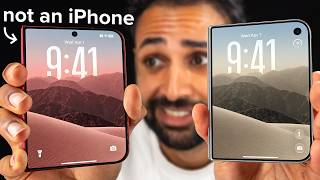
[06:08] same new camera as the base Pixel 11 with 56% more light, plus the little highlight LED from the Pro phones. The camera itself has also got a new design, but I can't lie, this is still a pretty clapped looking phone in my books. Not
[06:22] helped by these corners that don't at [music] all match the radius of the body. And then brighter displays inside and out, up to the same 3,600 nits that tougher to scratch. There are a few extra changes that are unique to the
[06:36] Fold, like the thinner bezels on the front. These are great, to be honest, pretty noticeable and much needed. Plus, the new guy is 1 mm thinner when folded the new guy is 1 mm thinner when folded up, almost 10% a back panel that they're
[06:48] saying is made of a new composite that is nearly impossible to crack. Now, that all sounds very innovative and next generation, but thinner, lighter, and harder to crack are also exactly what you would expect to happen when you swap
[07:01] out premium glass for a material that's based on a polymer or plastic. And this might also be easier to scratch as a result. And of course, the Fold has also had the same $100 price increase as the rest of the phones. But here, without
[07:16] even the consolation of any extra storage. You got 256 gigs last time, you more now. So, here's the question then. Clearly, Google's hardware is running on But does it matter when the company's waving its magic software wand around as
[07:32] with cameras, for example, there's actually a pretty large improvement this generation to video quality. The way these new phones are processing what you shoot, to my eyes feels clearly sharper with more accurate skin tones and also
[07:46] feel that even on the cameras that haven't actually physically changed at photos, Google's figured out how to capture the same quality shot, but now just using 1/3 of the light information on the new pro phones. So, you'll see
[08:01] side by side, the Pixel 11's night shots are so quick that it almost looks like >> [music] >> And even without any improvement to optical image stabilization, Google's video boost. You know that feature where
[08:14] uploaded to the cloud and enhanced? Well, this one now further iron out stabilization issues, addressing yet more hardware problems with software solutions. So, [music] when you factor in this side of the equation, this does
[08:28] start to feel like a noticeable improvement on the camera front. But, where my jaw truly left the chat was when I started to play around with Rambler. Because this is the smartest form of dictation that I have ever
[08:41] experienced. I'm thinking of naming my child after a Ooh. Maybe Pikachu. Actually, no. Not something Pikachu. Let's do Charmander. Maybe just Char, actually. Yeah, Char's
[08:55] good. Okay, forget everything I said before that. I'm naming my child Char. And then what I meant to say just pops in like that. Forgotten an emoji? It'll
[09:08] fill that in, too. I think this feature is crazy good. And because it's baked app. And there's a whole bunch of things like it as part of Gemini intelligence that some other Android phones will eventually get, but Google will get
[09:22] first. Like live dubbing. So, we pulled up some German YouTube video. The phone another language and then after a few seconds just starts dubbing it for you. >> The film is really good. Really good. It must have been pretty exhausting for the
[09:36] actors, but from the effects here, from the physical effects here, absolutely >> I'm yet to hear an AI dub that's as well matched to the original as this was. Now, Google did cherry-pick the example videos to show this on, and it only
[09:49] supports four languages right now, but I still think it's insane. Just for some context, every single video that we upload right now, we are paying around $2,000 to get that video dubbed by humans in three languages. This tech
[10:03] getting videos dubbed in just as high quality for every single language for free. And while I would personally rather carry on paying for humans for as long as that makes sense, this could be massive for smaller channels who are not
[10:17] of fees. That is, until one day Google does eventually start charging us for it. I wouldn't rule that out. Also, bear in mind that with all of these Gemini intelligence features, they won't be available in Europe at launch, which is
[10:30] undeniably upsetting. But, the guy seemed pretty confident that we won't be waiting long. Then there's a few final Pixel nuggets that will be available at launch regardless of Gemini intelligence, like Magic Eraser. Where,
[10:42] let's say you're in a moment that you really want to experience. The idea is framing your shot, and your phone will just find the best moments from the clip you end up taking, like when people look into the camera, and it'll just compile
[10:55] We've actually seen something just like this from Samsung like five years ago with their single take mode. This is better than that. They can do a lot of end shots are really crisp, but me personally, I think I'd rather just
[11:09] either take a few really purposeful shots that I love, or just disconnect all. All the phones this year have larger digital zoom [music] ranges. Pixel 11 and Fold have gone from 20x to 30x max zoom, although the shots don't
[11:24] look great that far in. And the Pros have gone from 100 to 120x, assisted partly by by new telephoto camera, but also largely by AI. This camera looks, Apple's photographic styles. It lets you tune the shadows and color temperature
[11:39] that your camera shoots with by default. And creator suite, which gives you an you talk. An audio visualizer to make social media layouts on your screen, so you know which parts of it are going to
[11:53] be covered by UI when your video eventually ends up on, say, Instagram. like this all the time to make sure that things don't get cut off on some devices. So, baking them into the shooting process is a no-brainer. Also,
[12:06] genuinely incredible feature on the new Pixel Watch is too. You can just ask AI for an entirely new watch face, and they generate it on the spot. Safe to say I was very happy with my fluffy dinosaur face. So, all in all, here's what I
[12:18] think. I think that now the top-end Pixel is the exact same price as the Samsung S26 Ultra. If you're deciding between the two, I think you're getting a lot more phone by going Samsung. Their device is far more powerful. It's got a
[12:31] better screen, better battery, and an S Pen. But, if you really want the Pixel, which does have merit like the ultra-clean software and early access to these incredible features, then there's never been a better time [music] to
[12:45] have gone up this time, paired with the fact that older Pixels lose their value particularly quickly, means that just last year's flagship is at least a third hardware has barely improved, and if anything the RAM has gone backwards,
[13:00] means that you're not even really going to be much less future-proofed, and you difference either. All finished off by the fact that most improvements this time around are coming by a software and internet-based AI tricks, meaning that
[13:13] those perks just as trickle down. But, just bear in mind, the more that your cloud, which if anything is only going to start to go up, the more that you'll want to think about making your actual connection secure, which is why the one
[13:27] app that I would genuinely install on day one is Surfshark VPN, our sponsor. It'll sit in between your phone and all the thousands of things that your device is communicating to the internet and just make sure that your info is masked.
[13:39] That plus the hundred other perks, like being able to watch Solo Leveling here in the UK on Netflix by just changing location to Japan or creating an hand out your real details to sites that
[13:51] worth the $2 a month that you can get it for when you head to surfshark.com/boss for when you head to surfshark.com/boss and use the code boss.
⚡ Saved you 0h 13m reading this? Transcribe any YouTube video for free — no signup needed.