
Why 5 Delta Trades Are a Trap
45sChallenges the common belief that high win rate trades are always better, sparking curiosity.
▶ Play Clip"The title promises a consequence of collecting too much premium, and the video delivers a data-driven analysis of delta trade-offs, though it's more of a general guide than a dramatic reveal."
This video analyzes the impact of short delta selection on zero DTE (0DTE) SPX iron condor performance, comparing the trade-offs between high-probability, low-credit trades and high-credit, high-variance trades. The hosts, referencing research by Kai (Options Guy), break down how delta choice affects win rate, return on capital, and tail risk, ultimately recommending a balanced 15-30 delta range for income generation.
Delta changes risk, especially in 0DTE positions where position sizes are smaller. Changing delta has a bigger impact on risk and reward.
Short delta has a large impact on overall risk profile, probability of profit, and position volatility. Position sizing is key, but short delta drives volatility and POP.
Comparing 5 delta vs 50 delta shows win rate changes significantly. Credit collected also varies widely across the spectrum of short deltas.
Higher delta trades collect more credit and use less buying power, making return on capital look attractive. However, this comes with higher volatility and lower probability of profit.
The 5 delta shows a 92% win rate, but the buying power required is similar to 30 delta while collecting significantly less credit, dragging down return on capital.
Maximum profit can be over 100% of buying power for 50 delta, but average realized return is much lower due to POP. The gap between max and realized is smaller for wider positions.
Around 15 delta, the return on capital is more reasonable. 50 delta's return on capital is deceiving on its face; accounting for POP reduces long-term returns significantly.
Holding trades to expiration can lead to max loss scenarios. Early management strategies could skew results, but this test holds to expiration to isolate delta effects.
Higher deltas (closer to ATM) introduce more variance and less certainty in returns. 5 delta has the least variability, but collects less credit.
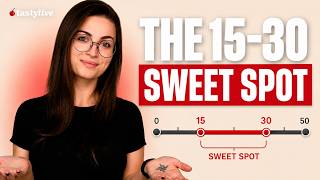
The 15-30 delta range offers a balance between tail risk, profit collection, and probability of profit. This is where the hosts prefer to operate for income generation.
Going super wide (e.g., 5 delta) collects so little credit that one max loss can offset 23 winners. This suppresses long-term gains.
Today's market moved 80 points in two hours, exceeding the implied weekly range of 130 points. This highlights the importance of keeping positions small.
Small deltas win often but low credit makes max losses expensive (1 max loss = 23 winners). Large deltas collect more credit but have higher variance and lower POP.
In this specific backtest, the 15-30 delta range offered the most balanced view of premium collection vs. tail risk. Management strategies would skew results.
For defined risk spreads, if collecting more than half the width, it's a low-probability trade. If collecting less than half, it's high-probability but don't go too low to avoid the 23x scenario.
The optimal delta for 0DTE iron condors on SPX is a balanced 15-30 delta range, which offers a good trade-off between credit collection, probability of profit, and tail risk. Avoid extremes: too low delta leads to insufficient credit to offset inevitable losses, while too high delta introduces excessive variance.
What is the impact of short delta on a 0DTE position?
Short delta has a large impact on overall risk profile, probability of profit, and position volatility.
00:28
What is the win rate for a 5 delta iron condor in the backtest?
92%
02:51
How many winners does one max loss offset in the 5 delta case?
23 winners
07:38
What is the optimal delta range for 0DTE iron condors according to the backtest?
15-30 delta
10:48
What is the rule of thumb for defined risk spreads regarding credit collection?
If collecting more than half the width, it's a low-probability trade; if less than half, it's high-probability but don't go too low.
11:15
Higher Delta Trades Collect More Credit
This is a key trade-off: higher delta offers attractive return on capital but at the cost of lower probability of profit and higher volatility.
01:44One Max Loss Offsets 23 Winners
This quantifies the danger of ultra-wide trades, showing how low credit collection can negate a high win rate.
07:3815-30 Delta is Optimal
This provides a concrete, actionable recommendation for traders, balancing premium collection with tail risk.
10:48[00:00] Delta changes risk. Um, and specifically we're going to be looking at like the know, it's zero DTE positions like position sizes are a lot smaller. So, changing that Delta has a, you know, a bigger impact on risk um, and reward as
[00:14] So, we're going to be taking a look at it. Kai did this piece uh, Options Guy over on X if you want to give him a follow or post in um, long form content team. So, uh, but yeah, that's what we're going to be talking about today.
[00:28] general, Kai. >> The general, Kai. >> That's true. >> Correct. Um, but uh, that short Delta, whatever you set up, you know, when and a short premium trade, that short Delta
[00:40] has a very large impact on your overall risk profile and um, probability of profit um, as well as like the overall volatility of the position um, changes a lot with that short Delta. So, um, but that really is where a lot of that
[00:53] that's where a lot of position sizing come in comes in, you know, changing your position size. Um, doesn't, you know, it doesn't matter, you know, short Delta. That's really where that long Delta comes in, but where that
[01:05] short Delta comes in is really your position volatility. And in a lot of um, in in a lot of respect your pop. So, um, just in this comparison we're looking at like five Delta versus 50 Delta. That win rate changes so much when we're
[01:17] going very tight versus very wide. And then um, the credit obviously changes be looking at like a wide spectrum of short Deltas um, when it comes to zero DTE strategies. And we're going to say are what are the benefits of going to
[01:30] kind of either extreme versus maybe going more towards middle of the road using $20 wide wings for all the positions that we're testing and we're SPX. >> Sweet.
[01:44] Check it out. >> Cool. Let's do it. Okay. So, um, the first one, uh, so higher Delta trades collect more credit and they use less buying power. Um, so your return on capital looks um, very attractive,
[01:57] right? Just like, you know, on its face, Uh, uh, noting that like obviously what that higher delta is probability of profit and you're taking on, um, more volatility typically when you do that. Um, but, uh, the maximum return on
[02:10] larger just because you're collecting so much more credit relative to the buying the trade. Um, so especially for a kind of more speculative trading where pop is maybe not as much of a concern, um, that tighter delta shows a like a pretty
[02:23] remarkable return on capital just looking at, uh, you know, at face value. >> Yeah, absolutely. And there's, I think there's going to be some lessons to be delta. Uh, but there is a rule of thumb that I
[02:38] think we'll reveal at the end. >> Yeah, I think that's the I think you got one. Um, but then likewise when we're like, you know, we saw that 92% you know, win rate in that first slide just
[02:51] in that little teaser, uh, for the five delta. Um, but the, you know, the buying power that you're putting up between a five delta and a 30 delta doesn't really you're collecting really drags down that return on capital. So when we're looking
[03:04] you can see that return on capital really changing. Noting that like that's There's a ton of metrics that we want to use when it comes to short premium interesting to see that between that five delta and then that even like 20 30
[03:18] delta is pretty comparable amount of, um, buying power that you have to put up collecting significantly less capital in the five delta case. >> Yeah, I think the the risk reward and probability lesson here
[03:33] >> Yeah. >> Yeah, that's a biggie. So, um, if we go over to the next side, uh, slide, um, this is kind of where we're actually like starting to break down return on capital, um, because a lot of the time
[03:45] you can see, you know, the maximum profit of the position can be quite high. Um, and especially in that 50 delta it be over 100% of the buying power that you have to put in. But when you look at the average realized return
[03:58] from not collecting the full amount for the majority of the trade, and this is where pop, you know, really drags that value down, you can see that the average tighter that you go between the maximum that you can collect and the average of
[04:12] what you wind up collecting versus, you know, the very wide positions, which is much less of a gap between like what you, you know, see a space value, the versus the realized value of what you wind up collecting.
[04:25] 20 delta is really where it's a little bit more reasonable, specifically around like the 15 delta range. But that 50 delta, that talking about, that return on capital can be very deceiving on its face. And
[04:40] when you account for pop, then what you actually realize long-term over time gets reduced pretty significantly. >> Yeah, cuz there there is no difference between a a 50 delta iron condor that's 20 points wide and a 20 point wide
[04:55] >> Right. >> So, you have a a nice high return relative to risk, but to realize that reward, you have to pin this very narrow >> Right. >> And holding things to expiration, you're
[05:11] that can happen when you hold these trades to expiration. So, that's the right away. >> Yeah, that's a very good point. having early management strategies could, like obviously, skew these
[05:25] to look at delta kind of in isolation, so we're holding to expiration. And then that's when you can see strategies kind of start to deviate from, yeah, some of these face value calculations. If we go to the next slide
[05:39] as well, um, it's really that variability is what you're giving up. So, you're we're really just taking on kind of like more variance in general, you have less certainty around your returns over time with the more variance
[05:53] generally. Um, and you can see that really starting closer to at-the-money when you're getting to that 50 delta where, um, down by five delta you have the least amount of variability, um, but kind of as we
[06:06] to talk about your collecting a lot less like, you know, to that punchline a little bit why we go more towards middle of the road when shooting choosing those short strikes, which is a balance of,
[06:18] you know, the tail risk that you're taking and, um, you know, the profit that you're collecting and probability of profit overall. >> Yeah. Absolutely, and I think the that this is where you get to that
[06:31] lesson in, uh, the 20 delta 15 to 30 delta is kind of where we live cuz we we want to make sure that we have that, uh, strong return relative to risk, but still a high probability of actually realizing
[06:45] that. >> Right. And that being said, it's really that's kind of more stable and, you know, for income generation versus something for hedging. Like there's a time and a place for, you know, like all
[06:59] the options, right? There's a lot of options in the options. Um, but that of more income generation short premium strategy, it's really like stability, as something that's, you know, subject to, you know, the leverage of options, um,
[07:13] and then controlling that tail risk and just trying to profit as consistently as possible, um, which kind of, you know, is part of why, you know, a lot of our I would say mechanics kind of tend more towards middle of the road deltas.
[07:25] And then I think like the next slide talks about sort of like the real downside of going super super duper wide. So even though those pops can be a time and a place for that, um, the amount of credit that you're collecting
[07:38] amount of credit that you're collecting when you go so wide is so it's like low such that um one max loss basically offsets 23 winners um which I thought was like a really nice way to kind of put that. So um even though you know
[07:51] attractive on its face, um the those tail risks as unlikely as they may be or even the more moderate losses which are a little bit more likely can be enough to really just kind of like squish gains over time and really suppress them. Um
[08:05] which I would say is like yeah, the real downside with going super wide. Like you that case, but not collecting enough to becomes very obvious when you're looking at like the five delta mark like very
[08:18] >> Yeah, for sure. You always got to make sure you're collecting enough to to balance off these these one-off events where things just really get um you do through those strikes. >> Right.
[08:31] >> today's move is a great example of that. We opened it We opened up 60 points and now we're down 20 net 20. So that's a 80-point move in two hours and the implied range for the entire week is 130 points. So uh this is why we really
[08:47] emphasize the importance of keeping it small cuz if these things happen more often than you might imagine uh as like a a new newer trader even an intermediate trader. >> Yeah, keeping it small um just being
[09:01] very cautious about position sizing. And then yeah, like just being mindful about act, right? Like taking, you know, probability of profit into account, but also trying to collect enough to make sure that the risks that you're
[09:13] make sure that the risks that you're taking they kind of compensate um for for all of that. Um so I think that like we like a 92% win rate sounds great, but if that comes at the expense of like long-term gains over time because you're
[09:27] offset the losses that sort of inevitably happen. You just have to kind of have to prepare as best as possible for that happening at some point, then case for those sort of middle of the range deltas between like, yeah, 15 and
[09:41] 20, 16 and 20 is generally what we kind of tend to focus on a little bit more. >> Indeed. >> Cool. Okay. So, just to kind of recap, really cool piece from Kai, um but small deltas win often, but the low credit
[09:54] makes maximum losses um expensive. One max loss uh can offset about 23 winners specific case uh looking at the five delta case in SPX iron condors since 2023. Um large deltas collect a you know, more credit and use less buying
[10:09] power, but the per trade returns are varied. Like what you're really giving up is variance and probability of profit. And when we look at sort of like the maximum profit that we can collect from trading those, you know, closer to
[10:21] at the money strategies versus what was realized on an average basis, that's where we saw that gap get very large. Um so, higher deltas still produce higher average um you know, realized return on capital, but that does come with higher
[10:34] variance um and more, you know, just variability over time. So, in this test, um we kind of like the most balanced by our own assessment using this specific test, you know, the specific back test on the specific underlying strategy, um
[10:48] the 15 to 30 delta range offered a more balanced um view when it came to, you know, premium collection for the amount of tail risk being taken. Noted that any number of like management strategies or anything that you use on top of this
[11:01] kind of base strategy will obviously skew those results, um but the balanced view just from this one lens said 15 to 30 delta-ish. >> Crazy. >> Uh yeah, and I think that the takeaway
[11:15] that we were uh alluding to in the beginning is really just that when especially with a defined risk spread, if you're collecting more than half the probability trade. If you're collecting less than half the width, you're going
[11:28] to have a high probability trade, but don't go too low cuz that's when you run into that 23x scenario where one bad move in the market against you can >> Yep. >> Right?
[11:41] >> Sweet. >> Another research banger. >> Another research banger. >> Hell yeah.




⚡ Saved you 0h 11m reading this? Transcribe any YouTube video for free — no signup needed.