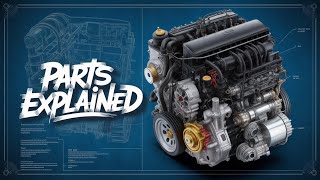

What Happens When You Start Your Car
45sGrabs attention by making a common action mysterious and interesting.
▶ Play Clip"The title accurately reflects the content, which explains car engines in a simple, accessible manner."
This video explains how car engines work in a simple, accessible way. It covers the basic components of an engine, the four-stroke cycle (intake, compression, power, exhaust), and supporting systems like fuel delivery, cooling, and lubrication. The video is aimed at beginners and car enthusiasts who want to understand the technology behind their daily commute.
An engine is a machine that converts fuel into motion, typically using an internal combustion engine.
Main components: cylinders, pistons, crankshaft, camshaft, valves, and spark plugs.
The four-stroke cycle consists of intake, compression, power, and exhaust strokes.
During intake, the piston moves down, drawing in air and fuel mixture.
Compression stroke: piston moves up, compressing the mixture to increase pressure and temperature.
Power stroke: spark plug ignites the mixture, causing an explosion that pushes the piston down.
Exhaust stroke: piston moves up, expelling burnt gases through the exhaust valve.
The crankshaft converts linear piston motion into rotational motion to turn the wheels.
The camshaft controls valve timing, driven by the crankshaft via a timing belt or chain.
Spark plugs ignite the air-fuel mixture at the right moment for combustion.
Modern cars use fuel injectors controlled by the engine computer for precise fuel delivery.
The air intake system includes the air filter, intake manifold, and sometimes a turbocharger.
The exhaust system removes gases, reduces emissions via catalytic converter, and quiets noise with a muffler.
The lubrication system pumps oil to reduce friction, cool the engine, and remove contaminants.
The cooling system circulates coolant to prevent overheating; includes radiator, water pump, thermostat.
The electrical system includes the battery (start) and alternator (generate electricity).
The ECU monitors sensors and adjusts fuel, ignition, and other parameters in real time.
Regular maintenance (oil changes, filter replacements, spark plug checks) is essential for engine longevity.
What type of engine is used in most cars?
Internal combustion engine
00:26
What are the main components of a car engine?
Cylinders, pistons, crankshaft, camshaft, valves, and spark plugs
00:40
What are the four strokes of the four-stroke cycle?
Intake, compression, power, exhaust
01:07
What happens during the intake stroke?
It draws in a mixture of air and fuel.
01:32
What is the purpose of the compression stroke?
It compresses the air-fuel mixture to increase pressure and temperature.
01:47
What happens during the power stroke?
The spark plug ignites the compressed mixture, causing an explosion that pushes the piston down.
02:15
What is the function of the exhaust stroke?
It expels the burnt gases from the cylinder.
02:29
What is the role of the crankshaft?
It converts the linear motion of the pistons into rotational motion.
02:42
What does the camshaft do?
It controls the opening and closing of the valves.
03:08
How does the fuel delivery system work in modern cars?
Fuel injectors spray a fine mist of fuel into the intake manifold or cylinders.
03:48
What are the functions of the catalytic converter and muffler?
The catalytic converter reduces harmful emissions; the muffler quiets engine noise.
04:14
What is the purpose of the lubrication system?
It pumps oil to reduce friction, prevent wear, cool the engine, and remove contaminants.
04:42
How does the cooling system prevent overheating?
It circulates coolant through the engine and radiator to absorb and dissipate heat.
04:55
What are the roles of the battery and alternator in the electrical system?
The battery provides initial power; the alternator generates electricity to keep everything running.
05:09
What does the Engine Control Unit (ECU) do?
It monitors sensor data and adjusts fuel delivery, ignition timing, and more in real time.
05:22
Engine definition
Provides a clear, foundational definition of an engine as a machine that converts fuel into motion.
00:26Four-stroke cycle explanation
Breaks down the core operating cycle of most car engines into four clear steps.
01:07Crankshaft function
Explains how linear piston motion is converted into rotational motion to drive the wheels.
02:42ECU role
Highlights the modern engine's reliance on computer control for efficiency and emissions reduction.
05:22Maintenance importance
Emphasizes that regular maintenance is key to engine reliability and longevity.
06:06[00:00] If you ever wondered what happens under the hood when you turn the key in your car, today we're diving into the fascinating world of car engines. From the moment you start your vehicle, a complex series of events takes place to get you moving. In this video we'll break down each step making it easy to understand how your car's engine works. Whether you're a car enthusiast or just
[00:14] curious, you'll gain a new appreciation for the technology that powers your daily commute. Let's start by exploring what an engine actually is and why it's so essential for your car. Its core and engine is a machine designed to convert fuel into motion. In most cars,
[00:26] this is done using an internal combustion engine. This type of engine burns fuel inside a chamber, creating energy that moves the car. The engine is the heart of your vehicle, responsible for generating the power needed to turn the wheels. Without it, your car would be nothing more than a stationary shell. Now let's take a closer look at the main parts that make up a typical
[00:40] car engine. Car engine is made up of several important parts working together. The main components include the cylinders, pistons, crankshaft, camshaft valves, and spark plugs. Each part has a specific job and together they ensure the engine runs smoothly. Cylinders are where the action happens while the
[00:53] pistons move up and down inside them. The crankshaft converts this movement into rotational energy, and the camshaft controls the opening and closing of the valves. Spark plugs ignite the fuel, starting the whole process. Next, let's see how these parts interact during the engine's operation.
[01:07] Most car engines operate using what's called the four-stroke cycle. This cycle includes four main steps, intake, compression, power, and exhaust. During the intake stroke, the engine draws in a mixture of air and fuel. Next, the compression stroke squeezes this mixture tightly. The power
[01:19] stroke follows where the spark plug ignites the mixture, causing a small explosion that pushes the piston down. Finally, the exhaust stroke expels the burnt gases. This cycle repeats rapidly, creating the power needed to move your car. Let's break down the first step. The intake stroke.
[01:32] When you start your car, the intake valve opens and the piston moves down inside the cylinder. This creates a vacuum that draws in a mixture of air and fuel from the intake manifold. The precise amount of air and fuel is crucial for efficient combustion. This mixture is then ready for the next stage where it will be compressed and prepared for ignition. The intake stroke set the stage for the
[01:47] entire engine process. As comes the compression stroke, here the intake valve closes and the piston move back up the cylinder. This compresses the air fuel mixture into a much smaller space, increasing its pressure and temperature. The tighter the mixture is compressed, the more powerful
[01:59] the explosion will be when it's ignited. This step is essential for maximizing the engine's efficiency and power output. With the mixture now compressed, the engine is ready for the next exciting phase ignition. Power stroke is where the magic happens. At the top of the compression stroke, the spark plug fires igniting the compressed air fuel mixture. This causes a rapid expansion
[02:15] of gases, creating a small explosion that forces the piston back down the cylinder. This downward movement is what generates the power to turn the crankshaft, which ultimately moves your car. The power stroke is the main source of energy in the engine cycle. For the power stroke, the engine needs to get rid of the burnt gases. This is where the exhaust
[02:29] stroke comes in. The exhaust valve opens and the piston move back up the cylinder, pushing the exhaust gases out through the exhaust system. Clearing out these gases is important to make room for a fresh air fuel mixture in the next cycle. This continuous process keeps your engine running smoothly
[02:42] and efficiently. Crankshaft is a key player in the engine's operation. As the pistons move up and down, the crankshaft converts this linear motion into rotational motion. This rotation is what ultimately turns your car's wheels. The crankshaft is connected to other parts of the drivetrain, transferring the
[02:55] engine's power to the transmission and then to the wheels. Without the crankshaft, all that energy from combustion would go nowhere. Camshaft works alongside the crankshaft to control the opening and closing of the engine's valves. It ensures that the intake and exhaust valves open at the right
[03:08] times during each cycle. The camshaft is driven by the crankshaft, usually through a timing belt or chain. Proper timing is crucial for the engine to run efficiently and avoid damage. The synchronized dance between the camshaft and valves keeps the engine breathing smoothly.
[03:20] Park plugs are small but mighty components. Their job is to ignite the compressed air fuel mixture at precisely the right moment. Each cylinder has its own spark plug and the timing of the spark is controlled by the ignition system. A strong, consistent spark is essential for smooth engine performance
[03:33] and fuel efficiency. If a spark plug fails, the engine can misfire or lose power. Fuel delivery system is responsible for getting the right amount of fuel to the engine. Modern cars use fuel injectors, which spray a fine mist of fuel into the intake manifold or directly into the cylinders.
[03:48] The amount and timing of fuel delivery are controlled by the engine's computer. This system ensures that the engine runs efficiently and produces minimal emissions. The air intake system brings fresh air into the engine, mixing it with fuel for combustion. It includes the air filter intake manifold and
[04:02] sometimes a turbocharger or supercharger. Clean air is vital for efficient combustion and engine health. The air filter removes dust and debris, protecting the engine from damage. Some performance cars use forced induction to increase the amount of air entering the engine boosting power.
[04:14] Once combustion is complete, the exhaust system safely removes the burnt gases from the engine. It includes the exhaust manifold, catalytic converter, muffler, and tailpipe. The catalytic converter reduces harmful emissions while the muffler quiets the engine noise. A well-designed exhaust
[04:27] system is essential for both performance and environmental protection. Engines have many moving parts that need to work together smoothly. The lubrication system pumps oil throughout the engine, reducing friction and preventing wear. Oil also helps to cool the engine and remove contaminants.
[04:42] Regular oil changes are important to keep the engine running efficiently and extend its lifespan. Engines generate a lot of heat during operation. The cooling system circulates coolant through the engine and radiator to absorb and dissipate this heat. Without proper cooling,
[04:55] the engine could overheat and suffer serious damage. The system includes the radiator, water pump, thermostat, and hoses. Keeping the engine at the right temperature is crucial for performance and longevity. Engines electrical system powers the ignition, fuel injection, and various sensors.
[05:09] The battery provides the initial power to start the engine while the alternator generates electricity to keep everything running. Sensors monitor engine performance and send data to the car's computer, which adjusts settings for optimal efficiency and power.
[05:22] Modern engines are managed by an engine control unit or ECU. This small computer constantly monitors data from sensors and makes real-time adjustments to fuel delivery ignition timing and more. The ECU helps the engine run efficiently, reduces emissions, and can even diagnose problems.
[05:36] It's a key part of today's automotive technology. Engine doesn't work alone. Its power is sent to the transmission, which adjusts the amount of power sent to the wheels. The transmission allows your car to change speeds smoothly and efficiently. Whether you drive an automatic or manual, the transmission
[05:51] and engine must work together seamlessly for a comfortable ride. Keep your engine running smoothly, regular maintenance is essential. This includes oil changes, replacing air and fuel filters, checking spark plugs, and monitoring coolant levels. Addressing small issues early can prevent
[06:06] major problems down the road. A well-maintained engine is more reliable, efficient, and last longer. Now you know what goes on under the hood every time you drive. The car engine is a marvel of engineering, with countless parts working in harmony to turn fuel into motion. Understanding how your
[06:20] engine works can help you appreciate your vehicle more and take better care of it. Thanks for joining us on this journey through the heart of your car. Safe travels and happy driving.
⚡ Saved you 0h 06m reading this? Transcribe any YouTube video for free — no signup needed.