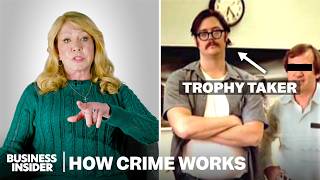

FBI Profiler Reveals Chilling Sociopath Interview
45sThe raw description of sociopaths' flat affect and lack of remorse is gripping and gives viewers a chilling inside look.
▶ Play Clip"Delivers a detailed, insider look at FBI profiling, though the title oversells 'how it works' with some personal anecdotes and media commentary."
A retired FBI agent with over 20 years of experience in profiling serial killers provides an in-depth look into the FBI's Behavioral Analysis Unit (BAU). She explains the structured process of profiling, shares insights from interviews with notorious killers like Jeffrey Dahmer and Ted Bundy, and discusses the evolution of the unit, the challenges of the job, and the impact of media portrayals.
The agent introduces herself as a former FBI agent who profiled killers and serial killers for over 20 years. She describes profiling as a structured process involving psychology, victimology, criminology, and forensic evidence.
The BAU becomes involved when local investigators need guidance on handling an offender, such as developing an interview strategy. In the Dahmer case, they provided background and strategy after a search warrant revealed body parts.
The agent wanted to ask Dahmer about his childhood, his recognition of his behavior, and his postmortem activities. She notes that sociopaths lack remorse and have a flat affect, making interviews chilling.
In a series of sexual assaults, profiling helped narrow down the offender by analyzing victim statements about his smell. The offender worked at a factory and wore cologne, which victims identified.
The FBI typically gets involved when local law enforcement requests assistance, as serial killing is usually not a federal violation. The BAU reviews materials and provides interview strategies.
The agent emphasizes the importance of professional listening, taking detailed notes, and appearing genuine to elicit information. She aimed to catch killers in lies by understanding their baseline behavior.
She describes a case involving a mother with Munchausen by proxy, who had five children die. The interview was challenging because the mother sought attention, and the agent had to appear genuine to gather information.
The agent collaborated with Bill Hagmaier on interviewing Ted Bundy. Bundy only wanted to speak with Bill, and the notes from those interviews helped locate victims after many years.
Sociopathic serial killers often have a flat affect, speaking about heinous crimes without emotional response. This chilling effect was disturbing, as they described acts like mowing a lawn.
The agent observed Edmund Kemper trying to feign remorse for matricide but failing to conjure tears. Sociopaths do not understand remorse, and their attempts are often transparent.
Profiling involves observing deviations from a person's baseline behavior, such as eye contact and body language. However, these are not absolutes; they are data points to consider.
The agent learned to trust her gut feelings, which are often underestimated in law enforcement. She describes a case where a killer became visibly uncomfortable when discussing unsolved murders.
Common patterns included a healthy appearance and increased confidence over time, making killers less suspicious. The nature vs. nurture debate is both; research shows a combination of factors.
The predictive model of the triad includes fire setting, bedwetting, and animal cruelty. If all three are present, the likelihood of becoming a violent offender increases, though it's not definitive.
The agent worked on the Oba Chandler case in Tampa, where a mother and two daughters were murdered. A handwritten note in the rental car led to a billboard campaign and eventually to Chandler's identification.
Susan Smith claimed her two boys were abducted, but profiling suggested otherwise. The agent notes the importance of handling such cases sensitively, as Smith eventually confessed to pushing the car into a lake.
The Atlanta child murders were one of the first successful profiling cases. The FBI's lab and profilers helped narrow down the suspect, Wayne Williams, who lived in the area and was African American.
The agent joined the unit in 1985, which was an 18-month program with on-the-job training. They reviewed crime scenes, watched films of killers like Gacy, and learned to identify deception.
The behavioral science unit was originally in the basement, which was supposed to be Hoover's bomb shelter. It evolved to include forensic support and serial killer research.
To get killers to talk, the agent appealed to their ego, acknowledging their success and asking how they could help prevent future crimes. This was effective even without offering leniency.
The agent worked with Jodie Foster on the film, advising on how a real agent would speak and behave. She provided insights into interviewing diabolical characters and the experience of being a woman in that role.
The agent finds 'Mindhunter' accurate for profiling and the unit, while 'Criminal Minds' is less so. She notes that media often focuses on serial killers rather than victims.
The job was frustrating due to budget constraints and the emotional toll. The agent compares it to doctors who must deliver bad news, noting that they must compartmentalize to remain effective.
The distinct smell of morgues and violent crime scenes is horrific. The agent recalls smelling her hair after visits to remove the odor, highlighting the sensory impact of the job.
The agent's background included being a probation officer and police officer. She joined the FBI through the LA office and eventually became the first female profiler in the behavioral science unit.
She faced resistance as a woman in a male-dominated field but was hired by John Douglas after impressing him with her composure during a test involving bloody photos.
Being a woman helped in interviewing female victims and witnesses, who were more likely to speak to her. However, the constant exposure to violent crimes led to depression and a negative view of human nature.
The agent began to see all human nature as bad, leading her to hide knives in her house. She eventually stepped away from profiling and moved into leadership roles, including cyber division.
She wrote a book about her FBI career, focusing on her time in profiling and the lessons learned.
The unit started around 1972 with Howard Teten and John Douglas. It evolved into the Behavioral Analysis Unit, which expanded after 9/11 to include terrorism.
The term 'science' implies absolutes, but profiling is not absolute. The Richard Jewell case is an example where profiling led to focusing on an innocent person.
Profiling is a tool that assists investigations, not a replacement for other methods. DNA and technology have become crucial, but human oversight remains essential.
Serial killing has been overshadowed by active shooter cases, which are more prevalent now. However, serial killers are more difficult to evade due to technology.
The agent reflects on seeing the egregious evil of the few but also the good in ordinary people. She encourages subscribing to the series.
The video provides a comprehensive look into FBI serial killer profiling, emphasizing the structured process, the psychological challenges, and the importance of profiling as a tool rather than an absolute science. The agent's personal experiences highlight the emotional toll and the evolution of the field.
What is the FBI's Behavioral Analysis Unit (BAU) and when did it start?
The BAU is a unit within the FBI that provides behavioral profiling and analysis to assist investigations. It started around 1972 with Howard Teten and John Douglas.
38:12
What is the 'triad' predictive model in serial killer profiling?
The triad includes fire setting, bedwetting, and animal cruelty. If all three are present, the likelihood of becoming a violent offender increases.
15:13
How did the FBI get involved in the Jeffrey Dahmer case?
Local investigators requested assistance from the BAU after serving a search warrant and finding body parts. The BAU provided background and interview strategy.
01:27
What is a 'flat affect' and why is it significant in interviewing sociopaths?
A flat affect is a lack of emotional response. Sociopathic serial killers often speak about heinous crimes without emotion, which is chilling and indicates a lack of remorse.
09:16
What was the outcome of the Oba Chandler case?
A handwritten note in the rental car led to a billboard campaign, and eventually Oba Chandler was identified and convicted for the murders of the Rogers family.
16:09
Why is profiling considered a 'tool' rather than a science?
Profiling is not absolute; it narrows down suspects but can lead to errors if taken as definitive. The Richard Jewell case is an example where profiling focused on an innocent person.
39:27
What interview technique did the agent use to get killers to talk?
She appealed to their ego, acknowledging their success and asking how they could help prevent future crimes, even without offering leniency.
25:30
What was the significance of the Susan Smith case?
Susan Smith claimed her children were abducted, but profiling suggested otherwise. She eventually confessed to pushing her car into a lake, killing her sons.
20:35
How did the agent's gender affect her work?
Being a woman helped in interviewing female victims and witnesses, who were more likely to speak to her. However, she faced resistance in a male-dominated field.
35:23
What is the difference between sociopaths and psychopaths according to the agent?
Sociopaths have a flat affect and lack remorse, while psychopaths may be more intelligent and able to feign emotions. The agent notes that sociopaths do not understand remorse.
09:16
Profiling as a Structured Process
Defines profiling as a multi-disciplinary approach, setting the stage for the entire video.
Interviewing Dahmer
Provides a rare, first-hand account of interviewing a notorious serial killer.
02:35Flat Affect of Sociopaths
Explains a key behavioral trait that is crucial for understanding and interviewing serial killers.
09:16The Triad Model
Introduces a predictive model used in profiling, offering a concrete tool for assessment.
15:13Advising on Silence of the Lambs
Reveals the intersection of real profiling and Hollywood, showing how accurate portrayals are crafted.
27:15Profiling is Not Absolute
Highlights the dangers of over-relying on profiling, using the Richard Jewell case as a cautionary tale.
39:27[00:00] I was an FBI agent for over 20 years. and profiling killers and serial killers. This is "How Crime Works."
[00:12] you get one shot. he would be talking about what he did, his crimes. Being a sociopath, he did not understand remorse,
[00:26] (button clicks) So many of the serial killers that were sociopaths
[00:39] FBI profiling it's a structured process psychology, victimology, criminology, forensic evidence,
[00:55] It's a tool that narrows down who And they have an offender that they want It's how to handle that, whether it's a soft approach,
[01:10] investigators that type of guidance. which is now called a behavioral analysis unit, So the behavioral analysis unit became involved
[01:27] although he was arrested by the local But after they served a search warrant on his house and body parts that belonged to different victims,
[01:41] And they thought it was important to have some background on Initially, he was not speaking to investigators. and the arrest reports down to Quantico
[01:55] just relating the crime, showing us the evidence, an interview strategy for that. But because of the way that some postmortem activity
[02:09] and had even put some of different body parts together, that's very aberrant behavior.
[02:21] "Well, why did you do that?" You know, what were you thinking at the time? Do you remember the first time
[02:35] And Jeffrey Dahmer was involved in a lot and sexual activity after death. You just, you don't wake up one day
[02:50] So was it something that started at childhood? Did he recognize it? Did he talk to anybody about it? All of those types of questions I wanted to ask.
[03:02] and he was in prison I had made it an He was killed two days prior What we have learned is more common when you have a series
[03:16] of sexual assault or rape cases, that you start looking at They lived in a similar neighborhood and they were all at a similar timeframe.
[03:29] So we got statements from all of them. how the offender smelled. And he said, which actually it was a good smell he had on
[03:41] And when you look at profiling something like that, where he is comfortable. he kind of moves out of that area a bit.
[03:56] What happened was the offender worked in a factory not too And he would always, he worked a night shift, and he would take a shower before going home.
[04:11] where he worked, they found men's cologne, and most of them could identify the cologne. and executive producer of Hulu's new crime thriller,
[04:26] - And I'm Chitra Raghavan, a clinical psychologist, Revenge is a slow, cold poison that sits with you
[04:38] - What the show dives into is a character who She's investigating the murders of these men,
[04:53] violence that was committed against her. and revengeful at the same time. Rage is a reaction to being threatened or harmed.
[05:09] - I always want, in this show in particular, the audience to or not they're good or bad, or whether If something happened to you that changes your ability
[05:26] to deal with the world, at what point are you to blame (tape clicks)
[05:38] - The process for getting the FBI involved in a killer because typically it's not federal violation, of their resources and sent all of their materials
[05:52] the behavioral analysis unit is located. when you're interviewing a killer. if you will, but there was a glass similar
[06:09] So, and you had some holes in it so that you could hear And they were also shackled and usually handcuffed. The time that I was conducting these interviews,
[06:25] I wanted to be amenable. I wanted to be present. And it's really listening, professional listening. So that was a lot of when I finished my interview
[06:41] and try to take as many notes as possible or record my own notes so that I got the accuracy. But the very important part of this was to make sure
[06:53] because I wanted to be able to catch him in a lie. I had an interview that I was anxious before going into. And the reason is it was a female, a mother
[07:08] Munchausen by proxy. she had just had her fifth child die,
[07:21] And she had said that she had bad luck. that's sudden instant death syndrome. The others, there had been numerous hospital visits.
[07:35] And as hideous as it sounds this, the syndrome is She wants the attention on her. suspicious that it was her.
[07:47] And I think the more genuine that you can appear of the information that you want. and we were collaborating on how to interview Ted Bundy.
[08:03] and made that first initial contact. to a female and he only wanted to speak with Bill. and he conducted the interviews
[08:17] After Bill Hagmaier had conducted these interviews, that the notes made sense so that we could give the facts to them as Bundy had indicated.
[08:32] to actually locate the victims after all those years. (button clicks)
[08:44] Another part that was very challenging they committed some pretty hellacious crimes. I would have to really listen to the words to realize,
[08:59] detail what they did. of the serial killers that were sociopaths They have a flat affect of emotions.
[09:16] It was almost a chilling effect, kind of goosebumps when And it would be pretty heinous, But with a flat affect on their voice, no emotional response
[09:31] And yet was speaking about it like he was mowing a lawn And that part was very disturbing. I mean, you're not gonna get someone to open up
[09:46] And most of them are extremely intelligent. but they don't feel what they have done is wrong. or make any kind of a grimace or something.
[10:01] of passing judgment on what they were telling me. Some of these serial killers in my observation I've got a video of Edmund Kemper,
[10:16] And he just happened to be in size, So I mean, he's somebody that would stand out. But being a sociopath, he did not understand remorse.
[10:29] he was trying to feign remorse. And, matricide, his last victim was his mother. that's horrible, to kill one's mother.
[10:44] So he said, "Yeah, matricide is awful." and it was like he was trying to conjure up a tear. and he just couldn't accomplish that.
[10:57] not absolutes of lying. or somebody's looking off to the left. what their normal pattern is.
[11:10] What's your date of birth? And then when you start getting into the ones Or have you been in that house before?
[11:24] and especially when you're looking at the serial killers or killers, they tend to deviate from that pattern. a little look down, a little look up.
[11:37] in a vacuum, you're not looking for your memory. Like, okay, that was last Tuesday. to tell them it was Tuesday, that was we could go Thursday.
[11:53] Some people have subconsciously, Sometimes women play with their hair. that's just kind of their behavior.
[12:05] when you're asking different questions. I had one killer that I was interviewing. And then when he started, I believe, fabricating things,
[12:21] I think he was tactically trying I think he knew enough that, oh, But it's gonna come out somewhere.
[12:35] because we all have that little hair stand up. that is very underestimated. And in law enforcement, at least initially,
[12:49] and we want facts, we want facts. What experience taught me was not to ignore that. but this is a data point
[13:02] And I think our own bodies tell us a lot, and only go with facts, One of the serial killers that I had interviewed,
[13:16] he had been apprehended and convicted of two. We had some unsolved that I was very suspicious So I was interviewing him about those,
[13:31] And it changed from him actually having pretty good eye contact to shifting shifting in his chair a lot Again, these things are subtle.
[13:46] You know, I mean, people would like to have that but it was something where he was visibly uncomfortable. (tape clicks)
[14:01] of serial killers were the takeaways And what we learned was there was typically a very healthy
[14:14] And there was also, as the killers grew more confident, nobody was even suspicious of them.
[14:26] He would pick the area where he was gonna dispose The age old question is are Nature, nurture. Yes, it's both.
[14:43] you look at research, you will find people, then other becomes a doctor, another becomes an attorney.
[14:55] he looked at pornography at an early age. There was a predictive model that we used called the triad, if they're a fire setter, enuresis, which means bedwetting
[15:13] If they exhibited all three of those, the likelihood of them being a violent offender What's the reasoning or the thought behind that being...
[15:28] - The thought behind what was a lack of control. one of the biggest components, So I think that was the frustrating part of it.
[15:40] You do have the triangle of behavior Also worked on a couple of cases They were artists, but the type of things they chose
[15:54] And we're talking at age, seven, eight, nine years old. (tape clicks) The Oba Chandler serial killer case in Tampa, Florida
[16:09] If I was a coordinator for the FBI in Tampa, and the Rogers family, it was a mother and Joan Rogers And for the oldest daughter who was 17,
[16:25] And so she wanted to go to Disney World in Orlando So they drove to Tampa. Unfortunately they were killed and it was a hideous death.
[16:40] and then their bodies were found floating on June 4th, 1989. that they all had cinder blocks,
[16:54] Their hands and feet were tied. alive, was to weigh them down. and gases of a dead body,
[17:09] So I became involved when the bodies were found. and I, we were not invited, but we went to the crime scene as they were
[17:24] but close enough that we thought St. Petersburg Police Department had the My initial impression in looking at the Rogers case
[17:40] was just real sadness. And then later when I was actually helping and whatnot, I found that the sad turned to mad.
[17:54] I got very angry because I really felt for them and I felt, oh my God for the husband, the father, Fast forward I was transferred shortly thereafter
[18:07] They, the investigators in St. Petersburg but then it went cold. So they asked for help from Quantico.
[18:22] basically started from zero. There's got to be something that we missed. And there was a note, a handwritten note in cursive
[18:35] It was in the console of the rental car. And they said, "Well, Joan Rogers." So what happened was the investigators went to Ohio,
[18:52] or your daughter's handwriting?" So that's when we came to the conclusion that is that this handwriting must have belonged to the offender.
[19:07] and put it on numerous billboards. It said, "Make sure that you contact St. Petersburg PD And had quite a few calls, but there were three, I believe,
[19:21] Oba's kind of, I'd never heard I think this case, it was behavioral profiling training Don't overlook any little piece of evidence.
[19:35] That was your regular FBI work. that was some assistance was the afterwards then in getting search warrants and surveilling the suspect, Oba Chandler.
[19:50] the local law enforcement in the Tampa area. and when he was being interviewed, but led investigators to some other women he had abducted
[20:07] And then there was a homicide subsequent to the Rogers Because I had the opportunity and let us know when he was apprehended
[20:23] (tape clicks) that would have no name recognition,
[20:35] but one of them that stands out is the Susan Smith case. where she had claimed she had two little boys And she had claimed that she had been abducted
[20:50] with the two little boys in it. where it occurred. So a black male in that area,
[21:04] Plus, it made no sense as to why an infant and a baby in the backseat of a car if And the issue where we had to handle it very sensitively is
[21:20] It was a small area, so she was known. to come in and be the bad guy, And as it ended up, she had pushed the car into a body
[21:36] One of the first successful profiling cases would have been and that one was very high profile and extremely alarming.
[21:49] It was occurring in the black community of Atlanta. to be no eyewitnesses from the neighborhood. that they could say we saw this strange person
[22:02] which made it unusual. was the first African American SAC,
[22:14] that the FBI could give investigators when they were And that was our laboratory and the profilers. in the Wayne Williams case was
[22:29] and community didn't see anything out of the ordinary because the suspect ended up being African American. but Wayne Williams lived in that area
[22:43] (tape clicks) I joined the behavioral profiling unit in 1985. and we were the behavioral science unit.
[22:58] was an 18 month program, but it was 18 months while doing on-the-job training. We ended up looking at crime scenes,
[23:11] went along for a crime scene ride, if you will, with NYPD. or films that we would watch of John Wayne Gacy, It would be ones for specific reasons.
[23:25] and this is where we think he's lying, and this is why. And this is how you would be able to confer this to and of course they're enhanced by the training,
[23:40] and understanding an approach, When you're interviewing, none of it's about you. to elicit information from.
[23:55] as a group think tank kind of methodology, if you will. of us when I was there, and all of us brought something different to the table.
[24:09] or four on some really significant cases. And again, we brought in different skill sets. Initially, the behavioral science unit was in the basement.
[24:24] It was supposed to be Jay Edgar Hoover's bomb shelter and so that's where we were. to be able to help with forensics, and then morphed
[24:41] where it was the serial killer research was part of the serial killers to look for that information I think by the general agent population,
[25:00] And because we were located in the basement, We would do things like go to the medical examiner's office and we'd watch autopsies.
[25:15] how an autopsy was performed, So the serial killer interviews, I learned from each It's like, human beings, there's gonna be some differences.
[25:30] for me being on the interview side of it was making sure that I could appeal to their ego. But when I'm interviewing them,
[25:45] We couldn't offer a stay of execution. So, you know, why? And what we used was that appeal to the ego.
[25:59] "Well, you were very successful at this. You turned yourself in or it took years. And the other, if you could ascertain from them that maybe
[26:15] or at least were pretending to be remorseful, to follow in your footsteps. So how can you help us, law enforcement, help other people
[26:28] that might have a tendency towards violent crime?" not knowing how cases ended. I guess it was just frustrating
[26:42] of us really did pour our heart and soul into this. And it was frustrating sometimes to see the name recognition It's not just the victim.
[26:58] people in the community, whatever she did. (tape clicks) a large part of it was filmed at Quantico.
[27:15] I was selected to work with Jodi Foster And so it was like I was Clarice Starling to her.
[27:28] and especially a new agent like that, how she would be in interviewing somebody as diabolical We sat in my office and she had the script
[27:43] Clarice says this or says that. And she would ask me, would a real agent say that or not? I think a response like this might be better,
[27:56] I had no influence, but she did, of the verbiage changed, some of the script changed. to the prison cell where she's going to speak to
[28:09] And it brought back memories to me because being the only woman walking down that aisle, and that kind of stuff that you don't want
[28:24] And I think Jodi Foster did an excellent job. and she looked nervous because it is awkward. that she used in that was my file folder.
[28:37] And obviously the notes were blank. I had to get out of FBI mode. That's boring. I loved it.
[28:49] I think the series "Mindhunter," which is based on John Douglas's book by the same name, is very accurate for the profiling and for the unit.
[29:02] and how they responded to cases. So in looking at the basement where the offices If you're talking about "Criminal Minds"
[29:15] I haven't really watched too many others looking at So I did not choose for a while to look at
[29:27] and it seems to be more so And I think a lot of that has to do with security and wanting to be able to identify something.
[29:42] But I think overall they do a good job. serial killers, again, and not victims,
[29:55] (tape clicks) and in the entertainment world
[30:08] And so it was a bit frustrating when you looked at budget but in everything else. So my first office in Albuquerque, New Mexico
[30:21] And my partner and I, my male partner So one of the hotels that we could afford there were cockroaches in it,
[30:35] I thought, no, I just can't do that. I think to not be heavily disturbed by these things or go crazy yourself I know I had to have what I refer to
[30:50] I can make it analogous to a doctor, like oncologists, surgeons, people that have to give bad news to somebody. they wouldn't be effective in their job.
[31:02] And so I would do the job and then later it would affect me and impact me. of crimes is the smell.
[31:16] there's a distinct smell in a morgue versus working or a lot of violence to the victims. At the morgue, what I remember, it's like a smell
[31:33] a very uninviting smell and it's so horrific. hair at that time and I'd smell my hair So it was like hair wash, shampoo,
[31:48] (tape clicks) and I was kind of an abnormal child in
[32:00] And for two reasons. and liberties, and I hate bullies. and others' vulnerabilities.
[32:14] And what can I do? Well, at the time, and it sounds like I'm 105, So I looked at that as good experience in an effort
[32:28] I started off initially as a probation officer, as a police officer working juvenile cases. And then I joined the FBI through the Los Angeles office
[32:41] and went to Albuquerque, New Mexico as an investigator, and then I landed up in the behavioral science unit. and I was not wanted there.
[32:55] or a bias of what women should be doing, This was their job, their domain, their territory. to prove myself that
[33:08] I'm not saying that people were sitting on the sidelines, to mentor or encourage me. I was what they called a field or street agent,
[33:24] to Quantico and be a profiler. I had always been interested in working on homicide cases, and psychopathy that goes with that.
[33:37] and so to me it's like, well, why not be the first? So I then became the coordinator in the Tampa office so and exposure as possible to the type
[33:49] Well, the behavior science was a little bit out and I had worked with Special Agent Bill Hagmaier, of an opening that was coming up.
[34:03] have an opening in the unit." and went and interviewed for the position. and it was John Douglas,
[34:16] And they asked me questions like, Then John took, looking at bloody, battered bodies
[34:31] but he didn't ask any questions. "Well what do you want to know? And he said, "I wanted to see if you had a reaction,
[34:45] if you'd look away, if, you know..." And he said, "Well, we've interviewed some other females And I said, "Well, I did some research
[34:58] and you were like a tennis or a golf instructor, so why would that make you more qualified than me?" and I do not recommend it.
[35:11] So I was hired, I believe, maybe three or four days that John took a chance on me.
[35:23] to being a woman in the FBI at that point in time. with female victims, witnesses, and a few offenders. especially if you're getting into like a sexual assault
[35:38] much more likely to speak to me than they would be I eventually stepped away from profiling and then I also recognized
[35:54] It became a little more depressing. all of these crimes and very vivid I started to go
[36:07] I began to look at all human nature as bad, as negative. a cloud or an anvil hanging over.
[36:19] I had been working several cases where a knife was involved. And all of them, the offender had come in And so I thought, "Aha, somebody breaks in here,
[36:33] So I took all of our knives and put them And then I was off interviewing some female prisoners.
[36:46] He calls me and said, "Where are our utensils?" "Uh, I think we need to talk when you come home." and better to get above ground
[37:02] Well, after I transferred out of the profiling unit, I went up the ranks of the the FBI. the FBI did not have a cyber division.
[37:14] but not a program or a division. I went into leadership the different positions you're supposed to.
[37:27] of white collar crime I became an assistant special agent in charge in Denver I became a special agent in charge of the office
[37:43] before being sent back to Washington DC And then I ended my career So I wrote a book.
[37:56] It's basically my memoir, but it predominantly focuses not only on my time in the FBI, (tape clicks)
[38:12] Howard Teten had a psychology background, again, not just forensics. It was about 1972 that it started, but it was very small
[38:29] The founders of the profiling unit were Howard Teten, I did not know Howard, but I worked with John Douglas was my unit chief.
[38:44] He hired me and then was my supervisor, my boss, to the behavioral analysis unit was still A few years after that, it expanded
[38:59] The behavioral analysis unit stayed the same, and there was still the training unit, Because you figure after the 9/11 attacks,
[39:14] that fundamentally changed all of law enforcement. had been the number one for years and years and years went to number eight, and you had terrorism
[39:27] So the unit was designed to help with I think that originally the word science had
[39:39] That if it's a science, then that's an absolute. it's not an absolute. And the danger was
[39:54] because investigators would hear, "Oh, this," or so that they would exclude looking at others The Richard Jewell case, July 1996, is an example of one
[40:12] So if you will, they were looking for, And it's like, okay, he's gonna be a loner, He showed up there and he was trying to be helpful.
[40:28] A lot of times you'd see someone that they want to see So he fit all of these things And that was what the example where then they focused on him
[40:43] and it ended up that he was not responsible for that. And then he was the one who was the bomber.
[40:56] (tape clicks) And the reason is, as I'd mentioned previously, with other agencies, other technologies.
[41:11] of things, but sticking with law enforcement piece of it But again, the operative word is tool. And I think you're still getting, it's not gonna replace
[41:26] but it's gonna assist in something like that. I actually remember I was working on a case with a colleague
[41:38] And one of the cases that he had, it was an old case And fortunately, the officers That's why it's so important to preserve it that way.
[41:51] and with the DNA, they ended up finding the offender. And of course, geez, surprise, he lied.
[42:03] AI, if you look at its capabilities right now However there's an old movie called "The Minority Report,"
[42:15] I think at this point in time, who knows what it's gonna transition into, but you've got to have human oversight because you can't replace that at this time.
[42:29] Serial killers, it seems like it's almost been superseded by active shooter, which has become so prevalent right now, But there's so many different active shooter cases
[42:43] If you look at the motivations, you cannot make it analogous But I do think serial killing has been shadowed, It's much more difficult to evade now than it had been,
[43:00] and more difficult for serial killers Reflecting back on my time in the behavioral science unit, I've seen the egregious evil of the few.
[43:17] When I stopped doing some of the profiling work and was working with ordinary people, it warms my heart to be reintroduced
[43:30] But I started looking for but I also know that there's the good part too. If you enjoyed this video, then please subscribe
[43:46] to cover in this series.
⚡ Saved you 0h 44m reading this? Transcribe any YouTube video for free — no signup needed.