
Female serial killers: 8% and often unnoticed
54sShocking statistic about female serial killers challenges common assumptions and hooks viewers.
▶ Play Clip"Delivers a solid, informative breakdown of female serial killers, though the title oversells the 'how' with some personal anecdotes."
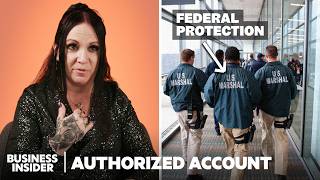
This video features former FBI agent and psychiatric nurse Liz Meriwether, who shares her insights into the minds and methods of female serial killers. She discusses their motivations, typical victim profiles, and the challenges of investigating them, drawing on her extensive career experience.
Liz Meriwether, a former FBI agent for 20 years, introduces the topic of female serial killers, noting that about 8% of serial killers are women and some start as teenagers.
The FBI defines a serial killer as someone who kills three or more victims, with a cooling-off period between murders.
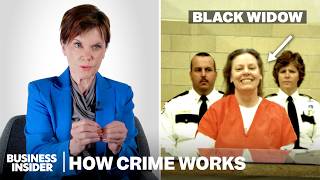
Aileen Wuornos was a female serial killer who murdered seven men by hitchhiking, motivated by financial gain and a history of sexual abuse.
Female serial killers often use poisoning, as they can easily contaminate food or drink, especially if they live with the victim.
Female serial killers are typically motivated by financial gain, anger, or a desire for control, unlike male killers who are often fantasy-driven.
Dorothea Puente ran a boarding house and killed tenants to collect their social security checks, exemplifying financial gain as a motive.
Joanna Dennehy, a British female serial killer, killed for anger and a sense of power, stabbing two men in one evening.
Meriwether interviewed a nurse in a small Texas hospital who killed 10 patients between 2000 and 2001, motivated by frustration and anger.
Profiling involves analyzing crime scenes to infer characteristics of the offender, such as mental state and behavior patterns.
The FBI's ViCAP (Violent Criminal Apprehension Program) is a database that helps link unsolved murders across jurisdictions based on similar behaviors.
Organized killers leave little evidence and may not be found, while disorganized killers leave chaotic crime scenes, often due to mental illness.
Understanding the victim's lifestyle and risk factors is crucial in profiling, as certain victims are more likely to be targeted.
A profile typically includes the killer's gender, age, marital status, and sexual history, though these are less common for female killers.
Serial murders are often ritualized because they are fantasy-driven, leading to similar patterns across a killer's crimes.
Arrests require sufficient evidence, and building a case can take time, as seen with Vickie Jackson's arrest almost a year after her last murder.
Meriwether used a 'dumb' persona during interrogations, especially with male suspects, to get them to lower their guard and reveal information.
Most serial killers deny their crimes, even to the end, as seen with a death row inmate who maintained innocence until two days before execution.
Vickie Jackson was convicted of multiple murders in 2006 and sentenced to life in prison, showing defiance rather than remorse.
Male serial killers are often fantasy-driven with sexual components, while female killers are more likely to kill for financial gain or family-related reasons.
One of the first documented female serial killers, Elizabeth Báthory, was a noblewoman in Eastern Europe who killed young women in her castle.
Psychopaths lack guilt and remorse, which allows them to repeat crimes; they may be white-collar criminals rather than violent offenders.
Children with chronic harmful behaviors are diagnosed with conduct disorder, not antisocial personality disorder, as their brains are not fully developed.
Insanity is a legal term meaning the accused did not understand the wrongfulness of their actions, as in the case of Richard Trenton Chase.
Meriwether believes Vickie Jackson was a psychopath, as she killed repeatedly without remorse, serving a need for her.
Most serial killers, male or female, have terrible upbringings, including abuse and neglect, with sexual abuse being common.
Meriwether became a psychiatric nurse before joining the FBI, which prepared her for dealing with disturbed individuals and profiling.
Meriwether's first profiling case involved a rapist in her neighborhood, leading her to offer her services to local police.
Meriwether was assigned to the Unabomber investigation, which was solved when the suspect's brother turned him in.
Excessive exposure to crime scenes desensitizes investigators, which is necessary for the job but can be challenging.
Meriwether was the 404th female agent out of 8,000, facing a male-dominated environment but coping due to her upbringing with brothers.
Meriwether contributed to a series about women who kill, interviewing 36 convicted murderers for an in-depth study.
Female serial killers are rare but real, often motivated by financial gain or anger, and they can evade detection for years. Profiling and understanding their psychology are essential for law enforcement, and Meriwether's unique background as a psychiatric nurse and FBI agent provides valuable insights into their minds.
What percentage of serial killers are women?
About 8%.
00:42
What is the FBI definition of a serial killer?
Someone who kills three or more victims, with a cooling-off period between murders.
00:54
What is the most common motivation for female serial killers?
Financial gain.
05:58
What method is frequently used by female serial killers?
Poisoning.
03:18
Who was Aileen Wuornos and how many men did she kill?
A female serial killer who killed seven men by hitchhiking.
02:15
What is the ViCAP system?
The Violent Criminal Apprehension Program, a database linking unsolved murders across jurisdictions.
11:56
What is the difference between male and female serial killers' motivations?
Male killers are often fantasy-driven with sexual components, while female killers are more likely motivated by financial gain or anger.
29:33
What is the legal definition of insanity?
The accused did not fully understand the wrongfulness of their actions at the time of the crime.
35:29
What is conduct disorder?
A diagnosis for children who engage in harmful behaviors, as their brains are not fully developed.
34:18
Who was Vickie Jackson?
A nurse who killed 10 patients in a small Texas hospital between 2000 and 2001.
07:53
What is the significance of victimology in profiling?
Understanding the victim's lifestyle helps determine the type of person likely to be targeted.
16:30
8% of serial killers are women
Challenges common perception that serial killers are almost exclusively male.
00:42Female killers' motivations differ
Highlights that financial gain is the most common motive, contrasting with male killers' fantasy-driven nature.
05:45Profiling is part art, part science
Explains the blend of experience and analysis in criminal profiling.
09:06Interrogation tactic: playing dumb
Reveals a practical technique used by Meriwether to elicit information from suspects.
22:17Psychopaths lack guilt
Explains the psychological underpinning that allows serial killers to repeat crimes.
32:45[00:00] I was an FBI agent for 20 years. violent offenders and serial killers. (machine whirring)
[00:14] There are certain crimes and certain people should never get out. I interviewed a female serial killer who was a nurse.
[00:27] She is responsible for the murders of 10 of her patients. God only knows how high the body count would be. (machine clicking)
[00:42] About 8% of all serial killers are women, and sometimes they start when they're teenage girls. Some female killers are very prolific.
[00:54] They may kill many, many people over a few years, something might be amiss. Serial killers by FBI definition is three victims,
[01:08] The series of murders that were eventually determined the detectives were assisted by the FBI Profiling Unit,
[01:20] women were not violent serial killers. Our society wasn't ready to accept that women could be killers.
[01:35] but Aileen Wuornos would hitchhike. She wanted a single male alone in that car.
[01:47] He lets her in the car. She would talk him into pulling over. And that wasn't her intention at all.
[02:00] And the interesting thing about Aileen Wuornos it appeared to me to be motivated killing men by hitchhiking
[02:15] as well as financial gain. She was horribly sexually abused when she was a young girl. She killed seven men.
[02:33] Had her lover not turned her in, she would've kept doing it. sentenced to death, and executed. Female serial killers, like all serial killers,
[02:47] generally speaking, plan the murder. Sometimes the first murder wasn't planned; it happened.
[02:59] And then the killer realizes after the murder, and perhaps they benefited in some way. Women use various methods when they kill people.
[03:18] A frequently seen method is poisoning. What makes murder easy for the poisoner, they have no trouble contaminating food or drink
[03:32] because chances are they live with the victim. to torture and sexually assault their victim
[03:44] We see that far more often in male serial killers. is the female poisoner who puts enough poison in the food
[03:59] to make their victim sick but not die. Just historically, women get away with murder especially in an era when we didn't have
[04:13] you take them to the doctor or to an emergency room, but back in the 1800s and early 1900s, and people would feel badly for you.
[04:28] "She's just had so much bad luck with her. "And did you hear her mother died last week unexpectedly?" That made it very easy over centuries
[04:43] - I'm Liz Meriwether. of Hulu's new crime thriller, "Furious." and the different paths that they take
[04:58] We have such iconic male serial killer characters in complicating that narrative in "Furious" who you're both feeling for and scared of.
[05:16] to watch these kinds of shows is the why. Women are so often underestimated
[05:29] I think that there aren't as many female serial killers, but we just have never found them. (machine clicking)
[05:45] - Generally speaking, female serial killers have different motivation than male serial killers. Female serial killers are motivated by one of three things.
[05:58] The most common motivation is they do it for financial gain. and will have life insurance on their husband and kill him.
[06:11] And they do it over and over and over with a new husband. motivated for financial gain is Dorothea Puente. Dorothea ran a boarding house in the Sacramento area,
[06:26] and she eventually started killing her tenants of collecting their social security check. She cashes somebody else's check.
[06:40] There's her reward right there for killing again. She was eventually caught in 1988. On rare occasion, we will see a female serial killer
[06:52] or they are angry at the world, An example of a female serial killer is Joanna Dennehy of Great Britain.
[07:09] because it's unusual for women to kill for that reason. and it appears that she saw herself
[07:22] But of course that's nonsense. One evening she stabbed two men. Generally speaking, female serial killers victimize people
[07:41] I interviewed a female serial killer She was a nurse working in a very, very small rural hospital in Texas:
[07:53] Part of her motivation was frustration and anger and she took out that negative energy on killing people,
[08:06] people who were dependent on her for care. Between the year 2000 and 2001, she is responsible for the murders of 10 of her patients.
[08:19] with some kind of medication that she had access to. in my first career as a psychiatric nurse and Vickie Jackson was the toughest nut to crack
[08:36] She steadfastly refused to admit Had she not been caught, (machine clicking)
[08:52] The term profiling or profiler is a popular description. My certificate upon completion of my training
[09:06] It says crime scene analyst analyzing the crime scene.
[09:19] to know exactly what happened, from analyzing a crime scene. For example, when someone who is severely mentally ill,
[09:33] or some other types of serious mental illnesses when they kill someone, the crime scene is going to be very chaotic, messy.
[09:49] I was with my partner at a woman's house in suburban Chicago. She had been stabbed to death by an intruder,
[10:03] and my partner and I were there a couple of days afterwards. and a woman walks up to us with her little boy
[10:17] And I look down at this cute little boy and he holds it up, "What have you got there, little man?"
[10:31] It was the murder weapon. The blade was this long, bloody blade.
[10:43] She said he found it under his swing set. was it told us after he killed the victim.
[10:57] the killer runs to safety. Home, he dropped the knife, probably panicked, into that neighborhood over there.
[11:12] walking up to someone on the street, There's not much of a crime scene there. they're usually playing out some kind of fantasy they have,
[11:29] a crime scene is, evidence perhaps that the killer drank blood that tells profilers a lot
[11:43] and it also tells profilers, "This is going to happen again, maybe pretty soon." Back in the '80s, the FBI started a program
[11:56] the Department of Justice called the VICAP, V-i-C-A-P, where let's say a detective is working on an unsolved murder in San Francisco,
[12:10] and he fills out all this information on a form. It's put in the central computer. And a detective from Minneapolis
[12:22] or he's working on and sends it into ViCAP, we have an exact same bizarre behavior
[12:34] and it looks identical to what happened here in Minneapolis. And the answer is yes, it could be. is they tend to travel for a variety of reasons.
[12:51] They don't want to draw attention to a particular area Sometimes female killers will relocate.
[13:03] and they are targeting a man who has something they want: money, things, land, and they kill him, Then they move on to another location
[13:19] Obviously they do that so they are not drawing suspicion to themselves. Highly intelligent, methodical, organized serial killers,
[13:31] male or female, tend to not leave much evidence frequently. The body isn't even found. Of course, that is not the case with healthcare killers
[13:45] and family mothers killing people in their family. than it was over 50 years ago because computerized systems can pick up things
[13:59] and if one person is repeatedly buying and those kids are dying, Healthcare killers such as Vickie Jackson was,
[14:16] the crime scene isn't recognized initially It's an older person generally who died, "They are in the hospital because they're sick.
[14:31] "Maybe a heart attack, a fatal stroke." So she didn't come under suspicion for quite a while for a small rural hospital.
[14:46] (machine clicking) starting in the late '70s, early '80s.
[14:58] and determining the type of person their lifestyle, their education, how they live,
[15:10] Profiling is part art, part science. and I worked with them with John Douglas, Robert Ressler, Roy Hazelwood,
[15:24] I worked with them on cases that were happening in the Chicago Division and secondarily the San Francisco Division.
[15:36] is it draws a sketch, a personality sketch and a lifestyle sketch of the unknown offender. Are they employed?
[15:51] Did they bring their own weapon? in male to female murders is strangulation.
[16:03] We rarely see strangulation as a method These are things police need to know and that's where profiling comes in,
[16:18] studying hundreds and hundreds of similar types of crimes. Also, a critical component of developing a profile
[16:30] This victim, what kind of person were they? that walked the streets to get customers,
[16:42] who rarely left her house? One of those types is far more likely to be victimized So the victimology is very important.
[16:56] Crime scene analysts do not go into the case It's important to let the photographs speak for themselves
[17:09] and let the autopsy explain what happened. from the experienced, highly intelligent, than a 16-year-old pizza delivery boy.
[17:27] One of them is going to be much more chaotic than the other. A profile of an unknown offender, generally speaking, addresses the gender of the killer,
[17:41] the approximate age of the killer, the marital status and sexual history of the killer which we rarely see on female killers
[17:57] The interesting thing about serial murders is each murder by the killer tends to look like the previous murder,
[18:11] is murdering someone is fantasy driven, and fantasy-driven murders tend to be ritualized.
[18:23] to change the method of murder, or think they got away with it, "Wow, I pulled that off!
[18:39] Some serial killers have a cooling-off period, before they do it again and again and again.
[18:53] (machine clicking) The ViCAP system, Violent Criminal Apprehension Program, and it is alive and well today,
[19:09] Unless a murder happens on federal land it comes under the purview of the state where it happens, and homicide investigators are in charge of it,
[19:24] because the resources are so vast, to develop a profile of the unknown offender.
[19:37] Vickie worked in a small rural hospital. People were dying on the night shift Yes, people sometimes check into a hospital
[19:50] and don't check out, but there's a predictable number. The problem that Vicki got herself into was she was very prolific.
[20:02] and she was the only nurse on duty, and people were dying at three or four times the rate. (machine clicking)
[20:17] I never made an arrest where there weren't at least usually bigger men.
[20:29] The day an FBI agent in training graduates from the academy, they are issued the gun they have been training with and handcuffs, and you always have those with you.
[20:42] I was assigned to surveil a house and this suspect,
[20:55] was suspected of being a hitman I was with another young agent.
[21:08] The subject of the surveillance came out of his house, "We can't let him go." I though my partner was right behind me.
[21:22] "Halt, FBI, don't move." He was back in the car calling the two agents that had (laughs) left.
[21:36] because when we were handcuffing him, he wet his pants. There has to be a certain amount of evidence
[21:50] to believe that person committed that crime, and usually an arrest warrant is sought beforehand.
[22:02] almost a year after her last murder. It takes time to build a case properly, can sink a conviction.
[22:17] (machine clicking) I've interviewed many female killers, and almost every single one of them denied
[22:30] of the crime they were in prison for. a police interview, an interrogation interview What you want to do is get them nailed down to a statement
[22:48] an incriminating lie. The suspect is the last person interviewed if they are truly believed to be responsible for the crime.
[23:00] He had been a Chicago homicide detective and we went to profiling school at the same time. Sometimes, when we interviewed someone together,
[23:17] I would play dumb, and one of the things we found was that, especially if the suspect was a male suspect,
[23:31] that he would disregard that I was even in the room If my partner left, and I would start interacting with the suspect,
[23:44] he is seeing me as a stupid woman, and like, "Well, she's stupid. I could say anything." I don't mind being considered stupid
[23:59] if it's a path to get the information. between my two professions: psychiatric nurse for 10 years and an FBI agent.
[24:12] was fearing that I might not ask but I got over that pretty quickly.
[24:24] who was on death row in Texas, in fact, two different men on death row in Texas, and one of them had been convicted
[24:38] of killing his girlfriend and her two sons His stance was he didn't do it. And he, toward the end of the interview,
[24:53] and just for a moment, the way he glared at me was unsettling.
[25:06] because I was just there to chat. and he agreed to an interview. "If this is what his girlfriend and kids saw
[25:24] "right before he killed them, yikes!" Serial killers I'm familiar with tend to be deniers. in American history,
[25:38] but the FBI thinks possibly over 100, maintained until two days before his execution date
[25:50] and he actually married a woman and she had his baby. She believed him to the last minute
[26:05] until two days before his execution, he decided to talk. She was not forthcoming. "The FBI is wrong. Everybody's wrong.
[26:19] But I knew she did. and some other killers that I've interviewed is she had an air of defiance.
[26:32] "I didn't do it. I didn't do it," whereas almost all of the other people I interviewed that denied the murder they were convicted of
[26:46] It was more like, "Poor me. The jury got it wrong. "I didn't do anything," whereas Vicki was, "You're stupid. I didn't do this.
[27:00] - And that actually, "Yeah, she's probably 100% guilty."
[27:14] (machine clicking) Vickie was convicted of murder, multiple murders, in 2006 and sentenced to spend the rest of her life in prison.
[27:28] Juries are always advised, "The defendant has a right "Don't hold it against them," unless you are low IQ or mentally ill,
[27:42] and say, "I did not do this." "What am I doing here?" "and you can't look at me
[27:56] "and explain that you're wrongly arrested?" Do people get convicted wrongly and go to prison? There is one person I interviewed
[28:09] who was convicted of killing six people, a family: that at the end of the interview, "This woman was wrongly convicted.
[28:22] because she said something about the case when we were talking that indicated to me she did it, and she absolutely does not belong in prison.
[28:39] She was being held as a sex slave and abused by the couple, and she didn't know anything about fires, the place would fill up with smoke,
[28:53] and she could run away, No prosecutor's or a governor's going to let her out. There are some crimes in America
[29:07] as much as the horror Some of them are where there's a high body count.
[29:19] They just want 'em put away. (machine clicking) between male serial killers
[29:33] is that most male serial killers are fantasy-driven murders with a sexual component. Victims of female serial killers are killed
[29:48] for some kind of financial gain for the killer. Female serial killers, generally speaking, starting with family.
[30:01] killing their own baby or their own little child, Male serial killers are far more likely
[30:13] Their motivation? since they were an adolescent, I've interviewed some male killers and serial killers
[30:29] that were honest, upfront. but they admitted to the murders and why they did it, that were absolutely defiant
[30:45] and spent the entire three hours talking with me trying to convince me that they were wrongly imprisoned. With women, I think some of the people I interviewed,
[30:57] were their goal was to convince me The average killer in prison They're not monsters as such.
[31:13] And as difficult as it must be to accept still there are certain crimes and certain people
[31:28] should never get out. if they have the opportunity to kill again, One of the first documented cases of a female serial killer
[31:44] is a woman who was of royalty in Eastern Europe. She was held in very high regard, wonder what was happening to their daughters and sisters
[32:01] that would go to work in the castle and never be seen again. Real serial killers generally are not as interesting When Hollywood is doing a story of a female killer,
[32:17] she's usually pretty, charming, good verbal skills, and she's a trickster. kill them, and get away with it,
[32:30] but that's not how real life is, that's boring (laughs) about real life. (machine clicking)
[32:45] Psychopath is under the category known as antisocial personality disorder.
[32:58] If somebody is afflicted with this, they do not feel guilt about anything they did, They do not have remorse.
[33:13] their crimes can become serialized. Guilt is a tremendously powerful motivator.
[33:25] the chances of us doing it again are pretty low, but serial killers don't feel that guilt.
[33:37] In fact, they do anything they can to relive the moment. Sometimes they make recordings or take pictures,
[33:50] take jewelry, or take something from the victim It's like a prop in a play. And they don't feel guilt.
[34:02] So they do it again and again and again. For serial killers, if a child is engaging in harmful behaviors to others
[34:18] and has a chronic disregard they are not diagnosed with antisocial personality. They're diagnosed with conduct disorder.
[34:33] is the human brain is not fully developed until someone is in their mid-20s. before their brain is even formed as an adult is unfair
[34:50] because there are cases of kids that grew out of it and became responsible adults that don't hurt other people.
[35:03] not everybody with that diagnosis hurts other people. They may be what's called a white-collar psychopath. They may do bad things: steal, embezzle, that kind of thing,
[35:17] in raping or killing, torturing anybody, than the violent kind.
[35:29] Insanity is not a clinical term; it is a legal term, and it means the individual, the accused, did not fully understand at the time they did the crime
[35:42] For example, Richard Trenton Chase absolutely, totally believed he had to replace the blood
[35:56] or he would die. That is psychotic. For 10 years as a psych nurse,
[36:09] I worked with people who had to be hospitalized to protect them from being hurt on the outside are frequently attacked and violated.
[36:24] So it's to protect them, but it's also to protect society. to a maximum security psychiatric unit. or they are so gravely disabled
[36:38] they cannot take care of themselves. especially schizophrenics, are very rare, because the crime scenes are so bizarre.
[36:53] that she was accused and convicted of I was pretty well convinced she was a psychopath or she wouldn't have done it 10 times.
[37:08] It was serving a need. So I've never interviewed or studied a serial killer
[37:21] and some of them are very open and honest, like, "If you let me out, I'm going to continue killing. The vast majority
[37:35] male or female, had terrible upbringings: bad parenting, neglect, abuse.
[37:47] We do see sexual abuse as a child Every now and then a killer will come along,
[38:00] a serial killer will be arrested, and a deep dive into their history and interviewing siblings and neighbors
[38:12] A couple of famous ones: there was some unusual things in his childhood and he started being a real serious problem
[38:26] The kids in the neighborhood avoided him. It's a little bit different with women. little girls being abused or neglected,
[38:39] tend to remain quiet about it. (machine clicking) I wanted to work with people that were mentally ill.
[38:53] I felt especially drawn to help someone that was having that much trouble getting through life So I graduated nursing school,
[39:06] and I eventually became a psychiatric nurse where I, after many years, became head nurse. I was giving a community lecture
[39:21] on mental illness and mental health, and a gentleman came up to me and introduced himself, and he had been in the audience.
[39:33] And he said, "I think the FBI could use a woman like you." "Well, in case you missed it, I'm a nurse!" The first female agent was admitted in 1972: one,
[39:50] It turns out, that night I couldn't sleep. I was at the FBI Academy, Quantico, Virginia.
[40:04] And then spent, I went back to Chicago, and I began my 20-year career. About four years in to my career,
[40:17] I found out there was a rapist in my neighborhood I wanted to get involved in the case. I was not trained.
[40:29] "and offer my services to the local police?" "Yes." And so I did that. He was raping women as they got off the Burlington train
[40:45] And then, in 1984, I'd been an agent for four years. They wanted to have an agent in every field division,
[40:58] to kind of be a liaison in my case, Chicago, And that's how it all got started.
[41:11] I was assigned to the Unabomber investigation. We didn't know who we were looking for until David Kaczynski, Ted's brother, turned him in.
[41:26] Nothing prepared me more or better than having been a psychiatric nurse.
[41:38] They interact with people that are upset, are disturbed, are exhibiting behaviors that can be dangerous to them dealing with people that are stressed out or ill
[41:54] or behaving badly or behaving crazily, and there was one or two other agents in my class or a detective on major police departments,
[42:10] and they, like me, were similarly prepared Interestingly enough, teachers, grade school teachers
[42:22] on the testing to get in, Hey, if you can control a classroom of 10 year olds, When I learned about profiling
[42:36] to become a special agent, and John Douglas came into our class one day and was showing slides, crime scene photos,
[42:51] Part of the reason is the vast majority of cases that lend themselves to profiling are the victims are women or children.
[43:04] Well, I'm a woman, and I had a child. So a little too close to home, but I wanted to do it. known as desensitization.
[43:18] it doesn't have the same impact. Excessive exposure to it minimizes the response, And so there, at that point,
[43:33] once I mastered that problem, I was on my way. When I graduated the academy and went back to Chicago, there were 8,000 agents nationwide,
[43:47] and I was the 404th female agent. Definitely male-dominated profession at the time. because I was raised with three brothers and no sisters.
[44:01] Dealing with boys, men, or men acting like boys was just common for me, Sometimes jokes that weren't funny, things like that,
[44:19] for women and minorities in the FBI. For the last 30, 40 years,
[44:33] I mean, TV shows, movies are replete with female agents. that I was asked to contribute to
[44:45] and it's about women who kill. It was a prison interview show with someone convicted of murder
[44:59] and talk with them about their life, what happened, I interviewed 36 people. and then I go in an in-depth study
[45:16] of why did this person end up taking the life And I love it. (machine whirring)
[45:31] then please subscribe and comment below in the series.
⚡ Saved you 0h 45m reading this? Transcribe any YouTube video for free — no signup needed.