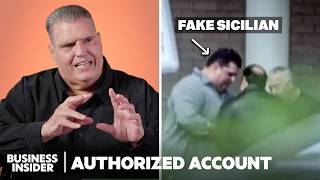

Undercover FBI Agent Reveals Mob Dangers
45sThe immediate intrigue of an undercover agent's life and the constant threat of death creates a compelling hook.
▶ Play Clip"Delivers a detailed, first-hand account of undercover work, though the title promises a general overview while the content is a personal story."
In this video, former FBI undercover agent Joaquin Garcia, also known as Jack Falcone, provides an authorized account of his 24-year career, focusing on his infiltration of the Gambino crime family. He details the intricacies of undercover work, the mob's structure and culture, and the personal and professional challenges he faced, offering a rare insider's perspective on organized crime and law enforcement.
Joaquin Garcia, aka Jack Falcone, introduces himself as a former undercover agent for 24 years, spending nearly three years with the Gambino Crime Family. He emphasizes the constant risk of undercover work, where a single misstep could be fatal.
Garcia was tasked to pose as an Italian to infiltrate the Gambino family. He underwent an informal 'mob school' run by a case agent from Italy, learning proper Italian food pronunciations and cultural nuances to convincingly portray a third-generation Sicilian.
The FBI targeted Greg DePalma, a captain in the Gambino family, because he had a propensity for talking. Garcia built a relationship with him, becoming his driver and confidant, which provided extensive intelligence.
Garcia describes typical mob activities including hijackings, bookmaking, and extortion, particularly in construction. He explains the 'dirt' business, where controlling dirt removal and landfills was lucrative, and how union control forced contractors to cooperate with the mob.
At trial, DePalma feigned illness ('mafia flu') to gain sympathy. Garcia highlights the nature of fear: victims feared not the individual but the mob's capacity for violence, which could be ordered at any time.
Garcia recounts an incident where DePalma and another made guy, Robert, assaulted Petey Chops in a Bloomingdale's for failing to report and kick up money. The violence was a reminder of the mob's enforcement methods.
Garcia explains the structure of New York's five families (Gambinos, Colombos, Genovese, Lucchese, Bananos), their territorial control over industries, and the hierarchy from boss to associates.
Being 'put on record' means becoming an official associate. Garcia received a gaudy pinky ring as a sign of his status, which he was required to wear despite his reluctance.
Garcia describes the process of becoming a 'made man,' including the oath where one burns a saint in their hand, symbolizing death if they betray the family. He notes he was not a made guy but an associate.
The distinction between 'friend of ours' (made guy) and 'friend of mine' (associate) is crucial. Introductions must be made by a third party, and the phrase used signals the person's status.
DePalma had a habit of stealing items like socks and ties from shops, which Garcia found risky due to cameras. This behavior was ingrained in his character.
Garcia learned to make himself attractive to DePalma, positioning himself as someone who could help and earn money, which made DePalma pursue him rather than the other way around.
Garcia gave DePalma $3,000 as a 'welcome back' envelope after DePalma's release from jail, which solidified their relationship. The mob values earners who do the right thing with money.
The mob demands constant availability. Garcia learned to always answer DePalma's calls, as missing one could raise suspicions of being an agent or informant.
Garcia's undercover role involved constant eating, leading to a 90-pound weight gain. Judge Hellerstein even commented on it, and the Daily News ran a story about 'fat fellas' eating their way through New York.
A typical day involved breakfast, lunch, strip club visits with pastries, dinner, and late-night meals at City Island. Garcia found that the more he ate, the more the mobsters loved him.
Mobsters wore expensive suits (Brioni, Zegna), pinky rings, Rolex watches, and drove luxury cars. Garcia carried thousands in cash wrapped in a broccoli band. He had to return all items at the end of the case.
Garcia's approach was to be inclusive and friendly, not a tough guy. He recorded all meetings and coordinated with his case agent at places like churches or Home Depot to exchange tapes and cash.
Garcia always wore a recorder to memorialize conversations, avoiding 'word against mine' situations. He never allowed himself to be searched, using a firm but non-confrontational approach.
The case began with Albanian gangsters extorting a strip club. The FBI intervened, and Garcia paid the mob $5,000 to 'protect' the club, leading to deeper involvement with the Gambinos.
DePalma had owned the Westchester Premiere Theater, a mob-controlled concert club featuring stars like Frank Sinatra. After jail, he returned to the club, and Garcia became his constant companion.
The case ended with 32 mobsters arrested. DePalma refused a global plea and went to trial, where Garcia testified. DePalma was convicted and died in prison. Garcia had a $250,000 contract on his head.
Garcia was proposed for membership in the mob, but the FBI pulled him out, similar to Donnie Brasco. He believes the case could have been bigger if allowed to continue.
Garcia also worked police corruption cases, including in Hollywood, Florida, where corrupt cops transported stolen art and drugs. They were arrested, but Garcia was surprised by how 'nice' they were.
Garcia came from Cuba at age 9, grew up in the Bronx, and was inspired to join the FBI after watching the movie 'Serpico' in college. He became a citizen in 1976 and applied.
Garcia faced challenges at the academy, including academics and weight standards. He was given an ultimatum to lose weight or be fired, but he returned and graduated.
Garcia names Mexican and Colombian cartels as the most fearful due to their violence and targeting of families. He worked cases against Willie and Sal, major drug dealers in Miami.
A drug deal with Harlem gangbangers turned dangerous when they planned to rob him. Garcia used a Santeria excuse to avoid leaving the diner, and the FBI arrested all nine.
The mafia has adapted, but the FBI has reduced organized crime squads from five to one, focusing on cyber and terrorism. Garcia warns that mobs are like weeds and will grow if not tended.
Garcia criticizes the media for romanticizing mobsters, which he believes encourages fascination and recruitment. He notes that many people dress like gangsters and claim connections.
Garcia retired in 2006 after 26 years, turning down a 30-year gold ring. He wrote a book, 'Making Jack Falcone,' which became a New York Times bestseller.
Garcia's account provides a unique, authorized look into the life of an undercover agent, revealing the dangers, psychological tactics, and personal sacrifices involved. His story underscores the importance of undercover work in dismantling organized crime, while also cautioning against the romanticization of the mob.
What was Joaquin Garcia's undercover alias?
Jack Falcone
How long did Garcia spend undercover with the Gambino crime family?
Nearly three years
What was the purpose of the 'informal mob school' Garcia attended?
To learn Italian food pronunciations and cultural nuances to convincingly pose as a third-generation Sicilian.
00:40
Why did the FBI target Greg DePalma?
Because he had a propensity for talking, and the FBI liked to listen.
01:38
What is the 'mafia flu'?
A tactic where mobsters feign illness to gain sympathy in court.
03:18
What are the five families of New York?
Gambinos, Colombos, Genovese, Lucchese, and Bananos.
07:58
What does 'put on record' mean in the mob?
It means becoming an official associate of the family, under its protection and control.
08:36
What is the difference between 'friend of ours' and 'friend of mine'?
'Friend of ours' indicates a made guy, while 'friend of mine' indicates an associate.
11:38
How did Garcia earn DePalma's trust early on?
He gave DePalma $3,000 as a 'welcome back' envelope after his release from jail.
13:52
What was the outcome of the case against DePalma?
DePalma was convicted and died in prison.
26:01
What movie inspired Garcia to join the FBI?
Serpico
33:10
What was the minimum grade required at the FBI Academy?
85
35:25
Which groups did Garcia consider the most fearful?
Mexican and Colombian cartels, because they come after your family.
38:18
What was the 'pucker factor' incident at Queens Mall?
A drug deal where gangbangers planned to rob Garcia, but he used a Santeria excuse to avoid leaving the diner, and the FBI arrested them.
40:17
What is the title of Garcia's book?
Making Jack Falcone
48:35
Undercover Agent's Credentials
Establishes the speaker's authority and the unique perspective of a 24-year undercover veteran.
Targeting a Talkative Captain
Illustrates the strategic selection of targets based on personality traits that aid intelligence gathering.
01:38The Mafia Flu
Reveals a common courtroom tactic used by mobsters to evoke sympathy.
03:18Five Families Structure
Provides a clear explanation of the mob's hierarchical structure and territorial control.
07:40Friend of Ours vs. Friend of Mine
Highlights the secretive language used to distinguish made members from associates.
11:07Being the Carrot
Demonstrates a key undercover technique of making oneself attractive to the target.
13:24Eating as a Cover
Shows the physical toll and unusual methods used to maintain cover.
15:33Always Wear a Recorder
Emphasizes the importance of evidence preservation in undercover operations.
20:17Donnie Brasco Comparison
Draws a parallel with a famous undercover case, highlighting the decision to pull agents out.
26:28Cartels vs. Mob
Provides a comparative analysis of danger levels between drug cartels and the mafia.
38:18Mob as Weeds
Warns about the resilience of organized crime and the consequences of reduced FBI focus.
43:05Romanticization of the Mob
Critiques media portrayal and its societal impact.
44:22[00:00] My name is Joaquin Garcia aka Jack Falcone. I was an undercover agent for 24 years. I spent nearly three years for the FBI with the Gambino Crime Family. This is everything
[00:14] I'm authorized to tell you. When you're undercover, something could just go wrong. Person may get the wrong vibe about you or may get paranoid about you for some reason.
[00:26] With the mob, you have to make sure your eyes were dotted and your tees were crossed because one slight move. Then you're in the back of a trunk of a car.
[00:40] They wanted me to pose as an Italian to infiltrate the Gambino crime family. I went through this informal mob school that was set up by the case agent who happens to be from Italy and he taught
[00:55] me the the foods and the proper pronunciation. You know, you don't look at Italian food at like manicotti and say manikgot, it's man. You know, it's not mozzarella, it's muzzarel. You
[01:08] sound like you grew up in that culture. You tasted these foods. I had no idea of how the mob culture worked. And I had to learn because my role was that my parents were third generation Sicilian.
[01:23] I grew up in that culture, but yet I grew up in Miami and I was around the Cuban uh criminal element and that's mostly I've lost a lot of my Italian influence. We decide to hitch our wagon
[01:38] to Greg DePalma. So, Greg DePalma became a uh captain in the Gambino crime family, which is a very high position. We knew Greg DePalma had a propensity for talking. Greg DePalma liked to
[01:50] talk and we in the FBI like to listen. So, it was the perfect match. Time goes by as slowly we go out to dinner with Greg. He's trying to get his foot on the ground. We became buddies. There
[02:03] were a couple of hijackings. Uh mostly there was the shaking down, bookmaking. There was a lot of extortion that went on when I was with them. He would be construction companies. He was very much
[02:15] into moving and transporting dirt. There's a lot of money in dirt. So people say, "You want that job? I got to get the dirt out of it." And by dirt means every time you dig a ground or foundation or something, that dirt has to be removed. Now, of course, once you got that dirt, you know, um then
[02:33] you got to find a hole to put that in. If you got the hole, you got the gold. We had guys who were construction company owners that had millions and millions of dollars to contract. And how why were
[02:47] they under the umbrella of the Gambino crime family? Because we were in the Gambino crime family had control of the unions. So it behooved them to actually work with the mob in order to you
[03:03] know ensure that there is no problems that things are going to flow smoothly. They're not going to have delays with anything. They have this fear intimidation that you think some they're going to burn your house. They're going to beat you with a baseball bat. When Greg DePalma walked
[03:18] into trial, he had the what I call the the mafia flu where he showed up with couple of workers from the hospital, an oxygen tank, unshaven uh like he was just about to die. There was a guy who was
[03:33] a construction guy that was being shaken down by Greg and he's understand. And the defense attorney goes, "Well, why did you have to pay this guy all this money on a weekly b because because you know,
[03:45] were you afraid of him?" He goes, "Yeah, I was afraid of him." And he says, "You afraid of him?" And of course, he's sitting on the defense table like crippled, you know, with a mask on and all
[03:57] of that. And the jury kind of laughed. And what he should have said, the kid on the stand would be, "I wasn't afraid of him. I could [ __ ] slap this kid all day, the guy all along. I was afraid of
[04:11] what he could, he's capable of doing, his people are capable of doing. All it would take is an order with some subordinate guy or somebody in his crew and associates. They go over there, burn
[04:24] his building down, beat him up, rape his wife, whatever you want to do, and they would do it. You fear him not for his size. You fear him because he represents the mob. and what the mob is capable
[04:38] of doing. Every day was like, "Let's go see this guy. He owes me money." We would go pick up money. His envelopes, he had envelopes all in his jacket. And then he cried the blues that he had no money.
[04:53] I go, "Greg, you got at least 20 envelopes. God knows how many thousands and thousands of dollars." Anyway, one of the guys was absent. He was never reporting. And all I would hear is this Petey Chops, he don't show up. I'm gonna go after him. Yeah, we gotta find him. And the only
[05:10] reason he was looking for Petey Chops is because he wanted Petey Chop to kick money up to him. That's what it's all about. It's money. One day he comes up and he says, "I found him." I goes, "You
[05:23] and Robert," which was another made guy. He says, "You, Robert, I want you to go with me." He goes, I says, "Where?" He goes, "He's in Bloomingdales." Bloomingdales and White Plains, New York. I would
[05:36] never forget that. I've driven by that so many times and I have to chuckle. And in Bloomingdales says, "What is he doing to bloom?" Well, every Monday he goes with his gummada, his guma, he said, which is girlfriend, and goes shopping with her, but he'll hang out at the coffee bar. There's
[05:55] Petey Chops with the two women. So, Greg gets all pumped up. Greg says to him, "Uh, hey, get rid of the girls." So he goes, "Where the hell you been?" Goes, "What do you mean I'm been?" He says, "Hey,
[06:07] Greg, I'm being followed." Because you're being followed. We're all being followed. That's what we do. The feds follow us all every day long. You're supposed to be reporting and you haven't. Well, I can't because I'm being followed. I got a lot to lose. Then suddenly Robert comes up. He goes,
[06:23] "Hey, you're talking too loud and you're disrespecting a skipper." And he goes, "Who are you?" He goes, "Who am I?" And he says to the guy, "Go after yourself." He says, "Oh, yeah." He grabs this candlestick made out of solid glass called the Costa Boa. It legit, it's kind
[06:41] of like a dumbbell. Solid glass. Grabs it, hits this guy over the head, blood starts gushing out. This guy drops down. The only thing missing were a little parakeet around his head because he was so
[06:57] knocked out. He's dropped down and he goes, "You keep your mouth shut." He goes to hit him again. I grabbed his arm. I says, "What are you doing?" So, Robin, look, we're got cameras here. He said, "Oh, the hell." When he's got a big mouth, the guy finally gets up. He's bleeding all over and I'm
[07:12] separating them. He's saying, "What did I do? Why did you do that for?" He goes, "Cuz you got a big mouth and you don't show up and you better show up first thing tomorrow." Greg tells him says, "Bride and early." The next day, bright and early, we go to the home. As I'm picking up
[07:27] Greg DePalma, here comes Petey Chops all bandaged up, walking by, and Greg DePalma says, "Yeah, he showed up. He gave me a nice envelope, and uh he said he's going to show up every week." And I'm
[07:40] thinking to myself, that's all they cared about. A little intimidation always works with the mod. New York is consist of uh five families that run the city so to speak. And by the city I mean they
[07:58] run every industry. They got the garment district. They got the fish filter market. They they got construction. They have all their unions. They really are in control of it. And the five families
[08:10] are the Gambinos, the Columbos, the Genovese, the Lucchese, and the Bananos. Everyone has their little territories and if you infringe on that territory like you got to get out of here that
[08:23] this is our turf. So everyone is very protective. They don't post it in classified ads. They don't say looking for a gangster come and apply. So what happens is you either get introduced to a guy who
[08:36] knows the guy and somehow you start moving into circles. There comes a point in time that they put you on record. And on record means now you are part of the family. You are underneath that
[08:49] umbrella, whatever family it may be. The Bananos or in my case was the Gambino crime family. When I got put on record, I was given a pinky ring. That was the gaudiest thing I've ever seen in
[09:02] my life. I refused to wear it, but I had to wear it. It was a sign that the captain gave it to me to show that I am an associate of the call or a connected guy. And how the mob works is you
[09:14] have an administration which is the boss, the underbos and the concier. Then underneath them you have what they call captains or capos. These cappos run crews. depends how powerful you are,
[09:28] depending how many people are in your crew and how much money you bring that are kicked up the ladder. They had 26 captains uh the Gambino crime family. Each captain had minimum of about five to
[09:44] 10 made soldiers which are the people below. Those are soldiers who are waiting their turns to be cathic. And underneath them come all the associates, all of the people who are connected,
[09:57] all of the businesses that are on record. Greg de Palmer had several made guys. He was known as a capo deimma, which is a couple with 10 made guys. So when one dies, they propose you and they put
[10:12] you on that list. That list is spread all around the families to see who is this Jack Falcone. Has was he before with another family? Is he a guy who's been a rat? Has he done anybody wrong? And
[10:27] if nobody says anything bad about you, then you're told that you're going to get straightened out. And that simply means that they tell you put on your best suit and on such and such a date you're
[10:41] going to meet usually meet in the basement of somebody's house. There you have all the wise guys, the leadership, the administration and then you take your oath of a ma where you burn a saint
[10:53] in your hand after they prick your finger and there if you betray the family you would have the same fate as just burned car. In other words, you're going to die. I was not a maid guy. And
[11:07] they take that stuff very serious. Like sometimes we would go to dinner and another mate guy come in and once they get done, hey, how you doing? Good to see you, Jack. Everything going well. You have
[11:19] to excuse me for a second. They go to another table and they whisper. Now, in the real world, you would be kind of offended like you know this guy. But they you don't need to know because how things work is you're not a friend of ours. Let's say for instance I know somebody to be a wise guy
[11:38] with the Bonanos. I somehow went to a wedding and I see the guy. I can't go to that guy and say, "Hey Joey, how you doing? It's Jackie Boy. I'm with the Gambinos." You know,
[11:50] you can't do that because it's a secret criminal society. You have to find a third person who knows the both of you who's going to make that introduction. And that would be, hey Joey, I want you to meet Jack. He's a friend of ours. That means that I'm a made guy. But if I said,
[12:08] I want you to meet Jack. He's a friend of mine. That tells you that he has I'm not a made guy. So there's certain things you can't talk to me about. And they really subscribe to that.
[12:21] So you're either a friend of ours or a friend of mine. Greg DePalma would do that. He would introduce me to all these captains from other families and he would say, "This is Jackie Boy. He's a friend of mine." Luckily for me, Greg DePalma had a big mouth and he would come back and
[12:35] tell me, "Ah, the guy wants to do this windows and this and that." So I was fortunate to have him. I drove him to every meeting. I knew what every meeting was about. That was a tough thing to do,
[12:52] driving him around because everywhere we went, he would had to steal something. We go to the big man's shop because he was a big guy, too. And he go in and he goes, "Hey, Jackie boy, look on his coat. He had socks and ties." I go, "What the hell are you doing?" He goes, "What
[13:07] are you talking about?" They got a whole bunch over there. You got a whole bunch there for sale, Greg. I says, "You know, you never know if you're on a camera." He couldn't help himself. He goes, "This is what I do." He goes, "This is who I am." This to him going there and robbing things was
[13:24] just a normal occurrence because that was in his DNA. One of the things that I found out with Greg is you got to you got to make yourself to be the carrot. You want him to pursue you. You don't want
[13:38] to pursue them. I slowly, methodically worked him, made me into something that he wanted to get his hands on. There's somebody who was going to bail him out and somebody who's going to help him. And
[13:52] for me, he was going to go places. When you're in the mob and you go to jail and you come out, everybody gives you an envelope to get your feet back on the ground. Well, my envelope was I gave Greg three grand. From then on, he loved me. He realized that, hey, this guy does the right thing.
[14:09] He gave me the money. He's respectful. And that's what the mob is all about. They want to sink their teeth into somebody who's got who's doing well because if they're doing well, you're going to do well. They want earners. They want people to who are going to make money and
[14:25] do the right thing with that money. We were selling jewelry to the bad guys as as being hot and uh they would give us, you know, good price, but of course I would sell them maybe to
[14:38] um the the captain for like give me 3500 or 4 grand for a Rolex. He turns around and sells it for seven. Now he's making money on you and that's always a good sign. With the mob there
[14:50] is total accountability. They need to know where you at. How come you haven't called? One time for instance, I remember he wound up calling me and I was busy working some other case and I
[15:03] didn't return his call. Next day he began to tell me. He goes, "Where were you?" I said, "I wasn't doing something." He goes, "Doing what?" He said to me, "If I call you wherever you're at, you better pick up that phone. Do you understand me? Because how do I know
[15:18] you're not locked up? How do I know you're not working for the feds?" So, I made it a point to answer that phone no matter what I was doing because if I didn't, it would have set me back.
[15:33] All I would do is go to Little Italy and eat like I was going to the chair. I mean, we order all kinds of pastas and this and that. Judge Hellerstein, never forget him, very nice man. He stops the proceeding as I'm bringing these tapes in. And he goes, "Agent Garcia,
[15:49] every tape you guys are eating. Every tape you're cursing. No manners, no nothing." He goes, "How much weight did you gain in this case?" I said, "Your honor, I gained about 90 pounds in this
[16:01] case." And he looked at me. He says, "I could see why." I says, "All you did was eat." The next day, front page of the Daily News says, "Fat fellas, they're eat their way through New York, these
[16:14] mobsters." And then you open up to the second page and it was he was one of the wide guys, the eating part. I think it helped me a lot. You wind up having me meeting for breakfast.
[16:28] We would meet about 9:00 in the morning. Then from there, we go to lunch. Of course, you know, you're eating there again. Then you go to the strip club where I was running a strip club in New York. Then there people come in with pastries, this and that. Okay, you're eating then. Then of
[16:43] course dinner time comes. So now now you're eating that and then you go back to the club, you're drinking and then right around 1 or 2 o'clock in the morning, you shoot over to City Island and there you eating some again. So this was a day I found the more I ate, the more
[16:59] they loved me. It was like we would order and they would sit there and it goes mad on Jackie boy look at you mink you how do you eat all of that stuff come on or try this come over my house my wife
[17:12] will cook you this bought it hook, line and sinker uh no one ever questioned me they thought I was a third generation Italian and everyone wore these Tacchini training suits but there was no training
[17:25] going on nobody ever said to me hey Jackie boy I want you to go jogging today let's go to the gym. Gym? What gym? These guys all walked around the sergeant tinies with their bellies hanging out,
[17:37] the crosses out. No one worked out in the freaking mob. The only thing they ran away is from the cops. And that's the only time I saw any running. You had to wear your Brioni suit, uh, your Zenga suit. Everything had to fit beautifully on you when you went out. We would spend uh maybe
[17:54] a couple of thousand for suits custom made. You would go usually to a tailor that the mob uses. Of course, you had all the obligatory 4karat pinky ring. You had the Rolex president watch.
[18:06] You had your jewelry. You had your cross. You had your car. Now, I drove a Hummer H2 at that time, but prior to that was a Mercedes and you could eat off that car. I used to carry four to five grand a day with me and I would have it wrapped up in a broccoli band. That's the funniest part.
[18:24] At the end of the case, all of that property have to be returned. So, I had to return all the suits. I had to return my underwear. I mean, who the hell's going to wear my underwear, right? Listen,
[18:37] it broke my heart having to turn somebody's suits in. You know, I went from a, you know, a bion suit to a uh god knows like a Corvette, you know, one of the cheap suits that I bought,
[18:49] a Target suit for crying out loud. So, it was tough. Then of course your cars have to go and then you have to get back in a bureau car and but I was lucky because I worked so many undercover
[19:01] cases that I would roll from one right into the other where I I had the ability to have nice things when I was undercover because those are the roles that I was playing. I was a big guy.
[19:19] I always approached my undercover work as being inclusive of everybody, just trying to be getting along, being nice. I wasn't playing a tough guy like some of these guys play or anything like that. I was just being me, you know, the way I am now. I talk, I tell jokes. All my meetings
[19:36] were recorded. And then I would arrange it with the case agent to meet me either at a church, at Home Depot. We walk down the aisles. I give him the tapes. He in turn give me money, the
[19:48] cash that I needed to operate. Uh he would give me whatever the paperwork and we filled out the form to say on such and such a date I met with such and such a person. When you're working on the cover,
[20:00] it's it's very difficult trying to keep a hold of the evidence as well as your paperwork. I always believed in wearing a recorder. If I'm wearing a recorder, you're memorializing that person's conversation. It's not going to go to court or it's going to be your word against mine. A lot
[20:17] of undercovers sometimes are leerary about wearing a recorder. Nobody ever put their hands on me to ever search me, nor would I allow that to happen. I I would just say, "Hey man, that what what are say, "You know what? Hey dude, I ain't got time to work with your paranoia. I'm out of here."
[20:36] and I would just walk away because no matter what would happen, whatever happened is if they do pat you down, they don't find anything, they're still not going to trust you. But again, I was kind of
[20:50] lucky. I, you know, I was, my size helped a lot because I didn't look like an agent. You command respect, you know. uh you also have a reputation like you're a badass and that that always goes a
[21:04] long way with with the mob. You're not somebody who is just, you know, walking around aimlessly or or as they call the mort somebody dying of hunger. It worked for me, but it also could have
[21:18] really backfired because okay, the guy's not an agent, therefore he has to be nothing but a rat. I started the case in 202 and we ended in 205. This operation began when there was a
[21:36] strip club in the Bronx that we had called Mirage International. One day these Albanians came in, Albanian gangsters, and they started roughing up some people, getting into fights. The owner and
[21:48] the bouncers went up to them and said, "Hey guys, you can't do that. It's not the way we operate here." He goes, "Look, you have a horrible security. We want your to be your security. You got to pay us 5,000 a month." The owners, there was several of them came to the FBI and said,
[22:04] "Look, man, we don't want any of the trouble. We just trying to get this business off the ground." So, we said, "All right, well, let's look into this. Let's uh look into it. Well, sure enough, the very next day, a mob guy shows up to the club, all spiffied up, beautiful suit,
[22:22] and he says to the owner, he goes, "Hey guys, I heard you had a problem." I says, "I heard the Albanians were here causing trouble." He says, "We can make that problem go away, but you got to pay us $5,000." So the guy goes, "Wait a minute. So I'm paying 5,000 to the Albanians for no trouble,
[22:38] but you want me to give you $5,000 to keep them? I'm still paying 5,000. We go back, we get together and realize they said, "Okay, we want to handle this. We want to find out who first of all who this mob guy was." Nobody knew who he was. So they put a tail on him. He's meeting with
[22:54] the right people. Day or two go by, we decide we're going to go get rid of the Albanians. Let them be worked separately. and I'm introduced and I pay this mob guy the $5,000 to assure us that
[23:11] the Albanians were never going to come in. So now we're working with the with the Gambino crime family. As we're moving along, Greg DePalma comes out of jail after his arrest for the Scores
[23:26] and the Gold Club investigation. Greg DePalma is probably one of the most colorful mobsters around. He had a business back in the mid70s. It was like a concert supper club. Frank Sinatra,
[23:40] Dean Mar, Narita Franklin, Sunny and Sher who's who of entertainment played at this club that was owned by the mafia called the Westchester Premiere Theater. That club was
[23:52] under his control before he went to jail. and he drives directly from jail to the club. He's trying to get his foot on the ground. We became buddies. And next thing you know, as I I was
[24:05] hanging around with him every day at the club, 24 hours a day just about and I became like his son.
[24:18] The Great Depal incident. The end of the case resulted in 32 mobsters arrested. Originally the boss and the underboss were arrested. The boss wanted to do what they call a global plea which
[24:31] means everyone in the case has to plea and the United States attorney will accept it and you know it will help towards their sentence reduction. Well, everybody took the global plea except for
[24:44] Greg DePalma who we had the most evidence but Greg DePalma believed the old school. He was from the John Gotti school where I don't care what they have on you, you go and fight it with the feds. 31 uh plead guilty and Greg DePalma did go to trial. Where I finished testifying,
[25:02] I walked by him and uh he looked at me and he goes, "You and the judge went nuts. He says, "You can't intimidate the witness." And all of that, but I just found it hilarious that he was
[25:15] uh you know, he was being a tough guy all the way to the very end. I mean, Greg, that was Greg's thing. He fought you all the way. And uh he believed in the mob and the mob came first to him. And I had the SWAT team take me to um to court cuz they thought there was going to
[25:32] be some issues. They had some guys watching over making sure that I was going to be okay. There was um a newspaper, Front Page News, that had me for $250,000 contract on me. But, you know,
[25:45] it's funny with the contracts. The mob doesn't take out contracts. The mob works if they want to whack you. The boss simply says he's done. You know, you don't pay the guy to do it. That's just what you do. You're told by the boss to do it. You kill the guy. What do you do? You kill the
[26:01] guy and do you go to the boss and say, "Can I have my $250,000 reward there? You're going to wind up being killed yourself." Greg De Palm, I think, got 12 or 14 years. He died in prison. The other guys
[26:14] got about 10. So, it was a very good case, but in hindsight, knowing that it was terminated earlier, it could have been a much better case. Similar to what I experienced, so was Donnie Brasco. He was
[26:28] uh in the movie. He was also uh proposed for membership and uh the bureau decides to pull it at the last minute, which I I I can't understand that. When I worked drugs,
[26:42] we did is we find the drug dealer. We found whose supplier was and we go up the ladder. Keep going up until you can't go anymore. Here we're in with the ground floor. No one else thought of me being
[26:55] anything but Jack Falcone. Well, let's just keep going up and up and up. And um it was decided against and uh that was it for my career in as an undercover with the organized crime family.
[27:14] It's unfortunate when you work your own because they tarnish the badge that we so proudly wear, you know. And when people always ask me like that and I always say to them, look, that's our job. We have to get rid of them because that's a reflection of us. These people are out
[27:30] there representing us and they're dirty. And when people know that they're dirty, they're gonna think we're all dirty, you know, and it really was it's it's horrible. And there's even some
[27:43] uh some police departments that look at you as a rat if you work police corruption cases. A lot of these police corruption cases I've done, I've done them San Juan, Puerto Rico. They were just
[27:55] as bad. I've done them. I've done them in uh South Carolina. um at gunman Broward Sheriff Department. The Hollywood cops ended around 2000. There were some police officers in Hollywood that we
[28:09] uh were working with and these guys were really hardcore thieves. They had no business being police officers. And I was playing the role of of a mobster along with my partner uh Dino. We
[28:24] were out working with them. They wanted they were obsessed with the mob. They wanted to be around gangsters. They loved that. So, what we would do is we would devise create these crimes like we just stole this Van Gogh art piece and we need it transported up north. And sure enough,
[28:43] we would hire them. They would transport the stolen artwork up to New York. They give it to us. We spend a day partying with them. They go back. Then we did, we told them stolen Krugerrand.
[28:55] They brought the Krugerrands which the gold coins up north to us. We kept utilizing them but as we were utilizing them we kept growing. That left from one to two to three to four to five cops that we were paying them off for transporting stuff. We even set up an executive
[29:13] uh card game where we rented a boat and there they uh we brought in agents from the West Coast and they were responsible for counting the money because it was a $50,000 entry fee
[29:27] and they took care of all the security for us. We told them we're going to move to the big time of transport cocaine for us and that's what they did. We would meet them up in Hollywood.
[29:39] We would have a tractor trailer pull up. They would load the tractor trailer with cocaine and then we would drive up north. Was one time when we came in to see them to arrange another dope, there was a leak and we couldn't find them. They weren't there and they were always picking us up
[29:57] at the airport. And it turned out that there was a leak within the Hollywood Police Department that found out because the FBI met with them because they were partners in their terrorist
[30:09] investigation and told them that we had this ongoing police corruption case and that we had just flipped one of the cops to work internally. Well, the chief of police, he didn't like that.
[30:22] And next thing you know, some words got to the subjects that we were dealing with and they put in their retirement paper. So this way guaranteeing that they were going to get paid for the rest of
[30:36] their lives. We wound up arresting all of the guys. I think we arrested five or six cops. And what surprised me about that case, the cops were such nice guys. I mean, they were kind of guys you want to sit down and have a beer with, which just baffled my mind how they decided to do this.
[30:58] When I came from Cuba, I was 9 years old and uh came to America. I was a big kid. We lived in Washington Heights, New York. And then from there, my parents were able to move to the Bronx where I grew up. When you're in New York, it's funny. You know who the mobsters are. I mean,
[31:13] you know the guys like a Vinnie Bag-a-donuts. It's Joey Pots and Pants. These are the guys street corner. They hang out. They got their Cadillac, you know, and they're all shiny. They always have
[31:25] people coming up to them giving envelope. You kind of respected them and you left them alone. They weren't celebrity mobsters like John Gotti. They weren't celebrity gangsters like Joey Molino.
[31:38] No one knew who they were. Yeah, you assume who they were because, you know, doesn't take a rocket scientist to figure out what this guy does. It's a secret criminal society and they stuck to those
[31:50] ethos. But we recognized that we respected them and um we left them alone and you know, we had nothing to do with them because once they got you, you know, you were done. And some of my
[32:04] friends that I grew up with, unfortunately, fell into that and helping them out, carrying disc, getting them coffee, wash their cars, and then from then on as they grow up, they start hanging
[32:16] out even more. And next thing you know, you got a gangster in your hands. My freshman year when the football coach walked around and he saw this big mama Luke, me, walking around and he says, "Hey kid, you know how to play football? But I thought football was soccer cuz in Cuba we
[32:32] don't play football, you know, it's baseball, our sport. From then I was uh uh I started doing well enough to get a old conference, old city and wind up uh getting a bunch of scholarships and
[32:44] then they changed the coaching staff. I went to a junior college that won the national championship and then from there went to the University of Richmond. I was a defensive uh tackle and uh we
[32:57] had a great season. My junior year we were 8 and2 ranked 20th in the nation. Uh and during the six week we would go before the games to watch a film. The coach got us all together to keep us out of
[33:10] trouble. So we went to see the movie Serpico with Al Pacino. Now I finished watching this and I go, "Oh my god, this is what I want to do in life." I mean, his cool Al Pacino, long hair, undercover,
[33:23] good-looking chick, lived in Greenwich Village, drove a motorcycle, and to add to that, he had a sheep dog. And I said, "This is what I want to do." So, I applied for the FBI. And of course,
[33:35] didn't hear anything. Called the FBI, said, "Let me get back to you." Gets back to me and he says, "Problem you haven't heard from us is you're not a citizen." I became a citizen in the bicentennial year of 1976. And right after I got that, I went right to uh the FBI and I told them,
[33:54] I said, "Look, uh um I took the test. I'm now a citizen. Let's get my application process." Four years it took me to get in. And when I finally did get into the bureau, I filed for a freedom of information and privacy act for my file. And I saw so much communications
[34:13] from the CIA saying in as much as he is from Cuba, the possibility could be is that he is a mole that could be planted into the FBI and is not our recommendation that he be hired.
[34:31] I was a police officer with the Union County Prosecutor's Office and in 1980 I received my appointment letter to report to Quantico as a special agent of the FBI. The FBI Academy
[34:45] kind of works with three components. There's the physical where they have you running and doing push-ups and all of these timed uh events that receive points. Then there was your firearms. And
[34:58] number three that I found tough was the academics. So my studying skills were really lacking. And I was just barely graduated from the University of Richmond where I went to school. I in fact I
[35:12] even go as far as saying I probably ranked last in my class. So when I go to the FBI Academy, I really got to hunker down and learn how to study. I was able to pass. The minimum grade you need at
[35:25] the FBI Academy is 85, which is pretty high. Below that, it's a failure. And if you have two failures uh in any kind of academic class, you're gone. It was very difficult for me because I had to go
[35:40] through a second process uh at the academy due to the fact that the first one there was this assistant director who didn't take a liking to me and was very upset about how much I weighed
[35:53] and I didn't fit the bureau standards and uh I was kind of given an ultimatum. I either resign and lose the weight and come back to the bureau and I would be accepted. And if I did not resign,
[36:05] I would be fired. When I did u leave, I I was at a loss. I got a call from the counselor of my class and said, "Hey, lose the weight. Come back. We need you." And sure enough, it was like the Rocky
[36:19] song came out. I started running, working out, got into shape. I'm 6'4. They wanted me to weigh about 200 lb. I think I was 200 lb when I was 12 years old. Um, so it was a very tough thing
[36:33] and they got me down to 240, but even for me at 240 that was kind of very light. The FBI Academy surprised me first of all that I made it. That was my big surprise. I think I was 26 years old and
[36:46] uh it was such an exciting thing. I know my parents were not too crazy about it uh because of of the unknowns of the FBI, but for me it was uh probably one of the greatest moments of my life.
[36:59] And I didn't quite fit the bill throughout the career. I mean uh the way I looked. I'm a kid from the Bronx, from Cuba. Uh the bureau early on in the 80s still had the remnants from Jag or Hoover.
[37:13] So, the demographics, you know, it didn't really mirror the demographics of our society, of our society. Everybody looked like an agent. You know, they wore three-piece suits, they wore their wing tip shoes that we used to call them thousand eyes cuz they had the little perforated
[37:30] holes. And everyone was either from the Midwest and uh here comes here I come from from the Bronx, you know, a kid who grew up in that area. that just didn't, you know, belong in there. And I
[37:45] think because of that, people realize that this is maybe the opportunity for me to have worked on the cover because I I could blend with a lot. I've I I've grown up with all types of races. I've been
[37:58] around people and I'm able to feel comfortable around people who are not like me. And uh I think that's where I owe my success in and why uh I did uh so many undercover cases in my bureau career.
[38:18] If I had to name the the most fearful types, it would have to be uh the Mexican cartel, the Colombian cartel. Um would be my toughest group and uh very violent because they come after your
[38:31] family. There's a lot of stuff that they do where they uh make sure that if you screw them, they'll wind up killing your family, letting you live, and then at the end they'll kill you. I worked some
[38:43] big cases even in Miami with the Los Muchachos, the uh Willian Sao. These guys were huge dealers. I wound up going after the uh jury foreman who admitted that he took million-dollar bribe and
[38:57] u we got him for 19 years and then I wound up getting two other jurors that that we got. Once they identify those who will be testifying against Willie and Sal they wound up being killed blown up
[39:10] in cars any cocaine that came out of Florida or even the United States at that time William and S owned it. I mean, they they're are legends down here to this day. Willie and Sal were characters
[39:24] and W had to testify two weeks in his trial. I I actually felt good about them even though, you know, they did had the connections for wiping people out because that's what they did. I think at that time they had resigned that they were pretty much done. I know they made a
[39:38] lot of offers to the government, something to the effect of we'll give you tons and tons of coke and millions and gazillions of dollars if you just cut us loose, but we didn't do that. Most of my career
[39:50] was done through drugs because I speak Spanish fully. I worked pretty much as a doper. I was a a drug trafficker. I was an importer. I was a money launderer. And the money that's made from cocaine
[40:03] and heroin, the mob doesn't even come close to any of that kind of money. They make more money than the mob. They're more brutal, but yet they're not as romanticized as they are with the mob. One that
[40:17] was really a pucker factor. And that was at the Queen's Mall. Uh near the Queen's Mall, there was the Peach Tree Diner, I think it's called. I was dealing with these gangbangers from Harlem. and they were going to sell me nine teas of Coke. And uh we had it all set up for the next days.
[40:33] This is got to be 200 uh probably year 2000 2001. We had all our agents, our crew guys are out in the car in the parking lot. My back was covered. So in comes the gang bangers and I go, "Hey guys,
[40:47] you ready to let's let's get this thing done." And the guy goes, "Well, you got to wait a while. We got to wait for these other guys to come." We're waiting a little while. We're talking. All of a sudden, another car pulls up. Now, we're up to nine guys that are just floating in this drug
[41:02] deal right outside the diner. So, I got a quick I got to think quickly on my feet. So, I said to the guy, "Guys, I'm not comfortable doing here." He goes, "Don't worry about it." I says, "They got
[41:14] a house down the block. You can go in nice and comfortable. We'll count the money out. We'll check the dope. Make sure everything is fine." Whoa, whoa, wait a minute. I'm not going anywhere. And he says, "Well, why not?" I said, I went to my santara yesterday, you know, like in witchcraft
[41:29] santia. I said, she told me, do not leave this place. This is where the god the orishas, the gods are watching me here, and if you go, it'll be different. So, he goes, I said, I got I
[41:42] got to call her. So, he says, go ahead, call her. Right. I walk through the to the lobby area of the uh diner, called the office. He goes, "Um, I got two car loads of guys here and they're as they are
[41:58] as just badasses as they look, but we got to pull it down and we're going to pull it down now." Next thing you know, people scattering, running down Queens Boulevard, which is a very traveled area, locked up the nine guys, bring them down to the station. Um, and there they admit that they were
[42:16] going to take me hostage and take my money and they were going to take the Colombians who had the dope take their money as well and their dope in the car. We found Tech 9 mm. There was all
[42:32] kinds of tape. Uh, there was rope. There was all admitted to uh wanting to, you know, take care of me and and that. And that was about as close as I came to being targeted. All my undercover roles,
[42:46] I like to do them publicly. I do them in a in a public forum in a parking lot of the let's say whether it's Home Depot or inside a restaurant to talk about it. You feel more in control.
[43:05] The mafia has morphed itself many times over. They learned from all of our successes. and they of course try not to duplicate them in kind of ways. But the unfortunate thing is the FBI
[43:18] has an investigative priorities of very violations that they work and the the mob uh organized crime has just kind of dwindled. They've actually cut the five squads that they had down to one squad.
[43:34] So what does that tell me having worked organized crime and having walked among them is that these people are going doing what they're supposed to do live a quiet life under the rocks. They're still out there. They're still growing in numbers. They just we are not working because we are sidetracked
[43:51] with other things. You know of course important matters uh uh you know cyber and uh terrorism and whatever you want to go but you can't let go of the mob. Mobs are like weeds. They're growing
[44:05] out there exponentially and the only way you got to maintain uh taking care of you got to make sure that they stay where they're at. Otherwise, they're just going to grow. I mean, they're always looking to make money in any type of capacity. They just want to get their claws into people. And
[44:22] as long as people are romanticizing and love them, they'll do it. They'll get in. People have this fascination with being around these criminals. It's romanticized, especially in the New York
[44:34] area. It's like, uh, hey, I know a guy who knows a guy who's connected. Like, I'm a connected guy, you know? Like, give me a break. And if you see a bunch of guys, too. You go to the casinos, a lot of guys dress up like the gangsters. You notice how they wear sometimes the suits are all
[44:50] dressed up, but they're here and they're talking, hey, how you doing, demons? You know, it's you get to the point is like they always say everybody's a gangster. And so, a gangster walks in the room. then it's a whole different ballgame, you know. I mean, I know now there's a lot of cop shows,
[45:06] you know, there's FBI, this and that. I know that, but somehow every mob story is the same. I mean, you look at the Godfather, Godfather one, three, Bronx tale, uh, good fellas. He can go on and it's
[45:19] always some kind romanticized where it's cool like this pious uh, fedora wearing guys with 45s. to school, you know, killing somebody and Robert Dairo in his roles and and all of that.
[45:35] It's just that uh it's criminal. It really bothers me that the media does that. I retired in 2006 and I was hired as a contractor and I was towards that end to work that case and then they wanted me to
[45:49] do more on the cover as retired. But I did, you know, I did 26 years. I said, you know, enough is enough. I wanted to do 20. 20 led to 25. 25 is gone for 30. And then I got a year for
[46:02] my sick leave. And then I said, "What am I going to do here at 30?" At 30, they give you like a 10 karat gold little tiny uh ring kind of thing with a cubic zirconia. Uh 30 years for that. I said,
[46:17] "I can get whacked anytime for that, you know." And uh no gold watch, you know, no thank you very much. No pat on the back. Uh but I left. I figured it's time for the new blood to uh work on
[46:30] the cover. I also do I miss the job? Absolutely. I mean, there's no better adrenaline rush than sitting across the street from across the table from a bad guy and you're toasting something and
[46:44] you raise your glass and you look him in the eyes and your hands are not shaking but his art. That that it doesn't come any better than that. I did some contract work with the Boston case, but I
[46:57] I you know, it was time. I wanted to spend time with my daughter. She was young. My daughter at the time was six years old when I retired. And I drove her all over the place. And I reminded me of
[47:09] driving the captain of the Gambino crime family. And it was kind of like the same, you know, hey, daddy, get me some ice cream. Hey, hey, Jackie boy, let's go over here. Let's get some ice cream, something to eat. So, it was like uh the same thing almost and it felt good to just be around
[47:26] uh family and and and I survived. I'm a survivor. Nothing happened to me. I've known a lot of I've been to funerals of undercover police officers and agents and uh this sadden thing that it happens.
[47:40] It's just so many um police officers who have died doing this and uh I I wish the same for all my brothers and sisters out there who are working undercover. When I was the mob guysman,
[47:52] I walk in the tra waiters trip over themselves getting a table for you. Whatever you need, you don't even look at the menu. The chef comes out, he'll tell you what he's made or whatever he whatever you want he'll make. Oh god, I miss that tremendous. Now to put a reservation,
[48:10] you got to wait online. Then you got to sit in the bar area. You got to wait about half hour before your table's ready. Then you come in. It's like, you know, all of that panach, all of that thing is
[48:23] gone. I mean, uh, it's it's no longer now. Before I used to carry such a bankroll. Now I got I don't even have cash now. I got a credit card. Yeah. I wrote the book. My book I wrote after I retired.
[48:35] Title of the book is called Making Jack Falcone. It was a New York Times bestseller. So, there's a snippets of some of the hundred cases that I worked. If I was called for to do an undercover case, I would do it. That's how much I uh love the I love the action. It's a tremendous action.
[49:01] then please subscribe and comment with more topics that you'd like us to cover in this series.

⚡ Saved you 0h 49m reading this? Transcribe any YouTube video for free — no signup needed.