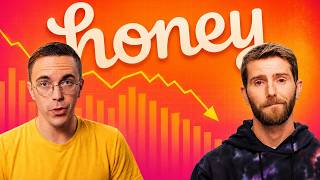

Honey Scandal Exposed: Creators Robbed
45sThe explosive opening reveals a controversial scam, sparking outrage and curiosity.
▶ Play Clip"The title promises a deep dive into the Honey scandal and its aftermath, and the video delivers with personal anecdotes, data, and industry context—though it could be tighter."
This video explores the decline of affiliate marketing revenue for YouTube creators, tracing the impact of Amazon's policy changes and the Honey browser extension scandal. The creator shares personal experiences of losing 70% of his income overnight and explains how this shift has pushed creators toward more sponsored content.
Honey, a coupon extension, allegedly swiped affiliate commissions from creators. The Megalad exposé got 19 million views, and the creator had done sponsorships with Honey in 2021.
Affiliate links in video descriptions track referrals; creators earn a small percentage of sales. Honey inserted itself at checkout, potentially taking credit for sales without providing a promo code.
A class action lawsuit by Wendover Productions and Legal Eagle was initially thrown out but is back on track after 18 months. Capital One Shopping settled for $4 million. Microsoft killed its coupon feature, and Google banned affiliate link swiping in Chrome extensions.
In 2013, the creator's Amazon Associates account was terminated after using Amazon's own link shortener, which Amazon claimed violated rules. The appeal email bounced back, and he lost 70% of his income overnight.
After reinstatement in 2016, revenue peaked in 2017, then halved by 2019 and again by 2020. Linus Tech Tips reported a 70% drop in Amazon affiliate revenue since 2020 despite no changes in linking practices.
Amazon paid the creator $102.51 last month. Affiliate revenue has been replaced by sponsorships, which now pay the bills. Newer creators like Betty from Switch and Click rely on affiliates for 30% of revenue, but volatility forces them to consider more sponsored content.
The decline is due to a combination of factors: Amazon rate cuts, Honey's practices, and platform changes. Creators are dependent on platforms that can change rules at will, pushing them toward sponsorships as the only viable option.
The video concludes that affiliate revenue has largely dried up, forcing creators to rely on sponsorships. The creator urges viewers to understand this shift when seeing ad reads, as it's a systemic result of platforms taking larger cuts over time.
What did Honey allegedly do to creators' affiliate links?
Honey allegedly swiped creators' affiliate links at the last second, even if they didn't find a promo code, taking credit for sales.
01:33
How much did PayPal buy Honey for?
$4 billion
01:58
What happened to the class action lawsuit against Honey?
It was initially thrown out but is now starting to get back on track after 18 months.
02:12
What was the reason Amazon gave for terminating the creator's affiliate account in 2013?
Using a link shortener (Amazon.co) that made it unclear they were linking to Amazon, which violated affiliate linking rules.
04:34
What percentage of the creator's income did Amazon affiliate revenue represent at the time of the ban?
60-70%
05:13
How much did Linus Tech Tips' Amazon affiliate revenue drop since 2020?
70%
08:41
What did Google change in Chrome extension rules regarding affiliate links?
Banned swiping affiliate links unless the extension provides a 'direct and transparent benefit to the user.'
02:51
What was the creator's Amazon payment last month?
$102.51
10:37
Affiliate Revenue Drying Up
Shows a decade-long decline in affiliate income, illustrating the systemic shift away from this revenue source.
03:30Losing 70% of Income Overnight
Personal anecdote highlights the fragility of relying on a single platform for income.
05:13Linus Tech Tips' 70% Drop
External data confirms the trend is industry-wide, not just the creator's experience.
08:41Systemic Cause
Identifies the combination of factors—Amazon rate cuts, Honey, platform changes—that eroded affiliate revenue.
13:14[00:00] It is completely unacceptable that Honey are acting in this sort of way. I will, under no circumstances, work with Honey ever again. Imagine, a sponsor that claims to help you get great deals online,
[00:12] only to be allegedly collecting commissions from the very YouTubers they were sponsoring. That's the story of Honey, and it was a huge deal. The Megalad video exposing them got 19 million views.
[00:25] But since then, things have kind of gotten worse. Now, I was one of the creators caught up in the drama as I did a couple of sponsorships with Honey back in 2021. It was an embarrassing miss.
[00:38] Now I did make a video about the situation and it has led us to taking a more careful look at potential sponsors. This also opened a much bigger can of worms. Because watching YouTube in 2026, it's hard not to see sponsorships absolutely everywhere.
[00:53] And I think there's a real reason for that. ties directly into the rise and fall of Honey and how sponsorships on YouTube have changed forever. Okay, so what is Honey? Well, the business model seems pretty simple.
[01:06] Install the browser extension and it will pop up with promo codes before you check out all over the web. But behind the scenes, they were inserting themselves in the middle of a massive chain of events that drives shopping online.
[01:18] Say you're watching one of my old PC builds. Well, in the description, you'll find links to the parts I used, which are all affiliate links. Now, these are fairly simple. Click on one, and you get sent to Amazon with my affiliate code to let Amazon know that
[01:33] I'm the one who referred you. If you check out, Amazon pays a small percentage to me for referring the sale. Simple enough. But Honey was supposedly swiping creators' affiliate links at the last second, even if they didn't actually find your promo code.
[01:46] So you can see why Megalag's video blew up. He exposed how creators like me were happily promoting honey, a tool that was actually swiping money out of our own pockets. Allegedly.
[01:58] Now, PayPal, who bought honey for $4 billion, have largely stayed quiet about things since the scandal broke. But the good news is that a number of creators, including Wendover Productions and Legal Eagle, have filed a big class action lawsuit in federal court.
[02:12] So, surely, honey was held responsible, right? Oh, wait. What's that? Oh, it's been 18 months and the lawsuit actually got thrown out and it's just now starting to get back on track?
[02:24] That's going great, isn't it? But this whole thing is a lot larger than just honey. There are others in the same space, including Capital One Shopping. Yes, the Capital One Bank.
[02:37] So their coupon extension got hit with the same allegation. However, they settled in December of 2025, of course, without admitting any wrongdoing, for just $4 million. You know, probably their weekly coffee budget.
[02:51] There are others, too. Microsoft has killed their coupon feature in Edge, and Google actually changed the rules for Chrome extensions to specifically ban swiping affiliate links unless they provide a, quote, direct and transparent benefit to the user.
[03:04] Basically, they had to write a rule that says you actually have to help someone before you take the money. So here's the thing. A very fair point a lot of people have brought up is who cares? I mean, sure, there's some shady behavior,
[03:17] but these coupon extensions do largely work for you as a user. But let me show you something. This is every dollar Amazon has paid me in affiliate commissions for the last decade. Not only has it almost entirely dried up,
[03:30] but I think this story explains a lot about why YouTube feels the way it does in 2026 Early YouTube was a very very different place In April of 2011 I had maybe 20 subscribers and I was accepted into the Amazon Associates program
[03:45] This was a pretty big deal for me, and it quickly became a big portion of my income, mostly off the back of the many, many PC builds I did back then. It was a different time. Sponsors bought some various things,
[03:57] and while YouTube did pay based on the ads they ran on my videos, it was a lot more minimal than it is these days. Just to put it in perspective, there was no such thing as a video ad back in 2011. They just put a little banner on the side.
[04:09] The line on the Amazon affiliate links felt like a win-win. I linked the parts I used and built, it didn't cost you anything to click on them, and I got a small percentage in commission, and most importantly, there was zero friction for you as the audience.
[04:22] If you didn't want to check out the links, they were buried in the description completely out of sight. It has been 13 years, And I've never told the story about how all this absolutely blew up in my face.
[04:34] So, in June of 2013, I got an email from Amazon's customer service. They claimed that I was violating their affiliate linking rules because I was using a link shortener that made it unclear I was linking to Amazon.
[04:48] The shortener I used? Amazon.co, which is Amazon's own shortener. But sure, rule of the rules, I wrote back in barely an hour. and the email bounced back.
[05:00] The address that Amazon told me to respond to to fix my account was a dead inbox and I was screwed. Now, for context, in this time, I had just moved out by myself in my own apartment
[05:13] and Amazon had revenue. It was like 60, like 70% of my income. Like YouTube was my full-time job and I was doing well, but not well enough to lose 70% of my income overnight.
[05:26] Now, I unsuccessfully kept trying to contact Amazon as you might imagine, but 12 days after the initial email, I got the termination. My account was closed, the thousands of dollars they owed me in advertising fees were withheld,
[05:39] and that was it. No way to appeal, no one to talk to, no way to fix things. It was just gone. It wasn't just me. I had a chat with someone who knows a thing or two about being on YouTube since the Prince
[05:51] George era. They said that I was violating their terms of service by offering something in exchange for people clicking on the links. And I said, well, what am I offering? And they said, well, you're offering gratitude.
[06:04] And I was like, what does that even mean? All I said was, if you use our link, it helps us out a lot. And they were like, you can't do that. And I'm sitting here going, that's crazy.
[06:16] I mean, here's all these other creators that are doing exactly the same thing. or in some cases, even more explicitly offering something in return. As soon as that happened, I looked at it and I went, holy crap, I can't rely on this at all.
[06:28] It was around that time that we started really making serious investments into our own store, for instance. It's been a long time, and yet the emotion of having over half my income disappear overnight,
[06:40] it still feels the same as it did back then. But I will tell you, it did teach me a valuable lesson. As a creator, you should never keep all of your eggs in one basket. Which is why this graph starts in 2016, as it took me nearly 3 years to get my account
[06:56] back up and running. Now as you can see, it did start popping pretty much immediately. By 2015 for context we learned the channel was really growing and by February of 2017 I had my best month ever Check out some of the most littlest of the delete links in the description Right after this peak the first crack
[07:16] March of 2017, literally the next month, Amazon changed their commission structure, meaning that a lot of items started paying less than half of what they used to. And it just so happened that 2017 is also when extensions like Honey began to take off.
[07:30] Now, look, I am not telling you that Honey calls what happens next on this graph. It is a complicated story with a lot of moving pieces. But it feels like an interesting coincidence that my revenue spiked from nothing to its peak within a few months,
[07:46] and then began spriting as one of the biggest coupon extensions on earth was growing. From 2017 on, this line basically only goes in one direction. And it halved by 2019. It halved again in 2020, the biggest year for the channel ever.
[08:00] So what happened? I mean, affiliate revenue used to be a huge part of our business. It's still measurable, but it's not like it used to be.
[08:12] It really did empower creators, in my opinion, to make the kind of content they wanted about whatever they wanted without worrying about whether there was any sponsorship dollars associated with it or any advertising dollars.
[08:26] Linus and his team were kind enough to share LPC's actual Amazon affiliate numbers for the video, and while his numbers are much healthier than mine, it is the same trend. Since 2020, Linus Tech Tips' Amazon affiliate revenue is down 70%.
[08:41] Linus told me directly, they've changed nothing about how they link. Same links in the description, same workflow, the audience went up, and yet revenue is down 70%. But what happened over time was the affiliate dollars shrunk.
[08:56] Brands have stepped in wanting to kind of pay for placement for their products. And you're seeing that in multiple places. Like you see that on the sales platforms themselves, where you go on Amazon these days,
[09:09] and instead of their search results and their recommendation engine being driven by, you know, what you're likely to be interested in or what might be the highest quality product, Instead, it's driven by who is buying advertising space on Amazon.
[09:26] Amazon isn't a shopping platform anymore. It's an advertising platform. And so for that reason, you know, we still make videos where it's just here's a dope guide. And we're still going to throw an Amazon link down there because in spite of how much they've incentivized their affiliate program, they're still one of the best.
[09:43] We'll just make a fraction of what we used to on it. It seems clear to me that between Amazon steadily cutting their rates and extensions like Heist scooping up affiliate revenue, a stolen commission, and a lost sale that look identical in your books,
[09:56] there's just lasting lots of a pie to go around. The issue is that I think a lot of the time it comes back to, you know, we have teams. Do we want those people to, you know, to still be able to support themselves and their families?
[10:09] And sometimes the way that we find is a way that, honestly, I don't think is better for the audience. and I wish that as platforms we'd think about, okay, what is best for the customer and not put creators in a position where they're sort of scrambling,
[10:25] trying to find a new way to make up for what was a pretty good system before. So where does this whole thing leave us today? Last month, Amazon paid me $102.51.
[10:37] Now this chart is a bit more dramatic than Linus's because I mostly stopped even bothering linking to Amazon at this point But still my single best month of 2017 made more than the last three years combined Now here the thing about affiliates
[10:51] They weren't just seamless to the audience. They were also transparent from a creator's perspective. I would link to all the time mentioned whether I liked them or not. If you still want to check out some dumb gadget I talked about in the history text, go right ahead.
[11:03] But importantly, these were not sponsored segments. There was no contact with the brands, no talking points, no hashtags, no approvals. But now that the affiliate safety net has largely disappeared, it has been replaced by sponsorship.
[11:17] By... Figures the sponsors of this video, the Banjo Boys! Or... other... It's fucking funny, we both used to get the Banjo Boys sponsoring this lately. Weird, I don't know why, it's, uh... makes me keep talking shit about sponsors. Hmm.
[11:29] I'm not exaggerating when I say that sponsors quite literally pay the bills here overclock. But there's a trade-off. It varies between brands, but generally there's an extra layer that simply just wasn't there when creators could rely on those
[11:41] innocuous little affiliate links in the description. Everyone's heard a lot from Linus and I who've been doing this for a very, very long time. Here's the perspective of someone who never got to experience the good old days at all. This is Betty from Switch and Click. She started her channel in
[11:55] 2020 in a world where hunting was already established. Currently, affiliate income makes for about 30% of our monthly revenue on average, but some months it's down to 10 or even as low as five and other months it's as high as 50. Affiliates are very volatile. You're always at the mercy and
[12:12] the whims of the affiliate companies like Amazon or other retailers, but they're extremely important for us since that's how we avoid doing fully sponsored content and instead opt for shorter middle segments instead so we can make some more niche content and still keep the lights on. This
[12:28] is a creator with a real team in 2026 describing affiliate links as the thing standing between her channel and taking deals she doesn't want to have to do. So creators have adapted. Linus built his LPP store in large part because Amazon banned him too at one point.
[12:44] Most of us have leaned into sponsors but I think this is the perfect time for everyone to remember the lesson that I had to learn the hard way when my Amazon got banned. As a creator you are reliant on the platform you use. If Amazon or
[12:59] or YouTube or TikTok want to change the rules, it's their platform. They can do what they want. You're just along for the ride. Now, Honey didn't kill affiliates. Neither did Amazon or their rate cuts or their dead inbox.
[13:14] It was really all of it. A system where every single party between a creator and their audience takes a bigger and bigger cut year after year until there's almost nothing left in the end. Now, look, I've had 17 years to diversify the business.
[13:28] largely because I got to build the channel in a much easier era than today. The creators who are starting out now do not have that luxury. So the next time a creator starts an ad read that makes you roll your eyes,
[13:40] think about what you're looking at. To create content at the scale of creators these days to actually be successful on YouTube, kind of the only option left. Thank you very much for watching. I want to give a special shout out to Linus and Betty for sharing so much for the
[13:53] video, as well as to Megalag for not only his initial videos, but also for chatting with me and helping me to understand just how deep this world goes. And as always my friends, if you enjoyed make sure to subscribe to the channel and ring-a-ling that ding-a-ling, because I promise you, it makes a whole lot more of a difference than
[14:08] those Amazon employees we can do at this point. This video is sponsored by the Banjo Boys! Do you like banjo music? Do you like boys? Well boy oh boy have I got the greatest band for you!

⚡ Saved you 0h 14m reading this? Transcribe any YouTube video for free — no signup needed.