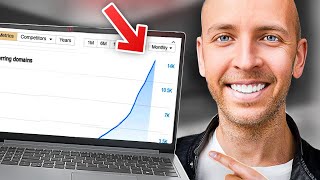

1,000 Links Per Month: The Secret
45sThe promise of building 1,000 links monthly in a unique way hooks viewers interested in SEO and link building.
▶ Play Clip"Title accurately describes the strategy; video delivers a detailed, actionable walkthrough."
Brian Dean presents a link-building strategy called 'Reverse Outreach,' which involves creating content specifically designed to attract links from bloggers and journalists automatically. The method focuses on publishing hyper-specific statistics pages that rank for keywords journalists search for while writing articles, eliminating the need for manual outreach.
Reverse Outreach is a passive link-building strategy where you create content that automatically gets in front of bloggers and journalists, making them likely to link to it.
Most content targets end customers, not linkers. Even if a dentist loves your content, they don't have a website to link from. You need content for bloggers and journalists.
A post on 'How many people own Bitcoin' gets thousands of links without outreach because journalists search for that stat when writing about crypto.
A post on mobile web browsing stats gets over 1,000 links by providing a simple, citeable statistic for journalists writing about mobile optimization.
Look for keywords that journalists search for when seeking stats. Analyze competitor pages that have many links and identify which specific stat is being cited.
Front-load the value: put the key stat at the top with a short intro. Make it easy for journalists to find and cite. Supplement with supporting stats.
Link from the stats page to other relevant pages on your site to funnel authority to money pages. This boosts overall site authority and rankings.
Reverse Outreach is a powerful, scalable link-building strategy that focuses on creating hyper-specific stats pages for journalist keywords. By becoming the go-to source for key statistics, you can earn thousands of links passively and funnel authority to important pages.
What is Reverse Outreach?
A passive link-building strategy where you create content that automatically gets in front of bloggers and journalists, making them likely to link to it.
Why does traditional content often fail to earn links?
Because it targets end customers who don't have websites to link from, rather than bloggers and journalists.
01:30
What is a journalist keyword?
A keyword that journalists search for when looking for stats or data to include in their articles.
04:30
How should you structure a stats page for Reverse Outreach?
Front-load the value: put the key stat at the top with a short intro, then add supporting stats.
06:00
What is the ultimate goal of Reverse Outreach?
To become the source that people link to when referencing a statistic in your niche.
08:00
Reverse Outreach Definition
Introduces a novel passive link-building strategy that contrasts with traditional outreach.
Bitcoin Stats Page Success
Demonstrates real-world example of a stats page earning thousands of links without outreach.
02:30Finding Journalist Keywords
Provides actionable method to identify keywords that journalists use, a key technique.
04:30Funneling Authority
Explains how to leverage stats page links to boost other important pages, a strategic principle.
08:00[00:00] in this video I'm going to show you how I build 1 000 links per month to exploding topics now I know I know this is like the new version of the Brian Dean YouTube channel and we're not going to talk about SEO all the time but I couldn't help myself because this strategy is just working super well and I'm learning so much about how to build Links at scale that I wanted to share with you so
[00:20] what is the strategy and how does it work well I actually published a blog post about the strategy about a year ago and I called the strategy reverse Outreach because of course I had to give it a unique name but I published it around the time of the backlinko sale to semra so I don't think it got the attention that it probably deserved in terms of the strategy which I think works really well and it's working
[00:40] actually better now than it did back then so what is reverse Outreach and how does it work well it's basically you creating content that gets in front of bloggers and journalists automatically and content that they're very likely to link to so how is this different than just like creating great content well most people create great content that's meant to get in front of the target audience and the Target customer nothing wrong with that that's what you
[01:00] should be doing the problem is in most most cases your Target customer isn't someone that's going to link to you like say you target dentists even if a dentist reads a piece of content from you that blows their mind they don't really have a website where they're going to link to you as opposed to creating content specifically for bloggers and journalists to link to and not just specifically for bloggers journalists to link to but content that
[01:20] ranks for keywords that they're searching for while they're writing or editing an article so here's an example on the exploding topics blog one of the blog posts that gets the most links every month is a blog post about how many people own Bitcoin it's pretty simple it's just like basically how many people own Bitcoin with a few stats about Bitcoin this post has got thousands of links without sending one Outreach email and why well when bloggers
[01:40] are journalists are writing about cryptocurrencies or Bitcoin they want to know how many people own Bitcoin it's an important Stat or fact to include in the article so they Google how many people own Bitcoin and instead of searching through an article that's just 101 crypto facts we just tell them straight up here's how many people own Bitcoin and they want to reference that stat so they link to us another example from exploring topics is a post
[02:01] we have about mobile web browsing like how many mobile web users are there and what percentage of traffic is mobile and that post also has quite a few links probably a thousand plus and it's literally just a stat that we found online and made it really easy for bloggers and journalists to find when they're writing about mobile and specifically a lot of them are writing like why mobile is important or why your site needs to be
[02:21] mobile optimized and responsive and all that stuff and instead of just saying a lot of people browse the web on their phones they're specifically saying here's a stat here's 60 something percent according to exploring topics and they link to us when they cite that statistic so how do you get started with this process well the first step is to find what I call journalist keywords and they're basically this very small set of keywords that journalists search
[02:41] for when they're looking for stats or data to include in their article this is something that is a little bit nuanced it's hard to just say like here's a bunch of them because it depends on your Niche but the key is to look at pages from competitors in your Niche or even your own site that has received leave lots of links and you'll probably discover that a lot of them are linking to one specific statistic so
[03:01] I first sort of discovered this strategy when I was running backlinko I found a page on the Moz blog about keyword research and noticed it had a ton of links and when I looked at all of the links that were pointing to that page I would say 75 to 80 of them were studying one statistic about how many keyword searches were unique they weren't citing the article like this is a great article to check out or
[03:21] this is a great resource they were citing that step and I realized that when you have a stat and you become the source that's the best way to get journalists to link to you but I still didn't really know how to get journalists and bloggers to see the post in the first place it's one thing to create it but how do you get in front of them and that's when I discovered journalist keywords now it depends
[03:41] what this will look like in your Niche but in the case of exploring topics we tend to focus on technology so some of our best performing pages are things like I mentioned how many people own Bitcoin how many cryptocurrencies are there or just simple ones like how many SAS startups are there this is one that gets tons of links for us every single month and it's just some something that took a researcher a few hours to
[04:01] look up to write about it bulk up the article with some supporting stats about different categories of SAS starters are in but the main stats how many staff startups are there that way when someone's writing about how big SAS is they can cite there's you know whatever thousand number of SAS companies that come out every year and they cite us as a reference so people are literally searching in Google you know how many SAS companies are
[04:21] there and we rank number one now this is a key word that an a keyword research tool is going to show like 10 searches or 20 searches or 50 searches and it's not something to Target customer research for it's a keyword that most people ignore but when it comes to link building it's an awesome keyword to be targeting so the next step is once you find that journalist keyword is to outline how you want it to
[04:41] look and basically what you want to do is front load the value as much as possible have a really short intro and then give them the stat they want as high up on the page as possible we really spoon feed it when it comes to how we structure the content so when it comes to you know the percentage of traffic that's mobile it's literally like what percentage of traffic is mobile with the answer right underneath that
[05:01] way the journalist doesn't have to sift through these long you know stat pages to discover the stat they want they have it right there so the third step is to actually create your stats page now how do you want to set these up well most of these stat pages that rank for these journalist keywords are these long list of stats like crypto stats or digital marketing stats or whatever and these are fine like there's nothing wrong
[05:21] with creating those I do create those on occasion but they don't do as well as these very hyper-specific posts that just gives someone the stat they want so say you're a journalist searching for how many people own Bitcoin you could go through this long list of 100 crypto stats or you could just land on this page and just see right away okay this many people own Bitcoin it's simple so when you outline your post and write
[05:42] your stats page make sure that first stat that feature stat is at the top and then underneath kind of gives some supporting stats around it so in the case of the Bitcoin stats page it would be things like how Bitcoin has grown and how many wallets there are and things like that supplement it a little bit so the page isn't like you know 50 words or whatever if you are creating data that's really really like recents
[06:02] and well structured and just easier to find than your competitors you have a good chance to rank even above some Big Brand competitors I'm surprised at how well these Pages do even against pages that already have hundreds of links just because they're way better uh search results than giving someone a big long stats page so yeah this isn't to say that every single one of these you know pieces of content that you create will be a
[06:22] hit in rack number one or wrecking the feature snippet or whatever but they have a good chance of doing so even if the keyword's competitive in fact when I'm looking for these journalist keywords sometimes I actually look for competitive keywords so I'm looking for keyword difficulty that's really high because that shows that this topic has a lot of links right there's a lot of people linking to content around this topic and then what I look for
[06:42] when I look at the Surfs themselves is there a page that's specific for this query like if someone searching for how many SAS companies are there is there a page that already answers that or if there is does it answer it towards the top of the page is it recent like maybe it's out of date maybe the stats out of date can you create something better so for me that's sort of how evaluating these journalist keywords
[07:02] and we're finding new ones all the time so one of the things that I realized when I started this process is it can be tricky to find them but as long as you have a list of competitors or even not necessarily competitors but other sites in your nature adjacent to your Niche and you just look at what are people already linking to as opposed to trying to create something that is just a great piece of content
[07:22] that hopefully people will link to in reality most people link to sources to numbers and data you want to be the source and that's really the ultimate goal of my league building strategy with exploring topics is to be the source to be the site that people are linking to when they're linking to and referencing something in any Niche that we cover whether it's e-commerce or technology or marketing or whatever and then really the last step is
[07:42] to funnel that Authority from your stats page to pages that are important so even if you didn't do this you would still probably see an increase in traffic in your so-called money Pages because your site Authority is going up right like more people linking to your site that's a huge sign for Google and all of your pages are likely to rank higher but if you want to be more strategic about it and get the most value
[08:02] of the strategy you want to link from your stats page to another page on your site that's relevant further down the funnel for example with our list of how many SAS companies are there we're linking to other SAS related content on exploding topics that's a little further down the funnel or even on the funnel at all because again this content isn't necessarily designed to rank for keywords that your customers are searching for right like that's a
[08:22] nice bonus if you're able to do that but the real goal is to get in front of bloggers and journalists that cover your space and get them to link to you and then once they do you want to funnel that authority to pages that matter those can be blog posts those can be landing pages those can be whatever the important thing is you have that authority to sort of funnel around which is the hardest part so
[08:42] yeah that's really the strategy when it comes to reverse Outreach when I first started this strategy I really focused on these statistics pages and we still do them they work well so for example fintech stats or e-commerce stats or things like that and those do fine but first of all they're really competitive because a lot more people are doing that but the other challenge is they don't really have that great like traffic to link ratio because
[09:02] that person is just looking for like General stats they're not necessarily going to link to you as opposed to like how many SAS companies are there that could be obviously some random person but it's also very likely to be a blogger or a journalist that's writing about the SAS space and when they land on your article they find exactly what they need right away so they're going to reference you they're busy they're not going to necessarily
[09:23] go down to the rabbit hole to the original source of course we do cite the original source and if they choose to cite them instead that's totally fine but most journalists are busy or lazy and they're not going to do that they're just going to link to the First Source that they find so yeah that's pretty much all there is to reverse Outreach it's a strategy we're using most at exploring topics we do have some other
[09:43] stuff like product like growth we're getting a lot of links from the tool itself and some other things you know I go on podcasts now and again but for the most part this is the Cornerstone of our link building strategy and now I'd like to hear from you have you ever tried creating stats Pages or getting in front of journalists using a reverse Outreach or some other passive strategy if so I'd love to to hear from
[10:03] you leave a comment in the comment section below
⚡ Saved you 0h 10m reading this? Transcribe any YouTube video for free — no signup needed.