
The REAL Edge in Trading Isn't Prediction
44sDebunks common misconception about AI trading, offering a fresh perspective that resonates with aspiring traders.
▶ Play Clip"Delivers exactly what the title promises—a practical, actionable framework for using AI as a new trader, with no fluff."
The video argues that the real edge in trading is operational efficiency, not prediction. It outlines five practical ways a new trader can leverage AI: pre-market assistance, automated review, custom scanners, risk tools, and faster learning. The core message is that AI enhances discipline and efficiency, not shortcuts.
The real edge in trading is operational: speed of preparation, organization, and execution efficiency—not prediction or magic bots.
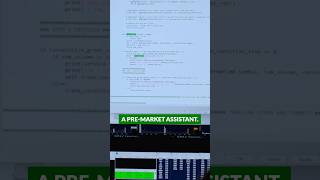
Build a pre-market assistant that scans newsletters, earnings reports, economic events, and overnight headlines, then provides one clean summary before the open.
Automate the review process: upload trades, track win rate, average winner/loser, mistakes, and best setups for the day.
Create custom scanners for gap ups, relative volume, low float momentum, and sector strength—tailored to your edge.
Build risk tools: daily loss limits, position sizing reminders, and setup-based sizing.
Use AI to study charts, test ideas, backtest, refine playbooks, and challenge thinking to learn faster.
AI won't replace traders, but traders using AI will replace traders who don't.
What is the real edge in trading according to the video?
Operational efficiency—how fast you prepare, how organized your processes are, and how efficiently you execute ideas.
00:01
What is the first use case for AI as a pre-market assistant?
Scan newsletters, earnings reports, economic events, and overnight headlines, then give one clean summary before the open.
00:29
What should the automated review process track?
Upload trades, track win rate, average winner and loser, mistakes, and best setups for that day.
00:42
Name two custom scanner criteria mentioned in the video.
Gap ups, relative volume, low float momentum, and sector strength.
00:56
What risk tools should AI build?
Daily loss limits, position sizing reminders, and setup-based sizing.
00:56
How can AI help traders learn faster?
Study charts, test ideas, backtest, refine playbooks, and challenge overall thinking.
01:09
What is the final takeaway about AI and traders?
AI won't replace traders, but traders using AI will replace traders who don't.
01:25
Operational Edge Over Prediction
Reframes AI's role in trading from prediction to operational efficiency, a key differentiator.
00:01Pre-Market Assistant
Provides a concrete, actionable first step for using AI to streamline pre-market preparation.
00:29Automated Review Process
Shows how AI can systematize trade review, a critical but often neglected practice.
00:42Custom Scanners and Risk Tools
Offers specific scanner criteria and risk management tools that are directly implementable.
00:56AI as Discipline Enhancer
Emphasizes that AI's value is in enhancing discipline and efficiency, not shortcuts—a core principle for traders.
01:25[00:01] [clears throat] completely wrong. They think it's about prediction. going or building some magic bot to just trade for them, but that's not the real edge. The real edge is operational. It's how fast you prepare, how organized your
[00:15] processes, and how efficiently you can execute on your ideas. Now, that's where AI can become extremely powerful. If I was a trader just starting today, here's exactly how I'd use it. First, I'd want to build a pre-market assistant. I'd
[00:29] want to have AI scan newsletters, earnings reports, economic events, and overnight headlines. And then I'd have give me one clean summary before the open. Second, I'd have it automate my review process. Upload trades, track win
[00:42] rate, average winner and loser, mistakes, and best setups for that day. Third, create custom scanners for gap ups, relative volume, low float momentum, sector strength, really whatever fits your edge. Four, it would
[00:56] build risk tools, daily loss limits, position sizing reminders, position sizing reminders, and setup-based sizing. Lastly, just learn faster. I'd use AI to study charts, test ideas, backtest, refine
[01:09] playbooks, and to challenge my overall thinking. The best traders won't use AI for shortcuts, but they'll use it to become more disciplined, more efficient, and overall more dangerous. Because AI won't replace traders, but traders using
[01:25] AI will definitely replace traders who don't.
⚡ Saved you 0h 01m reading this? Transcribe any YouTube video for free — no signup needed.