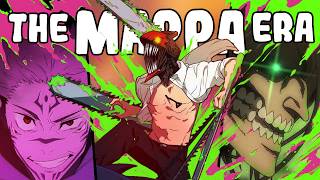

How MAPPA Changed the Anime Race
45sOpens with a relatable, dramatic hook about feeling anime looks too good, then pivots to MAPPA's rise, creating immediate curiosity and engagement.
▶ Play Clip"The video thoroughly delivers on its promise, providing a detailed analysis of MAPPA's rise, strategies, and impact on the anime industry, though it includes some personal opinion and speculation."
MAPPA has transformed from a respectable studio into a dominant force in the anime industry by consistently taking bold creative risks, pushing visual quality to new heights, and redefining audience expectations. The studio's strategy involves interpreting source material rather than just adapting it, attracting top talent through ambitious projects, and maintaining a sustained impact that makes each release a major event. The video highlights director Shota Goshazono's exceptional involvement and the studio's calculated risk-taking as key drivers of its success, while also noting concerns about sustainability due to intense production pressures.
Viewers notice when anime visuals are exceptionally clean, intentional, and expensive, leading them to discover it's a MAPPA production.
Founded in 2011, MAPPA started as a solid but not dominating studio. Its breakthrough came with *Yuri on Ice*, which showcased clean animation and emotional storytelling, marking the beginning of its ascent.
MAPPA takes on risky, high-stakes adaptations like *Attack on Titan*'s final season, *Jujutsu Kaisen*, and *Chainsaw Man*, delivering ambitious results that push boundaries.
MAPPA aims for fluid action, detailed backgrounds, and expressive animation, often exceeding what is expected from a weekly anime, creating a 'Formula One car in a local street race' effect.
Goshazono storyboarded every episode of *Jujutsu Kaisen* season 3, including the opening and ending, a level of involvement that is unprecedented and drives the show's artistic and experimental direction.
Rumors that Goshazono might leave after part one create anxiety because his creative control is so pervasive. However, MAPPA's depth of talent suggests the studio can adapt.
MAPPA interpreted *Chainsaw Man*'s Reze Arc with experimental colors, pacing, and visual tricks, leading to over $100 million globally and a 97% rating, showing that risk-taking can yield huge rewards.
MAPPA has reached a point where its name itself generates expectations of a major event. This psychological shift means releases are anticipated as moments, not just content.
The rapid pace and multiple simultaneous large projects lead to reports of strain on staff. The key question is whether MAPPA's high-speed approach is sustainable long-term.
MAPPA has fundamentally changed the anime industry's standards by consistently delivering high-quality, visually ambitious productions that redefine audience expectations. While its current dominance is clear, the long-term sustainability of such an intense pace remains an open question.
In what year was MAPPA founded?
2011
00:53
Which anime is considered MAPPA's breakthrough hit that put them on the map?
Yuri on Ice
01:05
What is unique about Shota Goshazono's involvement in Jujutsu Kaisen season 3?
He storyboarded every single episode, including the opening and ending, which is unprecedented for a series director.
02:25
How much did the Chainsaw Man movie (Reze Arc) gross globally?
Over $100 million
05:54
What rating did the Chainsaw Man movie receive?
97%
05:54
What is the key difference between how MAPPA adapts manga versus most other studios?
Most studios translate manga to anime; MAPPA interprets it, asking how they can make it better for animation.
06:06
What major anime's final season did MAPPA take on and deliver?
Attack on Titan
01:34
What is the main concern regarding MAPPA's high-speed production approach?
Sustainability – tight schedules and multiple big projects at once lead to reports of strain on staff.
05:18
MAPPA Changes the Speed of the Race
It establishes the core thesis that MAPPA has accelerated visual standards across the industry, not just within its own projects.
00:27Design Philosophy: Push Until It Breaks
Summarizes MAPPA's risk-taking approach that separates it from safer studios, aiming for ambitious results even if imperfect.
02:00Goshazono's Potential Departure
Highlights the risk of creative dependency on a single visionary, a common challenge in high-intensity creative environments.
04:17MAPPA Produces Expectations, Not Just Content
Explains the psychological shift where the studio's name alone creates anticipation, elevating each release to a major event.
07:10[00:00] You ever watch something and halfway through you just pause and go, bro, how is this even allowed on TV? Like, the visuals are too clean, the direction feels too intentional. Every frame looks like someone actually cared,
[00:12] and you're sitting there like, mmm, this doesn't feel normal, this feels expensive, this feels dangerous, and obviously awesome. Then you check who made it. Mapa? Again, and that's the moment it clicks, because it's not just one show anymore.
[00:27] It's like every time anime decides to go all out, to push visuals, to try something risky, to stop playing safe. Mapa is right there in the middle of it, and now you're not asking, is this good? You're asking, why does everything else suddenly feel slower?
[00:41] That's the real story here. Mapa didn't just rise, they changed the speed of the entire race, and you're sitting there like, what just happened? That is exactly what Mapa has done to the anime industry. So let's rewind.
[00:53] Mapa starts in 2011, solid studio, respectable, not crazy, not dominating, just there. Like that one car in traffic that looks nice, but you don't think twice about it.
[01:05] Then slowly, things start changing. They drop projects that show potential, then boom, Yuri on ice. Now suddenly people are like, wait, who built this car? Clean animation, emotional storytelling, global reach,
[01:19] Mapa just quietly installed a turbo, and they didn't stop. Most studios pick safe roads, smooth lanes, no risks, Mapa? Nah, Mapa looks at a broken, dangerous, pothole-filled road and goes, yeah, we'll drift through that.
[01:34] They take on attack on Titan's final season, Jujutsu Kaizen, Chainsaw Man, and not just take them, they deliver. Not perfect every time, sure, but bold and ambitious, like someone building a car that might explode.
[01:46] But if it doesn't, it's the fastest thing on the street. Now let's talk about what they actually do differently, because this isn't luck. This is design. Mapa doesn't aim for good enough. They aim for, bro, how far can we push this before it breaks?
[02:00] Fluid action, detailed backgrounds, expressive animation, stuff that makes you pause and go, wait, this is a weekly anime? That's like showing up to a local street race and someone brings a Formula One car.
[02:13] Unfair, absolutely unfair, but that's business. However, this is where things go from fast to, what even is this machine? Meet Shota Goshazono. This guy is not just driving the Formula One car.
[02:25] He built the engine, tuned it, designed the steering, probably painted it too, because here's the insane part, normally a series director, they supervise, maybe storyboard two to three episodes,
[02:37] they're like the team boss, but Goshazono? Nah, this man said, I'll do everything. He storyboarded every single episode of season three so far, including the opening, including the ending, every cool shot,
[02:49] every angle, every visual idea came from one brain. That's not normal, that's borderline ridiculous? Think about it like this, usually building a high performance car takes a team. Engine specialist, design team, aerodynamics guy,
[03:03] test drivers, etc. Now imagine one dude walks in and goes, yeah, I'll handle it. And then the car comes out, it's not just working perfectly, it's dominating races. That's Goshazono right now and somehow,
[03:15] no quality drop. Before Goshazono, some who park handle Jujutsu Kaisen, and he did a great job, solid foundation, grounded fights, clean choreography, like a well-balanced sports car,
[03:28] then Goshazono takes over and goes, what if we make this thing weird? Not bad weird. Good, artistic weird, experimental weird. Suddenly, JJK isn't just a battle anime,
[03:40] it looks expensive, unpredictable, it doesn't just follow the manga, it elevates it, even simple moments, he turns them into something fun to watch, there's even an episode that's basically talking heavy,
[03:52] and people still enjoy it. That should not be possible, that's like enjoying traffic, and season three is where everything peaks, visuals, upgraded, direction, creative, execution,
[04:04] sharp, every episode feels like, they're trying something new again. And it works. That's the key. It works. Mappa didn't just improve JJK, they turned it into something bigger than a standard adaptation.
[04:17] Now here's where things get slightly uncomfortable. Rumors say Goshazono might leave after part one, and the community? Yeah, they are not okay, because when one guy controls so much of the creative direction,
[04:29] you feel his presence everywhere. So if he leaves, you'll notice immediately. But okay, let's calm down for a second, because this is where people start panicking, anime changing directors? Not new. JJK itself already had two,
[04:42] and Mappa is not some small garage, Mappa is a full blown performance factory, they have talent, connections, resources, they're not gonna just fumble their biggest project. So yeah, things might feel different,
[04:54] but different doesn't automatically mean worse. Sometimes it just means a new driving style. Another thing Mappa does, they attract talent. Big projects, high visibility, ambitious production,
[05:06] animators want to work there. It's like a racing team that everyone wants to join, because no matter if you win or lose, you're building something exciting, something that matters. Because when you concentrate talent, you dominate.
[05:18] Now, we can't just sit here and act like everything is perfect. Mappa's speed, it comes with pressure, multiple big projects at once, tight schedules, reports of strain. This is like pushing an engine at Redline constantly.
[05:30] You can do it, but the question is, for how long? That's the debate around Mappa. Not whether they're good, that's already proven. The question is, is it sustainable? Well, before that, let's jump on another topic,
[05:42] Chainsaw Man. The movie Rees Arc. This shows Mappa's mindset perfectly. They didn't just adapt the movie safely. They experimented, played with colors, pacing, visual tricks,
[05:54] even character reactions were amplified beyond the source. And guess what? It worked. Over $100 million globally. 97% rating. Cop rankings. That's not luck. That's calculated risk.
[06:06] This is important. Most studios translate manga to anime. Mappa, they interpret it. They ask, how can we make this better for animation? Sometimes fans love it. Sometimes fans argue,
[06:18] but one thing is always true. It's never boring. Now, here's something people don't talk about enough. The consistency of impact. Not just quality. Impact. Because a lot of studios can make one great show.
[06:31] Maybe two. Then they disappear for a while. Rees said, come back later. Mappa doesn't do that. They stack, jujutsu kaisen hits, Chainsaw Man hits. Before that, attack on Titan's final season
[06:44] carries massive expectations and still delivers enough to keep the conversation alive. Then the Chainsaw Man movie drops and crosses 100 million globally. That's not random success. That's sustained pressure on the industry.
[06:56] And here's the key detail. You start associating hype itself with the studio. Now when a Mappa project gets announced, people don't just say, this might be good. They assume it's going to be a major event. That psychological shift is huge.
[07:10] Because now Mappa isn't just producing anime. They're producing expectations. And once the studio reaches that level, every release stops being content. It becomes a moment. So why does Mappa feel like it's taking over?
[07:23] It's not just one thing. It's everything combined. They take big projects. They push visuals. They experiment. They attract talent. They raise expectations. That last one is huge.
[07:35] Because now people expect anime to look this good. And if it doesn't, they notice. Mappa didn't just make good anime. They changed what good means. Other studios see this and they try to match it. Higher quality.
[07:47] More ambition. More risk. Which is great. But also dangerous. Because not everyone can handle that pace. Mappa set the bar high. Now everyone has to jump. Yeah, here's what I think.
[07:59] Right now they're leading. Not perfect. Not flawless. But leading. Because now when you look at modern anime, Mappa is everywhere. Defining the biggest shows. Setting the visual standard.
[08:12] Driving the conversation. That's what a king looks like. Not someone who never fails. But someone who moves the entire game forward. Now here's the thing I keep thinking about. Can they keep this up?
[08:24] Because running at this level sounds exhausting. For the studio. For the people. For the system. And if they figure out sustainability. Then yeah, this isn't just a phase. This becomes an era.
[08:37] Mappa right now is like that insane custom built machine. Fast, unpredictable, and a little risky. But it works. Nothing else on the road even comes close. And you just sit there watching it disappear
[08:49] into the distance thinking, yeah, I'm not catching that anytime soon. So tell me honestly, if anime is a race right now. Are you betting on or against Mappa? Or are you just trying to keep up? So yeah, at this point,
[09:02] it's not even a debate anymore. Mappa isn't just playing the game. They're changing how the game is played. Every project feels like a risk. Every risk somehow works. And now the entire industry is just trying to keep up.
[09:14] We're not just watching a great studio. We're watching a whole era being built in real time. So tell me what you think. Is Mappa actually the king right now? Or are we getting carried away? And if you enjoyed this breakdown, stick around.
[09:27] Cause we're just getting started.
⚡ Saved you 0h 09m reading this? Transcribe any YouTube video for free — no signup needed.