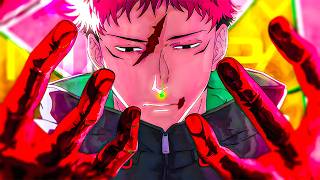

MAPPA's Darkest Hour: Animators Hospitalized
40sShocking revelations about animators working 72-hour shifts and tweeting 'I want to die' create immediate emotional engagement.
▶ Play Clip"Title accurately reflects MAPPA's remarkable recovery from crisis to simultaneous blockbuster releases."
Studio MAPPA, known for hits like Attack on Titan and Jujutsu Kaisen, faced severe production crises with staff burnout and hospitalization. By splitting into specialized teams and allowing longer production windows, they achieved simultaneous success with Chainsaw Man Reze movie and Jujutsu Kaisen Season 3, proving that time and structure, not just money, are key to quality.
MAPPA, behind Attack on Titan, Jujutsu Kaisen, Chainsaw Man, was known as Japan's most hated studio due to brutal working conditions, including 72-hour shifts and staff hospitalization.
Episode 17 of JJK Season 2 aired at 30% completion, with animators tweeting 'I want to die quickly' and publicly vowing never to work with MAPPA again.
Made on a $4 million budget, the movie grossed $170 million and became Letterboxd's highest-rated film of 2025.
JJK Season 3 weekly episodes caused streaming services to crash upon release, indicating massive popularity.
Founder Masao Maruyama left Mad House after Nippon TV prioritized profit over people, leading to 400-hour work months and unpaid overtime. He founded MAPPA in 2011 to do it right.
In 2016, Maruyama handed MAPPA to Manobu Asuka, who pushed for rapid productivity, leading to short production schedules like Attack on Titan Final Season (10 months) and JJK Season 2 (6-8 months).
In December 2023, MAPPA split into three separate production lines, giving JJK Season 3 a 2-year production window and allowing focused visual development.
By 2026, MAPPA runs over 10 specialized teams, handling JJK Season 3, Chainsaw Man's Assassin's Arc, and the Reze movie, all without destroying staff.
The movie's success comes from its slow-burn first act building investment before emotional devastation, a rarity in Hollywood.
Director Shota returns, using techniques like fisheye lens, foreshadowing, and slow pacing (e.g., 40-second hand-washing scene) to create emotional impact.
Choso vs. Naoya fight thematically contrasts love vs. selfishness, and the campfire scene with Yuji's breakdown builds emotional foundation for the season.
MAPPA's turnaround proves that giving staff time and structure leads to both critical and commercial success, setting a new standard for the anime industry.
What was the completion percentage of JJK Season 2 Episode 17 when it aired?
30%
0:15
How much did the Chainsaw Man Reze movie cost to produce and how much did it gross?
Produced on a $4 million budget, grossed $170 million.
0:43
What was the production window for JJK Season 3?
2 years, from late 2023 to January 2026.
3:40
Who founded MAPPA and why did he leave Mad House?
Masao Maruyama founded MAPPA after leaving Mad House because Nippon TV prioritized profit over people, leading to exploitative working conditions.
1:27
What structural change did MAPPA make in December 2023?
They split the studio into three separate production lines, each dedicated to specific projects.
2:55
How many specialized production teams does MAPPA run by 2026?
Over 10.
4:05
What is the thematic contrast in the Choso vs. Naoya fight?
Choso fights for his brothers (love), while Naoya fights alone (selfishness).
7:22
JJK Episode aired at 30% completion
Illustrates extreme production pressure and staff distress.
0:15Chainsaw Man Reze movie success
Demonstrates that low budget can yield high returns with proper execution.
0:43Studio split decision
Key strategic change that enabled recovery and quality.
2:55Emotional storytelling in Chainsaw Man Reze
Highlights the importance of building investment before action.
4:44Thematic fight: love vs. selfishness
Shows how animation can convey deep themes through action.
7:56[00:00] Studio Mappa just did the impossible.
[00:02] The studio behind Attack on Titan,
[00:04] Jiu-Jitsu [music] Kaisen, Chainsaw Man,
[00:06] some of the most beautiful anime ever
[00:08] made. It is also notoriously known as
[00:10] Japan's most hated studio. During
[00:12] Jiu-Jitsu Kaisen season 2, episode 17,
[00:15] one of the most hyped episodes of the
[00:17] year, aired on TV at what the animation
[00:19] director said was 30% completion.
[00:21] Animators have been working 72-hour
[00:23] stretches. Workers were being
[00:24] hospitalized from exhaustion. Staff
[00:26] started tweeting, "I want to die
[00:27] quickly." then deleting it minutes
[00:29] later. Animators publicly said they'd
[00:31] never work with MAPA again. The entire
[00:34] industry watched this collapse in real
[00:35] time. Everyone said MAP was finished,
[00:37] burnt out, on the verge of collapse. And
[00:40] I thought so, too. Cut to 2025. Chainsaw
[00:43] Man Rea made on a $4 million budget,
[00:45] pulls $170 million at the box office.
[00:48] The movie gets litter box highest rated
[00:50] film of 2025. Not anime, not animation,
[00:54] film period. And at the exact same time,
[00:56] Juu Kaisen season 3, one of the biggest
[00:58] anime IPs on the planet right now,
[01:00] starts airing weekly episodes, causing
[01:02] streaming services to literally crash
[01:04] upon release. I mean, I legit couldn't
[01:06] watch episode 1 because someone's uncle
[01:08] couldn't wait to see this panel adapted,
[01:11] right? By every industry standard, this
[01:13] shouldn't be possible this fast. And the
[01:15] reason they pull this off is not what
[01:17] you think. Not more money, not more
[01:19] people, but something else entirely. But
[01:21] to truly understand how they're doing
[01:22] this, we need to quickly go back to
[01:24] where MAPA actually began. 2011, Masaw
[01:27] Moryama founds MAPA. After leaving
[01:29] studio Mad House, the legendary studio
[01:31] behind Death Note, One Punch Man season
[01:33] 1, HunterX Hunter, the whole catalog. So
[01:36] why leave? Well, Nippon TV bought Mad
[01:38] House and chose Profit over people. One
[01:40] production assistant worked 400 hours in
[01:43] a single month, collapsing in the street
[01:45] at 7:00 a.m., then went back to work the
[01:47] next day. This man was on the verge of
[01:49] death just so you could watch the next
[01:51] episode of Death Note. Over $26,000 in
[01:54] unpaid overtime. Imported staff left,
[01:56] quality dropped, and Mad House fell off.
[01:59] Moryama said, "I'll do it right this
[02:01] time. I got this." So in 2016, he steps
[02:04] down and hands Mappa to Manobu Asuka.
[02:06] And needless to say, history repeated
[02:08] itself again. Assuka wanted Mappa to be
[02:11] Futu and Kyoto animation fast. His
[02:13] strategy increased productivity. And if
[02:15] you know animation, you see the problem
[02:17] immediately. Attack on Titan's final
[02:19] season only had 10 months of production
[02:21] while also working on JJK season 1. One
[02:23] director couldn't go home for 3 days
[02:25] straight. Jutsu Kaizen Zero only had
[02:27] four months of production and still was
[02:29] an absolute banger by the way. Oh my
[02:30] goodness. Chainsaw Man season 1 had 13
[02:33] episodes of the most ambitious animation
[02:35] possible. Then immediately after all of
[02:36] this, they start on JJK season 2, which
[02:39] maybe had 6 to 8 months of production
[02:41] for 23 episodes with a new director.
[02:44] Mappa made staff sign NDAs. Some broke
[02:46] them away just to tell people how bad
[02:48] the conditions were getting. This wasn't
[02:50] about talent or money. It was about time
[02:52] and MAPA didn't have it. December 2023,
[02:55] Jizu Kaisen season 2 finally wraps up
[02:58] and Mappa makes the most important
[02:59] decision in his history. They split the
[03:01] studio. Before this, the same core
[03:03] animators have been juggling everything.
[03:05] Same key animators, same compositors,
[03:07] same episode directors, and no breathing
[03:09] room to recover. The burnout was
[03:11] imminent. You can't ask the same people
[03:13] to sprint four marathons in a row and
[03:14] expect them to survive cuz [ __ ] I can't
[03:16] survive one, my guy. So, Mappa changed
[03:19] the structure. Instead of one exhausted
[03:21] super team, they created three separate
[03:23] production lines. One team dedicated
[03:25] entirely to Juu Kaisen season 3 and
[03:27] another locked in on Chainsaw Man, while
[03:29] the others handled different projects
[03:30] entirely. Simple chains, massive impact.
[03:33] That separation did two things. First,
[03:35] it gave JJK something it never had
[03:37] before, time. Season 3 received a 2-year
[03:40] production window from late 2023 to
[03:43] January 2026. That's nearly four times
[03:46] the schedule season 2 had. Second, it
[03:48] forced focus. Each team could finally
[03:50] build a visual language specific to
[03:52] their project. Actually plan shots
[03:54] instead of frantically assembling them.
[03:56] But there was a trade-off. Some top tier
[03:58] talent stopped rotating between
[03:59] projects. But now MAPA is choosing
[04:01] stability over spectacle. And [music] it
[04:03] worked. By 2026, MAPA is now running
[04:05] over 10 specialized production teams at
[04:08] once. each led by his own animation
[04:10] producer. Mappa is currently tackling
[04:12] one of the densest slates in anime
[04:14] history. JJK season 3, Chainsaw Man's
[04:16] Assassin's Arc, which is already
[04:17] confirmed for 2026. I'm hype as hell for
[04:20] that. Chainsaw Man Rec, which already
[04:22] released, but let me say this again. It
[04:24] got letter box highest rated movie of
[04:26] 2025. Do you know how crazy that is?
[04:29] Multiple million-dollar franchises all
[04:31] running simultaneously without
[04:32] destroying anyone. This isn't a comeback
[04:34] story. This is a studio trying to prove
[04:36] everyone wrong and rewrite his legacy
[04:38] after one of the most disastrous
[04:40] production cycles in anime history. And
[04:42] that proof truly began with Chainsaw
[04:44] Man. The reason Arc's movie success
[04:46] doesn't come from his budget. It does
[04:48] something special, something most action
[04:50] movies forget. It earns your investment
[04:52] before the chaos. The first act is the
[04:54] slow burn teen romance. Meeting Rez in a
[04:56] phone booth during rain. This festival
[04:58] with fireworks. The pacing is deliberate
[05:01] and patient. Then the last two/3s become
[05:03] pure emotional devastation. The betrayal
[05:05] where she bites off his tongue. And
[05:07] because she spent 40 minutes actually
[05:09] giving [music] a [ __ ] about these two
[05:10] people, every moment lands. That
[05:12] screenwriting 101 that [music] Hollywood
[05:14] committees would erase. Director Tatsuya
[05:16] Yoshihara brought his agame. My guy was
[05:19] locked in. Let's not forget this is the
[05:21] legend who directed Black Clover. He
[05:23] knew exactly how to pace this and Ma
[05:25] gave him the time to properly storyboard
[05:26] it, to workshop scenes, to nail every
[05:28] emotional beat. Chainsaw Man is
[05:30] something Hollywood rarely makes
[05:32] anymore. Weird, violent, emotional, and
[05:34] unpredictable. Jutsu Kaisen season 3 is
[05:37] proof number two. Director Shota, I'm
[05:39] not even going to butcher his last name.
[05:40] One of the most creative directors of
[05:42] our generation has returned for season
[05:44] 3. Now, keep in mind, this is the man,
[05:46] the myth, the legend who directed the
[05:48] entire season 2 of JJK. He animated in
[05:52] four episodes, storyboarded most of the
[05:54] episodes, and so much more. This guy is
[05:57] a beast. And honestly, I thought he
[05:58] wasn't going to return for season 3
[06:00] because after surviving what season 2
[06:02] put him through. Hell no. And turns out
[06:04] he did return. And not only is he
[06:06] returning, he's going to be doing nearly
[06:08] everything [music]
[06:09] again for part one. We are in for a
[06:11] banger. The opening scene alone
[06:13] immediately shows you what that time
[06:15] brought them. 40 seconds of Yuji washing
[06:17] his hands with zero dialogue. slow,
[06:19] zoom, water, running, blood that won't
[06:21] come off, the heavy breathing, the guilt
[06:23] that's eating him alive after killing so
[06:25] many people in Shabuya. Most studios
[06:26] rest this in 5 seconds with those same
[06:28] dramatic fast cuts and like boom sound
[06:31] effects and stuff. Mappa said, "No,
[06:33] we're going to make you feel what Yuji
[06:35] is feeling." That's the confidence that
[06:36] only [music] proper scheduling provides.
[06:38] Every scene after this has its own
[06:40] visual language. Take the Zen and Clan
[06:42] aura form meeting because this scene has
[06:44] so much aura. Nappa turned it into a
[06:46] masterclass in atmosphere. Watched out
[06:48] shadows so the family toxicity without
[06:50] saying a single word. Someone punches
[06:52] the wall. A ceiling fan starts swinging.
[06:54] And for the next several minutes, that
[06:56] swinging light cast shadows on
[06:57] everyone's faces. The room feels alive,
[07:00] claustrophobic, and ominous. You
[07:02] understand the Zen and Clans dysfunction
[07:04] just from watching this scene alone.
[07:05] When the world turns purple and Yuji
[07:07] feels something similar to Gojo's power,
[07:09] it immediately lets you know how
[07:11] powerful UT is. That scene dead ass gave
[07:13] me shivers, though. And don't even get
[07:15] me started on the Choso versus Naoya
[07:17] fight because it was peak thematic
[07:19] storytelling. A perfect way to open
[07:20] [music] part one. You see, Choso fights
[07:22] for his brothers. Every move is driven
[07:24] by love. Meanwhile, Noya fights alone.
[07:27] He trusts no one. And when the clash
[07:29] comes to a end, Choso is on top. Whoa.
[07:32] Pause. Pause. Because love beats
[07:34] selfishness. Also, just looking at this
[07:36] character design, I knew my boy wasn't
[07:38] going to last long. He looks like one of
[07:39] those background characters that might
[07:41] appear in like a flashback or some [ __ ]
[07:42] The campfire scene with Yuji breaking
[07:44] down and making me speech about not
[07:46] being heroes. Voice actors Junior and
[07:48] Yuma are dead ass giving performances
[07:50] that make you forget you're watching
[07:51] animation. That's the emotional
[07:53] foundation that everything in this
[07:54] season is going to be built [music] on.
[07:56] You care about the punches because you
[07:57] care about the people throwing them.
[07:58] Show's techniques are everywhere this
[08:00] season, too. The fisheye lens
[08:02] perspectives, the extreme foreshadowing
[08:04] making characters tower over the frame,
[08:06] the way he uses anticipation, stretching
[08:08] limbs creating tension before every
[08:10] strike. The opening scene with Yuji
[08:11] running away from these cursed spirits
[08:13] was it it was insane. The way my boy
[08:15] Choso came in, this season is peak.
[08:17] Episode 5 drops this week. And the
[08:19] season is already tracking to be one of
[08:20] the most watched anime of 2026. Mappa
[08:23] isn't winning by spending more money.
[08:24] They're winning by giving people time to
[08:26] [music] breathe. Time to not collapse in
[08:28] the street. And now the entire industry
[08:30] is watching. If nobody told you today, I
[08:32] love [music] you. And MAPA is learning
[08:34] to love their staff, too. Peace.
⚡ Saved you 0h 08m reading this? Transcribe any YouTube video for free — no signup needed.