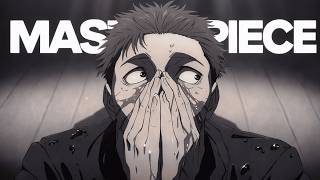

Best JJK Episode Without a Fight
45sChallenges the expectation that JJK is only about action, sparking debate among fans.
▶ Play Clip"Title accurately reflects the episode's acclaim for peak animation, though it's not a traditional breakdown."
This analysis explores why a recent Jujutsu Kaisen episode, despite lacking action, is considered one of the best animated in the series. It highlights the episode's focus on character acting and atmosphere, achieved through solo key animation by Koki Fujimoto and direction by Yusuke Takada, demonstrating animation's power beyond spectacle.
The episode is praised as one of the best animated without featuring a real fight, using animation for personality and atmosphere instead of action.
Assistant director Yusuke Takada took creative leadership, marking the first time series director Shota Gosso was not directly involved this season.
Nearly the entire episode was animated by one key animator, Koki Fujimoto, which is extremely rare in TV anime and ensures stylistic consistency.
Fujimoto excels at communicating emotion through movement, such as weight shifts and hesitation, rather than dialogue or action.
The cafe scene features fully animated background characters with unique rhythms, making the world feel alive and independent of the protagonists.
Higuruma's movements evolve from controlled to heavier and hesitant, visually narrating his psychological development without dialogue.
Sakuga refers to moments where animation feels personal rather than industrial, and this episode is a textbook example of that philosophy.
Fujimoto focuses on realistic hesitation and posture changes, treating animation as performance rather than spectacle.
The episode demonstrates that animation's highest level can be achieved through character acting and cohesive vision, proving that strength in anime does not require a fight scene.
What makes the Jujutsu Kaisen episode special despite lacking action?
It focuses on character acting, atmosphere, and personality through animation, not spectacle.
Who took creative leadership for this episode?
Assistant director Yusuke Takada.
1:14
What is a solo key animation episode?
An episode where nearly all key animation is done by a single animator, ensuring stylistic consistency.
2:14
Who animated most of this episode?
Koki Fujimoto.
2:48
What is sakuga?
Moments where animation feels personal and artistic rather than industrial, showcasing an animator's individual style.
6:31
How does Fujimoto's approach differ from action-focused animators?
He focuses on observational realism and character acting, communicating emotion through subtle movements.
7:56
What does the cafe scene demonstrate?
Living backgrounds with fully animated, independent characters, making the world feel alive.
4:29
How does Higuruma's animation change throughout the episode?
His movements evolve from controlled to heavier and hesitant, reflecting his psychological development.
5:07
Episode's Unique Achievement
Demonstrates that animation can be exceptional without action, focusing on character acting.
Solo Key Animation
Rare production method that ensures stylistic consistency and personal vision.
2:14Character Acting Over Action
Highlights the difficulty and value of communicating emotion through movement.
3:29Sakuga Philosophy
Explains the concept of personal animation and its rarity in TV anime.
6:21Animation as Performance
Emphasizes that slow character acting exposes skill more than action.
8:49[00:00] The newest Jujutsu Kaisen episode might
[00:02] be one of the best animated episodes in
[00:04] the entire series. And what makes that
[00:06] achievement so fascinating is the fact
[00:08] that it accomplishes this without
[00:10] featuring a real fight at all. And
[00:12] paradoxically, that absence of spectacle
[00:14] is exactly what makes the episode so
[00:16] special. Because while audiences usually
[00:18] associate Jujutsu Kaisen with explosive
[00:21] choreography and overwhelming combat
[00:23] animation, this episode demonstrates
[00:25] something far more fundamental about the
[00:27] medium itself. What animation is capable
[00:29] of when it is used not for action, but
[00:32] for personality, atmosphere, and genuine
[00:35] character acting. Weeks before the
[00:36] episode even aired, respected animators
[00:39] and industry insiders were already
[00:41] discussing it online, treating its
[00:43] release almost like a small internal
[00:45] event within the animation community.
[00:47] And some even claimed that this was an
[00:49] episode viewers could watch without ever
[00:51] having seen Jujutsu Kaisen before. A
[00:53] statement that initially sounds
[00:54] exaggerated, yet becomes surprisingly
[00:57] accurate once you understand what the
[00:58] episode is actually attempting to
[01:00] achieve. Because many viewers probably
[01:02] asked themselves the same question while
[01:04] watching, "How can an episode feel this
[01:06] impressive even when some faces are
[01:08] barely detailed?" And to understand
[01:10] that, we need to look at two crucial
[01:12] factors behind its production. The first
[01:14] factor is direction. This episode marks
[01:16] the first time this season that series
[01:18] director Shota Gosso was not directly
[01:20] involved in overseeing the episode's
[01:22] execution. Within parts of the anime
[01:24] community, rumors currently suggest that
[01:26] Gosso may not return as main director
[01:28] after the first phase of the Culling
[01:30] Games arc. Although this has not been
[01:32] officially confirmed. Instead, assistant
[01:35] director Yusuke Takada took creative
[01:37] leadership for this episode. And this is
[01:40] where things become particularly
[01:41] interesting.
[01:43] Takada has worked closely alongside
[01:45] Gosso for years and clearly understands
[01:47] his visual philosophy. Yet rather than
[01:50] simply imitating the established style,
[01:52] this episode demonstrates an evolution
[01:54] of it, resulting in staging that feels
[01:57] calmer, more deliberate, and almost
[01:59] cinematic, as if every movement exists
[02:02] because it was consciously chosen rather
[02:04] than efficiently produced.
[02:06] However, even strong direction alone
[02:08] cannot explain why this episode feels so
[02:11] different from standard television anime
[02:13] production.
[02:14] Because the true highlight of this
[02:16] episode is something that almost never
[02:18] happens in modern TV anime. Nearly the
[02:21] entire episode was animated by one key
[02:24] animator.
[02:25] A so-called solo key animation episode
[02:28] is extraordinarily rare, since anime
[02:30] production is normally divided across
[02:33] dozens or even hundreds of artists
[02:35] working simultaneously,
[02:37] which inevitably introduces stylistic
[02:39] inconsistencies between scenes.
[02:42] Here, however, almost every motion
[02:44] originates from a single creative
[02:46] vision.
[02:48] And that vision belongs to Koki
[02:49] Fujimoto.
[02:51] Fujimoto has worked in the anime
[02:52] industry [music] for over a decade and
[02:54] contributed to major productions such as
[02:57] Jujutsu Kaisen season 1, Jujutsu Kaisen
[02:59] 0, and Chainsaw Man, gaining recognition
[03:03] not only for technical skill, but for an
[03:05] almost inhuman level of output.
[03:08] During Jujutsu Kaisen 0, for example, he
[03:11] animated extended portions of the Yuta
[03:13] versus Geto confrontation nearly by
[03:15] himself. An achievement that already
[03:18] positioned him among the industry's most
[03:20] respected animators.
[03:22] Yet what truly separates Fujimoto from
[03:24] many action-focused animators is not
[03:26] speed, but character acting.
[03:29] Action animation impresses through
[03:31] impact, explosions, and velocity, but
[03:33] the real difficulty lies in
[03:35] communicating emotion purely through
[03:37] movement. Through how a character shifts
[03:39] their weight, hesitates before speaking,
[03:42] adjusts posture unconsciously, or
[03:45] reveals internal conflict through motion
[03:47] rather than dialogue.
[03:49] And this is precisely where the episode
[03:50] reveals its greatest strength.
[03:53] The simplified facial designs seen
[03:55] throughout the episode are not signs of
[03:57] reduced quality, but deliberate artistic
[03:59] decisions. Because fewer visual details
[04:02] allow animators greater freedom of
[04:04] motion, enabling energy to flow into
[04:06] timing, body language, and natural
[04:09] physicality instead of rigid line
[04:11] accuracy.
[04:12] As a result, the characters begin to
[04:14] feel startlingly real.
[04:16] Even ordinary actions, walking, turning,
[04:19] sitting, or glancing sideways, carry
[04:22] believable weight rarely achieved in
[04:24] weekly television anime. A perfect
[04:26] example appears in the cafe scene.
[04:29] While the main conversation unfolds in
[04:30] the foreground, the background never
[04:32] stops living as pedestrians move
[04:35] independently with unique rhythms and
[04:37] personalities.
[04:39] A mother carefully pushes a stroller.
[04:42] Children run unpredictably through the
[04:43] frame, and a teenager casually walks
[04:46] past with relaxed body language.
[04:49] Every movement exists fully animated in
[04:52] 2D.
[04:53] The world continues independently of the
[04:55] protagonists, following a principle more
[04:58] commonly associated with cinematic
[05:00] animation or studios like Kyoto
[05:02] Animation, where environments feel alive
[05:05] rather than decorative.
[05:07] This philosophy becomes especially
[05:09] noticeable in Higuruma's animation.
[05:12] At the beginning of the episode, his
[05:14] movements appear controlled and
[05:15] rational, almost rigid, reflecting
[05:18] emotional restraint.
[05:20] However, as the episode progresses,
[05:23] subtle animation changes alter his
[05:25] entire presence. As footsteps grow
[05:27] heavier, gestures slow slightly, and
[05:30] hesitation becomes visible without a
[05:32] single line of dialogue explaining his
[05:35] internal state.
[05:37] The animation itself narrates his
[05:38] psychological development.
[05:41] And perhaps this is the greatest irony
[05:43] of the episode.
[05:44] In a series globally celebrated for
[05:46] spectacular battles, one of its most
[05:49] creatively ambitious achievements
[05:51] emerges from an episode almost
[05:53] completely devoid of action.
[05:55] Episodes like this are exceptionally
[05:57] rare because they require immense
[05:59] production trust, extended time
[06:01] allocation, and an animator capable of
[06:04] sustaining an entire episode's visual
[06:06] consistency alone.
[06:08] And while earlier seasons of Jujutsu
[06:10] Kaisen were frequently associated with
[06:12] intense production pressure,
[06:14] this episode may suggest that MAPPA is
[06:16] increasingly allowing individual artists
[06:19] greater creative freedom.
[06:21] To really understand why this episode
[06:23] caused such a strong reaction inside the
[06:25] animation community, you first need to
[06:27] understand what the word sakuga actually
[06:30] means.
[06:31] Because outside anime circles, the term
[06:33] is often misunderstood as simply
[06:35] referring to good animation,
[06:37] when in reality, sakuga describes
[06:39] moments where animation stops feeling
[06:41] industrial and begins to feel personal.
[06:45] In most television anime production,
[06:47] episodes are divided into dozens of
[06:49] isolated tasks [music]
[06:50] handled by large teams working under
[06:52] intense deadlines,
[06:54] meaning animation often prioritizes
[06:56] efficiency and consistency over artistic
[06:59] individuality.
[07:01] Sakuga, however, represents the opposite
[07:04] philosophy.
[07:05] Moments where an animator's personal
[07:07] style, timing, and creative
[07:09] interpretation become visible on screen.
[07:12] And this episode is almost a textbook
[07:14] example of that idea.
[07:16] Because when a single animator handles
[07:18] the majority of an episode's key
[07:20] animation, something unusual happens.
[07:23] Movement gains coherence.
[07:26] Characters no longer feel like they were
[07:27] assembled piece by piece by different
[07:29] hands,
[07:30] but instead move according to one
[07:32] unified understanding of weight, rhythm,
[07:35] and emotion.
[07:36] Every gesture belongs to the same
[07:38] creative mind. [music]
[07:40] Every pause feels intentional.
[07:42] Every motion carries continuity.
[07:45] That consistency is what animators
[07:47] immediately recognize. What makes Cookie
[07:49] Fujimoto's work here especially
[07:51] remarkable is that he does not attempt
[07:53] to impress through complexity alone.
[07:56] Instead, he focuses on observational
[07:58] realism, studying how real people
[08:01] hesitate before speaking, how posture
[08:03] changes depending on emotional pressure,
[08:05] and how subtle imbalance in movement can
[08:08] communicate psychological tension more
[08:10] effectively than dramatic action ever
[08:12] could.
[08:14] This approach reflects a philosophy
[08:16] often associated with legendary
[08:17] animators such as Yoshinori Kanada or
[08:20] Yasuhiro Otsuka, where animation is
[08:23] treated not as spectacle, but as
[08:25] performance.
[08:26] And performance is significantly harder
[08:28] than action.
[08:29] Explosions can hide mistakes. Speed can
[08:32] disguise shortcuts. But slow character
[08:34] acting exposes everything, which is
[08:37] precisely why episodes like this become
[08:39] landmark within animator communities.
[08:42] They remind artists what the medium is
[08:44] capable of when production allows
[08:46] craftsmanship to take priority over
[08:48] volume.
[08:49] Interestingly, many viewers
[08:51] subconsciously felt this difference,
[08:53] even if they could not immediately
[08:54] explain it, because humans are extremely
[08:57] sensitive to natural motion.
[08:59] When animation suddenly reflects
[09:01] believable weight and timing, the brain
[09:03] recognizes authenticity long before the
[09:06] viewer consciously understands why
[09:08] something feels different.
[09:10] The episode feels alive, not because
[09:12] more happens, but because everything
[09:14] breathes.
[09:16] Moments like this rarely emerge from
[09:18] weekly television schedules, since they
[09:20] require trust from the studio,
[09:22] extraordinary endurance from the
[09:23] animator, and production circumstances
[09:26] willing to prioritize artistic cohesion
[09:29] over efficiency.
[09:30] That is why many animators quietly
[09:32] describe episodes like this as
[09:34] milestones, not because they are louder
[09:36] or more technically complex,
[09:38] but because they demonstrate what
[09:40] television anime can achieve when
[09:42] individual vision is allowed to lead
[09:44] production.
[09:45] And maybe that is why this episode feels
[09:47] so different.
[09:48] It does not try to be louder. It does
[09:50] not try to be bigger. It does not try to
[09:53] overwhelm the viewer.
[09:54] Instead, it quietly demonstrates what
[09:57] animation [music] can achieve at its
[09:58] highest level.
[10:00] Because sometimes proving the strength
[10:02] of anime does not require a fight scene
[10:04] at all.
[10:05] Sometimes all it takes is watching a
[10:07] character walk across a room and
[10:09] realizing you cannot look away.
⚡ Saved you 0h 10m reading this? Transcribe any YouTube video for free — no signup needed.