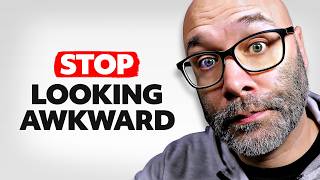

Stop Saying 'Hey Guys' to Grow Your Channel
40sThis clip addresses a common mistake and offers a simple, relatable fix, making viewers feel like they're getting insider tips.
▶ Play Clip"Delivers solid, actionable advice for on-camera presence, though some points are common knowledge."
The video offers practical advice for content creators, especially beginners, on how to appear more natural and engaging on camera. It emphasizes using singular language, preparing with bullet points, incorporating movement, and embracing imperfections to foster a genuine connection with viewers.
Don't start videos with 'Hey everybody' or 'Hey guys.' Instead, use singular language like 'you' to make each viewer feel personally addressed.
Speaking directly to the individual viewer creates a more intimate connection, making them feel like the content is for them, even if they watch with others.
Communicate with the camera as if it's a buddy. Authenticity and a conversational tone build deeper connections than a performative or overly energetic style.
Preparation is key. Bullet points allow for natural delivery, whereas scripts can feel stiff. Script important data and transitions, but improvise the middle.
If you use scripts, allow yourself to deviate when you express the right idea differently. Keep takes that convey the message naturally.
Before recording, move around to raise energy. This helps you start from a higher energy place, making your delivery more dynamic and natural.
If you communicate with your hands, let them move naturally. Forcing stillness makes you appear stiff and uncomfortable, which translates to the viewer.
Record the same segment several times to have options in editing. This allows you to choose the best delivery and create a smoother final product.
Small mistakes, like correcting yourself or filler words, make content feel real and relatable. They help distinguish human creators from AI avatars.
Don't be afraid of pauses; they give viewers time to digest. Occasional 'um' or 'like' is fine, but avoid overusing them to the point of annoyance.
Most YouTube content is for entertainment. Relax, have fun, and enjoy interacting with the camera. This makes you come across as more natural.
The person on the other side of the camera is just like you, with their own problems and aspirations. Reducing the 'bigness' of YouTube can lessen pressure.
To be better on camera, focus on creating a genuine, one-on-one connection with your viewer by using singular language, preparing with bullet points, moving naturally, and embracing imperfections. Remember that the viewer is just another person, which helps reduce pressure and fosters authenticity.
What is the recommended way to address viewers in a video?
Use singular language, specifically the word 'you', to make each viewer feel personally addressed.
00:28
Why should you speak to the camera like it's a buddy?
Because it's authentic and creates a deeper connection with viewers, making communication more natural.
01:19
What is the advantage of using bullet points over a full script?
Bullet points allow for natural communication, whereas scripts can feel stiff and require fine-tuning to sound natural.
01:47
What should you do if you are adamant about using a script?
Give yourself flexibility to keep takes that express the right idea even if they deviate from the script.
03:31
Why is it beneficial to record multiple takes?
It provides multiple versions to work with in editing, allowing you to create a smoother and more natural final product.
04:51
What is the effect of leaving in imperfections like filler words?
It makes content feel more real and helps distinguish human creators from AI avatars.
06:54
How can silence be helpful in a video?
It gives viewers space to digest what was said, improving communication.
08:03
What mindset should you adopt to reduce pressure when recording?
Remember that the viewer is just another person like you, which reduces the 'bigness' of YouTube and lessens pressure.
09:05
Singular Language Creates Connection
Using 'you' instead of 'everybody' makes each viewer feel personally addressed, a key technique for engagement.
00:28Bullet Points Over Scripts
Bullet points allow for natural delivery, avoiding the stiffness of scripts, a practical tip for creators.
01:47Multiple Takes Improve Quality
Recording multiple takes gives editors options to create a smoother final product, a standard practice for professional videos.
04:51Imperfections Signal Authenticity
Leaving in small mistakes makes content feel real and helps distinguish human creators from AI, a relevant insight in the age of AI content.
06:54Viewer is Human
Remembering the viewer is a person like you reduces pressure and fosters a more natural connection, a fundamental principle.
09:05[00:01] camera is going to be the life or death of your channel. So, I'm going to share natural on camera, so you don't suck once the camera turns on, and we're Have you ever been watching a YouTube video and the content creator starts the
[00:15] video and they say, "Hey everybody." or "Hey guys." You don't want to do that. more intimate way, so that you can have are watching your videos. And the way that you do that is by using singular
[00:28] language. Or in other words, use the word you. Let me give you a quick demonstration why and see if you can spot the difference. Option one, I'm best cake you've ever eaten in your life. Option two, I'm going to show you
[00:42] how to make the best cake you've ever eaten in your life. Both of them are almost the same. However, one of them makes you feel like you're participating in something. Sure, other people are in it, but it's not really for you, right?
[00:55] They're not talking to you. They're talking to everybody. In the other version, they're talking directly to you, to the person that is watching the video, not a group of people. They're not in a coliseum, they're talking to
[01:07] that one person that's watching the video. And even if that person's sitting in a room with a bunch of other people, each one of those people, in their mind, feels like that content creator is talking directly to them. The next thing
[01:19] camera is you want to speak to the camera like it's your buddy. So, a lot they'll put on a show. It's okay to raise your energy levels up, but when it communicating, you want to make sure that you're communicating just like you
[01:32] would with a friend. And the reason for that is because it's authentic, and it's of thing that people connect with. I mean, of course, yeah, people do respond you're willing to create that deeper connection with your viewers and just
[01:47] interacting with your content, then make sure that you're talking to the camera you sound more natural on camera is to prepare for the video. So, that it could be writing bullet points, but
[02:00] having some type of preparation that you can go over before you record your you're not recording, and then you know what you're going to say, how you're everything out loud. Then, when it comes time to make the video, you turn on the
[02:13] those things that you've already went over, and you've already practiced how things. Personally, I find bullet points to be the best because if I have those bullet points, then I can just communicate naturally in a way that I
[02:26] When I write scripts out, everything feels a little bit stiff. Like, I've make a script sound natural in most cases, but it usually takes a lot of fine-tuning because when I'm writing
[02:39] things down, I I think differently and I communicate differently than if I'm because of that, for me personally, bullet points has been the most effective way for me to communicate
[02:51] experiment with bullet points or experiment with a hybrid so that you are scripting the things that are the most important. Any important data, uh if you scripting that out so that you can make sure that you nail that. If you have an
[03:05] different video, and you're closing your video down in a certain way, then that part. And then, for everything in the middle, experiment with running off of bullet points. Or, at the very least, if you are adamant about writing scripts,
[03:18] Scripts are great for a lot of people. But, if you are adamant about writing scripts, then in that case, giving yourself the flexibility to where if you are communicating the script in your video to where if you say something a
[03:31] what you have in the script, but it's expressing the right idea, make it okay with yourself that you can keep that take. The next thing you can do to communicate more naturally in videos is to get your body moving. So, a lot of
[03:44] turning on the camera, and they're just kind of stiff and uncomfortable, and just stiff, and they just don't just doesn't feel great and because of that the way that they communicate also isn't great. So before you make your video,
[03:58] yourself out a little bit, move yourself around, right? Try to get your energy up so that when you do start talking, you're coming down from a higher place so to speak instead of being in that lower place and trying to bring yourself
[04:11] you're trying to share in your video. Jumping jacks can be great for this, but that you're, you know, just pouring in sweat or you're out of breath or make your video. Next, if you're somebody that communicates a lot with
[04:24] your hands like I do, just let them go. Do not try to force yourself into being stiff and uncomfortable. Communicate in your natural way. So if you use your hands a lot when you talk, then do that in your videos, too. And by
[04:38] comfortable and natural when you're making videos, which means that it's going to translate into a more comfortable experience for your viewers with them. Now this one here for a long time I assumed that everybody did
[04:51] [clears throat] this and I assumed that when people were making YouTube videos that every single person that made YouTube videos did this, but apparently it's not the case. In fact, I've spoken with new content creators that didn't
[05:04] even know that this is how people made YouTube videos. Multiple takes. Record the same thing multiple times because the first time you say it might be good, get a better version if you say it again, then you have two things to work
[05:18] time, then you have three different versions of it in the edit that you can work with. So then you can put together everything that you need as you need it lot more natural on camera. For example,
[05:31] together, everything is going to come together smooth and it's going to seem as we're going through this video. However, I'm sitting here with my remote and I'm like, no, no, no, that's not it, and And I'll stop it, and then I'll hit
[05:46] clip, and then I'll say it again, and then I'll get a little bit into it, and then I have to start over again, and then I'll say it again, and then I just everything it is that I'm saying, almost everything, I'll have to take several
[06:00] takes, and then when the editor gets it, or if I edit it myself, then we have all of this additional stuff to work with in order to create a better final product. You don't want to do that. When it comes to YouTube, yes, sometimes more than one
[06:13] person is watching a video with somebody. No, don't use that. you want to s- You don't want to do that. If you want to You don't want to more natural way, you don't want to do that. Instead, you want to communicate
[06:27] in a more intimate way. If you're new to that style of video recording, or if the scenes of what it looks like when somebody's recording a video, if you put a link to a video at the top of the screen right now of a video that I
[06:41] recorded. So, I recorded the entire recording process and everything that I go through, and I explain all of the details about what it is that I'm doing sure that you check out that video when you get the chance. The next thing you
[06:54] performance is to leave in the little details. So, for example, when you are have the option to edit. So, because of when you're saying something, then nobody freaks out about it. Nobody's
[07:08] just corrected yourself." Instead, you're having a conversation. So, because of that, if you have little here and there in your video, when you leave those things in, it makes your
[07:21] content feel more real, and your communication on camera feel more real, also believe that when it comes to imperfections, I think these types of things are going to be one of the things that help real content creators separate
[07:34] somebody's watching the video, they're going to be able to tell that, you know, hey, this isn't perfect, and because of that, this is probably a real person generated avatar. But when it comes to the imperfections, some of the things
[07:48] some filler words from time to time, it's fine. If you say um occasionally, annoying with it. If you drop in a filler word like like, also perfectly much that it becomes annoying. Another thing that can be helpful when it comes
[08:03] to communication is also just silence. Being okay to just kind of slow things down a little bit and just leave space for people to digest what you just said. Another thing that can help you sound
[08:16] more natural on camera and just help you have a better camera presence in general seriously. You know, when it comes to YouTube, there's the side of things news or something like that, yeah, maybe, you know, you should be a little
[08:29] bit more serious. But when it comes to most content on YouTube, people are entertained. So, if you are teaching something, teach something, have a little bit of fun, and relax when you're doing it. If you're entertaining people,
[08:41] entertaining people and that you're relaxed and having fun while you're doing that. And when you are relaxed and you're having fun and you are enjoying interacting with the camera, then that is also going to make you come across a
[08:53] lot more natural. And remember, because judgment is one of the big things that when we're communicating in our videos, one of the things that we worry about is, well, you know, somebody else watching this, they might think this
[09:05] looks stupid or this sounds stupid or whatever the thing is. And that's really about how we communicate on camera. So, because of that, also just remember that lens, like you are right now watching this video with me, you know, you're
[09:20] your own problems that you're dealing with, you have, you know, the dreams aspirations, you have the things in your life that suck, you have the things in me. So, just remember that the other
[09:33] person on the camera is also like you. And just when you're communicating, just friend because it's just another person. Even though it's YouTube and you're the opportunity that YouTube has, just remember that it still all comes down to
[09:48] on the other side of the camera. That's it. And when you reduce it down to that, you take that bigness away, it can also reduce some of the pressure when it if you're watching this video because you're a small content creator or you're
[10:03] stuff and because of that you're trying to figure out how to do it all. I put a video together about advice that always helps small YouTube channels. I'll put click into that now and I'll see you in the next video. Thank you so much for
[10:16] the next video. Thank you so much for watching. I'll see you next time.


⚡ Saved you 0h 10m reading this? Transcribe any YouTube video for free — no signup needed.