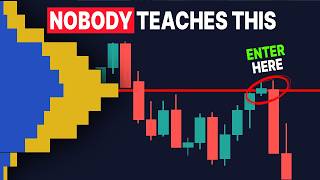

How a Stock Skyrocketed 300% in Hours
45sExtreme financial gain in a short time captures attention and curiosity.
▶ Play Clip"Title accurately reflects content: the video teaches how to find day trading stocks using volume, float, and news."
This video explains how to identify high-potential stocks for day trading by focusing on volume, float, and news catalysts. The presenter shares strategies for finding stocks that make massive moves before they happen, using tools like stock screeners and news scanners.
Stocks can surge 300% in hours, but traders need to find them before the move. Key factors: volume, float, and catalyst.
Volume is the total shares traded. High volume indicates a hot stock with more opportunities and liquidity for easy entry/exit.
Float is the number of shares available for public trading. Low float means less supply, so high demand (volume) drives price up. Ideal float for day trading is under 20 million shares.
News catalysts (e.g., partnerships, earnings, breakthroughs) cause price spikes. Key news times are 7-9 AM EST. Good news articles are essential for consistent gains.
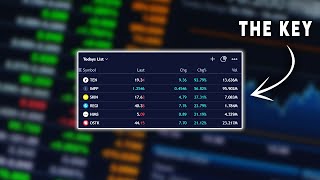
Use stock screeners (e.g., Yahoo Finance) to spot top gainers and check recent news. Alternatively, use a news scanner with filters for price, volume, and float to get news before price moves.
The presenter provides a list of keywords to rate news articles from best to worst. Experience helps in identifying good catalysts.
Combining low float, high volume, and a strong news catalyst gives the best chance for consistent day trading gains. Tools like news scanners with filters can help traders enter before the crowd.
What is volume in stock trading?
The total quantity of shares traded by traders for a specific stock.
00:32
What is the float of a stock?
The total amount of shares available for public trading.
01:36
What float size is ideal for day trading according to the video?
Under 20 million shares.
02:35
What are the key times for important news articles?
7 AM to 9 AM Eastern Standard Time.
03:30
What is relative volume?
How many shares have been traded in relation to how many shares are usually traded.
05:18
What is the advantage of using a news scanner over a stock screener?
It finds news articles first, allowing entry before the price moves.
06:04
What three factors does the video recommend for consistent day trading gains?
Low float, high volume, and a great news catalyst.
08:26
Massive Moves in Hours
Shows the potential of day trading with stocks that can surge 300% in a couple of hours.
Supply and Demand via Float
Explains how low float creates scarcity, driving price up with high volume.
01:36Catalyst-Driven Spikes
Emphasizes news catalysts as a key driver for price spikes, more reliable than technicals alone.
03:04News Scanner Advantage
Introduces a tool that finds news before price moves, giving traders an edge.
06:04[00:00] What make s a stock a great potential candidate to day trade? This stock went up 300% in just a couple hours. While most blue-chip stocks you would have to wait multiple years for that to take place. The problem is, usually when you see these 300% plays your late to
[00:14] the party. So how do we find these stocks that make these massive moves like this, before they even happen? So we can take advantage of it, reap the benefits, and get incredible we first have to understand volume. Volume is the total quantity of shares traded by
[00:32] traders for a specific stock. So, the more buyers and sellers, the higher the volume. Volume can be a great indication if a stock is hot or not. Think of it as almost the amount As a day trader you ll quickly realize, price movement is your friend. That s why day traders
[00:50] more. Giving us more opportunities for trading plays. While if you trade a stock with little to no volume, it s not going to be moving as much, resulting in fewer amounts of opportunities. Not only that, traders like volume for liquidity
[01:07] reasons. As if you re a buyer and you want to sell your position at a specific point, you can only sell that position if there is another buyer. It doesn t just poof out of side of the transaction. When there are low amounts of volume. It might be hard for you
[01:21] So we now know the impact volume has on a stock, but what creates the actual movement is scarcity. I m sure you ve all heard of the good ol supply and demand. If there is
[01:36] a low supply of something, and lots of demand for it, that will increase the price. Right? So we identified that volume is the demand in a type of way, but how do we identify the supply? The answer? The float. The float is the total amount of shares available for public
[01:51] different amounts of shares to be bought and sold. Some companies like Amazon have 450 million shares out there in circulation, while other companies, like some penny stocks, only have 700,000 shares out there. Every stock is going to be different. You
[02:03] can get this number by going on yahoo finance, searching the ticker symbol, click the statistics tab, then scroll down a bit to the float section. That s the amount of shares available right example. If we want the price to rise. We want high amounts of volume, which is the
[02:19] So in most cases for day trading, the lower the float the better. As the less shares out When I m day trading I like to find stocks that have a 20 million share float or lower.
[02:35] Like I said before, the lower, the better. If it has anything more than 20 million, I wont day trade it, unless it s a really slow day and there aren t a lot of options out amount of volume, a low float, and it s a top gainer. You will quickly see why this
[02:51] is a day traders dream. Because the amount of volatility from this is like nothing you have ever seen before. You will literally have single candles that make 10% moves. So when day trading, those should really be your filters. Lots of volume, and a low float.
[03:04] That s how moves like this, exist. Now filters are important and all, but what s even more important is a catalyst. News. News is such a huge part of day trading. As a company with insanely great news, has a greater chance of blowing up.
[03:17] Maybe they found a cure to a specific type of cancer, maybe they just made a partnership with another big company, or maybe they just crushed their earnings for that quarter. All of these news catalysts would result in a huge spike in price for that specific stock.
[03:30] as early as 4 in the morning, to as late as 9am. This is eastern standard time by the way. For the most part, the most important news articles will come out at around 7am
[03:42] to 9am. They will also usually come out at round numbers. So, there will be a batch of news articles that come out at 7am. Then another batch of Now, not all news articles are good. Sometimes companies will release an article and say
[03:57] something like BESTBUY, just announced it will repaint all of the parking space lines in its parking lot. A bit exaggerated, but you get the point. Our goal is to find the news articles as early as possible, decipher if it s a good news
[04:13] article, then enter, and hopefully make a trade like this one. Where we get in before everyone else even realizes. Now, I know what you re thinking. How do we find these news articles? Ah yes, how wise of you to be thinking that.
[04:25] Well there s a few ways actually. Some brokers will have a news section on their platform and show all the recent news articles that came out. But I don t really like this strategy because most of the time 95% of it, is just fluff, and not very import articles. Resulting
[04:39] in no price movement. Another option is to use a stock screener. So say if its 8:57 am and it s about to be 9. Sometimes ill open my stock screener and watch the top gainers of the morning. As it automatically refreshes, I ll wait till it
[04:52] turns 9 o clock, Scroll down a bit and maybe I see a new ticker symbol pop up that wasn t there before, and it just spiked up 10%. You can simply go on yahoo finance, which is completely free. Search the ticker symbol. Then hopefully there s a news article that
[05:06] came out in the past 10 minutes and you can hop on the train before it leaves the station. Then this 10% gain, might turn into a 50% gain. Who knows? You can also do the same thing with relative volume. Relative volume tells us how many
[05:18] shares have been traded in relation to how many shares are usually traded. So if a stock has a relative volume of 60. That means its volume right now is 60x higher than normal. Now these strategies are nice, and it definitely has worked for me before. The thing is, it
[05:36] s not very consistent. For one, you re just hoping a new stock pops up on your screener, and sometimes that doesn t even happen. Then 2, your hoping you find it soon enough, to where you can search the ticker symbol and find the news article before it even blows
[05:49] stocks that are already up 10%, most of the time, your already late. And the news article So we need to find stocks with high amounts of volume, low float, find their news articles
[06:04] as soon as they come out, and not just any articles but good news articles, to hopefully enter before everyone else does. One way I ve found great success with this is using a news scanner. Just like a stock scanner, a new scanners is constantly refreshing,
[06:19] finding the best news. So instead of find the price movement first, then searching up the news article. We get the news article first, and enter before the out there. Some are free, but not as good, some are great, but cost money. Theres a lot
[06:34] off your needs, but if you want some help I ll put the one I use in the description. What I like about this one is all the features it provides. So instead of searching for ticker
[06:46] symbols, it will have a live feed of all the articles that are released. So you can get on during key moments like we were talking about before, like 8 am or 9 am. And see if What s even cooler is you can add filters to this scanner. So say if you only want stocks
[07:02] priced between $1 and $20, stocks that have volume of 100k or more, and has a float of under 20 million. This scanner will only show you news articles of stocks with those specific requirements. Which is so damn powerful. And we really just scraped the surface with
[07:18] the filters, there are soo many more. So you can watch the scanner at key times, have your filters enabled, if you see one pop up, check it out, read the article and decipher how good the news is. The better the news, the better the spike.
[07:31] The next thing you might be wondering is how do you tell if a news article is good? Well the more you trade, the better you get at identifying articles and how good they are. But for all the beginners out there s this list I ve made. Rating popular keywords from
[07:43] best to worst. If you see these key words in the title of the article. So you can add this video to a playlist or save the video or whatever,
[07:55] But doing this whole strategy with finding great news articles and getting in plays like this before they happen has worked wonders for me. So I thought I d share it with you might not be from news. Sometimes stocks will spike up huge amounts
[08:12] because they broke a key resistance level or sometimes for literally no reason at all. So you really could just use the low float / volume strategy and just trade top gainers off technical analysis. That s completely fine too. And sometimes I even do that.
[08:26] But I found trading stocks with a low float, high volume, AND a great news catalysts, gives a lot more consistent gains. And you truly feel a lot better and safer when day trading a stock that has a good news catalyst. It s almost like trading a stock that has a magnet
[08:41] So you know how to find the stocks, but you also need to know how to trade them correctly. Well luckily for you I did the testing for you. I tested a trading strategy with 100
[08:54] trades and it profited 130% in just 2 month, so yeah its pretty good. Go check that out, thanks for watching, and I ll see you guys next time.
⚡ Saved you 0h 09m reading this? Transcribe any YouTube video for free — no signup needed.

![BEST MACD Trading Strategy [86% Win Rate]](https://img.youtube.com/vi/rf_EQvubKlk/mqdefault.jpg)