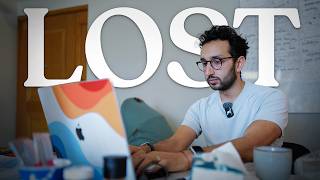

Would you sell for a billion dollars?
54sThe 'billion dollar test' is a provocative thought experiment that forces viewers to question if they are truly living their purpose.
▶ Play Clip"Delivers a structured 5-step roadmap, but the sponsor segment and occasional fluff reduce density. Still, the core advice is solid and practical."
This video presents a five-step roadmap to help individuals reframe their thinking about life's purpose, based on a conversation with executive coach Joe Hudson, who works with CEOs at companies like Apple, Google, and OpenAI. The core message is that purpose is not a distant destination but something to be lived in the present through experimentation and authenticity.
The longer you wait to find your purpose, the more lost you feel. Purpose is not found in the future but through a series of experimentations.
If you have an idea you want to pursue and you can't be bought off (e.g., wouldn't sell it for a billion dollars), you're living your purpose.
Ask yourself: Would you sell what you do for a billion dollars? Are you living for a future reward? Do you feel pressure from family/society? A negative gut feeling indicates you're not living your purpose.
There are infinite ways to make money. If you say you can't follow your purpose because of money, you're thinking from fear. Binary thinking (e.g., either keep job or quit) limits possibilities.
Before making big changes, try being completely authentic in your current job for 30 days. Ask 'If I were living my purpose, how would I show up?' This helps distinguish whether the problem is what you do or how you do it.
Set a random timer (e.g., app 'Yap') to ding several times a day, prompting you to check: 'How am I living my purpose right now?' This shifts purpose from future search to present moment.
An engineer in autonomy vehicles decided to be herself at work. Despite her boss wanting to fire her, her boss's boss wanted to promote her, and an outside firm recruited her. She learned that compromising on purpose even briefly can have long-term consequences.
Once you find your purpose, you must continuously live it moment to moment. Even small compromises (e.g., taking a promotion that doesn't align) can derail fulfillment.
Many people think they're not 'special enough' to demand purpose-driven work. But most only know one workplace environment; there are many possibilities. If you're deeply passionate about something, you become special at it.
Constantly asking 'What's my purpose?' can be self-abuse. The 'tyranny of purpose' replaces old career ladders with a new rigid expectation. Allow experimentation without judgment.
Purpose is not a future destination. It's expressed in how you do things, not necessarily what you do. Like Steve Jobs, follow curiosity and say yes to what excites you; the path reveals itself.
Finding your life's purpose is not about a single grand revelation but about ongoing experimentation, authenticity, and living purpose in the present moment. The five-step roadmap—audit, reframe money, experiment authentically, drop self-criticism, and stay present—offers a practical way to shift from feeling lost to actively crafting a purposeful life.
What is a key sign that you are living your purpose, according to Joe Hudson?
If you have an idea you want to pursue and you can't be bought off (e.g., wouldn't sell it for a billion dollars), you're living your purpose.
02:45
What are three questions to ask in a 'purpose audit'?
Would you sell what you do for a billion dollars? Are you living for a future reward? Do you feel pressure from family or society?
06:51
Why is 'binary thinking' a problem when considering purpose and money?
Binary thinking (e.g., either keep job or quit) is based on fear and limits creativity. There are infinite ways to make money.
12:03
What is the 'experiment with authenticity' step?
For 30 days, try being completely authentic in your current job. Ask 'If I were living my purpose, how would I show up?' and use a random timer to check in.
15:48
What tool is recommended to remind you to live in purpose throughout the day?
A random timer app like 'Yap' that dings several times a day to prompt: 'How am I living my purpose right now?'
21:06
What lesson did the engineer in autonomy vehicles learn about purpose?
Even a brief compromise on purpose (taking a promotion that didn't align) can have negative consequences for years.
23:36
What is the 'tyranny of purpose'?
The idea that replacing traditional career ladders with a rigid expectation to find one true purpose can be just as restrictive and self-critical.
39:55
How does the video define passion versus purpose?
Passion and purpose are closely related; when you're living your purpose, you're passionate about what you do. Purpose is a felt sense, not a checklist.
13:54
What advice does Joe give for someone who thinks they're not 'special enough' to live their purpose?
Most people only know one workplace environment; there are many possibilities. If you're deeply passionate about something, you become special at it.
35:59
What is the final step (step 5) for finding life's purpose?
Find purpose in the present: it's not a future destination but expressed in how you do things. Follow curiosity, experiment, and say yes to exciting opportunities.
40:22
Definition of Living Purpose
Provides a clear, memorable litmus test: you can't be bought off from what you do.
02:45Purpose Audit Questions
Offers actionable self-assessment questions that anyone can use immediately.
06:51Binary Thinking as Fear
Reframes common mental block as a fear-driven limitation, opening up creative possibilities.
12:03Random Timer Practice
Simple yet powerful technique to bring purpose into the present moment repeatedly.
20:38Purpose in How, Not What
Shifts focus from finding the 'perfect' job to expressing purpose through any activity.
40:22[00:01] actually find your life's purpose? This is something that a lot of us, including and we're asking questions like, "What should I do with my life? Why do I feel What's my purpose?" But, ironically, the longer you keep waiting to find your
[00:14] purpose, the more years you'll spend feeling completely lost. So, in this a five-step road map that will hopefully help you reframe how you think about on a conversation that I had with Joe Hudson. He is the somewhat secret
[00:27] world's biggest companies, including Apple and Google and OpenAI. And these companies pay him absolutely insane amounts of money to help their CEOs and tells me that a surprisingly large proportion of what he talks about with
[00:40] like billionaire CEO type people is often focused around this idea of life's purpose. First of all, most of the times when people are just thinking, "What's Second of all, purpose isn't found in the future. And then the third thing
[00:54] that's critical is that it's a series of experimentations. And so that's the most that question of >> so maybe you're a few years into your anymore. Or maybe you're doing something just because your parents or society or
[01:09] to get to security or whatever. Wherever you are right now, I really hope that you a little bit more clarity around how to find your life's purpose. So let's right. So, we are starting with step number one, which is all about how to
[01:23] recognize if you are not currently living your purpose. So, Joe, a lot of people are, including me, are searching for this thing that we call purpose. Um, what does it look like when someone is living their purpose? And how might
[01:37] whether they're not doing it? >> It looks like this. My wife and I were at the end of this week-long retreat. And it's a hardcore retreat. You've been And it's a hardcore retreat. You've been to it. It was starts at 7:30 in the
[01:51] to it. It was starts at 7:30 in the morning and it ends at like 10 o'clock seven days straight. Big emotions, lots of people having big issues, getting Exhausting. And we're at the last day. We're sitting in the hot tub recovering.
[02:06] And I looked at my wife and I said to her, you know, there was this thing, this transaction we could have made that would have made us like $70 million. And I was thinking about it and I'm really glad that didn't happen. and she said,
[02:18] "Oh, what would make that the case?" And I said, "Oh, um, because if we would have done that, we might not be doing this. If we had $70 million, we not might not have started this business. We might not have like done this because we
[02:31] said, "Oh, yeah." And then I looked at her and I said, "If somebody offered you right now, would just sell it. And our company's worth nothing close to a billion dollars, right?" And but the only thing is you couldn't compete. So,
[02:45] you couldn't do any of this work again? And we both went, "No, no, we didn't. No, no, we wouldn't. We wouldn't sell it for a billion dollars." If you have an idea that you want to pursue and you can't be bought
[03:00] off, then you're living your purpose. >> This billion dollar thing, I'm not going because it's like, how many people realistically are there in the world that would that wouldn't like sell what they're doing for work for like a
[03:13] billion dollars? I I've met some of them over the years who have used this feel like I'm living my purpose because like, you know, I there's no amount of been a bit like skeptical. I'm like, "Really?" Like, "Really? If someone paid
[03:27] dollars, you you wouldn't you wouldn't stop doing a podcast or a YouTube thing or like doing this specific thing?" And they're like, "Yeah." And I'm like, "Damn, that's a level of living purpose that I'm just like, man,
[03:40] personally, I don't take it too literally a billion dollars. I I I treat this more as like a general feeling of like, am I doing it for the money or am I doing it not for the money? Cuz if
[03:53] money, then it's kind of unlikely that that thing is going to be you living >> Okay. So, people might be hearing that and thinking, I mean, that sounds great. I'd love to be, you know, I'd love for my work to be the thing that I wouldn't
[04:07] that I I I would say no to a billion dollars to stop doing. But if I think of >> 99% of people who might be watching this video, um >> including me, uh there are either like, you know, if someone offered to buy my
[04:19] business for a billion dollars, there are there are aspects of it that I would wouldn't. Um, and I imagine for for people that I speak to in our audience, maybe it's like 95% 100% of the work they would totally just stop doing if
[04:33] lottery. So like, right, >> how do we go from this starting point of like the work I'm doing is absolutely not the work that I, you know, that that this point where you and your wife are chilling in a hot tub and like, yeah,
[04:47] you know, I'm glad we didn't sell for 70 million because we actually we enjoy >> Yeah. Uh, so the first thing is you have to recognize that you're not living your purpose. And so that's easy for most people. I think most people can say,
[05:00] "Yep, I'm probably not living my purpose." But admitting that to yourself and and then taking the risk to take the step to live your purpose is something. recognize it, right? They've just been in the the idea is that you're gonna do
[05:16] college and when you're done with college, you're supposed to get a job and it's supposed to be in a good career and then get married and then get a supposed to do to be happy. And they've been told that and they think that
[05:29] they're doing the thing that's supposed to be happy. And but what they don't realize it's it's life is far more like a great piece of music. And you're not just like trying to get to the crescendo of the song. You're not just trying to
[05:43] actually enjoying listening to the music. And so one of the greatest ways to tell that you're not living your purpose is that somehow or another you're living for a reward in the future. Something in the future is going
[05:57] to going to pay off and tell you, "Oh, then now it's worth it." But if you're song. Life is like a dream come true that you never thought thought was possible, never even thought of because you couldn't even imagine it's as good
[06:10] as this. And so that's the recognition to be able to recognize that. If you're things or have to do things, it's a great sign that you're not living your purpose. If you're if you're telling yourself, I'm doing it because it's the
[06:25] safe thing, that's also probably a great sign that you're not doing your purpose. you know, you're not living on your purpose or living in your passion. And then the first step is actually recognize that that's happening that
[06:38] you're you're living for the crescendo. You're not living for the music that's >> And so that is step number one, conducting a purpose audit is to ask living your purpose. And we can ask ourselves these questions to get a feel
[06:51] for is that true for us or not. Firstly, would you sell what you're doing for a probably not living your purpose to some degree. But if not, then you probably Secondly, are you living for some sort of reward in the future? Is that the
[07:06] thirdly, do you feel like you should do something or is there a lot of pressure from your family or society more broadly to do a certain thing? If you're feeling thing is unlikely to be your purpose. Broadly, when we're doing a purpose
[07:19] audit as well, like we do have a felt sense. Like right now, if I were to ask you, are you currently living your purpose in terms of what you do for like a gut response to that. Um, back when I was working as a doctor, I felt
[07:33] when I would have the Sunday scaries and every Monday morning when I wake up like a I don't want to go to work. It's like h it's just supposed to be noble and stuff, but I just had that feeling of like h associated with it. And so that
[07:49] wasn't living my purpose. Whereas for me, when I was teaching medical students, like I had a teaching day or I had to run a physiology supervision or running, I would never have that feeling of like uh I would always have a feeling
[08:01] looking forward to this teaching thing. And so that kind of told me that my own it was in practicing medicine. Now, if you're enjoying this video so far, I me and my team have been using literally a zillion times a day since 2019. You've
[08:16] sponsoring this video. Notion is the work lives and also me and pretty much everyone in our team uses in our platform where we coordinate all of the content we're making, all of the
[08:28] lifestyle business academy and our YouTuber academy courses. And the most exciting thing about notion is that they have just launched an incredible new feature called Notion Agent, which is basically AI agents that are built into
[08:40] just being able to answer questions for you, which it's been able to do for a while, you can describe what you want and Notion agent will literally do the work for you directly within your Notion workspace. It's absolutely freaking
[08:52] Notion, so it knows exactly how all of the blocks of Notion works. It it knows it knows how to do all of the technical stuff that would normally take you and what I really love about it is how it learns your style so that the results
[09:06] written or created yourself. And this has genuinely saved me and my team literally hours of time every week that was previously spent manually creating reason you are not yet using Notion and you've been living under a rock, you
[09:18] you are already a Notion user or you're a new timer, you should definitely check out Notion Agent and see how amazing it is that notion agent can literally do want to check that out. So thank you notion for sponsoring this video and for
[09:31] six plus years. Let's get back to the video. Okay, so now we come to step two where we have to address the elephant in the room, which is the money problem. What if someone's like, "Hey, I'm not really
[09:43] passionate about my job in accounting, but you know, I'm passionate about the money that it gets me at the end of the month, and then I can use that money to do fun things and like support my family and stuff."
[09:58] Where does that mode of operation sit in this conversation about purpose and passion? Yeah, it's a great question. Um, first of all, there's nothing wrong with not living your purpose. You know, you're not going to be able to find that
[10:10] you're not going to be able to find that kind of happiness or or or or passion or kind of happiness or or or or passion or zest for life. But the the it's really important that people don't beat themselves up just because they're not
[10:22] going to get them to living their purpose any faster. So, that's one thing. So, we're not calling some people good and some people bad for living question to answer your question
[10:34] specifically, I'm passionate about the money. Money is right now I'm looking at a computer. 500 different companies made money to make that computer. These lights, the YouTube, you're making money. I'm making money. YouTube is
[10:49] making money. The advertisers are making money. There is infinite amount of ways window unless you're in nature. You thousands of ways that people have made money. So if you're passionate about
[11:04] making money and then you say I have to do it in this one way, then then you're then there's at least zero creativity, but at most you're delusional because there's literally infinite amount of ways to make money in this world. And so
[11:21] saying I'm not going to live my passion and my purpose because because of money is it doesn't make any sense. But Joe, like you know, you've got no market is these days. You know, my degree is in think X and like AI and the
[11:36] there's like thousands of ways to make money, but like all I've been trained for and all I know is this one way of making money and well, I I got to kind >> Yeah. So, do it to pay the bills as you find out another way to make money. So,
[11:50] one of the things that you'll learn in your about the way that your mind works is that if you are doing binary thinking, if you say it's either this way or that way, it's either keep my job or quit my job or I either stay an
[12:03] accountant, that means your mind is in fear. Binary thinking says that you're you're making decisions out of fear. And so, that's what I would say is if you're a thousand different ways to make money in accounting. just in accounting alone,
[12:18] the company that you work at and how you do accounting for one company, how you do the accounting. Are you finding ways for AI to do the accounting for you? Are you innovating in accounting? Are you accounting for a drug dealer or are you
[12:33] doing accounting for a company that's trying to save the world? Are you accounting for Ali Abdal? How close is the team that you love? Or do you hate them? all all of these things apparently have to happen because you need money.
[12:48] And so so to me there's just infinite possibility. And when you start thinking you're thinking out of fear. And so fear is not going to get you to your passion.
[13:01] >> I scared myself into living my passion. I've never heard that. I've never heard that. So it's really requires you to to at least be open to the concept that life can change. And if you're not open to
[13:14] that concept, look around you because there's no part of life that's not >> And so that is step number two to think creatively about the money problem. It's but I need to make money from the thing and have this very blinkhood view of
[13:28] what that actually needs to look like and then use that as a reason as to why got to make the money. But what I really like about what Joe says is that if we like there are ways to make money following your purpose almost regardless
[13:40] >> Side question that's a little bit of a tangent here is uh how are we defining our terms? Like what is passion and what is purpose? Is it the same thing? Is >> I think there's there's lots of definitions for passion. Um but if we're
[13:54] what you do, then you're definitely living your purpose. And if you're living your purpose, you're definitely passionate about what what you do. And so living your purpose is a felt sense. It's not a there's no way to like have a
[14:08] checklist and say, "Okay, I'm doing X, Y, and Z, and now I'm living my people try to do that. They make a checklist and they say, "Okay, if I'm living my purpose, then, you know, I will be helping people and I'll be
[14:23] making X amount of money and I'll, you know, have this kind of a this size of a team and, etc., etc." And a couple of them because they've been incredibly smart CEOs have done it and then found out no that's not not living their their
[14:38] purpose because purpose is a felt sense. You know when you're doing it and you don't have to do it in the future or in can't. The only place you can actually feel if you're living on purpose is in
[14:51] future. It's just right here because it's a feeling and that's when the feeling happens. And so, yes, you feel passionate about it. Yes, you feel like this is what I'm meant to be doing right now. This is what I'm meant to be doing.
[15:06] >> And that's that's the crazy thing about purpose is that right now we're having a conversation and you can be doing it on your purpose with passion or you can not be doing it. You could be doing it not on your purpose. And so, and you can
[15:21] and that's the best way to find what your purpose is. is to conduct a purpose audit. We've got step two, which is to think creatively about step three. And so, at this point, maybe you've recognized that maybe you
[15:35] are not living your purpose. But the next action step is not to try and just like elusive purpose thing because there you can do before you suddenly like blow up your life.
[15:48] >> Yeah. So, there's a couple of things that you want to just check out for a see when people are burnt out on their job and they feel like they're not living their passion. Sometimes they it's just more of the way that they're
[16:02] doing it and less of what they're doing. And so there's been too much pressure that's been built up or they've stopped being themselves enough where they've lost touch with the passion and they have this dream that oh if I go over
[16:16] there and do something else I'll be able to be myself. And often times that just like that not being themselves chases them. So before you leave the thing that you're doing, one of the most effective things to do is to say what happens if I
[16:29] am unadulteratedly if I am unadulteratedly if I am completely 100% authentic and me in this environment and let's see what happens. That's a really good first step. And so the other way to say this
[16:45] is to say, what if I if I I know I'm acting from my purpose for the next 30 days at work. Every meeting, every moment, I'm reminding
[16:57] myself like if I'm being in purpose, what is it that I would do? How would it how would I listen? How would I say the thing? How would I interact? How would I program? How would I be a doctor? Whatever it is, that question is really
[17:10] important because it is one of the best ways to start understanding what is important to you. What what what is what is your purpose? And it lets you is what is your purpose? And it lets you see how people change when you act that
[17:24] way. So what I mean to say is that often do that, what they find out is, oh, I have been living my purpose. I just whole bunch of pressure on me that was all in my head and I just made my
[17:39] all in my head and I just made my purpose into, you know, a horrible thing And you can find this all the time with like rock and rollers or artists where they just struggle for 20 years to be the artist and then they like finally
[17:53] rock and roller and then they're like, "Oh I gotta go play rock and "Oh I gotta go play rock and roll." Because it went from a release to an obligation. and they went from being themselves to
[18:05] being something for somebody else. And so it just like all that passion evaporated. And so so one of the first things that you do is you say, "Hey, if I'm going to be authentically myself and I'm going to
[18:18] do it the way that I want to do it, let's see what happens." And that the and the second thing that that teaches you is that you'll find out 80% of the time the world will start rearranging to support how you want to do it. Your mind
[18:33] mind will be like, "No way will they support me if I say what I really think or if I do the thing I really care about or if I do it in the way that I care about." But you'll see the world start bending
[18:47] and that'll be this lesson. So even if you don't stick with what you're doing, you go off and try something new. What happens is you've learned this lesson that oh the most important thing is being in my purpose in the moment
[19:01] being in my purpose in the moment because that's what makes the world mean it provided in a magical thinking way. I just mean if if I am really into drumming and I like drum
[19:17] in my neighborhood every day, the person who's really interested in guitar is say, "Oh, wait. Hey, you're drumming. What's going on? I play guitar." I just you're doing will come towards you and the people who don't like will leave.
[19:31] The opportunities will come towards you. And so you have to be living that purpose for the world to rearrange itself to to to help you out. >> And so that is step number three to experiment with authenticity. This is
[19:43] job and travel the world and find myself. It's about saying that look within the context and the confines of my current situation. Let me try a little experiment where I act as if I'm living my purpose fully authentically
[19:55] what would it look like if I was showing up as my most authentic self in the or in the context of my law medicine you know whatever the thing might be let's experiment >> and it and the the most important part
[20:09] of that experiment is every moment that you're doing your job what is it for me to do this o on my from my purpose on purpose like h how do I do that right because most of the time we're doing our job like a coma in a
[20:25] automatic pilot it. Okay, this is just the thing that I do and now I do the thing and I I'm not learning and I'm not growing and I'm not saying the thing that I want to say. So it's that question is constantly in okay right now
[20:38] if I'm in my purpose and you can you can like at any moment right now anybody can feel what is it in this moment to not be living in purpose and what is it in this exact moment to be living your purpose like what changes in your body and the
[20:51] way that you look at the world and so that's the most important part of the experiment yeah and then go to India there's this great timer there's plenty of them on web. We use the one called Yap. And so
[21:06] you can put it on your phone and it'll make a ding seven, eight, nine times a make a ding seven, eight, nine times a day. And you put it on your phone and you have it remind you to just say, "How how do you live on purpose right now?"
[21:25] And you just and in that moment, just take 20 seconds and do it. Yeah. It a minute or two. Just right there, right now. This isn't a search in the future. It's a search that you find in yourself in the moment.
[21:38] And if you do that for two, three, four weeks, your search for purpose will completely flip on its head and be far have a lot more elacrity. >> Are there any stories that come to mind of any anyone you've coached who was in
[21:51] this sort of situation like sort of when they when they did this experiment, what >> Yeah, absolutely. There was a a great experiment. Uh so there was a person who wanted to quit um her job. She had she is a a brilliant engineer and a
[22:06] brilliant leader of engineers and she's in the autonomy space which is vehicles in the autonomy space which is vehicles that move on their own. And she was in a job that she didn't like and she
[22:20] absolutely 100% was just like I'm going to be myself in this job. And simultaneously her boss wanted her fired if I recall correctly and her boss's boss wanted to promote her into her boss's position. And at the same time
[22:37] somebody from out like another big famous outside firm heard about what was happening and they went in and recruited her. And so she she could have stayed her. And so she she could have stayed could have replaced the boss and but
[22:51] could have left. So she got all these opportunities simultaneously. And the funny thing is, as soon as she got this opportunity in this new place, she was offered, you can have this really high position or you
[23:05] can have the position right below it. And and the way she describes it in the p and like now, she goes, at that moment, I I wasn't in my purpose and I made the wrong choice. Like I had learned it in in this place
[23:21] like, I'm leaving. it doesn't matter. I'll just be myself. And it started working. And then I went into this place where I did care and all of a sudden I compromised on my purpose. And that one mistake early on of not living in her
[23:36] purpose had a consequences for years afterwards because it put her in a the thing that she wanted to do for a couple of years. M >> so it was a totally you know fascinating example of how important it is to to
[23:53] really be in that moment being true to yourself in that moment being passionate doing the thing that your passion is leading you towards despite the fear despite the consequences and that's the most acute one and it was
[24:07] so cool to watch her you know two years later be able to look at the whole thing and can see oh there I was living it. I could feel it. There I got scared. There I was living it. There I got scared.
[24:21] >> So it's it's sort of like in if you're like dating someone whether you're being authentically yourself versus like putting on an act. And something about like when you it's when you sort of care too much about the outcome. That's like
[24:34] uhoh. The subconscious or conscious thing starts where you start acting like someone who's not you because you care about the outcome. But then that ends up well they're gonna fall in love with someone that you're you actually are not
[24:48] >> correct. That's that's exactly it. It's just it's just not with a woman. It's with the world. >> Right. It's you are instead of oh I'm going to abandon myself for a woman and
[25:01] going to be me. It's I'm going to abandon myself for the world and then they're going to value me but they're not going to value me. the world, then they're going to value you and they're going to value what you
[25:15] do and what's uniquely awesome about you. purpose. >> Like, okay, so if someone if someone's they're they're about they're thinking, you know what, I'm like x minutes into
[25:29] this video, you know, I think I think this might be a good experiment to try where I try and be authentically myself. But their mind will immediately come up with a long long list of reasons as to why that is a terrible idea. Um,
[25:43] >> correct. Oh, yes. I won't be safe. People will get mad at me. I I'll lose my job. Oh, yeah. They're infinite. That's right. >> So, what do you do about that? >> I I Well, the first thing I do, I point
[25:56] out that you've created a world that you can't be yourself. Like that get out of the world. You have two choices. is if that's the case, if there's a whole bunch of bad consequences. It means you're in a world
[26:10] that's not suited for you. So, leave or say, you know what, it's okay. I am world that is not suited for me, that does not accept me, does not see me,
[26:23] does not accept me, does not see me, does not understand who I am. And convince yourself that you have to do it for X, Y, and Z reasons. And it's okay. Like I like there's no bad guy in that. There's just that
[26:36] You don't you don't get life doesn't give you a third choice. Be a fa like do the things that are scary and and trust or see if the world
[26:51] will start providing the people who actually like the world will provide the people who like you for who you are or continue to not be yourself and live in a compromise. And it's it's a hard choice,
[27:04] hard choice until you do about three experiments and then it gets really easy this works. >> I asked myself this question about 6 wanted to get more fulfillment from what I'm doing, what would I be doing? And I
[27:18] events in person because there's just more vibes when you're doing stuff in right, let's just run some events here in Hong Kong." And we just like booked a room, got 100 people together, and the events themselves didn't didn't make any
[27:32] money. Um, and I there was there was part of me that felt a bit bad. I was >> we actually lost about £100 on that because actually we ordered some more because actually we ordered some more food, whatever, whatever. And but then
[27:44] like the vibes and the fulfillment that I got from that and the ideas and the totally worth it." And now sort of the next phase of our business has sort of stemmed from the fact that we did these events that on paper didn't seem to make
[27:56] sense but totally made sense from the perspective of like me so I'm just going to do the thing regardless of whether it like breaks money. >> Yeah. So critical that's such a
[28:08] beautifully critical piece. So um I'll give you two examples of this. I work with a lot of famous AI engineers and one of the things that I noticed all the time is if they start burning out, it's because they're not actually doing
[28:22] the core research that they love doing. They're not doing the IC individual that they fell in love with at the beginning. And so oftent times my advice is make sure how much time do you need? 30% of your time is doing that. Make
[28:36] sure 30% of your time is doing that. We can figure out how to help you manage people more efficiently. All that other stuff. There's lots of ways of telling everybody to like manage that. Make sure you get that thing that that that fuels
[28:49] your passion. It's why I still coach one-on-one, right? I don't need to coach anybody one-on-one. They it doesn't it's not as lucrative as all of the the business and the teaching and all the people that are
[29:02] coming for the courses. But it's like I get passion watching people's life change in in like in a in in with like real life closeness not just by somebody who comes and goes in a
[29:17] over years and I get to watch them blossom and it's oh I need that. So I will do that because that's that's in my passion and it and every time I learn something in a coaching session it turns into a
[29:31] teaching. it turns into something I can share with everybody. And so that's the most important thing is to constantly be in that question of how do I live in my in that question of how do I live in my purpose right now? And when I have done
[29:45] this work with people, I just did this work to this morning. We had a whole about living their purpose and I said right now act it from your purpose and you saw the whole transformation in their face and they like settled down
[30:00] and then they went wait but and you could see it. It was like oh there was a a a deep fear of oh if I'm going to be myself I'm going to be rejected. And so that's one
[30:15] of the things that prevents us from doing it is what we see is, okay, I'm of myself, but if I get rejected, that's going to feel really bad. So I'm going rejected. And now I'm out of myself again.
[30:30] again. And so the practice of learning, okay, how am I going to live my purpose right now is the training ground >> for actually having a job, having a a career that serves your purpose. Because
[30:45] like my friend that I was telling you about or client I was telling you about who was doing their purpose got the new job and then you know didn't do the job and then you know didn't do the thing and then it's they suffered for 2
[30:59] years because they didn't accept the higher position like you have once you're living your purpose you actually have to be there doing that all the time for you to be successful in it. All the time is a little strong but you have to
[31:11] successful in it. You have to continue what you're doing, saying that doesn't feel right. Even if my sponsors want it, I'm going to do the thing that actually going to do that even though we're going to lose a little money because I know
[31:28] that that's where I have to go. That's I can feel that pull. I can feel that calling. You have to make those choices or it doesn't last. It it all falls apart. And so you need to have that deep practice of being living your purpose
[31:43] from moment to moment because that's what's going to be required of you to actually make the thing that you want to do work. I' I've had a few conversations with people about this sort of thing. Um, and one
[31:56] Um, and one objection that sometimes comes up is something like, "Yeah, but who's to say that I should even trust my feelings? Am I not just being ridiculous for having the audacity to want a job that allows
[32:12] me to be myself? Like, isn't that just such a ridiculous way of thinking about things because like, you know, I'm not some like special snowflake. because I have a feeling that like, oh, I want to want to be myself, you know?
[32:25] workplace works. Like, I got to I got to be realistic. Dot dot dot. >> So, the first there's two parts to that. The first part is who am I to trust my feelings? They're ridiculous.
[32:38] Yes, they are ridiculous. And the things that you want right now that you think you want will not be the things that you want 6 months from now. That won't be the things that you want a a year from now. And out of all people, you know
[32:50] this, like there's a whole bunch of things you wanted and then you end up living where your dreams used to be in your dreams and you're like, "Oh, check that out. I got everything that I wanted." But yeah, like no, now I want
[33:03] something different. That's how the world works. And so absolutely. Who are Yes, absolutely. But the way that the human system works is we want something
[33:15] like walking and then we want something like running and then we want something like being the fastest person on the planet or we want to like beat our friend in a race. The thing that we want that's right in front of us is our
[33:27] evolutionary call. Little kids that go from zero to eight years old, they only do is they follow their wants and they evolve quicker than any other eight years that we exist. Then we start thinking stuff and it gets in the way.
[33:42] what I want. This is what I want. This is what I want. Those wants actually fulfill our calling. There's a secondary step to this is like sometimes we have wants that actually don't serve us, but they're actually not our true wants. And
[33:57] through that. So, I'll give you an example. Let's say I want something like to eat a gallon of ice cream. All I have to do is say, okay, what's
[34:10] the need behind that want? It's like, oh, I want to feel satiated. And then I go, oh, what's the need behind that want? Oh, I it's because I want to feel like calm. Okay. And what's the need behind that want? Oh, I want to feel
[34:24] safe. So, you really want to feel safe. You ice cream. If I could just make you feel safe, the feeling of wanting the gallon of ice cream would go away. And so, there maybe you need to take a look and
[34:37] really dive down and say, "What's what's the want really trying to get?" Because the first want is just a strategy and the second want, third want, fourth want is actually the real want. But all of those wants are pulling us in a very
[34:50] particular direction towards understanding ourselves better towards the next want. So that's one part of your question. The second part of your question is I'm not a special snowflake. So that's not the work the the way the
[35:04] workplace works because I'm not like I'm I'm not some diva where I have so much talent that people have to have to love me. So the my answer there would be you don't know what the workplace is like.
[35:19] You know what your workplace is like. So most of the times I hear people say that it's because they've experienced one type of workplace. So they're yeah that's not how accounting works. But they have not been
[35:33] accounting works. But they have not been an accountant for you know uh Wavy an accountant for you know uh Wavy Gravy's uh ranch who had an accountant right and and they have not been an accountant for cir cir and they have not
[35:46] been like they don't know they they just know this is there's a particular kind particular environment and so they're because they actually haven't seen very much of the world. you know, they I
[35:59] circles so small they think they've seen it all. And so so that's one of the issues. And then the other thing that I would say is if what you're doing you're
[36:11] not actually that special at, you're not a snowflake, then you're not living your purpose. Because if you're living your purpose and you're so passionate about it, you are one of those people who is who is
[36:24] who has found the thing that like dovetales with them so well that they >> And so to summarize step number three for finding your life's purpose before changes to your life, try being completely authentic in how you approach
[36:39] whatever you're doing for the next 30 days. Ask yourself, if I were living my like? How would I show up? How would I listen? How would I speak? How would I behind this experiment is that it helps you figure out like is the problem here
[36:52] what you're doing or is the problem, shall we say, how you're doing it. And show up authentically, the world does genuinely start to somewhat rearrange itself around you in that the right people and the right opportunities come
[37:05] wrong opportunities start to fall away. Okay, so that was step number three. We are now moving on to step number four. But like when when I think of purpose, I think more like there's some sort of grand narrative
[37:18] grand narrative uh and some sort of ideal outside of myself that I'm like working towards cuz I'm, you know, my pop, you know, like my sister-in-law, her purpose, uh the thing that she really cares about is to reduce
[37:31] human suffering. And so she founded a nonprofit and like actively reduces human suffering. And I'm like, I don't think I care about anything that much to make like to make that the thing. like am I missing some sort of like um caring
[37:45] component or something where I just I don't I don't know what like my broad blah blah blah big narrative grand vision thing is going to be and like working myself up into not trying to figure out like uh what's what's the
[38:00] thing that I care so much about that I would be excited to get out of bed in >> There's a couple things in that. The f the first thing is one when when people start searching for their purpose, they like, "Oh, I don't I'm not living my
[38:13] purpose. One of the things that they do is they think that the f the future in front of them. And they're like, "I have to go find my purpose." And then
[38:25] they do a lot of thinking. Is that my purpose? Is that my purpose? Is that my purpose? And but they're not actually like riding the horse. They're not actually like seeing, feeling, knowing the thing that they're doing. They're
[38:38] their head, all in their head, they're going to figure out what their purpose is without any experimentation. There's a couple problems with this. people are just thinking, "What's my purpose?" That's just self- abuse.
[38:51] purpose?" That's just self- abuse. It's it's basically saying, "Why haven't you found your purpose yet? What's your purpose?" Even though the out loud thing is, "What's my purpose?" It's like you should have found it by
[39:03] now. Why are you look like why isn't it there? Why is this so hard? There's a with trying to find your purpose. >> All right, so step number four is to cut the selfc criticism. This was one of the main things that I took away from this
[39:16] conversation with Joe. This idea that like there's all sorts of like self like there's all sorts of like self abuse that we tend to put on ourselves purpose because we're like, "Oh man, I should be living my purpose and like why
[39:28] are like I've figured it out and I'm I'm not living my purpose. Oh my god. And helpful at all when it comes to actually figuring out how to find your purpose. neuroscientist. Her name is Ann Lur Lump and she wrote a very good book called
[39:42] Tiny Experiments. And in that there is a wonderful chapter called the tyranny of purpose. And that's this idea that a lot of us have escaped the sort of very traditional rigid career focused path of thinking that our parents were probably
[39:55] whole like hey just work for a corporation and work your way up for 50 years. Like we've we've replaced that ladder with this other thing that's like purpose and like I'm a failure in life if I haven't figured out my one true
[40:08] purpose. So even though we like to think that we chose freedom in rejecting those actually just traded that for this other equally restrictive thing around like I And so with that said, we now come to step number five for how to find your
[40:22] life's purpose. Purpose isn't found in the future. Purpose is found right now. You live your purpose in this moment. And so even if you are searching for your purpose, do it as if you're living your purpose. be on in your purpose as
[40:37] you're doing it in the way being yourself authentically being you doing your thing in your way knowing like being fully centered in yourself in it that's more important than going and finding it and then the third thing
[40:52] that's critical is that it's a series of experimentations Steve Jobs is famously you know talks about this about how he was just I was really into calligraphy and I was really into this meditation practice and and
[41:07] then this is how all those things that became the calligraphy became the fonts and this design process that I was interested in became the colors of the Mac or whatever he had he talked about all of his wanderings and then he talked
[41:20] about how all those wanderings ended up in his products and so it's the same with me you know here I am doing this thing but I can tell you how all my venture capital background
[41:35] affected this and how my music background and how my movie making done in my life that I wandered around doing, I found parts of myself. I I found things I wanted to do and and and now looking back, I can be living my
[41:52] purpose in all of those things. All of them are telling stories. All of them are waking up the mind. All of them are different ways in which I can live my purpose. I don't I the purpose isn't the one thing I'm doing. It's how I'm doing
[42:07] it. It's it's what I'm doing in a general sense, but it's not what I'm doing specifically like I'm an accountant. You know, it's it there's if my if my purpose is say helping people understand, be financially
[42:23] understand, be financially um abundant or or financially sane. And if that's my purpose, man, there's 73 different ways I can think of right away that I could do that. So, it's really not about finding the thing. It's about
[42:38] experimenting and living and growing and and wandering and then everything shows up. And my personal story on this was I think it was interesting. So, I was
[42:53] I was doing international stock lending and I was I had three promotions and three raises inside of 18 months. I was 24 years old. I was making more money 24 years old. I was making more money than any of my friends by a long shot.
[43:08] And and like in retrospect, I'm had no idea how much money I was making. And and so I was making all this money and I was miserable. And in my mind, I said, I know what I want to do. I want to be creative. I
[43:23] want to do. I want to be creative. I want to play music, write movies, and make movies. That's what I wanted to do. And so, for seven years, I worked my butt off to get to a place where I could be doing this movie thing, television
[43:36] show. I'm in this television show. I'm I'm the observing director to become the director of the next show or something, your show down the road. and and I'm sitting there observing and I look around and I'm like, "Oh crap, this is
[43:49] international stock lending. It's exactly the same thing. There's one bunch of people who want to be doing their job, but they actually want to be doing a different job. There's people who come to work telling me that a part
[44:03] of their soul has been taken out of them by having to come and do this work. They're working long hours. Nobody's happy. Everybody is like physically not taking care of themselves. And I for seven years ran after the thing
[44:19] that I thought I wanted only to find out I was running towards the thing I was running away from. And at that moment I said, you know what? I'm just going to say yes to anything that sounds good in the moment.
[44:32] Any work that comes to me any way. And I did crazy things. cuz I like helped with did crazy things. cuz I like helped with a welder and I remade cars and I did a welder and I remade cars and I did drywall and I did uh big loan
[44:45] modifications for large buildings and I helped somebody start a venture business and I I did all these crazy things and next thing I know there was more could say yes to. So I just started saying yes to the things that were most
[44:59] exciting and it just kept on growing. That's how all of a sudden I became a venture capitalist. and so and a lot of luck. But the luck happened because I was sitting there living in my
[45:13] passion dayto day. And what happens when you're living in your passion dayto day hard to get a job because you don't want to be doing it. You want to get a job like do the thing you want to do and everybody wants to work with you.
[45:33] the people I know who are like, "Oh man, I applied to 200 jobs and I got 200 rejections." It's like like now that I've seen what it's like to hire people, I've seen what it's like to hire people, I'm I'm like, "Bro, let's just honestly
[45:45] pick like the two or three that you really really really want to go for." >> And then just like go like put in 100x the effort that anyone else would. Like coffee or their direct reports. Just like find a way to get in there. Like
[45:59] someone wanted to with me, there's an infinite infinite number of ways they >> But none of them would involve applying on some generic job board or like autofill the LinkedIn jobs application and just like spam and pray and all that
[46:12] >> All of them would require you to be passionate about it. You would only do those hundred things if you were passionate, if you have, if you were on your purpose. And that's why those people
[46:25] succeed. Whereas a person who's like but you know that job market today >> you don't really want to do it anyway. >> So then is the thing to quote follow your passion because that also like you
[46:38] camp then there's an anti-f follow your passion camp like where do you stand in >> you should passion >> I think that the question of following your passion is is is um it's a false dichotomy. There's no follow your
[46:54] passion don't follow your passion. it assumes that there is a passion. So the the place where it gets wonky is that somebody's like my passion is being an artist and then they have this very fixed way in which they want to be an
[47:09] artist and I want to do black and white charcoal only and I want to do it at large scale and and if you are deeply passionate about that absolutely go ahead and do the thing. But most people
[47:22] when they do that, what they're actually setting up is a rejection. They're like, "See, the world won't accept me if I'm living in my passion." deeply living in their passion, they're passionate about something broad and
[47:36] they're okay with the thousands of ways to get there. There's a thousand ways to get to the broad thing that you're after. You you said your sister or somebody wants to contribute to the happiness of all
[47:48] beings. I can think of a dozen ways to do that. So, most of the time when passion or don't live your passion camps, they're thinking about somebody saying,"I want to be the charcoal black and white artist and I'm going to do
[48:02] live? You're going to have this miserable life." But if you're broadly saying, "I want to have an impact and I want to be have a creative life and I want people to see
[48:15] beautiful things and I want it to affect them." Do you know how many hundreds of ways you can do that and make money doing that? Tons. So to me, yes, live
[48:27] your passion, but not in the narrow way that most people define it. And there's lots of little nooks and crannies in our ecosystem of people, oh wow, this person happens to be deeply passionate about, you know, a very specific arbitrage of
[48:44] of insurance, you know, and it makes a ton of money. is a a friend of mine and passionate about but he's not passionate about that. He's passionate about numbers. He's passionate about winning games. He's passionate about solving
[48:57] games. He's passionate about solving problems. He's passionate about um about to his particular charities that he cares about and like taking money from another. And that's what he's p he's passionate about the arbitrage
[49:12] passionate about the arbitrage but he loves his job. But I there's 10 other jobs he could work in a hedge fund that would all do the same thing for >> Yeah, that's a really nice way of looking at it. Um I've recently we've
[49:24] thing where we're helping people start start businesses and people always ask out what my niche is based on like passions and things. And one way I found myself explaining it is being like like it's it's not in your interest to
[49:40] narrowly define your passion. It's like what is a business? So business is like particular problem and then you offer them the solution. So you could be characteristics of the set of people. You could be passionate about any of the
[49:52] could be passionate about any of the could be passionate about is it like a software thing. So you you could be available to you. You could be passionate about coaching. You've got a
[50:05] be passionate about teaching. You could be passionate about creative. Like there's all these different permutations of things. And I agree like when someone feels like oh it's it's it's sort of like this idea of I have this one
[50:18] passion and I and that passion equates to a like uh point by point a weekly agenda of what I will be doing. Now we're just defining passion so narrowly might not be able to make much money
[50:32] doing that one specific instantiation of that calendar but I I love this idea of sort of broad broadening it up. The other thing I notice is that the people who do achieve that very narrow this exact thing I want to do, they are often
[50:45] and an obligation, they lose all passion for thing they were passionate about. Passion was actually something a little narrowly that like they missed the forest from the trees as it were.
[50:58] >> Or or they their passion was really kind of being rebellious. What they were really doing was re being rebellious and saying see I won't be accepted for X Y and Z and then they are
[51:11] accepted and then it it loses all the the pull. >> it's not always the case. There are some people you know you know great movie to do that their whole life and they and they just totally dedicate to it.
[51:26] >> So this is step number five to find purpose in the present. So this final isn't something necessarily that you find in the future, it's something that And so instead of it being about trying to find one specific job or one specific
[51:41] is my purpose now. Instead of that, it's much more about experimenting and wondering and trying to be authentically yourself in whatever you're doing. And conversation with Joe is that your purpose is expressed in how you do
[51:55] things, not necessarily in what you are specifically doing. Like Steve Jobs calligraphy would lead to the fonts on the Mac like 30 years later. He just followed his curiosity and he said yes to the stuff that excited him. And
[52:08] in that same way. I've seen this work in my own life over the years like ever since I was in secondary school. There was like the thing that I was supposed stuff and then there was the thing that I was curious about which was initially
[52:20] learning coding and learning like graphic design and illustration and in handy when I got to med school and started my first business. And again, was the thing I was supposed to be doing, which was like getting through
[52:33] doing these side quests, exploring various interests. And there's no way I could have possibly predicted where I would end up. But I feel like today I'm living my purpose way more than I was back when I was following a sort of the
[52:46] then being a doctor. But that didn't come because I was like sitting around purpose? It's cuz I was actively exploring my curiosity and experimenting seemed exciting. And so when you explore these things that energize you, you end
[52:59] up sort of crafting your life's purpose without really being conscious that you value from the video. You should definitely check out more of Joe Hudson And if you enjoyed this video, then you'll probably really like this one.
[53:12] with me on a little journey through a day spent in Hong Kong and showing you the think day method to figure out what I want to do in my life. And the idea is different journaling prompts and stuff, you can actually drastically change the
[53:25] linked in this video right over here. Thank you so much for watching and I'll Thank you so much for watching and I'll see you hopefully next time.
⚡ Saved you 0h 53m reading this? Transcribe any YouTube video for free — no signup needed.