
How to know if your niche will fail
43sThe opening immediately grabs attention with a relatable failure (61 subs) and promises a solution, creating high curiosity.
▶ Play Clip"Delivers a solid framework with actionable criteria, but heavy promotion of his coaching services dilutes the value."
Stefan, a 23-year-old YouTube automation expert earning $30-40k monthly, presents a systematic framework for testing YouTube niches before committing significant time and resources. He emphasizes that 80% of YouTube automation success comes from niche research and provides specific criteria and tools to evaluate niche viability.
Many creators end up with channels that have few subscribers and views, wasting months. Stefan introduces his framework to avoid this.
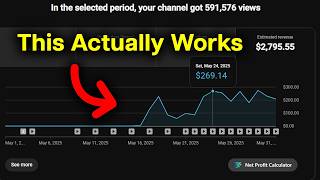
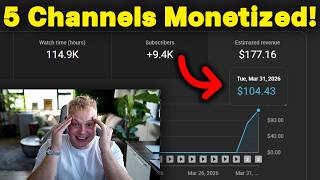
Shows a new channel earning $350 in its first month, then $107, demonstrating the potential of a well-tested niche.
Stefan is 23-24 years old, earns $30-40k/month from faceless YouTube channels, and has scaled a channel from zero to $48k in 30 days.
A structured process to determine if a niche is worth entering, avoiding spending money on videos that won't work.
80% of YouTube automation is niche research. Look for specific criteria to judge niche viability upfront.
Look for niches where fewer than five smaller channels consistently get more views than subscribers, indicating high demand and low supply.
Avoid niches with dominant channels over 100k subscribers, as they have YouTube's trust and are hard to compete with.
If many smaller channels in the niche are failing, it's a red flag. Also, prefer niches younger than 6 months for freshness.
You must be able to produce longer or better content than competitors. Example: a 25-min video vs. a 31-min original gives the original an advantage.
Interest in the niche is a bonus, not a must, if you have a team. Check monetization potential using tools like Next Level.
Next Level and VidIQ are recommended. Next Level offers in-depth search, monetization status, and RPM analytics for ~13 euros/month.
Options: new, personal, aged, or pre-monetized accounts. Stefan recommends new or personal accounts, which need to be warmed up by normal usage for a week.
Need 10-15 video topics (more in summer due to slower YouTube). Look for recent outlier videos and trending formats, but don't copy the most popular videos one-on-one.
Check how many times a video idea has been done. If more than three times without a unique angle, skip it.
Must resonate with the audience, be posted on time (especially for trends), repeat what has worked, and leverage negativity (humans respond better to negative things).
Use AI for scripts, 11 Labs or Gene AI Pro for voiceover, freelancers for editing and thumbnails (or DIY/ChatGPT for thumbnails). Make videos 1.5x longer than competitors for a competitive advantage.
Don't reinvent the wheel; mimic what's working but add your own twist. Example: white text with images works well in some niches.
Post videos with a skip pattern (post, skip, post) until all 10-15 are up. If no views after 15, stop and analyze why.
Bad niche, bad video topics, poor packaging, wrong video length, or a bad channel (low impressions). If CTR is bad, delete videos and repost on a different channel.
Post the same videos on two different accounts simultaneously to speed up testing. If a channel fails, go back to niche research and repeat.
The only way to truly test a niche is to post videos and analyze metrics, but using this framework can prevent wasting months on doomed channels. If a niche fails, iterate on research and try again.
What percentage of YouTube automation is niche research?
80%
03:39
List the five criteria for evaluating a niche.
Under 5 smaller channels outperforming, no channels above 100k subs, no failing smaller channels, niche younger than 6 months, ability to create better content.
03:52
What is the recommended video length relative to competitors?
1.5 times longer
16:54
What tools are recommended for niche research?
Next Level and VidIQ
08:40
How many video topics are recommended for testing a niche?
10-15
11:09
What is the 'skip pattern' in posting?
Post, skip, post, post, skip, post until all 10-15 videos are posted.
19:10
What should you do if a channel fails after posting 15 videos?
Analyze reasons (niche, topics, packaging, length, channel), delete videos and repost on a different channel, or go back to niche research.
20:20
Why is it important to avoid copying the most popular videos one-on-one?
Because viewers have already seen them and won't click on your copy; it fails.
13:27
What is a 'dummy account' used for?
For niche research, to build a niche-specific feed and find outlier videos.
12:02
What is the recommended way to warm up a new YouTube account?
Use it as a normal user for a week, watching 1-2 hours of content and liking channels, without spamming.
10:39
Niche Research is 80% of Success
Emphasizes the critical importance of upfront research over execution.
03:39High Demand, Low Supply
Core market principle applied to YouTube niches.
04:05Longer Videos Win
YouTube prioritizes watch time, so longer content gives a competitive edge.
07:30Don't Copy Top Videos
Copying fails because viewers have already seen the content.
13:27Leverage Negativity
Humans respond better to negative framing, a psychological insight for content creation.
15:34[00:01] end up exactly like this one here, 61 subscribers, 18 videos, and in total this channel has gotten 4,000 views, then you have to watch this video. Because in this video, I'm going to show you guys exactly how to know if a niche
[00:15] just to show you an example, here's the example of one of the channels that we have very recently started, like literally the first month. As we can see right here, we were testing, testing, testing, and then, you know, here in the
[00:28] first month we already had the first $350 day. Yes, it did go down, but only to $107. You know, it's still good. It's still good. So, in this video, I'll show you guys exactly how to do this because so many so many people ask themselves
[00:43] the question like, "Hey, which niches to go into? How to know if when I should stop a channel?" All of these questions are going to be answered in this video once and for all. So, you'll know exactly what to do. Now,
[00:58] let's get started with you know, who am I? Why am I actually, you know, why am I speak about it? So, I'm Stefan, 23 years old, 24 years old. Currently doing about 30 to 40,000 dollars a month with my own faceless YouTube channels. I'm
[01:11] constantly starting new ones, as we can see right here. Then, you know, I've scaled, I've made $42,000 with just two videos that I've posted. This one here made me $30,000. This one made me $12,000. I scaled the channel from
[01:24] literally zero to $48,000 in just 30 days. You guys can have a look at these hundreds of other people do the exact same thing. For example, here Martin's same thing. For example, here Martin's who helped to make $30,000. Then here a
[01:38] different student, you know, completely blowing up their faceless YouTube channel with 1,500 subscribers. You know, getting 100,000 views every 48 hours. Then here $12,000 a month for a different student. Then here, you know,
[01:50] $4,000 for a different student. Here $18,000 a month. And many, many more. If same results, check out the first link in the video I'll have a look if I can actually help you scale up as well. The biggest thing,
[02:06] you know, for me to be able to scale you up is that you are 100% serious. So, if you're serious about, you know, scaling up YouTube, then firstly, watch this video, and secondly, go ahead and book your call with me. Now, before we go
[02:19] into this whole process, let me first explain to you guys the niche testing framework, and this framework is basically going to give us exactly the answer that we're looking for. Is a niche worth it to go into, or is a niche
[02:31] not worth it to go into? It's going to give us everything we need to know to be able to, you know, determine like, "Hey, is it a good one, or is it a bad one? Is work?" All right? Now, I follow this exact process with every single niche I
[02:46] get into to avoid spending money on videos that will never ever work. Now, something I have to mention right here is that we will still have to post videos to test a niche, right? That is completely normal. Some niches, you
[03:00] I'll I'll tell you guys like exactly what kind of metrics I'm looking for, all of these things, so you can already, you know, test niches in the right direction, because most people, like for example, this channel here, this is the
[03:13] completely wrong direction. Like this guy has probably no idea what he's doing, and I hope he actually watches this video, because from my opinion, I would 100% stop this channel, or go into a different direction, okay? Now,
[03:27] first thing we need to do is obviously niche research, okay? That is going to be the most important thing of this whole of this whole kind of thing, picking the right niche, first step, 80% of YouTube automation is just niche
[03:39] research, okay? Now, when we are doing niche research, we're looking for niche research, we're looking for specific niche criteria to basically, in the front end, already determine like, "Hey, is this niche worth it to go into,
[03:52] or is it not worth it to go into? So, at number one, there are under five smaller channels creating content in the in this niche that are constantly getting more views than they have subscribers. This means there's high demand and low
[04:05] supply, which is one of the most important things when it comes to YouTube automation. Like, YouTube is a marketplace. It's a marketplace of videos. And if the if the marketplace is flooded of a specific type of videos,
[04:17] you look at just as an example, this channel here, just as an example, if we now go ahead and go to most popu- popular, let's actually look up this video and see how many other different channels are already in this exact same
[04:32] niche. So, let's actually look that up and see like and this is what I want you something that works very well or a niche that looks very good, like, always go ahead and look up some video topics as I do right here to determine like,
[04:46] "Hey, is it worth it for me to go into the niche?" So, here we can see one channel just as an example, 122,000 views. Then here, you know, 2,500 views. Then here just four days ago, you know, doing not doing that well if you compare
[04:59] to the subscribers. Here one doing very well. So, now already just on the first bunch of channels posting content in this niche. And now, let's actually have a look if they are even still getting views. So, here we can see these
[05:13] anymore, right? So, firstly, there are a bunch of, you know, other channels and, you know, many of them aren't even getting any views anymore. So, let's actually look at some of the more recent
[05:25] video. Like here, for example, this one is also crazy. This niche is super, super saturated. You can't just go ahead and copy videos one-on-one, which he is currently doing. You know, let's have a look. So, here, he copied this video
[05:38] here one-on-one from a channel that has, for example, 80,000 subscribers. It second. Like, we'll go deep into video topics and all of these things as well. But here this is his video. The thumbnail is even
[05:51] basically one on one. It is one on one the same, right? Then here's another channel not doing well anymore. Copied the exact same video. Exact same. So you in this exact same niche that are failing and that is probably the biggest
[06:05] reason why his channel is not working at all. Then we're we're looking that there are no channels above 100,000 subscribers, which is also extremely compete against the channel even this one, 80,000 subscribers? How are we
[06:20] Because YouTube already has so much trust to this channel. They already know that the audience actually likes these kind of videos, right? So we will not be able to compete against them except if we do something different. Okay? Then
[06:34] there are no smaller channels failing. We already saw like there are bunch of smaller channels failing in this exact niche. So would absolutely not recommend to go into that niche. Then the niche is not older than 6 months. So let's have a
[06:49] example. Boom. Okay. 5 months is still okay. I would always recommend you guys actually go into niches that are as new as just possible. Why? Because, you
[07:01] as an example and they have a video with 800,000 views, you can imagine how many people have already tried to basically recreate this exact niche. And that is why I would recommend you guys to always
[07:15] look for niches that are as new as just possible. Okay? 1 month, 2 month, a few weeks. That's kind of the best thing you can do. Okay? Then I can create better content than my competitors. This can also be longer content. All right?
[07:30] Now, let's have a look if he actually went ahead and created longer videos. So this video here, 25 minutes. So let's have a look how long is the original video. You You see it's 31 minutes. Okay? So,
[07:43] their video has a competitive advantage over his video. So, they have literally all of the stats on their side. All right? So, then am I am I actually interested in this niche? This is not a must as long
[07:56] as you build a team that has interest in the niche. Is the niche monetizable? and you can actually see it here with Next Level. It's actually going to show us if a channel is monetized or not. I'll link
[08:11] the tool in the video description. Um I'll tell you guys more about that in a second. And then huge bonus if you can actually post long videos because then you can actually make more money per 1,000 views. Then what is very important
[08:24] is this does not need to be 1,000% with all niches you find um because, you it's difficult to to have it 100% and if you actually get it 100%, this is what to absolutely explode. All right? Now, tools I would recommend and for for
[08:40] niche research is Next Level and VidIQ. Now, Next Level, you know, with Next on similar channels, you know, click here on in-depth search, and it's going to search all of the channels in this exact same niche and give you a list of
[08:53] a bunch of time. You can see if the channel's monetized. You can see the analytics like the RPM, all of these things for like 13 euros a month. 100% worth it. All right? Now, if all of this is still a bit confusing because I know
[09:07] with niche research, this is something I do with my students and that's why they actually do get monetized within, you know, 3 to 6 weeks. Just as an example, this channel here, you know, Antonin, who got monetized in just 20 days. Or
[09:21] here, a different student, first $1,000 in his first month, right? So, if you help, then check out the first link in the video description. Um book your call, you know, don't waste years and years and years. Uh take the
[09:34] opportunity now. We you know, we still have the opportunity for YouTube to pass, but you know, take it now. Then, you know, once we have our niche research done, we actually need to choose a YouTube account we want to post
[09:47] videos in. So, we have new accounts, we have personal accounts, we have aged accounts. Now, a new account is just a brand new account. Personal account is A personal account is basically an account
[09:59] that you are, just as an example, using right now to actually watch this video, okay? Then an aged account is just a very old YouTube account. You can actually buy them. I can't show you where, but you can buy them. Then a
[10:12] pre-monetized YouTube account is just a YouTube account that is already in the YouTube partnership program. Now, which account is the best account to kind of go with? I would always, at this current stage, go for new accounts and then
[10:24] personal accounts, okay? Now, new accounts you actually need to up. These two accounts you need to warm up. So, how do you warm up the accounts? In very, very basic words, you just use them as a normal user for like a week or
[10:39] something. So, you watch 1 to 2 hours of content on the accounts. You like some channels. But very important is that you do not spam. You know, you do not spam these buttons. Because we want to show YouTube that we are actually a real
[10:54] human behind the account. So, we don't want to, you know, like subscribe to a thousand channels in an hour, okay? Then, we need Here, let me just change this up. Boom. Give me a second. So, then we need 10 to 15 video topics. Now,
[11:09] usually you only need like five video Five to 10 video topics. But at this current stage, we need a little bit more video topics because YouTube is taking in the summertime, all right? Here, June, July, and also August are slower
[11:24] times for YouTube. So, then we actually do want to post a little bit more to test a niche, okay? I'll tell you guys more about that later. But, we always have to, you know, when we're picking video topics, we have to
[11:36] keep in mind that there is supply and there is demand in video topics. Supply and demand is not just important in your niche, but also in the video topics we choose. So, if you look at just as an example, wait, let me just show you
[11:49] this, okay? How to find demand is we look at recent outlier videos on competitor channels and we look for recent trending formats. And for that, again, I would highly recommend when you guys to create a dummy account. Dummy
[12:02] account is basically just an account where you do niche research on. And on on this account and you can find outlines. Now, you can kind of build this account to be very, very niche specific. So, we look at the Okay, this
[12:16] channel is also quite big already, but it's doing very, very well. So, if I would actually go ahead and instead of creating, you know, the videos he's currently doing, I'd actually have a look at like, "Hey, how can I combine
[12:30] thumbnail, with a different style of packaging that's working very well?" In the food niche, we can see here Consumer Exposed, just as an example, whatever as we can see here. Okay? So, this video here, let me go to
[12:45] latest, you can see like, let's say, for example, this here is very good. So, don't buy these seven barbecue sauces uh sauce brands in summer, blah blah. So, outlier recent outlier videos. So, this video here, 22 hours ago. So, how can we
[12:59] take this exact video and create a different style of video that maybe fits his niche, right? That fits his niche for, you know, the the the what's it called? For um here, the history kind of food niche. But, 100% you can combine
[13:14] these two, okay? Now, very important, look for recent uh trending formats. So, again, you know, formats, thumbnail styles, um here, what's it called? Video title structures, all of these things. Then, do not copy the most popular
[13:27] videos from competitors. This is what everyone does in that and your videos channel here just as an example, this video failed, right? Why? Because they literally copied this video one-on-one from the competitors, all right? And
[13:42] this is not something you want to do and so many so so so many people copy one-on-one. You see, copy, here's a copy. Okay, so this video was posted 11 days ago. Here, copy, 500 views. Copy, 300 views. Uh let's see here, copy, 180
[13:58] views. They at least tried to change up the thumbnail. Uh copy, 300 views. Let's have a look uh if we can find some more that kind of gives us uh what's it called here? No, I can't. Let's actually, you know,
[14:12] always change up the title a little bit and then search again. So, let's have a look if we can find any more. Here, copy, okay. Now, this one it actually did halfway okay, but also not like massively, right? Failed.
[14:26] Uh failed like on a big channel. So, you know, you do not Here again, another one, failed. You do not want to copy videos one-on-one. Now, how do you actually go ahead and find supply? You
[14:40] how many people have created the exact same video as we've just done as we have just done. Now, if it's been done more than three times and you don't have a different angle to that specific video, go ahead and just look for different
[14:54] show the videos to the hardcore fans of that niche first and if they have already seen the video multiple times, they do not have a reason for clicking they do not have a reason for clicking on your video, okay? If a viewer, okay,
[15:08] has already saw like clicked on this video, looked at this whole video, what click on this video, on this video, on this video? Like even the thumbnail on this one is exactly the same. By the way,
[15:21] super sorry for roasting your channel, so all right. But hopefully you learn what does the perfect video topic actually look like? The perfect video topic is a topic that resonates with your audience. So, ask yourself, do they
[15:34] even want to watch this? Some topics sound super interesting, but are super boring, all right? And all of this is on top of the whole supply and demand, all right? Your topic has to be posted on time, especially if
[15:47] it is a trend. Repeat what has done well in the past. So, we've done this with just as an example, one of our students, where, you know, Andre, who he scaled from literally just being monetized to $30,000 a month in 4
[16:00] months, just because we were doubling down on what works. Then we want to leverage negativity. Humans respond way better to negative things, okay? Always keep that in mind. Doesn't fit to all niches, but, you know, still works. So,
[16:14] once we have these 10 to 15 video topics, you know, we're going to use, you know, AI to write the script, okay? We want to keep our expenses down in the beginning. Use AI to write the script. Voice over we're going to use 11 labs,
[16:27] or even Gene AI Pro, maybe some of you guys have heard of that. Then, editor, we're going to use a freelancer, okay? Now, you do not have to use a freelancer. You can also create the videos yourself if you are on a lower
[16:40] budget, okay? Then for the thumbnail, we use a freelancer DIY, or we can even use GPT. Sounds crazy, but Chat GPT can do very, very good thumbnails, all right? Then for the video length, we actually want
[16:54] to do our videos 1.5 times longer to have a competitive advantage over our competitors. So, let's say, just as an example, you know, this video here, right here, we would actually go ahead and we would create a
[17:08] video like here, okay, 31 31, whoops, times 1.5. Let's have a look how much. So, our video has to be 46 minutes, all right?
[17:20] Now, and if you can create or afford to create a 46-minute video, this is not going to be the right niche for you, okay? Then it's not going to be the right niche for you, all right? Now, this is very important because keep in
[17:34] mind YouTube is going to push the person that keeps the viewer on YouTube for the longest period of time. So, that is why we always want to create longer videos competitors, okay? Now, for the thumbnail and the title, want to, you
[17:48] know, stick to like Let me show you. So, we don't want to reinvent the wheel. We want to do what is already working. So, if you look at this channel here, just as an example, we can see we can clearly see that what is working
[18:01] is, you know, having the images here down below and then the white text with text. Now, we do not want to copy the thumbnail one-on-one because that is not going to work. We cannot copy the
[18:15] thumbnail one-on-one. So, here just as an example, they did something a little bit differently, okay? As we can see here, they did it a little bit differently and it actually worked, okay? Forgotten Old America, here it
[18:29] actually worked out, you know? This was, I think, even an outlier video for their channel and they copied The video is even shorter. If they have had created a longer video, I personally think this video would have performed better, okay?
[18:42] But yeah, so we don't want to reinvent the thumbnails now kind of um we don't want to reinvent it, but we want to do what is already working and just, you know, change it up a little bit, bring our own kind of spice to it,
[18:55] all right? Now, once we have all of that, we actually go into the posting where we're actually going to see if a channel is going to work or a channel is not going to work. So, we're going to post, skip, post, post. No, skip. Post,
[19:10] post, skip, post until we have all of these 10 to 15 videos posted, all right? Like, if you're not getting any views with 10 videos, go to 15, okay? Post 15 And I know it's going to be painful. YouTube is a bit slower at the moment,
[19:24] it goes a bit quicker. I can quickly show you guys for, you know, just one of our students, just as an example. He can't believe, you know, the first video is already absolutely blowing up, as you can see here, like this looks pretty
[19:37] good. This is literally the first video. So, for some channels, goes way way in mind, if you're looking for the exact same results, check out the first link in the video description, book your call with me, all right? Now,
[19:50] what is going to happen is, um, one of two things. So, either, you beginning, right? You're going to sit with videos that get 10 views, 20 views, you know, these kind of views, but don't give up, all right? Because someway, if
[20:05] the niche is good, one video will pick up, and that is the time where you can continue to post videos, all right? Now, if nothing happens, if nothing happens, if you get zero views and you've posted all your 15 videos, then we do not
[20:20] continue to post any other videos, okay? We actually, you know, want to sit back and try to understand why a channel failed. So, the reasons why a channel might fail is because of the niche, okay? Maybe your niche is bad. Always
[20:35] have a look back into those things. Maybe your video topic sucks. Maybe your packaging isn't good enough. Maybe your video length, you know, sucks. Maybe you kind of messed up with the video length. Or, maybe you have a bad channel. Now, a
[20:47] bad channel can often be seen if all of these videos have like literally zero or >> [clears throat] >> or even eight impressions, you know? In that case, then, you know, not in the beginning, after just posting
[21:02] them, but but after you've posted all 15 videos, okay? Now, in this case, when the channels if these videos literally have a very very bad average video duration or not average video duration click-through rate, then you actually
[21:16] want to go ahead and you delete these videos off the first channel and you post them to a different channel. Okay? And then you obviously post all 15 this is something we like to do sometimes to kind of speed up the
[21:29] testing is we have two different YouTube accounts and we post these two videos on two different accounts at the exact same time. Okay? Until we have all 15 videos posted. Now in case of the channel failing, actually
[21:42] go back to niche research and repeat this process and I promise you you will find something that is winning. All right? In my opinion, this is the only way you can actually test the niche. So, I really hope this video was helpful.
[21:55] Like I really really hope this video was helpful. Try to explain with a bunch of examples and stuff. Um but yeah, keep in mind guys, if you don't want to, you know, struggle yourself and kind of speed up the whole process, you know,
[22:07] with help this student here to go to $8,000 a month and then here $5,000 and here million views in every 48 hours, then here one $4,000, you know, then here a student hitting his first 171 euro a day, here channel
[22:21] check out the first link in the video description, come book your completely free call and let's have a look how we can scale you up and yeah, let's see how being said, I'll see you guys in the next video.
⚡ Saved you 0h 22m reading this? Transcribe any YouTube video for free — no signup needed.