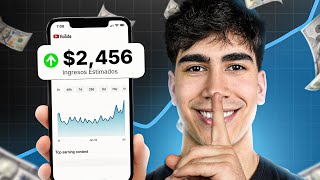

Monetize YouTube in 7 Days?
40sThe bold promise of monetizing in 7 days challenges common belief and hooks viewers seeking quick success.
▶ Play Clip"Delivers on the promise with concrete strategies and real examples, though some claims are anecdotal and the pitch for the academy is a minor detour."
This video presents a methodology for monetizing a YouTube channel within seven days, based on the creator's personal experience with multiple channels. It emphasizes strategic niche selection, AI-assisted content creation, and account warm-up, rather than generic advice like consistency and patience.
The creator claims to have monetized channels in 5, 12, and 17 days using the same methodology, without shorts, ads, or showing face.
Key factors: high demand, adult audience, good RPM, reasonable competition, evergreen content, and clear niche focus.
RPM is revenue per mile (per 1000 views) that the creator keeps; CPM is what advertisers pay YouTube per 1000 views.
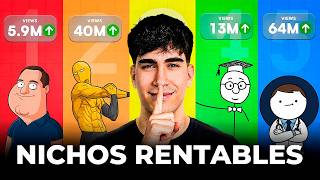
Basic finance, business/productivity, sleep-focused content, and celebrity/entrepreneur stories are recommended due to high RPM or demand.
Children's content (low RPM), gaming (low RPM and saturated), and compilation/accident clips (reused content) are discouraged.
Look for channels with many more views than subscribers, indicating high demand. Use keywords from ChatGPT, search in incognito mode, and in English for broader opportunities.
Use ChatGPT for scripts and thumbnails, Eleven Labs for voiceovers, and CapCut or freelancers for editing.
Warm up the account by interacting with recommended channels, upload 3-4 videos per week, and be patient for initial low views.
The creator shows a channel earning €134 on day one, reaching up to €600/day, and over 1 million impressions in a day.
The video concludes that monetizing a YouTube channel quickly is achievable through strategic niche selection, AI tools, and consistent uploads, but it requires patience and effort in research and content creation.
What does RPM stand for and what does it measure?
RPM stands for revenue per mile; it's the money the creator earns for every 1000 views.
01:48
What are the five factors for a profitable niche?
High demand, adult audience, good RPM, reasonable competition, and evergreen content.
00:56
Why is an adult audience preferred for monetization?
Older audiences spend more time watching videos, leading to higher retention and better RPM.
01:23
What is the difference between CPM and RPM?
CPM is what advertisers pay YouTube per 1000 views; RPM is what YouTube pays the creator after taxes.
01:48
Which niches are recommended for high RPM?
Basic finance, business/productivity, sleep-focused content, and celebrity/entrepreneur stories.
03:33
Why should you avoid children's content?
Children's content attracts a young audience with low purchasing power, resulting in much lower RPM.
05:02
How can you identify a potential niche channel?
Look for channels with many more views than subscribers, indicating high demand from non-subscribers.
06:26
Why search for keywords in English?
Searching in English provides channels from other markets, avoiding replication of local content.
08:31
What is the recommended upload frequency in the first week?
Upload 3-4 videos per week after warming up the account.
13:58
RPM vs CPM
Clarifies a key metric for YouTube earnings, essential for monetization strategy.
01:48Recommended Niches
Provides actionable niche ideas with reasoning based on audience purchasing power.
03:33Finding Potential Niches
Offers a practical method to discover high-demand niches using views-to-subscriber ratio.
06:26Real Earnings Example
Demonstrates the potential income with a real channel, adding credibility to the strategy.
14:11[00:01] monetize a YouTube channel in [music] in 7 days. Yes, you heard right, in 7 days. I'll teach you the same methodology I used [music] to monetize this YouTube channel in 5 days, this other one in 12 days, and this other one
[00:15] in 17 days, without using shorts, without using ads, without showing my face. [music] And the craziest thing about all this is that it wasn't luck, since I used the same methodology for all channels, because here's the truth that almost nobody tells you.
[00:29] rewards the person who understands how [music] to speed up the whole process that takes others months. In this video I'm going to show you the six methods I used to monetize in record time from
[00:41] scratch. And no, these aren't your typical [music] advice tips like be patient, be consistent, or keep uploading videos. These are real strategies applied in real channels and they work even if you're starting today. So with that said, let's begin.
[00:56] find a profitable niche, a potential niche, which is basically the topic we talk about within our channel. You'll avoid wasting days creating content that no one will ultimately see, and you'll accelerate monetization
[01:10] by choosing a niche that has these factors. One, high demand. That you see that in that niche or in that topic being discussed within the platform there are people interested. And how can you analyze that? Seeing that there is a
[01:23] large volume of [music] views on the videos. Two, an adult audience. Because? Because the older those people are, it has been shown that they spend more time watching videos, therefore, you will have more
[01:35] retention and, consequently, you will have a better RPM. [music] And that's why we're going to point number three, which is having a good RPM. What is a good RPM? What is an RPM? RPM stands for revenue per mile; it's the money we earn for
[01:48] the money we earn for every 1000 visits. There's CPM and RPM. CPM is what YouTube earns from the money advertisers pay them for every 1000 views. [music] And RPM is the money we keep after taxes
[02:00] , it's the money YouTube pays us. The fourth point is reasonable competition. I never recommend entering niches, entering [music] channels where there is a lot of competition. Because? Because otherwise we can't take
[02:13] the whole pie, and that's what interests us. The fifth point is evergreen content. There are two types of content: evergreen content and Trending content is content that works through news, through those
[02:26] trends that happen in [music] day to day. And bergreen content is a interesting over time. An example of a video with bergreen content would be the 10 best saves in football history. If you look closely, it's a type of
[02:40] content that you can see today and you can see it again in 3 months and it may still be interesting. On the other hand, trending content, if you upload breaking trending content, if you upload breaking news, such as x person dying or x people
[02:52] quitting sports or anything else, is news that in 3 months everyone will already know and it won't be of interest within the platform. The sixth, and I want to return to the niche, is to be clear about what niche,
[03:06] what theme you are in. Because? Because without good direction [music], you won't know what kind of idea to take. And if you don't know where to steer the channel and you don't know how to differentiate yourself from what other people are doing, you'll never be able to
[03:19] meet those requirements or you'll never be able to make it big on the platform. Ultimately, YouTube needs context about what kind of audience [music] watches your videos in order to recommend more videos if they appeal to that type of audience [music].
[03:33] A good niche, if you select a good potential niche, can reduce the monetization time from many months, even years, to a few days, as I have shown you The niches I recommend are the following. First,
[03:48] basic finance. Because? Because in the end, if you're talking about finances, what kind of People with high purchasing power. Therefore, the CPM will be higher and the RPM earning more [music] for every 1000 views. The second, business and
[04:02] productivity, is more of the same: people [musicians] with high purchasing power and they pay us more. The third niche would be niches with a focus on Because? Because that type of content is two, one, two, three, or four hours long. And what
[04:19] makes the content so long? Because it's focused on falling asleep and becoming someone else or falling asleep listening to this story, [music] people fall asleep within the video and it makes for more retention. So what
[04:32] happens? More retention, more ads like that person, more money YouTube makes, and [music] The fourth would be stories of celebrities or entrepreneurs. Because? Because there is a lot of demand for it. If you search for any video of how x
[04:49] person lives, x famous person, you'll see that there's a huge volume, there's a huge demand. So there we don't play with the RPM, but we play with the demand that that niche has. So once you've seen these niches that I recommend, let's
[05:02] move on to the niches that I recommend you avoid and never open a channel within children. Because? If before I business content [music] attracts people with high purchasing power, with
[05:15] children, the opposite happens. What kind of people are you attracting? You're attracting children. What's happening? The children buy it, they pay for it. So, the RPM of that is much lower. It's not that I do n't recommend you join because you won't
[05:28] monetize, but rather that it's not just about monetizing, it's about making money with this and with children's content. We'll never be able to scale a channel to many [music] figures per month. The second one I'd say is gaming. Because? Because one is
[05:41] a low RPM content [music] and the second is that it is ss saturated. So, I definitely don't recommend it. And the third would be the typical niche of compilations of [music] accidents or any, I do n't know, funny moment. Because?
[05:56] works when you put the clips together. So what happens? Without a story, without well-made content, that content does not monetize because it is reused or repetitive content . Ultimately, you don't need to invest in something new; you need to
[06:12] [music], but do it much better than everyone else. We've been talking explain step by step how you can choose and find a potential niche. First of all, what is a potential niche?
[06:26] A potential niche is a channel or several channels where you see there is a high You can identify it by seeing that there are many more visits than subscribers. [music] Because if you analyze that, it means that
[06:41] the channel is receiving are not from the audience it already has, but there is a great demand and there are people who watch the videos and obviously don't [music] subscribe. So, to find those kinds of channels, what I recommend is that we
[06:54] 're now on YouTube and this is my personal channel, and what I would recommend is that you start looking for keywords. Once you have the niche [music] or have thought about what you want to do, start putting keywords about it. I never
[07:06] recommend that you go in with the intention of finding a niche, because it's not what we think will work or what we want to do, but what within the platform. So, I recommend that you narrow down five or ten
[07:21] general niches to the ground, write them down on a piece of paper or in a document, and then start looking for keywords from there . To do this, I recommend you go to GPT chat and tell it, "Give me the top 20
[07:38] health keywords." [music] And notice that here it starts searching for all these keywords. And here [music] what we would do , okay? You can go to YouTube, you can do it either on YouTube or in incognito mode and start
[07:51] searching for these keywords. Because? Because in that health music niche, we are sure that those keywords will appear within that channel, within those videos. And why do I recommend doing it in
[08:04] incognito mode? Because if you do it from your account, in the end the algorithm works according to what you like. And if you 're used to watching certain types of content or other things within that account,
[08:17] YouTube may never show you that content, those potential niches, or okay? Very important. We've asked you to give us the top 20 most important, most recognized words in [music] health, but it's important that we
[08:31] [music] health, but it's important that we tell you, give them to me in English. Why is this being done? Because in the end, if we search for those keywords in Spanish, it will provide us with channels in Spanish [music], and we don't want to
[08:44] replicate something from our market, from our language. Let's, for example, copy this [music] from here, paste it here, and what you should start doing is searching for channels and channels and channels that have many more
[08:56] [music] views than channel subscribers and selecting and subscribing to those channels so that you can then replicate it correctly. In the end, there's no secret trick to finding these
[09:09] secret trick to finding these potential niches, it just takes time. find a potential niche, you're not going to find something that will [music] give you that 90% of the income in a short time, in 1 hour, 2 hours, 3 hours, 4 hours. I
[09:23] 've even spent three, four, even seven days looking for potential niches to find something that really works. So don't rush to find that potential niche. Be patient and [music] bring the ideas down to earth, bring down
[09:36] those keywords and little by little you will look into it. [music] Once we've seen this, let's move on to the next very important step, which is how to generate all that content with artificial intelligence. We actually
[09:48] segmented it into three [music] steps. One, script. Two, phrase. Three, video editing and four, design, thumbnail, or whatever you want to call it. For the script, I recommend you go to Chat GPT. In this case, this is a custom prom we
[10:04] have, [music] well, that's inside the academy 1 of 10, but you can do it from your normal GPT chat [music], but here we would say, "Hello, I want a script." Okay, first you have to understand that
[10:19] can create all that content for you [music], but it's true that you still have to delegate it. We cannot delegate the fact that he does it, yes, but we cannot delegate that it is
[10:32] 100% right and that he corrects those errors. So once we said, "Hi, I want a script," it said, "Perfect, to start I need some details to create the ideal script. Please tell me the following:
[10:44] Main idea of the video: what it's about. Two, reference or style of the channel. Three, approximate length of the video. Four, desired narrative tone. Okay, so desired narrative tone. Okay, so [music] I want it to be about
[10:59] [music] I want it to be about improving my habits. Okay, let's assume improving my habits. Okay, let's assume one. One, two, reference. I don't have a reference. Three would be
[11:12] don't have a reference. Three would be approximate length, 20 minutes, and four would be relaxed. And let's see what it generates. If you notice, it's already generating did this with the custom promo we have at the academy, but you
[11:27] In fact, [music] will give you a good script, but it's true that it won't be as detailed, okay? In this case, notice, it has already made the script while I was talking to you." Speaking to you, but obviously we'd have to
[11:41] but notice that [music] these days you need to hire a person, artificial intelligence, you can do it perfectly. For the AI voiceovers, we're going to use Eleven Labs. Eleven Labs is an
[11:56] Eleven Labs. Eleven Labs is an you can start generating your first videos with the free trial, and when that trial ends, paying the monthly fee isn't very expensive; it
[12:09] costs less than $. So it's an AI that works well, it works great. [music] The only downside is that it is paid, but it costs no more than $20 a month. For the thumbnails, we're also going to use Chat
[12:21] GPT. Chat GPT has a function that allows you to generate images, and this image you 're seeing here [music] was generated with Chat GPT in less than 2 minutes. This one you're seeing here was also generated with Chat GPT, and
[12:35] this one too, for example. And remember, it's not about doing the that we like, but what works within the platform. And for video editing, for creating general content, I recommend either Capcut or [music] that you pay a
[12:49] recommend delegating all that to an external artificial intelligence. I, for program, from the academy we have, have [music] generated a custom artificial intelligence that does generate videos well and
[13:04] from scratch, but since you're probably not involved, I don't recommend there, [music] so I recommend you pay a freelancer or covered all this, let's talk a
[13:17] publishing strategy. For that, I first recommend you warm up the account. Why? Because the more information you give the account, the better. What do I recommend you do in the first week, those first 7
[13:30] days that the [music] channel is created? I recommend you go recommend, liking and interacting with your recommended channels, and leaving any video playing on your computer so
[13:43] YouTube detects you're consuming that type of content. For the first 7 any videos; I would focus on building up the account properly and then upload three to four videos per week depending on what the
[13:58] reference channel is doing. The channel you're seeing on screen is the one I monetized in 7 days. If you look, in the first few days, I obviously had zero views, very few views, and then little by little it started to
[14:11] take off. I monetized this channel quickly because I did something no one else was because I did something no one else was doing, and there was very good demand. Notice that in terms of income, the first day it was already €134, then we went up
[14:24] first day it was already €134, then we went up to €260, we dropped a bit to €30 a day, but then little by little we climbed back up , even reaching almost €600, as we're seeing here with so Just one channel, okay? In
[14:38] terms of impressions, we also had very few, but the music until one day we had over 1 million impressions in just one day, and I didn't implement any different strategy; I
[14:51] implemented the same strategy I just explained in today's video. So now that you've made it this far , if at any point in this video you felt that you'd like to make a living from this, that you'd like to have a
[15:03] channel that generates income every month and, above all, doesn't depend on luck or something going viral, perhaps this guide will be helpful to you at the beginning. In the first link in the description, you can schedule a
[15:16] consultation call with me and my team, and we'll talk a little about your idea, your niche, and what you want to build. And if we see that you're a good fit, we'll explain how we can help you from the academy, especially
[15:29] to turn this into something stable, something real. It's not a commitment. It's not pressure, it's simply a conversation [through music] to bring you closer to the life you want, to work from wherever you want, at your own pace, with a
[15:42] channel that grows even when you're not around . So if you want all that, I've description so you can take your first step.

⚡ Saved you 0h 15m reading this? Transcribe any YouTube video for free — no signup needed.