

Make $13K/Month on YouTube Without Face or Experience
45sThe opening hook directly addresses a common pain point (no face, no experience, no money) and promises a high income, triggering curiosity and aspiration.
▶ Play Clip"Title promises a specific monthly income and delivers real case studies with numbers, though the $13,266 figure is from one example."
This video presents a step-by-step algorithm for making money on YouTube without showing your face or having prior expertise, leveraging AI tools. It covers niche selection, content creation, and monetization strategies, backed by real channel examples and earnings data.
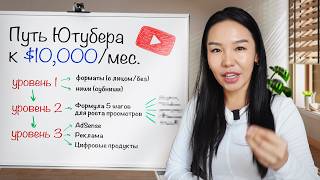
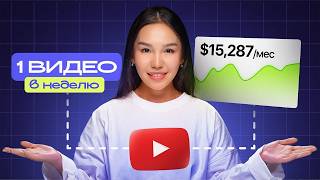
The video claims to show how people with no face, no money, and no experience can earn from $10,000 a month on YouTube using AI.
AI can analyze markets, write scripts, and generate voiceovers, making it possible to create content without expertise or showing your face.
Not all niches are equal; profitable niches like real estate or finance pay 5-10x more per view than DIY or lifestyle niches due to higher product prices.
For 100k views, a finance channel earns up to $8,000 (ads $300, sponsors $1.5-3k, products $5k) while a lifestyle channel earns max $650.
The top 5 niches are backed by advertisers; neural networks are a separate fast-growing niche with average RPM but increasing sponsors.
To avoid competition from big channels, pick a narrow sub-niche with existing audience (10-100k channels), moderate competition, and clear monetization potential.
Commercial real estate has low demand (old top videos), while real estate market shows new videos and one big competitor, making it viable.
Read top comments on competitor videos to find unanswered questions; use AI to generate video topics from those pain points.
Find successful English videos in the same sub-niche, adapt them for the local audience with current data and pain points.
Use Google Trends and recent news to identify growing topics; YouTube promotes relevant content.
Test at least three thumbnails per video; packaging determines 70% of video success. Use AI to generate stronger headlines.
Use AI voiceovers (e.g., 11 Labs) and stock footage (Pixels, Pixabay) to create videos without showing your face. Example channel about Canada earns $500-600/month.
A 5M subscriber faceless channel in business/money niche earns $13k from ads, $50k from app subscriptions, $73k from courses, totaling $125k/month.
A faceless channel with 50k subscribers earns $2k from ads, $9k from a $30/month coaching community, $4k from affiliate links, $2.5k from sponsors, totaling $17-20k/month.
Smart channels build a system to direct traffic to monetization (subscriptions, affiliates, sponsors) rather than chasing views.
The video provides a systematic approach to building a profitable YouTube channel without face or expertise, emphasizing niche selection, content adaptation, and diversified monetization. Real case studies demonstrate that even small channels can generate significant income by focusing on high-RPM niches and selling products or services.
What is the key factor in determining niche profitability according to the video?
The price of products or services in that niche; higher prices mean higher RPM and sponsor budgets.
01:34
How much more can a finance channel earn per 100k views compared to a lifestyle channel?
Up to $8,000 vs $650, roughly 12 times more.
02:41
What are the three criteria for choosing a sub-niche?
1) Existence of audience (search demand), 2) moderate competition (channels 10-100k subs), 3) clear monetization potential.
04:43
What is the recommended method to generate video topics from competitor content?
Analyze the most liked comments on competitor videos to find unanswered questions, then use AI to generate topics.
06:17
What percentage of a video's success is attributed to packaging (title and thumbnail)?
Approximately 70%.
09:30
How many thumbnails should be tested per video according to the video?
At least three.
09:17
What is the monthly ad revenue of the 5M subscriber faceless channel mentioned?
About $13,000 per month.
12:28
What is the total monthly income of the 50k subscriber faceless channel?
$17,000 to $20,000 per month.
14:58
What are the four monetization methods highlighted for the 50k subscriber channel?
YouTube ads, a $30/month coaching community, affiliate links, and sponsor integrations.
14:02
What is the main lesson from the case studies?
YouTube is a traffic machine; smart channels build a system to direct traffic to monetization (subscriptions, affiliates, sponsors) rather than chasing views.
15:12
Profitability rule
Provides a simple heuristic: niche profitability correlates with product/service price.
01:34Revenue comparison
Quantifies the massive difference in earnings between high and low RPM niches with real numbers.
02:41Competitor comment analysis
Offers a practical, AI-assisted method to generate video topics directly from audience pain points.
06:17A/B testing thumbnails
Emphasizes that packaging determines 70% of video success and shows real test results.
08:40YouTube as traffic machine
Summarizes the core strategy: use YouTube to drive traffic to monetized products/services.
15:12[00:01] expertise, I'm a zero, I don't have money, and I don't want to show my face on the internet, but I want to earn money. If you recognize yourself now, this video is for you, because today I will show you how people from scratch, with no face and no experience, earn
[00:15] from 10,000 dollars a month on YouTube. Let's look at the actual channels and numbers. And this is Previously, without expertise on YouTube, there was nothing to do, but now this limitation completely. If there is no niche, for example, AI can analyze the
[00:30] market for you. If there is no expertise, AI can write a script better than most authors. If you don't want to show your face, artificial intelligence distinguish it from a real person. The only thing needed is the right
[00:43] algorithm. Know exactly what to do and in what order. And today I will show this algorithm step by step. Which niche exactly to choose, I will give a real list of how to find a [music] topic that will get views thanks to real prompts
[00:55] that I use myself. and how to monetize all of this not only through YouTube advertising, but many times more. So, the very first step you need to take to start making money on YouTube is to choose a profitable niche. I want
[01:08] you to understand that there are profitable [music] niches on YouTube and there are unprofitable ones. For example, the DIY channel Do It Yourself, there are crafts, repairs, drawing, and DIY projects . Such videos can get millions of views, but a channel about,
[01:21] for example, real estate or investments with an audience 10 times smaller and with 10 times fewer views will earn 10 times more. Why does this happen? Let's figure it out. It's simple. There is one, uh, rule that I
[01:34] ask me if this niche is profitable. I say: “Look at how much products or services in this niche cost.” For example, real estate, yes, apartments there cost around 10-250 million rubles. And one client can thus bring the
[01:48] agent hundreds of thousands in commissions. Therefore, advertisers in this niche are willing to pay five to 10 times more per view than in the niche about cardboard crafts, [music], for example. The same thing with finance, legal services, B2B, and
[02:01] software. This means that one contract can bring in millions in such niches. Therefore, and generally pour huge budgets into advertising. Now let's take a niche or recipes, yes, there is a product, for example, a jar of sauce for 300 rubles. Yes, in such
[02:16] niches, the advertiser physically cannot pay you as much as in other niches. So, when choosing a niche, think not about what you're interested in filming, but about what your audience is buying and how much it costs.
[02:28] Because RPM, the revenue per 1,000 views, affects more than just how much you earn from YouTube monetization. He sets the standard for everything. How much do your sponsors pay you? How much can you charge for your products? Let's calculate it using
[02:41] real numbers. Let's take 100,000 views and compare two niches and how much money you can make in these niches. Look, on the left we have finances, on the right lifestyle. The views are the same, 100,000, but the income is 10 times different. And it's not just about
[02:55] YouTube monetization, there's little difference there , right? $300 versus $50 is The real difference is here. Sponsors of the financial niche pay $1.5-$3,000 for integration . In lifestyle, it's $150-$300, because
[03:09] one client brings hundreds of thousands of rubles to a bank or broker, while a shampoo brand only gets 300. The biggest discrepancy, however, is the exchange rate. In finance, the average bill is 30-50,000 rubles. In lifestyle 1 dash 3,000 rubles. For the same ten sales, you
[03:22] earn either $5,000 or $300. That's the difference. As a result, it turns out that the same 100,000 views bring the financial channel up to $8,000, and the lifestyle channel a maximum of $650. So if
[03:35] amount of money without any expertise, I would specifically choose a niche [music] with high RPM. And here is a list of the ten most profitable niches that I advise you to enter. The top five are niches where the audience is backed by
[03:48] advertisers. Neroseti [music] installed separately. RPM is still average, but the niche is growing faster than all others, and sponsors are actively entering it. [music] So, we've dealt with Nisha. Next, uh, to make money, you need to create content and
[04:01] sell something. The first thing I would do is analyze the direction in these profitable niches. [music] Because if you go into big [music] Because if you go into big niches, you will simply be eaten up by established
[04:15] channels. Therefore, in order to distinguish ourselves, to have some chance of making a hit, we need to go in a narrower direction, again, because there we have a better chance of getting through as a newcomer. For example, if you, uh, globally chose the
[04:29] YouTube what directions there are in general, right? For example, I analyzed, there is, uh, a real estate market, there are ways to make money on real estate, there is commercial real estate. Next, after this
[04:43] analysis, you need to choose this direction. I call it a subniche. Here are three criteria by which I would choose this narrow direction. Is there an audience? Do people even look for this kind of content on YouTube? This can be checked
[04:56] through search. You look, yes, are there channels for these key queries, do they get any views at all. The second criterion is whether there are competitors, yes, but not giants. If a niche is completely empty, and there are no videos on this topic, then there is no
[05:09] money and no demand. If there are a lot of channels there, and really big channels with a million subscribers, there are a lot of them, it will be very difficult to break through. Therefore, the ideal balance for us is channels for 10-100k, yes, which are growing well now
[05:24] . And the third criterion is if there is anything to sell there. That is, [music] your subniche have to ask yourself what someone will buy after watching my videos. And if there is no answer to this question, then the niche [music] is a dead end. For example,
[05:39] if you do an analysis for the keyword " commercial real estate," look, the top five videos that YouTube shows were made a year ago, 2-3 years ago. And this is an indicator that there is very little demand for this niche.
[05:52] YouTube doesn't provide any new videos on this topic, so it's not worth going there at all. [music] Let's now check the direction of the real estate market. Look, there are already new videos here, which means there is demand. There is a big player too, but
[06:05] I only found one big player. So, it's okay to come in here, right? And what would I do step by step next, now that we have already chosen a sub-niche, in this sub-niche we need to get views. So, how do you get traffic,
[06:17] how do you get views? Yes, this is my favorite question. Let me explain step by step what I would do. Step one. I would analyze the competitor's comments. For example, you go to the channel of the only major player in this
[06:30] subniche, yes, in our case. You take his top five videos by views and read the most liked ones, because [music] there people themselves write what was missing, what was unclear, what question remained open. And these are all, in fact,
[06:44] ready-made topics for your videos. You take this list, throw it into the GPT chat or into the Take a screenshot, here is a comment under the video about the real estate market. Identify the top five ask and suggest a YouTube video topic for each query. And here, it
[07:00] turns out, you get ready-made topics without guessing. Next step. I would look at the English market on English YouTube, that is, there is 10 times more data. That which flew in there, I don’t know, a year ago, comes to us there
[07:13] after 6 months, after a year. So you look for the same sub-niche in English, filter by views over the last year, take the top five videos, and adapt them to CIS realities. I don’t recommend copying, but simply taking the format,
[07:26] use this pront. Here is the topic and structure of an English video about commercial real estate. [music] adapting for a Russian-speaking audience, other examples, current figures for the CIS market, other audience pain points. And I
[07:38] use this strategy very often. For example, this video popped up in English with a title about how ordinary people get great views and make a ton of money on YouTube. As soon as it flew in, I took this
[07:50] concept, added my own, my own angle of delivery, added more examples. Added the figure $10,000 to the title. And look, the original got 400,000 views, and mine got 300,000 views. and brought a lot of ice
[08:02] to my product. So overall it’s a fantastic result, I think. Taking what comes in English and adapting it to our needs is a super strategy, so implement it yourself. The third step is trend analysis. Go to Google Trends,
[08:15] enter your subniche, and see what's growing right now. At the same time, you watch the news on the topic for the last 2 weeks. Anything that has seen a sharp increase in search results because YouTube promotes relevant content. And here is the finished product. Here's a
[08:28] trending news story about the Russian real estate market . Come up with a topic for your YouTube audience and write a clickable title. Step four is packaging, namely, A/B testing of covers and
[08:40] titles. And you know, this is super important. Let me explain. It's important, ah, to take what's already working, that is, videos that have been popular, you take their title, cover, but you can't copy them, you need to enhance what's already working. Yes, for example, you take a
[08:53] competitor’s role that has flown in with a good cover, you look at why it works, the title is cool, some numbers [music], emotion, yes, that is, you take it and improve it. And here is the prompt for this. Here is the title of the video that has garnered
[09:05] 500,000 views. Come up with five different headlines on the same topic, but stronger, with a more specific number, a sharper angle, or an unexpected twist. And what's super important is that YouTube has a feature where you can test
[09:17] three covers at once for one video. And I always, every time I upload a video, I always test at least three covers, because the cover and the title are literally what determines the network, that is, how many people will click on
[09:30] your video, yes, it’s almost 70 [music] the success of the video depends on the correctly chosen packaging, on the correctly chosen title and cover. Here is an example of one of my tests. The first cover, look, showed, ah, 30.4
[09:43] views. The second is 32.1, and the third is already 37.6. The difference is huge. And now tested and just left this first option, the video would have received far fewer clicks, views, and recommendations. Although the video itself is essentially the same
[09:58] , right? Do you understand how important it is to test covers? Very often, I always tell my students, the growth of a video lies not in the algorithm or [music] or even in the script sometimes, but in strong packaging. And that's exactly how
[10:13] , by testing different concepts, hypotheses, constantly tweaking [music], competitors who are still posting videos without eye testing, so to speak, yes. And this system is the full cycle from analysis to the first
[10:27] video, which has a chance of being successful without expertise. Only here the system can be used as a tool. Now that you have an action plan for how to get views on YouTube, it's important to decide on the content format.
[10:40] And there is good news here. It is not necessary to film yourself. You can make content with a face, or without a face at all. The same content, yes, both you can still get views and subscribers and
[10:53] show your face, you can generate a voice through 11 Labs using a pre- written script, [music] yes, generate a video sequence, there are plenty of AI services like that use photos from the internet, yes, for example, you can take them from Pixels,
[11:07] [music] Pixabay, Story Blocks, and so on. For example, one of our without a face. And look how well her [music] videos fly. 100,000, 200,000 views. She runs a channel about Canada, look, she doesn't show her face at all
[11:21] regular footage from the internet and a voiceover. This kind of video is actually super easy to make. And with monetization, she gets about 500, 600, 500, in short, 600 dollars a month. So,
[11:37] monetization. When we already make videos, when we already have [music] views and we have already established ourselves in the niche, the time comes to monetize all this [music] traffic. And I want to show you how this can be done using real cases on the
[11:50] Faceless channel in a profitable niche. Look, this is one of the coolest Aux channels for me, for example. Yes, [music] is a channel without a face, 5 million subscribers, niche, business, money, self-development. Their content is essentially
[12:02] voiceovers on stock videos or they make cool animations, yes, not a single living person in the frame. Let's figure out how the business model works. YouTube advertising, online courses, [snort]
[12:14] marketing and sponsorship [music] integrations with luxury brands. Let's figure out how much they earn from each method of earning. Look, they make about $13,000 a month from YouTube ads. This is what Vidaya
[12:28] shows. And this is a good income, because the niche is highly profitable and the RPM is high. By the way, thanks to artificial intelligence, a Russian-speaking person can do this even without knowing English. Now, thanks to this, you can create
[12:40] content in English and reach a US audience and earn higher income. So think about it. The app brings in around $50,000 per month. They have a subscription model, and that is their biggest asset. The courses on their website cost from
[12:54] asset. The courses on their website cost from $240 to $500. And with 146,000 visitors per month and a conversion rate of even 0.1% [music] - that's another $73,000 per month in digital products made by an expert channel without a face [music]
[13:07] . Can you imagine? The result is a minimum of $125,000. And this channel earns per month. And the main lesson from this case for me personally is that YouTube is just a [music] source of income. This is the traffic machine. This
[13:22] Aux channel has built an audience on YouTube, and they [the music] get money from applications from courses. Yes, the channel has no face, no expertise, just a system for delivering content to the right audience, and everything else is sold separately.
[13:35] high-level case [of music]. Let's look at what's more relatable for us, yeah, [music] look. And this channel Nisha, he has Bezliki YouTube. He without a face, [music] 50,000 subscribers,
[13:50] again without expertise, without a face, just a voice-over and screen recordings. And [music] at the same time I calculated that they earn about 20,000 figure it out. The first is YouTube advertising. [music]
[14:02] Niche and YouTube automation, American audience, RPM there is about Your 200,000 views a month is about $2,000. Yes, it's not bad, but that's not the main thing. The main thing is this. In the description of each video, he has a
[14:17] link to a coaching program, essentially a course , for $30 a month. Such a closed community. We have a subscription club, they have a closed community on the [ __ ] platform, where he teaches how to do the same thing, yes, what he does himself. With 50,000 subscribers,
[14:30] even with a conversion rate of 0.5%, that's 300 people. 300 at 30 9,000 dollars every [music] brings to his product, it turns out, yes, it’s stable, without new sales, because it’s a community, there’s a subscription model, it’s
[14:43] affilite links. Here is Filmora. Tools for Iya, everything is in the description buy. He receives a commission of approximately $4,000 more per month. And integrations. [music] Brands pay another $2,500 or so for access to his audience
[14:58] . The result is a channel without a [music] face, 50,000 subscribers, 17 dashes of $20,000 a month. Once again, all this is faceless and, moreover, the [music] audience is not huge. And here's the main takeaway
[15:12] come to watch the video, and it turns out that it directs them to where the money is, yes, to subscriptions, to affiliate links, to sponsors. This is exactly how smart channels work: they don't chase huge numbers of views or subscribers,
[15:25] but rather build a system around this traffic. So, look, today we've covered how you can make real money on YouTube from scratch, without a face, without expertise, expertise,
[15:38] intelligence. We just saw it on live channels with live numbers. [music] And the only thing you need is a system. The right niche, the right subniche, the right analysis and the right packaging. I showed you all this today. Now there is
[15:52] yourself and mark time [music] just like I did. Yes, I couldn’t grow the channel for 4 years. Then one training, and I passed it, and immediately my video was built for 200,000. I found a niche. And it is thanks to this video, thanks to this
[16:08] [music] training, that I now have an expert channel with 200,000 subscribers, which generates an average of $20,000 every month. Or you will choose to grow, with support that will shorten your [music] path many times over and save you
[16:20] years of trial and error. If I were you, I would, of course, choose the second option, so I encourage you to join the YouTube Academy. We have already done dozens [music] of such cases. Zeros in thirty different niches, with a face without a face, in Russian, in
[16:33] German, with different starting points, with point, were in the same place where you are now. If you want to read the cases, I'll leave a link to the Telegram channel with the cases, [music] with their stories, and with the
[16:46] description. Come in, read, look at similar to you there. Why do we manage to achieve results? Because we don't just give video lessons and leave, right? And we literally take you
[17:00] by the hand from choosing a niche to finished videos. We look at your scripts, provide feedback, and analyze every step. As a bonus, you also receive over 70 video lessons, so after the program, you'll know what to do and be able
[17:14] to produce yourself without us. New stream [music] starts very soon. In groups with a producer, we only have 10 people. This [music] is essential, because otherwise the quality of the accompaniment drops. That's why we
[17:26] fill up quickly. The program is in the description below the video. If you're not sure if it's the manager, he'll look into your [music] situation and tell you if it makes sense to come in right now, for you, to us. That's why we're waiting for you. That's
[17:39] all. I hope this was helpful. Leave your comments, subscribe, and we'll see you in the next video. Bye bye.
⚡ Saved you 0h 17m reading this? Transcribe any YouTube video for free — no signup needed.