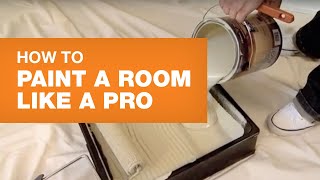

The 5-Minute Prep That Saves Hours of Painting
45sMany DIYers skip crucial prep work, leading to sloppy results—this clip reveals pro secrets that beginners need to know.
▶ Play Clip"The title accurately promises professional results, and the transcript delivers step-by-step expert advice on painting a room."
This video provides a comprehensive, step-by-step guide on how to paint a room professionally, focusing on preparation and technique. It emphasizes the importance of proper prep work and finishing methods to achieve a high-quality, long-lasting result.
A fresh coat of paint can transform the look of a room, but painting involves significant prep work.
Cover electrical switches and sockets, tape over them and baseboards, move or cover furniture, fill holes with poly filler, dust walls, and lay drop cloths.
A list of tools depends on the space; the Home Depot book 'Home Improvement 1-2-3' offers tips. Paint-and-primer-in-one products are recommended.
Start at the ceiling or crown molding with a high-quality angled brush, using wrist and arm control to avoid paint seeping under tape. Feather paint to prevent ridges.
Use a 9-inch roller, paint in a 3x3 foot W pattern, and use long strokes to blend. Work steadily to avoid splatter.
Use an extension pole or 6-foot ladder for high walls, and a 4-inch roller or brush for small areas like windows and doors.
Apply second/third coats similarly, allow final coat to dry before removing tape and replacing cover plates.
Following these steps—thorough preparation, careful cutting in, and consistent rolling—ensures a professional-looking paint job. The video emphasizes that patience and the right tools lead to the best finish.
What type of paint product is recommended for a good-looking finish?
Paint and primer in one.
01:16
How should you hold a brush for better control?
Hold the brush handle between thumb and forefinger with fingers on the metal ferrule.
02:05
What is the recommended pattern for rolling paint on a wall?
A 3x3 foot section in a W pattern.
02:31
How long should you let the painted surface dry before applying another coat?
A few hours.
04:03
What should you use to fill cracks and nail holes in walls?
Quick-dry poly filler.
00:45
What type of roller size is recommended for large wall expanses?
9-inch roller.
02:31
What is the purpose of feathering paint around corners?
To prevent paint from drying with bristle ridges.
02:05
What tool should you use for small areas around windows and doors?
A 4-inch roller or a good brush.
03:48
Room Preparation
Details the critical prep steps often overlooked, which ensure a professional finish.
00:31Brush Control
Provides a specific ergonomic tip (holding brush correctly) to reduce fatigue and improve precision.
02:05Rolling in W Pattern
The W pattern is a classic professional technique that eliminates roller marks and ensures even coverage.
02:31Multiple Coats Procedure
Emphasizes that the process is repeatable, reinforcing the need for patience and multiple coats.
04:03[00:00] When you're finishing a new wall or looking to spruce up a room, a fresh coat of paint
[00:16] can give your home a new look. Painting involves a lot of prep work. Take the time to get your room ready. Cover plates for electrical switches and sockets.
[00:31] Tape over switches, receptacles, and the edges of baseboards and moldings with blue or green painters tape. Remove furniture or group it in the center of the room and cover it with a plastic sheet
[00:45] or drop cloth. Fill in cracks, nail holes, and dents in the wall with a quick dry poly filler. Type the walls with a tack cloth or damp rag to remove dust.
[01:00] Make sure the walls dry before you start painting. Also, lay down a wall-to-wall drop cloth to protect your floor. Your painting tool list will vary depending on the space you're working in.
[01:16] Pick up a copy of Home Depot's Home Improvement 1-2-3 book for more tips on tools and paint selection. Turn your walls for a good-looking finish, Home Depot offers several products with paint and primer in one.
[01:31] Start your cutting in at the ceiling or wherever the wall meets the crown molding. A good quality angled brush is essential to cut in around the edges and corners of a room.
[01:47] Work along the masked trim and up to the tape without slopping over it. You don't want the paint to seep under the tape. Use both your wrist and your arm to ensure better control and less fatigue.
[02:05] Hold the brush handle between your thumb and forefinger with your fingers on the metal feral. To prevent paint from drying with bristle ridges, lightly feather the paint around the corners
[02:17] and onto adjoining walls. Cut in around the edge of the entire space you're painting before you begin rolling with paint.
[02:31] Use a 9-inch roller for large expanses. For a smooth and consistent finish without ridges, start from a corner and paint a 3x3 foot section in a W pattern.
[02:46] Use light, long strokes to blend the paint. Change the direction of the roller slightly each time until the W disappears.
[02:59] Take your time with the roller and move at a steady and moderate pace to avoid splatter. With any paint spills, clean it immediately with a damp rag.
[03:18] Continue the same procedure across the wall. If you're reaching high on walls, use an extension pole for your roller.
[03:34] Alternatively, a 6-foot ladder is the most versatile for painting projects.
[03:48] Use a 4-inch roller or a good brush for small areas around windows, doors, and moldings. Allow the painted surface to dry for a few hours before applying another coat of paint.
[04:03] The procedure for a second or third coat is the same as the first. Allow the final coat to dry before removing painter's tape and replacing cover plates.
[04:16] Your room now has a fresh new look. Here's a reminder of the tools and material you'll need to complete this project.
⚡ Saved you 0h 04m reading this? Transcribe any YouTube video for free — no signup needed.