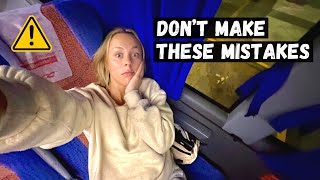

20 Essential Solo Travel Safety Tips
45sOpens with a strong, relatable fear (solo travel safety) and promises a comprehensive guide, hooking viewers seeking actionable advice.
▶ Play Clip"The title accurately promises 20 essential safety tips, and the video delivers exactly that with detailed, actionable advice."
This video provides 20 essential safety tips for solo travelers, based on the creator's two years of solo travel experience across Mexico, Colombia, Indonesia, and more. The tips cover planning, accommodation, and general safety practices to help travelers feel secure and confident.
The creator introduces the video, stating that after two years of solo travel, they have compiled 20 essential safety tips for solo travelers.
The creator encourages everyone to try solo travel, even a weekend trip, as it promotes personal growth and pushes you out of your comfort zone.
Start research by region, then narrow down to country, city, neighborhood, and accommodation. Use the US State Department's website for up-to-date travel advisories.
Check travel advisories (Level 1-4). Level 1-2 are safe, Level 3 requires case-by-case evaluation, Level 4 is avoid. The site also provides emergency numbers, embassy locations, and common scams.
Google 'destination for solo travelers' or 'solo female travelers' and add 'blog' to find firsthand experiences. Recommended blogs: Nomadic Matt and The Broke Backpacker.
Enroll in STEP on the State Department website to input your itinerary. This helps authorities track you if you go missing and sends alerts about protests or natural disasters.
Book flights or buses to arrive and depart during daylight to avoid navigating new places in the dark.
Use an eSIM like Airalo to have data immediately upon arrival. The creator provides a discount code.
Knowing a few phrases in the local language shows respect and reduces the chance of being targeted as a clueless tourist.
The creator prefers co-living spaces (like hostels for digital nomads) for safety and community. They search Google and Google Maps for options.
Cross-reference reviews on Hostelworld, Airbnb, and Google Maps to gauge the vibe and safety of accommodations.
Choose centrally located accommodations to avoid walking through dark alleys. Search for 'safest neighborhoods for solo travelers'.
Hostels and co-living spaces have other people around to deter creeps. Private rooms are available. The creator feels safer than in an Airbnb.
If someone makes you uncomfortable, tell the front desk. The creator's friend had a harasser kicked out after reporting.
The creator prefers female dorms but has had no issues in co-ed dorms. Curtains on beds add privacy.
In shared living spaces, you can tell others your plans and they will notice if you don't return, providing an extra layer of safety.
Join Facebook, WhatsApp, or Slack groups for local tips and to stay informed about safety issues.
Use a padlock for lockers in hostels. Place AirTags in bags to track them if lost or stolen.
Never check valuables like laptops or cameras in luggage. The creator had a speaker stolen from checked baggage.
Avoid walking alone late at night, especially intoxicated. Trust your gut. Don't compromise safety to save money. Don't be overly friendly to strangers. Pretend to be a local by not staring at your phone. Don't be flashy with jewelry or expensive items. Don't post on social media in real time. Keep someone informed of your whereabouts. Join local social media groups for alerts. Be hyper-aware of your surroundings.
The creator emphasizes that with proper planning and these tips, solo travel can be safe and rewarding. They encourage viewers to subscribe for an upcoming video on making friends while solo traveling.
What are the four levels of travel advisories on the US State Department website?
Level 1: Exercise Normal Precautions, Level 2: Exercise Increased Caution, Level 3: Reconsider Travel, Level 4: Do Not Travel.
03:24
What is the Smart Traveler Enrollment Program (STEP)?
A program where you input your itinerary so authorities can track you if you go missing and you receive alerts about protests or natural disasters.
06:50
Why does the creator prefer co-living spaces over Airbnbs for safety?
Because in shared living spaces, there are other people around to deter creeps, and you can tell others your plans so they notice if you don't return.
12:26
What should you do if someone in your hostel makes you feel uncomfortable?
Tell the person at the front desk; they can take action, such as kicking the person out.
13:57
What two items does the creator recommend for keeping belongings safe in hostels?
A small padlock for lockers and AirTags in bags to track them if lost or stolen.
16:44
What is the number one way people get robbed or mugged according to the creator?
Walking around alone late at night, especially when intoxicated.
17:51
Why should you not post on social media in real time while traveling?
Because you never know who is watching; posting in real time can reveal your exact location to potential thieves or stalkers.
23:51
What is one way to pretend to be a local while walking in a new city?
Put your phone away, count blocks, and walk confidently without staring at your map.
21:03
Fear of solo travel is often overblown
The creator notes that people who haven't solo traveled are more scared of the risks than those who actually do it.
01:04Use US State Department website for research
It provides up-to-date travel advisories, emergency numbers, embassy locations, and common scams.
02:58Enroll in STEP for safety
STEP helps authorities track you if you go missing and sends alerts about local emergencies.
06:50Shared living spaces are safer than Airbnbs
Hostels and co-living spaces have community oversight, making it harder for creeps to target you.
12:26Trust your gut and don't compromise safety for money
The creator emphasizes listening to intuition and spending extra on safety when needed.
17:51[00:00] If you're someone who wants to travel solo, but are terrified of the safety risks, you need to watch this video. I've been traveling solo for the last two years all over the world from Mexico to Columbia to Indonesia.
[00:12] And the number one question I get asked all the time is, do I feel safe? And what are some tips that I have for other solo travelers who are looking to do this for the first time? So after years of firsthand experience,
[00:25] I have put together 20 essential tips that all solo travelers should do in order to stay safe and secure all over the world. And I will argue that this is the most comprehensive solo travel guide in terms of safety on YouTube.
[00:40] So make sure you hit the subscribe button and let's get right into it. When it comes to my personal opinion regarding solo travel, I truly believe that everyone should travel solo at some point in their life, even just a weekend trip
[00:52] in a different city than where you're from is such a great way to learn about yourself, do a lot of personal growth, reflection, and kind of just push yourself out of your comfort zone in a new way. And it gets really built up I think in people's heads.
[01:04] I know because I felt this way before I started traveling solo that the safety risks are just so massive. It's something that I think people who have never traveled solo are much more scared of the risks than people
[01:17] who are actually doing it themselves. And I can tell you from experience that once you actually start traveling solo and really doing the thing, it starts to get a lot less scary because you take the unknown out of it.
[01:29] So that's just true for anything really. It can be really scary to just think about it and think about all the hypotheticals but don't let the fear of the unknown inhibit you from pushing yourself out of your comfort zone
[01:41] and having a new experience like traveling alone. So that's why this video is going to give you a really comprehensive overview and actionable tips that you can implement on your first and future solo trips so that you can have an amazing experience
[01:54] and avoid really unsafe situations. So let's get right into it. So these first set of tips are going to be all things planning and the planning phase for solo travelers. I don't care how spontaneous you are.
[02:06] If you like to just figure it out as you go, if you've never solo traveled before, you really need to do your research and take the planning stage very seriously. The first thing that I do before I even decide on where I'm going
[02:19] is I research the following things in this order. I start with the region and then I kind of go into specific countries and then from there I will look at the different cities I'm considering then within that city,
[02:33] the different neighborhoods and then from there my accommodations. Just doing it in this order will help you really narrow down where you're going to end up going because I know it can be really overwhelming when you're just starting out and you have no idea where you want to go.
[02:45] So start with the region and then start narrowing it down by country. Now the first thing I do to research these specific things is I go to the US State Departments website and obviously I'm a US citizen so depending on where you're from
[02:58] you may have something different in your country but the reason I do this first is because I find that it has the most up-to-date information in every single country and depending on where you're considering going. So let's say I'm going to Guatemala.
[03:11] I'll go on to the US State Departments website. I'll go to the travel advisory page and then I will search Guatemala in the searched bar. From there it's going to have a rating. I think Guatemala is a level three
[03:24] but pretty much level one is the safest rating that you can have. I think it's like exercise normal precautions up to level four which is a absolutely do not travel zone. You want to take these ratings really seriously
[03:36] but you also want to see why they're rated the way that they are so you can click on the actual page and it will take you to let's say Guatemala's page and it will tell you all of the different things that you need to be aware of within that country whether it's natural disasters that are happening,
[03:49] crimes that are typical throughout the area, any protests that are happening, et cetera. Most countries will have one overall rating for the country but some countries like Mexico for example will have multiple ratings for different states
[04:02] or regions within the country and for Mexico specifically I love that the US State Department does this because it's such a humongous country with so many diverse states so it's really hard to give a country like Mexico
[04:14] one general rating and I know you guys are probably thinking about the scary stories of people getting kidnaps and killed in Mexico. There was one fairly recently that happened I was getting so many texts from family and friends
[04:26] when I was in Mexico when this happened it happened to the level four do not travel zone. So if you do your research and you see that is a level four zone don't go there because if you go there you are opening yourself up to a lot of danger.
[04:40] So for me personally, level one and two rating no brainer. I will go and feel totally fine. I'll obviously exercise still the normal precautions that I'll discuss in this video but yeah, level one and two are super chill.
[04:52] Level three I will kind of do it on a case by case basis so I'll do a lot of research as to why it's rated that way. A lot of the time it's like specific parts of the country or cities or regions are an absolute no
[05:04] but maybe the main tourist hubs are totally fine. So I've traveled to a few level three regions and countries and it's been absolutely fine. Level four I will almost always refrain from going. That's just me personally but you can kind of,
[05:17] that's up to you. Now the next thing I will do is I'm still on the State Department's website but I will go to the International Travel tab and from there you can learn a lot of really helpful information about the country that you're going to
[05:30] including the emergency number to call while you're there. That's something that I'll like wake up in the middle of the night and be like what if I was having a medical emergency right now? Who do I call? There's not like a 911 number is there but stuff like that that you might not really think about
[05:44] until you really need it. That's all on the website in the International Travel section. Things like where the US embassies and consulates are. That's something to note. Just various safety things you need to be aware of. Common scams that happen with tourists.
[05:57] So this is just another kind of great resource to just have in your back pockets you know what to expect. After this I will then just go onto Google and I will Google something like blank destination for solo travelers
[06:11] through a woman solo female travelers in 2023 or something like that. And I'll also add blog onto the end because I like to hear from first-hand experiences of other travelers that have been there themselves
[06:24] and I find that blogs and YouTube videos are a really great resource for that. Some common ones that I always go to are nomadic mat and the broke backpacker but there are so many other ones that will pop up and just spray through them
[06:36] and you can kind of get a good insight into what other solo travelers and solo female travelers have experienced in a specific destination. The next thing I do that gives me so much peace of mind honestly is I enroll myself in the smart traveler
[06:50] enrollment program or step for short. This is also on the US State Department's website and basically you will just input your itinerary. So the destinations are going, the dates, et cetera.
[07:02] You can even put addresses in of the accommodations if you have those booked. And if for some horrible reason you just go missing off the face of the earth and no one can get in touch with you, this will help the authorities track you down
[07:14] and kind of see where you are at least planning on going. And the other thing I like about it is when you put those destinations in, you will automatically start getting alerts to your emails if certain things are happening in that area. So if there is a protest that erupts
[07:28] in the country or the city you're going to, you will be aware of that. If a natural disaster hits, you'll also be aware of that and you can kind of make plans accordingly. Next up is when you're booking your flights or your buses or whatever transportation
[07:41] to and from the location you're going to. Try and plan the departure and arrival times during the day so you're not dealing with all of this at night. Especially when you're arriving somewhere new, it's already kind of intimidating and overwhelming.
[07:55] So I just find that being there during the day gives me a little bit more comfort than if I'm arriving at 11 p.m. and trying to find my accommodation and pitch black. So that's just a small tip is trying to arrive and leave during the day.
[08:07] The next thing I recommend getting before you arrive in your destination is an ESIM. So a lot of the times when you go to a new country you'll go and get kind of a physical SIM card to put into your phone,
[08:19] but I personally like to have an ESIM and I use Airello. I love it and it's just really, really convenient because you can add it to your phone before you even arrive and then when you arrive you can just quickly switch it
[08:31] in your settings, you don't need anything else all on your phone. So if you want to use Airello I do have a code for $3 off, the code is right here. And the last part of the planning stage is to try and learn some basic phrases in the local language
[08:45] before you arrive. It doesn't have to be anything crazy but on top of it just being a respectful thing to do as a traveler for the locals it also will give you an edge. If you're clearly a foreigner and has no idea
[08:57] what they're doing in this lost and just can't speak the language at all you're a little bit more likely to become a target and for people to take advantage of you. So I just find that knowing a bit of a local language
[09:09] just really helps with all of that. So once I've decided the destination that I'm going to I then go down the rabbit hole of finding my accommodation. For me personally I always go for co-living spaces
[09:22] which are kind of like hostels for adults who work online. It's a shared living space similar to a hostel. A lot of them have dorms and private rooms but a lot of them have co-work spaces and the culture isn't so much young 20s partying
[09:36] et cetera but it's more late 20s, 30s, 40s travelers who work online and for me personally that just works really well. I'm not a big partier and I do a lot of work online but I also want to be surrounded by a community.
[09:49] So when I'm researching a new destination I will typically just go into Google and I will search something like best co-living spaces in blank destination and see what comes up or I'll search something like best hostels
[10:02] for digital nomads or best hostels for solo female travelers or a combination and a lot will pop up. Sometimes I'll put blog on the end of that just to get people's reviews. Nomadic mat tends to have a lot of guides
[10:14] for popular destinations with different hostels for different kinds of travelers like digital nomads, couples, solo travelers, et cetera. I'll also just go into Google Maps and I'll search co-living spaces or hostels
[10:27] in kind of the region I'm looking at and go from there. Once I find like one or two or three different accommodations that look like a good fit for me, I will then just scour the reviews. Typically what I'll do is I'll kind of cross reference them
[10:41] across different platforms. So I'll start usually on hostile world because the accommodations I'm staying at are listed a lot of the times but you can also look at the Airbnb reviews and then from there I'll go onto Google Maps
[10:54] and I'll look at the reviews there. Each place that you stay is going to have a completely different vibe and I find that the reviews are a really great way to get an idea of what to expect before you go. And then in terms of the location of these accommodations,
[11:08] I try and stay in places that are more centrally located especially if I'm staying in an Airbnb. I do not want to be walking down an alley in the middle of the night walking home I just feel extremely unsafe doing so.
[11:20] I will always try and stay in a good neighborhood and in a centrally located area. Just to make it a little harder for creepy people to follow me home and they're not the other people watching.
[11:33] So that's just always in the back of my head. You can also search things like best neighborhoods or safest neighborhoods for solo travelers in your specific destination and kind of find your accommodation from there. Side note, but if you want to see all of my top-rated accommodations,
[11:49] co-work spaces, cafes that I've been to throughout my travels and continue to add to, check down in the description box. I have the Nomad map linked and yeah, it has all of my favorite places I've ever stayed
[12:02] with my specific reviews and sometimes I have a tour on my YouTube channel. So definitely go check that out in the description below. So I put a question sticker up on my Instagram a few days ago just kind of gauging your main questions
[12:14] when it comes to solo traveling. And one of the most common questions I kept getting again and again were which accommodations should I book and how do I keep my belongings safe if I stay in a hostel or whatever.
[12:26] So for me personally, I by far feel the most safe staying in shared living spaces like hostels and co-living spaces over in Airbnb. If you're someone who has never stayed in a hostel before,
[12:39] I want you to throw all of your preconceived notions about a hostel out the window because let me tell you there are some gems out there. The reason I feel so much safer staying at these shared living spaces, I mean there's several reasons
[12:54] but honestly, the main one is that if you're staying in an Airbnb, it's a lot easier for creepy people to kind of follow you back to where you're staying and you don't really have anyone else around
[13:06] to look out for you or to scare a weird person off. Whereas if you're staying in a hostel or a co-living space, you're surrounded by other travelers and you can book a private room and so you have that private space to yourself.
[13:19] Obviously, there is always a possibility that there is a weird creepy person where you're staying. I personally have not had many situations with that but it does happen and I find that it happens a lot more
[13:32] in kind of the bigger, more party hostels whereas I tend to stay in smaller, more boutique hostels or co-living spaces and the thing is, if there is someone that's messing with you
[13:44] that's making you feel really uncomfortable, this happened to one of my friends at a hostel I'm staying at in Guadalajara. There was someone who was just not respectful and was following her around and making her feel extremely uncomfortable.
[13:57] She told the person at the front desk and they took action and kicked him out because he had several allegations or whatever already being made against him and yeah, don't be afraid to stand up for yourself. That's just a side note tip
[14:10] but if there's someone that's really making you feel uncomfortable if you're staying in a co-ed dorm, you just have to be willing to voice your concerns if there is one but just in general for talking about co-ed dorms, I've stayed in quite a few of co-ed dorms
[14:22] and I have never had any issues. If I have the choice, stay in a co-edverse female dorm, I'll stay in a female dorm but I've never had any issues. Usually the guys are extremely respectful. I do prefer if the dorms have a curtain
[14:36] to kind of giving that privacy while I sleep and then you can always change in the bathroom if that makes you feel more comfortable. Usually it's not an issue at all but yeah, like I said before, you really do wanna be scouring the reviews on various platforms just to see
[14:49] if there is a sort of trend, what kind of people tend to be in that accommodation and yeah, just go from there. The other thing I really like about staying and sharing living spaces is that, you know, if you're going out for the day, you can tell people
[15:03] in your co-living or your hostel that you're going somewhere when you plan to be back and if for some reason you don't show up, there are people that are kind of looking out for you and will notice, hey, so and so is missing what's going on.
[15:15] People will try to get in touch with you. So that's just helpful as well. And again, make sure to check out the Nomad map and the link below if you wanna see my favorite spots. If you do prefer to stay in an Airbnb
[15:27] or an apartment or something like that, then I would recommend joining local Facebook groups and WhatsApp groups or Slack groups depending on where you're at. And this will really help you to kind of gauge different local tips for the area that you're in.
[15:41] Maybe check out a co-work space and see if there is a Slack or WhatsApp group because those are very common and a lot of backpacking in digital Nomad hubs and then you can kind of get a vibe for, you know, where are some good spots for me to check out
[15:53] and where I should avoid, et cetera. But yeah, if you're staying by yourself, just try and stay as centrally located as possible. And in terms of keeping your belongings safe and secure at your accommodation, specifically in shared living spaces,
[16:06] you're kind of going to get an idea of how chill you can be with your belongings when you arrive. And you can also look in the reviews and see if there's ever been any issues. But for example, in a lot of the smaller co-livings
[16:18] that I stay at, people will leave their laptops out in the co-work space overnight. They're really chill about that type of thing. And that just tells me that it is a really safe place to keep your stuff out, especially technology.
[16:32] And it's just not part of the culture for people to be sneaky and conniving like that. Obviously, you can be more or less careful, no matter what. But I would always recommend keeping a small padlock
[16:44] you can set a password to. Because in most hostels, you will always have a locker in your dorm, specifically for you. And you can put all your things in there and lock it up when you're walking around for the day. And the other thing I always do is I put air tags
[16:57] in all of my bags in case I lose one or one gets stolen. I can quickly pull up my phone and see where it's at. And then when you leave your accommodation, let's say you're switching locations, you want to keep your valuables on you at all times.
[17:12] So on all public transportation, whether it's a bus or a plane, you do not want to be checking your computer, camera, et cetera. That needs to be on you at all times. The one time I left my speaker,
[17:25] like just like a small JBL speaker in my checked backpack, I got to my destination and someone had opened my bag and taken it out. That was the only valuable I had in there. The rest was just clothes and toiletries. But that's why it's so important to keep your things
[17:39] on you at all times because unfortunately, that is quite common. Okay, now we're just going to do some rapid fire general safety tips that I have gathered over my years of solo travel
[17:51] and you really should be doing this. The number one way that I have heard of people getting robbed or mugged, et cetera, is walking around by yourself late at night, especially when you're intoxicated.
[18:03] This should be a given. But unfortunately, I have heard countless stories of people in various parts of the world, including the US obviously, that have been jumped
[18:15] or targeted or mugged at two or three in the morning. They're walking home from a club or a bar by themselves. And yeah, that leads me into the second point, which is to trust your gut, trust your intuition. If you feel unsafe for any reason,
[18:28] regardless if if there's actually something happening or you just have a really bad feeling in your stomach, you need to listen to that. For me personally, I experience this a lot. And I don't know if I'm just being paranoid or if it's actually something that could be happening
[18:41] but I'll never forget the first solo trip I ever took was in 2018 and I went to Granada, Spain for a weekend trip. I was going to a Flamengo show in this cave and Granada was so excited. And for some reason, well, my map took me kind of behind
[18:56] the main building, so it was really dark. There was not a lot of lights. And I just got this horrible feeling in my stomach. I felt so scared, my heart was pounding and I was looking around like no one's around me. There were some people far up ahead.
[19:09] I felt so scared, like abnormally scared. And so I just yeeted out and I got in a cab. And honestly, that leads me into my next point, which is do not compromise your safety to save a few extra bucks.
[19:22] If you feel unsafe at your Airbnb, book a hotel. If you're walking around late at night and you feel really unsafe, go get in the cab or call an Uber, run into a restaurant, somewhere where there's light.
[19:34] You really need to listen to your gut and if you need to spend a few extra dollars to ensure your safety, do it. You will regret it. If you're putting yourself in a really unsafe situation to save 20 bucks, don't just do not do that.
[19:47] This next tip goes out to my ladies and it is to don't feel the need to be overly friendly. This is something I see all the time. And it's kind of, I think, just a societal thing
[20:00] where we feel like we need to be really sweet and nice to strangers and people. And unfortunately, people will sometimes take this as you're an easy target and you're easy to push around.
[20:13] If you're traveling somewhere like South America or Asia and you look like me, you're blonde or you just look like a foreigner, you already stand out. You're already getting eyes drawn to you.
[20:25] You probably know what it feels like to get cat calls on the street. You don't want to be drawing any more attention to yourself than you really need to. So if someone approaches you and they're being really pushy, they're either trying to sell you something
[20:38] or make you come into their store or get into their cab. If you don't feel good about it, you look them dead in the eye and you say, no, no thank you and you keep walking. You need to be really firm.
[20:50] Don't be rude, obviously. You don't need to be overly rude unless it calls for it. But just don't feel the need to be overly friendly. So this next tip, I kinda try and make it fun and that is I just pretend that I'm a local.
[21:03] Even if I don't look anything like anyone around me, everyone's staring at me because I have blonde hair. Now what are some ways to do this? Number one, do not be walking around like this. Looking at your map, texting people, taking photos,
[21:19] don't do that. That is just blinking lights. Hi, I'm a tourist, I'm lost. I don't know what I'm doing. What I like to do when I'm walking around a city for the first time, I remember doing this when I was in Medellin in Columbia because I definitely stood out.
[21:32] I was definitely getting a lot of unsolicited stairs. So what I would do is if I was walking somewhere that was 10 or 15 minutes away, first of all it was during the day. And second of all, what I would do is I would put my destination
[21:44] in, I would look and say, okay, I have four blocks until I have to take a left. I would then put my phone in my Fanny pack. I put my sunglasses on and I would walk down the street like I own the place and I would count the blocks.
[21:56] One, two, three, four, take a left. Okay, now what do I do? If there's a lot of people around and I don't really want to get me pulling my phone out, I'll either pull it off quickly. Quick look, oh, three more blocks, let me take a right or I'll run into a convenience store or a shop
[22:11] and I will then look at my maps again. I know that might sound like overkill but it's really helpful just to not make yourself appear as a target and really look like you know what you're doing and where you're going.
[22:23] The next thing that's really important is do not be flashy. There are a lot of different ways that you can, you know, appear flashy or appear as a tourist with money and therefore be targeted. So a few of the ways to avoid this is number one,
[22:35] don't wear expensive jewelry, don't wear designer clothes, depending on the part of the world that you're in. But I remember when I was in Columbia, for example, I was wearing $18 hoops I got off Amazon but they're like gold plated
[22:48] and you wouldn't know if they're real gold or not and I remember wearing them and I was getting a tattoo and my tattoo artist was like, I know this is personal but I would not wear those earrings because people will snatch them out of your ears. And again, that's an extreme example
[23:00] if never had that happened to me but it just kind of got my head on like, oh God, like I didn't even really think that these, they're not really expensive but people won't know that. Same thing with your phone. If you're walking around holding your phone an iPhone is very expensive.
[23:13] Well, it might be normal to have in the US or in parts of Europe. It's not totally normal for all locals to have that in other parts of the world and then this is kind of obvious but having a camera like a camera that I'm filming on right now,
[23:25] I was walking around Lima with it one time and I had it in my backpack like I was getting cash and I put my camera in my backpack and the woman at the cash register was basically like, wear your backpack on your front
[23:38] because you might get robbed. And I was like, gosh, okay, but at least people are looking out for you but there are going to be bad people that are looking for easy target so you just don't want to be an easy target and these are some ways to avoid looking like that.
[23:51] Next up is do not post on social media in real time. Whether you have a really small account or you have a lot of followers, you never know who's watching. You do really want to be mindful of avoiding posting
[24:05] where you are at that exact time. For me personally, I'm fine posting that I may let's say Wahaka City while I'm there but if I go to a cafe or a museum or a park,
[24:17] I won't post on my story until I leave or maybe even the next day I usually post about a day late. And then my accommodation, I do like to post tours of where I'm staying and stuff like that in my reviews. I won't post those until I leave.
[24:30] Next up is if you are moving from one place to another or you're going on a weekend trip or even just a day trip, you want to keep at least one person in the loop of what you're doing. If I'm traveling from one city to another on a night bus
[24:45] or on a plane, I'll always text like my parents or my partner kind of, okay, this is my flight number or this is the combination I'm going to, I should arrive around this time. I also always have my location shared with them as well
[24:58] so they can kind of check on their phone where I'm at. I mentioned this before but I'm a huge fan of local Facebook groups, WhatsApp groups, Slack groups, depending on where you're at. If it's like a big backpacker or digital nomad hub,
[25:12] there's almost always some kind of social media group that you can join. And I love these because not only is a great way to network and make friends and kind of see any local meetups that are happening but if there is something, you know,
[25:26] some kind of crime or protest happening, you will usually get a text in that group. So an example of this is when I was in San Cristobal Day in Las Casas in Mexico, which I felt extremely safe there
[25:39] for the most part, but there was a point where there was a shooting happening at one, at like the main local market that I had been to multiple times was really close to my co-living space and there was issues with the local indigenous groups fighting.
[25:53] I wasn't in San Cristobal the time, I was on a weekend trip but I got a text in my WhatsApp group basically people saying, come back to the co-living space, there's a shooting happening at this location, you know, everyone come back here. And that's just really helpful.
[26:05] If there is something that happens, you know, you're aware of it instantly and you can kind of take action. And then my last tip is kind of obvious but super important and that is to be hyper aware of your surroundings.
[26:19] Us women, we do this already on a regular basis but you really want to be eliminating as many distractions as possible while you're walking around a city. If you're on public transportation,
[26:31] you just kind of, you know, you don't wanna be looking around. If someone walks into the restaurant, check them out. You know, you wanna be aware of people watching you or following you, et cetera. Like, and I've never had any of these issues. I'm very, very hyper aware of my surroundings
[26:45] and I really don't put myself in unsafe situations to begin with but yeah, you just really wanna be as aware of your surroundings as possible and just don't have your head in the sand. Don't be on your phone when you're walking around
[26:57] and just kind of practice common sense. Well, that is it for my top tips for current and aspiring solo travelers. If you found this helpful, I would really appreciate you giving this video a like and sharing it
[27:10] with any other friends that you have who currently solo traveler or are thinking about it. Like I said in the beginning, I think everyone should try it solo traveling at one point or another and I hope you don't take these tips and get even more scared about all the possibilities
[27:24] because when I tell you, I have very, very rarely felt unsafe as a solo traveler, I am being so serious and it's because I do all the planning and I exercise all of the tips that I just told you
[27:37] in this video, I truly do this on every single trip that I go on. So if you found this helpful, I would really appreciate you sharing it and subscribing to my channel because I have a video coming out next week
[27:49] about how to make friends as a solo traveler. That is my next most popular question I get besides safety is how to make friends as a solo traveler. So that video is coming out very soon and it's going to have all of my top tips
[28:02] for how I've made lifelong friends as a solo traveler. So I'm really excited for you to see that. But yeah, make sure to subscribe to my channel to see some more solo travel vlogs in the future and if you're new to my channel, make sure to go back and check out
[28:14] I have so many solo travel vlogs from all over the world that I think you will really enjoy. But with that, thank you so much for watching this video and I will see you in the next one. Bye. Bye. Bye.
⚡ Saved you 0h 28m reading this? Transcribe any YouTube video for free — no signup needed.