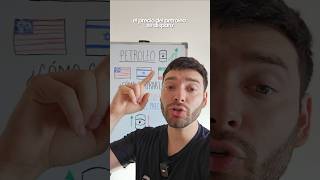

How to Profit from Oil Price Surge
45sTaps into current geopolitical tensions and offers a clear profit-making opportunity, sparking curiosity.
▶ Play Clip"Title is straightforward but content is thin—basic overview with a broker plug, not a deep guide."
The video explains how to trade oil without owning physical barrels, focusing on price speculation through CFDs or futures. It highlights the impact of Middle East conflicts on oil volatility and provides a basic framework for entering the market via a broker.
The price of oil has skyrocketed due to tensions between Iran and Israel, presenting a profit opportunity by trading oil price movements.
Investors do not receive physical barrels; instead, they trade the price of oil, predicting whether it will rise or fall.
Oil prices tend to rise during conflict escalation and fall during truces or calm periods; technical analysis is used for predictions.
Oil trading is done via contracts for difference (CFDs) or futures contracts, requiring a broker account (e.g., ExNES).
You can buy if you expect the price to rise or sell if you expect it to fall; selling without owning the barrel still yields profit (shorting).
Middle East conflict makes oil highly volatile, attracting traders; the creator mentions a related video on their channel.
The video provides a concise introduction to oil trading, emphasizing price speculation and the role of geopolitical events in driving volatility. It serves as a basic entry point for beginners interested in trading oil.
What instruments are commonly used for oil trading?
Contracts for difference (CFDs) or futures contracts.
00:42
What is the effect of Middle East conflict on oil prices?
Oil prices tend to rise during conflict escalation and fall during truces.
00:26
How can you profit from a falling oil price?
By selling (shorting) without owning the barrel, you make money if the price drops.
00:54
Geopolitical Tensions Drive Oil Prices
Explains the direct link between conflict and oil price spikes, a key insight for traders.
00:01Technical Analysis for Predictions
Emphasizes the use of technical analysis to forecast oil price movements.
00:26Shorting Without Ownership
Clarifies that selling oil without physical ownership is possible and profitable.
00:54[00:00] Con todo el conflicto que hay en Medio Oriente entre Irán e Israel, el precio del petróleo se disparó. Y nosotros podemos ganar dinero con esta suba del precio, simplemente comprando los barriles de petróleo.
[00:12] Pero, ¿cómo hacemos esto? Bueno, para saber cómo comprar petróleo, lo primero que tenemos que entender es que no vamos a tener el activo físico. No nos van a traer barriles de petróleo a nuestra casa. Lo que suele hacer la mayoría de inversores es negociar el precio.
[00:26] tratar de predecir si el barril de petróleo va a subir o si va a bajar de precio. Generalmente cuando el conflicto escala tiende a subir y cuando hay una tregua y todo se calma tiende a bajar. Eso es lo que tenemos que tratar de predecir nosotros con nuestro análisis técnico.
[00:41] Ahora, para poder negociar el petróleo se suele hacer a través de contratos por diferencias o de contratos de futuros y para eso necesitan tener una cuenta creada en un broker. Yo uso Exnes, que les dejo siempre el enlace en mi perfil y varios videos en mi canal de YouTube explicando paso a paso cómo usarlo,
[00:57] pero ahí adentro van a poder tanto comprar si creen que el precio va a subir o vender si creen que el precio va a bajar, porque cuando venden, por más que no tengan el barril, también ganan dinero. A eso se le llama ir en corto.
[01:09] Y hoy en día con todo el conflicto que está habiendo en Medio Oriente, el petróleo tiene mucha volatilidad, o sea, cambia de precio muy rápido últimamente, por eso hay tantos interesados en saber cómo operarlo. Igualmente de todo esto acabo de subir un video en mi canal de YouTube
[01:22] Y si querés que te lo pase comenta petróleo y te lo mando por privado Ah y no te olvides de empezar a seguirme



⚡ Saved you 0h 01m reading this? Transcribe any YouTube video for free — no signup needed.