
AI Summary
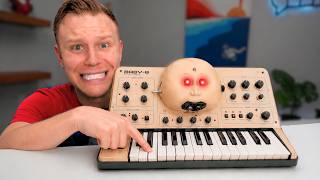
This video showcases a variety of unique and rare Japanese musical instruments, from a tiny 88-key Sega piano to a traditional shakuhachi flute, with the host demonstrating each instrument's quirks and challenges.
Chapters
A fully functional 88-key miniature piano so small it requires chopsticks to play, yet every moving part works like a real piano.
A Japanese koto with picks taped to fingers; produces a classic Japanese sound and allows string bending for effect.
Otamatones are simple instruments played by pressing the stem and squishing cheeks; there are also giant versions and Hatsune Miku/Batman editions.
Music-themed sushi pieces each play a different part (e.g., drums), and the Gum Bass is a tiny bass with only a volume knob.
A handmade bamboo flute historically used as a weapon; extremely difficult to play, requiring specific chin placement and breath control.
A $1,000 chord instrument from Suzuki with buttons for chords and a strum plate; the host used Coopert to find a deal and cash back.
A Tao drum controller for Nintendo Switch simulates traditional drumming; the Pakim Miku device recreates Hatsune Miku's voice with vowel sounds.
A three-string guitar-like instrument with snakeskin, tuned with a bachi pick; no frets, making it challenging but rewarding to play.
A futuristic synthesizer guitar with strings for strumming but a solid neck without frets; produces various voices and rhythms.
Using LSDJ software on a Game Boy Color to compose chiptune music; notes are entered in a sequence and played back via the cartridge.
Mentioned in this Video
💡 Key Takeaways
Shakuhachi: Instrument or Weapon?
Reveals that the shakuhachi flute was historically used as a weapon, adding a surprising historical layer.
02:44Omnicord Price and Savings
High price ($1,000) and use of Coopert to get significant discount demonstrate consumer savings.
04:06LSDJ: Chiptune Creativity
Shows how old hardware (Game Boy) can be repurposed for music creation using custom software.
09:50Full Transcript
[00:02] secret weapon. And I'm testing these along with the biggest, rarest, and strangest musical instruments from Japan. But first up, this is a fully functional piano from Sega. This mini piano has all 88 fully functional keys.
[00:16] them with my fingers. I literally have to use chopsticks to play the notes. It's so detailed that every piece on this piano moves just like a real piano. play on its own. Even though this piano was way too small to play, we have some
[00:30] insane instruments coming up. This is a traditional Japanese koto. This thing is insane. It really has that, you know, like Japanese sound. Apparently, I'm supposed to tape these things to my fingers. Okay, I feel like
[00:44] a cat now. I have no clue if I did this right, but we have five picks taped to my fingers. Okay, I'm just going to strum this.
[00:57] playing it and she was like bending the strings with this side. Oh, that's so strings with this side. Oh, that's so sick.
[01:09] Well, that was a you can tell I love Otama. These guys released in Japan in 2009 and they've just made so many of them now. They made a Hatsune Miku one. They made Batman. I have Batman up on my shelf.
[01:22] Kitty one right here. Automatones are pretty simple little instruments. Basically, you can press on their stem and you can squish their cheeks. There's only two switches on the back. One of
[01:35] the low to high. So, you can play really low like this. Or you can go all the way to this. I'm sorry for your ears.
[01:48] gigantic ones which are exactly the same. They're just very big. stem. They just play melodies with this little button.
[02:06] The company that makes automatones also makes these little things called sushi little pieces of sushi, and they each play a different musical part. So, this play a different musical part. So, this yellow one is drums.
[02:32] And then they made this really cool thing called the gum bass. instrument. It just has a volume knob. If you turn it off, you can't even hear
[02:44] it. This next instrument is called a shakuhachi flute. These handmade bamboo flutes have been used for centuries, not just to play music, but to literally un alive people. So, I've never played one of these in my life. I've played the
[02:57] flute a little bit. So, I honestly have no clue how to play this. >> A few moments later. >> Okay, so I just watched some videos on
[03:10] you're supposed to let this part rest on your chin and then lightly blow
[03:23] This is literally the hardest instrument I've ever tried to play. I got sound to I've ever tried to play. I got sound to come out of it once. noise again. >> One week later.
[03:36] shakuhachi for the last week and this is where I'm at. where I'm at. [music]
[03:53] play shakuhachi. This thing is very hard to play, but sounds so cool. And if I were playing this in a Japanese ceremony for some reason, and the yakuza came up at me, I have a weapon that I can battle with. I'm going to practice every day
[04:06] until I'm a professional shakuhachi player. So, you have to subscribe to see my progress. You guys will see me play this and I'm going to be good. I really Omnicord. Yeah, apparently Suzuki made
[04:19] Yeah, apparently Suzuki made instruments, not just motorcycles. in Japan, and this thing is expensive. Even though it looks like a toy, the
[04:31] Omnicord is literally $1,000. But luckily, I used Coopert to get one for extension that helps you save money while shopping online. When I was looking for an Omnicord, Coopert automatically found and tested tons of
[04:45] coupons. Plus, it even compared other websites that sold the same Omnicord for a lower price. Look, it actually shows you a list of websites and how much they sell the Omnicord for. Yo, Coopert already found an Omnicord for $295 off.
[04:59] And unlike Honey, Cooper doesn't steal tracking links to make money. Cooper is creators. Let's see how much we can get it's going through a lot of coupons right now to find a really good deal.
[05:13] Oh, wow. It actually found a coupon for $32 off. Cooper also gave me cash back when I bought these instruments. So, basically, I got free money to buy even more Japanese instruments. Smarter shoppers use Coopert. Find the Coopert
[05:26] extension link in the description of this video and start saving today. And sponsoring this part of the video. Anyways, the Omnicord is specially made for playing chords. Each one of these buttons plays a different chord.
[05:43] is the strum plate. You can either strum or tap on it. or tap on it. [music] sounds. [music]
[06:01] omnicord, I just think of Adventure Time. There's one episode where the Ice King was playing this thing with Marceline. It was so good.
[06:16] drum. Tao drums are a Japanese drum that are used in really cool ceremonies, but they're gigantic and very expensive. So, I got myself a little Tao drum controller for my Nintendo Switch, and we're going to play the Tao drum. All
[06:28] right, I am channeling my Tao drumming skills from Japan skills from Japan >> into this game. Let's do this.
[06:47] You know what? This does the job for sure. I feel like I'm there. device recreates the voice of Hatsune Miku, which is a virtual superstar from
[07:00] stylophone. You use this stylus to press on the keys.
[07:12] to figure out how to use this thing, but all of the instructions are in Japanese. the top part of the keyboard, you can actually do a slide. vowels that you can get her to sing. So, we have a E, U, E, and O. Okay, I'm
[07:31] going to try to play a Hatsune Miku song on the Pakim Miku. know Japanese. Next, we have a Japanese shamisen. Right off the bat, this is
[07:44] like a three string guitar. And it looks like it has real snakes skin. We just got this thing tuned to what I think are the right notes. And you actually use this thing. I think this is called a a boti. Let me know in the comments if I'm
[07:58] you hold it and this is kind of like your guitar pick. So I think I'm kind of your guitar pick. So I think I'm kind of holding it right automatone. There's no frets on this. So it's just like
[08:29] cool as a weapon, but uh I don't think it would do much.
[08:41] Oh my gosh. Why are Japanese instruments so hard to play? This is Mega Levvenia on the Shamisen. [music] would rather take a normal six string guitar over this. Um, this is pretty
[08:56] hard to play, but it sounds super sick. Okay, next is another instrument from Suzuki. This is the Unison. This thing was super futuristic for its time, cuz synthesizer. It was the first guitar
[09:08] guitar. So, there are strings right here that you can strum. It feels like a guitar, but on the neck of the guitar, there is no strings.
[09:23] It feels so weird cuz they're not strings. They're just like solid. guitar that has different voices. These are vibes.
[09:35] are vibes. The vibes are [music] vibing.
[09:50] And then you have rhythms here. [music] So, this is my old Nintendo Game Boy Color. So, I just found out that someone actually made a program for these Gameboys where you can make music. So,
[10:05] of course, I had to try it. The only problem is these old GameBoys need light to be able to see what's on the screen. So, I need some sunlight. So, the software is called LSDJ, and you actually have to buy a game cartridge
[10:17] where you can load on whatever you want. What I love about LSDJ is you're forced makes to make your songs. So, it took me a while to figure out because this is but eventually I made it to this screen where you actually put the notes in.
[10:32] different notes in the sequence. So, if I want to change the first note, I hold down A and then change it. And then once you input all your notes, And then once you input all your notes, you can hit start to play your song.
[10:47] but it's still really cool. Man, I love Japanese food, instruments, video games, all of it. Thank you so much for watching this video. Don't forget to algorithm actually works, you're going to love this video. Next,