
Every interval problem starts with sorting
45sThe core insight that sorting is the universal first step for interval problems is a quick 'aha' that hooks viewers seeking coding interview prep.
▶ Play Clip"Delivers exactly what the title promises: a concise, pattern-based guide to interval problems."
This video explains the two fundamental sorting strategies for solving interval-based coding problems: sorting by start time and sorting by end time. It demonstrates how each strategy applies to detecting overlaps, merging intervals, and finding the maximum number of non-overlapping intervals, with a clear example showing why sorting by end time is optimal for the latter.
An interval is a start time and an end time. Problems give a list of unsorted intervals, and the first step is always to sort them.
There are two sorting strategies: sort by start time or sort by end time. The choice depends on the problem.
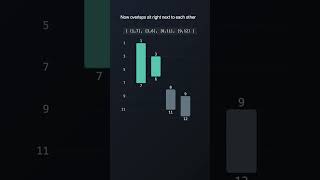
Sort by start time places overlaps next to each other. To detect an overlap, check if the next start is less than the previous end.
When merging overlapping intervals, extend the merged end to the max of both ends. Example: 1-3 and 2-6 become 1-6.
Sorting by start time fails for finding the most non-overlapping intervals because an early-starting long interval blocks others. Sorting by end time works better.
Sort by end time and always pick the interval that ends earliest, leaving the most room for others. This greedy choice is always optimal.
Sort by start for detecting overlaps and merging; sort by end for maximizing non-overlapping intervals.
What is an interval in coding problems?
A start time and an end time.
00:01
What are the two sorting strategies for interval problems?
Sort by start time or sort by end time.
00:14
How do you detect an overlap when intervals are sorted by start time?
Check if the next start is less than the previous end.
00:27
How do you merge two overlapping intervals?
Extend the merged end to the max of both ends.
00:39
Why does sorting by start time fail for finding the maximum number of non-overlapping intervals?
Because an early-starting long interval blocks many others.
00:53
What is the greedy choice for maximizing non-overlapping intervals?
Always pick the interval that ends earliest.
01:06
Two sorting strategies
Establishes the core framework that all interval problems follow.
00:14Start sort fails for max non-overlap
Demonstrates a common pitfall and motivates the alternative strategy.
00:53Greedy choice is optimal
Highlights a key algorithmic principle: greedy choice with end sort yields optimal results.
01:06[00:01] Turns out, companies love asking problems about exactly this. Here are every interval coding question. An interval is just a start time and an end A problem hands you a list of these, totally unsorted. Every interval problem
[00:14] first, then walk through in order. There are two sorting strategies, and which one you pick depends on the problem. Strategy one, sort by start time. This Now, overlaps sit right next to each other. To detect an overlap, check one
[00:27] previous one ends? If next start is less than previous end, they overlap. That's how you check if any intervals overlap. Sort by start, combining overlapping intervals into one? Same sort, but instead of just
[00:39] When two intervals overlap, extend the merged end to cover both. Take the max of both ends. So, 1 to 3 and 2 to 6 become 1 to 6. merging as you go. That's how you merge all overlapping intervals.
[00:53] What if you want the most non-overlapping intervals? meetings in a day. Sort by start time fails here. earliest, but it runs all day long. It blocks everything else. You fit one
[01:06] meeting instead of three. The fix? Sort by end time instead. Always pick the leaves the most room for whatever comes next. Greedy choice, always optimal. Sort by start gave you one meeting. Sort by end, three. Two strategies, that's
[01:18] all there is to it. Sort by start for detecting overlaps and merging. non-overlapping count. Try these problems on Hello Interview. Link is in problems on Hello Interview. Link is in the pinned comment. Follow for more.




⚡ Saved you 0h 01m reading this? Transcribe any YouTube video for free — no signup needed.