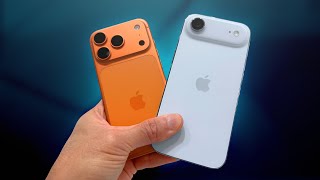

iPhone 17 Air: Ultra-Thin Trade-Offs
45sThe extreme thinness of the iPhone Air sparks debate about sacrificing features like camera and battery for design.
▶ Play Clip"Title accurately reflects the video's coverage of multiple iPhone models and updates, though it's slightly hyped."
The video covers Apple's latest hardware announcements, including the iPhone 17 lineup, AirPods Pro 3, and Apple Watch Ultra 3. The presenter shares hands-on impressions of the new devices, focusing on design changes, camera systems, and new features like the iPhone Air's ultra-thin build and the Pro models' upgraded cameras and cooling.
Apple introduced iPhone 17, iPhone 17 Pro, Pro Max, and iPhone Air. The Plus model is replaced by the iPhone Air, which has no numerical moniker, suggesting it won't be updated annually.
The iPhone Air features a 120Hz ProMotion screen, titanium frame, ceramic glass, 12GB RAM, and A19 Pro chip. It is very thin and light, with a single wide-angle camera (no ultra-wide or optical zoom). The internal space is mostly battery.
Apple claims good battery life, but the presenter is skeptical due to the thin design. A new low-profile battery pack is compatible only with the iPhone Air due to its thin camera hump. A 0.9mm case changes the phone's feel significantly.
Priced at $1,000, the iPhone Air targets users who prioritize thinness over camera versatility and battery life. The presenter values camera and battery too much to choose it personally.
Pro models have a unibody aluminum design with no seams, a vapor chamber for cooling, A19 Pro chip, 12GB RAM, and larger batteries. The telephoto camera now supports up to 8x optical zoom, and all three rear cameras are 48MP.
Color options include orange (similar to Apple Watch Ultra), white, and others. There is no black option. The orange is described as loud but cool.
The regular iPhone 17 finally gets a 120Hz ProMotion display. It has 8GB RAM, A19 chip (non-Pro), a 48MP ultrawide camera, and a larger battery. Base storage is now 256GB at the same price as previous generation.
All four models have a new square front-facing sensor that allows aspect ratio changes, zoom, and center stage functionality similar to MacBooks and iPads.
AirPods Pro 3 have significantly improved noise cancellation (claimed 2x), foam-infused silicone tips (not compatible with older models), a heart rate sensor, and remain priced at $249.
The Watch Ultra 3 has a slightly larger screen and a new blood pressure monitoring feature that tracks trends over 30 days to detect potential chronic hypertension. It does not provide spot readings.
The iPhone Air is a bold design experiment prioritizing thinness, but its single camera and potential battery trade-offs may limit its appeal. The Pro models and AirPods Pro 3 offer meaningful upgrades, while the Watch Ultra 3's blood pressure feature could have significant health benefits.
What is the price of the iPhone Air?
$1,000
04:37
How many cameras does the iPhone Air have?
One (wide-angle only)
01:39
What is the RAM and chip in the iPhone Air?
12GB RAM and A19 Pro chip
01:27
What is the claimed noise cancellation improvement of AirPods Pro 3 over Pro 2?
2x
09:12
What new health feature does the Apple Watch Ultra 3 have?
Blood pressure monitoring over time to detect chronic hypertension
10:23
What is the base storage of the regular iPhone 17?
256GB
08:44
What cooling system does the iPhone 17 Pro use?
Vapor chamber
06:27
What is the resolution of all three rear cameras on the iPhone 17 Pro?
48 megapixels
06:42
What is the maximum optical zoom on the iPhone 17 Pro telephoto camera?
8x
06:58
What type of tips do AirPods Pro 3 use?
Foam-infused silicone
09:31
iPhone Air Replaces Plus
Apple replaces the Plus model with a thinner, lighter Air model, signaling a design shift.
00:46Single Camera Trade-off
The iPhone Air sacrifices camera versatility for thinness, a controversial decision.
01:39Vapor Chamber in iPhone
Apple uses a vapor chamber for cooling in a phone before laptops, showing thermal priority.
06:27AirPods Pro 3 Noise Cancellation
Significant improvement in noise cancellation (2x) at same price point.
08:44Blood Pressure Monitoring
Apple Watch Ultra 3 introduces passive blood pressure trend monitoring, potentially life-saving.
10:23[00:03] the biggest iPhone event that I've been to. They had a lot of new hardware, so phones, watches, AirPods, plus all the accessories for this stuff. There were a as much time as I could with these devices before I got kicked out from
[00:17] that space. I have a lot of thoughts I want to share. So, first, the phones. We have the iPhone 17, the iPhone 17 Pro, the Pro Max, and the last one, arguably the most interesting one to me, is the iPhone Air. So, there is no more iPhone
[00:31] 17 Plus type product. It's been replaced in spirit by the iPhone Air. And if you'll notice, there is no numerical moniker to it. It's not iPhone 17 Air. it's because they're probably not going to replace this every generation. But
[00:46] would expect because it's replacing a Plus product. And this is a prootion 120 Hz screen. But this device is very thin and very light. It does have a titanium frame and ceramic glass to keep it as
[00:59] rigid and as strong as possible. We'll see how that holds up over time. But this is a remarkably thin and light iPhone. It has similar vibes to the S25 Edge product that we saw a few months back. But that device, it's got a very
[01:13] pronounced squareish edges, right? The S25 Edge product from Samsung. But the iPhone Air has rounded edges and it feels very different in hand. It hold. Not that, you know, phone comfort is all that important, but it is
[01:27] something I noticed like right off the rip. So, this device has 12 gigs of RAM and the new A19 Pro chip. So, it's got the same kind of hardware specs as the top-end Pro products this year, but it has a single camera. It's just the
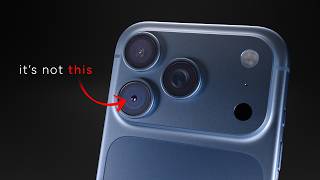
[01:39] regular wide-angle lens. There is no ultra wide. There is no optical zoom. It able to crop that sensor for like the optical like uh telephoto, but it is a single lens camera. You also lose the ability to do any kind of spatial videos
[01:54] or like 3D depth videos if you're looking for that. You lose a lot of versatility that basically every single camera or smartphone camera has today. And it's all in pursuit of thinness. And the reason why it only has one camera is
[02:07] because the entire internal space is mostly battery. It's only that top section that has like the camera components and the chips. It is a very densely packed device mostly for battery. Now, this battery is not a
[02:20] very thin device and it's not silicon you're powering a relatively large screen. All of these things work against long battery life on a device and the quoted numbers that they have in terms
[02:34] of just the typical battery life testing that they do for these devices is pretty good on paper. Now, if this was any other company, I would be like, those numbers have to be BS because there's no way they're hitting that. But Apple has
[02:47] a track record, at least from my testing, to be very aligned with what their published numbers are. So, I need to do some proper testing it. It's not longer than I would expect considering how thin this device is. There is a new
[03:01] lowprofile battery pack. It's fairly big. It's very flat and it's got like a generation. And it also use USBC charging. But this pack, every device that I tried to connect up to it did not fit nicely except for the iPhone Air.
[03:17] So, I tried it on a 16 Pro Max. I tried on a 16. I even tried it with the new iPhone 17 Pro devices. It's just not built for anything with a normal camera hump. It just needs that really thin camera hump like the visor shaped thing
[03:29] did not fit nicely. There's also a very thin case that Apple makes for this device. It's only 0.9 mm thick, but when I had this thing on, it just changed the shape and feel of this device drastically. I feel like this phone is
[03:44] going to appeal mostly to people that just don't run cases on the device. The regardless of how thin it is, it just it loses most of the appeal of what makes the iPhone Air the iPhone Air. There's also a bumper case for it that had
[03:59] I've seen from previous Apple bumper cases. But again, it just changes the way this thing looks and feels. But overall, it's a very nice looking device, but it does have the single camera. It does have a relatively small
[04:12] size battery and based on my ears, single speaker. In terms of color options, the black iPhone Air is actually the only black looking iPhone that they're offering this year in terms of like the new ones. The blue color is
[04:24] very pale. It's almost like a cool toned white. The Starlight is okay, but the all of these devices have that polished titanium rail, and it does get pretty smudgy. So, the iPhone Air is priced at $1,000, which if I'm being honest is a
[04:37] would be. Not that it's a cheap phone, but considering Apple and the pricing products, it's I would have expected like a hundred or even $200 more. Now, I price tag and at this product, there's going to be like two camps. One group is
[04:52] going to be like, "That's crazy. $1,000 for a phone that has less features and less battery than a normal phone. What? Like, who wants this? And then the other camp looks at it and is like, that is a very nice and elegant and almost just
[05:05] reason, that's appealing. For me personally, I did not think that this does. I think the way that holds and the way that it feels just the idea of a
[05:17] super thin and light phone is awesome. I just I think I value like a good camera and a good battery way too much. So, we'll see in like proper testing, but it's a very interesting phone. Uh now, in terms of phones that have big
[05:30] batteries, the Pro devices have the big batteries and they're extra big this year. Now, if you pick up a Pro phone like right after holding the iPhone Air, it is so weird. It's It's almost like these are like big back iPhones. They
[05:44] They are actually a little bit bigger than the iPhone 16 Pro devices. And when you pick these things up, they actually feel like pudgy or like just bloated in comparison. It's a unibody aluminum design this year. There's no
[05:59] single block of aluminum. And because of that, the back panel has no seams. Like the back panel is just part of the same material block as the rail. There is a allow for wireless charging and to give it that kind of frosted glass texture.
[06:15] It runs the new A19 Pro chip and it does have 12 gigs of RAM. So, I'm sure when I do any kind of performance testing, bigger numbers equals better. But it also has a vapor chamber. And it's very interesting to me that they went with a
[06:27] vapor chamber to cool a phone before they did any of their laptops. Like even with Intel chips, they had regular heat sinks. But on this phone, vapor chamber and an aluminum build. Like I enjoy good thermals on all of my devices, but how
[06:42] supposed to get? That is a very aggressive and capable thermal system on a phone. Now, the camera system on the Pro devices, all three cameras are 48 megapixel. Now, the telephoto now also goes up to 8x zoom. It's an optical like
[06:58] Again, I did test it out real briefly, but I'm going to reserve my judgment for the proper review. The images do look good though, and having extra zoom capabilities is always nice. The colors are limited this year. There is no black
[07:11] look nice, but if you're someone that just needs to have a black phone, it doesn't exist. The orange color, it's really cool to look at and when you just with it, it's very cool. I don't know if I'd want to own something that is so
[07:25] loud. It's got a very similar orange color to the orange you see on like the Apple Watch Ultra devices. It's like that really bright, almost like emergency orange. There's also lighter color options. I like the white with its
[07:37] kind of natural silver color. Uh, last but not least, the regular iPhone 17. So, the biggest change for the regular iPhone 17 is the inclusion finally of a 120 Hz prootion panel. It's finally here. So, it's only the iPhone 16 that
[07:53] doesn't have a prootion panel at this point. Uh, it has 8 gigs of RAM and it uses an A19 chip, so not the Pro chip. So, everything is just a little bit kind of tuned down in terms of performance, but 120 Hz panel and a significantly
[08:07] bigger battery. Now, the rear camera is still arranged vertically. The ultrawide has a 48 megapixel sensor, so it's just more capable, but I'll test that in the future review. Now, the front-facing camera for all four of these devices
[08:20] have a new square sensor that allows you to change the aspect ratio and zoom in and out a little bit with just a button tap. You don't need to rotate the phone to be able to go into landscape. And also, because it's got that big sensor,
[08:32] it's able to do the center stage stuff that we've seen on the MacBooks and the iPads. It's just a way more versatile front-facing camera than before. Pricing on the base model is the same as the previous generation, but it now has more
[08:44] storage at that base. It's now 256 gigs, which I think is like a nice thing all things considered. Uh, okay. AirPods Pro 3. So, these were very impressive to me. I put these in and I couldn't really get a gauge of the actual sound quality
[08:57] because it was a very noise environment, but when the noise cancellation kicked in, my god, it was so much more capable than the AP2. I switched them in and out cuz I brought my AirPods Pro 2 with and it's very distinct as to how much more
[09:12] uh just powerful the noise cancellation is on AP3. They claim 2X. I believe it. and you always thought that AP2 was not strong enough, these are legit. Now, the tips. So, these now use a what they describe as foam infused silicon. And at
[09:31] foam tip where you like squish them in and stick them in your It's not that. It actually feels very much like silicone still. It's just a squishier silicone. feel different. So, the buds themselves sit out a little bit further of your ear
[09:45] than the old ones did. The new tips though do not work with older generations of AirPods Pro, unfortunately. It's just unique to the AirPods Pro 3. And it does have a heart rate sensor, which I imagine for most
[09:57] they already have some kind of fitness tracker that does it. There are some cases where having it in the butt is just a better like if you use machines you don't want to wear watch there's like various cases but I think for most
[10:10] people the heart rate sensor is just going to be like a redundant feature and nice to have but they didn't jack up the price on this thing. It's still $2.49. Last thing real quick Apple watches. So watch Ultra 3 has a slightly bigger
[10:23] screen than before. like the bezel on the edge is a little bit thinner. But the most interesting thing to me is the new capability for the heart rate sensors to be able to get a read on blood pressure. So, it's not meant to be
[10:37] Check it." I don't even think it's capable of doing that. What this thing does do is that it monitors your blood pressure over time and after a 30-day window, if you potentially have chronic hypertension, it will tell you. That is
[10:50] something that is so important for people to know. So a lot of people are completely unaware of the fact that they do have elevated blood pressure and it condition over an extended period of time it will absolutely affect your
[11:03] health. So having this built into a watch that millions of people have is awesome. Like absolutely awesome. Uh we don't know how accurate this stuff really is and it's I think it's still waiting for approval but the idea of it
[11:19] is very well done. Now, this is not the first time we've seen this. Samsung has blood pressure capabilities on their watches, but they do need a secondary regularly, and it's just not something that a lot of people are willing and
[11:31] capable of doing. But on the Apple Watch, if it works the way that it's intended and the way they're marketing it, I think it'll be very useful for just average human health. I think it's really, really cool. Okay, this has been
[11:43] a very long video. Hope you guys enjoyed it.

⚡ Saved you 0h 11m reading this? Transcribe any YouTube video for free — no signup needed.