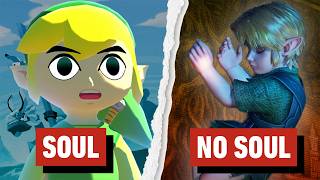

Is Nintendo Losing Its Soul?
42sPoses a provocative question about a beloved company, sparking debate among fans.
▶ Play Clip"Delivers a thoughtful analysis of Nintendo's soul, but the title oversells a definitive answer when the video is more of a discussion."
This video essay from IGN examines whether Nintendo is losing its creative soul by comparing its current strategy of remakes and safe sequels to its historical philosophy of innovation through hardware constraints. It traces the company's evolution from the GameCube era through the Wii and Switch, highlighting key moments like the Wind Waker backlash and the SpaceWorld 2000 demo, and questions if recent moves like the Switch 2 and Star Fox remake signal a shift toward commercial safety over originality.
Nintendo's soul is making decisions that could only come from them, not chasing industry standards. The video questions if recent moves like an Unreal Engine Mario or realistic Zelda indicate a loss of this identity.
At SpaceWorld 2000, Nintendo showed a realistic Zelda demo to prove graphical power, sparking fan outcry. IGN's Fran Mirabella noted it was 'un-Nintendo' because it focused on graphics over innovation.
The 2001 reveal of Wind Waker's cartoonish art style caused fan outrage, but it became a beloved classic, proving Nintendo's trend-bucking spirit. The realistic demo aged poorly.
Satoru Iwata, president in 2002, decided to stop competing on graphics, leading to the Wii. He applied Gunpei Yokoi's 'lateral thinking with withered technology' to home consoles.
The Wii U was a disaster, prompting Nintendo to open its IP to licensing, theme parks, and movies. This marked a shift toward mainstream monetization.
The Switch 2 is a more powerful Switch, not a paradigm shift. Mario Kart World at $80 and remakes like Star Fox 2026 feel like safe bets rather than innovative risks.
Nintendo's iconic developers are aging or retiring, and the company is increasingly relying on remakes of classic IP like Ocarina of Time, raising questions about its creative future.
Capcom and Atlus show remakes can be soulful if they have a point of view. Nintendo's remakes currently lack that opinion, suggesting a potential loss of soul.
Nintendo's soul is at risk as it leans into safe remakes and sequels, but it's not inevitable. The company can reclaim its identity by approaching remakes with a clear creative vision, as Capcom and Atlus have done.
What is Nintendo's 'soul' according to the video?
Making decisions that could only have come from them, not chasing industry standards.
00:03
What was the SpaceWorld 2000 demo and why was it controversial?
A realistic Zelda demo showing graphical power, which was considered 'un-Nintendo' because it focused on graphics over innovation.
01:41
What is 'lateral thinking with withered technology'?
Gunpei Yokoi's philosophy of making the most of cheap, well-explored, underpowered components through innovation in design and performance.
07:07
How did Satoru Iwata apply Yokoi's philosophy to home consoles?
He decided to stop competing on graphical fidelity and created the Wii, a low-powered console that focused on innovative gameplay.
05:22
What was the fan reaction to Wind Waker's art style?
It caused volcanic outrage, with fans demanding a 'mature Zelda', but the game later became beloved.
03:46
What does the video suggest about the Switch 2?
It is a more powerful Switch, not a paradigm shift, and represents a safe, 'whelming' decision.
10:58
What is the video's stance on remakes?
Remakes can have soul if they have a point of view, as seen with Capcom's Resident Evil and Atlus's Persona remakes.
18:09
What is the 'SpaceWorld 2000 crowd'?
Fans who wanted realistic graphics, which Nintendo is now seemingly validating with remakes like Ocarina of Time.
17:00
Nintendo's Soul Defined
Sets the central thesis of the video: Nintendo's uniqueness comes from making decisions only it would make.
00:03SpaceWorld 2000 Demo
Historical example of Nintendo briefly chasing graphical power, which was seen as uncharacteristic.
01:41Iwata's Philosophy
Explains the strategic pivot that led to the Wii's success, rooted in Yokoi's doctrine.
05:22Switch 2 as Safe Sequel
Critiques the Switch 2 as a conservative upgrade, contrasting with Nintendo's history of innovation.
10:58Remakes Can Have Soul
Offers a constructive path forward, showing that remakes can be creative if done with a point of view.
18:09[00:03] There is no man or woman or anyone for that matter. Most cries of hire this man are sarcastic, even scornful. The notion of an Unreal Engine Mario with spotty frame pacing and shader compilation
[00:17] screens runs contrary to everything we know about the company that consistently bucks modernity and blazes its own trail. Nintendo would never chase such stale industry standards. You might as well have Peach on the tactical comms.
[00:30] >> Bowser's castle should be just up ahead. >> I thought I smelled something burning. >> The jokes have been landing a little differently lately. Star Fox on Switch 2 is a stellar remake of a game that's been remade several times since 1993,
[00:43] full of lens flare and lush skyboxes and physically based feathers rendered with the full AAA toolkit. Meanwhile, Ocarina of Time's second remake appears to chase a similarly contemporary sheen. Nintendo is still no stranger to charming bespoke
[00:59] bangers, but the remake slate, the Switch 2's less than inspired existence, and Shigeru Miyamoto's public embrace of the Mario Galaxy movie's midness, all raise a question that a lot of Nintendo fans would rather not sit with for too
[01:13] fans would rather not sit with for too long. Is Nintendo losing its soul? rizz, the secret ingredient that let it run circles around competitors with
[01:26] triple the teraflops? Soul for Nintendo has always meant the same thing. Making a decision that could only have come from them. So, why does it feel, maybe for the first time, that Nintendo is going with the flow? This is not a new
[01:41] argument. Nintendo already had it with itself 26 years ago. August 24th, 2000, Chiba, [music] Japan. Nintendo opens the doors of its annual Space World exhibition, the company's own version of E3, where it's set to debut the next
[01:55] generation of hardware after the commercially disappointing N64. The reveal of the GameCube, a teeny purple box with a handle and its accompanying controller with bean-shaped buttons, oozed with the kind of quirky character
[02:07] we'd come to expect from the big N. But, the software on display was a very different beast. The now legendary SpaceWorld 2000 demo reel consists of clips designed to dazzle turn-of-the-millennium game journalists
[02:20] with the pure graphical power [music] many felt had been lacking in the prior generation. Amidst the litter of dancing Meowths and myriad Marios, sandwiched between a squashed and stretched Luigi and Samus Aran sprinting down an
[02:33] exploding hallway, was 12 seconds that would spark one of the biggest fan would spark one of the biggest fan outcries in gaming history.
[02:50] >> Finally, Nintendo would have a cool, realistic Zelda to silence the lunchroom slander and BBS bullies. At long last, Nintendo could compete graphically with contemporaries like Sony's PlayStation 2 and Microsoft's recently unveiled Xbox.
[03:06] The company would be safe from irrelevancy, spared the sad fate of Sega's Dreamcast that just couldn't keep up with the Final Fantasies and Metal Gear Solids out there. This was considered an unusual move for Nintendo
[03:19] even at the time. Covering the event, IGN's own Fran Mirabella remarked, "In a very un-Nintendo style, it showed how great the games could graphically be, not how well they might play. In fact, the whole presentation was almost
[03:33] totally devoid of Nintendo's true vision. The innovative company has said time and time again that great graphics mean nothing and it can only succeed if it offers the world a new way of looking at games." Fran's fears would prove
[03:46] graphical demo was just that, a quick game, though. That didn't stop console warriors from salivating at the thought of bump mapped biggorons and bongo
[03:58] of bump mapped biggorons and bongo bongos. at SpaceWorld 2001. The reception to the cartoony child link and his brightly
[04:12] colored, highly saturated world was nothing short of volcanic. An embarrassing epidemic of pants wetting and puerile anger towards Zelda. Message boards across the web rage. "Where is my mature Zelda? They made Zelda look like
[04:26] a puppet show for 5-year-old. I want a deep plot and realistic graphics. I thought this game would look so good my eyes would bleed."
[04:40] >> Hindsight has been kind to Zelda, now known and beloved as Wind Waker. Art style that sent forums into fits has endured as a shining example of trend-bucking spirit. While the SpaceWorld demo that was so breathtaking
[04:54] in 2000 with its plasticky character models and sludgy brown aesthetic has aged like Lon Lon milk. And even when Nintendo gave the higher this man crowd exactly what they wanted with Twilight Princess, the solidly mid sequel remains
[05:09] lower on the tier list than the Zelda games that the company made on its own terms. Almost like Nintendo knows what it's doing. After all, it's been doing it for a long time and the philosophy is no accident. It was in fact a
[05:22] deliberate, named decision that allowed Nintendo's soul to emerge. GameCube's very admirable library could save the quirky little console. It was
[05:35] already falling behind competitors when Satoru Iwata became president of Nintendo in May of 2002. A master programmer who knew his way around hardware, Iwata could see which way the industry was headed and wanted none of
[05:48] it. The GameCube generation would be the last in which Nintendo tried to hang with the big dogs in the race for graphical fidelity. Competing was expensive, loading development costs and time and eating into margins. And unlike
[06:01] cutting-edge hardware at a loss, Nintendo turns a profit on every console it ships. >> You want a revolution?
[06:15] >> [cheering] >> The result was the Wii, a paradigm-shifting revolution in gaming that couldn't even dream of cracking 720p while games like Call of Duty and Grand Theft Auto ignited a AAA explosion
[06:28] that severely graphics modded Nintendo's seventh-generation console. The games that made the Wii worth owning were bespoke, designed from the ground up around the capabilities of the cost-efficient hardware in that clean,
[06:41] tiny, white box. They didn't look like the other games on the shelf because they couldn't. Outside of rough-looking, compromised ports with little to offer beyond gratuitous waggle. The Wii and the equally humble under the hood DS
[06:54] looked and played like toys, but their astronomical success proved Iwata's strategy beyond any reasonable argument. And he was running a playbook established 15 years before by Gunpei Yokoi, the brilliant inventor who saw
[07:07] salarymen goofing off with calculators on the train and used the same components to invent the concept of handheld gaming. Yokoi called his philosophy lateral thinking with withered technology, making the most of
[07:20] cheap, well-explored, underpowered components through innovation in design performance. It's evident in the deliberate simplicity of Yokoi's Game & Watch and Game Boy, whose monochromatic screen traded color for a lower price
[07:33] tag and 30 hours of double-A battery life. Iwata decided to scale Yokoi's doctrine to home consoles, creating a lane for Nintendo to occupy all its own. Hardware limits have always informed the design of Nintendo's software. And
[07:47] rather than sheepishly hiding behind its modest specs, the company used them as permission to dazzle with wit and craftsmanship and soul. You already know >> Mr. Miyamoto, you pulled it out in the end.
[08:01] >> Very good. >> Soul is responding to the pre-rendered muscle of Donkey Kong Country with the crayon scribbles of Yoshi's Island. Soul is turning to paper cutouts to compete with the operatic excesses of Cloud
[08:15] Strife and Squall. Or foregoing the crowd-pleasing path of a hyperrealistic hero of time and delighting us with toon Link instead. Soul isn't always enough, but Nintendo's long history of flops from the Satellaview to the Wii U are
[08:30] still imbued with the undeniable spirit of a company that's willing to put itself out there and try something different. Even Nintendo's more frustrating business decisions have a handmade, idiosyncratic quality that
[08:42] distinguishes them from generic corporate extraction. Moves like sticking with cartridges way past the point of reason, charging $40 for DLC in the form of a plastic figurine, locking voice chat and game soundtracks behind a
[08:55] standalone app, they're all kind of insane, but it's recognizably, [music] insane, but it's recognizably, [music] soulfully Nintendo insane. And frankly, we wouldn't have it any other way even if our wallets say otherwise. Nintendo
[09:07] is going to Nintendo, and that's worked out really well for more than a century. But lately, however, Nintendo's been doing a little too much of what Nintendon't. Nintendo has been so successful for so long that it's almost
[09:22] hard to remember its last flop era, even if it was only about 13 years ago. does it feel? >> Uh I'm just glad I'm [music] I got it >> The Wii U, a funky dual screen concept that confused retailers and alienated
[09:35] the casual audience cultivated by the Wii was an unmitigated disaster and Nintendo true to form didn't waste any time on a new pivot. The withered technology ethos wasn't the problem as the switch would prove with extreme
[09:47] prejudice, but it was clearly time to find more mainstream ways to make money. that had generated so much of the company's mystique and aura would be open wide to licensers, theme parks, toys and movies. Things wouldn't really
[10:01] be the same afterwards. This isn't entirely a bad thing. Super Nintendo World is fantastic. We'll never say no to cool Lego sets and it was kind of nice to have a Mario Brothers movie that didn't traumatize the people making it
[10:15] or viewing it. Still, the first cracks appeared almost immediately. The film that Nintendo with all its creative capital and institutional weirdness chose to sign off on was a shallow by-the-numbers exercise in focus grouped
[10:28] IP exploitation from the folks who made Minions. You'd think the company behind utterly unique, out-of-left- field ideas like Pikmin and WarioWare could be a little more creative than Chris Pratt. >> Uh growing up, man, I spent hours of my
[10:44] life stomping Koopas in the original Mario Brothers arcade game at my local >> But, that's movies. Surely the games would be different. Surely Nintendo
[10:58] would follow up the runaway success of the Switch with another seismic piece of hardware to fly in the face of the futile quest for graphical perfection, but its answer was the Switch 2. The Switch with more graphics. While not
[11:12] resolution and frame rates of the original console, running the same playbook with some extra juice under the hood was a perfectly whelming decision from a company we're used to seeing dazzle us. It's exactly what everyone
[11:26] else does. The software slate tells a similarly milquetoast tale. [music] Switch 2 launched with Mario Kart World as the flagship title, a cromulent enough entry in the stalwart racing series that nonetheless left much of the
[11:38] fan base wanting more, especially [music] given its historic $80 price tag while the Ford GTA 6 came under fire for doing the same. The audacity of charging so much for more Mario Kart is a testament to how much grace fans are
[11:52] willing to give Nintendo as long as the company holds up its end of the bargain and delivers the good [music] stuff. But is it doing that? The Switch 2 is by all commercial metrics a massive success and Nintendo is still delivering great games
[12:06] on the regular. Surprise hits like Tomodachi Life and Donkey Kong Bonanza are still bursting with the company's trademark magic, but it seems like for every soulful smash there's either a misfire like Metroid Prime 4 or well,
[12:20] not a whole lot. GBA Pokémon ROMs sold at full price and paid upgrades for the back catalog. It's the sound of a satiated company happy [music] to tread water. And Nintendo is right to be happy. The folks working there certainly
[12:34] are with an impossibly low turnover rate and raises in an industry that's infamous for mass layoffs. The people are what [music] make Nintendo Nintendo and the accumulated wisdom and expertise from decades in the development trenches
[12:47] is impossible to recreate elsewhere. But those people are getting older and many of the icons [music] of Nintendo's golden age are entering into a well-earned retirement. Some like Iwata are tragically no longer with us and the
[12:59] ones who stayed might be growing a little checked out. Even Shigeru Miyamoto himself, the visionary genius behind some of the most joyful inventive games ever made has settled into a sort of a ceremonial emeritus role. Let's be
[13:12] clear, the man who has given us so much owes us nothing and deserves to ride off into the sunset. That said, it was a little weird to see him caping so hard for the Mario Galaxy movie. He almost seemed defensive, taking shots at film
[13:26] critics for being so negative on the utterly routine sequel. [music] If Miyamoto-san is willing to go to bat for mediocrity, what does that say about Nintendo? There's still plenty of talent willing to take risks from a rising new
[13:39] generation of developers cutting their teeth on fun new series like Splatoon to legends like Masahiro Sakurai pouring his considerable creative energy into an awesome and entirely unasked for Kirby Air Ride sequel before being sent back
[13:53] to the Smash [music] Bros. mines. But, what happens when the people at Nintendo who know how to make something weird and mean it are retired, uninterested, or otherwise occupied? The traditional move in gaming is to fall back on tried and
[14:05] tested IP, and what do you do when you've got some of the most valuable IP in human history and no particular vision for what to do with it? You remake it. >> Atmospheric entry complete. Extend the
[14:17] >> Star Fox on Switch 2 is an awesome game. Gorgeous, runs flawlessly on the still somewhat underpowered hardware, and feels more or less exactly like playing cutscenes, and it all takes place with immaculate anthropomorphic character
[14:31] models loafing about in the same gray room. It's an excellent introduction to the franchise largely because it was the introduction to the franchise. Behind the bells and whistles, Star Fox 2026 is largely the same game as the 1993 Super
[14:44] FX shooter and exactly the same game as the 1997 Nintendo 64 classic that brought force feedback to the masses. The only difference is that now it looks The only difference is that now it looks and sounds like every other game out
[14:58] >> We're entering Corneria City now. >> Gone are the unhinged line readings and bizarre regional accents >> Those who cross that rock will die. >> delivered via the distorted urgency of the N64's audio compression that became
[15:13] vocal stems for an entire generation, replaced with serviceable modern actors reciting sanded down dialogue like they don't want to wake up their parents in >> No. >> So, someone wants to play.
[15:27] >> The radio squeal and static has been swapped for sterile HD competency. The visuals are stunning, but they lack readable clarity, and the bosses have lost that crispy hit feedback that let you know your shots were landing. For
[15:42] all the world, Star Fox feels like Nintendo hired that man, but that man was missing the extra spark that made Star Fox 64 hit different. coming for him. >> You're no match for Andross.
[16:03] Is it soulful? Does it have the juice? in the original promotional materials. These [music] fuzzy gasfly marionettes inspired by low-budget British children's programs. Or heck, if you
[16:16] nightmare-inducing, the team's [music] dynamic anime makeover from the Mario interesting jumping-off point. There were a lot of ways the abstract polygons of Andross's armada could have been interpreted, but Nintendo went for the
[16:32] intentional, a way to get newcomer Velen Studios up to speed on Star Fox before more interesting path. There's a time and a place for training wheels, and Star Fox is a fine franchise to earn your sea legs on. Zelda is another
[16:47] matter entirely. The Legend of Zelda: Ocarina of Time is arguably the most celebrated game in the most celebrated franchise ever, and it looks to be headed somewhere similar. It's too early to render a full verdict, but the visual
[17:00] direction reads like a company more interested in validating the Space World 2000 crowd than telling them to pound sand and giving them greatness they didn't even know they wanted. Nintendo has gone back to this well before. The
[17:14] 3DS version of Ocarina was more of an HD port than a full remake, and even that lost some of the immaculate original art style in the translation, [music] Mask. But, this is something else entirely. Nintendo redoing Ocarina of
[17:29] Time with the mature, realistic graphics gamers pine for is like Hayao Miyazaki remaking Princess Mononoke in live action on a green screen. It's not wrong, exactly. It's just the most commercially legible version of the
[17:44] thing with the highest profit upside, which is a path Nintendo normally refuses to take. And Ocarina is not alone in this pipeline. Nintendo's near future slate is notably light on original titles, and more sacred cows
[17:57] queued up for the same modern makeover. At what point do you stop celebrating your back catalog and start fracking it for guaranteed returns? It's a fine line, and it doesn't have to be this
[18:09] way. [music] Remakes are not your enemy. Remakes can absolutely have soul. They just need something to say. Capcom is running back the entire Resident Evil series with expanded games rebuilt from the ground up in ways that enhance the
[18:23] source material without zeroing it, earning them a ton of money and an impeccable reputation among fans and critics alike. Atlus is revitalizing past Persona games with the confident visual flourish developed after the
[18:35] phenomenon that was P5, using its new found swagger to embellish the classic RPGs with modern, unmistakable style. Both approaches require a genuine point of view of what the thing is and what it
[18:47] could be. The best remakes come with an opinion about the original. They have someone in the room who cares enough to have an argument about it. Nintendo used to be that company, and we'll know soon enough if it still is. Thanks for
[18:59] want to hear more about Ocarina of Time, why don't you check out why we think now is actually the perfect time for a remake. And for everything Nintendo, remake. And for everything Nintendo, soul or no soul, make sure to stick with
[19:12] soul or no soul, make sure to stick with IGN.

⚡ Saved you 0h 19m reading this? Transcribe any YouTube video for free — no signup needed.