[00:03]
you this week because this week kicks off a three-part Legend of Zelda Ocarina of Time miniseries. We'll be here this week, the launch of Zelda week, and the week after with new episodes of NVC. And Perry, with the week we have before the
[00:16]
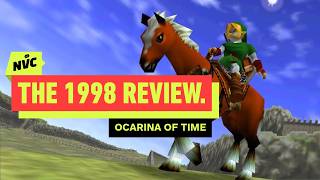
wanted to just take a look back one more time at the original Legend of Zelda Ocarina of Time, and specifically your review. I don't know if you know I did this, but I pulled a bunch of lines from your original 10 out of 10 Ocarina of
[00:30]
Time review on IGN, and I just wanted to go through it with you here. >> Okay. All right. That takes me back. >> Yeah. Yeah. I It's It's a really fun thing because I think it was a different era for spoilers at the time, and you
[00:45]
final boss in your review. Like it's It's really funny to read through and style of writing was. But you you lead off your review with the new benchmark for interactive entertainment has arrived. That is That's quite the lead.
[01:00]
>> Uh yeah. It I mean, look, this it it's hard to describe how anticipated this game was because it was you know, we had seen at preview events and through coverage before it came out in magazines and on our website that
[01:14]
this was going to change a whole bunch of things about how you play video games in 3D, right? And so of like, well, will it hold up? Will it work? Will it run? You know, can it can
[01:28]
it do all the things it promises? And so when it arrived, I was I was very pleased it did it. >> Yeah. So tell me about the the review period because now things are different. We get digital codes, and I mean, when I
[01:41]
review a game, it's it's just from home since I don't work out of the office. So it like to get that game and how did that all go? >> Okay. So it was very you know, Nintendo had very strict security.
[01:54]
had very strict security. Always always has had that. Sometimes we get lucky, right? A game out in Japan three like three months earlier. We get an import copy. We play through the whole thing. Uh, you know,
[02:07]
some games don't have a lot of text in it. For the ones that had text in it, I would play them because I can can read um read some Japanese. And then when the game then so it gives you this heads up start and you know exactly what to look
[02:20]
for and it speeds up things. In the case of this game, it came out in Japan I think just two days before. And so there was not much of an advantage. Um, so we had to rely on Nintendo giving
[02:33]
us early access to the game which if I recall correctly was not very early. It was literally like maybe um two days before launch. And then the security back then was person brings N64 with cartridge bolted
[02:51]
into the slot. Like it looks like the mask from uh from Like it looks like the mask from uh from uh you know uh a horror movie. Um, like it. And brings that to your offices and then
[03:06]
this person who was from Treehouse uh or Mario Club would would have to hang out with you while you play the game. In the same room uh we had a couch. We had like a demo room in our office with a nice TV
[03:19]
and a couch on the side and you know the rep from Nintendo basically just hung out and chilled out uh while we were playing that game in real time and then we had to impose on the poor person by saying hey we're not going to go home.
[03:33]
because obviously we're excited to play the game but we also have a review to write and on that. And so it was um it was basically and the person didn't mind luckily, right? We would have respected it if that wasn't possible.
[03:47]
And so yeah we just basically pulled an all nighter playing this game. And uh then bright and early in the next day continued. on the couch. Uh, the game couldn't leave the office.
[04:00]
It couldn't leave the room. And so that's that's where we were. and then uh uh you know, at the same time, we got an import copy, so some other people on the team started to play as well.
[04:12]
>> Yeah, there's you have a line in the review that said that when the copy of locked yourselves into a room with a big screen TV and played 17 hours straight. everything that's happened and write a review and something? That's that's like
[04:27]
a blur. Like if I do a marathon review day where I play like 8 to 10 hours and it's still hard to remember everything. >> Well, I was very young in 1998 and I will say that and so that that was not
[04:40]
that big of a problem. Um, we switched off playing a little bit if I recall correctly. Like I think Matt played a little bit. I did most of the the playing as well. And then uh yeah, we um
[04:53]
you have to remember like we were in good shape when it came to the opening hours of the game. I had played the game at a preview event in San Francisco earlier. So we did the whole I did the whole part up to getting
[05:06]
Epona in the beginning. And so without guide books, like if you went stuff's pretty obtuse. Like >> Mhm. >> knowing how to get the horse, like as a as a sort of uninformed consumer, not
[05:20]
you're probably visiting the ranch and you like, okay, you know, there's nothing to do here yet and you sort of forget about it. Um, well, a lot of people did know obviously that this game would have horseback riding and so they
[05:32]
the horse, right? So that kind of spoiled it at the start. >> Well, yeah, but you didn't nobody knew that you had to wait for the horse to right? Like that all of that information really wasn't out there. And so luckily
[05:45]
I had gotten to that part already in in the preview period. Um, so run uh and we got pretty far. Uh and then you know, I I don't I don't recall honestly. Obviously it's been a
[06:00]
couple of years, but I don't recall if we got all the Skulltulas on the first run through or we did every hard piece, probably not. Uh, but then obviously, then uh we couldn't continue to play on that
[06:13]
same cartridge. After the Nintendo rep went home, we had to start over with a obviously for this game. We were super excited. >> Yeah. Yeah, so I mean a big number, 10 out of 10 and I mean from my research,
[06:28]
on ign.com, but I don't know. I know there's a bunch of other sites and stuff fully true. >> So when IGN when IGN's first website launched, which was, you know, in in September
[06:42]
uh of 1996 n64.com actually had a 10-point rating scale. And so Mario 64 got a 10 out of 10 um I think it was a 0 to 10 scale back then. And then a year later already, we redid our rating scale to be a 100-point
[06:58]
scale. And so we adjusted all the the very few reviews that IGN had published. We adjusted them, so the 10 became a 9.8 for Mario 64. In hindsight, should have just kept it as a 10, but um yeah, that ensure that made
[07:13]
ensure that made Legend Legend of Zelda the first real 10 because it was on a 100-point scale. And so, you know, 9.9s followed and obviously other 10s followed, but um >> Majora's Mask get a 9.9 I think on IGN?
[07:27]
>> Yeah. >> I think Conker might have been uh a 9.9 game. >> It like Matt was really excited because he really likes some potty humor. Uh there you go. Majora's Mask was 9.9.
[07:42]
>> Yeah. >> was just that was the the frame rate was >> Yeah. So I guess from what you remember, I mean that not a big score, only a few dozen games have gotten 10 out of 10s on
[07:56]
IGN even in the in the 30 years since. Like what what's a 10 out of 10 to you? that number? >> I mean for it it's obviously the you you sort of outlook changes over the as you play more and more games. Um,
[08:11]
for us it was always the the top expression in a certain genre, right? Like it it the people keep saying, you know, there's no such thing as a perfect game or a perfect movie. I mean, it just
[08:24]
depends depends on your your um you know, basically your criteria. Like Ocarina of Time runs at 24 20 to 24 frames per second, right? And so if you
[08:36]
say, oh, I need a smooth running game um that runs at 30 at least or ideally at 60, then you ding it for that. When looked at it within the sort of, you know, within the era that it was released in, that was not unusual,
[08:51]
right? Like we had just stepped into 3D gaming. Super Mario 64 ran smoother than this game, but then a lot of a lot of games struggled with keeping frame rates up with like big vistas or lots of enemies on screen. And so you sort of
[09:06]
like, oh, that's, you know, it it it feels a little choppy. It doesn't feel to it and you sort of like that becomes your reality. Um, no, for me it was is this is this the sort of
[09:20]
is this is this the sort of pinnacle of action adventure games? And my answer was yes. If Link to the Past had uh if if we'd been around to review that a 10 too. That was the >> Yeah.
[09:33]
>> Yeah. >> perfect 2D expression of being thrown into a world where you can explore and you can sort of peel back the layers and and uncover new areas until you have the ability to go everywhere and just sort
[09:46]
Link to the Past did that first obviously and it did it really well. And then Ocarina Ocarina of Time did it perfectly in the 3D realm. It adopted it you know, in some ways it was still tethered to this uh
[10:02]
this setup, right? Like you and your preview for the remake um talked about how their load screens because they sort of segment the experience, right? Like opens when you go into the Forest Temple
[10:15]
of the Kokiri Forest, it's not connected. It loads in and they decided they'd be able to just make that one area. And like Ocarina of Time adapted linked to the past and basically sort of rift on that concept because of
[10:31]
technology at the time. And um I I mean I thought it did it perfectly. Uh is I thought it did it perfectly. Uh is everything flawless? No. Lord Jabu's belly is an awful dungeon. I hate it.
[10:44]
Um but that sort of becomes part of the journey that you know being inside of >> Yeah. Yeah no it was >> It was interesting to me reading through your review and in some things that you
[10:58]
talked about that now this remake 28 years later is going to address. Like this part I pulled is you you wrote but Ocarina of Time is not a platformer, a trying out Link's various actions. There is no jump button. You can still jump at
[11:11]
integral to the gameplay that players actually control the jump themselves. feature where Link will jump the last possible moment when running toward a it works very well for this type of game. Oh there there's Link. There's
[11:25]
Link the dog in the background. Yeah. So so all right you were talking about the lack of a of a jump button and that's kind of what 3D Zelda did for the next finally we're getting a jump. >> And and let's be honest, right? Like
[11:39]
Nintendo was pushing this concept of contextual actions and you know uh uh Conker did it did it later as well with 10A button doing a lot of different things. That was a necessity not it didn't start as a design decision. They
[11:53]
didn't go oh Link shouldn't jump because because obviously Link jumped in Link's >> item yeah. Mhm. >> And and they basically said no we need >> And and they basically said no we need the C buttons for um we need the C
[12:08]
buttons for items because you need to be able to switch quickly and uh so we're not going to put a camera there and so what do we do? Okay, we'll center the camera with Z and then we design the game around it and like it is really
[12:20]
remarkable how they pulled that off, right? They were basically already dealing with the limitations of the N N64 controller and how many sticks and buttons you had available to
[12:32]
sticks and buttons you had available to you. Um it was a lot by the standards of the day, right? It's not like it was somehow a step back but um they just basically designed their games around the hardware in a smart way.
[12:45]
Um and nowadays yeah when you revisit the game is it nicer to jump haven't played the new [laughter] one yet but um I imagine it's a nightmare. memory thing when I was in New York doing the preview and everybody wrote
[13:01]
running off ledges thinking that Link was going to jump and he didn't. Like if the first time you pick this up like you will you will just walk off a cliff it's a and that's not bad. That's just muscle memory you'll immediately
[13:15]
overwrite but it's just a funny thing. >> I remember and and there are games where actions and they could be streamlined and certain things didn't need to have a dedicated button, right? Um but in in this one I do remember um
[13:30]
there were times when I accidentally jumped off a ledge in Ocarina of Time, >> happens. Yeah. >> You on a on a walkway and then you jump down you're like oh no and like the you know this this game has a multi-layer
[13:43]
structure and so it can like this is a good example by the way where it doesn't on an ice uh I I think there like certain surfaces right? >> if you don't like build enough speed up
[13:57]
dips into the water or whatever yeah you have to be really careful. >> And so there you have something where if you said was the game perfect it's like the controls are enhanced now that you have more uh more actions available to
[14:13]
>> Yeah and like obviously the boots are a big one. People talk about the water temple having to go into that menu to toggle your boots on and off every time you need to take them off. And the free DS remake already fixed that with making
[14:25]
the boots an equippable item on your XY buttons basically. So that's something like that's a big pain point in the original that just makes a huge >> Yeah, that's that that was cumbersome for sure, right? Um to have to
[14:39]
constantly uh go to menus to to toggle that ability. played Ocarina of Time within the last year and I I have too. I've been playing it a ton this year. I guess how do you think that the original one holds up in
[14:54]
a modern context? >> Yeah, we did an episode with uh Damon did a like a basically a Game Scoop um spin-off uh called Is It Still Fun? Uh where we all replayed the game and um I was surprised how well it holds up. I
[15:09]
you know I I think it starts with the weakest area. Like Kokiri Forest like visually is my least favorite place outside of Jabu's Belly. Um that is not
[15:21]
outside of Jabu's Belly. Um that is not speak about uh Waterfall anymore. Uh but so you kind of you go back in and then as you go to the open world you go well this is a huge difference from modern open world games that have all these
[15:36]
sort of secrets and this great expanse, right? It it feels really small. And then by the time though you get to the Forest Temple you go oh my god like there are few games that do puzzle dungeons like this including in in the
[15:53]
uh Zelda series, right? Zelda games have some amazing uh dungeons. freaking amazing ones as well. But Ocarina of Time is just like I don't know it's just this even in one dungeon like the Forest Temple if you think
[16:07]
about what what's in there and the game I'll just go through some some gameplay elements, right? Like teaches teaches to use the hook shot interesting ways to uh to basically use verticality
[16:21]
in a way that you have not seen in any 3D game before that, right? Like being able to pull yourself up. You drop down, you lower water levels to free up traverse because you're limited in your diving ability at that point. You use
[16:35]
bows and arrows to twist and flip rooms and change the layout of puzzles. You figure out how to fight multiple enemies at once by locking onto them and and traverse stuff. Like there are block
[16:48]
puzzles pulled off in 3D. Um everything is like super eerie. You figure out how to use your shield to deflect enemies and put out their flames. Um like just that one dungeon had more puzzles than any other game of
[17:04]
play it, I feel like it feels so modern still. >> Yeah. Yeah, no no I agree with you. And I think that Ocarina and Majora's Dungeons do these in in a really unique way where Eiji Aonuma, who is still
[17:17]
producer on the Zelda series, we know he's a producer on the remake. He's the one who presented it in the Nintendo Direct. Uh he when he was in college, he made these wooden dolls, these these mechanical Japanese wooden dolls called
[17:29]
uh I believe karakuri. And like they they they play instruments and twist and move. And when he interviewed with Miyamoto at Nintendo, Miyamoto told him, these would have a good place at Nintendo, basically. And then one of
[17:44]
Aonuma's first projects was to design the dungeons in Ocarina of Time. And you can see the similarities between these mechanical wooden dolls where there's flips. Um and you have to think about the whole thing, but you can also think
[17:57]
about the individual part and these dungeons where you do that too where individual rooms have puzzles you solve to get through them. But also you need to think about I'm here, I need to get to this floor, but to in order to do
[18:10]
room, play this song in this room, climb up through this room. And it's just this spatial reasoning and navigation that it's just unbelievable to me that it's and I still think that the Ocarina dungeons in the original are like the
[18:25]
best lineup of dungeons in any Zelda game and that that's just wild to me. >> The organic design in this game you just saw Link jump like basically drain a well and go oh I need to go back down there but instead of going through a
[18:39]
doorway you just jump off the ledge you they they built a roll into the game so that you can mitigate it and that's the sort of the progression of that as you get
[18:51]
better and you understand the systems it's just so freaking smart I mean just that action it seems like nothing to us today because so many games have done that but like you used to if you jump off a platform you used to die that's it
[19:07]
right like it's like there is no verticality things are not stacked on top of each other the the contemporaries of the age like you know games like Doom they they were on a level playing field without you being able to look up and
[19:22]
down and like objects did not exist on top of objects. >> It's yeah and obviously Mario 64 blazed the trails on that. Oh I saw they changed that for the for the remake in the
[19:35]
>> Yeah the floor that the floor that fall or the ceiling that falls in the forest because you have a jump button so you could just jump up on that tile but yeah probably be little tweaks like that all over the place that have to account for
[19:49]
like his his new move set. >> But you could you could climb on top of it right here or does it >> I can't say I don't know I I haven't thought about it in that way. >> I I believe maybe just speed runners do
[20:03]
it where you do a sword slash and go on top of it or something yeah yeah >> Yeah you can bypass that. >> Well should we talk about some of the other versions of Ocarina of Time that came out over the years I think there's
[20:15]
some interesting ones there's I mean there was supposed to be a Nintendo 64 DD that's the Japan only a disc add-on to the 64 was going to be called Ura Zelda and it was never really came out. It was going to
[20:27]
have new enemies, new puzzles, new stuff. Didn't happen, but eventually they say some of those ideas made it into Master Quest, which was on the this this morning. There's like some debate of whether Master Quest actually
[20:40]
is what Ura Zelda was going to be or if it's just kind of an excuse second quest version of this game. Thanks for watching this clip from catch the full episode over at youtube.com/igngames.
[20:53]
With the Nintendo Switch to finally here, there is so much to dive [music] into. We appreciate you tuning in and don't forget NVC is the only place you don't forget NVC is the only place you can get the thing.