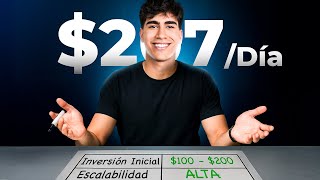

Make $10k/month with YouTube Automation
55sHigh-income claims and lifestyle appeal trigger curiosity and aspiration.
▶ Play Clip"The title promises a fast money-making method, but the video is mostly a sales pitch for a paid program, with generic advice and heavy promotion."
The video presents YouTube automation as the fastest way to make money online in 2025, claiming the creator earns €10,000-€20,000 monthly while traveling. It outlines the business model, compares it to alternatives like dropshipping and trading, and details five steps to start, including finding a niche, building a team, analyzing metrics, scaling channels, and systematizing. The latter part is a sales pitch for the 'Uno de 10' program.
A small sector earns €5,000-€30,000+ monthly without a boss, while most follow the conventional path of university and jobs they dislike.
The creator generates €10,000-€20,000 per month while traveling, starting from scratch while studying and working.
Nicole earns over €7,000/month, Aida over €2,000/month, and Show scaled to €2,000/month in the second month of monetization.
The model involves uploading videos by delegating all content creation to earn money. Example channel generated 260,000 views and €500 per video.
Only needs a laptop and internet, unlike dropshipping or e-commerce which require large investments and have lower margins.
Childhood friend Carlos quit dropshipping after generating €200 gross but only €20 net from four orders.
The creator lost thousands in trading and notes it requires years to become profitable, unlike YouTube automation.
YouTube has nearly double the users and much higher RPM (revenue per 1000 views), paying $1-$10 vs cents on TikTok.
Steps: find a profitable niche, find a content team, analyze metrics, expand to more channels, and systematize/delegate.
Choosing the right niche can mean the difference between €500 and €6,000 per month with the same effort.
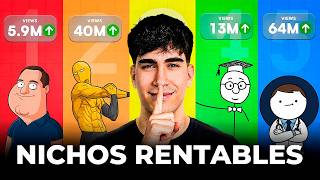
Niche is the broad theme (e.g., sports), sub-niche is specific (e.g., football). Profitability depends on view volume, competition, and RPM.
Don't enter niches with existing channels in the same language; instead, take inspiration from other markets (English, French, etc.) and bring it to a new market like Spain.
RPM is earnings per 1000 views, higher in niches like finance/technology due to audience purchasing power, and higher in English markets than Spanish.
Social Blade shows channel earnings estimates; example channel earned $460-$7,400 in 30 days with 1.8M views, even without recent uploads.
Once videos are published, they generate income without ongoing work, as shown by a channel earning €4,000 with no new videos in 30 days.
A good content team costs around €150-€200 per month, and AI can reduce costs further. Delegation saves time and enables scaling.
Recommendations: use Appwork (freelance platform) or Twitter to find scriptwriters, miniature artists, etc. Take time to find a committed team.
ChatGPT for scripts, titles, and thumbnails; ElevenLabs for voiceovers (replacing human voice actors). Human review is still recommended.
Key metrics: retention (where viewers drop off), impressions (how many times video appears), and CTR (click-through rate, e.g., 10% means 10 out of 100 impressions clicked).
The creator wakes up early (5-8 AM) to analyze metrics and decide changes for next videos.
Having five channels earning €2,000 each is better than one earning €10,000, for scaling and risk diversification.
Open new channels only when systems are in place; replicate successful channels in other languages or similar niches.
To scale further, hire a manager to handle execution while you focus on strategy.
Failure often comes from wrong niche, poor content, or inability to interpret metrics; solving these can change your life.
Option 1: DIY with trial and error, risking months/years and money. Option 2: Join the 'Uno de 10' program for structured guidance.
A program to help scale to €2,000/month in 3 months, with success stories like Shil, Aida, and AES (who left his job).
Includes systems for niche finding, team building, one-on-one chat, weekly calls, expert calls (e.g., miniature expert), and community support.
The program is not free; it requires commitment. A free strategy session is offered to assess fit, accessible via link in description.
Knowledge is what separates you from results; the sky is not the limit.
YouTube automation is presented as a low-cost, scalable business model that can generate significant passive income, but success requires careful niche selection, delegation, and metric analysis. The video ultimately promotes the creator's paid program as the most reliable path to achieving these results.
What is YouTube automation?
A business model where you upload videos to YouTube by delegating all content creation to earn money.
02:10
What is RPM in the context of YouTube?
RPM is the revenue the platform pays for every 1000 views.
05:28
Why is YouTube's RPM higher than TikTok's?
YouTube has nearly double the users and pays $1-$10 per 1000 views, while TikTok pays only a few cents.
05:28
What is the difference between a niche and a sub-niche?
A niche is the broad theme (e.g., sports), while a sub-niche is more specific (e.g., football).
07:13
What are the three key metrics to analyze in YouTube automation?
Retention, impressions, and CTR (click-through rate).
15:31
What does CTR of 10% mean?
It means that out of 100 impressions, 10 people clicked on the video.
16:23
Why is it better to have five channels earning €2,000 each than one earning €10,000?
It allows for scaling and diversifies risk; if one channel is taken down, you still have others.
17:00
What is the recommended cost for a content team?
Around €150-€200 per month for a good team.
11:11
Which AI tools are recommended for content creation?
ChatGPT for scripts, titles, and thumbnails; ElevenLabs for voiceovers.
13:46
What is the main reason to avoid entering a niche with existing channels in the same language?
Because those channels have already captured the audience and attention in that market, making it harder to compete.
08:04
YouTube automation definition
Clearly defines the core business model that the entire video is based on.
02:10YouTube vs TikTok RPM
Provides a concrete comparison showing why YouTube is more profitable per view.
05:28RPM factors
Explains how niche and language affect earnings, a key principle for niche selection.
08:43Key metrics
Identifies the essential metrics to track for channel optimization.
15:31Diversification strategy
Highlights the importance of multiple channels for risk management and scaling.
17:00[00:02] faces layoffs, economic crises, instability, long hours at a job or university they don't like, there is a small sector of the population that is taking advantage of what I call the golden age of
[00:14] digital businesses, since they earn 5,000, 10,000, even more than 30,000 € a month without having to put up with any boss and also being able to have free time and be where they want. Despite having this great opportunity, most
[00:27] conventional path of going to university, having to study, then looking for a job they don't like, and spending the rest of their lives without earning what they want, without doing what they want, and on top of that, facing rising prices,
[00:41] economic instability, debt, and so on. Luckily, if you've entered this video it's because you don't want that for yourself. Therefore, in this video I'm going to show you the best way to make money online, which allows me to generate
[00:55] between €10,000 and €20,000 per month every month while traveling the world and also having time for literally whatever I want, having started completely from scratch while studying and working at the same time.
[01:07] But honestly, I haven't only achieved that. For example, Nicole climbed to over €7,000 per month starting from absolutely nothing. Ah, today it is generating more than €10,000 per month with its automated channels. Aida
[01:20] is already generating more than €2,000 a month while combining it with her job, starting completely from scratch. Show, who has also managed to scale his channel to more than €2,000 per month while working, in just the second month
[01:32] of monetization, and many more people who have already monetized and are in the process of passing the €2,000 monthly barrier. So in the next few minutes I'm going to reveal what this business model consists of and why it's so
[01:45] profitable. And I'm also going to tell you the five steps you need to know to get started so that you too can achieve results like these. So this video, I suppose you're not willing to achieve the
[01:58] life results you want either. First of all, what does this business model consist of ? This business model is called YouTube automation and it consists of uploading videos to the YouTube platform by delegating all
[02:10] content creation, that is, delegating all the videos with the goal of earning money videos. I'm going to give you an example. This channel you are seeing on screen is the first one I opened and the one that allowed me to scale to more than €2,000 per
[02:24] month with this business model. If you look, I have videos with quite a few thousand views, even though it's one of the smallest channels I have today. And if you look, this video has generated 260,000 views, and this other one 250,000
[02:38] . And with this video I earned about €500, with this one also about €500, with this one a little less. I remember there were about 400, with this one also about 400. And what I think is really important when
[02:51] invest all your savings with the risk of losing them. You can start flexibly anywhere in the world while you are studying or working and without having any prior experience. In this case, all you need is a
[03:05] laptop and an internet connection, since there are many other business models that I complete opposite. For example, dropshipping, Amazon FBA, or e-commerce in general requires a large initial investment, since you are working with
[03:19] stock and risk losing that money. And on top of that, the worst part is that the margins are much lower. Today we see many screenshots of typical gurus showing that they make many thousands of euros, but in reality the
[03:32] profits from those screenshots are 20% at most. So if they show you a screenshot that they have generated €10,000, that means they have actually earned €2,000 or even much less. In fact, my childhood friend, Carlos,
[03:44] started with dropshipping and a clothing brand almost 2 years ago and quit because out of four orders he made he generated €200 and was left with only €20 net. and headaches managing all those shipments. And that's one of the reasons
[03:58] why he started with YouTube automation. Or for example, there is also a lot of talk about trading, a business model that I myself started and that I left because I lost thousands of euros that at that time cost me a great deal to generate. And
[04:10] sense when you have money, not when you can invest €1,000, €2,000 or even €4,000. Besides the fact that trading is very complex and requires many years to become profitable,
[04:22] along the way he has suffered by investing many hours and a lot of money. trading, I wouldn't have experienced anything I 've experienced this year, and I would still be working to be able to invest. I honestly prefer a
[04:37] business model that allows you to quickly build capital so you can live the life you want and not waste my 20 years. Another business model that is talked about quite a bit is the business model of digital marketing agencies. And it is
[04:50] be quite good, but in my own case I wouldn't like to deal with clients and it's much harder to scale because there comes a point when you don't have enough time to get more clients. Or there's also a lot of talk about
[05:03] TikTok automation, the new business model that will make you a millionaire quickly. And it's results within that business model, but you have to see what the projection of that platform is, what the projection of the TikTok platform is,
[05:16] and also what the projection of that business model is. These are TikTok users and these are YouTube users. As you can see, YouTube has almost double. Not only that, but YouTube's RPM is much
[05:28] higher. RPM is what the platform pays for every 1000 views, while YouTube can pay you from one to $ for every 1000 views and TikTok you earn very few cents for those 1000 views. Therefore, there is a huge difference and you can
[05:42] actually earn much more money on YouTube without millions of views. Now that we see the potential of YouTube automation and how profitable it is, let's go over the five steps you
[05:54] need to get started and create a network of automated channels that generate €150 a day for many months. Basically, it involves finding a produce the videos for us, analyzing metrics to see if the
[06:08] content is working, expanding to more YouTube channels, and focusing on delegating all those systems so you really only take care of the channel strategy. The idea is that with these steps you will have at least
[06:21] four or five channels that generate €100 per month each. And logically, this is not easy to achieve and requires a great deal of effort, much more effort. It requires studying a degree you don't really like, only to
[06:34] then have a job you spend most of your life doing that you also don't like. Let's go step by step. The first step will be to find a profitable niche. And this is one of the most important steps because it can mean the difference between
[06:47] earning €500 with a channel to more than €6,000 with that same channel investing the same time or even less effort, like Nicole or A who managed to generate a lot of income largely thanks to the niche they
[07:01] chose. So, to help you understand what a niche is. The niche is what you talk about on your channel; it's the theme. For example, if you upload soccer videos, the niche will be soccer. I want you to understand one thing, I
[07:13] like to divide the niche into two, a niche and a sub-niche. The niche, for example, of football would be sports, but the sub-niche would be football. Because? Because we are sub-niche, we are moving further into a type of
[07:26] sport, which in this case would be football. Then also, what makes a niche profitable or not? First of all, the visualizations. What is the volume of views in the niche we are going to
[07:38] views, that there isn't a large volume, it's perhaps because there isn't much demand. But I always recommend entering niches that have a lot of views, mind you, I'm not talking about our market, but views
[07:51] in the niche in general. Because? Because we know how to identify that there is a high Also, since I just mentioned the competition, I'm in favor of never entering channels, never entering niches
[08:04] mean by competence? I mean, channels that are doing exactly the same thing as you, in the same market, that is , in the same language as you. channel that's already doing it in Spanish. Because? Because you're being
[08:17] inspired by someone who has already done the things you're going to do and has uploaded videos within a market and has already received all the attention and all the audience of that market. So, I always recommend having
[08:29] reference channels, whether in the English, French, Portuguese, German, or Italian markets, and bringing it into a new market such as Spain. Then it also needs to have a high RPM, meaning that we earn more for every 1000 visits,
[08:43] because RPM is what measures what we earn for every 1000 visits. And what determines whether the RPM is higher or lower? Well, it depends on the example, on a technology channel, if you
[08:56] , obviously the purchasing power of those people who watch the technology video will be much greater. So, you have to understand that you're not going to get paid the same for a cartoon audience as for an audience
[09:09] that might be, for example, in finance, technology, and so on. You also have to understand that, for example, the RPM of a Spanish market, that is, the language of that channel in Spanish, will be much lower than the RPM of an English channel.
[09:22] Because? For the same reason I just told you, the purchasing power of the United States is much higher than the purchasing power, in this case, of Spain. So it's normal that advertisers want to pay YouTube more for
[09:34] channel you're watching receives several million views per month, and if we copy the channel name and go to Social Blade, a platform for viewing how much money
[09:47] channels are earning, we copy the channel name and search for it. It will automatically find all the statistics, and we can see approximately how much money that channel is generating. What's up, dude? Look, this is the channel and
[10:00] this is what Social Blade has shown me . During the last 30 days it has generated more than 10,000 subscribers, 1.8 million visits and has generated between $460 and $
[10:13] 7,400. You have to understand that more or less, so you understand how much money the channel keeps from this, it's half or a little more. So, what has half or a little more. So, what has
[10:28] hardly uploading any videos? Well, that's it. Well, actually, he hasn't uploaded a video. If you look closely, the most recent video is from 3 months ago. So, this channel has generated about €4,000 without having published any videos this month, in the last 30 days.
[10:41] business model: once you've published those videos, you receive visits anything. If you'd like me to send you a list of profitable niches that I've thoroughly analyzed, just send me the word " niche" in my Instagram direct message
[10:57] and I'll send it to you completely free of charge, with no Once we know this, we'll move on to the second step, which is to find a content team to make the videos for you . Many people get scared when I talk about
[11:11] outsourcing all that content to an external team because they think it 's super expensive, that it's going to cost a lot of money, when in reality if you pay around € 150 or €200 a month, you can have a very good team that will make all those
[11:25] you can pay much less because artificial intelligence is literally do it yourself in a moment. I want you to understand why a content team is important. The first thing of all is time. My philosophy is
[11:40] not how much money I'm making, but how I'm making it. I value much but not having to take care of anything, than earning a little more and having to be on top of everything. That depends on you personally, but I
[11:53] like it that way and the good thing about it is that you don't have to invest much are watching this video, I woke up this morning, spent 2 hours free of everything else. Because? because I have the team
[12:09] because of this point which for me is also very very important, that if we don't hire a team we can't scale. Because? Because it's great that you do things yourself, but there comes a point when you're already
[12:24] that. Because? Because if you don't have a cape, you can't keep climbing. Because? Because your day has 24 hours and there's a point where you can't do any more work. So, you also delegate to an external team that creates the content for you.
[12:37] channels as you want. Okay, and for those people who are interested in how to find a good team, I want to tell you that first of all, it's not easy. It's not easy to find a committed and good team, but I
[12:51] help you. It's better to take a little longer to find that team, but in the end find a team that is faithful and loyal to you and that is very enthusiastic about the people start with the first person they find and then they end up
[13:06] quitting, creating a very large bottleneck. So, where do I recommend you look for equipment? One would be Appwork, which is a platform freelancers. All you have to do is submit a job proposal
[13:19] asking for what you want, and the other option would be Twitter, okay? On Twitter you can find many, many people, whether they are miniature artists, scriptwriters, with them via WhatsApp. I have a WhatsApp community where
[13:32] the names of all the channels are listed, and I talk to each but we also have to take advantage of the rise of artificial intelligence so that we can have the work we want at the same time,
[13:46] which our freelancers would also do, but in a much more economical way. The first intelligence I recommend is Chat GPT. Chat GPT is constantly improving and you can leverage it to create
[13:58] scripts, video titles, and thumbnails. Yes, as you heard, you can also create thumbnails because today Chat GPT allows you to can do it completely free of charge. You also need to understand that you
[14:11] artificial intelligence, in this case to ChatGPT. In other words, you can't ask him to random script, which he will also do, but if you want him to do it in the references. In this case, you would give them three titles that you have as a
[14:25] reference and you have to say, "Make me a title based on these three there you assess what else has been done to you and what you can tweak in the end. Yes, intelligence is increasingly prevalent these days , but I always
[14:39] recommend having it reviewed by a human . For vocals, I the best artificial intelligence to date that produces voices. And in fact I started with a voice actor, a real person, so to speak, who narrated my
[14:54] voiceovers, but I had to replace him. Because? because they delivered the same quality and with artificial intelligence I could literally do it in a your videos, honestly, I don't recommend any
[15:06] Because there is no artificial intelligence on the market that can generate videos for you correctly, but I'm sure that also edit videos for you will soon be released. Let's move on to the
[15:19] third point, which is the analysis of metrics to see if the content is working. First of all, what are metrics? Yes, metrics are what you can see to analyze if the channel is working. If it's not
[15:31] the algorithm. If it's not within the algorithm, you can also analyze the change. And so you understand, the main metrics that are most important would be the first one, retention, the retention metric. You can
[15:45] analyze how much retention you're getting within your video and at what point retention has dropped the least, and you can analyze what you can do for future videos. The second would be the impressions. You can see how much
[15:57] traffic that video is receiving. And now for the third metric, which is the CTR. The CTR is what the cost per click is for every 1000 impressions. An impression is not the same as a visualization. An impression is when
[16:11] your video appears to someone upon entering the YouTube platform. That would be an impression. And a viewing happens when the person enters the platform, the video appears, and from there they enter into
[16:23] it. That would count as viewability, and the way to measure that, to measure impression and viewability, is the CTR. In other words, if you have a CTR of 10, it's because it has been shown to 100 people and 10 people have entered your
[16:36] video. My workflow these days is that I get up more or less early every day . Some days it's at 5, some days at 7, and some days at 8. And the first thing I do is analyze the metrics that the channels have had,
[16:48] and what I can change for the next videos. Let's move on to YouTube channels. And why is this important? Because, as I always
[17:00] like to say, it's not the same to have one channel that generates €10,000 a month as it is to have five channels that generate €2,000 each. We do this for two reasons. Because? Because if we create channels, our channel network can
[17:13] scale more because we have more options for those channels to generate revenue, and for the second reason, to diversify that risk. As I said, it's not the 10,000 as it is to have five that generate 2,000. Why? Because if that channel's views drop significantly,
[17:26] or if YouTube ever takes down that channel, your source of income will fall completely to zero. On the other hand, if you diversify and have several channels, if one or two channels are taken down someday, you have the other three
[17:38] do it? Look, first you have to understand that I always like to systematize, to have all the processes ready, and until I have it ready, I don't open another channel. In other words, I don't recommend that you open
[17:52] have the systems in place, the team does n't know what to do, and you haven't delegated it properly. So, the way to scale is to keep opening channels, but always keeping the systems firmly grounded. And
[18:06] the fifth point is the scalability of your automated channel network. What I always like to do is, if something has worked, why not do the exact same thing again, or in another language, or in a very similar niche?
[18:20] Ultimately, this is what I'm doing today. If a channel works for me, if a niche or one works for me, I open another very similar channel or I open exactly the same one in another language. Because? Because if there is demand,
[18:33] potential as long as, as I said before, there is no competition. And then to really climb the ladder, you need to hire a YouTube today, who takes care of making sure all those things happen. He is a person
[18:48] who is attentive to everything happening. You take care of the strategy and the other person would be more in charge of execution. These days it's neither cheap nor easy much about it because I'm sure that if you're
[19:02] watching, well, at this point you don't need it. I know all this sounds great, but the reality is that right now, if you were starting from scratch, what would happen over the next few months is that you would probably be frustrated because you did
[19:15] n't choose the right niche, because you didn't produce the right content, or because you didn't know how to interpret all the metrics. common reasons why people fail, but if you manage to
[19:28] solve them, your life will change forever, as it is one of the greatest opportunities that has ever existed to capitalize on your success quickly. achieve all these results I 've told you about? Well, you have several
[19:40] options. The first would be to take all the information you have seen in this video and try to solve it in your own way. But what will most likely happen is that you will spend months or even years falling and getting up continuously. Also, that
[19:52] you will invest and spend money that you will not be able to get back. And the worst part is that you'll be alone and won't have anyone to accompany you, and you'll have been trying for a long time without getting results. Therefore, it's much easier for you to give up and
[20:05] get caught in the rat race. And for these reasons I founded Uno de 10, a program where I help you acquire the ability to truly scale to more than €2,000 per month in 3 months, like Shil, who in less
[20:20] than 2 months has already scaled to more than €2,000 per month, or like Aida, who is also already at €2,000 per month, or like AES, who is also already earning more than €10,000 per month and has been able to leave his job thanks to this
[20:32] business model. or Carlos, Cristian, Pedro, Paula, who have also monetized and are heading towards €2000 per month in less than three months. And the best part is that they are normal people just like you and me. They're not smarter or more
[20:45] astute, they simply have the right information, and ultimately it's information you don't have because that's really what separates you from getting the results you want. And that's the second option: join the best
[20:59] academy with the best results on the market, where we help people with no experience and no prior knowledge to set up automated channels and earn more than €2,000 a month in these 3 months or even more if they implement and execute everything I've
[21:13] told them. Now we're going to talk in detail about what the 1 of 10 program includes, because it's not just a simple course, it's a program that covers all aspects and also has the necessary support for you to
[21:25] acquire the skills with the goal of reaching €2,000 in 3 months. You have the systems and processes to find a profitable niche. I also help you find a good niche. I help you find the perfect team
[21:38] to produce your videos. You have a one-on-one chat with me, and you also have amongst yourselves. And to help you understand, I have divided it into three phases. In phase one, I help you find that niche and that team. In phase two, I help you with
[21:53] all the problems that arise once you start publishing and are on your way to monetizing the channel. And in phase three I give you all the information and all the processes you need to literally scale that
[22:06] channel to the moon. And yes, it's designed so that you acquire the skill with the goal of generating more than €2,000 per month in less than 3 months. But this does not mean that the program will last less than 90 days. You will have lifetime access
[22:21] to all training with updates, news, and more. And all of this is very good, but the best thing of all, and what many people see as even more valuable, is what I mentioned
[22:33] earlier about support, since Uno de 10 is a place where I personally make calls every week analyzing your specific cases. Aside from that, aside from my calls, there are calls from other experts that
[22:46] you need to know about and you need to see in order to truly understand the business model. There are calls, for example, from a miniature expert, where that call is made so that you too can learn how to make a miniature or so that that
[22:58] miniature. And as I said, you also have the one-on-one chat with me and there's also the community for you all to support each other. Now, as you can imagine, all this value and all these results don't come for free.
[23:11] And, in fact, I myself previously created a community to be accessible to everyone, but very uncommitted people joined and I couldn't offer the best possible service. That's why I decided to focus for three months on
[23:25] creating the best possible program, where truly committed people come together with the goal that I can give them the best possible service. Look, honestly, there are people who sell their training courses for 5,000, 4,000, 3,000 and
[23:39] I, in fact, have paid for many programs of this type and the reality is that they may be good or not, but nobody is willing to pay that price, especially when they are starting out, either because they don't have that money or because it's going to
[23:51] cause a lot of stress and headaches. That's why, putting myself in my own shoes when I started my own business, I've decided to make all of this much more accessible to everyone. By accessible, I don't
[24:04] mean that everyone can access it, since we only accept people who are very committed and willing to do everything to achieve results, because in the end, we win if you win. And this
[24:17] selection process is very simple. You just need to schedule a completely free session where we'll give you guidance, advice, and really see if we can work together. And
[24:31] this free session isn't with me, it's with a strategy consultant who is only dedicated to providing guidance in that session and making sure that you resemble the success stories we already have. Because if you're like them, then you're
[24:45] much more likely to get the same results. To schedule this session, simply go to the first link in this video's description, where you can book a call with us. You'll just
[24:58] need to fill out the form; otherwise, you'll lose full access to the training. If you don't show commitment now, you probably won't show it when it comes to achieving the results we promise. I've
[25:10] also left my Instagram in the description in case you have any questions you to end this video, I just want to say that I hope it has been valuable to you, and remember these two things: knowledge is what separates you
[25:23] from having the results you want, and the sky is not your limit. Yeah.


⚡ Saved you 0h 25m reading this? Transcribe any YouTube video for free — no signup needed.