
I Trained Half My Body Light vs Heavy for 60 Days
45sThe premise is inherently intriguing and the immediate mention of an unexpected result hooks viewers.
▶ Play Clip"Delivers exactly what the title promises—a clear, data-backed comparison of light vs. heavy weights with MRI evidence."
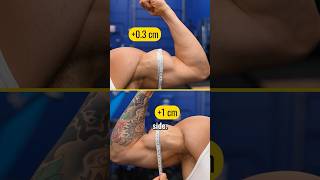
A 60-day self-experiment compared training one side of the body with light weights (15–30 reps) and the other with heavy weights (3–6 reps), using MRI scans to measure muscle growth. The results were surprising: light weights led to slightly more growth in most muscles, but heavy weights built more strength and caused joint pain. The creator suggests a moderate rep range (6–15) as the practical sweet spot.
Heavy side: 3-6 reps to failure. Light side: 15-30 reps to failure. Both sides did the same number of sets.
The light side produced a much bigger pump, but pumps don't equal growth. MRI scans were used to measure actual muscle growth.
Most muscles grew slightly more on the light side, likely due to higher volume. The chest showed the biggest difference—twice the growth on the light side.
The heavy side gained more strength but caused joint pain. The light side built endurance but was mentally taxing. A hip stabilizer muscle grew on the heavy side but shrank on the light side, possibly causing a back tweak.
A beginner participant also grew slightly more on the light side, but differences were tiny (sometimes 15 grams) and not visible in the mirror.
The creator suggests 6-15 reps with moderate weight as the sweet spot for gains, balancing growth, strength, and joint health.
What rep ranges were used for heavy and light weights?
Heavy: 3-6 reps to failure. Light: 15-30 reps to failure.
00:28
Which side showed more muscle growth in the MRI scans?
Most muscles grew slightly more on the light side, likely due to higher volume. The chest showed twice the growth on the light side.
00:55
What unexpected imbalance was found in the hip stabilizer muscle?
A deep hip stabilizer muscle grew on the heavy side but shrank on the light side, potentially causing a back tweak during deadlifts.
00:43
What were the trade-offs between heavy and light weights?
The heavy side gained more strength but caused joint pain; the light side built endurance but was mentally taxing.
00:28
What middle ground does the creator suggest as the sweet spot for gains?
6 to 15 reps with moderate weight.
01:21
Light weights led to slightly more growth in most muscles
Challenges the common belief that heavy weights are always superior for muscle growth, backed by MRI data.
00:55A hip stabilizer muscle shrank on the light side
Highlights that training style can cause imbalances with real-world consequences like back injuries.
00:43Moderate weight (6-15 reps) may be the sweet spot
Offers a practical, balanced recommendation for most trainees based on the experiment's outcomes.
01:21[00:00] I trained half my body with light weights and the other half with heavy weights for 60 days to see which one actually builds muscle faster. And the results? Not what I was expecting. The light side came with an insane pump,
[00:14] inflating my arm almost four times bigger than the heavy side. But pumps don't equal growth. So I got full body MRS scans to measure the growth of everything. I even found a beginner to do the experiment with me. Both sides did the same number of sets.
[00:28] Heavy meant 3-6 reps to failure, and light meant 15-30 reps to failure. After 60 days, the heavy side got way stronger, but my knees and elbows were begging me to stop. The light side built endurance, but every set was a mental battle to reach failure.
[00:43] But which side grew more? One muscle, a deep hip stabilizer, grew on my heavy side but actually shrunk on my light side. This imbalance might be why I tweaked my back during normal deadlifts after the experiment.
[00:55] But every other muscle we measured grew slightly more on the lighter side, likely because it did way more volume. Surprisingly, my chest had the biggest difference, twice the growth on the lighter side. Maybe because I've never trained it with such high reps.
[01:07] Dennis, the beginner, also grew slightly more on the lighter side. But the actual growth differences were tiny, sometimes just 15 grams, and definitely not visible in the mirror. At least I don't think. You guys tell me. But remember, there's a middle ground that I didn't test.
[01:21] 6 to 15 reps with moderate weight. And after doing this experiment, I honestly think that's the sweet spot for gains.



⚡ Saved you 0h 01m reading this? Transcribe any YouTube video for free — no signup needed.