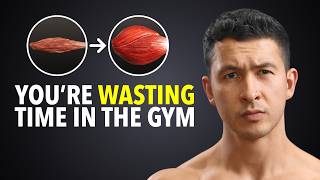

Why 95% of people never gain 20lbs of muscle
45sShocking statistic with dramatic visual transformation hooks viewers who struggle with muscle gain.
▶ Play Clip"Title is highly accurate: video provides a detailed, expert-backed plan with realistic timelines, debunking quick-fix promises, and offers science-based methods without hype."
This video explains the fastest way to naturally gain 20 lbs of muscle, debunking common myths and outlining a science-backed system based on training, nutrition, and recovery. It combines insights from multiple experts to provide a realistic timeline and actionable steps for achieving significant muscle growth.
Shows how gaining 5, 10, 15, and 20 lbs of muscle transforms different body types (skinny, skinny fat, heavier).
Less than 5% of people naturally gain significant muscle, not due to age/genetics but due to lack of a proper plan.
Naturally, it takes at least a year to gain 20 lbs of muscle with proper training and nutrition; gains slow by about half each subsequent year.
A study of 56 top natural bodybuilders found they only do about 12 sets per muscle per week, not hours of training.
Dr. Mike Zourdos' research shows diminishing returns: sets 1-5 provide lots of growth, 5-10 provide some, and beyond 10 gains are uncertain.
Pushing each set to 1-2 reps shy of failure nearly doubles muscle growth compared to stopping 8 reps short.
Two main approaches: Intensity method (5-12 sets per muscle, all to failure, shorter workouts) and Volume method (12-20 sets, stop 2-3 reps short, longer workouts). Both are effective; choose based on adherence.
Jeremy uses a mix: fewer sets to failure for arms/back, more sets with higher volume for legs to aid recovery.
Research suggests capping sets at 10-11 per session per muscle group; splitting sets across at least two days per week can speed up gains by up to 30%.
Stage 1 (beginner): Few compound movements (press, pull, squat, hinge). Stage 2 (intermediate): Add more targeted exercises (machines, cables) for lagging muscles. Stage 3 (advanced): Stick with proven exercises and rotate minimally.
Above 20% BF (men) / 30% BF (women): Aim for body recomposition with a small deficit (max 0.5% body weight loss per week). Leaner individuals: Use a slight calorie surplus (0.5%-2% body mass gain per month depending on experience).
Minimum for maximum benefit: 1.6 g/kg or 0.7 g/lb. Even lower amounts (1.2 g/kg) still support gains; protein plays a smaller role than often thought.
Eat slow-digesting carbs + protein 1.5-2 hours before, then fast-digesting carbs 30 minutes before training for sustained energy.
Creatine can boost lean mass by 2-3 lbs in 8-12 weeks, but much of that is water; 20-30% of people are non-responders.
Sleep boosts growth hormone and testosterone; lack of sleep limits recovery and gains. Aim for 7-9 hours of quality sleep.
Three key tips: pitch-black room (no LED lights), quiet environment (use eye mask + earplugs), and cool temperature (program thermostat to drop at night).
A 20-minute nap can restore performance after poor sleep, shown to improve sprint speed by 2-3%.
The fastest natural muscle gain requires a structured system combining optimal training volume/intensity, targeted nutrition based on body composition, quality sleep, and consistency—not just more protein or supplements.
What percentage of people naturally gain significant muscle, and what is the main reason for the low percentage?
Less than 5% of people naturally gain significant muscle. It is not due to age or genetics but because they lack the right plan.
0:22
How long does it take to naturally gain 20 lbs of muscle with proper training and nutrition?
At least a year.
1:03
According to the study of top natural bodybuilders, how many sets per muscle per week do they do on average?
About 12 sets per muscle per week.
1:45
What does Dr. Mike Zourdos' research show about the relationship between number of sets and muscle growth?
Diminishing returns: sets 1-5 give lots of growth, 5-10 give some, and beyond 10 the benefit is uncertain.
2:06
How much does muscle growth nearly double when pushing each set to 1-2 reps shy of failure?
Growth nearly doubles compared to stopping 8 reps short of failure.
2:47
Name the two main training approaches for muscle growth and their key difference.
Intensity method (5-12 sets per muscle, all to failure) and Volume method (12-20 sets per muscle, stop 2-3 reps short of failure).
4:06
What is the optimal number of sets per session per muscle group, according to recent research?
About 10-11 sets per session per muscle group.
6:21
How much can splitting sets across two or more days per week speed up gains?
Up to 30%.
7:08
What is the recommended minimum protein intake for maximum muscle growth (in g/kg and g/lb)?
1.6 g/kg or 0.7 g/lb.
14:33
What is the recommended calorie deficit for body recomposition in men above 20% body fat?
Max 0.5% body weight loss per week (about 250-500 calorie deficit per day).
12:08
What are the three key environmental factors for quality sleep according to Dr. Andrew Spektor?
Pitch-black room, quiet environment (use eye mask + earplugs), and cool temperature.
18:15
How long should a nap be to improve athletic performance after poor sleep?
20 minutes.
19:50
Realistic timeline for 20 lbs of muscle
Provides honest expectation of at least one year, countering common 'quick gain' promises.
1:03Diminishing returns of additional sets
Reveals that more volume doesn't always equal more growth; risk of wasted effort.
2:06Training to near failure doubles growth
Key actionable insight that adjusting intensity alone can significantly boost results.
2:47Frequency's impact on speed of gains
Simple scheduling change (splitting volume) can accelerate progress by 30%.
7:08Calorie strategy based on body fat
Tailors nutrition to individual body composition, avoiding generic bulk/cut cycles.
11:07Protein's small role relative to training
Challenges overemphasis on protein, redirecting focus to more impactful factors like training intensity.
14:12Sleep as a chemical signal for growth
Highlights non-negotiable role of sleep in hormone production and recovery.
17:34[00:00] This is a skinny guy, skinny fat guy,
[00:02] and heavier guy. And here's what it
[00:03] looks like if they each gain 5 lb of
[00:05] muscle, 10 lb, 15 lb, and [music] 20 lb.
[00:09] Gaining that much muscle completely
[00:11] transforms your body no matter your
[00:13] starting point. I know because it
[00:14] happened to me. I went from this to
[00:16] this. [music] And just 12 lb in the
[00:18] right places took my wife from this to
[00:20] this. But here's the problem. Based on
[00:22] the data, uh less than 5% of people ever
[00:24] gain that much muscle naturally. Not
[00:26] because of age or genetics, it's because
[00:28] without the right plan, sure you may
[00:30] make some progress early on, but
[00:31] afterwards you get stuck spending years
[00:33] with the same physique. And more
[00:34] protein, more creatine, and more
[00:36] workouts aren't going to help you break
[00:37] through that. It's why I teamed up with
[00:40] five of the world's smartest scientists
[00:42] and coaches, experts in all different
[00:44] areas related to muscle growth, [music]
[00:45] to answer one question. What is the
[00:48] fastest way to gain 20 lb of muscle
[00:50] naturally? And at the end of this video,
[00:52] I'm going to give you a step-by-step
[00:54] plan that combines everything into one
[00:56] simple system. But before we talk about
[00:58] how to do it, we need to clear something
[01:00] up that almost nobody online is honest
[01:02] about. How long this is actually going
[01:03] to take. Cuz you'll see fitness coaches
[01:05] everywhere promising 20 lb of muscle in
[01:07] 3 months. With special sauce? Sure. But
[01:09] naturally, a muscle just doesn't work
[01:11] like that. With proper training and
[01:12] nutrition, it takes at least a year to
[01:15] put on that amount of muscle. And then
[01:16] every year after that, your gains slow
[01:18] by about half. But here is the good
[01:20] news. Your fastest gains don't actually
[01:22] come when you start lifting. They come
[01:23] when you start lifting properly. So
[01:25] let's start with training because this
[01:26] is where 90% of your muscle growth
[01:28] actually happens. [music] Take a look at
[01:29] this. 56 of the world's top natural
[01:33] bodybuilders. Guys who have naturally
[01:35] built well over 20 lb of muscle, beyond
[01:37] what most guys can achieve even with
[01:39] drugs. And a few months ago, a group of
[01:41] researchers studied their actual
[01:43] training routines to try to find out how
[01:45] they're putting on so much muscle
[01:46] naturally. Now you'd expect them to
[01:48] [music] spend hours in the gym
[01:49] annihilating their muscles with tons of
[01:51] exercises. But that's not what they
[01:52] found. On average, they only do about 12
[01:55] sets per muscle per week. So [music] for
[01:56] chest, that's four sets of bench, four
[01:58] sets of incline, and four sets of flies
[02:00] for the whole week. Now, for some
[02:01] muscles, they were doing just six sets a
[02:03] week, probably a lot less than what
[02:05] you're currently doing. And [music] the
[02:06] reason why, might surprise you. The more
[02:08] sets that you're doing, the less benefit
[02:11] you get from each extra set. That's Dr.
[02:14] Mike Zourdos, professor cited in over
[02:16] 6,000 studies, who currently runs a
[02:19] muscle growth lab out of Florida
[02:21] Atlantic University, where he and his
[02:22] [music] team recently investigated how
[02:24] much more muscle you grow by doing more
[02:27] sets in the gym. Now, most people expect
[02:29] a straight line upward. More sets, more
[02:31] growth. But, here's what they actually
[02:32] saw. From sets one to five, you're
[02:34] getting a lot of growth. From five to
[02:36] 10, you're getting some. And then, every
[02:38] time you add sets after that, we're not
[02:40] as confident that you're still getting
[02:42] more growth. And so, if [music] training
[02:44] longer and longer isn't the best
[02:45] solution, then what is? This is where it
[02:47] gets interesting. So, Mike and his team
[02:49] actually ran a second analysis. How much
[02:51] more growth do you get by taking each
[02:53] set closer to failure? The point where
[02:55] you literally can't do another rep if
[02:57] your life depended on it. When you stop
[02:58] your set at eight reps short of failure,
[03:00] which is honestly the intensity I think
[03:02] most gym-goers train at, your muscles
[03:04] still grow. But, when you push each set
[03:06] to just one or two reps short of
[03:07] failure, growth nearly doubles. And I
[03:10] can hear you already. Jeremy, I train
[03:12] hard, that's not the problem. Trust me,
[03:13] I have worked with both beginners as
[03:15] well as trained lifters who have
[03:16] plateaued, and they both failed the two
[03:18] simple tests I look for. Number one, if
[03:20] their last rep isn't moving really slow,
[03:23] they aren't pushing hard enough. And
[03:24] number two, if on their very last set of
[03:26] their exercise, they can do more reps
[03:28] than their first set, even though
[03:30] they're using the same weight, again,
[03:31] they're [music] not pushing hard enough.
[03:32] But, now you may be thinking, okay, so
[03:34] if more sets help, and training closer
[03:36] to failure helps, then why not just do
[03:38] more sets and take them all to failure?
[03:40] I always try to remind folks that there
[03:42] are downstream effects of every training
[03:44] decision that you make. What that means
[03:45] is, if you take all of your sets to
[03:47] failure, you're going to feel terrible
[03:49] after the session, then you might have
[03:50] some fatigue and soreness the next few
[03:52] days. If that lasts for a little bit
[03:53] longer, maybe you can't train again or
[03:55] train effectively and then you've
[03:57] actually decreased your frequency
[03:58] throughout the [music] week. And maybe
[03:59] that inhibits some of the total volume
[04:01] that you could do because you were so
[04:02] fatigued from it.
[04:03] >> So, if your goal is building muscle as
[04:05] fast as possible, [music]
[04:06] the key isn't trying to maximize
[04:07] everything at once. It's choosing the
[04:09] training style that allows you to train
[04:11] hard, train consistently, and avoid
[04:13] injury. And that usually comes down to
[04:15] two main approaches. The first is what I
[04:17] call the intensity method. And if you
[04:19] hate spending hours in the gym, you're
[04:21] going to love this.
[04:22] >> If somebody loves training to failure,
[04:23] then they can go and knock out all of
[04:25] their sets to failure. Perhaps they
[04:26] don't need as many total sets. Maybe
[04:28] even five sets a week per so on a muscle
[04:29] group.
[04:30] >> do five to 12 sets per muscle per week.
[04:32] So, for chest, you might do three sets
[04:34] of bench, three sets of incline, and two
[04:36] sets of cable flies. That's eight sets
[04:38] for the entire week. Your whole chest
[04:39] workout might take just over 20 minutes,
[04:41] and you might be in the gym as little as
[04:43] three or four hours a week. But
[04:45] remember, you're taking every set to
[04:47] failure. And I'm not talking, "Oh, this
[04:49] is getting hard failure." I mean, you
[04:50] physically cannot move the weight
[04:52] another inch. Your muscles are shaking,
[04:53] your face is red, and you're making
[04:55] weird noises. It is mentally tough, but
[04:57] I have personally seen many lifters
[04:59] switch to this approach and see way
[05:01] better gains with half the sets.
[05:03] Because, for the first time in their
[05:05] lives, they're training with actual
[05:06] intensity instead of just running on
[05:08] autopilot with three sets of 10. But I
[05:10] will admit, each set is a mental battle,
[05:12] which is why there's a second option.
[05:14] With the volume method, you do more
[05:16] sets, like 12 to 20 sets per muscle per
[05:18] week. But you stop two or three reps
[05:20] short of failure. So, that same chest
[05:22] workout becomes four sets of bench, four
[05:24] sets of dips, four sets of incline, and
[05:26] four sets of cable flies. Each set is
[05:28] easier, but the workouts are longer.
[05:30] Now, which approach is actually better?
[05:32] >> The difference is pretty small. We get
[05:34] hung up on looking in the weeds at what
[05:36] is the the statistical difference in
[05:38] this and but we're talking about a few
[05:40] millimeters. So, whatever somebody is
[05:42] going to enjoy and adhere to the most,
[05:44] they should do that.
[05:45] >> Now, for me personally, I do a mix of
[05:46] both. So for arms and back, I actually
[05:49] prefer fewer sets pushed all the way to
[05:51] failure. But whenever I'm short on time,
[05:52] I also use the intensity approach. But
[05:54] for muscle groups like legs, taking sets
[05:56] to failure can honestly be brutal and
[05:58] hard for me to recover from. So, I'll
[06:00] often prefer adding an extra set or two
[06:02] instead. But to find what works the best
[06:04] for you, here is an upper and lower body
[06:06] workout with the intensity approach. And
[06:08] here are those same workouts but with
[06:10] the volume approach. So try out both and
[06:12] see what style you're personally more
[06:13] likely to stick to. Regardless of which
[06:15] approach you choose, if you're training
[06:17] this hard, you have to be smart about
[06:19] how many sets you're doing in each
[06:20] workout.
[06:21] >> This is pretty recent paper from us by
[06:23] Jake Remmert, one of my PhD students
[06:25] right now who just did a fantastic job
[06:27] on this. Unlike the other
[06:28] meta-regression from Pelland where we
[06:30] want to see the number of sets per week,
[06:31] we wanted to see [music]
[06:32] where you tap out for those diminishing
[06:34] returns in sets per session. We found
[06:36] that right about 10-11 sets per session
[06:39] [music] per muscle group. So over that,
[06:42] we aren't sure if we're really getting
[06:45] more growth. And now, that could be for
[06:47] physiological reasons. It could be for
[06:49] fatigue, right? We're training in such a
[06:51] fatigue state that we're not really
[06:52] accomplishing anymore. But what that
[06:54] suggests to me is that this is where
[06:56] frequency becomes a variable that
[06:59] becomes to be important.
[07:00] >> And all this means is rather than doing
[07:02] 12 sets of chest all in one workout,
[07:04] split those sets up into at least two
[07:06] separate days per week. Based on Mike's
[07:08] analysis, that one switch has the
[07:09] potential to speed up your gains by up
[07:11] to 30%, which is why upper lower splits,
[07:14] push pull leg splits, and full body
[07:16] splits are great options to organize
[07:18] your training. Now for me personally, my
[07:19] favorite split is this 5-day upper lower
[07:22] push pull leg split. But the exact split
[07:24] matters much less than choosing one that
[07:26] actually fits your schedule and lets you
[07:27] stay consistent. And if you stick to
[07:29] what we covered so far, depending on
[07:30] your experience, you should be able to
[07:32] build 3 to 8 lb of muscle over the next
[07:34] 6 months. But you can speed up those
[07:36] gains even further by choosing the right
[07:38] exercises.
[07:39] >> that some newbies might make, especially
[07:41] with this social media age and there's
[07:42] so much information is there's a lot of
[07:44] exercises you could be doing but you
[07:46] aren't in a position where you can
[07:48] efficiently learn many many exercises.
[07:49] >> That's Steve Hall, a pro drug tested
[07:52] natural bodybuilder who has gained 45
[07:55] pounds of muscle throughout his 20-year
[07:57] lifting career. He explained how there's
[07:59] three stages when it comes to choosing
[08:01] your exercises starting with beginners.
[08:04] >> Yeah, at least for those novice lifters,
[08:05] fewer exercises, just general movement
[08:07] patterns, a press, a pull, a squat, a
[08:10] hip hinge, and then you can kind of
[08:12] build from there.
[08:12] >> In fact, with just these six core
[08:14] exercises done three times a week, you
[08:16] can build well over 10 pounds of muscle.
[08:18] But once you actually put on some muscle
[08:20] and have at least two or three years of
[08:22] consistent training under your belt, you
[08:24] might notice those same compound
[08:25] movements have limitations. This is
[08:27] where stage two comes in. This where
[08:29] most people plateau.
[08:30] >> Once you're at this point as an
[08:31] intermediate, you've probably really
[08:33] grown some of your strong, genetically
[08:35] well-endowed muscle groups cuz your body
[08:36] is just it wants to move the weight A to
[08:38] B [music]
[08:39] the most efficient way possible.
[08:41] >> squats did a great job of growing my
[08:43] glutes and inner thighs, but my quads
[08:45] barely budge. And bench press never
[08:47] really did much for my chest and often
[08:49] just bugged my shoulders. It wasn't
[08:50] until I started doing hack squats for
[08:52] quads and more machine and cable work
[08:54] for my chest [music] did these areas
[08:56] finally start responding. But I know for
[08:57] others it's a complete opposite.
[08:59] >> There are some exercises that really
[09:00] suit some body types versus others.
[09:03] >> At this stage, you need to become your
[09:05] own guinea pig and figure out what your
[09:06] body and your joints respond best to.
[09:09] And this is also a stage where you might
[09:10] add a few more specialized exercises,
[09:12] especially for muscles that tend to lag
[09:14] behind, like the rear delts, upper
[09:16] chest, or [music] lats. But here's a
[09:17] list of a few exercises for each muscle
[09:19] that I find tend to work well for most
[09:21] people. Try two or three of these out
[09:23] per muscle and pay close attention to
[09:25] which ones feel the best on your joints
[09:27] and give you the best pump and next day
[09:28] soreness. Those are likely going to be
[09:30] your winners. And so by the time you've
[09:32] reached stage three, you've figured out
[09:33] which exercises actually grow your
[09:35] muscles the best. So instead of
[09:37] constantly changing exercises, you
[09:39] simply double down on the ones that work
[09:41] and rotate them only when needed.
[09:43] >> May or may not like this question, but
[09:45] I'm just curious. If you could pick one
[09:48] exercise for every single muscle, what
[09:50] would they be?
[09:51] >> You're right, I don't love it, but I
[09:52] will I'll play ball. Delts, I'll go for
[09:55] a cross body cable lateral raise.
[09:57] Triceps, I really like skull crusher
[09:59] variations. Dumbbell skull crushers
[10:00] probably are the most sustainable for
[10:02] me. Then for biceps, I will say Bayesian
[10:06] curls are a big go-to. For chest, I I
[10:08] struggle with my chest. I will go for
[10:10] good converging machine press. Uh for
[10:14] lats, I will say any sort of shoulder
[10:16] width to slightly inside shoulder width
[10:18] lat pull down works super well for me.
[10:20] And then for my upper back, a good
[10:22] pronated grip shoulder width or slightly
[10:25] wider machine row suits me down to the
[10:27] ground. Glutes, like a a machine hip
[10:30] thrust. Can't go wrong with it. Quads,
[10:32] if you've tried a lot of hack squats,
[10:33] the Cybex one like a lot of well-trained
[10:36] lifters kind of acknowledge it as one of
[10:37] the best. It's very challenging and
[10:39] humbling. Hamstrings, a good RDL.
[10:42] >> And then last but not least, calves.
[10:44] >> That straight leg calf raise can't be
[10:47] beat.
[10:47] >> And what's exciting about this stage is
[10:48] even someone like me, I'm still
[10:50] discovering exercises that unlock new
[10:52] growth. My chest and back are good
[10:54] examples. They've grown more in the past
[10:55] couple years than they have in a long
[10:57] time, even though my body weight didn't
[10:59] change that much. But while training is
[11:01] the engine that drives muscle growth,
[11:03] your nutrition is the fuel. most
[11:05] important question you need to answer is
[11:07] how much should you eat? Take a look at
[11:08] this chart. Now let's start over here.
[11:10] Above 20% body fat for men or above 30%
[11:13] for women. If that's you, then while it
[11:15] may not look like it, you actually have
[11:17] a unique advantage.
[11:18] >> There's about five times the energy in
[11:20] the fat tissue compared to the lean
[11:21] tissue, roughly. And if your body
[11:23] believes it needs to [music] build
[11:24] muscle cuz you're giving it a resistance
[11:25] training stimulus, some more body fat
[11:28] may be metabolized to feed that.
[11:31] >> That's Dr. Eric Helms, a muscle growth
[11:33] scientist and pro natural bodybuilder.
[11:35] If you have enough body fat, he suggests
[11:37] you want to aim for a body
[11:38] recomposition, losing fat while building
[11:41] muscle.
[11:41] >> You probably don't need to be in a
[11:43] surplus. And you might be able to make
[11:45] just as good of gains, probably not
[11:47] exactly as good, but pretty close.
[11:49] You're going to get a little more bang
[11:50] for your buck visually, accepting like
[11:52] 80 to 70% of the muscle gain you could
[11:54] have got, but losing body fat in an
[11:56] appreciable rate. But the trick is you
[11:58] don't want to be in a large deficit. The
[12:00] likelihood of muscle mass loss is scales
[12:02] with the deficit side. I would probably
[12:04] cap your deficit and say losing 0.5% of
[12:06] your body weight per week.
[12:08] >> So, if you multiply your body weight by
[12:09] 0.005,
[12:11] that is how much weight you want to aim
[12:13] to lose per week. Which means you're
[12:15] eating about 250, max 500 calories less
[12:18] than your body needs per day. Many of
[12:20] our app members follow this exact
[12:21] protocol and end up seeing a complete
[12:23] transformation, even though their weight
[12:25] hasn't changed that much. I personally
[12:27] saw it with my brother-in-law's 6-month
[12:28] transformation, too. While he only lost
[12:30] about 12 lbs on the scale, he actually
[12:32] lost around 20 lbs of fat while gaining
[12:35] 7 lbs of lean mass. But if you're
[12:37] serious about maximizing growth, you
[12:39] actually don't want to use this approach
[12:40] forever.
[12:41] >> And in those scenarios, you can
[12:43] probably, until you get below that
[12:45] cutoff, that 20 or 30% respective body
[12:47] fat percentage level, just based loosely
[12:49] on the data, that's the point where you
[12:51] might go, you know what, if if muscle
[12:52] gain rather than fat loss is my
[12:54] principal goal, now I'm going to move it
[12:56] closer to maintenance or a slight
[12:57] surplus.
[12:58] >> So, if you're lean enough, this is
[12:59] actually where more calories can help
[13:01] maximize growth.
[13:02] >> There's a great study by Rossow and
[13:03] colleagues, 2002. Untrained university
[13:06] age males, they go into a hypertrophy
[13:07] oriented program and they're being being
[13:09] given either nothing, just follow your
[13:11] habitual diet, or a 2,000 calorie weight
[13:13] gain shake. They were [music] just so
[13:15] responsive to training, they gained
[13:17] almost a pound a week of lean mass and
[13:19] body mass. So, exclusive at the group
[13:21] level, lean gains over 8 weeks, almost a
[13:23] pound [music] a week, when they added
[13:25] those 2,000 calories.
[13:26] >> For context, mostly lifters can expect
[13:28] to gain 10 to 20 lb of lean mass after a
[13:31] full year of training. And just by
[13:32] pairing hard training with a large
[13:34] calorie surplus, these students were
[13:36] able to gain eight after just 2 months
[13:38] of training. But, that same approach
[13:40] isn't going to work for everyone. The
[13:41] key is scaling your calories based on
[13:44] your potential to grow.
[13:45] >> Your nutrition is permissive to growth.
[13:47] So, if you are a rank beginner, 2% gain
[13:50] in body mass per month, that's a great
[13:52] target and it should be enough to not
[13:54] hold you back. And if you are
[13:55] intermediate, somewhere closer to 1%.
[13:57] And then if you're advanced, which
[13:58] hopefully also comes with the ability to
[14:00] precisely track your nutrients, that
[14:02] might be something closer to 0.5%.
[14:04] >> And so, based on Eric's advice, here's
[14:06] the exact approach I'd recommend,
[14:07] depending on your experience level and
[14:09] how much body fat you're carrying. But,
[14:10] with your calories now figured out, how
[14:12] much protein should you eat? Considering
[14:14] protein has been put into literally
[14:16] everything nowadays, it must be a
[14:17] game-changer for growth, right? Well,
[14:19] the real answer might surprise you.
[14:21] >> So, protein overall has a very small
[14:23] effect. So, I've made a whole
[14:25] >> past video on this, and while protein
[14:26] does support muscle growth, it doesn't
[14:28] play as big of a role as people think.
[14:30] And you don't actually need very much to
[14:32] maximize its benefit.
[14:33] >> So, I still think, say 1.6 g per
[14:35] kilogram or higher as a kind of cut off
[14:37] on the low end is a good idea, or 0.7 g
[14:40] per pound if you're an American.
[14:41] >> And it's not like you won't build any
[14:42] muscle if you're not meeting that,
[14:44] right? Again, that's like the minimum
[14:46] for the maximum.
[14:47] >> Exactly. You're still making gains.
[14:48] >> I see.
[14:49] >> Even as low as 1.2 g per kilogram, which
[14:51] is like hard to not hit. So, if you
[14:53] weigh 220 lb, only consuming 120 g of
[14:56] protein per day.
[14:57] >> Honestly, someone really needs to fix
[14:59] our whole metric and imperial system,
[15:00] but here is a good summary of how much
[15:02] protein you actually need. Now, if
[15:04] protein doesn't matter as much as we
[15:05] thought, then now you may be wondering,
[15:07] is there anything else you can do with
[15:08] your diet to speed up muscle growth? And
[15:10] yes, there is. Because based on my
[15:12] experience as a coach, the biggest
[15:13] nutrition mistake people make isn't
[15:15] protein. It's what they eat or don't eat
[15:17] before their workout. You won't believe
[15:19] the number of times I've had someone
[15:20] start a workout and I asked what they
[15:21] ate before and they say something like,
[15:23] "Oh, 3 hours ago, I had a coffee and a
[15:25] granola bar."
[15:26] And what I like to do is about 1.5 to 2
[15:29] hours before my workout, I'll have a
[15:31] meal with slow-digesting carbs and
[15:33] protein. And so, for me, that's usually
[15:34] oats with Greek yogurt and protein
[15:36] powder. And then, about 30 minutes
[15:38] before training, I'll have some
[15:40] fast-digesting carbs. Now, these [music]
[15:42] get right into my bloodstream, and I can
[15:44] feel the energy almost immediately. I
[15:46] usually don't last very long, but when I
[15:47] eat like this, I can go hard for hours.
[15:50] >> But of course, no discussion about diet
[15:52] would be complete without talking about
[15:54] supplements. It's super cost-effective.
[15:56] It just has a really good track record
[15:58] of having small but pretty consistent
[16:00] positive effects on muscle growth.
[16:02] >> That's Dr. Eric Trexler, a researcher
[16:04] out of Duke University who has published
[16:06] studies on pretty much every supplement
[16:08] you can think of. And the supplement
[16:10] he's referring to is creatine, which has
[16:12] been found to boost your lean mass by as
[16:14] much as 2 to 3 lb in the first 8 to 12
[16:17] weeks. But, there's [music] two
[16:18] downsides to keep in mind about this
[16:19] number. First of all, most of that lean
[16:22] mass is simply a one-time boost from
[16:24] creatine pulling [music] water into your
[16:26] muscles to help it look fuller. So, it's
[16:28] not like you're going to continue
[16:29] getting the big boost every 8 to 12
[16:31] weeks forever. And the second downside
[16:33] is something I've personally noticed
[16:34] whenever I do take creatine.
[16:36] >> Some people do not respond to creatine.
[16:38] Some studies will suggest it's like 20
[16:40] to 30%.
[16:41] >> As for how to tell if it is working,
[16:43] >> if you were getting 10 reps with that
[16:45] weight, and you add some creatine to the
[16:48] mix, and pretty soon after adding the
[16:49] creatine, you're getting an extra two or
[16:52] three reps out like a 20 or 30% increase
[16:55] in that kind of rep range,
[16:56] >> And while Eric and I did talk about a
[16:58] handful of other supplements, I honestly
[17:00] don't think you need any to build 20 lb
[17:02] or more of muscle. I mean, look at
[17:03] people in sub-optimal conditions, like
[17:05] prisoners with no supplements and
[17:07] limited protein. They can still build
[17:09] serious muscle as long as the training
[17:12] stimulus is there. But, that's only
[17:13] going to work if it's paired with the
[17:15] final piece of the muscle-building
[17:17] puzzle.
[17:17] >> So, you stimulate the muscle to grow,
[17:19] but then don't give it the chemical
[17:21] signal that it needs to do so, it's
[17:23] eventually going to just shrink. [music]
[17:25] >> That's Dr. Andrew Spektor, a
[17:26] board-certified neurologist and sleep
[17:29] specialist at Duke University. And the
[17:31] chemical signal he's referring to comes
[17:33] from sleep.
[17:34] >> The body actually produces more growth
[17:37] hormone and testosterone when you slept
[17:40] better. So, if you want to build muscle,
[17:42] you have to get the sleep. And then the
[17:44] other side of that is if you don't sleep
[17:46] following a workout, you're not going to
[17:48] have the recovery time. And the body
[17:50] [music] has to have that rest to be able
[17:51] to rebuild and regenerate. So, if you go
[17:54] into a workout sleep deprived, or if you
[17:57] don't have recovery sleep, you're
[17:58] limiting what you can possibly achieve.
[18:00] >> And according to Andrew, it's not just
[18:02] about getting 7 to 9 hours of sleep per
[18:04] night. [music]
[18:04] >> Because if you're getting 7 hours and
[18:06] waking up and still not feeling
[18:08] refreshed, there was something wrong
[18:09] with the quality of that sleep, right? 7
[18:11] hours ought to be at least mostly
[18:13] [music] refreshing for somebody.
[18:15] >> Based on Andrew's research, there's
[18:16] three main ways many of us sabotage our
[18:18] sleep quality without us even realizing.
[18:21] >> So, the environment plays a much bigger
[18:23] role than people give it credit for. And
[18:25] so, when we say you want your room to be
[18:27] dark [music] and quiet, everybody
[18:28] intuitively knows that, but they don't
[18:30] necessarily know what dark means. And
[18:32] all these chargers around your room that
[18:34] have LED lights on them, you know, or
[18:36] your smoke detector with an LED light. I
[18:38] mean, that's actually too much light
[18:40] [music] just from the LEDs in your room.
[18:42] The goal in dark is that you can't see
[18:44] your hand in the front of your face. And
[18:45] if you can still see the room around you
[18:47] while you're trying to sleep, that's not
[18:49] the dark we're talking about. Um quiet,
[18:51] I don't have a measure, you know, it's
[18:53] hard to to measure the noise. We don't
[18:55] easily do that. Um but yeah, you do want
[18:57] it dark and quiet. [music]
[18:58] >> While most of us aren't going to install
[19:00] blackout curtains and a noise-canceling
[19:02] room, you can spend just $15 on Amazon
[19:05] for something I use every night and
[19:07] something Andrew recommends everyone
[19:09] else use as well.
[19:11] An eye mask and earplugs. These [music]
[19:13] two items alone can make 7 hours in bed
[19:15] start to feel like a restful 8 or 9
[19:17] hours, [music] especially when it's
[19:19] paired with Andrew's third tip.
[19:21] >> And people are often trying to sleep
[19:22] when it's too hot. The body needs it to
[19:24] be cold to sleep. And if you can program
[19:26] your thermostat so that it drops even
[19:28] during the night, so by 2, 3, 4 in the
[19:30] morning it's even colder, that's
[19:31] preferable because that's when you
[19:33] really need it to be cold to sustain
[19:34] sleep well.
[19:35] >> Now some nights of bad sleep are still
[19:37] bound to happen, but there is something
[19:38] you can do to prevent it from sabotaging
[19:40] your next day performance and recovery.
[19:42] >> It can be hard to get enough sleep
[19:44] overnight. And naps have been shown
[19:47] repeatedly to improve athletic
[19:49] performance. I can tell you about
[19:50] sprinting, for example, a sprinter, they
[19:52] sleep deprived a sprinter to 4 hours and
[19:54] they didn't nap. 20 minutes, that's it.
[19:56] Just 20 minutes, doesn't need to be a
[19:57] long nap. Then in another session they
[19:59] did 4 hours of sleep and that sprint
[20:02] speed decreased several percentage. Now
[20:04] 2 to 3% may not sound like a huge
[20:06] amount, but if you're competing at a
[20:08] higher level, that 2 to 3% is usually
[20:11] the difference between first and like
[20:12] eighth place, [music] right? That's the
[20:14] margin of of elite athletes.
[20:15] >> Keep in mind nothing we covered so far
[20:17] with training, nutrition, or recovery is
[20:19] magic, but it does work. I personally
[20:21] seen it with men and women of all
[20:22] different ages and body types. Because
[20:24] the biggest challenge isn't knowing what
[20:26] to do, it's actually applying it
[20:27] consistently week after week. And if you
[20:30] want someone to take care of all that
[20:32] guesswork for you, literally tell you
[20:33] exactly what workouts to do and what
[20:35] nutrition to follow based on your body
[20:37] so that all you have to do is execute,
[20:40] then you can try 2 weeks free of my
[20:41] Built with Science Plus app by scanning
[20:43] this QR code or heading to
[20:44] builtwithscience.com. After that, give
[20:46] this video a watch next for a new 3-day
[20:49] per week full body workout that can get
[20:51] you solid gains whether you're a
[20:52] beginner or intermediate. Thank you so
[20:53] much for watching. I'll see you next
[20:55] time.



⚡ Saved you 0h 20m reading this? Transcribe any YouTube video for free — no signup needed.