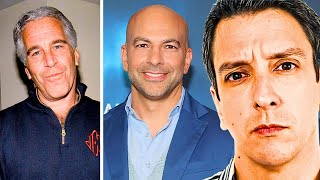

Attia's Crude Epstein Jokes Exposed
39sThe shocking tone of communications with a known sex offender sparks outrage and curiosity.
▶ Play Clip"The title promises a link to health decisions but is delivered in a philosophical discussion; solid but could be more direct."
The video discusses the controversy around Dr. Peter Attia's association with convicted sex offender Jeffrey Epstein, using it as a case study for why we must separate an individual's personal conduct from the scientific information they share. The speaker argues that discarding all of Attia's health advice due to his poor judgment is a mistake, and warns against following influencers based on charisma rather than evidence.
The Epstein files leaked, identifying Dr. Peter Attia as someone who communicated with Epstein. Attia, a popular health podcaster and doctor, was hired as a CBS News medical correspondent.
Attia's emails with Epstein contained crude sexual jokes and innuendo about Epstein's lifestyle, though Attia was advising on health issues. Attia later denounced Epstein's lifestyle as outrageous and said he was naive.
Many people renounced not just Attia but all his scientific views and health advice, which the speaker finds problematic.
The speaker learned a lot from Attia's podcasts on heart disease and lipids, taking extensive notes, and considers the information accurate from cross-referencing.
Attia's poor judgment does not change the scientific information from his platforms; the speaker's health decisions remain unaffected.
People often choose health influencers based on packaging, confidence, or credentials rather than accuracy of information.
It's dangerous to choose health advice based on charisma; the most knowledgeable scientists often have no platform, while charlatans can be very popular.
Survival depends on the ability to separate how cool or moral someone seems from the accuracy of their information.
The key takeaway is to critically evaluate health information based on scientific evidence, not the personal conduct or charisma of the communicator, for your own self-defense.
What was the nature of Peter Attia's emails with Jeffrey Epstein?
Crude sexual jokes and innuendo about Epstein's lifestyle and activities on his island.
00:43
What role did Peter Attia recently assume at CBS News?
Medical correspondent.
01:10
Why does the speaker argue against renouncing all of Attia's scientific views?
Because the accuracy of scientific information is independent of the individual's personal conduct.
04:45
What is the danger of choosing health advice based on vibes or charisma?
The most popular figures may be charlatans spreading dangerous misinformation, while knowledgeable experts lack a platform.
06:30
According to the speaker, what is a crucial life skill for health decisions?
Separating how cool or moral someone seems from the accuracy of their information.
07:34
Personal learning from Attia's content
Shows that despite Attia's issues, his platform provided valuable scientific information on heart disease.
03:32Separating person from science
Key principle that one can retain valid scientific knowledge even if the source is flawed.
04:45Choosing influencers for wrong reasons
Highlights a common error in following influencers based on packaging rather than evidence.
05:11Crucial life skill
Emphasizes the importance of critical evaluation for self-preservation.
07:34[00:03] weekend with the Epstein files and all the leaks and revelations. And one person that was specifically identified was popular doctor and podcaster Dr. Peter Attia. Peter publishes a lot of content on medicine and health and
[00:18] nutrition. And I think this whole episode contains some interesting lessons about how we look at internet influencers, medfluencers, and what role they play in our lives. Now,
[00:31] I'm not going to exploit any of the salacious side of it all. Apparently, of them, Peter Attia and Jeffrey Epstein. And Peter was advising Epstein on some
[00:43] or health issues, which by itself would not be But the issue is that the tone of the communication between them was not of medical or scientific nature. In fact, there were crude sexual jokes and
[00:58] innuendo about Epstein's activities on the island and Epstein's overall lifestyle. All of this would have been minor news in a small corner of the internet until recently, but
[01:10] Attia's profile has risen significantly in the last couple years. And in fact, I believe just last week he was hired as a medical correspondent for CBS News. So, this became a political issue for a lot of people and it became quite mainstream
[01:24] and made a lot of headlines. Now, there's no evidence that Attia was directly involved in any of the illicit activities. And in fact, there's an email where Attia denounces
[01:36] Epstein's lifestyle as outrageous. And Attia just released today a response to the whole thing where he reiterates that he was not involved in the criminal activities, but it's the tone of the communication that has shocked people
[01:51] because Epstein was a known convicted sex offender and Attia knew about it. He says as much in his response. He even asked Epstein about it. And so, the question that's being asked is how much did Attia know, and was there a medical
[02:06] to report third parties that were being endangered that was neglected because in many places there is an obligation to report that supersedes patient confidentiality.
[02:19] And that would be not just an ethical, but a legal issue. In his response, Attia says he didn't witness anything illegal, and that he was incredibly naive, and had poor judgment. He also says that when he wrote that Epstein led
[02:34] an outrageous life, and that Attia couldn't tell anyone about it, he wasn't referring to Epstein's crimes, he was referring to dinners and power and influence in the sphere that surrounded Epstein. What I want to focus on, and I
[02:48] think what pertains to the topics that we normally talk about and worries me, is I saw a number of people renouncing not just Attia himself and his platforms, which I find understandable, but also
[03:04] any of his scientific views, and any information they had gathered from him over the years. I saw several people saying, "I can't believe I ever listened to his podcast, or believed him on this or the other, or followed his health
[03:17] advice on this topic or that topic." And this worries me, this mixing of the individual and their conduct and their personal judgment with their scientific views and the information that the person broadcasts.
[03:32] I listened to many of Peter Attia's podcast episodes, particularly on heart disease and lipids, many years ago, before I was even making videos for And I was at the edge of my seat. I took extensive notes
[03:46] on those episodes because of the quality of the guests he brought on, the accuracy of that information once I in many other medical sources at the time and over the years. So, I learned
[04:02] immensely from those podcasts indirectly through a platform that Peter Attia organized and my content over the years has been influenced directly or indirectly from that learning from all those guests that he
[04:15] in heart health in the world. And a few years ago, I even made a video listing sources that I consider reliable in health and nutrition-related topics and I listed Peter Attia as one of those
[04:30] sources specifically because of these episodes on heart disease and lipids. And no matter how bad or not the situation turns out to be, how bad his judgment may be and certainly seems to be based
[04:45] on the email exchanges that are publicly available, that doesn't change any of the scientific information that I obtained from his guests and from his platforms back in the day and it doesn't change my health decisions. I
[04:59] think what we're seeing in this renouncing not just of the individual but all scientific information he conveyed is the flip side of choosing
[05:11] an influencer on the internet not based on the accuracy of the information he on the accuracy of the information he conveys but rather on the packaging, on how the person looks or how the person behaves or how confident the person
[05:23] or their credentials. In a word, for the wrong reasons. Peter has said many things over the years that were not just scientifically correct but to the public that are absolutely essential to understand
[05:36] if we're going to optimize our cardiovascular health and minimize risk of disease and death. He's also said many things. He had many weird takes on nutrition and health
[05:49] that I completely disagree with, that are not backed by evidence, things about dietary cholesterol or changes in glucose after eating or nutrition takes that I've heard from him here and there that are just bizarre that you'd hear
[06:03] in medicine. And some of them are a simple Google search to see that they're not factual. So, it's crucial to make this distinction, not idolize or worship someone on the internet, and also not to
[06:16] blindly trust the person, especially a stranger on social media that whom you've never met. It's incredibly dangerous to choose health advice based on vibes. Some of the best scientists on this
[06:30] planet, some of the most knowledgeable people when it comes to medicine and health and nutrition, have zero charisma, zero speaking have no platform, you've never heard from them. And conversely, some of the
[06:42] most popular figures in health and wellness are complete charlatans who don't know the first thing about medicine or nutrition, and spread dangerous misinformation to
[06:54] millions of people on a daily basis. And my concern is that a lot of people who are renouncing, not just the individual, but also every piece of information they received from that source, likely got on board for the wrong
[07:07] with confidence conveyed or credentials or and as now they jump ship, they're going to same those same buttons,
[07:21] and are likely to fall for hucksters who seem convincing, but will probably endanger their health in the long run. So, for your own self-defense, not for the sake of Peter Attia or anything I might think, it's
[07:34] not about us on this side, it's about your own health and self-preservation. It's absolutely crucial, it's a crucial life skill to be able to separate how cool someone seems or how confident someone seems
[07:48] or even how moral and decent someone appears to be from the accuracy of their information. Are their views supported by scientific Your survival depends on your ability to make that distinction.
⚡ Saved you 0h 08m reading this? Transcribe any YouTube video for free — no signup needed.