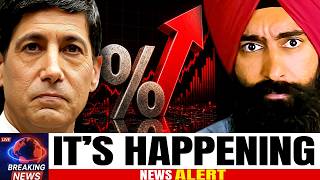

Fed might RAISE rates in 2026?!
44sDirectly challenges the popular expectation of lower rates, creating immediate controversy and curiosity.
▶ Play Clip"The title promises a breakdown of interest rates and delivers exactly that, with a clear explanation of the Fed's dilemma and investment implications."
The video discusses the Federal Reserve's potential shift from cutting to raising interest rates in 2026, driven by persistent inflation and a new chairman. It explains the Fed's dual mandate, the impact of the $40 trillion national debt, and draws parallels to the 1970s. Finally, it offers investment strategies for navigating higher rates.
The Federal Reserve Bank announced that lower interest rates might not come soon, and higher rates could be coming in 2026. New chairman Kevin Walsh said 'prices are too high' and they've 'missed on inflation for five years.'
The Fed raises interest rates to fix inflation, as seen in 2022 when inflation was 9%. Higher rates make mortgages, car loans, and credit cards more expensive, and also make the country more expensive to run.
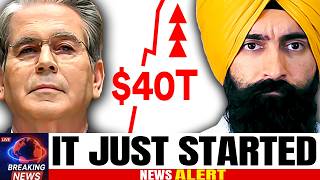
The US has about $40 trillion in national debt, and higher interest rates make servicing that debt more expensive. The government's only revenue source is tax dollars, so higher expenses mean more tax burden.
The Fed has a dual mandate: to balance inflation and the job market. High inflation leads to rate hikes, while a weak job market leads to rate cuts. Currently, both are problematic.
The Fed is facing a dilemma: high inflation and a weak job market. Cutting rates would help the job market but worsen inflation; raising rates would fight inflation but hurt the job market.
Inflation is high due to tariffs and oil prices. The Fed wants 2% inflation, which is low enough to be unnoticed but still benefits the financially savvy by making investments grow.
The government's fastest-growing expense is interest payments on the national debt. A third of the debt is set to readjust in 2026 at higher rates, increasing expenses.
The 1970s saw money printing, an oil crisis, and premature rate cuts, leading to a re-spike in inflation and a deep recession. The Fed is wary of repeating this mistake.
Gold, silver, and Bitcoin are debasement trades that benefit when the dollar weakens and hurt when it strengthens. Higher rates strengthen the dollar, so these assets may struggle.
During high interest rates, value investments like dividend-paying companies tend to do well because they have profits and cash flows. SCHD is an example of a dividend ETF.
Investing in broad market funds like SPY (S&P 500) is a long-term strategy that gives exposure to the American economy, which generally grows over time despite recessions.
What is the Federal Reserve's dual mandate?
The Federal Reserve Bank has a dual mandate to balance inflation and the job market when making decisions on interest rates and money printing.
03:12
Why does the Federal Reserve target 2% inflation?
The Fed wants 2% inflation because it's low enough that the average person doesn't notice it, and it benefits the financially savvy by making investments go up in value.
06:53
How much national debt does the US have, and how much is readjusting in 2026?
The government has about $40 trillion in national debt, and about a third of it is set to readjust in 2026 at higher interest rates.
10:46
What three factors caused the 1970s inflation crisis?
In the 1970s, the US experienced money printing, an oil crisis, and premature rate cuts, leading to a re-spike in inflation and a deep recession.
12:07
What are gold, silver, and Bitcoin considered, and how do they react to dollar strength?
Gold, silver, and Bitcoin are known as debasement trades, which benefit when the dollar weakens and hurt when the dollar strengthens.
16:47
Why do value investments tend to do well during high interest rate periods?
Value investments, like dividend-paying companies, generally thrive during periods of higher interest rates because they have profits and cash flows that are less affected by expensive money.
17:32
What is the fastest-growing expense for the US government?
The government's fastest-growing expense is interest payments on the national debt, not military or social security.
09:50
The Fed's Dual Mandate
Explains the core framework the Fed uses to make decisions, which is essential for understanding any rate move.
03:12A Third of Debt Readjusting
Highlights a critical, often overlooked factor that could drive government spending and economic policy.
10:461970s Parallel
Draws a historical parallel that helps predict potential Fed actions and market reactions.
12:07Debasement Trade Dynamics
Provides a clear, actionable insight into how assets like gold and Bitcoin react to dollar strength.
16:47Value Investing in High-Rate Times
Offers a practical investment strategy for navigating higher interest rates.
17:32[00:00] For the last 18 months, President Trump has been promising lower interest rates are around the corner. I agree that the lowest interest rates in the world. Well, the Federal Reserve Bank just announced that lower interest rates might not be coming anytime soon.
[00:13] Actually, they said you might want to prepare for higher interest rates coming in 2026. Why? Because the new chairman at the Federal Reserve Bank, who was picked by President Trump, just said, quote, prices are too high. We've missed on inflation for five years and we are going to fix that.
[00:30] And how does the Federal Reserve Bank fix inflation? Well, they do that by raising interest rates. We just saw that happen in 2022. When we were facing 9% inflation, the Federal Reserve Bank raised interest rates aggressively to bring the inflation rate down.
[00:44] The reason why you want to pay attention to this isn't just because higher interest rates make mortgages and call loan rates and credit card rates more expensive, but because higher interest rates also make our country more expensive to run.
[00:56] And it also impacts the value of the dollar. We have about $40 trillion worth of national debt, and we have to pay interest on that $40 trillion. And as interest rates go up, that $40 trillion of debt becomes a whole lot more expensive.
[01:11] The government only has one source of revenue, tax dollars from tax payers. So as expenses for the government goes up, you have to spend more of your tax dollars to pay back the past debt, which means they got to figure out how they're going to make more money.
[01:25] In this video, I'm going to break down what's going on and how it actually creates opportunities for the financially savvy. So, let's jump right in. For more than a year now, everybody has been waiting for the Federal Reserve Bank to cut interest rates and make borrowing money cheap again.
[01:39] Realtors have been begging for lower mortgage rates. Bankers want to see cheaper loans so they can make bigger commissions. And people want cheaper interest rates so they can refinance their debt. And if we go back in time just a few months ago, in the beginning part of 2026,
[01:52] It's everybody expected. Even Wall Street was betting that the Federal Reserve Bank was going to cut interest rates in 2026. Well, now it feels like things are changing, and they're changing fast. The Federal Reserve Bank is the central bank here in the United States,
[02:05] and they're not a bank because you and I can't go to the deposit money. It's not a reserve because it's not sitting on any cash reserves, and it's not federal. It even says so on its website because it is a separate entity from the government.
[02:18] Now, the reason why that matters is because the government is not supposed to tell the Federal Reserve Bank what to do. But the previous chairman, the person that led the Federal Reserve Bank, his name was John Powell, his term expired earlier in 2026.
[02:32] Which means the government, who was not in charge of the Federal Reserve Bank, gets to pick the next chairman at the Federal Reserve Bank. So President Trump got to handpick a guy by the name of Kevin Walsh.
[02:45] That was his pick to now lead the Federal Reserve Bank, and President Trump promised lower interest rates, so everybody assumed lower interest rates would be coming. Well, Kevin Walsh came into the Federal Reserve Bank, and he said,
[02:57] not so fast. I don't know if we're going to cut interest rates. We might actually raise interest rates. And in order to understand what the Federal Reserve Bank is thinking, you have to understand what does the Federal Reserve Bank look at? Because the Federal Reserve Bank has a mandate called a dual mandate,
[03:12] which says that they have to take a look at two things. when they make decisions with interest rates and decisions with money printing. Number one is they have to take a look at inflation.
[03:24] And number two, they're going to take a look at the job market. The Federal Reserve Bank needs to balance the price growth of things with the health of the economy. When we have inflation that's very high,
[03:37] the Federal Reserve Bank then raises interest rates to cool down the economy and bring inflation down. When we have pain in the economy, people are unemployed, the Federal Reserve Bank then cuts interest rates to stimulate spending, stimulate the economy, stimulate inflation, but then also fix the job market.
[03:58] And so right now we have a very unique situation where right now we have high inflation and we also have a not so great job market. Now, the numbers say that the job market is amazing, but a lot of people, as they start to dig deeper into the numbers, will tell you that the job market isn't the best.
[04:17] Well, you fix high inflation by raising interest rates. You fix a bad job market by cutting interest rates. You can't cut interest rates and raise interest rates at the same time.
[04:29] Now, you can start to see the dilemma. President Trump, like any other president, wants to see a booming economy. They want to see the job market boom. Cutting interest rates stimulates spending. Stimulating spending means people are buying houses.
[04:42] They're refinancing the debt. They're buying more cars. They're spending money. Which means realtors are making more money. Bankers are making more money. Title companies are making more money. People are making more money. Businesses are hiring more people. The economy is booming. The stock market is rising.
[04:54] That's what lower interest rates do. Higher interest rates put downward pressure on the economy. Now, it doesn't guarantee that the economy goes down, but it puts downward pressure on the economy because now you have to pay higher interest rates on your mortgage,
[05:06] and your car loan and your business and any other thing that you want to do. So higher interest rates put downward pressure on the economy. Lower interest rates put upward pressure on the economy. But they influence the economy and the job market in different ways.
[05:19] And now what we're hearing the Federal Reserve Bank chairman, Kevin Walsh, say is this inflation problem is becoming a bigger problem than this job market. It's like a teeter-totter.
[05:31] They're trying to figure out which direction to weigh this, and now it seems like this inflation problem is outweighing this economy problem, which is why Kevin Walsh is right now saying that we don't have the ability to cut interest rates.
[05:46] We might have to actually raise interest rates, which would hurt the job market more, but it would help fix the inflation problem, which might have you scratching your head. Okay, Jeff Bezos, but why is inflation suddenly becoming a big problem in 2026?
[05:59] Two things, tariffs and oil. In 2026 President Trump has been passing new tariffs on many countries around the world while oil prices are also still high due to the war in the Middle East These tariffs and these high oil prices are contributing to the prices of things rising
[06:14] which is now measured in inflation, and this is what's causing the inflation problem, while the Federal Reserve Bank says that they want 2% inflation. Now, I want to take a pause here and just think about this for a second. Why does the Federal Reserve Bank want 2% inflation?
[06:27] Have you ever thought about that? Because why 2%? Why not 3%? Actually, why not 1%? And actually, why not 0% inflation? Because inflation means that your savings lose value. Inflation means that your paycheck loses value.
[06:40] The average person is getting poorer every single day because of inflation because the wages are not keeping up with inflation and the Fed says publicly that they want 2% inflation. Why? The reason why is because 2% inflation is low enough
[06:53] that the average person doesn't notice it. And inflation is there to make the financially savvy richer. Inflation benefits the rich and the financially educated because your investments go up in value at the expense of everybody else.
[07:07] It's a tax. It's just a hidden tax because the person that pays the price is a person that doesn't understand how it works. So just understand that our economic system is designed to create inflation. The Federal Reserve Bank states it on its website.
[07:20] The average person has no idea what inflation does, but that inflation is making the financially savvy richer, which is why you want to become an investor, which is also one of the reasons why I wrote a book called ADB Always Be Buying, How to Find Investment Opportunity in Any Market.
[07:34] And you can download a digital copy of this book for free just by signing up for it. And when you sign up for the book, you're also going to get access to Market Briefs, which is my newsletter for investors, completely for free as a bonus.
[07:46] So if you want to get my book, ADB Always Be Buying and Market Briefs all for free, I have that link for you down in the description. So we got the new chairman at the Federal Reserve Bank. And then we have these problems with high inflation because of tariffs. and because of oil prices.
[07:59] But what's going on with the economy? Why are we seeing pain in the economy? Well, what we've been seeing is that the job market hasn't been the best and more and more Americans are starting to struggle financially. Part of the reason for that is the higher inflation. Another part of the reason for that is just changes in the job market.
[08:12] Because of AI, some companies don't need entry-level workers or other types of workers because they're trying to automate or use robots to replace those jobs. So we're seeing changes in the economy which are being felt by people.
[08:24] But at the same time, now, President Trump, the government, says, we need lower interest rates because these lower interest rates are going to be like rocket fuel for our economy and get our economy moving again. The Federal Reserve Bank says, well, this inflation is a problem. But there's one more part to the story that
[08:39] you want to pay attention to that I haven't really talked about in this video, and it is what I call a $40 trillion problem. And the problem is the government has about $40 trillion worth of national debt. What does that mean? Well, every year, the government
[08:55] collects taxes. Last year, it collected about $5 trillion in taxes, and then the government's going to go out, and they're going to spend money. Now, the government, if it ran a balanced budget, would probably spend $4 trillion out of the
[09:07] $5 trillion that it generates. That way, it can save and invest some money, but that's not what it does, and it doesn't spend $5 trillion. Last year, the government spent around $7 trillion.
[09:19] That deficit has to then be financed through debt because their money had to come from somewhere. So when you add up all this debt the government has racked up over the years, you see how we have $40 trillion worth of debt.
[09:34] Well, this is what things get interesting. One of the fastest growing expenses, actually the fastest growing expense for the United States government is not a military, it's not veterans benefits, it's not social security, it is interest payments on a national debt.
[09:50] Because number one, a national debt has been growing so much, but then number two, because the interest payments on these debts had gone up so much. What do I mean? Well, in 2020-2021, when interest rates were at their lowest levels ever,
[10:03] the United States government did what everybody else did. They refinanced their debt. And they refinanced the debt at the lowest interest rates in the history of time. But the government did something very unique and different.
[10:15] What they did was they did not lock in a 30-year fixed-rate mortgage. Instead, the government said, instead of locking in a 2.1 or 2.2% 30-year loan, how about we get a five-year 1.8% loan?
[10:30] They got a little greedy, wanted to save a little bit more money on the interest. So we did the five-year loan in 2021, and now here we are in 2026, and almost a third of our national debt is going to readjust in 2026.
[10:46] and it's readjusting at today's interest rates, which are a whole lot higher than when we were back in 2021, which means our expenses are rising, not just because we're buying more stuff,
[10:59] but because our interest payments on our debt are becoming more expensive, just because the debt is readjusting at a much higher rate, which means now more of your tax dollars are being used not to actually drive your value,
[11:13] but to just pay back our previous debts. This is one of the reasons why President Trump wants lower interest rates, is because if we see lower interest rates, we can refinance this debt and lower some of the expenses for the government,
[11:27] which gives the government more ability to spend money in the economy, which would stimulate the economy. Because remember, our economy runs on spending. The more money people spend, the more money somebody else makes, the more the economy gets stimulated.
[11:40] If the government can spend more money, or somebody gets a job, somebody gets paid, somebody gets stimulated in the economy. Now, this is where things really start to get even more interesting when we look at history, because that will help show you where the investment opportunities are.
[11:53] Raising interest rates generally hurt the economy. Cutting interest rates generally stimulate the economy. One of the reasons why the Federal Reserve Bank is considering raising interest rates in 2026 is because we've seen this exact situation play out back in the 1970s.
[12:07] In the 1970s three things happened around the same time First we saw the dollar get taken off of the gold standard in 1971 The reason why that happened was the government was facing a lot of financial problems
[12:21] and because we were backed by gold, we couldn't pay back our debt. So then President Richard Nixon said, let's take the dollar off of the gold standard so we can print more money and pay off our debts, which is kind of like just signing a blank check.
[12:33] And at first everybody felt rich and it was great, But then what we realized is that money printing has a consequence. So there was a lot of money printing that happened, which then led to consequence number two, inflation. During the 1970s and the early 1980s, we were seeing double-digit inflation in the United States
[12:50] due to all the money printing that was happening. And then number three, we had an oil crisis because there was some conflict happening in the Middle East. The United States got involved. It was called the Yom Kippur War, and that conflict caused an oil spike.
[13:05] causing prices of things to skyrocket. These three things then caused the inflation problem, and what the United States government did, because we were starting to see a period of economic slowdown,
[13:17] even though inflation had relatively cooled off, that was when the government then started to cut interest rates, but they cut interest rates too early. And because they cut interest rates too early, we saw inflation then re-spike back up,
[13:31] causing an inflation crisis, the life of which we haven't seen in a century, and that caused huge pain in the economy. And then to remedy that problem, the Federal Reserve Bank had to then jack up interest rates to about 20%,
[13:46] which, when getting a mortgage was not a 5% or 6% thing, you were paying 15%, 17%, 18% a year on your mortgage. It caused a deep recession.
[13:58] It caused high unemployment. It caused a lot of economic pain because the government then stimulated the economy too early by cutting interest rates. Here we are in 2026, and we're starting to see some similar things happen again.
[14:12] First, we saw the money printing happen because of the pandemic. We saw all this money printing fund, the stimulus, the unemployment, the PPP loans, the bailouts, all the grants, all that other stuff, which then caused consequence number two, the inflation problem that we saw in 2021, 2022, 2023,
[14:28] and even until today we're still facing some of that inflation problem, causing the prices of things to go up so much. And then what we saw happen in 2026 was the United States got involved in a conflict in the Middle East,
[14:40] causing oil prices to spike, making the inflation problem worse again. So you can start to see the correlation, the similarity between the 1970s and today. And now the question is, what is the government going to do next?
[14:53] What we know happened here was the government started cutting interest rates fast. One started to see inflation cool down, but that was too early. And because it started stimulating too early, inflation then spiked up again.
[15:07] That's the concern that the Federal Reserve Bank has today, that if we start cutting interest rates too early, because we think inflation is under control when it's really not, it could cause a re-spike up of inflation, and then to solve that new inflation spike-up is very difficult, very painful,
[15:25] and it could cause a deep economic slowdown. And this is where the Federal Reserve Bank says, we don't want that to happen, so let's wait and see what we should do with interest rates. Now, the concern that a lot of people have is that the Federal Reserve Bank
[15:38] isn't always the best at trying to predict what's going to happen in the economy. And many times what we've seen is that the Federal Reserve Bank might keep interest rates too high, which could actually cause economic pain, even a recession.
[15:50] Because if you keep interest rates higher, that higher interest rates put downward pressure on the economy and it could lead to a recession just by making it harder for people to spend money. And so now other people are saying, well, if we don't stimulate,
[16:03] we're going to cause pain in the economy, we're going to cause a recession, which is going to cause even other financial problems. I mean, if you remember just a few years ago when the Federal Reserve Bank started raising interest rates, we saw banks like Silicon Valley Bank collapse due to the higher interest rates.
[16:17] And this is the tightrope that the Federal Reserve Bank is trying to walk across. Because on one hand, we have this inflation problem. On the other hand, we do have pain in the economy. Credit card debt is at some of the highest levels we've seen in history. And auto and delinquencies are at some of the highest levels we have seen in decades.
[16:32] So what does this mean for you and your money? Well, when Kevin Walsh, the chairman at the Federal Reserve Bank, said that we are going to try to protect inflation and protect the dollar, we saw assets like gold, silver, and Bitcoin crash. Why? Because gold, silver, and Bitcoin are known as a debasement trade.
[16:47] People buy those assets generally when they're worried about the dollar, when they think that the dollar is going to do bad. We hear higher interest rates, it might cause pain to the economy, but that's generally better for the dollar. So understanding now that we have some of these debasement trade assets
[17:02] that benefit when there's pain in the dollar, but they hurt when there's strength in the dollar. The second thing you might want to pay attention to are dividends. Because when you see times of interest rates going up and flowing economies in the stock market, people then look for value investments.
[17:17] Because all the speculative investments that are hoping for cheap money that are waiting to grow fast, they struggle during times of expensive money. Because they want cheaper money so they can have more access to dollars and more growth.
[17:32] The value companies generally thrive during times of more expensive money, higher interest rates, because now they have profits, and they have big cash flows, and they can then continue to reinvest the cash flows,
[17:44] and the interest rates don't affect them that much. So that's where, during times of higher interest rates and economic pain, people like to look for value investments like dividend companies. Now, there are so many different dividend ETFs out there,
[17:57] different ways to invest in it. I like investing for cash flow just because I like the idea of investing my money, not having to sell it and getting paid. But one example that I'm personally invested in, again, I'm not telling you what to invest in because I'm just a random guy on YouTube,
[18:12] is SCHD. This is an ETF that gives the exposure to dividend companies in the United States that are generally working to grow their dividends but also have a strong company As a disclosure I am personally invested in SDHD Again I not telling you what to invest in My goal is just to show you how you can start thinking like an investor and understand what
[18:29] your goals are. That way, you can invest in things that give you exposure to your goals. And then the third thing that you can think about is just investing in the American economy. Something like the S&P 500. Because if your goal is to be a long-term investor, just own the economy, give you a
[18:42] piece of the economy, and we know that over the long run, despite the recession, you're Despite the market crashes, the economy generally goes up. The S&P 500 is a group of the 500 largest companies in the stock market.
[18:54] And it gives you exposure to essentially the American economy. If you wanted to invest in that, a simple way to do it is something like SPY. Again, I'm not telling you what to invest in. I'm just showing you how you can start thinking like an investor. SPY is a fund that's going to give you exposure to the top 500 companies in the stock market.
[19:10] If one of those companies starts to struggle, SPY will kick it out and replace it with another company. and you don't have to do anything. This is a great place to start thinking of how you can start investing with these types of broad basket funds
[19:22] that will now give exposure to the broad market. Investing in money is hard. And on this channel, I teach how you can start investing your money yourself. But for some of you, working with a financial advisor, somebody who is a professional
[19:34] will be a better option because now it's more hands-off and you can work with a professional who will manage and invest your money for you. And that's why I partnered with my sponsor, Money Pickle, The reason why I like Money Pickle is because first they get to know you and what your needs are,
[19:49] and then they match you with a vetted financial advisor who will be best suited for your needs, and then they give you a free consultation call with the financial advisor. That way you can get a feel of the financial advisor and see if they're right for you or not.
[20:03] That way you don't have to go through a high-pressure sales process with somebody who might not even be a good fit for you. If you're interested in learning more and you have over $100,000 in assets, the process is pretty simple. All you have to do is complete a short form.
[20:17] I have that link for you down in the description. It takes a few minutes to complete. And once you do that, Money Pickle will review your answers and then pair you with a vetted financial advisor who they believe is best suited for you. It's a completely free process.
[20:30] That initial consultation, again, is free. And then if you decide to move forward, then you can negotiate and discuss what your rates and terms look like with that financial advisor directly. So, if you want help managing your money and you want to work with a vetted financial advisor,
[20:45] my sponsor, Money Pickle, can help get you paired up with a financial advisor at no additional cost. If you want to learn more, I have that link for you down in the description. So, what we talked about in this video is that we have been promised lower interest rates for about a year and a half,
[20:57] But now the Federal Reserve Bank is saying, hold your horses, we might not see lower interest rates so fast. We might actually see higher interest rates. The reason why is because the Federal Reserve Bank has to balance inflation and the job market.
[21:10] And while, yes, we're seeing pain in the job market, the Federal Reserve Bank is saying we're actually seeing more pain in the inflation side of things. So we might have to fight this inflation problem. How do you do that? By raising interest rates.
[21:23] The consequence is raising interest rates could cause more pain in the economy. Now, we don't know if the Fed is going to raise interest rates or not. We're just kind of getting these hits. And that's kind of a shock to Wall Street because everybody was predicting lower interest rates just a few months ago.
[21:38] And so now a lot of people are just wondering and holding their breath to see what the Federal Reserve Bank is going to do and if it's going to cause more pain in the economy. These sort of things get interesting because if the Federal Reserve Bank does keep interest rates higher for longer,
[21:52] not only can it impact mortgage rates and car loan rates, but it also impacts our national debt. because the government has about $40 trillion worth of debt and they have to pay interest on that debt. The government has one source of revenue, tax dollars and taxpayers.
[22:06] About a third of our national debt is going to readjust in 2026, which means our interest payments are going to go up. Not just because of the volume of money, but because the interest rate on that debt is going up. That puts more burden on the government
[22:19] when you have these higher interest rates for longer. That's why President Trump really wants lower interest rates is because it makes government running cheaper. And lower interest rates means the government has more money to spend into the economy
[22:33] and stimulate the economy. Well, now that you understand that, what we talked about is if we cut interest rates too early, we've seen what it done in the past, because in the 1970s, we saw money printing from the dollar
[22:45] being taken off of the gold standard, which led to inflation, followed by an oil crisis. And then when inflation kind of got under control, the government then cut interest rates, which then caused a re-spike up of inflation causing a significant amount of pain in the economy
[22:59] and then the Fed had to raise interest rates very aggressively causing even more pain in the economy. Here we are today with our money printed from the pandemic which led to inflation and now an oil crisis in 2026
[23:11] and the question is what's going to come next? And this is where the Fed does not want to do a repeat of what happened in the 1970s. So now, what does this mean for you? What we understand is the debasement trade gold
[23:23] silver, and Bitcoin go in reverse to the dollar. When you're raising interest rates and strengthening the dollar, the debasement trade generally does worse. When you're inflating the dollar, the debasement trade generally does better.
[23:36] Then we talked about how you can invest in dividends as in value investment, because value investments generally benefit during periods of higher interest rates. And when I say benefit, it doesn't always mean that they go up, but also that they go down less than other investments.
[23:49] Then we also talked about how you can put the investment money into the broad economy. Again, if you haven't downloaded my free e-book yet, the link is for you down in the description. If you got value out of this video, the best thing to do is a referral. So if you could, please share this video with a friend,
[24:01] family member, colleague, or fellow investor. That way, we can continue to spread this type of financial education. Thank you. America is now officially running out of people to keep buying its debt. So the Treasury Secretary just announced
[24:14] that on September 9th, we're going to be creating it. We, the United States of America, are going to buy up our own debt. Take a listen. We routinely do buybacks, and we're going to increase the size of the buyback.
⚡ Saved you 0h 24m reading this? Transcribe any YouTube video for free — no signup needed.