

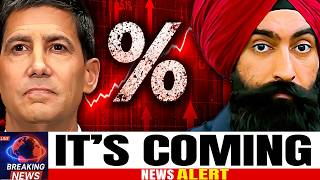
Trump's Plan: Inflate Away Debt?
44sDirect quote from Trump about using inflation to pay off debt is controversial and sparks curiosity.
▶ Play Clip"Solid analysis of inflation and debt, but the title oversells a 'can't' claim that the video doesn't fully prove."
Snapshot 2026-10-31
Every observation TubeSum recorded, plotted as measured.
Based on 3 observations · last observed Oct 31, 2026 · straight lines connect consecutive observations — TubeSum does not measure the days between them.
Exact daily observations; gaps mean no observation was taken that day.
| Date | Views | Avg views / hour | Channel median |
|---|---|---|---|
| 2026-10-31 | 221,307 | 5,269.2 | 91,228 |
| 2026-10-30 | 166,633 | 9,257.4 | 91,228 |
| 2026-10-29 | 1,797 | 1,797.0 | — |
This video analyzes President Trump's suggestion that inflation could reduce the burden of America's $40 trillion national debt. It contrasts government-reported inflation and income growth with the actual price increases of major assets, explains how the Federal Reserve creates inflation, and reviews historical asset performance during inflationary periods. The video concludes by outlining three potential solutions to the debt crisis and identifying investment sectors the government is likely to support.
Inflation is described as a hidden tax that disproportionately hurts those who don't understand it, while financially educated individuals can use it to become wealthy.
From 1971 to 2025, reported inflation was 700%, median household income grew 830%, but new car prices rose 1,200%, median house prices 1,500%, and public university tuition over 2,000%, making the average person poorer.
Investing $100 in the S&P 500 from 1971 to 2025 grew to about $7,000 (7,000% return), and with dividend reinvestment, to over $33,000 (33,000% return), turning $1,000 into over $300,000.
Between 2020 and 2025, the U.S. government collected $27 trillion in taxes but spent $39.5 trillion, creating a $12.5 trillion deficit, which was added to the national debt, now over $40 trillion.
The Federal Reserve can print money but cannot create wealth. Printing more currency devalues each dollar, raising prices. This is inflationary and acts as a hidden tax without congressional approval.
After WWII, the U.S. had a debt-to-GDP ratio of 118%. By 1981, despite debt growing to $1 trillion, the economy grew faster, reducing the ratio to 32%, effectively inflating away the debt's burden.
Today, the U.S. has over $40 trillion in debt and an economy of about $32.5 trillion, resulting in a debt-to-GDP ratio of approximately 125%, worse than post-WWII levels.
The three options are: default (unlikely, would cause global calamity), inflate away the debt (Trump's suggestion), or outgrow the debt through economic growth (Treasury Secretary's 333 plan).
In the 1970s high-inflation decade, gold, silver, and oil boomed (gold $100 to $1,600), while stocks, housing, and treasuries lagged. In the 1980s, those winners fell, and in the 1990s, stocks dominated.
Treasury Secretary Scott Bessent's plan targets 3% economic growth, a 3% deficit, and 3 million additional barrels of oil per day. Current figures are 2.1% growth, 6% deficit, and 400,000 barrels, showing a gap.
The government is investing in AI and semiconductors (ETFs: SMH, SOXX, QQQ), rare earths (REMX), American manufacturing (XLI), and metals/mining (XME), signaling where growth is expected.
The video concludes that while default is unlikely, inflation is a probable path to reduce the national debt burden, benefiting certain asset classes. Investors should follow government spending to identify growth sectors, but always conduct their own research.
Inflation as a Hidden Tax
Frames inflation as a regressive mechanism that punishes the uninformed, a core thesis of the video.
00:14Investors Outperform Inflation
Shows the stark wealth gap between investors and wage earners over 54 years.
02:16Fed's Money Printing vs. Wealth Creation
Clarifies the difference between creating currency and creating wealth, explaining inflation's root cause.
08:16Debt-to-GDP Ratio Worse Than Post-WWII
Provides a concrete metric showing the severity of the current debt situation.
12:13Historical Asset Performance
Demonstrates that asset classes perform differently across inflationary and deflationary periods.
15:43[00:01] Trump, "What's your plan after the midterm elections to get us out of this $40 trillion worth of national debt? Because right now, our national debt is growing faster than the economy." He said, "Let the average person pay for it
[00:14] inflation." Take a read. You know, inflation, certain levels of inflation will also pay off that debt very rapidly. Very rapidly. I call inflation a hidden tax because the person who pays the price of inflation is the person who
[00:28] doesn't understand how inflation works. While some people, the financially educated, use that same inflation to become incredibly rich. You don't have to believe me. I am just a random guy on YouTube. But take a look at the numbers
[00:41] because between 1971 to 2025, the reported inflation numbers according to the United States government are that the prices of things on average grew by 700%. Let's compare that to the growth in the
[00:55] States. The median household income grew by 830% over these same 54 years. Which is why you keep hearing the government and the central bank keep saying the
[01:07] incomes have grown faster than inflation. The average person is getting richer because your salaries are outpacing inflation. But if you start to dig a little bit deeper and we compare the price growth of your income to the
[01:20] prices of things that people spend a lot of money on like your car, your house, and college, you'll start to see a different story. Over those same 50ome years, the price of a new car has grown by around 1,200%. The price of a median
[01:32] house grew by 1,500%, not including property taxes and not including insurance. And the price of going to a public 4-year university has gone up by more than 2,000%. So yes, we have seen inflation over these 50some years. Yes,
[01:47] according to the government numbers, household income has grown faster than inflation. But if you compare the price growth of cars, houses, and college, inflation numbers, but it's also grown significantly faster than people's
[02:02] household incomes, which is why the average person has become poorer as a result of this inflation. But somebody has gotten richer as a result. Take a look. Between those same years, 1971 to 2025, investors who put their money into
[02:16] the stock market, the S&P 500, saw their money grow by around 7,000%. Which means investors got a windfall. Your wealth grew faster than the faster than the median household income, and it grew significantly faster than
[02:32] the price growth of most things. But that's not all. Let's assume now that the stock market, but you reinvested the into the stock market when you got paid a dividend. You just reinvested that
[02:45] representation of how your money would have grown. You saw your wealth grow not have grown. You saw your wealth grow not by 7,000% but by more than 33,000%
[02:57] over these same years. Which means if you put $1,000 into the stock market back in 1971, it would be worth more than $300,000 today. The people who got rich because of this inflation are the ones that
[03:11] invested their money and reinvested the profits versus the person that's working for a salary slowly became poorer even though the government says, "Hey, you're making this video today is because President Trump is no longer kind of
[03:25] alluding that we're going to try to inflate away the value of our national debt. He is now saying that our national debt could become less burdensome if we have more inflation. And when we see more inflation, three things happen.
[03:40] Number one, some people become incredibly rich. Number two, many people become poorer. And number three, it can decrease the value of our national debt by inflating the value of the currency. So what I want to do in this video is
[03:56] number one and be some of the people that have become incredibly rich as a result of the inflation while talking about number three. what could be done national debt. That way, you could be a
[04:10] smarter investor and use what's happening as an opportunity to build specific investment ideas. So, make sure you stick with me until the end. I'm not doing this to tell you what to invest in. My goal is to show you how to start
[04:23] thinking like an investor and make sure you always analyze your investments. I do recommend you use Chat GPT or Claude or whatever AI tool you like to help you things that I found is that more and more people are using AI to help
[04:37] because it's almost like having a Wall Street analyst at your fingertips. But a lot of people have no idea how to use your Chat GPT cloud or AI tools the right way to be able to analyze investments the right way because well,
[04:52] You're going to get better stock picks. And if you do it the wrong way, you're that's why for the first time ever, I'm doing a free live stream on November 17th where I'm going to show you how I use AI tools like Chat GPT and Claude,
[05:07] how my analysts use these AI tools to be able to research stocks better. We'll doing to be able to get better outputs from our AI tools. If you'd like to join me, I'm doing it twice in November 17th. Once in the morning at 10:30 a.m.
[05:21] 8:00 p.m. Eastern time. There's a limited number of people that can join live. I think this is going to be very popular. So, if you haven't registered yet, I have that link for you down in the description below. And as an added
[05:33] bonus, when you show up live on November 17th, I'm also going to give you our AI prompt guide. These are 10 AI prompts that my analysts and I use directly in our AI tools to get better answers out of our AIS. So, you only get that if you
[05:48] show up on November 17th. Again, that link is for you down in the description. That way you can understand how the United States government strategically creates inflation. That way you can understand how you can better profit as
[06:02] a result from it. The United States government has one form of revenue, tax government has one form of revenue, tax dollars from taxpayers. And between 2020 to 2025, the United States government collected right around $27 trillion
[06:18] worth of tax revenue. Then the United States government goes out and they're spend money on social security and Medicare. Then they're going to spend going to spend money on infrastructure and other things that the government
[06:32] wants to do. And if the government ran a balanced budget, they might only spend $25 trillion out of the $27 trillion that was collected. But that's not what we do. We also don't spend all 27 trillion. We don't spend $30 trillion
[06:47] out of the 27 or 35. The United States government between 2020 to 2025 spent government between 2020 to 2025 spent right around $39.5 trillion. That's a deficit of more than 12 trillion. And that has to come from
[07:04] somewhere. And this is where the United States government goes deeper into debt. that the government has over $40 trillion worth of debt. Well, more than $12.5 trillion of the national debt came just between 2020 to 2025.
[07:21] interesting because when the government goes out to borrow money, they can and me who lend money to the government in exchange for interest. They can borrow money from foreign countries like Japan and the United Kingdom and China
[07:34] who also lend money to the United States government in exchange for interest. Or they can borrow money from our central bank here, the Federal Reserve Bank. Now, I'm going to draw the Fed right here because this is where things start
[07:47] to get very interesting. The Federal Reserve Bank is actually not a bank deposit money. They're not a reserve because they're not sitting on any cash reserves. And it's actually not federal. It says so on its website. But the
[08:01] Federal Reserve Bank has the ability to create money out of thin air and lend it to the United States government. So every time the United States government spends money that it doesn't have, some of that money has to be printed by the
[08:16] Federal Reserve Bank which then gets lent to the United States government. So more money that is inflationary because money has to be printed. But why is that inflationary? The reason why is the Federal Reserve Bank has the ability to
[08:30] print money but they don't have the ability to create wealth. See those are two different things. I can print a bunch of $100 bills, but that doesn't make more wealth. What happens is you're creating more currency. You're creating
[08:44] more pieces of paper. You're creating more units of currency. more units of currency. Those are different than actual wealth physical gold. They're backed by a promise that the dollars have value by
[08:58] the Federal Reserve Bank goes out and prints money, the value of each individual dollar goes down causing the prices of things to go up because we're not creating more wealth. We're just creating more units of currency. So if
[09:12] of currency goes down causing the prices of things to go up. That's how inflation happens. So the Federal Reserve Bank is printing that money. The government is spending that money. We're boosting the economy by spending more money at the
[09:26] "Well, how are we boosting the economy?" Because when the government goes out and they sign a contract to build a bridge, construction workers get jobs. When they sign a contract to build more missiles, defense companies get money. And so now
[09:39] this is putting money into the economy, but the prices of things start to go up because people realize that a $100 doesn't buy you as much as it did 3 years ago. That's how inflation works. And this is why I call inflation a
[09:52] hidden tax. Because if the government wanted to raise taxes to build a bridge, from. But that would require congressional approval to raise those taxes. You don't need that same congressional approval to just print
[10:05] money. So when you print money, it happens without going through the same being spent. But in order for the money to be spent, money has to be printed. paying for it when you go to buy more
[10:18] incomes have not kept up with the prices of things. So now we understand the foundation of how the United States government creates inflation. Now that talk about how this has happened in the past because we have seen the United
[10:33] States government try to inflate their way out of their national debt in the past and it has worked. The last time the United States was facing a national the United States was facing a national debt crisis this big was back in 1946
[10:45] after World War II. Because back then we had $269 billion worth of national debt. Now this sounds very small today, but the reason why it was so big back then wasn't just how many dollars of debt we had, but
[10:58] because of how big the debt was relative to the size of our economy. Our economy is measured through a number called GDP. And back then, our economy was $228 billion large, which meant our debt to GDP ratio was approximately 118%.
[11:13] We had more national debt in our economy and this was a big problem. But look at what happened in the coming decades. By 1981, our national debt exploded to $1 trillion. Which sounds like our national debt now became a much bigger problem.
[11:28] But that's not true because our economy grew faster than our national debt because now by 1981, our economy was a little bit over $3 trillion large. So, we went from a debt to GDP ratio of 118% down to about 32%
[11:45] because our economy was a little bit over $3 trillion large. So, our national debt grew, but it became less expensive. We inflated away the value of this national debt because our economy grew even faster than our national debt. And
[12:00] this is the number you want to pay attention to. Our debt to GDP ratio fell significantly, which meant we now have collateral worth more than a national debt. Now look at where we are today in 2026. We now have more than $40 trillion
[12:13] worth of national debt, an economy about 32.5 trillion large, which means we have a debt to GDP ratio of about 125%. It's worse than where we were understand the problem, the question is what comes next? Because there are only
[12:29] three potential outcomes. Number one is that the United States government could default on its debt. Option number two is we inflate our way out of this debt, which is what President Trump just alluded to Time magazine. Or option
[12:43] number three is we outgrow our national debt by having our economy grow faster than a national debt. Let me break these down one by one, starting with the Understanding a default when it comes to your personal finance is pretty simple.
[12:58] It's kind of like declaring bankruptcy. you have a mortgage, you can no longer pay it back. So, you stop paying the mortgage and the bank is going to be very upset. That's very clear. But when it's the government, it's a little bit
[13:11] now were to default, that means everybody that lent money to the United foreign countries, the Federal Reserve Bank now is not going to get their money back. And that would be a big problem. It would create a global calamity. It
[13:26] would create a global recession, depression. It would create a horrible financial crisis, but it's not likely to happen. How do we know? Well, we can time that the United States government was on the verge of any sort of default
[13:40] was back around 1971 because back in 1971, the United States government had a lot of debts and needed to pay back. Foreign countries were asking for their money back. Back then, the United States dollar was backed by
[13:53] physical gold. And so, foreign countries said, "We don't trust the dollar. we don't trust your economy. Give us back our physical gold. And we were on the verge of defaulting. And that was when then President Richard Nixon said, "You
[14:05] Instead of giving you back your gold, instead of defaulting, we are going to take the United States dollar off of the gold standard." And that's what he did. >> I have directed Secretary Connley to suspend temporarily the convertability
[14:19] of the dollar into gold or other reserve assets. So he separated our dollars from physical gold and now our money or what we call money then became fiat currency. It just became pieces of paper. This allowed President Richard Nixon now to
[14:34] write big checks to all the countries we owed money to. They got their money. We kept the gold and everything was great. But there was consequences to that. The inflation problem that I've been talking about all video. But that's why a
[14:47] default is not very likely. Which brings us to option number two. If a default is not likely, well then the next option is to inflate away the value of our Trump was talking about with Time magazine. The idea here is think of it
[15:01] this way. Let's assume that it's 50 years ago. You go and buy the median house for about $50,000 and you get a $40,000 mortgage. And let's assume you $40,000 mortgage. And let's assume you didn't pay a penny of it. Today in 2026,
[15:15] if you got the same $40,000 mortgage on the median house, that's not going to feel like a very big mortgage because well, $40,000 today is worth a lot less than it used to back 50 years ago. Why? Because of inflation. And so when you
[15:29] have inflation, the value of your debt starts to feel smaller. So if you want $40 trillion to feel smaller, create more inflation. And now the $40 trillion doesn't feel as big of a problem. So now, if that's what were to happen,
[15:43] which investments would benefit? And this is where we can just take a look at history. Because while history doesn't exactly repeat itself, it does rhyme. Let's take a look at which asset classes have done well in the past when we saw
[15:55] periods of high inflation. Not to tell you what to invest in, but so you can be a smarter investor. Again, this is where I recommend you use AI to help you with investment research. And if you want to see how you can be smarter using AI as
[16:08] register for my free live stream on November 17th. That link is for you down want to demonstrate this is let's assume that you put a $100 into the S&P 500, the stock market back in the year 1970. You put $100 into oil, $100 into gold,
[16:24] $100 into buying a median house, assuming that that was possible, $100 the United States government, and $100 into silver. Let's take a look at how your money would have evolved between 1970 to 1980, 1970 to 1990 and then 1970
[16:38] to the year 2000. That way you can see how different types of economies benefit break this down. What happened in the first decade? In the first decade between 1970 to 1980, what we saw happened was number one, President
[16:51] dollar off of the gold standard, which meant a lot of money was printed, which meant we saw a lot of inflation. And then we saw oil price shocks in the 1970s because the United States entered a conflict in the Middle East and oil
[17:05] prices skyrocketed causing huge oil problems during the 1970s. Here's how asset prices changed as a result. Your $100 in the stock market grew to $234. Your $100 in oil grew to $1,100. Your $100 in gold grew to $1,600.
[17:23] Your $100 in buy the median house grew to $276. Your $100 in cash in the treasury market grew to 200 bucks and your $100 in silver grew to $1,000. Which meant the winners during this decade, this period of high inflation,
[17:38] decade, this period of high inflation, were gold, silver, and oil. The losers were the stock market, treasuries, and housing. But we're not done yet because investing, not just for one decade. Let's take a look at what happened now.
[17:52] Let's take a look at what happened now. If we extend the time horizon from 1970, not to 1980, but to 1990. Because during the 1980s, what we saw was the Federal Reserve Bank got very aggressive to fight inflation. During the 1980s, the
[18:06] Federal Reserve Bank raised interest rates to double digits to fight the inflation that we saw in the 1970s because we saw huge inflation problems in the 1970s. that big interest rate hikes that we saw in the 1980s worked to
[18:21] the economy down. It also brought unemployment up as a result. Well, let's take a look at how asset prices changed as the Federal Reserve Bank now continued to fight that inflation. So, the $100 you invested in the stock
[18:35] the $100 you invested in the stock market back in 1970 is now worth $863 in 1990. The $100 you invested in oil back in 1970 is now worth 730 bucks in 1990. The $100 you invested in gold back in 1970 is now only worth $1,100. The
[18:50] $100 you invested back in the housing market back in 1970 is now worth $520 in 1990. The $100 you invested in cash and treasuries is now worth $450 bucks. And the $100 invested in silver back in 1970 is now only worth $260. So what we saw
[19:07] during this decade is that the assets that boomed in 1970, the oil, gold and that boomed in 1970, the oil, gold and silver actually fell in price and value. to rise. We saw the housing market
[19:20] market continue to rise. And now things start to get even more interesting as we fast forward one more decade to the year 2000 to see how your investments really changed over the 30 years between 1970 to the year 2000. Remember during the
[19:34] 1990s inflation was no longer a problem. During the 1990s the Federal Reserve again. This is when we started to see the tech boom happened and the economy really started to grow again in the 1990s. Let's take a look at how asset
[19:49] prices changed. Now between 1970 to the year 2000. Now what we see is that the stock market boomed. Now their $100 grew to $4,300. Oil prices stayed strong. Your $100 grew to $900 in the year 2000. Gold prices
[20:04] to $900 in the year 2000. Gold prices grew from $100 to $770. So they fell each decade. The median house grew to $720. So your housing market investment grew to 720. Treasuries grew from 100 to about $720 and silver prices grew from
[20:20] 100 to around 330. So what we see over these 30 years is that the winning asset class is not the same winning asset class that we saw in the first decade. But the winning asset class was the stock market followed by oil prices
[20:33] followed by kind of a tie between gold, housing and treasuries and then we have silver at the bottom. Why do I say this? Because things change in each decade and
[20:45] each one of those changes boost different type of asset classes. And what we saw is that in the 70s during the period of high inflation, we saw certain assets like gold, oil, and silver boom. During the 1980s when we
[20:58] saw the higher interest rates, we saw those same asset classes get hurt while stocks, housing, and treasuries generally did better. And then fast forward to the '90s and now the clear winner was the stock market. So we
[21:10] government is facing a problem where our economy is growing slower than a national debt. There are three potential solutions. Option number one is we default. We learned that's not very likely. Option number two is we can
[21:23] inflate it away. We've seen that happen in the past and we talked about which assets generally win during those periods of high inflation and we saw through history how different assets have done during different periods of
[21:35] our economy. Let's talk about number three. Let's try to outgrow our national debt because this is what Treasury Secretary Scott Bent keeps alluding to. He says that he wants our economy to grow faster than a national debt. Now
[21:49] this can go handinhand with number two, but this is what our Treasury Secretary keeps saying. So how is it that our economy could outgrow our national debt and how would investment opportunities change? Well, let's again take a look at
[22:01] history because after World War II, we saw our economy grow faster than our national debt because of a few reasons. Number one is manufacturing. The United States now started manufacturing half of everything produced on Earth, bringing
[22:13] Number two was suburbanization. We saw more highways being constructed, more single family houses being constructed. And number three was the baby boom. We more employees for our workplace. Our economy today looks very different than
[22:27] is where Treasury Secretary Scott Bassent has laid out his 333 plan. What that means more specifically is he wants to see 3% growth in our economy. He
[22:39] wants to see a 3% deficit, meaning we're only spending 3% more than what we're bringing in from taxes. And then he wants to see 3 million additional barrels of oil coming into the United States a day. This is the goal. But
[22:53] where are we actually? As of the time of me recording this video, our economy is me recording this video, our economy is growing by around 2.1%, not 3%. Our national deficit is right around 6%, not 3%. And we're bringing in approximately
[23:06] 400,000 additional barrels of oil a day, not the 3 million. So the idea is we want to grow the economy faster. We need to grow even faster. We want to spend less money, which is this problem right here. While we're bringing in more oil,
[23:20] which that's in the works, but not happening just yet. Now, this is where I lot in the YouTube comments because a lot of people say things like, "Well, don't we just cut spending? That would fix the problem." But I think a lot of
[23:34] times we overlook the cost of those things. Because yes, it is actually that simple. The problem is there's a cost associated with it. And no president price because it's going to make them look bad. If we were to raise our taxes,
[23:50] have to pay the price of it. And nobody likes paying more money in taxes. We all were to cut our spending, there's also a cost associated with that. If we were to cut our spending, so now our deficit is not 6%, it's 3%. Well, that means now
[24:07] money because that means we can only spend 3% more than what we're bringing in from taxes. I'm not saying spend only what we're bringing in. I'm saying only spend 3% more than what we brought in. If that was true, that means the
[24:20] government is going to spend less money. And remember, our economy is measured through spending. Well, the largest spender on our economy is not mere you. It's not Nvidia or SpaceX. It's the United States government. If the
[24:34] government were to cut its spending, so our deficit spending is no longer 6%, it's just 3%. Well, that's going to be a big hit on our economy. That means means certain companies are going to get less contracts from the government. And
[24:49] means people are going to lose their incomes if we were to shrink our economy by just 3%. That's right around what we saw during the 2008 great financial
[25:02] crisis. During the 2008 housing crisis, we saw our economy fall by slightly more than 4%. So here we'd have to see our economy fall by 3% which is almost what we saw during the 2008 crash. And during that crash, we saw unemployment jump up
[25:16] to 10% and we saw how many people faced economic problems as a result of the reduction in the economy here. That would be the government inducing that recession. And you can start to see why the government doesn't like that. But if
[25:31] the government now is right and we do see our economy grow and outpace our national debt, there are going to be certain winners. So the question is now where are those winners and how can that create potential investment opportunity?
[25:45] Well, let me show you. Let's just follow the money. And what I mean by that is government itself is investing tax dollars because the United States government wants certain industries to win because the United States government
[25:57] industries that I'm going to show you, these four industries that we are going to continue to be the world's economic superpower. So, the United States these four industries and they want these four industries to win. Now, I
[26:11] go up. I cannot guarantee that you're going to make money. I can guarantee that investing has risks, but you have to do your own due diligence. So, let me United States government is investing tax dollars so you can just follow the
[26:24] money. Number one is AI and semiconductors. President Trump has made it very clear that the United States wants to beat China in the AI race world's economic superpower, we have to be the leader in AI. And in order to be
[26:37] the leader in AI, we also have to be the leader in semiconductors, which is the chips, the brains behind those computers. So, how can you invest in what to invest in. My goal is to show you how to start thinking like an
[26:49] investor. Here's a few ETFs that give you exposure to that. Number one is SMH. This is an ETF that's created by Van Ec giving exposure to the semiconductor industry. Then we have number two, SOXX, also giving exposure to AI and
[27:03] semiconductors as well. And then number three is QQQ. This is the most broad. the NASDAQ 100. This is a group of the 100 largest companies in the stock market that are not financial. So they're primarily tech companies. All
[27:17] the big tech companies are in QQQ cuz that's investing in the top 100 we have option number two which are rare earths. Now the idea behind rare earths is as the United States is putting tariffs on countries like China. We now
[27:31] no longer have access to Chinese rare earth metals because China in response to the tariffs said no more rare earths for you. These rare earths are just metals that we need in order to produce iPhones and laptops and fridges and also
[27:44] our missiles. So we need them in our economy. But the problem is we haven't we've relied on China forever to get these metals. And so this is where the rebuild this rare earth supply chain. We're seeing tax dollars go into this
[27:58] industry. We're seeing new regulations for this industry. So if that's something you wanted to invest in, one ETF idea is REMX Remix. This is an ETF exposure to rare earth and strategic metals. Again, I'm not telling you what
[28:12] you can start thinking like an investor. By the way, I was asked recently if I'm sponsored by any of these ETF companies. The answer is no. I would recommend you do your own research. Again, use AI. I'm just showing you what are some of the
[28:26] affiliation with any of these companies. If I'm invested in any of them, I always notify you of that as well. And if I'm ever sponsored by anyone or anything, I will always notify you of that as well.
[28:38] these ETF companies or any of these fund three is investing in American manufacturing. President Trump has made manufacturing jobs back to the United States. That's one of the goals with
[28:51] this tariffs is to bring manufacturing back here. Well, you can invest in that American manufacturing industry if you believe that's an opportunity that's going to continue to grow. For example, XLI. This is an ETF that's created by
[29:04] Spider SPDR. That's going to give you exposure to the industrial select sector handinhand with number two is just the general's mining and metals industry. Because as we start to build our own supply chain, we need these metals. We
[29:19] those same products here in the United States. So if that's an industry you wanted to invest in, there's an ETF called XME. This is also created by Spider SPDR. This is giving you exposure to their S&P Metals and Mining ETF. One
[29:32] is that often times the things you don't pay attention to end up mattering the you about life insurance with our sponsor, Policy Genius. Because if you don't have the assets to live off of yet, something tragically happened to
[29:47] you. The last thing you want is now your spouse and your family trying to struggle to survive financially. And that's where term life insurance can come into play. Now, I'm talking about term life insurance here, not whole life
[29:59] insurance. The whole idea with term life insurance is it's life insurance for a period of time, 10 years, 20 years, 30 years. That way you can work to build your assets. It is a lot cheaper than whole life insurance because the whole
[30:11] idea is you're not here trying to get rich off your life insurance. It's just there as a bridge until you can build your assets. This is one of those things it is. Because if you're a healthy 30-year-old guy, you could potentially
[30:25] get a half a million dollar term life insurance policy for less than a dollar you want to learn more about term life insurance, or you want to see how much a term life insurance policy would actually cost you, I'll put a link to
[30:37] description. It only takes a few minutes to complete, and it'll give you an insurance will actually cost you. And I description. So, what we talked about in this video is that Time magazine
[30:50] interviewed President Trump asking about how the Trump administration is planning problem. But one of the solutions that he proposed now is inflating away our national debt. And the person that pays
[31:02] the price of that inflation is of course the average person while some people get once we learned that is we talked about what's going on in our economy right now because we've seen a national debt problem here in the United States in the
[31:15] past. We saw it happen after World War II. And after World War II, we did two things. We inflated our way out of the national debt problem while growing our economy faster. Now during that World War II time, we saw a lot of changes in
[31:28] back to the United States. We saw suburbanization and highways happen. And then we saw the baby boomers be born. Those things created a boost in the economy which helped our economy grow.
[31:40] Now here we are today facing a similar national debt crisis and now we have can default. Option number two is inflate. And what we just talked about is how we can outgrow our national debt. We talked about how defaulting is not
[31:53] very likely because that would create a global calamity. That's not what the government wants to see. What we've seen is instead of defaulting, we've inflated away our dollar. We saw that happen in the 1970s.
[32:05] So if we were to see inflation, we've seen the certain asset classes win. We talked about different asset classes during the inflation era of the 1970s. asset classes did during the 1980s when the Federal Reserve Bank raised interest
[32:17] rates to fight inflation. Then we talked about how that did now going into the year 1990 and we saw how asset classes did decade after decade after decade. That way you can see how investment cycles change the prices of different
[32:30] assets over the long run. Then we talked about well how could we outgrow our national debt? Because what we saw happen was in the World War II era we of the things that I just talked about. We've seen Treasury Secretary Scott
[32:45] Basset lay out his 333 plan to outgrow our national debt. that is having our economy grow by 3% a 3% deficit with 3 million more barrels of oil a day. Well, have to cut back our spending and we need more oil. And if that were to
[33:01] happen, well, then that would create investment opportunities. But where can just take a look at where the United States government is actively investing give us some indication where they want to see the economy grow. That includes
[33:14] artificial intelligence and semiconductors. that includes rare earth manufacturing and then of course that includes metals and mining. If you got you as a referral. So if you could please share this video with a friend,
[33:27] investor. That way we can continue to spread this type of financial education. Thank you. I was just in New York and somebody stopped me and said just pri I have $10,000 in the bank. What should I do with it? Should I invest it all into
[33:40] happens if the stock market crashes? Or should I slowly put this money into the more risky that can give me better returns like preipo stocks? That's what returns like preipo stocks? That's what I'm going to break down step



⚡ Saved you 0h 33m reading this? Transcribe any YouTube video for free — no signup needed.