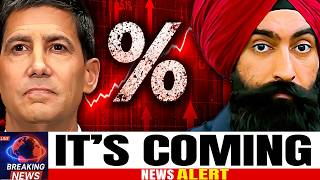

Fed nervous: AI bubble warning
45sHigh-stakes financial news with a shocking twist (AI bubble) hooks viewers immediately.
▶ Play Clip"The title promises Fed nervousness about AI, which is covered, but the video is padded with a lengthy workshop promo and credit card sponsor segment, diluting the core content."
Snapshot 2026-10-31
Performance history is still being collected — a chart appears once TubeSum has 3 or more observations for this video (2 recorded so far).
Exact daily observations; gaps mean no observation was taken that day.
| Date | Views | Avg views / hour | Channel median |
|---|---|---|---|
| 2026-10-31 | 116,547 | 5,297.6 | 91,228 |
| 2026-10-30 | 2,892 | 2,892.0 | — |
The video analyzes the Federal Reserve's recent meeting, where it signaled that inflation may stay higher for longer and interest rates could rise, while also addressing growing concerns about the AI sector. It explains the factors driving inflation—oil prices, tariffs, AI energy demands, and government spending—and discusses the potential impact on investments like gold, silver, and Bitcoin, as well as the broader economy's heavy reliance on AI.
The Fed is nervous due to persistent inflation, potential interest rate hikes, and concerns about AI companies, especially after the Chinese AI bubble burst and Google's stock dropped.
The Fed decided not to raise rates now but may do so in the future. New chairman Kevin Warsh emphasized commitment to price stability, with inflation at 3.5% versus the 2% target.
President Trump, who appointed Warsh, wants lower rates (1% or less) to boost the economy and reduce the burden of the $40 trillion national debt, but the Fed is leaning toward higher rates.
Four main factors: oil prices from the Middle East war, tariffs, AI's energy demands straining the power grid, and government spending that devalues the dollar.
These 'debasement trade' assets fell as the Fed signaled higher rates, which strengthen the dollar. Higher rates are better for the dollar but hurt these inflation hedges.
The S&P 500 is near record highs, but over 80% of its stocks are in correction territory, driven by the Mag 7 tech companies. A potential AI bubble burst could trigger a recession.
Google's stock fell over 10% in one day due to negative free cash flow from heavy AI spending and declining search volume, raising investor concerns about AI investments.
The Fed's rate hikes have historically popped bubbles (dot-com in 2000, housing in 2008). Higher rates could similarly burst the AI bubble, causing a domino effect on the stock market.
Panic leads to overselling, which creates opportunities for profit. The creator advises viewers not to panic but to find buying opportunities during downturns.
The Fed wants to control inflation before stimulating the economy, but uncontrollable factors like oil and tariffs complicate this. If a recession hits, the Fed faces a tough choice between saving the dollar or the economy.
Fed's Commitment to Price Stability
Kevin Warsh's quote underscores the Fed's priority to control inflation, which is central to the video's analysis.
02:35AI as an Inflation Driver
The Fed's shift from viewing AI as deflationary to inflationary due to energy costs is a key insight.
08:00S&P 500 Divergence
The fact that 80% of S&P 500 stocks are down while the index is near record highs highlights the concentration risk in AI.
12:33Panic Leads to Opportunity
The principle that panic-driven selling creates buying opportunities is a practical investment takeaway.
16:14Fed's Dilemma
The Fed's challenge of balancing inflation control with potential recession stimulus is a critical economic tension.
18:16[00:01] is getting nervous. Why? They just had a meeting where they said, number one, inflation might stay higher for longer. Number two, interest rates are probably going to go up. And then, number three, we're seeing more concerns about
[00:15] companies and artificial intelligence. Why? The Chinese AI bubble just popped. We saw Chinese AI stocks fall by 40% in just the last few months. And then we just saw Google stock fall very hard.
[00:29] One of the biggest one-day drops in history with their stock falling more than 10% in one day because investors are getting concerned that they're putting more money into AI that they don't have. And now people are getting
[00:42] concerned, could this be a bigger sign of what's coming in the economy? So, what I want to do in this video is talk about what the Federal Reserve Bank said because this can give us insight into how investment opportunities are going
[00:54] to change. And then I want to talk about how things are changing in the economy and find better investment opportunities. And yes, you should be using AI to help you with researching investments. But make sure you're using
[01:08] AI the right way because it's garbage in, garbage out or good information in and good information out. Which is why, for the first time ever on November 17th, I'm hosting a live, free, and virtual live stream where I'm going to
[01:21] be showing you how I and my analysts use AI tools like ChatGPT and Claude to research investments, to find investment opportunities, and to just be able to If you are interested in that, it's a free workshop on November 17th. There's
[01:36] a limited number of people that can join me live. This is going to be a very popular workshop. We've already seen so much demand in just the last few days limited number of people that can join live. So, if you are interested, you
[01:49] November 17th, once in the morning at 10:30 a.m. Eastern Time, and in the have that link for you down in the description below. And as an added bonus, when you show up live on November 17th, you're also going to get an AI
[02:04] guide. It's going to be our 10 prompts that my analyst and I use to just get paste these prompts into whatever AI you use, but you have to show up live on you down in the description. So, starting with the Federal Reserve Bank,
[02:21] where they decided that they're not going to raise interest rates right now, but they might raise interest rates again in the future. Kevin Warsh, who is the new chairman at the Federal Reserve Bank, said, "Quote,
[02:35] inflation remains elevated, but this is where the committee, the Fed, will deliver price stability." So, the prices of things have gone up a lot in 2026, more than what people would
[02:49] like. The Federal Reserve Bank wants to see 2% inflation. We're at about 3 and 1/2% inflation, and this is where the Federal Reserve Bank is saying, essentially, that because the prices of things are growing so fast,
[03:03] we need to now commit to stabilizing prices. stabilize prices? Well, they can do one of two things. They can raise interest or they can pull money out of the economy.
[03:16] is focusing on raising interest rates because they recently, for the last rates. Now, they're talking about raising interest rates again, potentially before the year ends. That could make your
[03:29] mortgage more expensive, car loans more expensive, and our national debt more expensive. And this has an impact on literally everybody in the economy, because even if you don't have any debt, your company might have debt. And if
[03:42] your company has debt, well, interest rates are going up, that makes your business more expensive to operate, which makes those businesses now have to cut back on costs, and generally that leads to higher layoffs.
[03:55] If you don't work for a company that has debt, well, our government has a lot of debt, more than 40 trillion dollars worth of debt, and as interest rates go operating go up as well, which has other impacts on the economy, which I'll talk
[04:08] But, this is where what Kevin Warsh continued to say is that in September, we removed a dose of accommodation. Essentially saying that in September, they gave a dose of higher interest rates, and we might need another dosage
[04:23] rates, and we might need another dosage come 2026 or 2027. And this is where President Trump was not happy. President Trump appointed Kevin Warsh as the chairman at the Federal Reserve Bank because Kevin Warsh was essentially
[04:38] hoped that he would do what President Trump wants. Trump wants lower interest And we're not getting lower interest rates, we actually are getting higher President Trump then posted on Truth Social. He said, quote, "Interest rates
[04:52] in the United States should be 1% or less." Right now, they're about 4%. Then he went on to say in all caps, "Lower the interest rates for the United States of America, and fast." Directly speaking to the Federal Reserve
[05:05] Bank, saying we want lower interest rates. Now, the reason why President Trump wants lower interest rates is twofold. Number one, is he wants lower the economy grow. If there's lower interest rates, getting
[05:18] loan is cheaper, getting a business loan is cheaper. So, more people borrow money, more money enters our economy, and our economy runs on spending. So, the economy grows. The second reason why is because right now our $40 trillion
[05:31] worth of national debt is expensive. Our national debt does not have a 30-year fixed-rate mortgage, it is a readjusting debt. So, as interest rates go up, our cost of servicing this $40 trillion keeps going
[05:44] up. That's why our fastest-growing expense for the United States economy is not our military. It's not our social security. It is our interest payments on our debt. Not just because we're borrowing more money, but
[05:57] because the interest cost on that debt keeps going up. So, one of the reasons why President Trump wants these lower interest rates is to remove some of that burden on the United States government. Now, let's talk about why we're seeing
[06:09] this inflation in the first place because all of this ultimately comes back to the inflation rate, which is way above what anybody wants. We're seeing about 3 and 1/2% inflation. The Federal Reserve Bank wants 2% inflation, and
[06:24] we're also seeing the prices of things rise faster than the median income in the United States, which means yes, the average person is getting poorer as a result of this inflation. So, reason number one right now is oil prices. The
[06:36] war in the Middle East has gone on a lot longer than many people expected. Higher well, a lot of things are more expensive. Your gas is more expensive, traveling is more expensive, your fertilizer for groceries become more
[06:50] expensive because fertilizer is made from oil. So, now farmers have to pay more money to produce crops, which makes grocery prices more expensive, shipping makes the price of pretty much every product in the store more expensive
[07:02] because when a store has to ship a product from the warehouse to their store, that costs more money. So, the prices of pretty much everything have gone up because of higher oil prices. Number two is, of course, tariffs.
[07:16] In order to produce goods in the United States as opposed to a foreign country, it costs more money, which means companies can either eat up the profits and have smaller margins, or they can raise their prices. And so,
[07:29] companies being forced to raise prices in order to maintain their margins. artificial intelligence. Now, this is interesting because for a long time, the Federal Reserve Bank themselves have said that
[07:44] AI is going to help bring the prices of things down, that AI is going to help make productivity so much better. Now, the Federal Reserve Bank is saying actually contributing to inflation because of all the higher energy costs
[08:00] as a result of AI. In order for AI to function, it needs a lot of energy. And we don't have that sophisticated of a power grid to be able to supply all the energy for AI. And so that's why we
[08:14] are seeing energy prices go up because our power grid cannot support all of And then number four is government spending, of course. Our government is still spending trillions of dollars every year that we don't have. That
[08:27] money has to be printed by none other than the Federal Reserve Bank. As we more wealth, we're just creating more units of currency. dollars, the value of each dollar goes down,
[08:43] causing the prices of things to go up. So those four things together, oil prices, tariffs, we have AI and government spending. Those four things combined have been contributing to this higher than what the government wanted
[08:57] inflation, which is why the Federal Reserve Bank says that they have to keep interest rates higher and probably have to raise interest rates, which is why which is why people are concerned about artificial intelligence. And this is
[09:11] where I want to talk about a couple of things. I want to talk about now gold, silver, and Bitcoin. And then I want to talk about Google and AI. Because when we talk about gold, silver, and Bitcoin, these have been really hot
[09:24] and Bitcoin, these have been really hot investments, especially post-pandemic. Because as soon as the pandemic hit, the money printer was turned on, and people when people are concerned about inflation,
[09:36] investments like gold, silver, and Bitcoin. These are known as the debasement trade. The idea being these assets generally go up when people are have high inflation, worries about the dollar, worries about the United States
[09:50] economy, people want gold, silver, and Bitcoin. This is kind of what we've been seeing. Now, gold is a traditional hedge against inflation. Silver and Bitcoin are a lot more
[10:02] volatile. They kind of trade more like tech stocks more than a dollar hedge. But gold, silver, Bitcoin are known as a debasement trade. and once we got the news that the Federal Reserve Bank wants to keep interest rates higher for
[10:15] longer, what we saw is that gold prices fell. We saw silver prices fall, and we saw Bitcoin prices fall as well. Why? Bitcoin prices fall as well. Why? Because higher interest rates are better
[10:28] for the United States dollar. They're hurtful on the economy, but they're better for the United States dollar. And the reason why is because higher interest rates mean that there's going to be less inflation. That means that
[10:41] we're trying to strengthen the United States dollar, but it hurts the economy there's more dollars entering our economy, there's more spending that's economy, which is inflationary.
[10:54] which is inflationary. And so, when we see higher inflation, When we see higher interest rates, stronger for the dollar, we then see the gold, silvers, and Bitcoins get hurt. And right now, the Federal Reserve Bank
[11:07] is saying that they want to commit to protecting the dollar. Now, that could flip if we see a break in the economy, raising interest rates to save the dollar, which hurts the economy.
[11:21] But if the Federal Reserve Bank sees a recession, they see major pain in the economy, and then they say, "We're going to now save the economy, not the dollar." That would mean that the Fed is now cutting interest rates, which is
[11:33] dollar. See, they can't raise and cut interest rates at the same time. They dollar at the same time. Those are two different functions, and right now, the Fed is committing to saving the dollar, which is downward pressure on gold,
[11:47] silver, and Bitcoin. Now, what does this mean for mean for our economy? Because what we just saw is reason why I'm talking about this specifically is not because of Google
[12:01] economy. Right now, our economy is so heavily reliant on AI that if we did not have AI, we'd probably be in a recession right now. How do I know? The S&P 500, which is a group of the 500
[12:16] largest companies in the stock market, is near record highs. of those 500 companies, more than 400 of them are actually in correction territory. 80-some percent of the S&P 500 is down
[12:33] by 10% or more. Little crazy, right? Yeah. But, the reason why we can have 80% of the S&P 500 stocks down, but the S&P 500 near record highs, is because the Mag 7, the big tech companies, you
[12:48] know, the Amazons, the Metas, the Googles, entire S&P 500. And the reason why they've been carrying the S&P 500 is because so much money has been going into artificial intelligence.
[13:01] been going into artificial intelligence. And concern started recently, primarily because of what happened in China. Now, I have a video coming about watch that because it'll help break all of this down. But, China just saw their
[13:14] AI bubble burst. And Chinese AI stocks are down about 40% And so, people are concerned, well, could that happen here in the United differences between the Chinese AI market and the United States AI market.
[13:29] Again, I'm not going to go over that all that right now. You'll see my video on that very soon. Look out for that. But, you have to imagine that if the AI bubble can burst in China, people are
[13:41] the United States because we've been essentially seeing AI stocks go to the essentially seeing AI stocks go to the moon and beyond for years now with go down. Well, now we just got the news that
[13:53] Well, now we just got the news that Google's stock got hit very hard. day. Why? Because what we saw is that it's spending so much money on artificial intelligence that its free
[14:08] cash flow went negative. While its search volume, Google searches, dropped. So, they're seeing a slowdown in the business while they spent so much money in AI that they went negative on their free cash flow.
[14:20] And now investors are saying, "Well, what if the AI investment doesn't work?" and they're investing all their money into AI. That seems a little bit risky. "Huh, do we want to keep pricing in these
[14:36] crazy high multiples for AI?" Now, why does this matter in the broader picture? what the Federal Reserve Bank says they want, are known to be needles when there's economic bubbles out there.
[14:50] When the 2000 dot-com bubble burst, it was because the Fed raised interest the needle that popped the dot-com bubble. When the housing bubble burst in 2008, it was because the Fed raised interest
[15:03] the needle that popped the housing market bubble. we have these concerns about inflation, which is why the Fed has to raise if interest rates have to stay higher for longer, those higher interest rates
[15:17] could then be a needle that pops the AI bubble. And if the AI bubble pops, that could have a big impact on a lot of the stock market because like I said before, right now the S&P 500 is up
[15:32] because of AI companies. If AI companies go down, the S&P 500 would get hurt and that would have a big kind of domino effect on the entire stock market because so many people are betting on AI, they're betting on AI
[15:47] even though they don't know they're betting on AI because people are betting on these target date funds in the 401k. They're betting on S&P 500 funds or total stock market funds not realizing that so much of their money is invested
[16:01] And if people are doing what they've done in the past, which is people sell when they panic, when markets go down, well, that's what then causes things to have more of that
[16:14] Because anytime we've seen a downturn in the past, people panic and they sell. Now, the thing that I want you to understand is that carries opportunity. Panic leads to overselling, leads to opportunity, leads to profit. Poop, p o
[16:27] o p. Panic leads to overselling, leads to opportunity, leads to profit. So, if that were to happen, I don't want you to panic. I want you to find opportunity to come in and buy. But, understand this is how our economic system works and that
[16:39] could create a lot of concern, but that would also have a big impact on the Because right now our economy has been carried so heavily by AI that if we were to see a downturn in AI, there's a very high probability that we
[16:54] could enter a recession. And now the Federal Reserve Bank would have to be forced to make an even tougher decision. Do we continue to keep higher interest to bring down inflation and save the dollar
[17:07] when the economy is hurting? And now we don't know what they would Because right now we have people in the Fed saying we should not have held interest rates. And if the Fed stays true to wanting to
[17:21] recession will continue to get worse because when we saw the pandemic in 2020, when we saw the housing market crash in 2008, 2000, the Fed cut interest rates to stimulate
[17:34] recession. In the 1980s, it was a little bit In the 1980s, the Fed had to raise interest rates so aggressively to put us into a recession to fight inflation.
[17:48] That caused deep pain in the economy. That caused high unemployment. And so right now, the Fed wants to get the inflation problem under control. That way, should we see pain in the economy, we have the ability to stimulate the
[18:01] If the Fed were to start stimulating the economy today, problem. And that's the dilemma the Fed wants to avoid. And they're hoping that no pain really happens in the economy yet until
[18:16] we can get inflation under control. But, there's factors that the Fed can't control like oil prices and tariffs, and those things are now And you can start to see that little dilemma here, because everybody wants to
[18:29] but higher oil prices are making things more expensive. Tariffs are making spending is making things more expensive. AI is making things more while we want more AI, while we're actively fighting a war in
[18:44] It's so now you can start to see how everything starts to come full circle and starts to shift how things change. Again, this is where I want you to start you haven't registered for my live stream on November 17th, again, I highly
[18:59] recommend you do so while we still have openings. The link is free down in the don't want you to be panicking when you hear this. I want you to find hear this. I want you to find opportunity, because the reality is
[19:11] everything has good and bad. And the media likes to make bad things seem And they also like to make good things seem better than they actually are. So, the noise and find the opportunity. But, just understand that, well, the
[19:27] and the Fed wants to see higher interest rates. interest rates is because of what's happening with inflation. But, those higher interest rates now put downward pressure on the economy. When I
[19:40] management, I avoided using a credit card because I thought that credit cards realized that I knew how to spend my money and I wasn't going to spend money points, I realized that I could earn more cash back, I could earn more perks
[19:55] and points for doing nothing except making the transactions that I would normally make anyways with a credit card instead of a debit card. And that's why I partnered with my sponsor FinanceBuzz to put together an article of some of my
[20:07] caveat. If you don't know how to manage your money, don't use a credit card. credit card, in this article with my sponsor FinanceBuzz, I go over some of my top credit cards based off of different types of tiers. If you have
[20:20] credit card debt and you want to pay it off faster, I go over some of the top 0% APR credit cards. This will give you an opportunity to attack that credit card debt faster while not accruing any interest during the 0% APR period. I go
[20:33] over some of my favorite cashback credit cards that we can earn more points and transactions. I go over some of my favorite travel cards for those of you earning more income. And then I go over some of my favorite business credit
[20:47] manage your money and you're comfortable using your credit card, you can see some of my top credit cards right now in the free article that I have for you down in in this video is the Federal Reserve Bank just had a
[20:59] meeting. They said they're going to keep interest rates where they are right now, in the future. Why? Because the prices of things are still too high. They're growing too fast and this is where the Fed wants to help
[21:12] stabilize the prices of things. President Trump is not happy about this. He wants lower interest rates to make our government cost cheaper and to help But this is where we're starting to see that
[21:25] counteracting force where we're seeing inflation because of the war in the inflation because of tariffs. We're seeing inflation because of AI and we're seeing inflation because of government spending which is forcing the Fed to
[21:37] keep interest rates higher for longer and potentially even raise them for here. As a result, we've seen the debasement assets, the gold, silver and keeping interest rates higher for longer.
[21:49] And this is where now what we're trying to figure out is what's going to come next because what we're seeing is now more pain in AI. What we saw that happen with China, again I have a video coming about this very soon, where the Chinese
[22:02] AI bubble has burst. At the same time, we're seeing we're seeing Google now feel that pain of AI and now investors are saying, uh-oh, could this be something bigger in the AI market?
[22:15] Because our entire economy is so reliant on AI. Our entire stock market is so reliant on AI that if AI starts to go down, that will definitely have a domino effect on the economy and the markets. but your goal is not to panic, it is to
[22:28] through the noise and to cut through the media and cut through the emotion profits. If you got value out of this video, the quickly share this video with a friend, a family member, colleague, or fellow
[22:42] investor, that way we can continue to spread this type of financial education. President Trump, "What's your plan after the midterm elections to get us out of this $40 trillion with the national debt?" Because right now our national
[22:56] debt is growing faster than the economy. He said, "Let the average person pay for it through the hidden tax called inflation." Take a read. You know, inflation, certain levels of inflation will


⚡ Saved you 0h 23m reading this? Transcribe any YouTube video for free — no signup needed.