

Raptor Vacuum Engine Fails on Starship Flight 12
43sThe dramatic failure of a Raptor 3 vacuum engine mid-flight, with no explosion but visible smoke, creates suspense and curiosity about SpaceX's next move.
▶ Play Clip"Title accurately reflects the Raptor problem and Artemis 3 details, though the 'Delayed HLS' part is not explicitly confirmed."
Starship Flight 12 showcased impressive progress but revealed a critical Raptor vacuum engine failure. The video analyzes the failure, its implications for SpaceX's design philosophy, and the broader context of NASA's Artemis 3 mission and Amazon's Project Kuiper.
Starship Flight 12 was both spectacular and concerning, highlighting progress and a Raptor vacuum engine failure.
One Raptor vacuum engine failed early in ascent and never recovered, but SpaceX confirmed engine-out capability and successful trajectory.
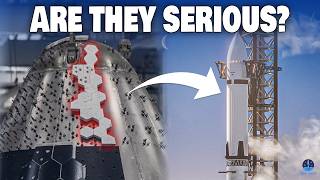
At T+7:29, the failed engine showed no exhaust plume, grayish-blue smoke, and lack of frost, indicating overheating or structural damage.
Raptor 3 removed external heat shields to reduce mass, but Flight 12 suggests thermal stress may have damaged sensitive components.
Minor damage observed near the ship's skirt area, likely from hot staging separation, but considered relatively minor.
SpaceX may improve engine materials, add coatings, enhance cooling, or upgrade fire detection rather than reintroducing heat shields.
Ship survived, completed mission objectives, demonstrated engine-out tolerance, and showed improved heat shield performance.
Deployed two Starlink satellites, which captured imagery of the ship in space.
Re-entry damage was dramatically reduced, with cleaner exterior and good condition of aft flaps and fuel tank sections.
NASA announced Artemis 3 crew: Commander Randu Breznik, mission specialists Frank Rubio and Andre Douglas, pilot Luca Parmitano. They will test systems in orbit, not land.
Three separate launches: Blue Origin lander pathfinder, Orion on SLS, and SpaceX Starship pathfinder, with docking tests in orbit over ~2 weeks.
Starship pathfinder likely lacks life support, focusing on docking demonstrations, while Blue Origin lander includes life support for crew interaction.
NASA making progress on SLS; Blue Origin faces New Glenn testing issues; SpaceX's Starship timelines remain uncertain.
FCC granted waiver extending deployment deadline, but Amazon loses spectrum protections until half of 3,232 satellites are operational.
Amazon has launched only 331 satellites; bottleneck is launch availability, not production. May need to buy launches from SpaceX.
Flight 12 demonstrated Starship's resilience and progress, but the Raptor engine failure requires a solution that balances simplification with reliability. Artemis 3's complex multi-launch architecture and Amazon's Kuiper delays highlight the challenges and interdependencies in modern spaceflight.
At what time did the Raptor vacuum engine fail during Starship Flight 12?
T + 3 minutes and 3 seconds.
01:05
What visual evidence indicated the engine failure?
No visible exhaust plume, grayish-blue smoke, and lack of frost buildup on the engine.
01:51
Why did SpaceX remove the external heat shield on Raptor 3?
To reduce mass and simplify the engine architecture.
02:48
What is one potential fix for the engine issue that does not involve adding back heat shields?
Upgrading engine materials for better heat resistance or applying specialized coatings.
05:01
How many Starlink satellites were deployed during Flight 12?
Two.
07:49
Who is the commander of Artemis 3?
NASA astronaut Randu Breznik.
09:54
How many separate launches are planned for Artemis 3?
Three.
10:37
What is the primary purpose of the Starship pathfinder in Artemis 3?
To serve as a docking demonstrator, likely without life support systems.
12:56
What penalty did Amazon face from the FCC for the Kuiper waiver?
Newly launched satellites lose certain priority spectrum protections until at least half of the constellation is operational.
17:57
How many satellites had Amazon launched by the time of the FCC waiver?
331 satellites, just over 10% of its first-generation constellation.
16:43
Engine Failure at T+3:03
Demonstrates the challenge of engine reliability despite overall mission success.
01:05Raptor 3 Heat Shield Removal
Illustrates SpaceX's trade-off between mass reduction and thermal protection.
02:48Engine-Out Capability
Highlights the resilience of Starship's multi-engine design.
06:17Heat Shield Improvement
Shows significant progress toward reusability.
08:04Artemis 3 Three-Launch Architecture
Reveals the complexity and coordination required for the mission.
10:32[00:06] I watched it and immediately thought,
[00:09] "Wow." Because Flight 12 somehow looked
[00:11] spectacular and slightly concerning at
[00:14] the same time, which is becoming a very
[00:16] Starship experience. On the surface, the
[00:18] mission was impressive. And for a
[00:20] moment, Starship looked dangerously
[00:22] close to true reusability. But then
[00:24] there was the engine. No explosion, no
[00:27] dramatic failure, just smoke drifting
[00:29] around a Raptor vacuum engine like it
[00:31] had already submitted its resignation
[00:32] paperwork. So, what happened? Why did
[00:34] the engine fail? How will SpaceX
[00:36] respond? And despite the issue, why are
[00:39] many people still calling Flight 12 one
[00:41] of the most successful ship flights yet?
[00:43] Let's break it down on today's episode
[00:45] of Great SpaceX. What a chaotic,
[00:47] beautiful stainless steel roller coaster
[00:49] it turned out to be. One of the biggest
[00:51] highlights of the flight was the debut
[00:53] power of the Raptor 3 engines. These
[00:55] engines represent the next evolution of
[00:57] SpaceX propulsion. Now overall, the ship
[01:00] portion of flight 12 actually performed
[01:02] extremely well. But early into Ascent,
[01:05] trouble appeared. At T + 3 minutes and 3
[01:08] seconds, one of the Raptor vacuum
[01:09] engines failed, and unlike temporary
[01:12] glitches seen on previous flights, this
[01:14] one never recovered. The engine was
[01:16] completely dead. SpaceX later confirmed
[01:18] the issue in an official update stating,
[01:21] "During its ascent burn to space,
[01:23] Starship lost one of the Raptor 3 vacuum
[01:25] engines, but demonstrated its engine out
[01:27] capability and achieved its planned
[01:29] trajectory." That statement is important
[01:31] because despite the failure, ship still
[01:33] successfully reached its intended
[01:35] trajectory. That alone is a major
[01:38] achievement. But obviously, losing an
[01:39] engine this early is not something
[01:41] SpaceX can casually ignore while
[01:43] pretending everything is fine. So, what
[01:45] exactly caused the problem? To
[01:47] understand it, we need to examine the
[01:49] live stream footage carefully. The most
[01:51] revealing moment came at t plus 7
[01:53] minutes and 29 seconds. At that point,
[01:55] the three sea-le engines and two of the
[01:57] vacuum engines were still operating
[01:59] normally. But one vacuum engine stood
[02:01] out immediately and not in a good way.
[02:04] There was no visible exhaust plume, no
[02:06] bright energy emission, nothing. The
[02:09] engine looked completely inactive.
[02:11] Instead, it was surrounded by an odd
[02:13] cloud of grayish blue smoke. And unlike
[02:16] the other engines, the upper section
[02:18] also lacked frost buildup. That detail
[02:21] may seem small, but it's actually
[02:23] extremely important. The frost normally
[02:25] appears because the engine components
[02:27] remain incredibly cold due to cryogenic
[02:30] propellants. But if heat suddenly rises
[02:32] in that area, the frost disappears,
[02:35] which strongly suggests something near
[02:37] the top of the engine overheated or
[02:39] worse burned. That immediately led many
[02:42] observers to suspect structural damage.
[02:44] And honestly, the evidence supports that
[02:46] theory pretty well. Now, here's where
[02:48] things get especially interesting. In
[02:51] the Raptor 3 design, SpaceX removed the
[02:53] external engine heat shield that existed
[02:55] on earlier Raptors. Previously, there
[02:58] was a protective outer casing around the
[03:00] upper portions of the engine. But with
[03:02] Raptor 3, SpaceX decided they no longer
[03:04] needed it. Why? Because the company
[03:06] wanted to reduce mass and simplify the
[03:08] engine architecture. SpaceX also
[03:10] believed Raptor 3 had become integrated
[03:12] enough to survive without additional
[03:14] thermal protection, but Flight 12 may
[03:16] have exposed the limits of that
[03:18] confidence. During ascent, the engine
[03:21] likely experienced intense thermal
[03:23] stress. That heat could have damaged
[03:25] sensitive plumbing or components near
[03:27] the top section. And once damage began,
[03:30] things may have escalated quickly. The
[03:32] smoke itself could indicate a leak. If
[03:34] cracks formed in the engine structure or
[03:36] propellant lines, hot gases escaping
[03:39] under extreme pressure would create
[03:41] exactly the kind of plume visible in the
[03:43] footage. And because these engines
[03:44] operate under absurd conditions, even
[03:47] tiny failures can grow very quickly.
[03:50] Remember, Raptor engines run at chamber
[03:52] pressures so high they basically treat
[03:54] physics like a speed limit suggestion.
[03:57] This is not forgiving hardware. Now,
[03:59] interestingly, the engine issue wasn't
[04:01] the only visible damage on ship.
[04:04] Sharpeyed viewers also noticed what
[04:06] appeared to be minor damage around the
[04:07] ship's skirt area, specifically near the
[04:10] region between sea level engine number
[04:12] 140 and vacuum engine number 98. A red
[04:15] glow became visible in the live stream
[04:17] footage, most likely. This damage
[04:19] occurred during hot staging separation.
[04:21] That's the phase where ship ignites its
[04:23] engines while still attached to Super
[04:25] Heavy. During the sequence, small sparks
[04:28] or thermal blasts may have damaged part
[04:30] of the skirt structure. Fortunately, it
[04:33] appears to have been relatively minor.
[04:34] The bigger concern remains the engines.
[04:36] And right now, fixing them is absolutely
[04:39] critical for SpaceX because one thing
[04:41] seems very clear. SpaceX probably
[04:43] doesn't want to bring back the old heat
[04:45] shield design. Doing so would almost
[04:48] feel like admitting defeat. The entire
[04:50] philosophy behind Raptor 3 is
[04:52] simplification and integration. Reding
[04:54] bulky shielding would partially reverse
[04:56] that progress. Readdding bulky shielding
[04:59] would partially reverse that progress.
[05:01] So instead, SpaceX will likely search
[05:03] for smarter solutions. One possibility
[05:05] involves upgrading the engine materials
[05:07] themselves. Certain components may need
[05:09] improved heat resistance or better
[05:11] durability under extreme operating
[05:13] conditions. The challenge, however, is
[05:15] scale. SpaceX already has many Raptor
[05:18] engines manufactured. If a major
[05:20] material flaw exists, replacing
[05:22] everything would become massively
[05:23] expensive and timeconuming. So any
[05:26] material improvements may primarily
[05:28] apply to future production runs. For
[05:30] existing engines, SpaceX may instead
[05:32] focus on external reinforcement methods.
[05:35] That could include specialized coatings
[05:36] or heat resistant paints designed to
[05:39] improve thermal protection without
[05:41] significantly increasing mass. It sounds
[05:43] simple, but advanced aerospace coatings
[05:45] can make a huge difference. SpaceX may
[05:48] also prioritize improvements to the
[05:49] cooling systems. More efficient thermal
[05:51] management could reduce overheating and
[05:53] better protect vulnerable engine
[05:55] sections during ascent. Another critical
[05:57] area involves fire detection and
[05:59] suppression. Future systems may become
[06:01] more responsive and capable of
[06:03] identifying early warning signs before
[06:05] visible damage develops. In particular,
[06:07] the smaller pipes and plumbing sections
[06:09] likely deserve special attention. These
[06:11] tiny components are often the most
[06:13] vulnerable parts of the rocket engines.
[06:15] But despite all these issues, there's
[06:17] still a huge positive takeaway from
[06:18] Flight 12. The ship survived. Not only
[06:20] did it survive, it completed its mission
[06:23] objectives remarkably well. That
[06:24] reflects one of the smartest aspects of
[06:26] SpaceX's design philosophy. Instead of
[06:29] relying on a few giant engines, Starship
[06:32] uses many smaller ones. That means the
[06:34] vehicle can tolerate engine failure
[06:35] without catastrophic mission loss.
[06:37] Losing one engine does not automatically
[06:39] doom the spacecraft. And honestly, it's
[06:41] one of the reasons Starship remains so
[06:43] exciting despite all the explosions.
[06:45] Every test keeps revealing that the
[06:47] system itself is surprisingly resilient.
[06:49] So, the big question now is this. Can
[06:51] SpaceX fix the engine issue quickly
[06:53] enough to push Starship even further on
[06:55] the next flight? Because the company
[06:57] clearly isn't slowing down. If anything,
[06:59] they seem more aggressive than ever. And
[07:00] honestly, if you know SpaceX, you
[07:02] already know the engineers are probably
[07:04] sleeping beside laptops right now while
[07:06] someone whispers flight 13 in the
[07:08] distance like a horror movie villain.
[07:10] But engines were only part of the story.
[07:12] Overall, ship actually performed
[07:14] extremely well during flight 12. In
[07:16] fact, compared to previous flights, this
[07:19] may have been the most reassuring ship
[07:21] performance yet. One major success
[07:23] involved maintaining stability
[07:24] throughout the remainder of the mission.
[07:26] Even after losing an engine, the rest of
[07:28] the propulsion system stayed healthy.
[07:31] That stability became especially
[07:33] important during landing operations.
[07:35] SpaceX successfully performed landing
[07:37] flip maneuvers and continued testing
[07:39] dual engine landing capability. Those
[07:42] tests are essentially for future
[07:44] recovery operations and they appeared
[07:46] far more controlled this time around.
[07:49] Then came payload deployment which was
[07:51] another huge milestone. SpaceX
[07:53] successfully deployed two Starling
[07:55] satellites during this mission and those
[07:57] satellites later captured some
[07:58] absolutely stunning imagery of ship in
[08:01] space. But perhaps the biggest victory
[08:04] involved the heat shield. Before flight
[08:06] 12, thermal protection remained one of
[08:08] Starship's biggest weaknesses. With
[08:10] earlier flights showing major tile loss
[08:13] and severe re-entry damage, this time
[08:15] looked dramatically better. Splashdown
[08:17] footage revealed a far cleaner exterior
[08:20] with the massive orange oxidation
[08:22] streaks from previous flights largely
[08:24] gone. That is major progress because
[08:26] true reusability depends on surviving
[08:28] re-entry without extensive
[08:30] refurbishment. Several critical regions,
[08:32] including the aft flaps and fuel tank
[08:34] sections, also returned in notably good
[08:36] condition despite historically being
[08:38] vulnerable during descent. The upgraded
[08:41] thermal protection systems appear to be
[08:43] working, and that matters enormously for
[08:45] future reuse and landing operations. For
[08:47] the first time in a while, it generally
[08:49] feels like SpaceX is beginning to close
[08:51] the gap between experimental prototype
[08:53] and operational spacecraft. Orbital
[08:55] landings, rapid reuse, eventually
[08:58] catching and relaunching ships. Those
[09:00] goals suddenly feel far more realistic
[09:02] than they did even a year ago. Of
[09:04] course, major challenges remain. Engine
[09:06] reliability still needs improvement, and
[09:08] full operational reusability remains
[09:10] unproven. But Flight 12 demonstrated
[09:13] something critical. Starship is evolving
[09:15] rapidly, and every flight is solving
[09:18] real problems, even while discovering
[09:20] new ones, which I've got to say is
[09:22] basically the history of rocket
[09:24] development. The Aremis 3 crew has been
[09:26] finally announced. And while the
[09:28] astronauts themselves are certainly
[09:30] exciting, the bigger story may actually
[09:32] be how NASA plans to pull off the
[09:34] mission. Because Artemis 3 is shaping up
[09:37] to be one of the most complex space
[09:39] missions ever attempted, involving
[09:42] multiple rockets, multiple spacecraft,
[09:44] multiple docking, June 9th marked an
[09:46] important day for NASA. As promised, the
[09:49] agency officially revealed the astronaut
[09:52] crew selected for Aremis 3. The mission
[09:54] will be commanded by NASA astronaut
[09:57] Randu Breznik. Joining him will be NASA
[09:59] astronauts Frank Rubio and Andre Douglas
[10:02] as mission specialists while ESA
[10:04] astronaut Luca Pararmitano will serve as
[10:07] mission pilots. It's an impressive team
[10:09] and unlike Artemis 2 which is focused
[10:12] primarily on flying around the moon,
[10:13] Artemis 3 has a very different
[10:15] objective. These astronauts won't
[10:17] actually be landing on the lunar
[10:19] surface. Instead, they will help test
[10:21] and validate critical systems that
[10:23] future moon missions will depend upon.
[10:25] NASA didn't just announce the crew. The
[10:27] agency also revealed new details about
[10:30] how Artemis 3 is expected to unfold. And
[10:32] honestly, the mission architecture is
[10:34] fascinating. According to NASA, Artemis
[10:37] 3 will involve three separate launches.
[10:39] The agency described the mission as
[10:41] launching the world's most powerful
[10:43] rockets in short order. That phrase
[10:44] alone should excite space enthusiasts
[10:47] because whenever multiple super heavy
[10:49] rockets are involved in the same
[10:50] mission, things tend to get very
[10:52] interesting. The entire mission is
[10:54] expected to last roughly 2 weeks.
[10:56] However, the exact duration will depend
[10:58] on how various rendevous and docking
[11:00] operations unfold in real time. Space
[11:03] missions rarely follow a schedule down
[11:05] to the minute. Space has a habit of
[11:07] reminding everyone who's really in
[11:08] charge. The first launch will involve
[11:10] Blue Origin's lunar lander pathfinder.
[11:13] Assuming New Glenn is operational and
[11:15] ready by then, it'll likely carry the
[11:17] Pathfinder into orbit. This spacecraft
[11:19] will arrive well before the astronauts.
[11:21] The goal is to allow the lander to spend
[11:23] several weeks operating in space while
[11:25] engineers evaluate how well it survives
[11:27] and functions in the harsh orbital
[11:30] environment. Think of it as a dress
[11:31] rehearsal before the main performance,
[11:33] except the stage is orbit, and the
[11:35] audience is every space agency on Earth.
[11:38] And after the lander is already waiting
[11:40] in orbit, NASA will launch the second
[11:42] major mission. This will be Orion riding
[11:45] a top the SLS. Inside Orion will be the
[11:48] four astronauts NASA just announced.
[11:51] Once in space, Orion will rendevous and
[11:53] dock with the Blue Origin lander. The
[11:55] docking phase is expected to last about
[11:57] 2 days. During that time, the astronauts
[11:59] will conduct system checks, perform
[12:01] demonstrations, and enter the lander
[12:03] itself to evaluate crew support systems
[12:05] and operational procedures. This portion
[12:07] of the mission is particularly
[12:09] important. NASA wants to understand how
[12:11] astronauts interact with the vehicle
[12:13] long before anyone attempts an actual
[12:15] lunar landing. Finding problems in Earth
[12:17] orbit is significantly better than
[12:19] discovering them halfway to the moon.
[12:21] After those tests are complete, Orion
[12:23] will separate from the Blue Origin
[12:24] vehicle. And this is where things become
[12:26] even more interesting. Next comes the
[12:29] arrival of SpaceX. A Starship Pathfinder
[12:32] vehicle will launch and rendevous with
[12:34] Orion. The two spacecraft will dock in
[12:36] orbit. However, unlike the Blue Origin
[12:38] phase, this docking period is expected
[12:40] to last only about a day. The focus
[12:43] appears to be verifying docking
[12:44] procedures and basic spacecraft
[12:46] interactions. Once those tests are
[12:48] complete, Orion will separate once
[12:50] again. The astronauts will then return
[12:51] safely to Earth. Their mission will
[12:53] conclude with a splashdown in the
[12:55] Pacific Ocean. Recovery teams from NASA
[12:57] and the US Navy will retrieve both the
[13:00] spacecraft and its crew, and hopefully
[13:02] everyone will return home with enough
[13:04] data to keep engineers busy for years.
[13:06] NASA's latest update also reveals some
[13:09] interesting clues about the vehicles
[13:10] themselves. For example, the Blue Origin
[13:13] Pathfinder appears likely to include
[13:15] life support systems. That makes sense
[13:17] because astronauts are expected to spend
[13:19] multiple days interacting with the
[13:21] spacecraft. As a result, it probably
[13:22] contains hardware similar to what will
[13:24] eventually fly aboard the crude Blue
[13:26] Moon Mark II lander. The SpaceX vehicle
[13:28] appears to be different. Neither NASA's
[13:30] webcast nor the official update
[13:32] mentioned life support systems inside
[13:34] the Starship Pathfinder. Combined with
[13:36] the mission's one-day docking timeline,
[13:38] that suggests the vehicle may function
[13:40] primarily as a docking demonstrator. In
[13:43] other words, it may resemble a standard
[13:44] Starship more closely than a finished
[13:46] lunar lander. Its primary modifications
[13:48] could focus on docking hardware and
[13:50] missionspecific interfaces that would
[13:52] allow SpaceX to test critical systems
[13:54] without needing to complete every
[13:56] feature of the final human landing
[13:58] system version. It's a practical
[14:00] approach. Why build the entire mansion
[14:02] when all you need right now is to test
[14:03] the front door? Of course, announcing a
[14:05] mission plan is one thing. Actually
[14:07] executing it is something else entirely,
[14:09] and every organization involved still
[14:12] has a tremendous amount of work ahead.
[14:14] NASA appears to be making encouraging
[14:16] progress on SLS. Hardware is being
[14:18] transported from facilities in Utah to
[14:20] Florida. Engine testing continues and
[14:22] overall development appears more
[14:24] organized than during previous Artemis
[14:26] preparations. Part of that progress may
[14:28] reflect NASA's growing sense of urgency.
[14:30] The agency knows the schedule is tight
[14:32] and that there is very little room for
[14:34] major delays, especially if it hopes to
[14:36] maintain momentum across the broader
[14:38] Artemis program. Blue Origin faces its
[14:40] own challenges. The company has already
[14:42] revealed parts of its lander Pathfinder,
[14:45] including the docking module, but many
[14:47] critical systems remain out of public
[14:48] view. That's not unusual, as much of the
[14:51] integration work happens behind the
[14:52] scenes. Still, the clock is ticking. The
[14:55] recent new Glenn testing incident has
[14:57] added uncertainty, and repairing
[14:58] infrastructure, validating hardware, and
[15:00] resuming launches will take time. If
[15:02] Blue Origin hopes to keep Artemis
[15:04] schedules intact, progress will need to
[15:06] come quickly. Then there's SpaceX,
[15:08] perhaps the most unpredictable player in
[15:11] the entire program. Neither the Starship
[15:13] Pathfinder nor the operational lunar
[15:15] lander has been publicly unveiled. Based
[15:17] on NASA's plans, they appear to be
[15:19] separate vehicles with the Pathfinder
[15:21] focused on testing and the final lander
[15:23] carrying life support systems and other
[15:25] missionritical hardware. Given SpaceX's
[15:28] development pace, both could appear
[15:29] within the next year. But predicting
[15:31] Starship timelines remains one of
[15:33] aerospace's most dangerous hobbies. Some
[15:35] people collect stamps, space enthusiasts
[15:38] collect revised Starship schedules, and
[15:40] the collection keeps growing.
[15:42] Regardless, NASA's latest announcement
[15:44] offers the clearest picture yet of how
[15:46] Artemis 3 is expected to work. The
[15:48] architecture is incredibly ambitious,
[15:50] requiring multiple companies, spacecraft
[15:53] launches, and an extraordinary amount of
[15:55] coordination. If successful, it'll
[15:57] demonstrate capabilities humanity has
[15:59] never attempted before. And the next
[16:01] year could become one of the most
[16:02] important periods in Artemis history. Do
[16:05] you think NASA can successfully pull off
[16:07] this three rocket Artemis 3
[16:08] architecture? Let me know with Go 3 in
[16:10] the comment section down below. And now,
[16:12] let's turn to our final part of today's
[16:15] news. Amazon and Project Kyper, which
[16:18] recently received an important FCC
[16:20] decision that offers more flexibility,
[16:22] but also comes with new pressure. In
[16:25] simple terms, Amazon no longer faces the
[16:28] immediate July 30th deadline that would
[16:30] have required half of its 3,232
[16:33] planned satellites to be operational.
[16:35] That sounds like a major victory, and in
[16:37] many ways it is. But the situation is
[16:39] more complicated. When the FCC granted
[16:41] the waiver on June 5th, Amazon had
[16:43] launched only 331 satellites, just over
[16:46] 10% of its first generation
[16:48] constellation. The company argued that
[16:50] launch availability, not satellite
[16:52] production, have become the primary
[16:54] bottleneck. Amazon has invested billions
[16:56] in launch contracts and built large
[16:58] numbers of satellites. The challenge has
[17:01] been finding enough rockets to get them
[17:03] into orbit. Amazon still expects to
[17:05] complete deployment by July of 2029, and
[17:08] that deadline remains unchanged. The
[17:10] company says recent delays among its
[17:12] launch providers will not prevent it
[17:13] from meeting the requirement. Those
[17:15] providers include Aryan 6, ULA, Blue
[17:18] Origin, and even SpaceX. I know the
[17:22] irony is quite hard to miss. One of
[17:24] SpaceX's biggest competitors may
[17:27] ultimately need SpaceX's help to deploy
[17:29] its own satellite network. As FCC Space
[17:32] Bureau Chief Jay Schwarz stated, "We
[17:34] find that Amazon LEO has demonstrated
[17:36] special circumstances warranting
[17:38] deviation from the milestone rules." The
[17:40] FCC also emphasized the importance of
[17:43] maintaining competition in the satellite
[17:44] broadband market, whereas Starling
[17:46] currently holds a commanding lead. More
[17:49] competition typically means lower
[17:50] prices, better service, and faster
[17:52] innovation. Amazon did not receive a
[17:54] free pass, however, until at least half
[17:57] of the constellation becomes
[17:58] operational. Newly launched satellites
[18:00] will lose certain priority spectrum
[18:02] protections. That penalty could remain
[18:04] in place until March of 2028, though
[18:07] Amazon may shorten that period by
[18:08] demonstrating faster progress. In other
[18:10] words, the FCC has effectively told
[18:12] Amazon, "We'll give you more time, but
[18:14] we'd like to see some hustle." The
[18:16] decision also increases pressure on
[18:18] Amazon's launch partners. Aryan 6 must
[18:21] raise its launch cadence. Vulcan must
[18:22] enter regular service. Blue Origin must
[18:25] recover from recent setbacks. And if
[18:27] those providers cannot deliver enough
[18:29] capacity, Amazon may need to purchase
[18:31] additional launches from SpaceX.
[18:33] Somewhere, a team of corporate
[18:35] strategists is probably looking at
[18:37] spreadsheets and feeling very
[18:38] conflicted. Because nothing says
[18:40] competitive marketplace quite like
[18:42] paying your biggest rival to help
[18:44] execute your business plan. More
[18:45] broadly, the situation highlights how
[18:47] quickly the space industry is evolving.
[18:49] And Amazon is working to build a serious
[18:51] challenger to Starlink. The result is an
[18:54] industry that is becoming more
[18:55] competitive, more interconnected, and
[18:57] increasingly dependent on partnerships
[18:59] between companies that are also fierce
[19:01] rivals. It's a fascinating moment in
[19:03] aerospace, and the pace of change shows
[19:05] no signs of slowing down. And could
[19:08] Amazon eventually become a serious
[19:09] challenger to Starlink, or is SpaceX
[19:11] already too far ahead? Leave your
[19:13] thoughts in the comments below. I read
[19:15] as many of them as I can, and some of
[19:17] the best discussions on this channel
[19:19] happen down there. That brings us to the
[19:21] end of today's episode. Thank you so
[19:22] much for tuning in. As always, this has
[19:24] been Kevin from Great SpaceX.


⚡ Saved you 0h 19m reading this? Transcribe any YouTube video for free — no signup needed.