
Cake Drop Shipping Makes $4k/Day
45sReveals a low-effort middleman business that generates high revenue by selling cakes to sales teams, sparking curiosity and aspiration.
▶ Play Clip"The title promises 'wild' business ideas making $1000/day, and the video delivers with real examples and revenue data, though some ideas are aspirational rather than proven."
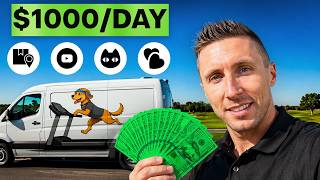
This episode of The Side Hustle Show explores five unconventional business ideas generating significant daily revenue, including a cake drop-shipping service, a mobile dog gym, an AI history YouTube channel, a cat condo business, and a virtual dating service. The hosts, Nick Loper and Chandler Bolt, analyze each idea's business model, scalability, and potential for side hustlers, emphasizing strategies like selling to high-net-worth individuals, leveraging recurring revenue, and using AI to automate operations.
Daymaker.com is a cake drop-shipping service generating ~$4,000/day in revenue with 30% margins. It targets sales teams wanting to stand out from cold emails by sending custom cakes to prospects. The founder acts as a middleman, partnering with local bakeries.
The service boasts a 35% conversion rate from cake delivery to booked meetings, compared to ~1% for cold email or cold calling. This leverages the law of reciprocity.
At $80 per cake and a 35% conversion rate, the cost per meeting is roughly $240. If one in four meetings converts to a customer, customer acquisition cost is ~$1,000, making it viable for high-ticket sales (customers worth >$5,000).
A mobile dog gym uses an air-conditioned Sprinter van with custom dog treadmills, charging $70 for a 30-minute session. The business is fully booked and expanding via franchising. 90% of clients book recurring weekly workouts, providing predictable revenue.
The key insight is to sell to affluent customers about things they are price-elastic about, like their kids and dogs. This allows for higher margins and recession resistance.
A 3-month-old YouTube channel featuring an AI persona 'Chloe' vlogging from historical events (e.g., Titanic) has garnered 17 million views, mostly on shorts. Estimated earnings are ~$8,000/month from ads.
The hosts argue that using a media company (like a YouTube channel) as a break-even customer acquisition channel for a back-end business is superior to relying on ad revenue alone. This mirrors Mr. Beast's strategy with Feastables.
A woman turned her cat's love for playing in Amazon boxes into a six-figure business manufacturing themed cat condos (e.g., gingerbread house, cheese wedge). She sells via her own shop, Amazon, and wholesale through Faire.
Recurring consumable businesses (e.g., Dr. Squatch soap, AG1) are highly lucrative due to predictable revenue and high margins. The key is to minimize SKUs to avoid inventory complexity.
Vida Select is a virtual dating service priced at $1,200–$3,000/month, claiming an 82% success rate and 11,000 relationships. It targets high-net-worth individuals who value time savings over cost.
Chandler recommends starting a pressure washing business as an analog side hustle. Startup cost is ~$300 for a machine, break-even after first job, and potential to earn $10,000/month by knocking on doors.
The second idea is an AI implementation business targeting old, antiquated service-based businesses (e.g., HVAC, roofing). The approach is to identify a pain point (e.g., missed calls) and implement an AI solution (e.g., AI answering service) to save time and increase revenue.
Partnerships and speaking at in-person events are generating $6–$8 million annually for Chandler's business. The strategy involves creating a 'dream 100' list of potential partners and offering value through workshops or webinars.
Chandler recommends using Lovable (a wrapper) with Claude to build custom in-house tools. He built a sales manager that added $500,000 in sales and a call review tool that grades and gives feedback on sales calls, eliminating the need for human managers.
Chandler recommends 'The Surrender Experiment' by Michael A. Singer, which tells the story of a yogi who surrendered to life and ended up building a billion-dollar software company. The book offers a counterintuitive perspective on control and opportunity.
The episode highlights that successful side hustles often involve selling to affluent customers, leveraging recurring revenue models, and using AI to automate operations. The key is to identify a specific pain point and offer a high-touch, memorable solution that saves time or money.
What is the conversion rate from cake delivery to booked meetings for Daymaker?
35%
01:42
What is the estimated cost per meeting for the cake drop-shipping service?
Roughly $240 (based on $80 per cake and 35% conversion rate).
02:12
What percentage of clients book recurring weekly workouts for the mobile dog gym?
90%
08:29
How many views did the AI history channel 'Chloe vs History' get in 3 months?
17 million views.
12:10
What is the estimated monthly earnings of the AI history channel from ads?
~$8,000 per month.
12:23
What is the pricing range for Vida Select's virtual dating service?
$1,200 to $3,000 per month.
26:56
What is the claimed success rate of Vida Select?
82%
27:10
What is the startup cost for a pressure washing business according to Chandler?
$300 for a machine.
37:18
What two books does Chandler recommend in the episode?
The Surrender Experiment and Am I Being Too Subtle?
56:44
What is the key insight for selling to affluent customers?
Sell to them about things they love and are price-elastic about, like their kids and dogs.
08:02
35% Conversion Rate from Cake Delivery
Demonstrates the power of physical gifts in sales outreach, far outperforming digital methods.
01:42Sell to Rich People About Things They Love
A core principle for high-margin side hustles: target affluent customers on emotionally charged purchases.
08:02Media Company as Customer Acquisition Channel
Reframes YouTube channels as loss leaders for back-end businesses, a strategy used by Mr. Beast.
13:11Recurring Consumables Are Lucrative
Highlights the power of subscription models with low SKU counts for predictable revenue.
22:55Pressure Washing as a Side Hustle
A low-cost, high-margin analog business with immediate cash flow potential.
35:13[00:01] is a wild business that's actually being run kind of as a side project to the guy's main thing. This is basically a cake drop shipping service. It's called daymaker.com, which is apparently doing around $4,000
[00:15] which is apparently doing around $4,000 a day in in revenue. It says like 30% margins somewhere in here. So, call it even just $1,000 a day in profit sending cakes to to prospects. So, his main customer base is a sales team sales
[00:29] organizations that want to cut through the clutter of cold email, cold DMs, and get something that's going to stand out. And this is a really initially thought the guy ran a bakery, but no. He like builds
[00:46] bakeries send them out and just plays the middleman. >> Yeah, I love this for two reasons. One is zig when everybody else zags. I mean, this is what we've been teaching with book stuff for over a decade now is send
[00:59] a physical copy to people in the mail and watch your lead sales and referrals go up. This is just obviously probably a more clever way to do it and because it's branded specifically to them or there's a message specific to them or
[01:14] other reason I like this is because I think when it comes to a side hustle or your business, the most profitable ones are the ones that sell revenue, sell money, or sell people. And so, if you think about it, this is
[01:28] selling revenue. This is not a bakery. He's selling revenue. And so, if you can skim some off the top of the revenue that he's driving, well then yeah, you leverage cake that exists versus just a race to the bottom in a commodity of
[01:42] selling baked goods. >> Yeah, it says he's got a 35% conversion rate from cake delivery to booked meetings compared with I don't know 1% from cold email or cold calling, right? It's this almost this law of reciprocity
[01:56] the trouble to send me this custom cake, I guess I I owe it to myself to at least >> Yeah. I mean, I obviously this only works in high It's got to be a high this. So, but >> Oh, so 80 bucks 80 bucks a cake.
[02:12] >> Yeah. So, then but you think what's your cost per meeting or what's your cost per customer? So, I mean, at 80 bucks a cake, that ain't bad because if you got conversion rate, well, then that means that, you know, back of the napkin math,
[02:26] that's roughly oh, 240 bucks a meeting. >> You better be selling something with a high ticket. >> Uh so, but I mean, you know, two 240 a meeting and then if you're converting,
[02:39] let's say, one out of four of those, that's $1,000 a customer. So, I mean, as long as your customers are worth more than five grand, let's call it, the the math probably pencils. >> Yeah, totally. And so, it seems like we
[02:51] can even go after is it really enterprise sales, right? Like, who the makers in a really unique way? Um we It's been 12 years since your first appearance on the Side Hustle Show back
[03:05] in this business. Since then, Self-Publishing School has evolved into self-publishing.com where you've helped thousands of people realize their dream of writing and publishing a book and built an eight-figure business in the
[03:19] this kind of outbound for self-publishing? was thinking about it and you know, it's kind of interesting. We've launched decade. They were just in the form of books.
[03:32] >> And I mean, there a lot of our customers, they start with a book around the thing that they do, and then that book goes on to, you know, create a business or or all this stuff. I think the best side hustles are ones that
[03:44] support your main hustle. So, how do you be an on-ramp for the business? And so, we've done it with books. We've shipped those. I mean, you've probably been on the receiving end of multiple things of this of, you know, we probably shipped
[03:56] you koozies. We probably shipped you self-publishing.com bottle openers self-publishing swag around here somewhere. >> But so it's just, I mean, unique unique swag. I There was a year where I
[04:08] sent a thank you note every single day for a year. And that's a a different zig when other people are zagging and get in front of decision makers or people that can move the needle in your business.
[04:21] >> Yeah, I think there's probably a note in this article about Well, could we send uh pizza with a custom message written out on the pepperoni? Or some people have mentioned, oh, maybe we could do this for like um a singing telegram type
[04:34] this for like um a singing telegram type of thing. Something that is high-touch, that's memorable. And the interesting thing again, you don't need to be the singer. Like in this case, it's just playing matchmaker and taking a margin
[04:46] in between. Trying to marry the physical with the digital. You're trying to have you know, these kind of boutique bakeries on the ground and build some kind of AI agent tech scraper to find bakeries that were willing to do bulk
[04:59] deals and negotiate on price. It could do this kind of custom cake design stuff be somewhat local to do this kind of thing. >> Mhm. Yeah. So So this is uh William Lindholm. He's the founder of Daymaker.
[05:13] original businesses was just a similar cake drop shipping business where it was just HR departments on kind of recurring um billing where it's like every time birthday, we're going to send you a cake. And similar like matchmaker
[05:28] but if, you know, every year when it comes around, we want to say thank you to this employee or recognize them on their birthday. And just you don't have to go out and get the customers. And it sounds like it was
[05:41] kind of a viral stunt to some VC firm that really uh got Daymaker on the map. But it's, know, that's kind of the the ticket to entry is trying to figure out, what are the creative ways I can get in front of them here.
[05:56] maybe level up this idea, right? Is how time, how do you take the Dave Ramsey model where Dave Ramsey doesn't just sell one-on-one financial education, he sells into schools, into churches, into
[06:10] nonprofits, into businesses. So, he makes it's the B2B2C sale. All right, so he makes one B2B sale that leads to 100 B2C sales on the back end of that. And so, to your point, you might sell cakes into companies that have hundreds of
[06:25] employees and then they're on auto subscribe where they send the cake to those employees on their birthday. And I mean, we did something similar like this, not quite at scale. So, this is maybe a little better and a little
[06:39] more at scale, but I mean, we've done stuff where we've had custom coffee mugs created on our employees' birthday. And we say, all right, well, hey, we're willing to spend 200 bucks per employee on their birthday. You
[06:51] know, that's just a small thing that makes this massive impact with your employees. And so, if you were able to do that and and this type of way, well, okay, now you're you're basically selling leveled up relationships either
[07:04] to a business or maybe it's with with employees, maybe it's with partners, think that would be a smarter way to do this model. >> I want to show you this cuz this was fascinating business that I found. It is
[07:18] a mobile gym for dogs where this guy will show up outside of your house or your apartment and in this air-conditioned Sprinter van has these custom dog treadmills where it
[07:34] is $70 for a 30-minute for a 30-minute dog run session. And it says, we are we are fully booked, we are trying to franchise, we are expanding and this is
[07:47] just wild to me. >> Mhm. Yeah, so this this takes advantage of what I think is kind of formula for a really good side hustle, which is sell to rich people about a thing that they love with where they're price elastic.
[08:02] anything else? Their kids and their dogs. I don't love how low priced it is massive volume and you have to it's a lot of coordination, but I do like that it's recurring, right? >> $70 is low price for a dog workout?
[08:17] >> Well, not for a dog workout, but in general, right? If I if I'm doing a side or >> Yeah, it becomes a volume type of >> Oh, it's a totally a volume, which means you got to be good at operations, which
[08:29] >> Yeah, what's interesting is there's some notes that say 90% of clients are booking a recurring weekly workout for their pup, so there is an element of a kind of predictable recurring revenue
[08:42] that you can start to stack up. A little bit of a well, a lot of a higher startup cost model if you're going to go out and you know, retrofit this custom Sprinter van and get the dog treadmills, but it's kind of well, what else?
[08:55] Yeah, what you kind of touched on, what else could this be applied to? This was a kind of wild fascinating thing as I'm picturing, you know, RIP the the side going on for a little run on a treadmill.
[09:08] >> Yeah, I mean, I think the takeaway for folks who maybe thinking, "Hey, I couldn't do this or I don't want to clone this." is how do you sell something to people about the thing that they care about most,
[09:23] which is kids and their dogs. So can you help their kids get into their dream school and charge them five grand? You know, that's where career coaching or Harvard coaching or whatever, you know, that's a very viable business that has
[09:37] no cost of goods sold and no especially with side hustles. I just say, "Hey, how do we make this as simple as possible, as high margin as possible, as possible, as high margin as possible, and as preferably as high ticket as
[09:51] possible so that it only takes a couple sales to make some really good money?" down as well where like dog walking services have been around forever, but it's like what have you ever had a kind of a luxury gym experience in the
[10:05] back of a Mercedes dog running service? It's like, you know, a fraction of those people who are buying dog walking would pay, you know, 10 times as much for this >> Yeah. When I just think
[10:19] I mean, my mind goes to B2B sales cuz I I mean, I know like I just think when it when it comes to side hustles or any business, I mean, B2C is good, but it's crowded and it's competitive and it's low margin
[10:34] and it's low ticket oftentimes. And so, but but it's what everybody thinks how I just think I just look at stuff around me that I buy and I think about that. But there's these hidden industries and hidden massive hairy
[10:47] problems that are worth a lot of money that if you could crack into that and solve it even in a in a small way, I think the the the margin and the upside is is is way bigger. >> Yeah, I feel it's always well, how how
[11:01] recession resistant is this? Like I would imagine if you lose your job, the the dog treadmill [laughter] workout is probably the first thing to get cut off dog really really's come to and grown accustomed to a few things.
[11:14] selling to rich people, right? Is they're largely recession resistant. I they're largely recession resistant. I mean, they have way bigger budgets to waste or to spend or whatever else. Now, if they deem it as a luxury purchase,
[11:28] and your kid, I would say that's well, especially dog, but most people that have dogs would not agree with that. They would say that that is a necessity and it has to happen one way or the other.
[11:42] >> Totally. All right, next one on my list is this relatively new YouTube channel. This is called Chloe versus history. It is a 3-month old >> YouTube channel, time travel YouTube
[11:56] channel, um which features Chloe, this kind of cute AI persona who's taking these like modern vlog selfie style videos, but this is her uh on the Titanic. And they're shot in a modern vlog style
[12:10] for this. I'm going to try to sneak into first class. I'm going to uh try and talk to the captain to uh you know, warn him about the iceberg cuz she's like coming at it from a 2026 perspective. So, in 3 months this channel has racked
[12:23] up 17 million views. Uh most of those are on shorts. They don't pay a ton, but still even the long form stuff, couple million views on this earning uh an million views on this earning uh an estimated 8,000 bucks uh a month. And I
[12:38] for something like uh like this cuz it's really well done, uh but I got to less than uh less than eight grand a month. I I love this concept. I hate this
[12:55] business model. So, I love the concept of cheap attention. The business model of paper click or CPMs or whatever else. I mean, it's just kind of a horrendous business model. It It's It's media companies.
[13:11] Right? And so, how do you monetize a media company? Ads. It's a really tough business, but I think when you when you flip this, and this is what's really got something like this for self-publishing.com?
[13:23] Where okay, we just basically use the CPM money to feed into the media company, but then that whole thing feeds into the back-end business. So, it's a it's basically a break-even customer acquisition channel, kind of like Mr.
[13:37] Beast has done with Feastables and all these other brands. That's what really broke my brain is when he said, "Hey, you think this is a high-revenue YouTube channel? It's really just break-even free customers for all of these brands
[13:51] I mean, that's just a >> crazy concept. That's really weird, man. >> Yeah, most people who go into it think of it as YouTube is the business, but three-dimensional chess sort of [laughter] different different game.
[14:06] >> Have you created the, you know, AI Chandler avatar to like scale your >> When you're running your business, you're going to come to this crossroads. either you don't know how to do yourself, or you're not the best at, or
[14:21] handing off to somebody else. If you're in that same boat, think this is a job for Sponsored Jobs. When you sponsor your job on Indeed, you'll get matched with quality candidates who meet your exact criteria, so you can focus on what
[14:34] you do best. Plus, with Indeed Sponsored Jobs, you only pay for results. Spend actually interviewing candidates who check all your boxes. Less stress, less time, more results. When you need the right person to cut through the chaos,
[14:49] this is a job for Indeed Sponsored Jobs. Side Hustle Show listeners get a $75 sponsored job credit to help get your job the premium status it deserves at indeed.com/podcast. Just go to indeed.com/podcast
[15:03] right now and support our show by saying you heard about Indeed on this podcast. indeed.com/podcast. Terms and conditions apply. Need to hire? This is a job for Indeed Sponsored Jobs. Scrappy side hustlers have an
[15:16] advantage over bigger competitors, and that's speed. The faster you can pick up the phone, and faster you can respond to customer messages, the better. That's why today's episode is brought to you by Kuwo, spelled Q U O. This is the
[15:28] business communication system built so you never miss a call. Kuwo is the number one rated business phone system on G2 with over 3,000 reviews, and it's built for how modern teams work. More than 90,000 businesses from side
[15:42] hustlers and solo operators to growing teams already rely on Kuwo to stay connected and stay on top of everything. outgrowing your personal cell phone as your business line, Kuwo makes it easy for you. Calls, texts, voicemails,
[15:55] transcripts, AI summaries, contact details, all in one clean view in an app on your phone or your computer, so you and your team always has the full picture for a better customer experience. Money is on the line. Always
[16:09] say hello with Kuwo. Try Kuwo for free, plus get 20% off your first 6 months when you go to kuwo.com/sidehustle. That's kuwo.com/sidehustle.
[16:24] but it's it's pretty good. Uh we've used HeyGen, and we've used some other tools. And what I really like about it is it allows us to be dynamic with our content, especially on the back end. So, some of our uh high-value course
[16:37] some of our uh high-value course material is that avatar. And why that's helpful is because we can update the scripts on a regular basis. As stuff whatever else, whereas previously you'd have to you know,
[16:51] go re-record it, re-edit it, re-ship it to your customers, all that stuff. It allows us to iterate on a bunch of that. So, that's really cool. I mean, I think this is a really good use case for ads. There you can I mean, this is going to
[17:03] change UGC content forever. As you just customer testimonials, and then you match that up with the UGC avatars, and then you've now all of a sudden got all this creative, and you cut a lot of your
[17:16] production costs out of it. >> Yeah, that's an interesting use case I back end. It's like, well, instead of re-shooting this course that is mostly
[17:28] that changes with some interface or something. Like, okay, we can quickly iterate on that to really deliver the best up-to-date stuff for our students. >> Yeah, and and that's Yeah, we've been having a lot of success
[17:42] But, I mean, gosh, we we use it for a bunch of the the wildest example I've bunch of the the wildest example I've seen of this is uh Anik Singal. If you've seen his YouTube channel, it you cannot tell hardly. It's all AI.
[17:57] >> And the videos are pretty good, but he's he's almost using it as what I was saying is the I I feel like the superior business model, which is media company to drive customers for a business. See,
[18:10] that's kind of how he's using it, driving customers for his business. >> Mm, okay. Well, yeah, you got my gears turning a little bit on what the uh next create AI video Nick,
[18:25] somewhere. Uh some some uh side hustle persona. Uh some some uh side hustle persona. >> [snorts]
[18:43] cat condos. The founding story was this woman found that her cat was playing in all the uh leftover Amazon boxes she had lying around the uh living room and was you. Why don't we put you in this cute little uh gingerbread one or this cheese
[18:58] wedge or this, you know, haunted house type of thing?" And so, she started manufacturing these and uh has turned this into a six-figure business. towards these uh
[19:11] you know, sustainably sourced you know, wool cat toys just because the big cardboard things were kind of bulky to to store and more expensive to ship, but definitely a creative one. He's starting from a personal pain point of like,
[19:24] owner, I have to imagine that other cat owners would be as well. >> I'm not going to lie. I hate this business. I I Cats [snorts] are First off, cats suck. We can all agree. Cats are the devil.
[19:38] luxury >> to alienate my my [laughter] audience here? >> I'm going to get roasted on this one. Cats are the devil. I mean, we just got I we got to agree on that.
[19:50] >> But I mean, talk about a business A that doesn't have to exist, exist and you get a bajillion of them from Amazon already. But then I think B that is just a totally going to get wiped out in a
[20:06] thing that people cut. I don't know. For I think for those reasons, I don't love this business. But I will say the counterpoint to that is kind of what you were what we were talking about earlier
[20:20] it's about a thing that people love and have an endless budget for, which is there. >> Yeah, it sounds like she does a decent amount of sales through her own shop, through Amazon, and then quite a bit
[20:34] comes through wholesale relationships with independent a pet store outlets. >> That's super smart. >> a site called Faire, F A I R E, which is um kind of proving ground or distribution for um wholesale type of
[20:50] you just, you know, list it once, set it and forget it. You're still going to have to, you know, do some proactive outreach and marketing and sales, but it's kind of like a little bit of social proof and it's almost a sell sheet for
[21:03] your stuff where you can have it uh for up for sale there for >> Yeah, that's smart. I mean, it's kind of like an Etsy business, right? It which is the two things I love about that is either one, you're going wholesale, so
[21:18] it's the B2B2C kind of sale, and so your cost of acquisition is way lower once you've established those whole wholesale distributors, uh or secondly, you're kind of like what we teach with people with books is, "Hey, there's already a
[21:32] marketplace of Amazon with hundreds of millions of customers. If you can just figure out how to get your book on that platform, and then work the algorithm in well, then they're going to bring all the customers." It's like the ultimate
[21:46] holy grail is retail for most, you know, consumer brands, which I always thought that was so stupid cuz and and and you think, "Oh, D2C is going to just and e-commerce is going to totally wreck retail." But, you just see every good uh
[22:00] direct-to-consumer brand ultimately wants to be in retail because your cost of acquisition goes to uh maybe not nothing, but very, very low, and then your scale goes way up. >> Yeah, exactly. We just talked to um
[22:15] a coffee maker who had kind of his his anti-inflammatory coffee blend, and it was like, "Dude, it's so expensive to acquire customers on Meta." And it's like, "We will gladly accept a lower margin on retail sales because once it's
[22:27] it costs us nothing from there." So, >> Exactly. >> agree with that. And it's not to your point about like comparing like the physical product here and the book sales, like, it's not recurring revenue
[22:39] predictable as the number of people searching for wool cat toys on Amazon is likely to be the same this month as it is next month as it is the month after. keyword-focused book topic, you know, pretty steady demand in a lot of cases
[22:55] if it's an evergreen topic. >> Well, that's where one of my favorite >> Well, that's where one of my favorite businesses is recurring consumables. And so, a buddy of mine uh started a business called Dr. Squatch and it's So
[23:07] these businesses are especially potent if they're subscription based. And so he did a basically subscription. So it was high-quality men's soap, so kind of filling a void in a narrow part of the market, and then soapscription.
[23:21] So it was a recurring consumable. Now if you think about some of the most lucrative businesses in the world, they're recurring consumable businesses. they're recurring consumable businesses. It's oil, it's gas, it's drugs.
[23:34] I mean like there's not much of a difference between a cocaine cartel and the oil industry. I mean it's it's you you're selling an addictive recurring consumable that's extremely high margin and you have a monopoly on it.
[23:47] company >> going to go I was going to go different different examples, but like an AG1 or a HelloFresh or even like Microsoft where it's like you can sign up for 365 and so it's recurring subscriptions.
[24:01] >> Yeah, that's a great point. You've got recurring digital consumable, right? And you've got recurring physical consumable and I think that's why you see so many massive companies in like AG1 or like BioTrust or BioOptimizers or whatever
[24:13] else in that kind of protein powder or you know, powder-based consumable. But I mean it you could you could right? The coffee business that you mentioned. And so recurring consumables
[24:29] subscription. I mean those are just massive high-margin businesses. this pet products one could be, you know, the box or the monthly we'll send you >> Exactly.
[24:44] You know, maybe your cat got bored with this one. It could be you know, the fancy organic cat food or sub you know, some kind of health supplement that makes the coat all soft and shiny.
[24:57] lots of people playing in that space, too, but thinking of well, what's the >> Yeah, well, I think the only thing that you got to be super careful of is limiting your SKUs, right? And that's the only thing that I don't like about
[25:10] the only thing that I don't like about kind of the uh monthly box model is I mean any any e-commerce or physical product business owner knows that SKUs and inventory absolutely wreck your profitability and your cash flow. And
[25:24] kind of caveat with that is if you can keep the SKUs as simple as possible, coffee business or that's what I love about AG1 or whatever else. It's like, every month." >> Right, we got one product.
[25:38] "Oh, I got to come up with something new this month and next month and then now I I think like if you can find a way to make it a single SKU or the least amount of SKUs as possible, gosh, that's a
[25:51] >> Yeah, we talked to a guy who had a like a barbecue seasoning rub and he's like, a you can get it in a two-pack or you can get it in a four-pack." And that was was selling golf gloves and on the surface pretty simple business. Hey, we
[26:05] "Well, they're they're gloves. People have different size hands." And so, "Well, how many should we order in large? How many should we order in now all of the sudden we got, you know, idle inventory and it's all becomes a
[26:18] >> It's the difference between a hat business and a shirt business, right? Is one of them has sizes and the other doesn't. And if you got a sizes, you got you got unsold inventory. And as Henry Ford said with the Model T back in the
[26:31] any color they want as long as it's black.
[26:43] >> All right, last one up uh for you is this um virtual dating service. This is called Vida Select. It's been around um for I want to say 15, almost 20 years, priced between
[26:56] priced between call it $1,200 and $3,000 a month, where it's targeting the people who are paying for these dating apps, but would have for these dating apps, but would have the budget and the desire to
[27:10] you know, to to actually find some results here and make it work. >> [laughter] >> Because this this business says, "Okay, you know, 82% success rate. We've got 11,000 relationships." So,
[27:23] these kind of numbers like in this kind of longevity says like there's clearly business for a long time and they can can see results. So, it is something that that people are proven to
[27:37] be willing to pay for and so I think there's probably an opportunity to do this either locally or you know, pivot to a very specific demographic and offer big opportunity in this space. There's lots of different dating apps that are
[27:51] all kind of commodity priced, you know, $20 to maybe $100 a month and say, "No, much higher tier if you want some real results." showed me, Nick. I I might have even been a customer of
[28:05] I if I worked with these guys or not back when I was single. There's no cost of goods sold. You're selling humans, right? Which is like like staffing or recruiting or whatever else. So, it's
[28:19] super high margin. And it's just a great business. I love that it's recurring, too. They're going up market and I think you could even go further up market. And you know, there's kind of that's the
[28:33] this or listening this is where is there a commoditized bottom of market thing that you can just go way up to the top to the highest net worth people in that industry. And maybe that's executive dating. Or that's someone where they're
[28:48] a very fit painful problem, which is they can't find a spouse. And I think that's a huge win-win. I think there's a lot of people like this instead of being really dumb with their time and
[29:03] >> You know, I've always thought just saying, "Hey, 25 grand finder's fee if make a lot more sense for >> Treat it like a recruiting relationship. >> and single. Uh but I mean, maybe this is a good close second.
[29:18] >> Yeah, I mean, here's the reframe is like, "Dude, you're going to waste 520 your time worth here? We're going to spruce up your profile. Maybe we're going to take some great looking pictures to make you stand out. And
[29:31] maybe we're going to kind of do the initial screening so you don't waste your time on that." >> Yeah. I think that's a super smart way to sell something like this, right? Cuz if you say, um what what is it people
[29:44] pay to save time or save money? Or or to make money. And so if you can money, their budget is unlimited. So I was just kind of doing some back of the napkin math here. You look at that 500 hours annually. And
[29:57] take you 500 hours over the next year and you might not even find someone. Did not. That's why you're looking at this page." You make $100 an hour, that's $50,000 worth of your time. Okay? So we'll stack that. Now, what are you
[30:11] paying monthly on dating apps? Now, what are you paying in all the people you're taking out to dinner and all that stuff that are total duds? Oh, that's thousands and thousands of dollars. >> waste of time. Yeah, extra wasted money.
[30:24] >> us 10 grand, you know, we're going to save you $50,000 and we're going to go help you find your person, right? So I just I love that kind of juxtaposition of selling people time or selling people money.
[30:38] >> Yeah, estimated market size here, $3 billion are spent on online dating with 30 million people being actively looking at any one time. So, big big addressable market, so carve out a
[30:51] little niche. What's going to be your specialty there so you can stand out? >> Yeah, this is a great business that anyone can start. >> And especially any woman can start. I I always tell my single guy friends,
[31:07] "Hey, you know who knows your wife?" Oh, they're women. And it's not men. It It It's other women that go to church with them, that are in whatever else. They know your wife and
[31:19] And they would love nothing more than to hook you up with your wife. Women love that, playing match maker. And so, this is I really love this business already have these You already have these people probably
[31:32] in your network. And to your point, Nick, if you go very niche with it, where hey, I help you know, high net worth individuals find a spouse or find their wife. I help executives find their wife or whatever. And you kind of create
[31:44] a little bit of a proprietary process around it. It's a great business. >> Very good. Well, this is one of the kind of a business frameworks that we've talked about on the show is look at what the really affluent class or wealth
[31:56] class is spending their money on and think, well, how could I democratize that in some way? And so, one of the examples we had was kind of a house manager type of service, but instead of, you know, being on site and
[32:11] like almost being a member of that person's staff, it's like, well, what if we could fractionalize that and we could serve five different clients reasonably well and bring it to a slightly broader audience that's got more appeal.
[32:23] It's smart. >> One customer says, "This tool literally spoiled me. It's so easy." Another added that it's taken a point of anxiety and process. Of course, they're talking about our sponsor, Gusto. Gusto is the
[32:39] built for small businesses. It's all-in-one, it's remote-friendly, and it's incredibly easy to use. So, you can pay, hire, onboard, and support your team from anywhere. Think of it like cleaning out your virtual junk drawer,
[32:52] all that admin chaos that's been piling up all year, and installing a lean and clean system instead. Automate your direct deposits, payroll taxes, health benefits, 401k contributions, and do it in a way that fits your budget with no
[33:05] hidden fees and no surprises. Plus, if you have any questions, Gusto gives you direct access to certified HR experts. It's no wonder why over 400,000 small businesses already trust Gusto for their payroll and HR needs. Try Gusto today at
[33:19] gusto.com/sidehustle and get 3 months free when you run your first payroll. That's 3 months of free payroll at gusto.com/sidehustle. One more time, it's gusto.com/sidehustle.
[33:35] almost never about the work itself. It's about the decision fatigue surrounding message, is this person going to make a good guest, what's the right tool for products online, let me take some of that decision fatigue off your plate.
[33:49] There's a reason millions of businesses, including dozens of the Side Hustle Show guests that you know, choose our partner Shopify. This is the one decision that makes all future decisions easier. For example,
[34:02] in designing your storefront. You can just pick one of the proven templates and then customize it to meet your needs. You can quickly generate product descriptions, you can use Shopify's built-in AI to enhance your product
[34:14] photography, and you can even fire up email and social media campaigns to drive traffic and sales. Start your business today with the industry's best hearing Sign up for your $1 per month trial
[34:27] Sign up for your $1 per month trial today at shopify.com/sidehustle. Go to shopify.com/sidehustle. That's shopify.com/sidehustle. Well, make sure to stop by self-publishing.com/sidehustle
[34:43] to grab a free strategy session about turning your book idea into reality. We've got more with Chandler in just a moment including his business idea donation for Side Hustle Nation coming up right after this.
[35:01] for round two. This is the business idea donation round. What do you got for us? >> Nick, I got two ideas. I can't give just one. I think people should go extreme
[35:13] one way or the other. They should go extreme AI or they should go extreme analog. And so I'll start with the analog cuz I think everything in the already is getting disrupted. And so analog, I would personally start a
[35:26] pressure washing business locally. I would knock on doors and you could do you could do 10 grand in a month very easily in your nights and weekends and time. I know this because I did this as a kid. It's high margin. All you got one
[35:42] hundreds of dollars per house that you >> Yeah, you can break even after your first job. think everybody when they think side hustle, they think like some kind of
[35:54] online AI thing. I think analog businesses are awesome. Yes, you've got to have some kind of basic skill, but the barrier to having that skill is so low especially with something like uh pressure washing. So I was working
[36:08] helping her son start this side hustle business cuz he wants to get an e-bike. And so he needs to get a few thousand bucks and then I said, "Hey, you could weeks if he started a pressure washing business." Now, let's talk about the
[36:21] other one which this is a pretty common one. I think it's maybe overused right now or over recommended, but is an AI implementation business. So, that's the extreme AI edition of this. Now, I think
[36:33] you need to go into the oldest, most antiquated businesses and industries that are not cutting-edge at all. So, think service-based businesses. Think somebody that sells a high-ticket thing that is just wildly inefficient. Come in
[36:47] that is just wildly inefficient. Come in and sell them time, revenue, and cost savings by implementing AI in their business. You can get a couple on then now all of a sudden you've replaced your full-time income.
[37:01] divergence, the barbell strategy. Full analog, full digital, and I'm almost tempted to like go the full analog route. I've always pressure washing would probably be close to the top of the list cuz we share a
[37:18] was the easiest It's the most satisfying work, you know? It's just fun to do the driveway and watch kind of the before and after uh of all that. You know, startup cost $300 for a machine, you break even after the first job, and then
[37:31] it's it's all gravy. >> Yeah, I mean, unlike all the digital stuff, the analog stuff is low competition. Most people in those business. They're not good at marketing or you know, they might show up, they
[37:45] might not show up. It's just such a defensible moat. In a world where everyone's been trained to go get a bachelor's degree or an MBA and get and with some worthless degree that's not even going to get you a great job or
[37:58] people should be going the total opposite direction and saying, "I'm I'm going to go to trade school or whatever, learn a very specific physical going to print money." Being a six-figure electrician or
[38:13] >> in in a couple years. >> Yeah. little robot vacuum. Maybe that robot pressure washer is [laughter] like the next thing. It's like going up and down the driveway. I could see that maybe.
[38:25] >> [sighs and gasps] >> Um and so in in the benefit is you can go knock on doors. You can you can reach the customer directly and I think just got their driveway pressure washed. I guess I better do it otherwise I'm
[38:38] going to look look bad. And then on the AI implementation, a few different guests have mentioned this lately, but I'm curious what that might what that might look like in practice. It's easy to say, but it's maybe harder
[38:50] to get on the phone or get have a conversation with a customer and then like kind of do maybe first step would be like an audit of their you get your foot in the door here? >> Yeah, I would I would come in and I
[39:03] would say, "Hey, I'm I'm an AI expert and AI implementer. I help businesses grow their margin and their profit and their revenue using AI. I want to ask you a couple questions and we'll build a custom solution, right?" And so then I
[39:16] what's the hairiest problem that they have that's costing them money, that's costing them time, or that's super you know, preferably this close to revenue man, I just can't get people to pick up the
[39:29] phone and get back to customers in my business." And I'd say, "Okay, cool. I'm there's there's all these solutions that already this stuff. You can just implement it." And so I'm going to say, "Oh cool, I'm
[39:42] going to I'm going to implement an AI answering service so you will never have a missed call again." And that's going to take every inbound call for your your calendar if they're a fit to work with you. And so now all of a sudden
[39:54] your revenue is going to go way up because I just solved this hairy specific niche example, but just basically saying what is their pain point or the thing that's costing them time or money and then fix that with
[40:06] some AI tool or solution. I think it's wildly lucrative lucrative. We're seeing massive returns in our business on this right now as we speak. >> So, it's less about
[40:20] you know, building a custom solution. It's more like plugging them into a tool customizing it a little bit to meet their needs. And you almost become a a reseller of that software or like a white labeler of that software.
[40:34] >> Yeah, I kind of I mean, I think a reseller or white labeler is labeler is like the lowest margin way to do that. If you it So, I wouldn't necessarily uh >> Yeah. >> Uh I would because it's just, you know,
[40:47] you're essentially framing yourself as >> No, yeah, you want to be the the the the >> Oh, you're the consultant except now nobody needs consulting advice because need implementation. And so, that's where I think Bain, Boston Consult BCG,
[41:03] Accenture, all that, I mean, they're going to just get wiped out. Now, I So, they're just going to probably rebrand their businesses to AI that's what their customers actually want and need.
[41:16] >> Yeah. Any niche that you like here you think is low-hanging fruit for people >> Yeah, I mean, I think it's it's the most unsophisticated businesses technically. And so, that are selling the highest margin thing. And
[41:32] so, that's that's kind of where I would start is I'm trying to think of what are wouldn't be online businesses because if you if you're running an online business, you're you've already got a propensity for this.
[41:45] >> Totally. >> like a roofer, like a high-ticket home maybe but maybe [clears throat] not implement like it's like
[41:59] sharpen the saw. Like I know this exists, I know I could probably save some time and money, but I I just got to done. >> Yeah, that's a great point. And so,
[42:12] yeah, it's it's maybe like an HVAC company or a roofing company because they're selling an expensive thing and they're selling their time really. So, how do you get them a better margin on their time? Well, you automate all the
[42:24] that's taking up their them or their staff's time and then you get them more shots on goal for revenue. >> Yeah, I wonder if there would be an estimator tool. I remember spending a lot of time with prospects walking
[42:39] the eaves. And maybe that's part of the rapport building. Oh, it took him 45 minutes to write up this estimate. Like it must be really But it's like, oh, I could just take a picture of every side of the house and
[42:51] then it spits it back out a number. >> Yeah, I mean, that's happening right I'm sure you're getting the same text that I am. I mean, you get like five in your neighborhood and we're offering tree trimming services or we're offering
[43:04] this service and we can give you a a quick quote." I mean, there's no way using AI to send outbound texts to people. They're probably scraping it by people. They're probably scraping it by high-net-worth zip code and and pulling
[43:17] homeowner database. So, it's like they're just doing a not really that complicated data scraping service followed by an outbound texting service probably followed by an AI estimator
[43:29] and then they're probably honestly just selling those jobs to local service providers. That would be my guess on what they're doing. It goes back to your average order value, and what's your cost of acquisition. And so, if you
[43:43] can answer those core problems for someone and help accelerate that with AI, well, then that you get down your door. >> Yeah, my gut is so being the AI
[43:57] broad. I think there's probably a lot of people playing in that space. So, my gut would be to kind of piggyback on the popularity of some tool, which could be risky if that tool goes away, but saying like I'm the expert in the quote AI call
[44:13] answering virtual receptionist service or the open claw, you know, operator. I'm going to build you an open claw implementation or something and kind of hitching your cart to that wagon versus trying to be everything to everyone. I
[44:26] cons to both. >> Yeah, when I think I would have said it's over the problem, not over the tool. And so what's the problem that So I'll just give a very practical example of this. We had someone do this
[44:38] getting a ton of leads and a bunch of them aren't turning into appointments. And so what if I just built you an AI texting solution that automatically outbound texted every new lead and then just had a conversation with them and
[44:51] your sales calendar." So they built that for us custom. I said, "I'll be your first customer. Build it and then you can go sell it to a bunch of other did that, started bringing in tens of thousands of dollars a month in sales.
[45:04] And then he went out and got a bunch of other customers, created a whole business around it. Now eventually, we're probably a more sophisticated customer than most people. We just built it all internally. Last month it did
[45:16] over $100,000 in sales for our business. Uh and now we have that tool internally, right? But that But we were a customer of his probably for 24 months. I think cuz you're selling revenue. So we're a $50,000 customer for that person. He
[45:30] built it one time. He had some maintenance, obviously, but like that's a very specific problem that he solved for the business. And so I think that comes back to we always teach these four P's of a high
[45:42] converting offer offer as person, pain, promise, price. So how do you find the person that you that that you can help and that's probably a specific industry the problem that they have that they know that they have? What's the
[45:55] compelling promise that you can make with AI for them in their business and then obviously a price point that makes sense for them. feel like we're going all the way back to Dane Maxwell foundation style
[46:10] Yeah, marketing paint What do you call it? Idea extraction extraction. This is great. Personal promise price.
[46:23] Let's move to round three. This is going to be a marketing tactic that's working for you right now. >> Partnerships. We will do probably $6 to $8 million this year on partnerships and business
[46:35] development. We do webinars, we speak at events. This is crazy, but just events, in-person events. It's very complicated, so a lot of people don't do it or can't do it or won't do it. We're doing it and it's just printing money
[46:49] doing it and it's just printing money for us. And we did a video on my my channel, all basically a $30 million partnership playbook, kind of breaking down the whole process. But I would say partnerships, big marketing thing that's
[47:01] working for us. We're building a media team that's starting to pop off. We're So there's kind of a lot of things that are free plus shipping funnels or bunch of things, but I would say out of all of them the most revenue is
[47:16] partnerships and speaking at events. >> So this is asking the question, well, >> So this is asking the question, well, who are my target customers already already paying attention to? What events are they attending? And they're trying
[47:29] you know, cut the line. Trying to shortcut your way to get in front of that audience by submitting a speaking proposal, by offering to do some kind of this is this is kind of like affiliate on
[47:43] steroids. >> Exactly. Yeah, exactly. And and and zigging when other people are zagging. Like going in person to the event. And now we've created a whole speaking team.
[47:55] to give the talk as the face of the company. >> Exactly. And and now it largely isn't. I mean, I would say at least 50 to 75% of our talks are done by someone on my team, not that's not me. Um so that that
[48:09] works really well because it's a defensible moat that other people can't defensible moat that other people can't and don't want to and won't do. >> What's an example of a of like a winning event for you and the the talk that you
[48:23] gave and something like that? >> Yeah, so a winning event for us would be at least 500 people there, typically. The our team is speaking on the main stage about using a book to grow your business. And then at that event, you
[48:37] there. And we'll do 50 to 100,000 dollars on the spot of customers signing up to work with us. That that would be kind of our obviously, it's kind of like an investment portfolio. You've got a bunch
[48:52] of duds. Uh and you've got several kind of major outliers where we say, "Oh my gosh, we paid $3,000 to go to that event. That event did 150 grand. Okay, let's do more of those." You know, you get but but it
[49:04] kind of is this this portfolio that that uh meshes together. >> And the way to do it as a side hustler on a budget without travel workshop. >> Exactly, yeah.
[49:19] invite your email list and I'll uh come handful of these over the years. You know, how to use a book to grow your weekend and you know, exactly build a thousand dollar a month side hustle. Um
[49:32] and so I think that playbook can still work, although maybe people are a little way, but trying to make it something unique and and value compelling even if
[49:44] they don't buy the thing at the end. >> Yeah, I agree. I think it's a great model and that's a really good win-win because it helps those creators monetize their audience, especially if they've benefited. That's what we find one of
[49:56] the highest correlations of is this partnership going to be successful is did the person do the thing that we're talking about. when I come into Hal Elrod's audience and it's oh yeah, this person published
[50:10] them. You should as well. Here's Chandler, he's going to talk to you about how to do this and how they can help you do it successfully. I mean, that just works way better and and this is a win-win, right? It's it's
[50:22] that person's audience gets served. That it brings in customers for us and then person who's bringing us in to speak to their audience. >> Yeah, I'm a fan and proponent of self-publishing.
[50:36] Just no barrier to entry and a chance to put your ideas and your work up for sale in the world's largest store and get found and discovered and earn author royalties. Like it's a really cool place to play.
[50:58] to create your kind of dream 100 or maybe even a dream 10 list of whom I make an ideal partner for you to to start to do some initial outreach. And the first time you do a a webinar or workshop it's not going to be great. So,
[51:12] you know, maybe start toward the bottom end of that list and get some reps in there. But I like this call for for person because it's like nothing really replaces that that face-to-face.
[51:26] Let's go to a new or new to you tool that you're loving right now. what you just or one addition to what you just said, which is create your dream 100, send them a cake. >> There you go. There you go.
[51:41] >> Call it a little callback. New to me tool that I'm loving right now is Lovable and Claude. Now, Claude is as of the Okay, everybody's talking about this. Sure, nobody will shut up about Claude. It's just
[51:55] it is game-changing. Now, Claude though, connected with Lovable and using that to create real tools in your business, that's even better. And so, we just did a video on Andrew Warner's YouTube
[52:07] channel about how we built a sales manager with Lovable. It built a sales manager with Lovable. It is nuts, absolutely crazy. The After we is nuts, absolutely crazy. The After we built it, we added $500,000 in sales
[52:20] mean, it's it's really doing some crazy stuff for whole hub that basically is a talent development and training hub for the whole company. >> Wow, so building your own in-house
[52:35] tools. What sound like, well, somebody built us this text message auto message build that in-house at this point. It's like, is off-the-shelf software slowly dying if you're like, well, I can just build
[52:47] >> Yeah, I mean, I think a lot of off-the-shelf software is either dying or it's just going to get way cheaper. I mean, let's just be honest. These software companies hold you hostage yearly and you go into
[53:01] yearly negotiation with HubSpot where they just know they got you and they are just I mean, you take you out to the woodshed. Same thing with Asana. I mean, is one of my favorite software companies.
[53:15] The product is incredible and yet Asana keeps scamming us yearly. They they upgrade our account, then they auto bill us on a yearly and then we say, "Hold up, we didn't do this." And they're like, "Oh, no, but we can't do refunds.
[53:29] We don't do refunds, we do credits." And then So, I just think people are tired "Hey, I just want a reasonably priced software that solves a real problem in my business. I'm tired of fighting these battles with these software companies.
[53:42] think what's going to end up happening is those companies are going to be forced to lower their prices and to be more competitive, to be more nimble. So, yeah, 100% I think those those companies are toast. Uh we're building a lot of
[53:55] it's it's really moving the needle in the business. >> You prefer Lovable over Claude code, Anthropic ecosystem? >> Yeah. Well, really Lovable is just a
[54:10] wrapper. You know, so So, a lot of what we did is we just are prompting Lovable to tell us what to to put into Claude to then create the connectors and MC MCP stuff so that it's automatically feeding data in, right? And so, that's where
[54:25] it's pulling from HubSpot, it's pulling from call recordings, it's sending them through call reviews, it's giving feedback. And so, we created this whole uh whole call review tool. I mean, this is helping our coaches get better. This
[54:38] This is helping everybody get better because it's live reviewing every single is grading and scoring and giving feedback on those calls. And so, it's going to help our customers be more I mean, it's going to help in every every
[54:53] it's going to eliminate managers from the company, um which is and it's going to make make everything better for our customers. >> Yeah, operate leaner while the same time driving more results. It's like what
[55:08] would be Imagine the best possible sales manager, basis to support their team, support their customers? And well, we could build a lot of that to and and automate it. This is um it's super interesting.
[55:23] >> Exactly. And it's even better than what they were doing because it's it can work around the clock and it doesn't get sick, it doesn't take time off. I mean, review five calls a week, this thing reviews
[55:36] And so you just have statistically significant data. Anyway, I could go I could go on that for a long time because it is absolutely bonkers what that's creating in the business and
[55:49] we're just getting started. And to be clear, I don't want to build any of this of this stuff. I would rather just buy it. So that's where I think there's some off-the-shelf tools that are going to start to get really competitive where
[56:03] you know, people won't have to be the actual builders or throwing back to the business idea donated earlier, if you are a builder, gosh, can you print money? Just coming in and setting this stuff up for people.
[56:16] >> Yeah, if the off-the-shelf was reasonable and again going back to selling time, then I don't feel the the driving pain to double my rate every year and put me on auto renewal, it's like no, that's
[56:29] not what I signed up for. Now I'm now I'm motivated and angry to switch off of >> Yeah. How about your favorite book other than your own from the last 12 months? >> There's two that come to mind.
[56:44] One I would say is an off-the-beaten-path recommendation for You know, you've known me for a while, Nick. I'm kind of like the operations like very practical business guy. So previously I'd probably recommend a
[56:57] bunch of practical business books. But I read one recently called The Surrender Experiment. I don't know if you've read this. What a fascinating Have you heard of this? >> I've heard of it. I haven't read it.
[57:09] >> Basically, it's the story of this guy who became a yogi and just basically kind of surrendered to what was happening in life and stopped trying to muscle it and all of these crazy opportunities started opening up and so
[57:25] construction company who went on to start a software company. That software company became valued at a billion dollars. I mean, the guy became super rich and in the process. And I think he also
[57:38] wrote a book called The Untethered Soul, which I think is maybe more like the the practical guide for this, and then the surrender experience is the story behind But it's just that whole the whole premise of that book is just so counter
[57:50] >> Yeah, I was going to [clears throat] say that feels very anti-Chandler. to me? No, no, that's >> I just did that. >> Yeah, so I think that's probably why it was so impactful because I I I I don't
[58:06] probably a similar way to I am in this It's like I love exposing myself to just totally counterculture. Basically, what do I think? Let me go into an area where they think totally the opposite because they probably have
[58:20] up somewhere in the middle. So it's like when I moved to San Francisco, you know, I'm the bootstrap business guy, and I went into the world of the the VC don't know anything about this, and I want to learn from these people, and you
[58:34] know, they're probably going to change my thinking." Because I read, you know, basically a book a week and have for a decade. I I It's just a are getting kind of boring, and so I've been really loving biographies.
[58:50] Experiment will definitely mark that one down. Second person now to recommend it, other one? >> Yeah, so the other one is called Am I Being Too Subtle? It's just another biography. It's just
[59:04] really funny and wild and contrarian about I've just business biographies from people who just do things totally different from how everybody else does it because I think I've become too homogeneous and
[59:19] think I've become too homogeneous and vanilla, and I've lost some of my boldness and uniqueness. And so I'm just kind of trying to tap back into that and said, "Chandler, it's your business. You're
[59:32] allowed to run it however you want." And look at that cover, man. That's really good. >> too subtle? Straight talk from a business rebel. >> Yeah. This This is a good one. Really
[59:45] >> All right. Well, we'll link both of those up in the show notes. Any parting advice before we bail on this? >> Don't let other people tell you how to
[59:57] live your life and how to run your business. You can do whatever you want. example of this. And Really fun. Thanks for having me on, man. It's a great time.
[1:00:10] to see you. self-publishing.com/sidehustle. If you head over there, you'll be able to book a free strategy session about going to take this thing from idea in your head to reality on paper and up for
[1:00:25] sale on the different marketplaces. Big thanks to Chandler for sharing his helping make this content free for everyone. sidehustlenation.com/deals is where to go for all the latest offers from our sponsors in one place. Thank
[1:00:40] support the show. That is it for me. Thank you so much for tuning in. Until next time, let's go out there and make something happen. Unless whatever happens. And [laughter] I'll catch you in the
[1:00:54] next edition of The Side Hustle Show. Peace out.
⚡ Saved you 1h 00m reading this? Transcribe any YouTube video for free — no signup needed.